Home Blog Page 1390

Building a beauty and wellness empire on trust

FACEBOOK.COM/ANNAMAGKAWASOFFICIAL

Let’s face it: being an entrepreneur is demanding. These days, entrepreneurs need to be agile — quick to spot opportunities and just as quick to pivot their business model. Today’s technology provides another challenge for entrepreneurs, with new tools, new markets, and new consumer behaviors that must be mastered. At the same time, it can be game-changing if these entrepreneurs can adopt emerging technologies to cut costs, enable customers, or give their business a competitive advantage. Anna Magkawas, the founder of the Luxe Beauty and Wellness Group, is an entrepreneur who excels at all of these qualities I mentioned. As a businesswoman, she is a virtuoso of entrepreneurship, whom we can all learn so much from.

As an early adopter of live selling, Anna Magkawas first entered into entrepreneurship with Luxe Online PH. From selling luxury bags, she moved on to business after business, first entering the beauty category then evolving towards the wellness category. Her brands under the Luxe Beauty and Wellness Group include Luxe Slim, Luxe Skin, Luxe Cosmetics, and Luxe Kids, with its products sold around the Philippines and a growing list of countries around the world.

I recently spoke to Ms. Magkawas in my podcast about how she orchestrated her phenomenal success. In the full interview she traces her entrepreneurial history from her days as a medrep to her current and future plans, which include entering the pharmaceutical industry, establishing a wellness resort, and opening a manufacturing plant for Luxe products and other brands. Here are some of the highlights.

THE VALUE OF TRUST
According to Steve Sy of Great Deals fame, a rising trend today is the CEO as the personality behind the brand. Ms. Magkawas is one of the pioneers of this trend, which she honed to perfection with her first business, Luxe Online PH, where she sold pre-loved luxury bags.

Working as a medrep at the time, she began the business from humble beginnings. She recalls, “I was jealous of my co-medreps, that their bags are beautiful… So, I tried to order one just for myself [online]. What happened? I sold it. So, umiral na naman ’yung pagiging utak-entrepreneur ko. [My entrepreneurial mindset took over.] And then after, I bought three more.

“Then, I sold the other two. Until the orders increased. Then, I posted it online. That’s when it started.”

Taking advantage of another rising trend at the time, online selling, she took her business online. Soon, she was live selling to thousands of faithful customers. Why was this so important?

Ms. Magkawas explains, “First, they need to trust me. Who am I for them to deposit such a big amount for a bag? You know, it’s hard to trust a person, especially if you can’t see them.”

This trust would become a hallmark of her future business ventures. “I started posting online,” she continued. “I showed myself, my face, the address of our house, so that they can go [to the showroom]. So that they can trust me.”

IMPORTANCE OF ENTREPRENEURIAL AGILITY
Entrepreneurial success didn’t come easy for Ms. Magkawas. When the pandemic struck, she was forced to pivot her business and sell antibacterial wipes. And from there, another opportunity arose — and another pivot. With her success at selling products online, manufacturers of beauty products approached her. Grabbing that opportunity, she established Luxe Skin, and soon afterwards, Luxe Slim.

Today, the Luxe Beauty and Wellness Group also sells cosmetics, and its breadth is so wide that it is sold all over the country through its distributors and even other countries around the world. Recently, the Luxe Group built a manufacturing plant to produce its own brands, as well as brands of its clients.

Talking about this new side of the business, Ms. Magkawas said, “We can help you from branding, packaging, including [everything] all-in. You’re the only one that’s missing.

“And for the marketing side, I can guide them on what they can start doing, if they’re confused or lost. Because at least, I somehow managed to go through this. Somehow, I’ll be able to share something, I’ll be able to offer something to you.”

With so many brands and so many businesses growing from her core line, how does Ms. Magkawas choose what businesses to venture into? And how does she manage her time?

She said, “Sa totoo lang, gini-gauge ko rin ’yung sarili ko, kung kaya ko pa ba. Kasi may time kasi na talagang… ang daming pumapasok na ideas na ang sarap isakatuparan. Pero kapag andiyan na, biglang mapapaisip ka na, ano ba ang una kong gagawin… Sinong gagagawa nito? Kasi hindi mo pwedeng akuin lahat.” (To be honest, I try to gauge if I can still do it. Because there are times… there are so many ideas that would be so rewarding to make a reality. But when it’s there, you suddenly think, what do I do first… who’s going to do this? Because you can’t take on everything.)

For Ms. Magkawas, part of being agile as an entrepreneur is delegation. But, she adds, the people you delegate to must be trustworthy.

“Who is the trusted person?” she asks. “Because that’s important. The person you’re going to give that opportunity to is someone that you can really trust. Because that will be the foundation. Your trust in each other.”

ENTREPRENEURIAL ENABLER
As parting advice, Ms. Magkawas returned to the importance of trust. As one who is a master at building trust between brands and consumers, she emphasized that analysis is an important part of building trust as an entrepreneur.

She said, “The first things I always advise: don’t trust too much. Because there are a lot of people around you who will take advantage of you. If what they’re telling you is a bit too flowery, pause for a while. Analyze it first.”

Today, Ms. Magkawas is an entrepreneur who helps other entrepreneurs. This is as much an integral part of her business to rely on entrepreneurial distributors as it is a genuine expression of her desire to enable other entrepreneurs who are like her.

“I want to duplicate myself,” she says about finding trusted partners in business. “But I also want to duplicate myself to other people, who are also like me.”


RJ Ledesma (www.rjledesma.com) is a Hall of Fame Awardee for Best Male Host at the Aliw Awards, a multi-awarded serial entrepreneur, motivational speaker, and business mentor, podcaster, an Honorary Consul, and editor-in-chief of The Business Manual. Mr. Ledesma can be found on LinkedIn, Facebook and Instagram. The RJ Ledesma Podcast is available on Facebook, Spotify, Google and Apple Podcasts. Are there entrepreneurs you want Mr. Ledesma to interview? Let him know at ledesma.rj@gmail.com.

PhilRatings maintains PSBank’s PRS Aaa rating with stable outlook

PHILIPPINE RATING Services Corp. (PhilRatings) has kept Philippine Savings Bank’s (PSBank) issuer credit rating at PRS Aaa (corp.) with a stable outlook.

A PRS Aaa (corp.) rating means that a company has a “very strong” capacity to meet its financial commitments compared to other Philippine firms. It is the highest issuer credit rating given by PhilRatings.

The stable outlook means the rating is likely to be maintained or stay unchanged in the next 12 months.

“The assigned rating and outlook take into account the following key considerations: (1) PSBank’s solid market position; (2) its sound capitalization and asset quality; (3) the bank’s strong parent and highly-experienced management team; and (4) the positive outlook for the bank’s major market,” PhilRatings said in a statement.

PSBank, the thrift unit of Metropolitan Bank & Trust Co. (Metrobank), was the largest thrift bank in the country in asset terms at end-2024 with P214.9 billion, latest Bangko Sentral ng Pilipinas (BSP) data showed.

PhilRatings said in its report that the bank also took the top stop in the sector in terms of net loans (P140.9 billion) and capital (P42.5 billion).

“PSBank has also established itself as a significant player in the consumer banking sector as it continued to hold a significant share in thrift banking sector’s auto and real estate loans,” it said.

Meanwhile, its capital adequacy ratio stood at 23.5% as of March, broadly steady from the end-2024 level of 23.6% and well above the BSP’s 10% minimum requirement.

“On the other hand, gross nonperforming loan ratio continued to be more than acceptable at 2.6%, significantly lower than the thrift banking sector’s 6.6% as of end-March 2025,” PhilRatings said.

“Moving forward, PSBank expects to maintain its strong capital position and further improve its asset quality, with the latter mainly supported by the robust growth of its loan portfolio,” it added.

PhilRatings said the bank’s major market, the consumer sector, is expected to continue growing amid strong household spending and easing inflation, which will help drive demand for credit and benefit PSBank.

“In particular, the projected modest growth in 2025 for the Philippine automotive industry is expected to benefit PSBank, given that bulk of its portfolio is in auto loans. The Chamber Automotive Manufacturers of the Philippines, Inc. and Truck Manufacturers Association forecast car sales to reach 500,000 units, a 7% increase from 2024. This optimistic outlook is attributed to the expected growth in remittances, business process outsourcing earnings, a sound financial sector, government spending, and election-related expenditures, all of which are expected to drive demand,” it said.

“The continued introduction of new models and brands is also anticipated to fuel growth in 2025. The sale of electric vehicles is expected to increase by 7%, with the volume reaching 20,000 units for the first time, and accounting for 4% of the industry’s target of about 500,000 vehicle sales.”

Philippine banks’ consumer loans stood at P3.18 trillion as of March, led by residential real estate loans at P1.13 trillion, credit card receivables at P960.66 billion, and auto loans at P600.28 billion, BSP data showed. 

PSBank’s net income rose by 0.59% year on year to P1.21 billion in the first quarter.

Its shares climbed by 55 centavos or 0.95% to close at P58.50 each on Wednesday. — A.M.C. Sy

Fintech companies’ appeal to investors boosted by managing risk, reducing friction and preventing fraud

STOCK PHOTO | Image by Macrovector from Freepik

By Yogesh Daware

THE PHILIPPINES’ financial technology (fintech) landscape is vibrant and evolving, driven by increasing digital adoption, a supportive regulatory environment, and a strong focus on financial inclusion. These encouraging dynamics form a strong foundation within the region, but profitability and sustainable unit economics remain some of the most important measures of a fintech’s success to and appeal to investors who want a clear picture of business health.

Strong profitability makes a business attractive to potential investors, and it supports the case for those contemplating an initial public offering (IPO) to fund future growth or to settle debt. Low profitability indicates that investors should be cautious because the business might not be sustainable in the long term. Investors now assess businesses on their capabilities, including whether they have built the right business model that will give them the “right to play” and “right to win,” in contrast to whether their capital will be leveraged primarily to buy accelerated growth.

One of the most effective ways for a fintech to support its profitability goals is to make sure that it has deep insights into the risk profiles of potential customers and that it has the tools to identify acceptable risks. Furthermore, being able to draw on both trended data and alternative data sources to assess consumer risk empowers fintech lenders to develop more personalized offers to consumers, rewarding their good credit behavior and building their loyalty over time.

Once an acceptable risk has been identified, the customer’s journey becomes paramount and needs to include frictionless onboarding. Responding to TransUnion’s Q1 2025 Consumer Pulse Study, 37% of Filipino consumers said they are planning to apply for a loan from a fintech firm in the next year, and 89% said that real-time approval is important for them when applying for a digital loan. Less friction during the application and onboarding processes definitely provides fintechs with one of the key levers of differentiation against competitors — especially established incumbents — and also helps drive loyalty and repeat business.

Conversely, the fintechs that don’t assess applicants’ risk profiles thoroughly are more likely to lose money on delinquencies in an environment where 45% of Filipinos surveyed expect to be unable to pay at least one of their current bills and loans in full. While many of those who said they will be unable to pay have a strategy to overcome this obstacle, including paying part of the balance due (45%), using money from savings (42%) or taking on temporary/gig work (34%), fintechs can improve their profitability by implementing robust collections and receivables strategies through data-driven decisions. These are fundamental to driving success amid rapidly evolving consumer dynamics.

One of the ways to mitigate the risk of delinquencies is to include an early warning solution that sets alerts in response to identified consumer behavior patterns. Early warnings can trigger closer engagement with consumers to offer credit education opportunities and to encourage better payment strategies.

Another way for fintechs to improve their profitability is to ensure that their environment is protected from fraud. Powerful analytics can help pinpoint irregularities in consumer-supplied data, allowing lenders to identify and prevent fraud in real time.

Steps to manage risk, prevent fraud, and create a frictionless customer experience are all important for fintechs focused on profitability. However, complying with local and international regulatory requirements is also essential. Fintechs in the Philippines must be licensed and registered with the Bangko Sentral ng Pilipinas (BSP) and the Securities and Exchange Commission. They must implement stringent anti-money laundering and counter-terrorism financing measures and comply with guidelines issued by the Insurance Commission. Careful compliance with data privacy laws and cybersecurity standards is also essential.

Trusting the guidance of a global partner that has an in-depth view into the nuances of the Philippines’ regulatory environment will reduce unnecessary expenses, avoid obstacles to success and minimize reputation risks while contributing to the profitability expected by investors and shareholders.

At a time when global financial markets are volatile and investors are likely to be more cautious, it is the fintechs that can demonstrate these fundamentals that support their profitability that will attract positive attention.


Yogesh Daware is the chief commercial officer at TransUnion Philippines.

Hershey to remove synthetic dyes from its snacks by end of 2027

BLOOMBERG

HERSHEY CO. will remove synthetic dyes from its snacks by the end of 2027, the latest in a string of major food companies that have announced similar moves.

The Pennsylvania-based maker of Hershey’s chocolates, Jolly Ranchers candy and SkinnyPop popcorn cited the challenges of navigating the profusion of new state legislation around food dyes.

“There is a patchwork of state regulations emerging that is creating confusion and will ultimately increase consumer costs,” a Hershey spokesperson said Monday. “Removing these colors is a natural next step in our program to ensure consumers have options to fit their lifestyle while maintaining trust and confidence in our products.”

US Health and Human Services Secretary Robert F. Kennedy, Jr. has made expunging artificial dyes from US foods an early priority, and his supporters have embraced the effort at the state level.

A West Virginia law will prohibit the sale of food with synthetic dyes and some other ingredients starting in 2028. A Texas law signed June 22 by Governor Greg Abbott will require warning labels on products with ingredients including synthetic dyes beginning in 2027.

Hershey’s move comes after Nestlé SA last week said it would remove dyes from its US portfolio by mid-2026, and Conagra Brands, Inc. said it would do so by the end of 2027. Kraft Heinz Co. and General Mills, Inc. have made similar pledges. — Bloomberg

42-MW solar farm now running in Bataan, says DoE

STOCK PHOTO | Image by Evgeniy Alyoshin from Unsplash

RENEWABLE ENERGY developer Samal Solar Renewable Energy Corp. (SSREC) has commissioned its 41.92-megawatt (MW) solar power project in Bataan, the Department of Energy (DoE) said on Wednesday.

In a statement, the DoE said the solar project has started delivering clean electricity to the Luzon grid.

“This solar project is a testament to the transformative power of renewable energy,” said Energy Assistant Secretary Mylene C. Capongcol.

“It not only provides clean power but also fuels local development through employment and capacity building. This is the kind of sustainable, inclusive progress we are working to achieve nationwide.”

Following the commissioning of the project, the municipal government of Samal, along with the residents of Barangays Gugo and San Juan, will begin to experience benefits accorded to host communities of renewable energy projects, the Energy department said.

The company began construction of the power plant in 2024, providing employment for over 1,000 workers, the DoE said. It is also expected to create long-term jobs in operations and maintenance, it added.

In 2023, SSREC signed a 20-year agreement with COREnergy, Inc., a unit of Vivant Energy Corp., for the supply of contracted energy from the power plant.

With the activation of the power plant, the DoE reiterated its call for stronger public-private collaboration to boost the country’s renewable energy development.

As of April, there were 1,392 active renewable energy contracts in the Philippines, with a total installed capacity of 7.05 gigawatts (GW). Of these, 515 contracts are for solar energy, accounting for 2.56 GW of the total installed capacity. — Sheldeen Joy Talavera

Art financing businesses

STOCK PHOTO | Image from Freepik

In 1932, Pablo Picasso painted an oil on canvas depicting his mistress. In 1941, this painting, known as La Rêve, was bought by a New York couple for $7,000. By 1997, it sold at auction for nearly $50 million. In 2001, casino owner Steve Wynn acquired it from the auction buyer for approximately $60 million.

Wynn’s purchase turned into a wise investment, allowing him to potentially double his money in five years. In 2006, he planned to sell La Rêve for $139 million to another businessman. Unfortunately, an accident shortly before the sale caused a six-inch tear in the painting, which cost Wynn $90,000 to repair.

Following this incident, experts revalued the painting at $85 million, and the sale fell through. Wynn, whose painting was insured, filed a claim to recover a $54 million perceived loss resulting from the damage. When the insurer denied the claim, Wynn sued, and the case eventually settled out of court.

Wynn kept La Rêve for another seven years, which retained its value from 2006. In 2013, he successfully sold it for $155 million. Further leveraging his art collection, Wynn consigned 59 artworks as collateral for a loan from Bank of America in 2015. Financing from art works reportedly enjoys favorable interest rates ranging from 1% to 3%.

Seven years later, Wynn continued investing in art. He purchased two Picasso paintings, Femme au béret et à la collerette (Woman with Beret and Collar, 1937) and Femme assise (Jacqueline, 1962), for about $115 million. These works depicted another of Picasso’s mistresses and his wife, respectively.

Banks and specialized lenders typically lend up to 60% of an artwork’s appraised value. The accuracy and reputation of the appraisal, therefore, significantly affect loan terms. Because art generally maintains or appreciates in value over time, you can potentially benefit twice — once from profits generated by businesses financed through art-backed loans, and again from the appreciation of the artwork itself.

Additionally, art-backed loans often serve as courtesy loans extended by banks to ultra-high-net-worth individuals, particularly those with strong existing relationships. In Wynn’s case, despite consigning artwork to Bank of America, he retained physical possession of the collection, which allowed him to occasionally sell select pieces at auction.

Steve Cohen, a hedge fund manager who bought Wynn’s Picasso in 2013, also leveraged his art collection. Cohen secured loans from Morgan Stanley’s Private Bank, Deutsche Bank, and other Wall Street banks to finance his significant art acquisitions.

Thus, it is not unusual for the family behind Hong Kong’s prominent property developer, Parkview Group, to seek financing from international auction house Sotheby’s by offering more than 200 artworks as collateral. The Wong family’s prestigious collection includes artists such as Andy Warhol, Pablo Picasso, Salvador Dalí, and prominent Chinese artists.

However, Parkview’s art-lending effort faced logistical hurdles: notably, transporting the artworks into Sotheby’s storage facilities. Unlike Wynn and Cohen, who borrowed against their collections while retaining possession, logistical considerations posed a unique challenge for Parkview.

Bloomberg reported that Sotheby’s entered the art financing market in Hong Kong late last year. HSBC Holdings Plc and Citigroup, Inc.’s private banking arm also provide loans backed by alternative assets, including art. Additionally, in 2024, Sotheby’s successfully raised $700 million through its first art-backed debt security by repackaging personal loans provided to art collectors.

You might wonder if art lending could work similarly in local markets, particularly involving Filipino artworks. Undoubtedly, local lenders exist who would willingly extend financing to ultra-high-net-worth individuals backed by valuable art collections. Major local conglomerates and institutions, including entities such as the Bangko Sentral, maintain extensive art portfolios.

As an ultra-high-net-worth individual, blue-chip corporation, or major conglomerate, leveraging your art collection to obtain loans or credit lines becomes increasingly feasible. However, whether major international lenders such as Sotheby’s Financial Services (SFS), JP Morgan, or Bank of America currently provide art lending in the local market remains uncertain. Specialized art lenders such as Athena Art Finance and Falcon Fine Art could potentially bridge this gap.

Art lending offers the unique advantage of converting artwork displayed in your home or office into immediate working capital. Interest rates for high-value art-backed loans are typically favorable, often significantly lower compared to conventional financing options. That is, if you have an existing banking relationship that accords you special privileges.

Nevertheless, several concerns accompany art lending. Art appraisals are subjective, volatile, and influenced heavily by market sentiment, potentially complicating the loan process. Appraisal can also be corrupted. More important, will the appraisal be credible to the lender?

Also, in the event of borrower default, lenders may encounter difficulties liquidating the collateral promptly and profitably. Quickly unloading has the unintended consequence of depressing the market. And this does not augur well for collectors and those taking art as collateral.

Furthermore, your publicly leveraging an art collection could unintentionally signal to the market that you or your business is in financial distress, impacting your reputation and perceived financial stability. After all, for a profitable business, or a wealthy family, the art collection will usually be the last to go.

Despite these risks, however, I believe art lending remains a viable and potentially beneficial financial strategy, especially given the substantial art portfolios held by wealthy individuals and corporate entities. I also believe lenders have the appetite to undertake art lending.

Ultimately, the successful adoption of art lending will depend on your willingness, as an art collector or corporate entity, to borrow against your art assets, the capacity of local artworks to retain or appreciate in value, and the effective management of risks by both borrowers and lenders.


Marvin Tort is a former managing editor of BusinessWorld, and a former chairman of the Philippine Press Council

matort@yahoo.com

Challenge to dollar supremacy a long way off, central bankers say

United States one-dollar bills are seen on a light table at the Bureau of Engraving and Printing in Washington in this Nov. 14, 2014 file photo. — REUTERS

SINTRA — There is no prospect of a major challenge to the dollar’s status as the world’s reserve currency of choice any time soon, central bankers gathered for an annual conference in the Portuguese resort of Sintra said on Tuesday.

US President Donald J. Trump’s unpredictable economic, trade and security policies have spurred questions over whether the US currency, which accounts for 58% of the world’s reserves, can remain at the center of the global monetary system.

European Central Bank President Christine Lagarde, who has argued the euro could over time become an alternative to the dollar if Europe’s currency zone enacted necessary reforms, said 2025 could in future be viewed as “pivotal” in this respect.

“(But) for a major change to occur it will take a lot of time and a lot of effort,” she told a panel with her US, British, Japanese and Korean counterparts.

She noted that “investors are looking at options” in a climate characterized by uncertainty and unpredictability and that there was evidence that the euro was benefiting from that.

“It’s not going to happen just like that overnight. It never did historically,” she said. “But there is clearly something that has been broken. Whether it is fixable, or whether it is going to continue to be broken — I think the jury’s out.”

Bank of Japan Governor Kazuo Ueda also noted that any significant change would depend on structural reforms.

“It’s to a certain extent up to what areas like Europe or China will do in terms of improving the efficiency or convenience of their currencies,” he said, citing as an example the efforts at capital market integration in the euro zone.

Bank of England Governor Andrew Bailey said any change to the dollar’s status was a long way off.

“I don’t see… a sort of a major shift at the moment,” he said, arguing that any reserve currency had to offer a supply of safe assets into the market that can be used for purposes of collateral and security.

Bank of Korea Governor Rhee Chang-yong said the prospect of a long-term shift of the dollar sentiment was a subject of discussion for some even as they retained their dollar holdings.

“It looks like people are talking about it. But at this moment they keep the dollar share while increasing their hedging ratio,” he told the panel.

Ms. Lagarde told a recent audience in Berlin that there was an opening for a “global euro moment,” if it earned it. She said Europe would need to build a deeper, more liquid capital market, bolster its legal foundations and underpin its commitment to open trade with security capabilities.

While the dollar’s current share of international reserves is the lowest it has been in decades, its 58% tally is still well above the euro’s 20% share. — Reuters

Anker announces voluntary recall of some power bank models sold in PHL

FACEBOOK.COM/ANKEROFFICIALPH

ANKER INNOVATIONS has initiated a global voluntary recall of some of its power banks, including models sold in the Philippines.

This comes after the company identified a potential issue with lithium-ion battery cells sourced from a third‑party vendor, which it said could overheat under certain conditions and pose fire and burn hazards.

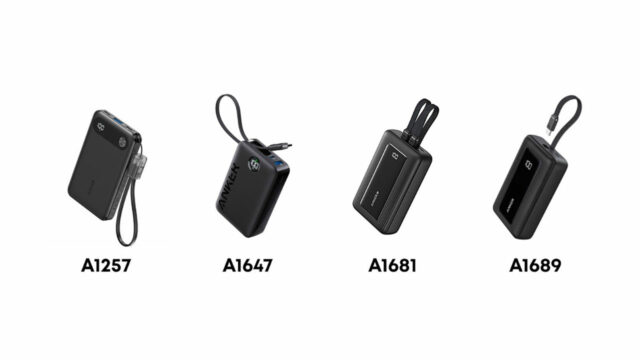
The affected products are Anker Power Bank models A1257 (10,000 milliampere-hours, 22.5 watts) and A1647 (20,000mAh, 22.5W, with built-in USB-C cable) and Anker Zolo Power Bank models A1681 (20,000mAh, 30W, with built-in USB-C and Lightning cables) and A1689 (20,000mAh, 30W, with built-in USB-C cable).

“The recall is a direct result of Anker’s proactive and enhanced quality controls and strengthened supplier audits, which were introduced to detect and address potential manufacturing issues earlier in the production process. This initiative reflects the company’s ongoing commitment to product safety and quality across all markets it serves,” it said in a statement.

“While the probability of malfunction is low, Anker has chosen to recall select Anker power bank models worldwide out of an abundance of caution and commitment to its customers’ safety. The company is working closely with regulatory authorities including the DTI (Department of Trade and Industry) and the DENR (Department of Environment and Natural Resources) to ensure everything proceeds smoothly and is in line with local guidelines.”

It added that all its other power banks and products not part of the affected models are safe to use.

Anker said customers with power banks that are part of the affected models can verify recall eligibility via https://www.anker.com/mmrc2506-form using the product’s serial number or order number.

“If you are unsure of the device’s model number or if the serial number on your device is worn out, contact support@anker.com to verify your order number.”

Those with power bank units confirmed to be eligible for the recall must immediately stop using the device and submit a recall claim through the same link used to verify eligibility by providing the unit’s serial number and proof of purchase.

Customers will receive a replacement device or a voucher redeemable via the Anker Official Store on Shopee.

“Do not dispose of your power bank until you receive confirmation from Anker that your unit qualifies for the recall,” the company said.

It said that units confirmed to be part of the recall must be physically turned over to Anker or Nifty outlets nationwide or can be returned via a free courier service. A full list of outlets and other mechanics are available on Anker’s website and social media pages. — BVR

Dining In/Out (07/03/25)


Newport celebrates World Chocolate Day

ON July 7, Newport World Resorts joins the global celebration of World Chocolate Day with spreads across its signature hotels and cafés. At Hotel Okura Manila, the Yawaragi Pastry Boutique unveils a collaboration with homegrown chocolatier Theo and Philo. The collection includes the Coco-Cacao Cheesecake, available in whole and mini sizes, alongside a Choco Pili Croissant and a soft Milk Chocolate Ensaymada — each treat enriched with local cacao’s character. The Coffee Barako Chocolate Chip Cookie Bar blends roasted coffee and dark chocolate. These limited-time offerings, priced from P210 net, are available from July 7 to 31. Yawaragi complements the celebration with the Blueberry Dark Chocolate Latte, a seasonal drink inspired by the summer season in Japan, combining dark chocolate with blueberry, citrus, and hibiscus. It will be served until Aug. 31, starting at P350+. At Sheraton Manila Hotel, mornings start with Tsokolate de Batirol, a rich, traditional Filipino hot chocolate brewed from local tablea. The drink is part of S Kitchen’s breakfast buffet, available daily from 6:30 to 10:30 a.m. The buffet experience is priced at P1,800 net. The Art of Champorado at Kusina Sea Kitchens, made with the native tablea and served warm, is included in Hilton Manila’s breakfast buffet (P1,800 net) from 6:30 to 10:30 a.m. It’s matched with Godél Hot Chocolate, crafted in collaboration with Godél and Auro Chocolates. At the Madison Bar and Lounge, the Chocolate Table features a selection of handcrafted bars made with premium Philippine cacao. Prices start at P280 net. The Garden Wing Café features the Chocolate Custard Pie, a flaky pastry crust topped by a chocolate filling with whipped cream and white chocolate. The seasonal dessert is available through July and August for P1,800 net.


Mrs. Saldo’s partners with Globe Platinum for charity

MRS. SALDO’S in Silang, Cavite is now part of Globe Platinum’s Gastronome Giving Series with the Fine Dining Club Philippines Facebook Community, offering seasonal dishes in support of a worthy cause. Currently running until Aug. 31, guests can enjoy an exclusive menu at this private dining destination. Each visit contributes to Globe’s Hapag Movement, which addresses involuntary hunger through sustainable feeding and livelihood programs. Leading the kitchen is owner and chef Rhea Rizzo. “We approach fine dining as a way to bring people together over their love for food, but with a purpose. By joining Gastronome Giving, we give our guests a chance to enjoy a refined yet personal experience that extends care beyond the table,” said Ms. Rizzo. The menu is a blend of French techniques and Southeast Asian flavors. The menu includes appetizers, pre-dessert, and dessert courses. For mains, diners can choose from Sticky Pork Belly with nahm jim cucumber and pineapple slaw, and peanuts; Duck Confit with orange demiglace and potato dauphinoise; Barramundi in Thai fish sauce and kaffir beurre noisette; or Miso-Soy Braised Short Ribs with sweet potato purée. The Gastronome Giving series also partnered with Taupe Dining in BGC-Taguig, Goxo in Salcedo Village-Makati, Kasa Palma in Poblacion, Makati, Anzani in Cebu, and Roots in Siargao. Book a seat through 0917-100-2983. Globe Platinum customers may book via THEA, the Platinum Digital Assistant available 24/7 on Facebook Messenger. Both Fine Dining Club members and Globe Platinum customers will enjoy a special treat from Mrs. Saldo’s when they book using the code “GlobeFDC.” To learn more about the Hapag Movement, visit https://www.globe.com.ph/about-us/sustainability/globe-of-good.


Breakfast comes to select Shake Shacks

BREAKFAST has arrived in Shake Shack Philippines and is being served daily at the Shacks in Central Square BGC and NAIA Terminal 3. They feature Shake Shack’s signature breakfast sandwiches: Egg N’ Cheese (P215), Arugula, Egg N’ Cheese (P225) and Bacon, Egg N’ Cheese (P295). All sandwiches include griddled-fresh cage-free eggs on a toasted non-GMO potato bun. While the Egg N’ Cheese and Bacon, Egg N’ Cheese use American cheese, white cheddar cheese is featured in the arugula sandwich. The bacon sandwich makes use of applewood smoked bacon. Complementing the sandwiches is a new sidekick in Breakfast Potato (P180), crispy potato tots served with the creamy, sweet, spicy and smoky Shack breakfast sauce. For a no-egg option, a Grilled Cheese sandwich (P170). Rounding up the breakfast menu is a selection of hot and iced coffee (from P140 to P200) featuring a premium blend of Arabica and Robusta beans from Colombia, Brazil and Indonesia. Shake Shack breakfast is available in Shake Shack Central Square BGC from 7 to 10 a.m., while those with the early flights can catch the breakfast menu in Shake Shack NAIA Terminal 3 (pre-departure) from 3 to 10 a.m.


Pizza Hut teams up with Superman for promo

AS DC Studios’ Superman flies into movie theaters this month, Pizza Hut Philippines has teamed up with Warner Bros. for a promotion. The new stars of Pizza Hut’s limited-time menu are the Krypton Meat Supreme (orange cheddar, beef, bacon bits, holiday ham, and mozzarella) and Hawaiian Power Up Supreme (diced ham, pineapple bits, holiday ham, and mozzarella cheese). Both flavors start at P439 and are available in all crust types except the Mega Crunch crust. For the Krypton Combo at P999, customers get two large Pan Pizzas (one flavor from the Specialty line, and one from the Lovers line). There is an option to upgrade both pizzas to Stuffed Crust with an additional P300 (choose from Original or Sausage Stuffed Crust; prices may vary). Get the Krypton Combo and receive a limited-edition Superman pizza box sleeve. The Superman pizzas can be found at Pizza Hut stores for dine-in and take-out, and can be delivered via the 8911-1111 hotline, www.pizzahut.com, the Pizza Hut mobile app, and through official delivery partners GrabFood and foodpanda (prices may vary).


Jollibee Chicken Sandwich now in three flavors

THE Jollibee Crunchy Chicken Sandwich is now available in three dressing flavors featuring two new limited-time options, Golden BBQ and Chili Cheese, alongside the fan-favorite Creamy Ranch. The line-up features Jollibee’s signature crunchy chicken fillet, with soft-glazed buns and the sauces. Prices range from Solo (P62) to meal options (fries and drink at P125). The new Jollibee Crunchy Chicken Sandwich flavors can be ordered via the Jollibee Delivery App, JollibeeDelivery.com, #87000, GrabFood, and foodpanda. Also available in drive-through and takeout.


Bar laboratory opens up at College of Saint Benilde

HOSPITALITY and beverage students from the De La Salle-College of Saint Benilde (DLS-CSB) and professionals have a newly renovated training ground with the reopening of Salle De Bordeaux. This is a bar laboratory housed at the Angelo King International Center (AKIC) of the DLS-CSB. Courses conducted here include Bar Management Lecture and Laboratory, Beverage Management, Wine Appreciation, and Coffee and Tea Culture. The refurbished facility features a modern industrial design and yellow mood lighting reminiscent of speakeasies. Salle De Bordeaux is equipped with two functional bar stations for instructor-led demonstrations and student-to-student presentations, as well as high ceilings for flair bartending practice and performance, and a 75-inch interactive smart TV for class presentations. It also features a customized bar counter with a fully equipped underbar, fitted with industry-standard stainless-steel components. The back bar has open shelving for the organized display of spirits, glassware, and equipment. A two-group Orchestrale Etnica espresso machine with grinder is installed for coffee training. For bar operations and cocktail mixing classes, the learning space boasts a selection of wines, beers, liquors, and liqueurs commonly used in sensory evaluation and mixology training. Students also have access to locally produced beverages for them to be familiar with Philippine-made brands and products. The lab can accommodate up to 25 learners in a classroom-bar setup. It likewise serves as a venue for masterclasses on alcoholic and non-alcoholic drinks, internal and interschool bar and beverage competitions, coffee skills training sessions with partner organizations, and beverage research and development.

Discovery Primea taps AdventEnergy for power supply

DISCOVERYPRIMEA.COM

DISCOVERY PRIMEA has partnered with AdventEnergy, Inc. (AdventEnergy), one of the retail supply arms of Aboitiz Power Corp., to power its hotel and residences.

“This partnership empowers us to future-proof our operations while staying true to our brand of heartfelt, world-class hospitality,” said Discovery Primea General Manager David Pardo de Ayala in a media release on Wednesday.

“Reliable energy is essential to delivering the seamless and meaningful experiences our guests deserve,” he added.

Discovery Primea, a luxury development located in Makati City, is managed by Discovery Hospitality Corp., the property management firm of listed hotel and resort developer Discovery World Corp.

The company said that its partnership with AdventEnergy “positions the property to pursue future upgrades such as energy audits and smarter power management systems.”

“Our goal is to evolve this from a supply arrangement into a deeper collaboration,” said AdventEnergy President James Yu.

“We see opportunities to bring even greater efficiencies and innovations to the hospitality space — and we’re excited to build that future with Discovery.” — Sheldeen Joy Talavera

SEC draft circular sets fines for OPCs failing to meet compliance deadlines

BW FILE PHOTO

THE Securities and Exchange Commission (SEC) has released a draft memorandum circular (MC) containing guidelines for the compliance of one-person corporations (OPCs), which will be open for public comment until July 11.

The exposure draft MC, dated July 1, outlines the guidelines for the initial and subsequent appointment of officers, submission of audited financial statements (AFS), and the posting of a surety bond.

It also details the fines and penalties for noncompliance in filing the Form for Appointment of Officers (FAO) for OPCs, late filing and non-filing of AFS, and failure to comply with the surety bond posting requirements.

“Pursuant to Sections 115 and 129 of the Revised Corporation Code (RCC), and considering that the OPC is a new feature of the RCC, there is a need to establish monitoring guidelines for OPCs to ensure uniformity in the assessment of fines and penalties,” the draft MC stated.

The RCC defines an OPC as a corporation with a single stockholder, who serves as the sole director and president. OPCs are designed to make it easier for entrepreneurs to establish a limited liability company.

According to the draft MC, the OPC must appoint its treasurer, corporate secretary, and other officers, and submit the FAO to the SEC within 20 days from the approval of its certificate of incorporation. Failure to comply will result in a one-time penalty of P10,000.

For subsequent appointments of officers, the OPC must file the FAO within five days of any new appointment.

The penalty for noncompliance with FAO filing will depend on the OPC’s retained earnings. Fines for the first offense range from P5,000 to P15,000, while fines for the fifth offense range from P9,000 to P27,000.

The draft MC also mandates that the submission of the OPC’s AFS must comply with existing MCs and orders.

Under SEC MC No. 7, issued in 2019, an AFS must be prepared for OPCs with total assets and liabilities of P600,000 or more. The AFS must be filed within 120 days from the end of the fiscal year. 

The financial statements must include all explanations or comments by the president regarding any qualifications, reservations, or adverse remarks made by the auditor. The OPC is also required to attach a disclosure of all self-dealings and related party transactions.

The submission of reportorial requirements is considered late if filed after the due date but within one year of the prescribed deadline, or beyond one year, in which case the penalty will be the basic fine for non-filing.

Non-filing refers to the complete failure to submit the reportorial requirements, and the monthly penalty will be computed for up to 12 months.

Fines for late filing and non-filing of AFS will also depend on retained earnings.

For late filing, fines for the first offense range from P5,000 to P15,000, while fines for the fifth offense range from P9,000 to P27,000.

For non-filing, fines for the first offense range from P10,000 to P20,000, while fines for the fifth offense range from P18,000 to P36,000.

The draft MC requires the posting of a surety bond for OPCs where the single stockholder assumes the role of treasurer. The bond amount will be based on the corporation’s authorized capital stock and must be renewed every two years or as required upon submission of the AFS/FS.

The initial posting of the surety bond by the self-appointed treasurer at the time of incorporation must be completed within 30 days after the issuance of the certificate of incorporation.

If the single stockholder initially appointed another person as treasurer but later assumed the role themselves, the initial posting must be completed within 30 days from the submission of the FAO.

The biennial posting is a continuing requirement if the single stockholder remains the treasurer of the OPC.

The penalty for noncompliance with the deadlines for the initial posting of the surety bond is a basic fine of P10,000, with a surcharge of P500 per month of delay.

For the biennial posting, the first violation carries a basic fine of P10,000 and a surcharge of P500 per month of delay. The surcharge increases to P1,000 per month for the second violation, and to P1,500 per month for the third and subsequent violations.

“The posting of a surety bond will no longer be required when the OPC files an amendment to its FAO reflecting the appointment of a new treasurer, other than the single stockholder,” the draft MC stated.

Rizal Commercial Banking Corp. Chief Economist Michael L. Ricafort said in a Viber message that the draft MC would encourage compliance but noted that the penalties could be costly for smaller OPCs.

“This could be a balancing act for some OPCs, especially those that can afford the fines and yet choose not to comply,” he said. — Revin Mikhael D. Ochave

At a Crossroads: Progress or more of the same?

STOCK PHOTO | Image by Pikisuperstar from Freepik

By Jesus Felipe, Mariel Monica Sauler, Gerardo Largoza, Susan Kurdli, Alellie Sobreviñas, and Christopher James Cabuay

(Last of three parts)

III. NEEDED: AN ACTIVE GOVERNMENT

The history of development also tells us that, besides attaining a high manufacturing employment share, no country has reached high income status without an active government. The most obvious aspect of such a government is the provision of all public goods that make a nation egalitarian: infrastructure, public education and public health, and to address malnutrition. We are told that we need the assistance of the private sector in the form of Public-Private Partnerships (PPPs), on the grounds that the government does not have “resources,” as if pesos (to fund these expenditures) were a resource. We have also heard from the government that “the private sector has more money than the government.” This statement is not even wrong. It is deceptive and flawed. There might be reasons for certain PPPs, e.g., the need to build classrooms because we need to school all our children and the government cannot build all the classrooms that are needed immediately (acknowledging that this is not a financial constraint).

Our sovereign government is not financially constrained to fund all these expenditures. We may have other constraints (e.g., real resources), but not pesos (foreign debt is a different story). The finances of our government are not like those of a family. Terms like “deficit” or “debt” mean very different things to both: while private debt is a liability of the private sector, government debt is an asset of the private sector. Moreover, in a country that runs a current deficit and the private sector wants to net save (the Philippines!), the government will have to run a fiscal deficit. The government’s rationale (e.g., consolidate the fiscal deficit, reduce it to 3% of GDP) is bad economics, and it amounts to not understanding its own finances. It is one thing to argue that we need to rethink what we spend on and what the priorities are — correct. It is another thing, quite different, to repeat the mantra that we have “limited resources” or that we have a “limited fiscal space.” Pesos are not a resource because they are not scarce, and so-called limited fiscal space is a self-imposed constraint. This does not mean that the government should spend as if there is no tomorrow. It simply means that the government can spend in its own currency (and of course a government does not need to collect taxes to spend) and tackle the pressing problems of our society. Naturally, the private sector can supply some of these (public) goods. Indeed, the private sector can build a hospital or a teaching institution. But this cannot be a substitute for the public good provided by the government. In the hands of the state (government), public goods are “rights” of 115 million Filipinos. In the hands of the private sector, public goods are “businesses seeking returns.”

We are told often that our development has to be “private sector driven” (what does this term mean?), and that exporting manufactures is not crucial because we have the BPO sector (exports of services) and OFWs (who send remittances). The BPO sector certainly matters but thinking that we can become a high-income economy without exporting (which means competing in the world economy) high-quality manufactures (which means innovation, R&D), is not true. The almost 2 million OFWs we have is the vivid indicator that things are not so good in the Philippines.

Naturally, firms, and the private sector in general, matter in a market economy. Yet, labeling a development model as private sector driven is very misleading because it seems that there is a strange and wrong dichotomy: private- versus public sector-driven development (like in a centrally planned economy?). Such a term gained significant traction during the 1990s, particularly in the context of the Washington Consensus. The term became more prominent in the early 2000s, as international development agencies and donors advocated for market liberalization, privatization, and reduced government intervention in developing countries. It is just a euphemism for less government, more business for the private sector, on the putative grounds that the private sector does it better. It is also true that today’s conservative wave in advanced economies is pushing for a smaller government and for the privatization of many public services. Yet, citizens in many advanced economies are complaining. Do we just accept the same for us without asking questions? Are we sure this is the way to go?

As we said earlier, most of our firms do not have the capacity to compete in international markets because they have low capabilities. We certainly need firms (a thriving private sector) but to manufacture and compete in the world economy, and not just to build a few roads. We need an industrial policy focused on firms to increase their capabilities. We also need to create a capital goods (machinery) cluster to support our manufacturing (what are engineers for?). Otherwise, we will continue importing machines, which have to be paid for in hard currency.

Our development model is very different from the one our neighbors had when they reached growth rates of 10% per annum. The role of the state has been historically fundamental to develop, and this does not mean that development was public sector driven. It simply means that the state provided all fundamental public goods; that it guided the economy toward certain key sectors that do not appear naturally (e.g., manufactures); and that it helped firms in the private sector thrive by creating a level playing field. Yes, the road was not easy but it was clear. We want to imitate the Sweden of today… but we are at the stage that Sweden was 100 years ago. This is wrong.

The result of a development model different from that of our neighbors and from that of the Western economies is the economy and the country we have today. Neither our firms nor our public sector are up to the standards that our society demands and needs. The solution is not to give up and ask the private sector to do what governments are supposed to do, but to build a modern and efficient public sector. If we reach high income with the current development model, it will be a new case study in the history of development. There is no single relevant example of a nation that reached high income without a significant manufacturing employment share (at least 20%-25%, compared to ours, about 8%) and a government that led and did not retreat. And, yes, we need a strategy to help the private sector create a (small version of) Philippine Siemens, Toyota, or Philips, and not simply thrive in non-tradable activities where there is no competition. What we argue is not manufacturing fetish or fantasy. While it will be impossible to create a much larger manufacturing sector (we are of course aware), it would be important to carve a few niches in some advanced products/areas and to try to increase the share of manufacturing employment — prevent its decline.

The government talks about Vietnam, which aims for at least 8% annual growth to become a high-income economy by the middle of this century. Let’s see if this very high wish materializes — we have doubts. In any case, let’s not forget that Vietnam is a substantially more industrialized economy than the Philippines and that the Vietnamese government is much more involved in the development of the nation than ours. Two important differences.

We note that our assumptions (exogenous variables in our model) are quite positive (e.g., we assume a growth rate of the world economy slightly higher than the recent estimates of the IMF or the World Bank). To be on the optimistic side, we also assume that the Philippines will not be affected by any crisis, domestic or international. However, who wants to bet that no crisis will occur in the next 25 years?

SUMMING UP
We agree with you that the Philippine economy is at a crossroads. In our view, the dilemma is: Progress or more of the same (MOTS).

We are in the same boat as you and the rest of the administration of President Marcos Jr., but we wish we could be as optimistic as you are. We think the reality will be that we will prosper but not at the speed you claim. We sincerely hope the remaining three years of the current administration bring a new era of growth and development to the Philippines, East-Asian-Miracle style (1970s, 1980s, and 1990s until the Financial Crisis). To achieve this, we will need a serious industrial policy (to change the structure of the economy, that of all sectors, agriculture, industry, and services) led by a credible government, together with significant public spending (not incorrectly thinking that we have “limited resources” and a small “fiscal space”). This will crowd in the private sector. Only then can meaningful progress be made. If we choose not to do these two because our moral principles dictate otherwise, so be it. Then you should bring us down to earth and stop making us dream. Let’s accept what we have. It is not bad, but it is not heaven.

Just don’t forget that the Philippines has bet on essentially the same development model for 80 years now and all it has gotten us is $4,300 per capita — which Vietnam surpassed two years ago. No serious plan to industrialize, to push firms to learn and conglomerates to export, and no commitment to spend what is needed to provide basic public goods. What did we think was going to happen? No more MOTS please.

Oo, kaya natin ’to! (Yes, we can do this!) But we need to push a development model (this is the role of government) that focuses on: productivity (what matters for long-run growth), manufacturing (the true engine of growth; not consumption), exports (the only component of demand that can pay for the import requirement of growth) and their quality (products that other nations want to consume as their income increases because they value them), and firms (yes, firms matter but we need to improve their capabilities so that they manufacture products that compete in international markets).

Unfortunately, some of us will probably not witness 2050, or will be relaxing at home. We hope those who are younger today keep track of what is being said in 2025 and bring it back 25 years from now to see who was right. We would be more than happy if the events proved us wrong. If this is the case, it will be only because we changed the development model along the lines we suggest.

Read parts 1 and 2 here https://tinyurl.com/255v365o and here https://tinyurl.com/25lxxazp.


Jesus Felipe, Mariel Monica Sauler, Gerardo Largoza, Susan Kurdli, Alellie Sobreviñas, and Christopher James Cabuay are Faculty at De La Salle University (DLSU). This letter represents the views of the authors and not necessarily those of DLSU.

ADVERTISEMENT
ADVERTISEMENT