Home Blog Page 1389

Puregold Channel’s Si Sol at si Luna rides on the momentum as viewers clamor for more episodes each week

In the next episode of Si Sol at si Luna, Sol gets a chance to meet Ara’s family.

Bitin!” That’s the common thread in Puregold Channel’s Si Sol at si Luna comment  sections as followers of the series ask, “Can we have more episodes per week?” The  clamor has only grown stronger with each release, all because “paganda nang paganda ang story,” as viewer @skipper2867 puts it.

In a previous episode of Puregold Channel’s hit digital series, viewers felt the thrill of anticipation as Sol (Zaijian Jaranilla) and Luna (Jane Oineza) finally opened up to each other. While Episode 5 moved audiences to cling to their romantic hopes, a heartfelt conversation between Sol and Luna hinted at a meaningful shift in their connection. This also yielded revelations about Sol and Luna’s psyches, adding depth to their dynamic as they prepared to work on Sol’s film project.

Luna waits for Sol so they can begin working on his film project.

After each episode, fans affirm how deeply invested they have become in the story, with many lamenting that one episode is no longer enough. The consensus is clear: Si Sol at si Luna tells a beautiful love story, and viewers want more of it.

Indeed, avid fan @bernadettemanayag7952 says, “Paganda nang paganda! Puwede ba araw-araw na ipalabas, hehe. Ganda ni Luna at pogi ni Sol; gano’n din si TL Ben. Pareho silang bagay kay Luna. Sana may kakambal ka Luna para kay TL Ben. Hehe.”

As the story of Si Sol at si Luna evolves, so does its emotional resonance, or how viewers connect with the experiences and feelings depicted in the show.

Will Sol arrive in time for the two to meet and talk?

With only five episodes so far, some fans are even inspired to share their own truths about love, attesting to how relatable and grounded the series has become.

“Sol, ang love, hindi hinahanap ‘yan. Kusang dumadating ‘yan kaya ‘wag kang sumuko. Darating din ang love sa tamang oras,” viewer @sage_4812 shares, reminding Sol and other followers that love arrives on its own time.

While the narrative continues to touch viewers’ hearts, the cast’s performances are also earning their own well-deserved spotlight.

Alam na ng lahat na isa si Jane Oineza sa pinakamagagaling na artista sa kanilang henerasyon. Samahan pa ni Zaijian na ang husay din sa pag-arte. Kaya kumpleto na,” writes @evangelinpalacio55.

Kind-hearted and patient Sol helps out Ara in the next episode of Si Sol at si Luna.

It’s no fluke then that with each new episode, Puregold Channel’s Si Sol at si Luna racks up hundreds of thousands of views. And every installment receives several likes and comments.

Appreciating the story’s sincerity and heart, @MaJaYaPa says, “Thank you sa mga ganitong content, Ninang. Sana may mga ganitong series ka ulit next season.”

True enough, with Ang Babae sa Likod ng Face Mask, Ang Lalaki sa Likod ng Profile, My Plantito, and now with Si Sol at si Luna, Puregold Channel has become a pioneer in retailtainment, sharing well-crafted stories that reflect Filipino themes and culture.

Fans now patiently wait for the next episode of Si Sol at si Luna, as the last episode promised a longer and more meaningful interaction between the two.

As Sol and Luna’s story deepens, so does its emotional resonance, or how netizens
connect with the experiences depicted in the show.

Catch Si Sol at si Luna’s sixth episode, ‘Meet the Family’, on July 5, Saturday, at 7 p.m., only on Puregold Channel.

Subscribe to Puregold Channel on YouTube, like @puregold.shopping on Facebook, and follow @puregold_ph on Instagram and X, and @puregoldph on TikTok for more updates and behind-the-scenes content.

Link to the previous episode: https://youtu.be/asoXvjrhR2A?feature=shared


Spotlight is BusinessWorld’s sponsored section that allows advertisers to amplify their brand and connect with BusinessWorld’s audience by publishing their stories on the BusinessWorld Web site. For more information, send an email to online@bworldonline.com.

Join us on Viber at https://bit.ly/3hv6bLA to get more updates and subscribe to BusinessWorld’s titles and get exclusive content through www.bworld-x.com.

Kinetix Kids: Where the power of play stimulates holistic child development

Imagination Station

KINETIX KIDS, a premier play-gym, activity, and specialized training center, celebrates the “Power of Play” by offering an environment where children develop their minds, bodies, and social connections through enjoyable and interactive experiences. Covering 824 sq.m., Kinetix Kids provides a fun and stimulating space for kids to learn and play together.

“We are dedicated to supporting the holistic development of children through innovative play spaces, professional services, and community-driven initiatives,” says Kinetix Kids Marketing Head Shalla Yu. She adds, “We are not just selling playtime; we’re building a movement that celebrates growth, confidence, and joy.”

The Play-Gym Experience

Kinetix Kids’ expansive play area immediately engages visitors with diverse sections designed to foster various aspects of children’s development. Features like the Moon Wall Spider challenge physical strength and strategic thinking, while the Imagination Station sparks creativity. It’s an ideal venue for playdates, filled with laughter and joyful interactions.

Kinetix Kids offers walk-in options and various memberships:

  • Space Explorer: A one-year foundational membership with standard Explorer Play Pass rates, allowing event bookings and class enrollment.
  • Space Captain: A six-month membership including six 180-minute play passes and one complimentary 90-minute session, suitable for structured play without a long-term commitment.
  • Space Commander: The premium, year-long membership offering unlimited play access, special rates for events and classes, complimentary guardian access, a 50% guest discount, and a 75% discount on a day passes at Kinetix Lab, a premier strength and conditioning gym in the Philippines. This is perfect for frequent visitors.

Specialized Training Center

Beyond the play-gym, Kinetix Kids provides specialized one-on-one and group training classes some of which are listed below.

  • Occupational Therapy: Led by in-house Doctor of Occupational Therapy Dra. Pilar Balboa, who holds a post-professional doctorate from Boston University. Dra. Pilar joined Kinetix Kids to integrate theory-based, evidence-driven practice in a natural, holistic environment. “I wanted to be part of something innovative and provide kids with a therapeutic experience that goes beyond the usual clinical setting,” says Dra. Pilar. Kinetix Kids’ equipment, such as swings, slides, and balance beams, are ideal for sensory integration, which involves the nervous system processing sensory information from the environment and body. “Kinetix Kids is geared with equipment to help kids better process and respond to sensory input from their environment; thus, enhance overall learning,” says Dra. Pilar. She primarily works with neurodiverse children of all ages.

    Doctor of Occupational Therapy Dra. Pilar Balboa
  • Early Education: Conducted by Early Education Specialist and Branch Manager Teacher Dana Macanlalay, who has a Bachelor of Science in Child Development and Education, majoring in Special Education. Teacher Dana emphasizes Kinetix Kids’ holistic approach: “We don’t just focus on academics — we support every part of a child’s growth: physical, emotional, social, and cognitive. The programs are designed to be developmentally appropriate and child-centered, which means we meet each child where they are and help them grow at their own pace,” she shares. Teacher Dana works with 2-3 year olds, using visuals, hands-on activities, songs, and gestures to engage them.

    Early Education Specialist and Branch Manager Teacher Dana Macanlalay, LPT
  • Speech-Language Pathology: Services are provided by in-house Speech-Language Pathologist Teacher Clarisse Lim, who also holds a certification in Augmentative and Alternative Communication (AAC). Services include one-on-one sessions addressing skills from early word acquisition to higher-level comprehension and reasoning. Group classes cater to different age ranges, such as “language building classes” for 2-4 year olds, “Little Detectives” for reasoning skills, and “Story Time Yoga” integrating movement with storytelling. Teacher Clarisse states, “All of these are held by professionals who have a special interest in these skills and are well-equipped for enhancing the skills needed for a child to succeed in their day-to-day environment.”
Speech Language Pathologist Teacher Clarisse Lim

Kinetix Kids also offer physiotherapy, and strength and conditioning sessions for children.

Celebrating Child’s Milestones at Kinetix Kids

Kinetix Kids also has an event hall, designed to host a variety of family celebrations, including birthdays, and other significant milestones. The event venue offers a capacity of 150 guests and provides flexible options for shared or exclusive use of the play areas. Each booking includes a basic sound system, tables, and chairs. Additionally, Kinetix Kids facilitates organized playdates for groups of 10 children or more, with optional catering services for snacks and desserts.

Power of Play Launch

Kinetix Kids launched the Power of Play campaign on June 21, 2025. The event saw attendance from invited media and families. A photo booth and a face-painting station were provided that everyone enjoyed. The Astrobuddies presented an initial dance performance, showcasing mascots Aki, Ava, and Tobi. Liza Guillion hosted the event, highlighting the concepts of the Power of Play along with an AVP. Shalla, the Marketing Head, along with Teachers Dana and Clarisse, and Dra. Pilar engaged in a short Q&A about professional services and their respective roles. The kids engaged in fun activities facilitated by Teacher Celine, focusing on parachute play, and music and movement. The event wrapped up with bubble master JayAr putting some kids, and some together with their parents, inside really huge bubbles. Kinetix Kids also hosted an open house for parents to inquire about child assessments and special services. After sitting in the program, children happily played at the Kinetix Kids amusement area for the entire afternoon.

Preschool Teacher/Digital Creator Celine Cornejo

Kinetix Kids understands that play is the ultimate teacher. It’s a vibrant avenue for children to gain new knowledge, and skills, fostering social interactions and foundational concepts across various subjects. They are committed to harnessing this inherent part of childhood for comprehensive development.

For more information and inquiries about Kinetix Kids, visit their website at https://kinetixkids.com/. Follow them on Instagram @kinetixkids and Facebook at https://www.facebook.com/kinetixkidsph.


Spotlight is BusinessWorld’s sponsored section that allows advertisers to amplify their brand and connect with BusinessWorld’s audience by publishing their stories on the BusinessWorld Web site. For more information, send an email to online@bworldonline.com.

Join us on Viber at https://bit.ly/3hv6bLA to get more updates and subscribe to BusinessWorld’s titles and get exclusive content through www.bworld-x.com.

PEZA investments surge in 1st half

A worker uses a microscope at an electronics manufacturing assembly plant in Biñan, Laguna, April 20, 2016. — REUTERS

THE PHILIPPINE Economic Zone Authority (PEZA) saw a 59% increase in approved investment pledges in the first six months of 2025, despite a drop in approvals in June.

In a statement, PEZA said its board approved P72.362 billion worth of investments in the January-to-June period, up 59.1% from the P45.481-billion investment pledges approved in the same period last year.   

“This continued surge in investments affirms PEZA’s role as a vital engine for economic growth and job creation for the country,” PEZA Director-General Tereso O. Panga said in a statement on Wednesday.

“The confidence shown by both new and existing investors is a strong signal that our economic zones (ecozones) are thriving and open for business,” he added.

However, the PEZA board only approved P6.022 billion worth of investments in June, down by 30.4% from P8.654 billion in the same month in 2024.

In June, the PEZA board greenlit 31 new and expansion projects that are expected to bring in $166.426 million in export revenues and 3,646 jobs.

Fourteen of the approved projects will be undertaken by export-oriented enterprises, while seven projects are in the information technology and business process management (IT-BPM) sector.

Four projects involve domestic market-oriented enterprises, while four projects are in logistics.

Another project involves ecozone development, while one project involves facility development.

The majority of the projects are expected to be located in Region IV-A or Calabarzon, while the rest will be in Central Luzon, the National Capital Region, Davao Region, Central Visayas, Western Visayas and Ilocos Region.

For the January-to-June period, PEZA approved 133 projects that are expected to generate 32,983 jobs and have $1.26 billion in export value.

The majority of these projects are in manufacturing, while 39 are IT-BPM projects, 12 are domestic market-oriented enterprises, 10 are facility development projects, while nine are ecozone developments.

There are four utility projects and another four are in logistics.

“South Koreans come in as the biggest investor for the first half of the year, followed by the Americans, Chinese, Dutch and Japanese,” said PEZA.

“In terms of sectoral investments, manufacturing of food and beverage products tops the list, followed by ecozone development and IT-BPM,” it added.

After the investment performance in the first half, Mr. Panga said he is “optimistic” that PEZA will achieve its targets this year.

This year, PEZA is targeting investment approvals to reach at least P235 billion, and a 5% increase in both actual exports and employment.

“The Philippines is surely in a sweet spot to attract foreign direct investments at this time, and surely, Filipinos and the whole country will reap the results of our combined hard work soon,” Mr. Panga said.

PEZA said it is pursuing 50 investment leads, which it hopes will translate in actual investments.

“PEZA likewise welcomed several high-level inbound delegations during the period representing the US, China, Japan, Spain, Germany, Hong Kong, Taiwan, Singapore, Malaysia, the United Arab Emirates, and even domestic exploratory missions within the Philippines,” PEZA said.

It noted interest in electronics manufacturing and semiconductor manufacturing services, advanced manufacturing activities, aviation, automotive and information technology-business process management sectors. — Justine Irish D. Tabile

Philippines still a lower middle-income country, according to World Bank

A STREET is seen in Quiapo, Manila. The World Bank still classifies the Philippines as a lower middle-income country. — PHILIPPINE STAR/RYAN BALDEMOR

THE PHILIPPINES is still classified as a lower middle-income country after just missing the threshold to achieve upper middle-income country (UMIC) status, according to the World Bank.

The World Bank’s latest country income classification showed the Philippines posted a record gross national income (GNI) per capita of $4,470. This was higher than its GNI per capita of $4,230 in the previous year.

Despite the increase in GNI per capita, the Philippines remains classified by the World Bank as a lower middle-income country — one with a GNI per capita of $1,136 to $4,495.

The Philippines’ GNI per capita was only $26 shy of the World Bank’s lower GNI per capita requirement of $4,496-$13,935 to become a UMIC. Last year, the GNI per capita requirement for a UMIC was between $4,516 and $14,005.

The World Bank computes a country’s GNI through the Atlas method, which serves as the basis of its income classifications — low, lower middle, upper middle and high. GNI refers to the total amount of money earned by its residents both inside and outside its borders.

In Southeast Asia, Vietnam overtook the Philippines in terms of GNI per capita with $4,490 but remained a lower middle-income country.

Cambodia ($2,520), Laos ($2,000), and Myanmar ($1,220) are also still classified as lower middle-income countries.

Meanwhile, Malaysia ($11,670), Thailand ($7,120) and Indonesia ($4,910) remained as upper middle-income countries.

Singapore ($74,750) and Brunei ($36,150) are still considered as high-income countries.

Other notable country movements include Costa Rica which is now classified as a high-income country; and Cabo Verde and Samoa, which both moved up to the UMIC category.

The World Bank updates country classifications by income level on July 1 every year, based on the GNI per capita of the previous calendar year.

Department of Economy, Planning, and Development Secretary Arsenio M. Balisacan in April said the country is still on track to meet its target of moving to the upper middle-income category by 2026.

However, World Bank lead economist for Brunei, Malaysia, the Philippines and Thailand Gonzalo J. Varela has said the country’s transition to UMIC status will likely take a bit longer.

“Getting there with an economy that’s growing a little bit slower than we thought about six months ago will take a little bit longer. So, we are thinking that a probable outcome is that it happens around 2027,” Mr. Varela said at a briefing on June 19.

The World Bank expects the Philippines to grow by 5.3% this year, below the government’s recently revised 5.5% to 6.5% target.

Analysts said the Philippines is unlikely to move to the UMIC category by 2027.

“I’m doubtful we could. Much work needs to be done to improve our competitiveness ranking to attract more investments,” Ateneo Center for Economic Research and Development Director Ser Percival K. Peña-Reyes told BusinessWorld in a Viber message.

The Philippines inched up a spot to 51st in the 2025 World Competitiveness Yearbook of the International Institute for Management Development. It remained a laggard in the region, ranking 13th out of 14 Asia-Pacific economies in the index.

Meanwhile, John Paolo R. Rivera, a senior research fellow at the Philippine Institute for Development Studies, said it is possible for the Philippines to become an upper middle-income country by 2027, but this would “require stronger, more inclusive and sustained economic growth.”

Mr. Rivera said the government would have to ramp up infrastructure rollout and boost productivity in agriculture and manufacturing.

“Falling short of the UMIC threshold despite a lower benchmark highlights how structural challenges and global headwinds continue to weigh on the Philippines’ income trajectory,” Mr. Rivera said.

He also cited slower-than-expected growth, peso depreciation, and inflation pressures as factors that have hurt the country’s per capita GNI. — Aubrey Rose A. Inosante

EV stakeholders told to brace for impact of ‘One Big Beautiful Bill’

A PHOTO of an agenda with the words “One Big Beautiful Bill Act” printed in Washington, DC, May 21, 2025. — REUTERS

By Justine Irish D. Tabile, Reporter

THE DEPARTMENT of Trade and Industry (DTI) on Wednesday warned that the Trump administration’s “One Big Beautiful Bill (BBB) Act” may have a negative impact on Philippine enterprises involved in electric vehicle manufacturing and supply-chain operations.

The US Senate on Tuesday approved the massive tax cut and spending bill by the narrowest of margins, advancing a package that would slash taxes, reduce social safety net programs and boost military and immigration enforcement spending while adding $3.3 trillion to the national debt. (Related story: “Trump risks voter blowback as ‘One Big Beautiful Bill’ advances)

The legislation now heads to the House of Representatives for possible final approval. US President Donald J. Trump has said he wants to sign it into law by the July 4 Independence Day holiday.

“Noting that the Philippines is part of the electric vehicle (EV) supply chain, the BBB’s proposed changes may have an effect on the demand for the country’s green metals that feed into the EV supply chain in the US,” DTI said.

The US measure includes provisions terminating federal tax credits for new and used electric vehicles and restricting the eligibility for clean vehicle tax incentives.

“The DTI advises all relevant industries and stakeholders — particularly those involved in EV manufacturing, supply-chain operations, and financial services — to consider conducting an early assessment of potential impacts and prepare appropriate risk mitigation strategies,” it added.

The DTI cited Section 112002 of the House-approved version of the bill, which will terminate the tax credit of up to $7,500 that US taxpayers can claim for electric vans, sport utility vehicles, and pickup trucks with a manufacturer’s suggested retail price of $80,000.

“The tax credit is set to expire on Dec. 31, 2032. However, if BBB is passed, the incentive will be terminated by Dec. 31. Further, only manufacturers that have not sold 200,000 units of new clean vehicles can qualify for the tax credit,” it added.

The BBB will also remove the tax credit of up to $7,500 that can be claimed for clean commercial vehicles that were placed in service within the year.

Under Section 112003 of the BBB, the incentive will expire this year, with only clean commercial vehicles ordered or purchased before the expiration eligible for the credit.

Rizal Commercial Banking Corp. Chief Economist Michael L. Ricafort said the proposed removal of the incentives on EVs could impact global supply chains.

“This could slow down sales and demand for EVs in the US and would have an adverse impact on global supply chains, including those in the Philippines, which are suppliers or exporters of parts and components for these EVs,” he said in a Viber message.

However, he said that the law could also “lead to some increase in demand for internal combustion engine vehicles.”

“That could benefit supply chains worldwide, including suppliers from the Philippines,” he added.

Meanwhile, Philippine Institute for Development Studies Senior Research Fellow John Paolo R. Rivera said the proposed BBB Act may “have indirect but strategic implications” for the Philippines.

“As the US aims to reduce reliance on China and secure its biotech supply chains, it could redirect investments and sourcing to allied countries like the Philippines through friendshoring strategies,” he said in a Viber message.

“Key Philippine sectors that may benefit include electronics, information technology-enabled services, pharma support services  and chemical manufacturing,” he added.

However, he said the country should strengthen its value chain, regulatory standards and investment incentives to take advantage of opportunities.

“On the flip side, if the act leads to tighter tech and intellectual property controls, it could also limit Philippine firms’ access to certain US-led biotech partnerships or funding,” he said.

“Policy readiness, talent development, and deeper US-Philippines economic cooperation will be critical to maximize gains,” he added. — with Reuters

Del Monte Pacific’s US subsidiary files for bankruptcy, seeks buyers

Bugo cannery workers in Cagayan de Oro — DELMONTEPACIFIC.COM

By Revin Mikhael D. Ochave, Reporter

CAMPOS-LED Del Monte Pacific Ltd. (DMPL) said its United States subsidiary Del Monte Foods Holdings Ltd. (DMFHL) has filed for Chapter 11 bankruptcy and is seeking buyers for its assets.

DMFHL and certain subsidiaries began voluntary Chapter 11 proceedings in the bankruptcy court for the District of New Jersey on July 1, granting access to $912.5 million in financing to support their operations, DMPL said in a local regulatory filing on Wednesday.

DMFHL’s board will also pursue a sale of “all or substantially all” of the assets of the company and certain subsidiaries as part of the Chapter 11 proceedings.

On May 5, a special shareholder group formed by certain lenders of DMFHL appointed a majority of directors to the boards of DMFHL and its subsidiaries following a litigation settlement. The lenders also secured 25% of DMPL’s equity in DMFHL.

“The newly constituted board of DMFHL has determined to pursue a value-maximizing sale process. The company has been advised that DMFHL has entered into a restructuring support agreement (RSA) with a group of its term lenders holding certain of DMFHL’s secured debt,” DMPL said.

“The RSA contemplates a sale of all or substantially all of the assets of DMFHL and certain of its subsidiaries, among other strategic transactions to be implemented through Chapter 11 proceedings in the US,” it added.

Chapter 11 is a US legal process for a company’s financial and operational restructuring. It allows the debtor to formulate a plan to address existing liabilities and related obligations, during which creditor debt collection efforts are generally halted by a moratorium for the duration of the proceedings.

DMFHL’s subsidiaries outside the US are not included in the Chapter 11 proceedings and continue their operations.

“The company has been advised that this filing is part of DMFHL’s overall strategic plan aimed at maximizing value for its business operations and those of its subsidiaries,” DMPL said.

“Throughout this process, DMFHL and its operating subsidiary, Del Monte Foods Corp. II Inc. (DMFC), will continue normal business operations,” it added.

In a separate disclosure, DMPL said it is also studying the effect of deconsolidating DMFHL from the group.

“The company is in the process of assessing the financial impact that its deconsolidation of DMFHL might have on the DMPL Group. Updates on such financial implications will be provided in due course,” DMPL said.

As of end-January, DMPL’s net investment value in DMFHL was $579 million, while DMPL and its affiliates have $169 million in net receivables from DMFHL and its subsidiaries.

“The value to be impaired will be determined after the audit. Updates on the financial impacts will be provided in due course,” DMPL said.

DMPL said its Asian and international businesses, led by subsidiary Del Monte Philippines Inc. (DMPI), continue to perform well with resilient consumer demand, supported by a strong and stable supply chain.

“The company is confident in its ability to maintain uninterrupted business operations going forward,” DMPL said.

AP Securities, Inc. Research Head Alfred Benjamin R. Garcia said in a Viber message that it is still possible for DMPL to meet its goal of financial recovery for fiscal years (FY) 2026 and 2027 amid the bankruptcy filing of its US business.

“It’s possible. The US business has long been a drag on DMPL, while their Philippine business has been doing quite well by comparison. For sure we’ll see a huge impairment loss for DMPL once the audit is finalized, but this still depends on how much they will get for their stake in the company after the creditors take their share,” he said.

“DMFHL has been losing money since before DMPL acquired it in 2014, and DMPL has largely failed to turn it around since. They acquired it for $1.675 billion in 2014 and, based on their filing, the investment is now worth only $579 million,” he added.

Unicapital Securities, Inc. Research Head Wendy B. Estacio-Cruz said in a Viber message that the possible deconsolidation of DMPL’s US business could reshape the company’s financial outlook.

“While it removes a major revenue stream, it may also remove a segment that’s been consistently dragging down overall performance, potentially improving the profitability of the remaining core businesses in Asia,” she said.

“If executed well, this move could accelerate DMPL’s path to profitability by FY26–27. However, near-term risks remain due to restructuring uncertainties,” she added.

For the third quarter of its fiscal year ending April, DMPL said its net loss widened by 24% to $35.9 million as DMFC’s net loss increased to $40.5 million during the period due to higher costs and increased interest expenses.

DMPL shares rose by 0.63% or two centavos to P3.17 per share on Wednesday.

Petron completes P32-B retail bond sale

PETRON.COM

LISTED oil giant Petron Corp. said on Wednesday that it has completed the offering of up to P32 billion worth of fixed-rate retail bonds.

The offering consists of up to P25 billion in retail bonds, with an oversubscription option of up to P7 billion, Petron said in a stock exchange disclosure.

The retail bonds will be drawn from the bond shelf registration, which was rendered effective by the Securities and Exchange Commission and remains valid until September this year.

The bonds were offered from June 24 to 30 and are set to be issued by July 7, or “such other date as the issuer and the joint lead underwriters and joint bookrunners may agree in writing.”

The bonds will also be listed on the Philippine Dealing & Exchange Corp.

PNB Capital and Investment Corp. acted as the sole issue manager for the offer, while Bank of Commerce, BDO Capital & Investment Corp., China Bank Capital Corp., First Metro Investment Corp., Land Bank of the Philippines, Philippine Commercial Capital, Inc., and PNB Capital and Investment served as joint lead underwriters and joint bookrunners.

Proceeds from the issuance were allocated for the repayment of Series D Bonds and Series E Bonds, both maturing in October this year; repayment of existing debt; repayment of short-term loans used to fund working capital requirements; and general corporate purposes.

In 2021, the oil refiner raised about P18 billion from the first tranche of its P50-billion shelf registration.

Amid market challenges and uncertainties, Petron reported a 2% increase in its net income to P4.03 billion for the third quarter from P3.95 billion in the same period last year.

“We continue to operate in a volatile and unpredictable market. As we navigate through these setbacks, we remain committed to enhancing our efficiency and strengthening our performance to sustain our market leadership and further our role as a nation-builder,” said Petron President and Chief Executive Officer Ramon S. Ang.

Petron emerged as the leading oil industry player with a market share of 24.9% as of June 2024, data from the Department of Energy showed.

The company has a combined refining capacity of nearly 270,000 barrels a day. It operates about 50 terminals in the region and has around 2,700 service stations where it sells gasoline and diesel. — Sheldeen Joy Talavera

Discovery Hospitality adopts digital strategy to stay competitive

DHC Senior Vice-President and Head of Sales and Operations Lynette Q. Ermac — DISCOVERY HOSPITALITY CORP.

By Beatriz Marie D. Cruz, Reporter

DISCOVERY HOSPITALITY CORP. (DHC) said it is boosting its use of digital tools while continuing to offer its signature Filipino-style service amid global travel challenges.

“Part of future-proofing our business is investment in business intelligence. That will give us leverage in understanding the market and the trends that are happening,” DHC Senior Vice-President and Head of Sales and Operations Lynette Q. Ermac said in an interview with BusinessWorld.

“We invest in programs that allow us to personalize — to get to know our guests better, to reach out to them, and to create personalized messages based on guest history,” she said.

Ms. Ermac added that the company has been using artificial intelligence to identify optimal pricing for accommodations.

“It’s not enough that we have a fixed price,” she said. “We have to know what’s going on with our competitor, with the world, and know how we optimize our sales conversion through revenue management.”

Launched in 2011 as The Discovery Leisure Company, Inc., DHC sought to bring Filipino hospitality across its homegrown portfolio of hotels and resorts nationwide.

As the property management arm of listed hotel and resort developer Discovery World Corp. (DWC), DHC manages several brands: Discovery Resorts, Discovery Suites, Discovery Primea, Kip&Kin, and the Manami Resort under its Signature Collection.

Ms. Ermac noted that geopolitical shocks caused by overseas wars, as well as the growing preference for other Asian destinations such as Japan and Korea, have impacted bookings.

“Definitely, in terms of the number of guests, the size of the pie has gotten smaller,” she said.

The Philippines welcomed about 2.1 million tourists as of end-April, according to data from the Department of Tourism. However, this remains significantly lower by 26% compared to pre-pandemic arrivals.

The company also emphasized the need to be agile in its distribution strategies to reach more customers both locally and internationally, Ms. Ermac said.

“We have to be present globally and identify new markets. We have to start marketing in Singapore, Hong Kong, to attract those new markets that would decide to stay with us,” she noted.

DHC has also expanded its bookings via online travel agencies to appeal to international travelers, especially millennials and Generation Z.

‘DEEPLY FILIPINO SERVICE’
DHC’s philosophy of providing “Service That’s All Heart” has driven the company to maintain its hyper-personalized and experiential services amid external shifts, according to Ms. Ermac.

“A service that’s from the heart transcends any trends, any new digital developments,” she said. “Because it is about how our guests want to be seen and felt.”

Ms. Ermac likened DHC’s signature management style to visiting a Filipino household.

“You will know that you’re visiting a Filipino home because they bring out the best towels, the best food,” Ms. Ermac said.

“They would even ask you, ‘What’s your favorite food?’ And they will cook that for you,” she added.

Amid the high cost of living and stagnant wages, Ms. Ermac noted that many travelers are still willing to pay for a premium hotel experience.

“We have guests, both global and local, who would still and would continue to pay premium for service,” she said. “As far as Discovery Hospitality is concerned, we will continue to be that place which the premium pricing market would choose.”

Likewise, DHC’s mid-range brand Kip&Kin, which has pipeline projects in Palawan and Siargao, targets cost-conscious travelers, she said.

Ms. Ermac, who began her career as a hotelier for another local brand, said working for a homegrown company provides a different kind of fulfillment.

This also means that a local firm like DHC is able to create promotions and packages without being constrained by the guidelines of a foreign entity, she added.

“In general, the trends may be changing, but we will always root our future service on who we are as a Filipino brand,” Ms. Ermac said.

“But we will be cognizant of the global shifts in terms of digitalization and also towards the needs and wants of our guests.”

DigiPlus sets September launch for Brazil operations

DIGIPLUS.COM.PH

LISTED digital entertainment company DigiPlus Interactive Corp. is set to launch its operations in Brazil this September as the company eyes international growth.

DigiPlus Brazil will introduce a fresh lineup of livestreamed games, slots, table games, and exclusive self-developed digital entertainment content, which will be delivered through its technology infrastructure strengthened by its migration to Amazon Web Services, the company said in an e-mail statement on Wednesday.

“We are excited to bring world-class entertainment to new markets, bringing the strengths and expertise that we have established in the Philippines,” DigiPlus Chairman Eusebio H. Tanco said.

“Our entry into Brazil is part of our strategic expansion program to usher DigiPlus’ next phase of growth,” he added.

DigiPlus is the provider of platforms such as BingoPlus, ArenaPlus, and GameZone, widely known for interactive gaming and sports entertainment.

The company said it already has a dedicated local team in place, ensuring that DigiPlus Brazil delivers popular global games as well as high-quality local experiences and responsible gaming.

In March, the company tapped industry specialist Graham Tidey as country manager for its Brazil operations.

Citing a report by LCA Economic Consulting, DigiPlus said that Brazil has an estimated market size of $4.6 billion for iGaming, making it one of Latin America’s fastest-growing gaming markets. Brazil has a population of over 200 million and an internet penetration rate of nearly 90%.

In 2024, the Brazilian government approved regulations for both online betting and gaming, providing clear guidelines for licensed operators, consumer protections, and fair taxation, allowing the entry of international players such as DigiPlus.

“This milestone is part of DigiPlus’ strategy to expand its market leadership beyond Southeast Asia by combining secure technology, highly immersive games, and an unwavering commitment to safe, fair, and responsible digital entertainment,” DigiPlus said.

DigiPlus shares dropped by 10% or P5 to P45 per share on Wednesday. — Revin Mikhael D. Ochave

AboitizPower unit eyes operations of P18.6-B solar project by 2029

STOCK PHOTO | Image by Michael Pointner from Unsplash

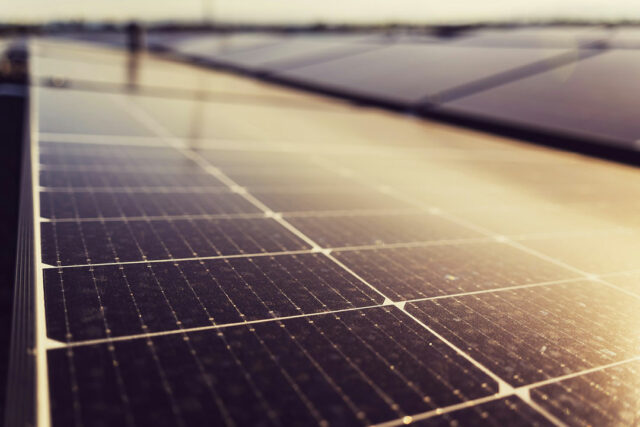
NORTHERN SUN POWER, Inc. (NSPI), a subsidiary of Aboitiz Power Corp. (AboitizPower), is eyeing the development of an P18.6-billion solar power project in Currimao, Ilocos Norte, which is targeted for commercial operations by the first quarter of 2029.

The Currimao Solar Power Project is expected to generate 351.436 megawatts of direct current electricity and will be equipped with a 337.8 megawatt-hour battery energy storage system, NSPI said in a document submitted to the Department of Environment and Natural Resources.

“The proposed solar power project is fully aligned with the Philippines’ renewable energy transition, directly supporting the national shift toward cleaner, more sustainable energy sources,” the company said.

Spanning a total area of 244.0723 hectares, the project will straddle two towns in the province.

Construction of the project is scheduled to commence in the second quarter of 2027 and will be energized by the third quarter of 2028.

“The Proponent (NSPI) is deeply committed to advancing the country’s renewable energy goals, ensuring that the project is fully integrated with the Philippine Energy Plan and national development strategies,” the company said.

AboitizPower is the Aboitiz Group’s investment arm for power generation, distribution, and retail electricity, as well as related energy solutions.

To date, the company has a power generation portfolio of 5 gigawatts (GW), of which 1.8 GW are renewables.

The company is targeting an expansion of its total attributable net sellable capacity to 9.2 GW by 2030, with a 50:50 balance between renewable and thermal energy sources.

For 2025, AboitizPower has earmarked P78.1 billion in capital expenditures, with 66% allocated to its renewable energy initiatives.

Among the other solar projects in the company’s pipeline are the 212-megawatt-peak (MWp) Olongapo Solar Power Project in Zambales and the 89-MWp San Manuel Solar Project in Pangasinan. — Sheldeen Joy Talavera

Stable. Strong. Strategic.

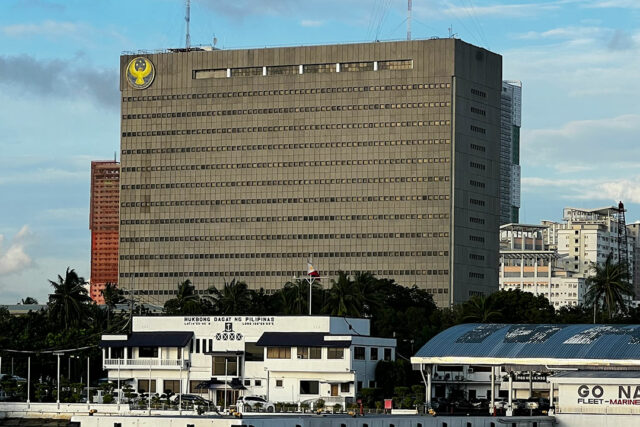
BSP’s role in building a more inclusive, resilient Philippine economy

Amid global headwinds and domestic pressures, the Bangko Sentral ng Pilipinas (BSP) continues to reaffirm its role as one of the country’s most trusted institutions.

In 2024 and 2025, the BSP launched bold reforms that made the Philippine economy more resilient, more digital, and more inclusive.

Navigating with precision

Monetary policy was calibrated to ease from a peak of 6.5% in October 2023 to 5.25% by June 2025. This timely easing helps stimulate business activity and consumer confidence while keeping inflation in check.

The country’s gross international reserves (GIR) stood at US$105.46 billion as of May 2025, providing an ample buffer to cover the country’s import and external debt service requirements.

A banking system that delivers

The Philippine banking system continued to expand. As of April 2025, the total resources of the banking sector reached ₱26.9 trillion, reflecting a 5.5% year-on-year growth. During the same period, total loans rose to P15.3 trillion, marking a 10% growth, while total deposits reached ₱19.8 trillion, with a 4% growth.

Lowering the reserve requirement ratio helped ease financial market distortions and support credit expansion. Financial inclusion surged, with deposit accounts topping over 150 million, up 19% year-on-year as of March 2025. Digital bank deposits jumped 33 percent, while rural and cooperative bank deposits posted 19% growth.

Digitalization that works

Digital innovation lies at the core of the BSP’s transformation agenda. From pioneering cashless transport to securing digital wallets, the BSP is building the rails for a frictionless and resilient financial system.

Digital payments surged from just 1% of retail transactions in 2013 to 52.8% in 2023, thanks to deliberate policy and regulatory reform. More Filipinos now rely on digital platforms for bills, salaries, remittances, and everyday spending.

PESONet transfers now clear higher-value transfers more quickly, complementing InstaPay’s real-time services for lower-value transactions. Bills Pay PH, an interoperable bill payment platform, simplifies paying bills across institutions.

Through the Nexus Project, the BSP is helping build the ASEAN region’s first cross-border real-time payment network. Soon, Overseas Filipino Workers could send money home in 60 seconds, straight to any local account—via apps already in their hands.

Currency that is smarter and greener

In December 2024, the BSP introduced the First Philippine Polymer Banknote Series. The notes are smarter, cleaner, and stronger. Designed to resist counterfeiting and withstand everyday wear, they offer both durability and savings on replacement costs.

Goodbye, grey list

Another milestone came with the Philippines’ exit from the Financial Action Task Force grey list. The BSP played a key role in a coordinated national effort that restored global trust in the country’s anti-money laundering and counter-terrorism financing framework.

No one left behind

The BSP’s push for inclusive finance took root in real places—public markets, transport hubs, and fishing villages. Paleng-QR Ph Plus was rolled out to 178 LGUs, raising account openings from just 5,500 in July 2022 to over 182,000 in Q4 2024. Today, 26.2 million Filipinos, many of whom were previously unbanked, now hold basic deposit accounts.

Financial literacy initiatives like Fish N’ Learn, KITA Mo Na!, and the Youth Financial Inclusion Initiative are empowering citizens to take charge of their financial future.

Small businesses were not left behind. Lending to micro, small, and medium enterprises (MSMEs) rose by 11% to P545.2 billion in Q4 2024. The BSP waived burdensome loan documents for microenterprises and startups and rolled out a simplified loan application form.

At 32, the Bangko Sentral ng Pilipinas is advancing, evolving, and anchoring the nation’s financial future with agility, integrity, and credibility.

Term deposit yields go down on BSP cut bets

BW FILE PHOTO

TERM DEPOSIT YIELDS dropped further on Wednesday as the offer fetched strong demand and amid bets that the Bangko Sentral ng Pilipinas (BSP) will continue its easing cycle as June inflation likely remained within target despite a likely uptick due to the Middle East conflict.

Total bids for the central bank’s term deposit facility (TDF) reached P211.651 billion, well above the P130 billion placed on the auction block and the P112.339 billion in tenders seen last week for a P100-billion offer. The central bank fully awarded its term deposit offering.

Broken down, tenders for the seven-day term deposits stood at P117.092 billion, almost double the P60 billion placed on the auction block and higher than the P65.808 billion in bids seen last week for a P50-billion offer. The BSP made a full P60-billion award of the one-week tenor.

Banks asked for yields ranging from 5.2% to 5.295%, narrower than the 5.1% to 5.385% margin seen last week. This caused the average rate of the one-week term deposits to go down by 2.53 basis points (bps) to 5.276% from 5.3013% a week ago.

Meanwhile, the 14-day papers attracted bids worth P94.559 billion, above the P70 billion auctioned off by the BSP and the P46.531 billion in tenders fetched for the P50 billion on offer last week. The central bank fully awarded P70 billion worth of the two-week tenor.

Accepted rates were from 5.2% to 5.39%, lower and tighter than the 5.25% to 5.53% range recorded a week ago. As a result, the average yield of the 14-day deposits went down by 6.93 bps to 5.3424% from the 5.4117% fetched last week.

The BSP has not auctioned off 28-day term deposits for nearly five years to give way to its weekly offerings of securities with the same tenor.

The TDF and BSP bills are used by the central bank to mop up excess liquidity in the financial system and to better guide market yields closer to the policy rate.

“The BSP TDF average auction yields again declined amid the continuing effects of the latest 25-bp BSP rate cut on June 19 and signals of another 25-bp cut for the rest of 2025,” Rizal Commercial Banking Corp. Chief Economist Michael L. Ricafort said in a Viber message.

Mr. Ricafort noted that the TDF average rates seen on Wednesday are now closer to the 5.25% policy rate.

The BSP last month slashed the target reverse repurchase rate by 25 bps to 5.25%. The Monetary Board has reduced borrowing costs by a cumulative 125 bps since it kicked off its easing cycle in August last year.

BSP Governor Eli M. Remolona, Jr. said they could deliver another 25-bp cut this year. The Monetary Board’s remaining policy meetings this year are scheduled for Aug. 28, Oct. 9, and Dec. 11.

Further rate cuts are likely to be supported by the continued decline in global oil prices after Iran and Israel agreed to a ceasefire last month, Mr. Ricafort said, with domestic inflation expected to remain benign despite an expected uptick in June.

A BusinessWorld poll of 17 analysts yielded a median estimate of 1.5% for the June consumer price index, up from 1.3% in May but still below the BSP’s 2-4% annual target. This would also be slower than the 3.7% print in June 2024 and is within the BSP’s June forecast of 1.1% to 1.9%. — A.M.C. Sy