Home Blog Page 1388

Geofencing: Defending Filipino mobile users from rising cyberthreats

REUTERS

By Jan Sysmans

ON AVERAGE, Filipinos use 11 mobile applications per day — one of the highest rates in Southeast Asia. Smartphones have become central to everyday life as the nation undergoes a mobile-first digital transformation.

Over half or 54.7% of mobile phone users in the Philippines prefer apps over websites for digital tasks, while 61.6% rely on e-wallets for payments, according to Appdome’s 2024 Philippine Mobile Consumer Survey. This growing reliance on smartphones aligns with the country’s Digital Transformation Roadmap, which aims to expand digital access and public services nationwide.

With increased usage, of course, comes increased risk. As mobile use pervades both urban and rural regions, the risk of digital fraud grows proportionally. In 2024 alone, the Philippines recorded P409 million in losses to online fraud — largely due to phishing, account takeovers (ATOs), and credential stuffing attacks. These threats underline the urgency for modern, context-aware security controls that extend beyond traditional methods.

One strategy is geofencing, a location-based security mechanism that uses geographic boundaries to implement access controls, detect anomalies, and deter fraud. As it is commonly associated with marketing or logistics, geofencing’s use in mobile cybersecurity remains under-leveraged. When implemented correctly, geofencing can be used to fortify mobile app security in the Philippines.

THE ESCALATING CYBERTHREAT LANDSCAPE
Cybercrime in the Philippines is rising at a staggering rate. Cybercrime complaints surged by 71.9% in the first quarter of 2025 compared to the same period the previous year, jumping from 1,891 to 3,251 cases, according to the Cybercrime Investigation and Coordinating Center (CICC). This increase underscores how cybercriminals are evolving faster than conventional security models can keep pace with.

Financial institutions are a popular target. According to the Bangko Sentral ng Pilipinas (BSP), supervised institutions reported losses of P5.82 billion due to cyber incidents in 2024, up from P5.67 billion in 2023. Most of these were due to phishing, card-not-present fraud, and ATOs. In addition to financial repercussions, these cyber incidents also undermine consumer trust and confidence in digital systems.

Cyberattackers increasingly utilize virtual private networks and proxies to mask their geographic location and bypass regional security controls. This allows attackers to impersonate legitimate users, create fake accounts, and exploit Know Your Customer (KYC) processes. By hiding their true location, threat actors can attack with minimal resistance, particularly on mobile platforms that lack native geographic data.

This is where geofencing offers a clear advantage: it introduces geographic intelligence into mobile security so that organizations can take actions based on data about real-world locations and user behavior.

WHAT IS GEOFENCING?
By using a device’s GPS, Wi-Fi, cellular data, or IP address, geofencing establishes virtual geographic boundaries. An app with geofencing can instantly initiate certain security procedures when a device enters or exits designated zones. With this method, businesses can implement location-based, dynamic controls, like requiring step-up authentication for sensitive transactions, blocking access from high-risk areas, or flagging suspicious activity.

By adding a behavioral component to mobile security threat detection that other methods don’t, geofencing enables apps to recognize when a user logs in from geographically disparate locations or tries to conceal their location by using anonymization tools. As a result, apps can distinguish between trustworthy users and possible scammers, decreasing false positives and improving detection accuracy.

THE SECURITY CHALLENGES GEOFENCING SOLVES
Geofencing addresses some of the biggest mobile security threats today, including ATOs, location spoofing, credential stuffing, and fraudulent transactions. By verifying that user behavior aligns with expected geographic norms, it can provide more robust security. This is especially useful for high-risk uses like onboarding, KYC or high-value financial transactions.

It also eases compliance efforts by implementing location-based controls in line with regional regulations and data privacy laws. For businesses operating across multiple jurisdictions, this can help streamline and simplify governance efforts.

Geofencing is especially effective because it is able to enhance security without adding friction for users. Unlike cloud-dependent security systems, geofencing decisions are enforced directly on the app. It doesn’t need a constant network connection, external application programming interfaces (APIs), or third-party infrastructure to do its job. This results in near-zero latency, maintains protection in low-connectivity environments, and ensures frictionless operation with no throttling or service disruptions. For mobile-first users, frictionless security is paramount.

THE ROUTE TO HIGHER SECURITY WITH GEOFENCING
As cyberattacks become more frequent and sophisticated, particularly in mobile-driven economies like the Philippines, so should cyber defenses. Traditional methods are becoming increasingly ineffective against modern tactics like location spoofing and credential-based attacks.

Geofencing adds a powerful yet low-friction layer of security to mobile apps by integrating real-time, location-based intelligence. Organizations are therefore empowered to proactively prevent fraud, protect users, and maintain compliance without compromising performance or experience. As the Philippines grows into its mobile-first era, intelligent embedded solutions like geofencing will be critical in securing trust, integrity, and resilience among the nation’s mobile users.


Jan Sysmans is a mobile app security evangelist at Appdome.

US to drop guidance to limit alcohol to one or two drinks per day, sources say

STOCK PHOTO | Image by Vinicius "amnx" Amano from Unsplash

THE US government is expected to eliminate from its dietary guidelines the long-standing recommendation that adults limit alcohol consumption to one or two drinks per day, according to three sources familiar with the matter, in what could be a major win for an industry threatened by heightened scrutiny of alcohol’s health effects.

The updated Dietary Guidelines for Americans, which could be released as early as this month, are expected to include a brief statement encouraging Americans to drink in moderation or limit alcohol intake due to associated health risks, the sources said.

The guidelines are still under development and subject to change, two of the sources and a fourth individual familiar with the process said.

Currently, the recommendations advise limiting drinking to one serving or less per day for women and two or less for men, widely seen as a moderate level.

Similar guidelines exist in countries such as the United Kingdom, which advises limiting drinking to 14 units per week. In Canada, a government-backed report in 2023 warned that health risks begin to increase after just two drinks per week, though government guidance online still recommends no more than two or three drinks per day, depending on gender.

Even moderate drinking is linked to some health risks, such as a higher risk of breast cancer, though some studies have also found an association with possible health benefits, such as a lower risk of stroke.

The fourth source said that the scientific basis for recommending specific daily limits is limited, and the goal is to ensure the guidelines reflect only the most robust evidence.

The new guidelines, developed by the US Department of Health and Human Services and the US Department of Agriculture, are closely watched internationally and influence policies ranging from school lunch programs to medical advice. Neither department responded to requests for comment.

Health Secretary Robert F. Kennedy, Jr., a known teetotaler, has remained largely silent on alcohol but has emphasized a focus on whole foods in the upcoming guidelines.

Some alcohol executives had feared a move towards tighter recommendations on alcohol intake as authorities such as the World Health Organization upped their warnings about alcohol’s health risks.

Former US Surgeon General Vivek Murthy said alcohol consumption increases the risk of at least seven types of cancer and called for warning labels on alcoholic drinks.

Major industry players, including Diageo and Anheuser-Busch InBev, have lobbied lawmakers throughout the review process. Senate records show the companies spent millions on lobbying efforts related to the guidelines and a range of other issues such as tax and trade in 2024 and 2025. Both companies declined to comment.

Shares in alcohol companies rose shortly after the announcement, with both AB InBev and Diageo’s shares hitting an intraday high.

The new guidelines are set to move away from suggesting consumers limit alcohol consumption to a specific number of daily servings, according to the three sources, who asked not to be named to speak freely.

One person said the new alcohol-related recommendation will probably be limited to a sentence or two. Another said the existing numbers tied to moderate drinking could still appear in a longer appendix.

While industry representatives have lobbied lawmakers on the guidelines or how they should be decided, some officials and researchers advocated for tighter restrictions.

Reports intended to inform the guidelines have meanwhile drawn different conclusions about alcohol’s health effects and the science around this.

‘UNHELPFUL’
Science Over Bias, a group representing US growers, producers, distributors, and retailers of beer, wine, and spirits, said the industry has consistently maintained that the guidelines should be determined by sound scientific evidence and free from bias or conflicts of interest.

“Information on responsible alcohol consumption has been part of the Dietary Guidelines for decades and has provided useful guidance for consumers who choose to consume alcohol and their health care providers,” the group said.

The guidelines, which are reviewed every five years, have advised drinking in moderation and defined that as no more than one drink per day for women and no more than two for men since 1990.

Eva Greenthal, a senior policy scientist at the Center for Science in the Public Interest, a non-profit focused on nutrition, health, and food safety, said the more general language expected in the guidelines was “so vague as to be unhelpful.”

Under such a change, the message that even moderate drinking can increase risks, especially for breast cancer, would get lost, she continued.

Two studies were produced to inform the development of the guidelines. The first found that moderate drinking was associated with increased risk of some cancers, but a decreased risk of dying from any cause and some cardiovascular problems like stroke.

The evidence for some other health impacts was insufficient to draw conclusions, it found.

The other report conversely found the risk of dying from alcohol use, including increased risk for seven cancers, begins at any or low levels of alcohol use and increases with higher consumption. Reuters

Panlilio, Layug take Vivant roles

ALFREDO S. PANLILIO, president of the Management Association of the Philippines (MAP), has been appointed as an independent director of listed conglomerate Vivant Corp., the company said.

“With a distinguished career across the energy and technology sectors, he adds strategic depth and governance strength as Vivant continues to deepen its leadership bench,” the company said in a media release on Wednesday.

In addition to leading MAP, Mr. Panlilio previously served on the board of power distributor Manila Electric Co. He is currently a director of telecommunications firms PLDT Inc. and Smart Communications, Inc.

Meanwhile, Jose M. Layug, Jr. has been appointed to the board of Vivant Energy Corp. (VEC), the group’s power generation and energy solutions unit.

Mr. Layug, a former Energy undersecretary, has expertise in Philippine energy law. He has held various governance roles within the Vivant group since 2022.

“His appointment to VEC reflects a continued commitment to bringing deep sectoral insight to the group’s energy platform as it navigates the evolving energy landscape,” Vivant said.

The company said the appointments reflect its effort “to align leadership with the evolving needs of the conglomerate — strengthening strategic oversight and governance at the corporate level, while reinforcing technical and sectoral expertise at the subsidiary level.”

Vivant has investments in companies engaged in electric power generation and distribution, as well as in the retail electricity supply business. It has also entered the water sector with a diversified portfolio that includes bulk water supply, wastewater treatment, and water distribution. — Sheldeen Joy Talavera

Peso returns to P56 level amid fragile Mideast ceasefire

BW FILE PHOTO

THE PESO climbed back to the P56-per-dollar level on Wednesday as inflation fears eased amid the decline in global oil prices following the ceasefire between Iran and Israel.

The local unit closed at P56.711 versus the greenback, jumping by 44.9 centavos from its P57.16 finish on Tuesday, Bankers Association of the Philippines data showed.

This was its best close in over a week or since it finished at P56.70 on June 17.

The peso opened Wednesday’s trading session sharply stronger at P56.80 against the dollar. It traded at the P56 range throughout the day, climbed to a high of P56.65, while its weakest showing was at just P56.81 against the greenback.

Dollars exchanged went down to $1.55 billion on Wednesday from $2.01 billion on Tuesday.

The peso extended its rally as the ceasefire with Israel and Iran remains in effect and amid the pullback in oil prices, a trader said in a phone interview.

The decline in oil prices seen following the ceasefire announcement “erased all of the increases… since the Israel-Iran attacks started on June 13,” Rizal Commercial Banking Corp. Chief Economist Michael L. Ricafort noted in a Viber message.

“Lower global crude oil prices and a lower US dollar-peso exchange rate would help ease the recent pressure on imported prices and overall inflation,” he said.

The conflict in the Middle East had caused the peso to slide to the P57 level last week after starting June at the P55 level on concerns that high oil prices would stoke inflation anew. The Philippines is a net importer of oil.

Risk appetite also got a boost after some US Federal Reserve officials said they were open to resuming their easing cycle as early as next month, Mr. Ricafort added.

For Thursday, the trader expects the peso to move between P56.60 and P57.10 per dollar, while Mr. Ricafort sees it ranging from P56.55 to P56.85.

The dollar struggled to regain lost ground on Wednesday as investors decided to take on more risk following a fragile truce between Israel and Iran, Reuters reported.

Markets were jubilant and an index of global shares hit a record high overnight as a shaky ceasefire brokered by US President Donald J. Trump took hold between Iran and Israel.

The two countries signaled the air war between them had ended, at least for now, after Mr. Trump publicly scolded them for violating a ceasefire he announced.

Investors heavily sold the dollar following the news, having piled into the US currency after pouring into the safe-haven currency during the 12 days of war between Israel and Iran that also saw the US attack Iran’s uranium-enrichment facilities.

The euro edged down 0.1% on the day, but at $1.1597, was still near its highest since October 2021, while sterling was unchanged at $1.3616, near its highest since January 2022.

In other currencies, the Swiss franc, which scaled a 10-1/2-year high on Tuesday, steadied at 0.8051 per dollar.

The yen lagged the rest of the major currencies, weakening on the day to leave the dollar up 0.37% at 145.4.

Against a basket of currencies, the dollar was up marginally at 98.1.

On Tuesday, Federal Reserve Chair Jerome H. Powell stuck to his cautious approach and reiterated that the central bank was in no rush to ease rates at his semi-annual testimony to Congress, but this did little to shift market expectations of an 18% chance that the Fed could cut in July, according to the CME FedWatch tool.

A number of Fed officials have spoken in the last week, and their views show there is divergence among policymakers. Both Michelle Bowman and Christopher Waller seemed to lean in favor of a summer rate cut, while others, such as Fed Governor Michael Barr, have signaled they believe the economy is holding up well enough not to require any for now.

A raft of weaker-than-expected US economic data in recent weeks have also supported expectations for Fed cuts this year, with futures pointing to nearly 60 basis points worth of easing by December.

Data on Tuesday showed US consumer confidence unexpectedly deteriorated in June as households grew increasingly worried about job availability, another indication that labor market conditions were softening. — AMCS with Reuters

Fighting HIV

LAKAN (Lead. Advocate. Kindle. Achieve. Nourish.) Community Center conducts free HIV testing during the Office of the Vice President’s “Kasarilayaan” Pride Month celebration in San Fernando City, Pampanga on June 25. — PHILIPPINE STAR/RYAN BALDEMOR

Late last year, the Department of Health warned that the number of Filipinos infected with Human Immunodeficiency Virus (HIV) might reach half a million by 2030 unless preventive measures and interventions significantly improve. Since 2020, the number of HIV cases in the Philippines has steadily risen.

If left untreated, HIV infection can progress to Acquired Immunodeficiency Syndrome (AIDS). HIV weakens the immune system, severely compromising an individual’s ability to combat infections and illnesses, including cancer. Timely and effective treatment is thus critical to prevent disease progression.

Current data indicate that HIV is now among the fastest-growing epidemics in the Asia-Pacific region. Locally, new HIV infections surged by 418% from 2010 to 2022, while HIV-related deaths increased by 535%. Additionally, average daily HIV diagnoses rose dramatically, from approximately nine cases per day in 2012 to as many as 57 cases daily by 2025.

According to the Joint United Nations Programme on HIV and AIDS (UNAIDS), key drivers of this epidemic include rising infections among men who have sex with men (MSM), particularly youth aged 15-24. UNAIDS data further highlight persistently low condom usage rates and insufficient funding allocated towards preventive programs.

Cultural and religious stigma also strongly discourages young individuals from regular HIV testing, leading to delayed diagnoses and treatment initiation. As a result, around 25% of newly diagnosed HIV cases are already at an advanced stage or AIDS upon detection.

In 2019, Congress enacted Republic Act 11166 or the Philippine HIV and AIDS Policy Act. Among its provisions, the law removed the requirement of parental consent for HIV testing among youth aged 15-17. It also mandated the expansion of HIV-related services across both public and private hospitals nationwide.

Despite policy advancements, the uptake of HIV self-testing (HIVST) remains low, mainly due to financial constraints. Self-testing allows individuals to use personal test kits conveniently at home. Yet, each test kit costs around P1,000, making it prohibitively expensive, particularly for low-income populations.

Similarly, Pre-Exposure Prophylaxis (PrEP), another critical preventive measure, remains inaccessible to many due to its cost. PrEP involves taking antiretroviral medication to significantly reduce the risk of acquiring HIV. When taken consistently, PrEP is said to effectively lower HIV infection risk by up to 99%. However, monthly costs for PrEP in the Philippines range from P1,500 to P3,500, a significant burden for many Filipinos.

Target groups for both HIVST and PrEP include individuals at high risk of infection: men who have sex with men, sexually active individuals with multiple partners or unknown HIV statuses, individuals in relationships with HIV-positive partners, and intravenous drug users sharing needles.

Globally, successful interventions exist. In Thailand and Australia, community-based testing, mobile testing units, and robust HIV self-testing programs reportedly increased early detection rates. Similarly, Brazil’s HIV prevention strategy focuses on widespread condom distribution coupled with comprehensive sexual health education programs, effectively reducing new infections.

To replicate these successes locally, the Philippine government and healthcare providers must broaden eligibility and access to PrEP through both public and private healthcare facilities. Moreover, comprehensive programs must actively encourage high-risk individuals to undergo regular testing and treatment.

The government could also enhance local outreach initiatives by improving viral load monitoring and drug resistance surveillance. This effort requires additional funding for laboratories to measure viral RNA levels accurately and detect HIV mutations that lead to drug resistance. Strengthening laboratory infrastructure and capacity remains crucial for effective HIV management.

Nonetheless, laboratory testing represents only part of the solution. The more challenging component is encouraging sexually active youth to engage in regular testing and treatment. Therefore, proactive public awareness campaigns and community outreach programs remain critical for increasing early diagnosis and timely treatment initiation.

Addressing preventive measures like HIV testing and medication accessibility remains complicated. Test kits’ high cost and prophylactic drugs’ expense pose considerable barriers. International aid or partnerships with pharmaceutical companies could significantly subsidize these costs, potentially enhancing uptake over the next five to 10 years.

Programs that substantially reduce or eliminate user costs can more effectively encourage people to test and seek preventive treatment. Generally, individuals seek to maintain their health and, if provided with affordable opportunities to test and receive preventive medication, they are likely to use them.

Providing free or subsidized testing kits and medications through government-run health centers and community programs represents a practical and achievable intervention. Yet, its success largely depends on health officials’ ability to secure sustained international aid and foster robust public-private partnerships.

Previously, a government-initiated, internationally funded condom distribution program significantly aided local HIV prevention efforts. In my opinion, correct and consistent condom use remains a highly cost-effective measure against HIV and other sexually transmitted infections, particularly crucial in rural areas and marginalized communities.

However, despite condoms’ proven effectiveness, free or subsidized condom distribution initiatives remain controversial within the predominantly Catholic Philippine context. Societal, religious, and cultural stigmas persist, limiting wider acceptance and consistent use.

Nevertheless, from a public health standpoint, condom distribution remains integral to comprehensive HIV prevention strategies. Ultimately, program success relies heavily on the government’s political will and commitment to addressing the HIV epidemic aggressively and systematically curbing viral transmission nationwide.


Marvin Tort is a former managing editor of BusinessWorld, and a former chairman of the Philippine Press Council

matort@yahoo.com

POCO launches ‘flagship-level’ F7 smartphone

POCO

POCO on Tuesday launched in the Philippines its latest smartphone, the POCO F7, which brings “flagship-level” performance at midrange pricing.

The POCO F7 is now available at a special price of P17,499 for the 12GB+256GB variant and P19,499 for the 12GB+512GB model from June 24-30 via POCO’s official Shopee store. It comes in three colors: Black, White, and Silver.

“With the POCO F7, we’re advancing our commitment to redefine flagship performance by making it accessible to a wider audience. The launch of the POCO F7 Cyber Silver Edition, with its distinctive aesthetic, further embodies our vision to connect more deeply with a new generation by blending futuristic style and powerful technology,” said Angus Ng, head of Product Marketing at POCO Global.

The POCO F7 is powered by the Snapdragon 8s Gen 4 mobile platform, delivering faster and more efficient processing for better performance. It also features the brand’s most advanced cooling system yet for stability.

It runs on Xiaomi HyperOS 2. For gaming, the phone’s WildBoost Optimization 4.0 supports 1.5K Super Resolution and Smart Frame Rate for up to 120fps for top mobile titles.

The POCO F7 has an aluminum alloy frame and a glass back cover. It offers bending resistance rated up to 70 kilograms and also has an IP68 dust and water resistance rating.

The smartphone has a 6,500mAh battery, which the brand said is the largest in the POCO F Series.

“Paired with 90W HyperCharge, which charges the battery to 80% in just 30 minutes, it delivers extended screen time with minimal downtime. For added convenience, the POCO F7 supports 22.5W reverse charging, offering broad compatibility across Xiaomi and other major smartphone brands,” POCO said.

“Completing the flagship experience is the Surge T1s signal tuner, which enhances cellular performance and boosts Wi-Fi and Bluetooth stability to keep the device reliably connected.”

The POCO F7 has a 6.83-inch 1.5K ultra-bright display with 3,200 nits peak brightness. The Sunlight Display 4.0 feature also enhances display contrast in real time.

The screen has TÜV Rheinland Low Blue Light (Hardware Solution) Certification, TÜV Rheinland Flicker Free Certification, and TÜV Rheinland Circadian Friendly Certification for reduced eye strain.

Meanwhile, the POCO F7’s camera system features a 50MP Sony IMX882 main camera with optical image stabilization.

“Features like UltraSnap and Live Photo further elevate the shooting experience with speed, depth, and motion. When it comes to portrait photography, POCO F7 offers versatile 26mm, 35mm, and 52mm focal lengths, coupled with a real light spot feature that gives your background a soft, beautiful blur,” it said.

The camera’s new artificial intelligence (AI) function called AI Beautify improves image quality without over-processing, it added.

The phone also has a redesigned camera interface for better user experience. — BVR

Bezos’ Venice wedding party moved to isolated area on security concerns

Tourists walk on a bridge as a gondolier rows his gondola near St. Mark’s Square in Venice, Italy, April 2, 2019. — REUTERS

MILAN — A celebrity wedding party for Amazon founder Jeff Bezos and journalist Lauren Sanchez in Venice this week has been moved to an isolated, less accessible part of the lagoon city on security concerns and to prevent the risk of protests, sources said.

The billionaire tech-tycoon and his fiancée had earmarked a location in Cannaregio to celebrate after their marriage, a popular and central nightlife area, but fears of demonstrations led to a change of plan, the sources added.

For weeks some local residents and pressure groups have been complaining that the event will turn the scenic city of gondolas and palazzi into a private amusement park for the rich, and threatened peaceful blockades.

After the wedding ceremony, whose location and exact date remain secret, although it is expected to be between Thursday and Saturday, some 200-250 VIP guests from show business, politics, and finance will now head to a hall of the Arsenale, a vast 14th century complex in the eastern Castello district.

Surrounded by water and impossible to reach by land when connecting bridges are raised, the hall is considered a safer venue than Cannaregio’s Scuola Grande della Misericordia, a medieval former religious school.

Originally a giant shipyard serving the Venetian Republic’s maritime empire, the Arsenale has been restored and converted into an exhibition space for the Venice Biennale art fair.

Mr. Bezos, 61, executive chair of e-commerce giant Amazon and No. 4 on Forbes’ billionaires list, got engaged to Ms. Sanchez, 55, in 2023, four years after the collapse of his 25-year marriage to Mackenzie Scott.

The couple’s decision to marry in Venice follows other celebrity weddings in the floating city, such as that of US actor George Clooney and human rights lawyer Amal Alamuddin in 2014.

“The news that Bezos has run away from the Misericordia is a great victory for us,” said Tommaso Cacciari, a leader of the “No Space for Bezos” campaign that is leading the anti-wedding front.

The group has announced more protests for Saturday on Venice’s canals, bridges, and narrow streets, pledging to make the event a “nightmare” for Mr. Bezos and his guests.

Luca Zaia, president of the Veneto region that comprises the city, criticized the protests, saying the 90 private jets carrying guests to nearby airports would bring revenue of up to €48 million ($55.69 million) to local businesses.

US President Donald J. Trump’s daughter Ivanka and son-in-law Jared Kushner, who have been holidaying in Tuscany, visited the factory of luxury sports car maker Ferrari on their way to the Venice wedding, a source familiar with their movements said. Reuters

PLDT recognized for social infrastructure deal

WIKIMEDIA COMMONS/PATRICKROQUE01

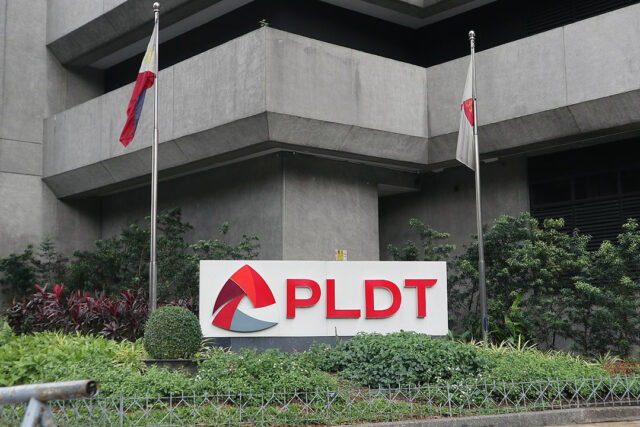
PLDT Inc. said its P2-billion social loan from HSBC Philippines was recognized by The Asset magazine as the “Social Infrastructure Deal of the Year” in the Southeast Asian region.

“Proceeds from the loan helped finance the expansion of fiber optic cable network and enable digital inclusion for the country’s fourth to sixth class municipalities, including geographically isolated and disadvantaged areas or GIDAs,” PLDT said in a statement on Wednesday.

PLDT Chief Financial Officer and Chief Risk Management Officer Danny Y. Yu said the company remains committed to expanding the reach of its fiber network to “better serve its customers and continuously support the government in narrowing the digital divide.”

As of end-March 2025, PLDT operates the country’s largest fiber optic network, covering 73% of municipalities and 91% of all provinces.

“This infrastructure provides a robust backbone to its wireless unit Smart Communications, Inc., which currently maintains a 97% population coverage of 4G/5G networks,” the company said.

The Asset Triple A Sustainable Infrastructure Awards is an independent recognition program honoring institutions and investments that support infrastructure development and economic growth across Asia.

The 2025 edition covered performance from January to December 2024.

At the stock exchange on Wednesday, shares in the company closed unchanged at P1,210 apiece.

Hastings Holdings, Inc., a unit of PLDT Beneficial Trust Fund subsidiary MediaQuest Holdings, Inc., has a majority stake in BusinessWorld through the Philippine Star Group, which it controls. — Ashley Erika O. Jose

GSIS loan disbursements reach P413.4 billion to date

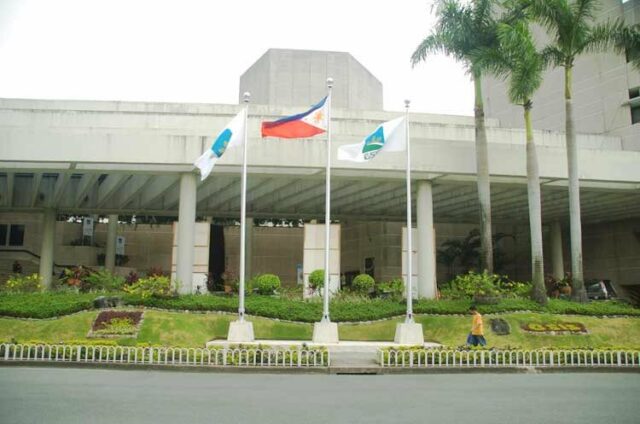
The Government Service Insurance System headquarters in Pasay, Philippines. May 28, 2012. — BW FILE PHOTO

THE Government Service Insurance System (GSIS) has disbursed P413.4 billion in loans so far under its flagship lending programs, it said on Wednesday.

GSIS President and General Manager Jose Arnulfo “Wick” A. Veloso said the combined amount covers 1.9 million approved applications under its Ginhawa Flex and Ginhawa Lite programs as of June 23.

“More than disbursements, these numbers represent real relief and support for public servants,” Mr. Veloso said at an event on Wednesday. “Every reform we make, every service we improve, starts with listening to our members.”

GSIS is the state-run pension fund for government workers.

Disbursements under the multi-purpose loan program Ginhawa Flex, which allows GSIS members to borrow up to P5 million or 14 times their monthly salary, reached P401.19 billion thus far, covering 1.437 million approved applications, he said.

Loans under the program that was launched in September 2023 are payable for up to 15 years, depending on members’ paid premiums.

Meanwhile, releases under the pension fund’s Ginhawa Lite program reached P12.247 billion to 408,656 members since its launch in October last year. The program offers loans from P5,000 to P50,000 that are payable in six to 24 months.

Loans under both programs have an interest rate of 6-7%. Both are available via the GSIS Touch mobile app. Mr. Veloso said more than 1.8 million GSIS members have registered on its mobile application as of May, with over 99% of transactions now done online.

“We heard your advice that the Ginhawa Max loan buyout process could be further simplified, so we improved the process and made it more convenient. Now, all you need is a letter of intent from your head of agency to enable you to apply under the program,” he added.

The Ginhawa Max loan buyout program allows qualified members to avail up to P5 million or 19 times their salary, whichever is lower, based on their paid premiums to consolidate and settle their existing high-interest debts. It has no service fee, interest as low as 6-7%, and repayment terms of up to 10 years.

Meanwhile, GSIS said it is now protecting over 130,000 public school buildings under its National Indemnity Insurance Program.

Its Lease-With-Option-to-Buy Program has also allowed more than 4,000 families to secure homes, while nearly 2,000 borrowers were able to retain their homes with the help of its Housing Accounts Remedial and Condonation Program that provides borrowers an opportunity to bring their housing accounts back to current status.

BULLISH OUTLOOK
Meanwhile, Mr. Veloso said they remain bullish on GSIS’ financial performance for this year, even amid global uncertainties due to trade concerns and geopolitical risks.

“I am very optimistic that our financial performance will be better than last year — of course, subject to a lot of the economic and political conditions,” he said.

GSIS booked a net income of P35.55 billion in 2024, up from P6.099 billion in 2023. It had assets worth P1.83 trillion at end-2024.

Asked if the pension fund is looking at recalibrating its investment portfolio due to the ongoing volatility in global markets, he said: “If there is uncertainty, others would like to get their cash and sell some of their assets. That’s what we would like to take a look at.”

“It’s automatic. If there are uncertainties, you take a look at the safe investments… Take a look at the investments that allow you to be able to say they are the ones that are resilient during these periods. These are the likes of government securities, these are the likes of safe currencies.” — A.R.A. Inosante

Greenfield investments and growth

STOCK PHOTO | Image by TravelScape from Freepik

Last week, on June 20, the UN Conference on Trade and Development (UNCTAD) released the World Investment Report (WIR) 2025. I downloaded the Excel files for inflows, outflows, instock, outstock of foreign direct investments (FDI) of all countries, mergers and acquisitions by country and by sector, and so on.

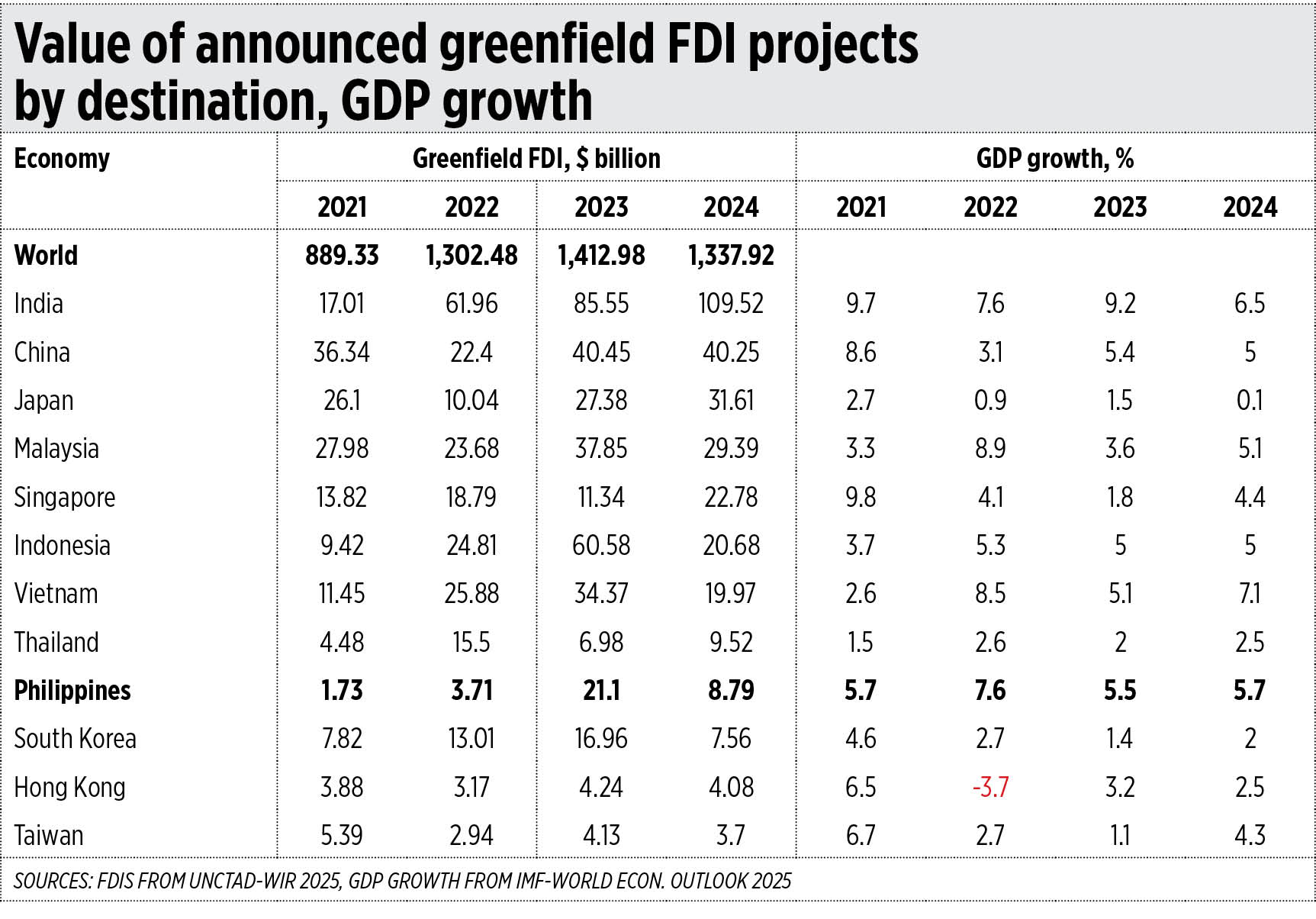
One table that caught my attention was “greenfield FDIs by country destination.” Greenfield investments are new (thus “green”) facilities like office buildings, manufacturing facilities, etc. cross-border from the ground up.

The Philippines has been catching up with some East Asian neighbors in this since 2023 — it was larger in this metric than South Korea, Hong Kong, Taiwan, and Thailand in 2023. But in overall FDI inflows including expansions for “brownfield” (old, existing) investments, these economies are ahead of the Philippines.

Global greenfield FDI from 2022 to 2024 was generally flat at $1.3 trillion. But for some Asian nations — India, China, Japan, Malaysia, the Philippines — there was a big jump over the last two years. Those with flat or declining trends were Singapore, Vietnam, Indonesia, South Korea, Thailand, Hong Kong, and Taiwan (see the table).

Except for Japan and Thailand in the list of top countries when it comes to attracting FDIs, many Asian nations had seen fast growth of 4.4% and above in 2024.

The Philippines’ economy has gained momentum between 2023 and 2024 and likely into 2025 to 2028 or beyond. The government economic team is on the right track despite what the detractors and pessimists say. The hike in greenfield FDIs in the last two years was several times higher than from 2020 to 2022.

The economic team — led by Finance Secretary Ralph Recto, Presidential Investment Adviser Frederick Go, Budget Secretary Amenah Pangandaman, Economics Secretary Arsenio Balisacan, and Trade Secretary Ma. Cristina Roque — should continue with economic and business liberalization, with increasing the ease of doing business, and investment promotions abroad especially in Europe where degrowth has become the trend and not the exception for many countries there.


Bienvenido S. Oplas, Jr. is the president of Bienvenido S. Oplas, Jr. Research Consultancy Services, and Minimal Government Thinkers. He is an international fellow of the Tholos Foundation.

minimalgovernment@gmail.com

Anthropic wins key US ruling on AI training in authors’ copyright lawsuit

STOCK PHOTO | Image by Brett Jordan from Unsplash

A FEDERAL JUDGE in San Francisco ruled late on Monday that Anthropic’s use of books without permission to train its artificial intelligence (AI) system was legal under US copyright law.

Siding with tech companies on a pivotal question for the AI industry, US District Judge William Alsup said Anthropic made “fair use” of books by writers Andrea Bartz, Charles Graeber and Kirk Wallace Johnson to train its Claude large language model.

Alsup also said, however, that Anthropic’s copying and storage of more than 7 million pirated books in a “central library” infringed the authors’ copyrights and was not fair use. The judge has ordered a trial in December to determine how much Anthropic owes for the infringement.

US copyright law says that willful copyright infringement can justify statutory damages of up to $150,000 per work.

An Anthropic spokesperson said the company was pleased that the court recognized its AI training was “transformative” and “consistent with copyright’s purpose in enabling creativity and fostering scientific progress.”

The writers filed the proposed class action against Anthropic last year, arguing that the company, which is backed by Amazon and Alphabet, used pirated versions of their books without permission or compensation to teach Claude to respond to human prompts.

The proposed class action is one of several lawsuits brought by authors, news outlets and other copyright owners against companies including OpenAI, Microsoft and Meta Platforms over their AI training.

The doctrine of fair use allows the use of copyrighted works without the copyright owner’s permission in some circumstances.

Fair use is a key legal defense for the tech companies, and Alsup’s decision is the first to address it in the context of generative AI.

AI companies argue their systems make fair use of copyrighted material to create new, transformative content, and that being forced to pay copyright holders for their work could hamstring the burgeoning AI industry.

Anthropic told the court that it made fair use of the books and that US copyright law “not only allows, but encourages” its AI training because it promotes human creativity. The company said its system copied the books to “study Plaintiffs’ writing, extract uncopyrightable information from it, and use what it learned to create revolutionary technology.”

Copyright owners say that AI companies are unlawfully copying their work to generate competing content that threatens their livelihoods.

Alsup agreed with Anthropic on Monday that its training was “exceedingly transformative.”

“Like any reader aspiring to be a writer, Anthropic’s LLMs trained upon works not to race ahead and replicate or supplant them — but to turn a hard corner and create something different,” Alsup said.

Alsup also said, however, that Anthropic violated the authors’ rights by saving pirated copies of their books as part of a “central library of all the books in the world” that would not necessarily be used for AI training.

Anthropic and other prominent AI companies including OpenAI and Meta Platforms have been accused of downloading pirated digital copies of millions of books to train their systems.

Anthropic had told Alsup in a court filing that the source of its books was irrelevant to fair use.

“This order doubts that any accused infringer could ever meet its burden of explaining why downloading source copies from pirate sites that it could have purchased or otherwise accessed lawfully was itself reasonably necessary to any subsequent fair use,” Alsup said on Monday. — Reuters

China tries to shift appetite for extreme eating shows

HONG KONG — China said on Tuesday that consumers should “rationally resist bad content” of extreme eating shows, which have boomed online, because they cause “heartbreaking” food waste and spread “unhealthy” ideas about food.

Extreme eating shows in China have included people eating as many cups of instant noodles as possible, devouring dumplings, and wolfing down hamburgers.

The statement from China’s Consumer Association is the latest effort to curb people’s appetite for online eating shows, which remain widely streamed in the world’s second-largest economy even after attempts to more tightly regulate the industry in 2020.

The shows attract hoards of followers who are keen to watch people consuming copious amounts of food, including very spicy dishes.

Some online platforms are “now full of extreme eating shows, which use the food intake that challenges the physiological limits of human beings,” the statement said.

“Not only does it seriously deviate from the true connotation of food culture, but it also causes heartbreaking food waste.”

The shows trample on China’s traditional virtues of diligence and thrift, the association added, and also spread “unhealthy and irrational” ideas about eating that could harm young people.

“Every porridge and every meal should be thought of as hard-earned,” it said.

China in 2020 strengthened regulation and banned clips that promoted food waste. It passed a law in 2021 to combat food waste while last year authorities also unveiled an action plan to boost food production while reducing waste.

The association urged consumers not to follow, like, or forward extreme eating shows and to actively block related accounts or channels.

Show creators must refuse waste and not plan, produce, or publish extreme eating content, it said.

“The focus of creation should be shifted to exploring the cultural connotation of the true nature of food.” The statement comes a week after Beijing ordered some civil servants not to dine out in groups of more than three after deaths linked to excessive alcohol consumption at banquets.

China is also battling rising obesity, particularly among children, after physical activity dropped during the COVID-19 pandemic and people ordered more fast food online. — Reuters

ADVERTISEMENT
ADVERTISEMENT