
How PSEi member stocks performed — March 19, 2026
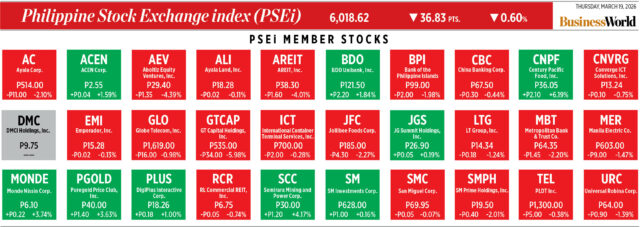
Here’s a quick glance at how PSEi stocks fared on Thursday, March 19, 2026.
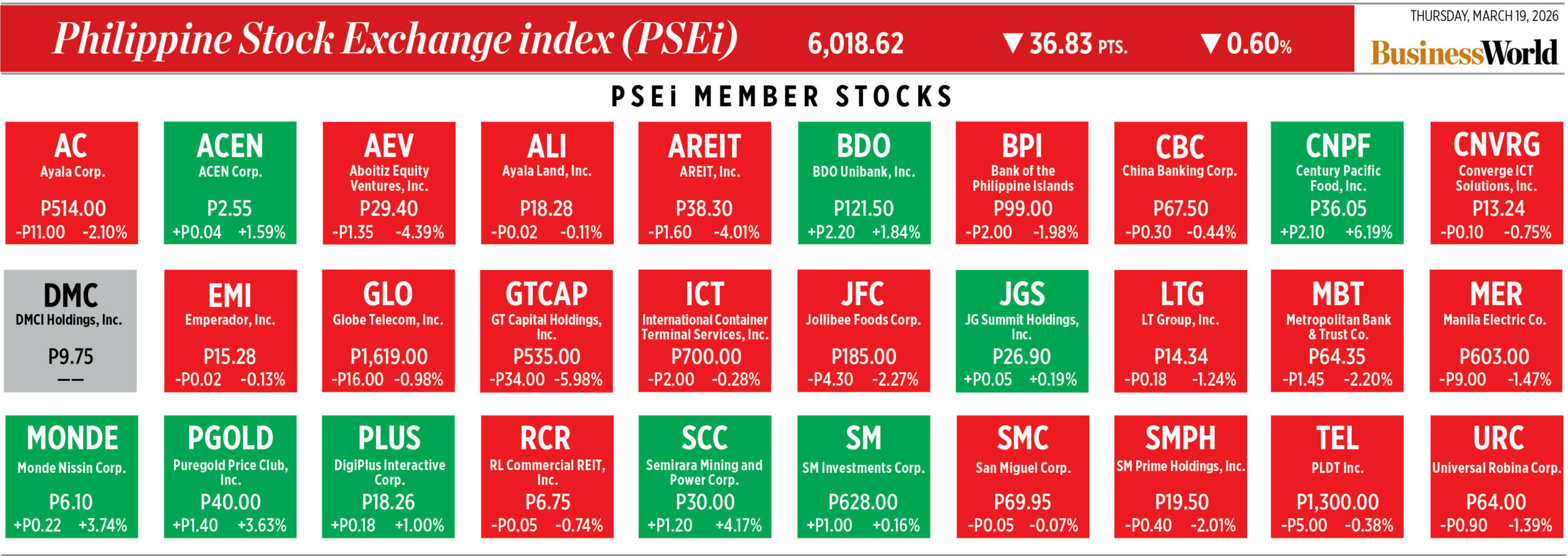

Here’s a quick glance at how PSEi stocks fared on Thursday, March 19, 2026.
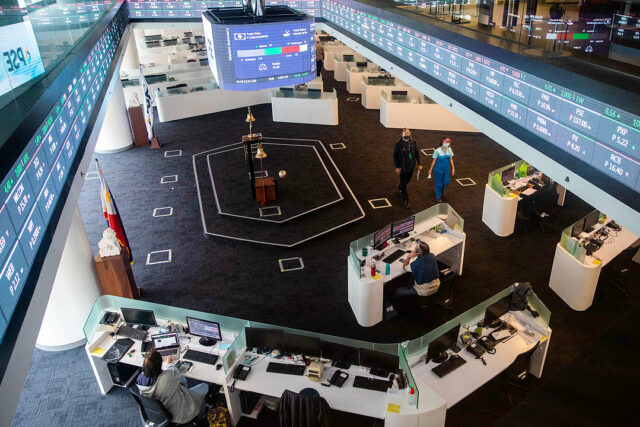
PHILIPPINE SHARES fell on Thursday as geopolitical tensions in the Middle East and the peso’s slide to an all-time low weighed on investor sentiment.
The benchmark Philippine Stock Exchange index (PSEi) dropped 0.6% or 36.83 points to close at 6,018.62, while the broader all-share index declined 0.55% or 18.69 points to 3,344.87.
“The market ended the week in the red as the Middle East tensions continue to wreak havoc on the global economy, keeping pump prices at elevated levels,” AP Securities, Inc. said in a note.
Financial markets are closed on Friday in observance of Eid’l Fitr or the Feast of Ramadan.
Wendy B. Estacio-Cruz, research head at Unicapital Securities, attributed the decline to escalating geopolitical risks, which pressured the peso and dampened hopes for near-term monetary easing.
“This came after the US Fed kept rates steady and raised its inflation forecast amid potential oil price shocks from the Iran conflict, dampening hopes for near-term easing,” she said in a Viber message.
The peso closed at a record P60.10 a dollar, down 58 centavos from Wednesday’s P59.52 finish, according to Bankers Association of the Philippines data posted on its website. This marks the peso’s weakest finish ever, surpassing the previous low of P59.87 logged earlier this week.
Sectoral performance reflected broad weakness. Mining and oil plummeted 6.7% to 15,984.83, property slid 1.41% to 1,987.35, holding firms fell 1.07% to 4,635.31, financials dropped 0.39% to 1,906.4, and services shed 0.16% to 2,752.37. Industrials were the lone gainer, up 0.14% to 8,792.53.
Losers beat gainers 133 to 61, while 55 stocks were unchanged. Value turnover rose to P10.11 billion on 1.88 billion shares traded, compared with P6.06 billion and 930.22 million shares a day earlier.
Net foreign selling fell to P460.37 million from P664.05 million.
Ms. Estacio-Cruz said the peso’s weakness, persistent inflation and global uncertainties are likely to keep financial conditions tight, limiting upside for equities in the near term.
With oil prices elevated and the Iran conflict showing no signs of easing, analysts expect continued volatility in both the peso and local markets, highlighting the risk of imported inflation on the Philippine economy. — Alexandria Grace C. Magno
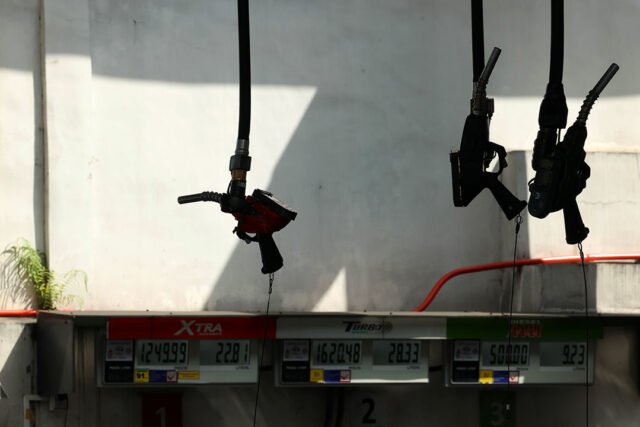
THE Philippines is stepping up efforts to secure alternative fuel sources, President Ferdinand R. Marcos, Jr. said on Thursday, as the escalating war in the Middle East continues to threaten global oil supplies and risk driving prices even higher.
Mr. Marcos said the government is working toward “soften[ing] the blow” of the war, adding it has secured enough supplies of food and oil.
“What we are monitoring now are the prices. For food, we can do more — we are looking for ways to bring food prices down,” he told reporters in Filipino during an inspection in Bataan.
“As for oil, there’s nothing we can do about that, but at least we are making sure supply will be available.”
He added the government is looking for alternative sources of oil to ensure the country has adequate stock, noting that Philippines suppliers have committed to honor their contracts.
“Fertilizer, petroleum products, that won’t be a problem because our suppliers promised to honor their contracts.”
Energy Secretary Sharon S. Garin earlier said the country is looking at other sources of oil, like the US, Canada, Russia or South American countries, as the Middle East continues to be heavily affected by the Iran war, making prices of commodities higher.
In a bid to cushion the impact, the government has earlier ordered discounts on public trains, with a possible move to provide relief on toll roads.
Mr. Marcos also blocked a planned public transportation vehicle fare hike, drawing criticisms from drivers and operators struggling with the rising fuel prices.
“Our real goal here is to preserve people’s livelihoods — so they continue to have a means of earning,” he said. He explained that while he suspended the fare hike, the government plans to provide assistance to offset high costs.
“The fare hike will just be deferred, and instead, we will increase the assistance provided to them.”
He also said the government is finding different methods to provide subsidies.
Finance Secretary Frederick D. Go earlier said he met with private oil firms over the weekend to explore additional steps to diversify fuel sourcing by widening the Philippines’ pool of suppliers.
He noted the country currently imports fuel from just four markets — South Korea, Japan, Singapore and China.
As a precaution, he added that Philippine National Oil Co.-Exploration Corp. will purchase about two million barrels from global markets to build up the country’s oil buffer stock.
CONTINGENCY PLAN
Meanwhile, the Senate on Wednesday adopted a resolution seeking to establish an ad hoc committee in charge of overseeing national contingency plans on addressing the oil shock.
“It is imperative that the country does not stagnate in its efforts to address emerging crisis nor remain confined to a reactive posture, but instead adopt a proactive approach and be a step ahead,” the Senate Resolution No. 350 read.
Senator Sherwin T. Gatchalian, as the chairperson of the Senate Committee on Finance, will lead the ad hoc committee.
“We embrace the challenge posed by this committee at this crucial time, and we are committed to ensuring that all assistance and mitigation measures will be not only sufficient but also sustained,” Mr. Gatchalian said in a statement.
The resolution proposed the creation of the ad hoc committee named Proactive Response and Oversight for Timely and Effective Crisis Strategy tasked to assess the contingency plans of the government, including those from the Executive branch, regarding the impacts of the US-Israel war on Iran.
Iran’s military leadership has warned oil could surge to as much as $200 a barrel, as tensions escalate in the Strait of Hormuz, where disruptions have effectively choked off a key global supply route that carries about a fifth of the world’s oil and liquefied natural gas.
Fuel prices surged on Tuesday, with gasoline rising by P12.90 to P16.60 a liter, diesel by P20.40 to P23.90 and kerosene by P6.90 to P8.90, marking one of the steepest weekly increases this year.
Data from the Department of Energy showed pump prices may climb as high as P91.60 per liter for gasoline, P114.90 for diesel and P143.79 for kerosene.
The government is now ramping up its cash relief assistance to the most vulnerable, including transport workers in the capital region who started receiving P5,000 earlier this week. — Chloe Mari A. Hufana and Kaela Patricia B. Gabriel

By Beatriz Marie D. Cruz, Reporter
THE PHILIPPINES climbed one spot to 56th in an annual survey that measures peoples’ level of happiness globally, but analysts said the ranking does not capture the social and economic pressures that Filipinos face today.
In the latest edition of the World Happiness Report, the Philippines ranked 56th out of 147 countries, a slight improvement from its 57th rank last year. The country had an average life evaluation score of 6.206 out of a possible 10, higher than the 6.107 score in 2025.
Among its Southeast Asian peers, the Philippines emerged as the fourth happiest country, only behind Singapore (36th), Vietnam (45th), Thailand (52nd), and ahead of Malaysia (71st), Indonesia (87th), Laos (92nd), Cambodia (121st), and Myanmar (129th).

The annual report is published by the Wellbeing Research Centre at the University of Oxford in partnership with Gallup and the United Nations Sustainable Development Solutions Network.
Finland (with a score of 7.764) was the happiest country in the world in its ninth straight year, followed by Iceland (ranking 2nd, with a score of 7.540), Denmark (3rd, 7.539), Costa Rica (4th, 7.439), Sweden (5th, 7.255), Norway (6th, 7.242), the Netherlands (7th, 7.223), Israel (8th, 7.187), Luxembourg (9th, 7.063), and Switzerland (10th, 7.018).
Meanwhile, the unhappiest countries in the world are Afghanistan (ranking 147th, with a score of 1.446); Sierra Leone (146th, 3.251); Malawi (145th, 3.284), Zimbabwe (144th, 3.346); and Botswana (143rd, 3.464).
The countries were ranked according to their self-assessed life evaluations averaged over a three-year period of 2023 to 2025.
To determine the ranking, the Gallup World Poll asked 1,000 respondents per country to evaluate their current life using the image of a ladder — with the best possible life for them as a 10 and the worst possible as a zero.
The research also looked into six factors — gross domestic product per capita, life expectancy, social support, generosity, freedom, and perceptions of corruption.
FILIPINO RESILIENCE
The slight improvement in the Philippines’ happiness index could be linked to “resilient” household conditions, supported by stable inflation and remittance inflows, Philippine Institute for Development Studies Senior Research Fellow John Paolo R. Rivera said.
However, these do not reflect ongoing pressures that Filipinos face, such as the high living costs and job security.
“While Filipinos report high well-being, many still face cost of living pressures, job insecurity, and uneven income growth,” he said in a Viber message.
Jose Enrique A. Africa, executive director of think tank IBON Foundation, said the slight improvement in the Philippines’ happiness index could only reflect marginal survey variation rather than domestic improvement.
“The slight improvement likely just indicates how Filipino families and communities confront significant economic pressures. Strong kinship networks and community support mechanisms in play, as the last-resort welfare systems of most Filipinos,” he said in a Viber message.
Mr. Africa cited the Philippine government’s role in ensuring Filipinos’ happiness and well-being through improved public services, social protection, and job security.
“More than resiliency, national industrialization and rural progress are the most important economic foundations to keep improving well-being,” he said.
Leonardo A. Lanzona, an economics professor at the Ateneo de Manila University, attributed Filipinos’ continued optimism to its religious upbringing.
“Happiness may be ingrained but improved well-being measured in terms of longer life expectancy can be crucial. Compared to other countries, our access to better health and education facilities needs to be raised,” he said in a Facebook Messenger chat.
“Without these, reported happiness is just Filipinos adapting to hardships and doesn’t reflect genuine economic security,” Mr. Africa said.

FOUR in 10 (41%) of Filipinos are calling on the government to prioritize measures that will lower food prices, according to a March survey by Pulse Asia Research, Inc., as higher fuel costs driven by the Middle East crisis strain households.
The March poll, commissioned by think tank Stratbase ADR Institute, also found respondents want Philippine leaders to prioritize policies that would lessen, if not eliminate corruption (26%) and create more jobs and livelihood opportunities (24%). The remaining 10% said the government should provide accessible education and healthcare services.
The think tank noted a three-percentage-point increase in the share of respondents calling for more affordable food prices, which Victor Andres C. Manhit, Stratbase ADR Institute president and chief executive officer, linked the growing anxiety over food security.
“What we are seeing is how geopolitical tensions are directly affecting Filipino households,” Mr. Manhit was quoted as saying in a statement on Thursday.
“While corruption remains an important issue, ordinary citizens are now more focused on immediate economic pressures including food prices and income stability,” he added.
On its third week, the escalating Iran war has severely disrupted global oil trade, as Iran continues to blockade fuel shipments through the Strait of Hormuz, a vital chokepoint that carries about a fifth of the world’s oil.
Meanwhile, Filipinos calling for the government to curb corruption slipped five percentage points from 31% in December, which the think tank attributed to the winding down of the multibillion-peso flood control scandal.
Mr. Manhit said that the government must respond decisively by stabilizing food and gas prices, penalizing profiteers, and expanding its subsidy program to support the vulnerable sectors from further shocks.
“Addressing rising food prices must go hand in hand with creating more jobs and ensuring that economic gains are felt at the local community level,” he added.
Pulse Asia interviewed 1,200 Filipinos on Feb. 27 to Mar. 2 for the poll, which had an error margin of ±2.8 points. — Adrian H. Halili

OVER 300 more Filipinos from the Middle East arrived in Manila on Thursday, the Department of Migrant Workers (DMW) said amid its continuing repatriation efforts.
Of the newly repatriated Filipinos, 317 were brought home on Thursday by the third government-chartered flight, which flew out on Wednesday to fetch them in the United Arab Emirates (UAE).
The flight included 153 overseas Filipino workers (OFWs), 114 dependents, and 50 stranded passengers.
Migrant Workers Secretary Hans Leo J. Cacdac said there will also be a fourth chartered flight this weekend.
Mr. Cacdac noted that most repatriation requests come from the UAE, Kuwait, Bahrain and Israel.
“The priority here is what we call those ‘repatriation-ready’ because we have encountered some who have immigration issues. We help them, of course. But they won’t be able to fly out immediately,” Mr. Cacdac said.
President Ferdinand R. Marcos, Jr. was supposed to greet the returning OFWs, but was unable to go as he attended meetings discuss key programs on education, infrastructure, and the reconstruction and development of Greater Marawi (Stage 2) among others.
But, Palace Press Officer Clarissa A. Castro said the President ordered their flight to land at the Maharlika, Villamor Air Base to ensure faster immigration processing.
A group of 49 Filipinos comprising 22 OFWs from Qatar also returned home with their 27 dependents through the Qatar Airways Flight QR 928, according to a Facebook post by the Overseas Workers Welfare Administration (OWWA) on Thursday.
Meanwhile, a group of 21 Filipinos from Kuwait, including a minor, first evacuated to Saudi Arabia arrived in Manila, OWWA said in a Wednesday Facebook post.
According to OWWA, the newly repatriated Filipinos were immediately given arrival assistance in the form of food and transportation.
Mr. Cacdac earlier said about 7,255 Filipinos in the Middle East have been assisted by the DMW, OWWA, and partner agencies through providing them with basic needs, temporary accommodation, and transportation.
The DMW on Thursday reported that they have brought home approximately 1,700 Filipinos, comprising both OFWs and their dependents since the repatriation began on March 5.
Earlier this week, OWWA Administrator Patricia Yvonne M. Caunan said they expect to close the week with 2,000 Filipinos repatriated from the region affected by the US-Israel and Iran conflict.
Ms. Caunan said this number is about the same amount of repatriation requests they have received.
The OWWA and DMW’s repatriation efforts to ensure the safety of Filipinos in the Middle East come after the US and Israel’s attack against Iran on Feb. 28 to destroy the latter’s nuclear program.
The attacks resulted in the death of Iranian leader Ayatollah Ali Khamenei and Iran’s retaliatory strikes against US-Israeli bases in Iraq, the UAE, Kuwait, Bahrain, Qatar, and Saudi Arabia.
Data from the Department of Foreign Affairs has shown there are about 2.4 million Filipinos in the affected region. — Kaela Patricia B. Gabriel and Chloe Mari A. Hufana
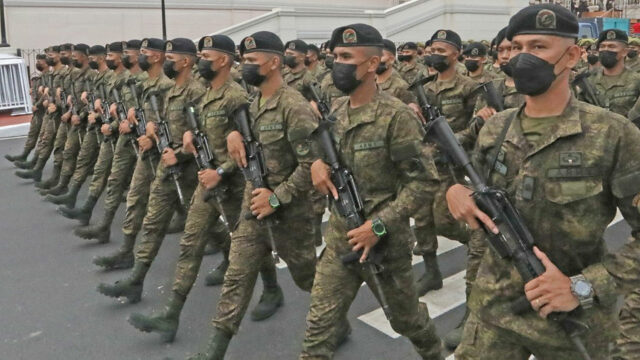
PRESIDENT Ferdinand R. Marcos, Jr. reaffirmed his administration’s push to modernize the military and expand the Philippine Army’s role in external defense as he marked the force’s 129th founding anniversary on Thursday.
Speaking at Fort Bonifacio, Taguig City, Mr. Marcos said the Philippine Army must build on gains in internal security while preparing for emerging threats spanning maritime and digital domains.
“The demands of our time call for a force that is agile, effective, and prepared to safeguard our nation across new and evolving domains,” he said.
Mr. Marcos said the Department of National Defense and the Armed Forces of the Philippines are continuing to monitor internal threats while coordinating with law enforcement and the National Task Force to End Local Communist Armed Conflict to sustain peace and development efforts in communities.
He urged the awardees to “uphold excellence” and “inspire” fellow soldiers to build communities that thrive in safety. — Chloe Mari A. Hufana
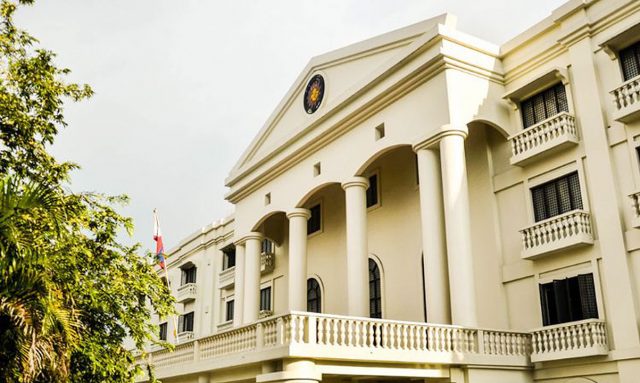
THE Department of Budget and Management (DBM) said that it will prioritize high-impact sectors such as infrastructure, food security, and human capital development for the 2027 budget proposals.
Under National Budget Memorandum No. 157, the DBM said Tier-2 expenditure directions, which involves new spending and expansion of project, activity or programs, based on the gaps and strategies outlined in the Executive Report 2026 and the Philippine Development Plan (PDP) 2023-2028 Midterm Update.
“As the country is nearing the final phase of implementing the PDP 2023-2028, the Marcos, Jr. administration shall focus resources on strategic sectors to achieve social and economic transformation,” it said.
“These priorities — infrastructure, human capital development, food security, climate and disaster resilience, and digitalization, among others — are anchored on the President’s 8-Point Socioeconomic Agenda and aligned with the AmBisyon Natin 2040 and the 2030 Sustainable Agenda,” it added.
To optimize allocation of the limited fiscal space, the DBM said that the programs, activities and projects to be included in the budget “must be implementation ready and shall only pertain to the cash requirements.”
“The departments/agencies are reminded to tightly prioritize their proposals given limited fiscal space. Hence, agencies should limit their proposals to a maximum of five only,” it added.
To prove that the programs, activities and projects are shovel-ready, the DBM asked the agencies to submit supporting documents, including feasibility studies, detailed engineering designs, detailed work and financial plans, and right-of-way acquisitions.
“The Tier 2 proposals shall be submitted to DBM through the Online Submission of Budget Proposals System v2.Q on or before April 24,” it added.
Meanwhile, the DBM set the budget ceiling for Tier 1 spending at P3.69 trillion for 2027. The DBM’s forward estimates of Tier-1 spending for 2028 and 2029 are P3.27 trillion and P3 trillion, respectively. — Justine Irish D. Tabile
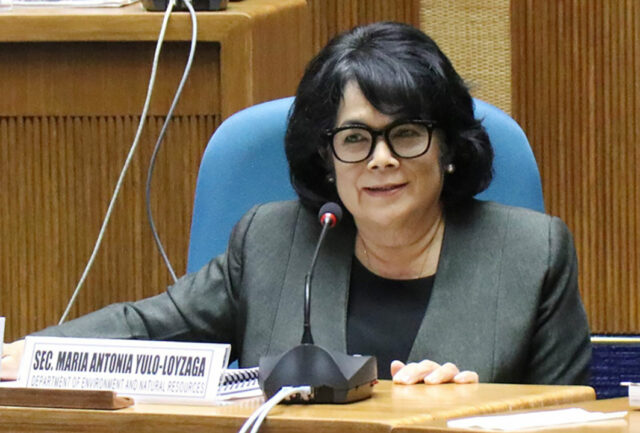
PRESIDENT Ferdinand R. Marcos, Jr. appointed former Environment chief Maria Antonia Yulo-Loyzaga as special envoy for disaster risk reduction and management, Malacañang confirmed on Thursday.
Palace Press Officer Clarissa A. Castro said Ms. Yulo-Loyzaga took her oath before the President in Malacañang on Wednesday.
Ms. Yulo-Loyzaga served as secretary of the Department of Environment and Natural Resources from 2022 to 2025.
Mr. Marcos accepted her courtesy resignation last year during a Cabinet shake-up.
Before that, Ms. Yulo-Loyzaga spent two years as a director at the United Nations Office for Disaster Risk Reduction (UNDRR) Alliance for Disaster Resilient Societies.
She also previously headed the National Resilience Council and was part of the UNDRR Asia Pacific Science and Technology Advisory Group.
Earlier in her career, she served as executive director of the Manila Observatory from 2007 to 2016.
She holds a bachelor’s degree in political science from Ateneo de Manila University and a master’s degree in government from Georgetown University in Washington, DC., USA. — Chloe Mari A. Hufana

AGRICULTURE Secretary Francisco P. Tiu Laurel, Jr. has filed separate cyber-libel complaints against lawyer Levito D. Baligod and former lawmaker Elizaldy S. Co over allegations linking him to the so-called “maleta” (suitcase) scheme and supposed irregularities in the agriculture sector.
Mr. Laurel filed a cyber-libel complaint against Mr. Baligod before the Makati City Prosecutor’s Office on Thursday over allegations linking the agriculture chief to the alleged “maleta” scheme.
Mr. Baligod represents 18 individuals claiming to be former Marine personnel who allegedly acted as “bagmen” delivering cash kickbacks to several lawmakers and Cabinet officials.
In a statement on Thursday, Mr. Laurel said Mr. Baligod repeatedly made allegations, through press briefings and social media, claiming “anomalies” and unlawful acts within the Department of Agriculture, including alleged diversion and misappropriation of public funds.
The Agriculture secretary also refuted the ex-Marines’ claim in an affidavit that his Forbes Park, Makati City property was used as a meeting place for the alleged transactions.
“They said they were getting money weekly from my house in Forbes Park. I haven’t lived there since 2018. I now live in another place in Makati, and I don’t know any of those 18,” Mr. Laurel told reporters separately.
Mr. Laurel also filed a cyber-libel complaint against Mr. Co over his claim that the Agriculture chief halted a House inquiry into rising rice prices after presenting a confidential report that allegedly implicated First Lady Marie Louise Araneta-Marcos.
In a video statement in November, Mr. Co had earlier accused the First Lady of involvement in a scheme that supposedly kept rice prices artificially high despite reduced import duties.
Mr. Laurel has earlier denied Mr. Co’s accusations, including claims that the Department of Agriculture favored certain companies in import allocations for certain commodities. — Vonn Andrei E. Villamiel
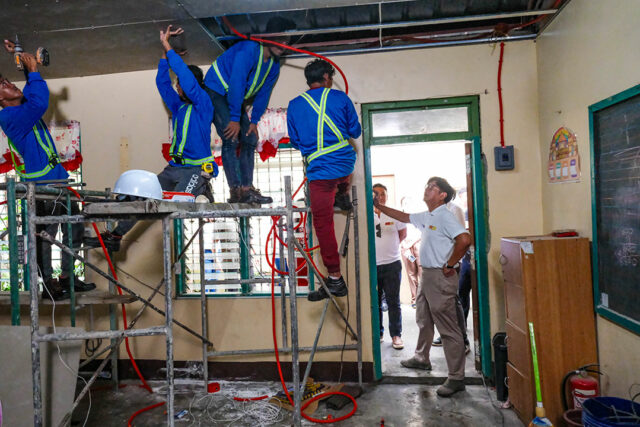
A SENATOR on Thursday called for the immediate release of classroom construction funds to local government units (LGUs), noting that further delays may slow the government’s construction goals.
“I was hoping by the end of March, the money has been downloaded so that the LGUs can start building during the summertime,” Senator Paolo Benigno A. Aquino IV, who heads the Senate Education Committee, said in a statement.
The senator added that the delayed transfer of about P65 billion for classroom construction could further lead to setbacks for the government’s goal to plug its 166,000-classroom gap.
“If they delay downloading the money and build when it’s raining, their progress will be slower,” Mr. Aquino said.
He added that a recently passed Senate Bill No. 1482 could improve classroom construction by including LGUs and nongovernmental organizations to build classrooms, noting that they can construct education facilities in just 200 days.
“The right way is that we allow LGUs to build at the same time, and is not focused on just one agency,” the senator said.
The Department of Education aims to build around 30,000 classrooms by 2028, a mandate it assumed from the Department of Public Works and Highways after a sweeping corruption scandal forced the government to strip the agency of its role in school construction. — Adrian H. Halili

BAGUIO CITY — A magnitude 4.4 earthquake struck near Bolinao early on Thursday morning, followed less than an hour later by a weaker tremor, the Philippine Institute of Volcanology and Seismology (PHIVOLCS) reported.
The stronger quake occurred at 6:11 a.m., with its epicenter located about 5 kilometers northeast of Bolinao at a shallow depth of 10 kilometers.
PHIVOLCS recorded instrumental intensity III in the nearby town of Bani, indicating weak shaking felt indoors by some residents.
No significant damage however was reported.
At 6:54 a.m., a magnitude 1.9 earthquake was also recorded about 19 kilometers northwest of that same town at a depth of 33 kilometers. The tremor, also tectonic in origin, was too weak to be felt.
PHIVOLCS said it continues to monitor the area and advised residents to remain alert, noting that minor earthquakes are common in seismically active regions like Pangasinan. — Artemio A. Dumlao
