Home Blog Page 1357

MGen unit activates 52.8-MW solar plant in Isabela

MGreen Cordon Solar in Barangay Capirpiriwan, Cordon, Isabela.

MGEN Renewable Energy, Inc. (MGreen), the renewable energy arm of Meralco PowerGen Corp. (MGen), has switched on its 52.8-megawatt (MW) solar power plant in Cordon, Isabela.

The solar project is the second under the second round of the government’s Green Energy Auction Program to be completed ahead of schedule, the company said in a media release on Wednesday.

Completed four months early, the solar farm is expected to supply clean and reliable electricity to over 53,000 households, supporting the Philippines’ goal of increasing the share of renewable energy in the power mix to 35% by 2030.

The project is expected to prevent over 50,400 metric tons of carbon dioxide emissions annually, equivalent to removing more than 11,700 gasoline-powered cars from the road, according to the company.

“We want to show that economic progress and environmental responsibility can go hand in hand,” said MGreen President and Chief Executive Officer Dennis B. Jordan.

This is MGen’s seventh solar power plant in the Philippines, following MGreen BulacanSol, Nueva Solar, MGreen Baras Solar, MGreen Bongabon Solar, MGreen SP Calatagan, and MGreen SP Tarlac.

MGen expects to end this year with at least 82 MW of additional capacity from three solar plants.

The company has a pipeline of projects expected to exceed its 1,500-MW renewable energy target before 2030.

MGen is the power generation arm of Manila Electric Co. (Meralco).

Meralco’s controlling stakeholder, Beacon Electric Asset Holdings, Inc., is partly owned by PLDT, Inc. Hastings Holdings, Inc., a unit of PLDT Beneficial Trust Fund subsidiary MediaQuest Holdings, Inc., has an interest in BusinessWorld through the Philippine Star Group, which it controls. — Sheldeen Joy Talavera

Yields on BSP’s term deposits end mixed as offer goes undersubscribed

YIELDS on the Bangko Sentral ng Pilipinas’ (BSP) term deposits were mixed on Wednesday as the offer went undersubscribed, with market sentiment affected by monetary easing expectations and political developments in the country.

The central bank’s term deposit facility (TDF) attracted bids amounting to P202.697 billion on Wednesday, below the P220 billion on the auction block and the P250.471 billion seen a week ago for a P190-billion offer. The BSP awarded just P194.697 billion in papers.

Broken down, tenders for the seven-day papers reached just P87.456 billion on Wednesday, lower than the P110-billion auctioned off by the central bank. This was also below the P115.922 billion in bids for the P100-billion offer seen the previous week. The BSP accepted only P85.456-billion worth of bids to cap the increase in yields.

Accepted yields ranged from 5.74% to 5.78%, a wider band compared with the 5.74% to 5.77% recorded a week ago. This caused the average rate of the one-week deposits to inch up by 0.39 basis point (bp) to 5.7579% from 5.754% previously.

Meanwhile, bids for the 14-day term deposits amounted to P115.241 billion on Wednesday, higher than the P110-billion offering but below the P134.549 billion in tenders for the P90 billion placed on the auction block last week. However, the central bank awarded just P109.241 billion in two-week papers on Wednesday.

The BSP accepted bids carrying rates of 5.7% to 5.79%, wider than the 5.76% to 5.79% margin recorded a week ago. With this, the average rate for the two-week deposits inched down by 0.57 bp to 5.7695% from the 5.7752% logged in the prior auction.

The BSP has not auctioned off 28-day term deposits for more than four years to give way to its weekly offerings of securities with the same tenor.

The term deposits and the BSP bills are used by the central bank to mop up excess liquidity in the financial system and to better guide market rates.

“The BSP TDF average auction yields were little changed after correcting slightly lower for two straight weeks amid some political noises lately, though offset by dovish signals [from the central bank],” Rizal Commercial Banking Corp. Chief Economist Michael L. Ricafort said in a Viber message.

Former President Rodrigo R. Duterte was arrested by Philippine police on Tuesday at the request of the International Criminal Court (ICC) for alleged crimes against humanity. He was taken to a chartered plane en route to The Hague later in the evening.

The International Criminal Police Organization’s (Interpol) office in the Philippines got a copy of the ICC arrest warrant early Tuesday, and local police enforced it, Malacañang said.

The war on drugs was Mr. Duterte’s signature campaign platform.

The ICC has been investigating the ex-President for alleged crimes against humanity that he supposedly committed when he was Davao City mayor and during the first three years of his government, when the Philippines was still a party to the international tribunal.

Meanwhile, BSP Governor Eli M. Remolona, Jr. on Tuesday said a rate cut is still “on the table” at their policy meeting next month, signaling “a few more” rate cuts for the rest of the year.

The Monetary Board will meet to discuss policy on April 10.

The central bank unexpectedly kept benchmark borrowing costs steady at the February meeting, opting to keep the policy rate at 5.75%. — Luisa Maria Jacinta C. Jocson

From Zero to Billions: Real estate lessons from RE/MAX Regent’s Eddie Santos

FACEBOOK.COM/OFFICIALREMAXPH

Real estate, famously, moves in boom-and-bust cycles. Just last month, reports of an oversupply in Metro Manila condominiums spread concern about the real estate industry. Cooler heads rose above the speculation, talking about adjustment periods and market correction. And some analysts also noted that the oversupply is a localized event. At the same time, others fell back to the old adage that this too shall pass. Real estate always recovers and the boom will return.

Recently, I had the good fortune of talking to one of the leaders in the real estate industry, Eddie Santos, the founder of real estate brokerage RE/MAX Regent. Not only did Eddie grow RE/MAX from zero to billions in the sustained boom years of the real estate industry, but he also foresaw how parts of the market were overpriced when I interviewed him before the oversupply reports.

Prophetically, Eddie said, “I must admit it’s really overvalued because for 20 years straight, the market has increased and increased. And the developers, what happened is, every time they have a new project, it’s an all-time high, all-time high, all-time high. The market can just take so much. This is my challenge. Bring down the price 20%, I’ll sell all those inventories.”

No stranger to personal hardship and entrepreneurial failures, Eddie Santos embodies the resilience that is required for business to succeed and ultimately thrive — particularly in the cyclical real estate industry. He offers invaluable advice for those who want to make it in real estate and, also, for entrepreneurs who hunger to succeed in their chosen field. Rather than focus on strategy, training, market insight, or access to data — all of which RE/MAX possesses — Eddie chooses to zero in on honesty, integrity, and dedication instead. I’ve highlighted a few of the lessons we can learn from this entrepreneurial master.

RESILIENCE IN REAL ESTATE: ‘WHAT’S IMPORTANT IS GETTING UP’
Prior to founding RE/MAX Regent, Eddie Santos was a stockbroker — yet another boom-and-bust industry. Here, he found early success, but it all came tumbling down after the Asian financial crisis of 1997. Even with this setback, Eddie soon rose again by putting up a real estate brokerage called Regent.

“It wasn’t an easy journey,” Eddie recalls. “I knew nothing about the brokerage industry. In fact, when I got [my clients’] properties, it took me two years to close my first transaction. So zero, zero, zero for two straight years.”

It began with a trickle, just enough to continue operations. But soon, the company, which would become RE/MAX Regent after becoming a part of the global RE/MAX network, would find its feet and rise to success.

“In 2004, things turned for the better,” Eddie recounts. “It was the start of many years of a progressive real estate boom for the Philippines, owing to the fact that the economy became better. And prices year after year after year became an all-time high. I was glad that I was able to start during those years because it laid the groundwork.”

From this foundation RE/MAX Regent grew to 41 offices in the Philippines with over 500 real estate agents in its network.

Eddie summarizes his lessons on resilience, saying, “You have to learn to stand up. I mean, you might fall once or twice, but what’s important is really getting up.”

SECRETS TO SUCCESS: ‘HONESTY, INTEGRITY AND DEDICATION’
To oversimplify the real estate brokerage, RE/MAX Regent is a franchise network. Brokers pay RE/MAX to be part of their network, receiving exposure, training, and access to RE/MAX tools.

The strategy is all in the name. “RE/MAX actually stands for real estate maximums,” Eddie explains. “We give you the maximum commissions. We give you the maximum exposure, the maximum training, and the maximum technology, technological tools.”

But what made RE/MAX Regent different? What propelled them to succeed where others didn’t?

Eddie says, “If you’re going to concentrate in real estate, in putting up a real estate brokerage, you have to know the market, the prices, the zonal values, the location, location, location. These are all key.”

RE/MAX Regent, in particular, focused on the upscale real estate market, famously closing a deal on the first billion-peso home property. And yet, instead of focusing on the network’s strengths or the technology it employs, Eddie focuses on three things: “Honesty, integrity, and dedication to your craft. Those are three very important virtues that one must possess.”

It is these three things that Eddie credits for the success of RE/MAX Regent. Expounding on the topic, he discusses how it all comes back to customer satisfaction.

“The best advertisement is a satisfied customer,” he says, “because they’ll say, ‘Hey Eddie, I’m so happy with your service. The title I got in four weeks instead of like 10 months with other companies. I will recommend you to my friends.’ And when they recommend friends, the other friends start recommending.”

REAL ESTATE ADVICE: ‘YOU ALWAYS HAVE TO BE HUNGRY’
When it comes to the future of real estate in the Philippines, Eddie Santos remains bullish about the market and focused on fundamentals, on the end-user. The reason for his optimism is the Philippines’ large population, which is now coming of age, ready to buy their first home.

“We’re blessed with 110 million Filipinos,” Eddie says, and then compares the Philippines to thriving real estate markets such as Hong Kong. “And then you look at Hong Kong. As far as I can see, it’s like skyscrapers, and they’re only 20 million.”

To these end-buyers of real estate, he advises to continue buying real estate, citing how real estate can be money-earning assets even in hard times.

“Not even the very best broker can tell you if the market will go up or the market will go down. If you could afford it and the price point is attractive to you, buy it. Especially for people whose age is between 40 to 50. [Real estate values] may go down, but in your lifetime, you will see it go up again. I strongly urge you to buy four or five properties and then rent the others, live in one. So at least in your growing age, you don’t have to burden your children.”

To other brokers in the real estate industry, Eddie advises constant learning. “You always have to be hungry,” he says. “You always have to educate yourself because right now it’s an ever-changing landscape for the real estate industry. Even though I’ve been 25 years in the industry already, I still think there’s still a lot to be learned.”


RJ Ledesma (www.rjledesma.com) is a Hall of Fame Awardee for Best Male Host at the Aliw Awards, a multi-awarded serial entrepreneur, motivational speaker, and business mentor, podcaster, an Honorary Consul, and editor-in-chief of The Business Manual. Mr. Ledesma can be found on LinkedIn, Facebook and Instagram. The RJ Ledesma Podcast is available on Facebook, Spotify, Google and Apple Podcasts.

ledesma.rj@gmail.com

Dining In/Out (03/13/25)


Women’s Month at Newport

ON MARCH 19, the Whisky Library toasts to women’s fearless spirit with the Taste of Éire masterclass led by Aiobhe Murtagh, the Irish Distillers’ Brand Ambassador for the Philippines. Discover a selection of Jameson Black Barrel, Redbreast 12-Year-Old, and more. Women who attend the masterclass will receive an exclusive 10% discount. The Whisky Library keeps the celebration going with Ladies’ Night for an evening of free-flowing signature cocktails and custom Gin & Tonics with premium botanicals. The Ladies’ Night is available for P1,200 net, starting at 9 p.m., throughout the month. At Casa Buenas, all señoras and señoritas will enjoy a treat with every sip. Order the Tu Hermosa cocktail and receive a free Mango Meringue for P310 net. They can also unwind at the Garden Wing Café with the Coco Lemonade, served complimentary with a minimum food and beverage purchase of P1,500 net. For the perfect girls’ night out, El Calle Food and Music Hall serves up a “Buy 1, Get 1 Free” cocktail and a “Buy 5, Take 1” Smirnoff Mule promo to keep the night sparkling. “A Toast to Her” is being held at Hotel Okura Manila. In honor of women, every guest will be welcomed with a complimentary Cocktail of the Month — a prelude to an elegant Afternoon Tea at Yawaragi or Happy Hour at the Sora Rooftop Bar. Gather with fellow women in groups of two to six and raise a glass to the moments that matter, available every Monday to Thursday until the end of the month. Terms and conditions apply. For more information on Newport World Resorts, visit www.newportworldresorts.com and follow @newportworldresorts on Facebook, Instagram, and TikTok.


Tea with Laura Mercier

IN CELEBRATION of International Women’s Month, the Hilton properties in the Philippines — Conrad Manila and Hilton Manila — have partnered with luxury beauty brand Laura Mercier, to launch an exclusive limited-time afternoon tea experience. Designed to honor and appreciate the contributions of women, this offering runs until March 31, featuring tea sets and an opportunity for guests to win premium beauty rewards. At Conrad Manila’s C Lounge, guests can enjoy an indulgent afternoon tea at P3,288++ for two from 2 to 6 p.m. daily. The set features bites like cucumber and cream cheese sandwich roll, and Serrano asparagus sandwich, grazing cones, savory tomato meringue caprese, and pork barbecue skewers. Freshly baked rose petal and plain scones complement a lineup of desserts inspired by Laura Mercier, such as the Chocolate Caviar Lip Liner, Translucent Flawless Pralines, and Real Flawless Weightless Raspberry with Caramel and Vanilla Sauce. Meanwhile, Hilton Manila’s Madison Lounge & Bar offers its signature afternoon tea daily from 2 to 5 p.m. at P2,500++ for two. Highlights include the Pan Bagnat and Garlic Spinach Mille Feuille, alongside desserts like Lychee Rose Shooter, Ispahan, Strawberry Shortcake, and the exclusive Laura Mercier Flavored Ganache Dip in Blueberry, Strawberry, and Mango paired with Grissini sticks. Guests can sip on the “I Am A Woman” cocktail, a blend of Beefeater Pink Gin, peach, lemon, strawberry, and soda water. Guests who purchase the International Women’s Month Afternoon Tea have a chance to win exclusive Laura Mercier prizes including Les Techniques gift vouchers worth P5,000 or a Laura Mercier Travel Size Deluxe Icon product. For more information and reservations, visit www.conradmanila.com, www.hiltonmanila.com, or e-mail MNLMB.FB@conradhotels.com, MNLPH_F&Binquiries@hilton.com.


Jollibee’s new Chicken Fillet meals

JOLLIBEE has launched the all-new Jollibee Chicken Fillet — an affordable meal starting at P69. It features chicken fillet slices paired with two sauce options: Pepper Cream and Tomato ‘n Cheese. The new Jollibee Chicken Fillet meal is available for dine in, take out, drive-through, and delivery via the Jollibee App, JollibeeDelivery.com, #87000, GrabFood, and Foodpanda.


Pickup Coffee launches anniversary collection

FEB. 25 marked Pickup Coffee’s third anniversary. To celebrate, they launched an anniversary collection including a limited-edition shirt produced by Secret Fresh that comes in black and white. Featured at the back of the shirt is an art piece designed by Winnie Yip Xin Wei depicting her original character BBG (“Bubble Butt Girl”), celebrating the anniversary at a Pickup cart. The limited-edition shirt is available in select branches through the App or at the Secret Fresh HQ at Ronac Art Center. Pickup Coffee also unveiled a special release — the Pickup Coffee X Winnieyippie Collectible BBG Toy. This collectible reimagines the “Bubble Butt Girl” as a Pickup barista sporting a cap and tee, with only 100 pieces available. This exclusive collectible can only be purchased through a raffle draw. To join the raffle: collect 10 stamps on the app to earn one raffle voucher for a chance to purchase the collectible BBG Toy — the more vouchers redeemed until March 14, the more chances of winning a chance to purchase. A hundred app users will be randomly chosen and winners will be announced on March 17 at 6 p.m. via @pickupcoffeeph socials. The brand also released another exclusive collaboration with Auro Chocolate, the Auro Pistachio Chocolate Milk (P99 on the app). This limited-time offer can be found within Pickup Coffee’s Pistachio Series, which includes the classic Pistachio Milk (P99).


Toby’s Estate Sydney rated World’s Best Coffee Shop

TOBY’S ESTATE has officially claimed the title of the world’s best coffee shop. Recently, the flagship café and roastery in Chippendale, Sydney, was crowned The World’s Best Coffee Shop at the inaugural The World’s 100 Best Coffee Shops Gala held at CoffeeFest Madrid, Spain. This global recognition celebrates coffee shops based on their excellence in quality, barista experience, customer service, innovation, sustainability, ambiance, and consistency. Jody Leslie, General Manager of Toby’s Estate, said, “At Toby’s Estate, coffee is at the core of everything we do. We’re beyond thrilled with this recognition as it reflects the dedication and hard work of our team. We’re passionate about delivering the best coffee experience to our customers.” In the Philippines, The Toby’s Estate franchise was brought in over 10 years ago by four entrepreneurs, including Marcel Crespo. Toby’s Estate Philippines now has 14 branches across Metro Manila, including locations in Ortigas, BGC, and Makati. The company also offers wholesale services for establishments looking to serve high-quality coffee, and plans to send local baristas to Australia for advanced training to maintain global standards. For more information on Toby’s Estate in the Philippines, visit https://tobysestateph.com/ or e-mail info@tobysestateph.com.

PLDT says cable work for Apricot project finished

PLDTENTERPRISE.COM

PLDT INC. has completed the cable-laying phase of the Apricot cable system from Baler, Aurora, to Davao, a development expected to strengthen the country’s domestic network while positioning the Philippines as a transit hub for hyperscalers. 

“International submarine cable systems are vital network infrastructure that are essential in supporting the exponential growth of data traffic brought about by the increasingly digital lifestyles of Filipinos,” PLDT Chief Operating Officer Menardo G. Jimenez, Jr. said in a media release on Wednesday.

Mr. Jimenez said the Apricot cable system is also expected to support the growing demand for connectivity by enhancing PLDT’s network between Luzon and Mindanao. 

The 12,000-kilometer Apricot cable system will further expand PLDT’s international data capacity. It is a high-capacity fiber-optic submarine cable capable of handling more than 211 terabits per second (Tbps). 

The Apricot cable system provides a direct link from Singapore to Japan and is expected to offer telecommunications companies alternative routes. PLDT said it is well-suited as an intra-Asia hub for over-the-top (OTT) service providers, which deliver digital services across networks.

This cable system will also increase PLDT’s international capacity by up to 33%, or more than 140 Tbps, the company said.

PLDT Senior Vice-President and Head of Enterprise Joseph Ian G. Gendrano said the company will continue investing in international submarine cables to position the Philippines as a strategic data hub in the Asia-Pacific region. 

“Through initiatives like this, we continue to accelerate high-capacity data services, meeting the region’s growing demand for cloud, e-commerce, and content delivery,” Mr. Gendrano said.

This development is also expected to support advancements in technologies such as fifth-generation (5G) networks, the Internet of Things (IoT), and artificial intelligence (AI), he said.

At the local bourse on Wednesday, shares in PLDT fell by P64, or 4.58%, to close at P1,333 apiece.

Hastings Holdings, Inc., a unit of PLDT Beneficial Trust Fund subsidiary MediaQuest Holdings, Inc., holds a majority stake in BusinessWorld through the Philippine Star Group, which it controls. — Ashley Erika O. Jose

Xiaomi eyes to boost market share through latest devices

XIAOMI

CHINESE technology giant Xiaomi is looking to increase its market share in the Philippines through the launch of its latest artificial intelligence (AI)-powered mobile devices.

“The strength of Xiaomi is its vast ecosystem. I don’t think there’s a competitor in the Philippines who has better or has more AIoT (AI of things) or ecosystem products than us,” Xiaomi Philippines Head of Marketing Tomi Adrias told BusinessWorld on the sidelines of a launch event on March 6.

Mr. Adrias said the company wants to expand its overall market share in the Philippines this year.

Data from the International Data Corp. showed Xiaomi cornered 11% of the Philippine smartphone market in 2024, putting it at joint third place. This was up from 9.7% in 2023.

Xiaomi last week unveiled its latest flagship smartphone lineup, the Xiaomi 15 series.

The Xiaomi 15’s price starts at P45,999 for the 12GB memory and 256GB storage model, while the 12GB+512GB model is priced at P49,999. It is available in three color options: black, white, and green.

The smartphone is powered by the Snapdragon 8 Elite mobile platform that the brand said delivers improved performance with less battery consumption. It is also equipped with a cooling system.

It runs on the latest Xiaomi HyperOS 2, which features Xiaomi HyperCore, Xiaomi HyperConnect, and Xiaomi HyperAI.

“These innovations give users an enhanced mobile experience in functionality, system fluidity, cross-platform connectivity, security, privacy, and access to next-generation AI interactions and AI-driven productivity tools,” Xiaomi said.

The Xiaomi 15 sports a Leica-engineered Summilux optical lens for its 50-megapixel (MP) main camera, as well as a Leica 60mm floating telephoto camera with a 50MP sensor and a Leica 14mm ultra-wide lens with a 50MP resolution.

“The Xiaomi 15 boasts a versatile triple-camera system that delivers exceptional image quality. Spanning extended focal lengths from 14mm to 120mm, it provides remarkable clarity and versatility for every shot,” it said.

The phone has a 6.36-inch CrystalRes AMOLED screen and has an aluminum frame. It has a 5,240mAh battery that supports both wired and wireless fast charging via HyperCharge.

It is also has an IP68 water and dust resistance rating.

TABLETS, WEARABLES
Meanwhile, the company also released its latest Xiaomi Pad series, namely the Xiaomi Pad 7 and Xiaomi Pad 7 Pro, which also have AI capabilities for user productivity.

Pricing for the Xiaomi Pad 7 starts at P19,999, while the Xiaomi Pad 7 Pro’s base model costs P29,999.

The Xiaomi Pad 7 Pro is powered by the Snapdragon 8s Gen 3 mobile platform, while the Xiaomi Pad 7 has a Snapdragon 7+ Gen 3 processor.

Both devices have a 11.2-inch display with a 3:2 aspect ratio and a 144Hz refresh rate.

The brand also launched its latest wearables at last week’s event: the Xiaomi Buds 5 Pro, Xiaomi Watch S4, and the Xiaomi Smart Band 9 Pro.

Lastly, it unveiled the Xiaomi Electric Scooter 5 Max, which has a traction control system to ensure stability on wet roads. Pricing for the scooter starts at P33,099. — Beatriz Marie D. Cruz

Fitch upgrades viability ratings for BDO, Metrobank, BPI, LANDBANK, DBP

REUTERS

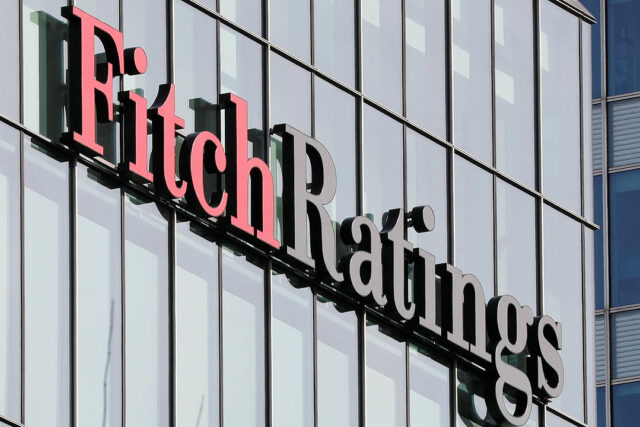
FITCH RATINGS on Wednesday upgraded its viability ratings (VR) for the Philippines’ three biggest private banks in asset terms and its two largest state-run lenders.

Fitch said in separate statements that it raised the VRs of BDO Unibank, Inc., Metropolitan Bank & Trust Co. (Metrobank), Bank of the Philippine Islands (BPI), Land Bank of the Philippines (LANDBANK) and Development Bank of the Philippines (DBP).

The VR upgrades reflect the banks’ standalone credit strength and was driven by the debt watcher’s upward revision of the Philippine banking sector’s operating environment score to “bbb-”/stable from “bb+”/stable, it said.

“This is underpinned by the country’s robust economic growth, which is favorable for banks’ asset quality and revenue in the near to medium term.”

Fitch also affirmed its long-term issuer default ratings (IDR) for the five banks with a stable outlook.

It likewise kept these lenders’ government support ratings (GSR), reflecting its expectation that the sovereign will rescue these banks if needed due to their high systemic importance.

BDO
BDO’s VR was hiked to “bbb-” from “bb+,” while its long-term IDR and GSR were affirmed at “BBB-” with a stable outlook and “bbb-,” respectively.

“The VR also takes into account BDO’s solid domestic franchise, which helps it generate quality business volume and maintain a leading funding position,” Fitch said.

It said BDO’s entrenched local franchise has allowed it to attract quality customers, manage risks and maintain its profitability.

It added that it expects the bank’s asset quality to remain stable over the next 12 months amid an improving economic backdrop.

Meanwhile, BDO’s margins could narrow as the central bank continues to cut rates, but its fee income will remain supported by its credit card business.

“We expect the bank to maintain stable capitalization, despite its growth plans, amid improved internal capital generation,” Fitch said.

“BDO’s funding and liquidity profile is a relative rating strength… The bank is funded primarily by customer deposits, with low-cost current and savings accounts comprising 71% of deposits — one of the highest ratios among domestic peers.”

METROBANK
Metrobank’s VR was also upgraded to “bbb-” from “bb+,” while its long-term local- and foreign-currency IDRs were kept at “BBB-” with a stable outlook. Fitch also affirmed its “bbb-” GSR.

“Metrobank’s VR also balances its solid franchise, superior asset quality relative to the industry and healthy capital buffers against risks associated with high credit growth,” Fitch said.

“Its large balance sheet and focus on the commercial and mid-market segment have enabled the bank to attract higher quality borrowers and generate robust business volumes over the years.”

The debt watcher said Metrobank’s improved loan ratios reflect its sound underwriting standards.

“We have revised Metrobank’s earnings and profitability score to ‘bbb-’/stable from ‘bb’/stable because of the higher operating environment score. The revision is also driven by our view that the bank is likely to maintain its risk-adjusted returns above its historical average over the next 18 months, owing to a slower pace of policy rate cuts and an increasing share of higher-yielding retail loans. Market-related income is also likely to remain high due to persistent market volatility,” it said.

Fitch said it expects the bank to post sustained earnings and healthy capitalization over the next 12 months.

It also has a strong funding and liquidity profile as it has a “favorable” deposit structure, it added.

BPI
Fitch upgraded BPI’s VR to “bbb-” from “bb+” and affirmed its long-term IDR at “BBB-” with a stable outlook. Its GSR was likewise kept at “bbb-.”

It said the bank’s VR reflects its strength as one of the country’s biggest private banks, “which anchors its steady funding profile and superior asset quality relative to the industry average.”

“BPI holds a roughly 16% market share in system loans, making it the country’s second-largest bank by loans. The bank’s market presence has been aided by the 2024 acquisition of Robinsons Bank Corp. (RBC) as well as robust lending growth in the retail sector. The shift towards the consumer segment is likely to be sustained in line with the bank’s effort to improve profitability,” Fitch said.

It said BPI was able to manage the impact of its merger with RBC on its asset quality. “Resilient economic growth and BPI’s steady credit standards should keep its asset quality metrics above the industry average,” it added.

Fitch said the BPI profitability will be steady this year as business volume growth stays robust despite an expected compression in margins due to the central bank’s rate cuts and an increase in retail loans.

“The common equity Tier 1 ratio declined to 13.9% in 2024, from 15.3% at end-2023, reflecting a one-off impact from BPI’s merger with RBC as well as strong risk-weighted asset growth. Nevertheless, we expect capitalization to steady over coming quarters, as risk-weighted asset growth is likely to decelerate to align with internal capital generation,” it added.

LANDBANK, DBP
As for the government-run banks, Fitch raised LANDBANK’s VR to “bb+” from “bb” and DBP’s VR to “bb” from “bb-.”

It affirmed both lenders’ long-term local- and foreign-currency IDRs at “BBB” with a stable outlook, as well as their “bbb” GSRs.

Fitch said both banks’ long-term IDRs are driven by its GSR, which are at par with the Philippines’ sovereign rating of “BBB” with a stable outlook, driven by its expectation of state support for both lenders in times of need amid their policy roles.

“This considers the bank’s unique and strategic policy role, the state’s 100% stake in the bank, as well as its systemic importance as the largest state-owned bank in the country, with a market share of about 14% of system assets,” it said about LANDBANK.

“Our assessment takes into account DBP’s strategic role as the country’s infrastructure financing bank and its 100% state ownership. A revision under way to the bank’s charter that allows it to sell shares to other investors is unlikely to affect our support assessment in the near term, as the state must retain at least a 70% stake in the bank,” it added.

The debt watcher said LANDBANK’s and DBP’s upgraded VRs reflect their improved capital positions, as well as the risks and benefits from their strong state linkages and roles as government policy banks.

LANDBANK is expected to post improved asset quality this year, as well as sustained core profitability in the near term, Fitch said.

“LANDBANK’s operating profitability was affected by large provisions in 2024, but credit costs are likely to decline this year amid a resilient economy and falling interest rates. Any pressure on the lending margin is also likely to be offset by higher market-related income on prolonged market volatility.”

The bank’s capitalization is also likely to improve, with its liquidity seen to stay strong as it is largely funded by customer deposits, with about 59% from government-linked entities.

“This underscores its high reliance on state-linked deposits for funding, but these deposits have proven to be a stable source over the years.”

Meanwhile, Fitch said it expects pressures on DBP’s asset quality to subside amid an improving operating environment.

This will lead to lower credit costs, which would support its profitability, it said.

“We also expect the bank’s market-related income to remain high in 2025 amid heightened market volatility, which should offset margin pressures stemming from a likely decline in the policy rate,” Fitch said.

“We expect DBP’s capitalization to steadily improve over the next two years as internal capital generation recovers to more than sustain risk-weighted asset growth… DBP’s liquidity coverage ratio of 128% at end-2024 reflects its liquid balance sheet. The bank sources the majority of its funding from customer deposits, most of which are linked to the public sector. This underscores the bank’s strong state linkages and the stability of its funding profile,” it added. — BVR


Security vs Privacy

FREEPIK

In 2022, when the SIM Registration law was passed, I expressed concern about the creation of a national SIM registration database. This database consolidates personal data, including names, photographs, IDs, mobile numbers, and other sensitive information, thus forming a substantial digital footprint. Such databases could easily become targets for hackers or malicious actors aiming to misuse or exploit the stored information.

At that time, I challenged policymakers, regulators, government officials, and industry leaders to prioritize data security and privacy protection. Achieving this, I argued, demands the implementation of advanced, next-generation cybersecurity measures.

Of late, the government chose to request Congress to establish a regulatory body dedicated to monitoring fake news and identifying troll farms. Additionally, the National Telecommunications Commission (NTC) proposed that mobile users register their SIM cards in person rather than online.

Both initiatives, in my view, fundamentally miss the mark and could lead to unintended negative outcomes. Mandatory SIM registration, along with online content regulation, presents opportunities for increased state surveillance and potential authoritarian abuses. Authorities could misuse these mechanisms to suppress political dissent, monitor opposition figures, and restrict freedom of expression.

The core of the debate lies in whether mobile telephony and the use of frequencies for voice and data should be viewed as a regulated privilege or recognized as critical infrastructure essential for modern societal functions, warranting easier access and greater convenience.

Mobile phones have become indispensable tools for social interaction, economic participation, and financial inclusion, especially in areas where mobile internet is the primary means of connectivity. Consequently, excessively stringent registration requirements might inadvertently restrict access for marginalized groups such as the urban poor, rural communities without formal identification, and economically disadvantaged sectors.

Strict regulation can unintentionally erect barriers to digital inclusion, undermining broader socioeconomic development goals. Policies that impose excessive burdens on SIM card acquisition conflict directly with international initiatives promoting digital accessibility and financial inclusion.

Therefore, SIM registration policies should carefully balance security and privacy without unnecessarily restricting accessibility. Other countries, like the Philippines, already adopted hybrid registration models that blend online and offline procedures. These models provide greater convenience, reduce logistical difficulties, and leverage digital technology to maintain secure verification without creating significant exclusionary risks.

That is why I find it perplexing why the NTC now insists on reversing course by mandating in-person registration — a method that is cumbersome, inconvenient, and not inherently more secure. Requiring physical presence for registration consumes substantial resources, creates logistical bottlenecks, and disadvantages individuals in rural or remote areas with limited access to registration facilities.

The inefficiencies and inconveniences associated with exclusively in-person registration are considerable. It is a costly, time-consuming, and often inaccessible process, particularly in densely populated urban settings and isolated rural communities with inadequate infrastructure. This approach disproportionately impacts low-income groups, exacerbating existing social inequalities.

Even if registration is permitted at points of sale, in-person methods remain vulnerable to human error, fraud, and corruption. Instances of bribery, identity theft, and mismanagement are significantly higher in manual registration processes. Countries relying heavily on physical forms managed by officials frequently experience these vulnerabilities, undermining the security goals that mandatory registration aims to achieve.

Concerns about scams and criminal activities will not necessarily diminish through in-person registration. Modern technology allows individuals to circumvent SIM registration entirely. Technologies such as virtual SIM cards (eSIMs) and Voice over Internet Protocol (VoIP) services — including popular apps like WhatsApp, Telegram, Signal, and Skype — enable anonymous communication without requiring a traditional SIM card linked to a personal identity.

Furthermore, advancements in virtual private networks (VPNs) and virtual phone number services provide anonymity and significantly weaken the intended effectiveness of SIM registration in deterring criminal activity. Scammers and criminals regularly exploit these technologies, reducing the practical value of mandatory SIM registration as a crime prevention tool.

Scammers are continuously adapting, using increasingly sophisticated methods such as spoofing caller IDs, cloning registered SIM cards, and exploiting vulnerabilities in mobile networks. The availability of fake identification documents and registration circumvention services on dark-web marketplaces further undermines the effectiveness of mandatory SIM registration laws.

In essence, mandatory SIM registration — whether conducted online or in person — cannot guarantee comprehensive security. Instead, ensuring robust cybersecurity, raising public awareness, and enacting strong data protection legislation are crucial to addressing these threats effectively. I have consistently advocated for this comprehensive approach since 2022.

I support mandatory SIM card registration to the extent that it contributes to security, crime prevention, and anti-terrorism efforts. However, in-person registration should remain optional, not mandatory. The fundamental benefit of mandatory registration lies in increased accountability, as mobile users become aware that authorities can trace their activities, potentially encouraging more responsible usage.

However, security measures must be balanced by robust privacy protections, transparency, and digital inclusivity. Mandatory SIM registration alone is insufficient to ensure comprehensive security. Centralized databases, if compromised, pose significant risks such as identity theft, stalking, blackmail, or other forms of harassment to millions of individuals.

We could retain existing practices regarding SIM registration while prioritizing secure digital identification systems for online registration. Integrating the national digital ID system with SIM registration would streamline processes and enhance security. However, this integration requires first addressing existing issues within the national ID infrastructure.

Additionally, we must strengthen legislation, regulations, and systems to ensure effective data protection, transparent data handling, strict access control measures, robust encryption, and clear accountability mechanisms. Public education campaigns should also inform users about protecting personal information, recognizing potential scams, and adopting secure mobile usage practices. In preserving security, we must respect privacy.


Marvin Tort is a former managing editor of BusinessWorld, and a former chairman of the Philippine Press Council

matort@yahoo.com

Kennedy tells US food companies to remove artificial dyes

CHEETOS.COM

NEW YORK — US Health Secretary Robert F. Kennedy, Jr. told food companies including PepsiCo and Kraft Heinz in a meeting on Monday that the Trump administration wants artificial dyes out of the food supply before Mr. Kennedy leaves office, according to an e-mail seen by Reuters.

Mr. Kennedy has pledged to tackle chronic illnesses by overhauling the US diet. He has encouraged fast-food chains to switch to beef tallow instead of seed oils for french fries, and pushed for bans on additives like food colors.

The US Food and Drug Administration, part of the agency Mr. Kennedy oversees, plans to work with the industry to create a federal framework on food dyes, according to the e-mail, sent by the Consumer Brands Association, a trade group representing PepsiCo, Kraft Heinz, and other food and consumer goods makers.

California last year banned dyes from food served in school lunches, and Virginia and New York State are considering similar measures.

Bloomberg News first reported on the discussion between Mr. Kennedy and the food companies.

According to the e-mail, the FDA wants to “avoid state patchworks,” or many states making their own laws on the topic, which could create confusion and hurdles for global companies.

Mr. Kennedy “expects ‘real and transformative’ change by ‘getting the worst ingredients out’ of food,” according to the e-mail. He also made clear that he will “take action unless the industry is willing to be proactive with solutions,” the e-mail states.

Consumer Brands Association Chief Executive Officer Melissa Hockstad said in a statement that the group looks forward to continuing to work with Mr. Kennedy.

A PepsiCo spokesperson said the Cheetos-maker was focused on “providing consumers with convenient, affordable and safe foods and drinks — including more options with natural ingredients, no synthetic colors and reductions in sugar, fat, and sodium.”

Kraft-Heinz did not respond to a request for comment. — Reuters

Avida Land unveils final tower of Avida Towers Makati Southpoint

AVIDA LAND Corp., the mid-market residential brand of Ayala Land, Inc., has unveiled the final tower of Avida Towers Makati Southpoint, completing the three-tower development.

“Located along Chino Roces Avenue, Avida Towers Makati Southpoint attracts both end-users and investors seeking well-designed residences in a prime location,” Avida Land said in an e-mailed statement on Wednesday. 

The final tower in the development features studio and one-bedroom units ranging from 23.1 square meters (sq.m.) to 41.9 sq.m., with prices starting at P7.1 million.

“Avida Towers Makati Southpoint complements Makati’s vision as a premier central business district, seamlessly blending modern living with a strong commitment to environmental sustainability,” Avida Land President Raquel S. Cruz said. 

“We’re providing residents with a forward-thinking lifestyle that harmonizes comfort, healthier living spaces, and a tangible contribution to a greener future,” she added. 

According to Avida Land, Makati City remains a sought-after real estate hub. It cited data from property consultancy firm Colliers Philippines showing that the Makati central business district’s full-year office vacancy rate stood at 8.3%, well below Metro Manila’s 19.8% rate. 

This underscores the city’s ability to attract corporate tenants, Avida Land said. 

The company also highlighted Ayala Land’s key upgrades in Makati City, including redeveloped malls, new office towers, lifestyle parks, and enhanced pedestrian connectivity. — Beatriz Marie D. Cruz

Local governments, barangays tap digital document handling solutions

DOCONCHAIN is streamlining document handling for Philippine local governments and barangays through blockchain-based digital signature solutions.

The Hong Kong-based startup software company, which entered the Philippine market in 2020, integrates blockchain technology with standard digital certificates to enhance document security and authentication.

“Implementing the current standard for offline security and authentication while adding blockchain allows us to achieve easy and hack-proof online authentication. This gives us the best of both worlds: offline security and online authenticity,” Doconchain Chief Executive Officer Olivier P. Bariou said in an interview.

Doconchain leverages Hyperledger, a private blockchain built by IBM, to encrypt and record every document event — from upload and fingerprinting to signature and download — ensuring that documents remain tamper-proof and verifiable throughout their lifecycle, he said.

While governments in the Philippines and other Southeast Asian economies remain mostly paper-based, Mr. Bariou said several local government units (LGUs) and barangays here have started adopting Doconchain’s blockchain digital signature solutions to streamline their transactions. 

“On the LGU side, it is used to secure digital business permits. This allows citizens and businesses to pay for their permits online and to have digital proof, reducing processing costs,” he said.

“On the barangays, we’re also discussing barangay clearances, which are usually done manually. Citizens can request an automated barangay clearance that checks the database and is then issued digitally. It’s secured on the blockchain, so if they need to share this clearance with an employer or a third party, they can verify that it’s authentic and original.”

Doconchain is also exploring partnerships with Philippine conglomerates, financial companies, real estate firms, and academic institutions, he said.

Mr. Bariou added that the national government’s efforts to digitize government transactions is a step in the right direction.

In June 2023, the Department of Information and Communications Technology launched the eGovPH Super App, a centralized platform for government transactions equipped with blockchain technology.

“I think we’re in the right moment and position to support the Philippine government in their transition. So yeah, there’s a lot of discussions, a lot of potential. I can say that the Philippines is also very open to new technologies,” Mr. Bariou said. — Edg Adrian A. Eva

IC moves deadline for firms’ adoption of new accounting standard to 2027

PHILSTAR FILE PHOTO

ALL INSURERS and reinsurers in the Philippines are required to adopt the latest financial reporting standards for their audited financial statements within the next two years, the Insurance Commission (IC) said.

All insurance companies must adopt the Philippine Financial Reporting Standards 17 (PFRS 17) in their audited financial statements by Jan. 1, 2027, the IC said in a circular dated March 11.

The deadline for compliance was moved from the original Jan. 1, 2025 implementation date.

“The Commission recognizes the need by insurers and reinsurers for additional time to prepare for the adoption of PFRS 17 in the presentation of their solvency reports. This will also allow the commission, the Securities Exchange Commission, the Financial and Sustainability Reporting Standards Council and the Professional Regulatory Board of Accountancy more time to ensure the effective, proportionate, and well-coordinated adoption of the new accounting framework,” Insurance Commissioner Reynaldo A. Regalado said in a statement late on Tuesday.

“At any rate, insurers and reinsurers are not precluded from adopting PFRS 17 as early as this year.”

The International Accounting Standards Board (IASB) in 2017 prescribed International Financial Reporting Standard (IFRS) 17 for insurance contracts. The standards provide updated principles for the recognition, measurement, presentation and disclosure of insurance contracts in firms’ financial statements.

PFRS 17 is the local adoption of the IFRS 17 as approved by the IASB in 2018.

“The new accounting standard introduces a more uniform and transparent approach to determine insurance contract liabilities using current values and risk adjustments,” the IC said.

Under the new circular, insurers and reinsurers will be required to submit by April 30, as part of their 2024 annual statements, reports outlining the status of their implementation of the PFRS 17 and affidavits of undertaking to declare their commitment to adopt the new accounting standard.

They will also need to submit quarterly implementation status reports, which cover preparatory activities; overview of implementation risks, challenges, and issues encountered; an assessment of PFRS 17 preparedness; and their PFRS 17 accounting policies.

Insurers are also required to turn in quantitative impact assessment reports.

“The commission views that the eventual institutionalization of PFRS 17 will ensure prudential stability and sustainable growth. It will also consequently afford the insuring public sustained, if not increased, protection and confidence,” Mr. Regalado said.

The insurance industry’s combined premium income rose by 12.81% year on year to P440.39 billion in 2024, driven by the life sector, IC data showed. Its net income grew by 15.88% year on year to P56.29 billion. — A.M.C. Sy