Home Blog Page 1308

Trump tariff on Brazilian goods could jack up US burger price

STOCK PHOTO | Image by Alexander Fox | PlaNet Fox from Pixabay

 – U.S. President Donald Trump‘s plan for a 50% tariff on goods from Brazil will likely raise prices for beef used in American hamburgers, traders and analysts said on Thursday, as food manufacturers increasingly rely on imports during a time of declining domestic production.

The proposal is a blow to U.S. meat companies also facing tighter cattle supplies due to a halt of livestock imports from Mexico over New World screwworm, a flesh-eating pest spreading south of the border.

The tariff would slash imports of Brazilian beef and force companies to seek supplies from other nations as Trump is broadening his global trade war, analysts said.

“If it does not get modified, you just cease the importation of Brazilian beef to this country,” said Bob Chudy, a consultant for U.S. companies that import beef. “Not one pound will be economic at those levels.”

U.S. beef prices climbed to records this year and production is projected to fall 2% to 26.4 million pounds, after farmers reduced the nation’s cattle herd to its smallest size in more than seven decades. A years-long drought dried up pasture land used for grazing, making it too expensive for many producers to feed their cattle.

Food makers have ramped up imports in response. U.S. beef imports from Brazil over the first five months of the year more than doubled from the same period in 2024, to 175,063 metric tons, according to the latest U.S. government data. That accounted for 21% of total U.S. imports.

A 50% duty starting on August 1 would bring the tariff rate on Brazilian beef to about 76% for the rest of the year, livestock analysts said.

“It is absolutely freezing trade today,” Mr. Chudy said of the proposal. “We don’t know what to do as an import community.”

Trump has shown the United States can enact tariffs that level the playing field for American workers and farmers while lowering costs, White House spokesperson Anna Kelly said.

However, U.S. consumers also face sharp price rises on staples including coffee and orange juice, traders said.

The U.S. is Brazil’s second-largest trading partner after China, and the tariffs are a major increase from a 10% duty Trump announced in April. The 10% tariff already started slowing U.S. beef imports from Brazil in June, traders said.

U.S. companies import lean beef from Brazil and other countries to mix with domestic supplies to make hamburger meat. Consumers have shown they are generally willing to pay high prices for meat, though the tariff would be a new test of their demand.

“This tariff will likely raise the price of beef, a staple food for many, on the heels of Congress voting to reduce food assistance to the most vulnerable consumers,” said Thomas Gremillion, director of food policy at the Consumer Federation of America.

The tariff forces importers to pay more for Brazilian beef or source it from other, higher-cost suppliers, said Austin Schroeder, commodity analyst for Brugler Marketing & Management.

Importers may try to boost purchases from Australia, Argentina, Paraguay and Uruguay, analysts said.

“You need higher prices to ration out what you have available,” said Altin Kalo, chief economist at Steiner Consulting Group. “Australia is shipping as much as they can here.”

Across the country, restaurants rely on a steady supply of imported goods that cannot be produced domestically, said Sean Kennedy, an executive vice president for the National Restaurant Association.

“Dramatic tariff increases could affect menu planning and food costs for restaurants as they attempt to find new suppliers,” he said. – Reuters

Brand Masters Collab 2025 spotlights accelerating marketing ROI with AI

The Philippine Association of National Advertisers (PANA), in partnership with Certified Digital Marketer (CDM), will be staging the Brand Masters Collab (BMC) 2025 on August 28 at the Makati Diamond Residences.

With the theme “Accelerating Marketing ROI: Transforming Creative, Media, and CRM through AI,” BMC is a closed-door, high-level learning environment designed for C-suites and senior business leaders who want to accelerate marketing ROI through smart AI integration.

“Marketers today are expected to deliver impact with tighter budgets and more aggressive goals,” said Cathy Santamaria, PANA Vice President and Chairperson of Brand Masters Collab 2025. “We’re curating this space to offer strategic clarity and practical solutions—from how to improve creative effectiveness, to optimizing media, to deepening CRM.”

Leading the conversation is Mimi Lu, Head of Strategy at dentsu Media APAC (Singapore), who will deliver the keynote session titled “The New Growth Formula: Creativity + Data + AI = Results.” She will be joined by an esteemed lineup of global experts, including Justin James of Agencio (Singapore), Thomas Hongtack Kim of Paulus (South Korea), Weldon Fung of Meltwater (Singapore), and Crisela Magpayo-Cervantes of WPP Media (Manila). Together, they will present execution-driven insights and high-impact case studies that showcase how marketing performance is being reshaped through innovation, intelligence, and integration.

BMC 2025 moves beyond theory with practical, strategy-driven workshops. From hands-on prompt engineering to AI application labs exploring real-world media and creative use cases, delegates will take part in immersive learning experiences. The day wraps up with a collaborative team challenge focused on mapping AI integration across the customer journey, guided by seasoned experts.

Delegates will walk away with clear, actionable insights on where to invest in AI to drive growth, how to enhance media targeting and attribution, scale content without compromising brand integrity, and personalize engagement through CRM x AI strategies. Real-world case studies from top-performing brands will shed light on what works, what doesn’t, and why.

Don’t miss your chance to be part of the PANA Brand Masters Collab 2025. Secure your seats via HelixPay and follow PANA on Facebook for the latest event updates and speaker announcements.


Spotlight is BusinessWorld’s sponsored section that allows advertisers to amplify their brand and connect with BusinessWorld’s audience by publishing their stories on the BusinessWorld Web site. For more information, send an email to online@bworldonline.com.

Join us on Viber at https://bit.ly/3hv6bLA to get more updates and subscribe to BusinessWorld’s titles and get exclusive content through www.bworld-x.com.

Trump’s Brazil tariff rattles coffee market, could raise prices in US

STOCK PHOTO | Image by Kelly Sikkema from Unsplash

 – The 50% tariff that the Trump administration has slapped on Brazilian imports has rattled the global coffee market and could make the price of a cup of coffee in the U.S. jump beyond recent highs.

Brazil is the world’s largest grower and exporter of coffee, while the U.S. is its biggest client and the world’s largest drinker of the beverage, with nearly 200 million Americans having a cup every day.

Coffee trade sources said the new duty announced on Wednesday, if confirmed on August 1, could halt new shipments of Brazilian coffee to the U.S., which imported 8.14 million 60-kg bags of the product from the South American country in 2024, or 33% of its total consumption.

“A tariff of this size would all but shut down that flow. Brazilian exporters won’t absorb it. U.S. roasters can’t,” said senior coffee broker and consultant Michael Nugent, owner of California-based MJ Nugent & Co.

“Bottom line: Brazil will sell its coffee elsewhere. The U.S. will buy coffee from someone else – Colombia, Honduras, Peru, Vietnam – but not at Brazil’s volume or price,” he said.

Traders said alternative coffee supplies would be more expensive, since there is not a lot of it in the market.

“Countries buy more from Brazil because it offers way better value versus expensive other origins,” said the director of a trading house based in the U.S. West Coast.

“It is not if Brazil would sell, but would U.S. buy (with the tariff)? Probably not,” he said.

Coffee drinkers around the world, including in the U.S., are already paying record or near-record prices for the beans after last year’s 70% price spike caused by tightening supplies.

Arabica coffee futures KCc2 jumped 1.3%on Thursday due to the planned tariff hike.


EYES ON EUROPE

Paulo Armelin, a large Brazilian coffee producer that sells directly to U.S. roasters, said his clients would not be able to pay up if the tariff is applied.

“We will have to look for other markets, maybe Germany,” he said, adding that it was already difficult to close deals earlier this year after the recent increases.

U.S. Commerce Secretary Howard Lutnick said last month during a Congress hearing that some natural resources that are not available in the U.S., such as tropical fruits and spices, could be exempt from tariffs, depending on negotiations with the countries producing and exporting them.

The U.S. produces only a fraction of the coffee it uses, with farms in Hawaii and a few in California.

“I hope that diplomacy will work and in the end coffee will be added to any exemption list,” said Eduardo Heron, a director at Brazilian coffee exporter group Cecafe, adding that exports could be made unfeasible by the tariff.


OJ, ETHANOL

Beyond coffee, more than half of the orange juice sold in the U.S. comes from Brazil, which exports other products such as sugar, wood and oil.

Orange juice futures rose 6% in New York on Thursday as the market fears a squeeze in supplies.

The U.S. has become more dependent on orange juice imports in recent years due to a sharp decline in domestic production due to the “citrus greening” crop disease, hurricanes and spells of freezing temperatures.

A report issued by the U.S. Department of Agriculture earlier this year forecast the U.S. orange harvest would hit an 88-year low in the 2024/25 season while production of orange juice would slump to a record low.

Brazil is the world’s second largest producer of the cane– or corn-based biofuel ethanol.

The South American country produced some 35 billion liters of ethanol in 2024, but exported less than 6%, of which only some 300 million liters went to U.S., according to a report from BTG Pactual. – Reuters

Bitcoin hits another record high

ALEKSI RAISA-UNSPLASH

 – Bitcoin rallied to all-time highs on Thursday, powered by demand from institutional investors and friendly policies of U.S. President Donald Trump’s administration.

The world’s largest cryptocurrency rose to a peak of $116,046.44 as of 2127 GMT, breaking the $113,734.64 record scored earlier on Thursday. It is now up about 24% this year.

In March, Mr. Trump signed an executive order to establish a strategic reserve of cryptocurrencies. He has also appointed several crypto-friendly individuals, including Securities and Exchange Commission Paul Atkins and White House artificial intelligence czar David Sacks.

Mr. Trump’s family businesses have also made forays into cryptocurrencies. Trump Media & Technology Group is looking to launch an exchange-traded fund to invest in multiple crypto tokens including Bitcoin, SEC filing on Tuesday showed.

Ethereum rose 3.01% to $2,905.24 as of 2130 GMT. – Reuters

British PM Starmer to visit Trump during his trip to Scotland this month, source says

BRITAIN’S PRIME MINISTER KEIR STARMER — POOL VIA REUTERS

 – British Prime Minister Keir Starmer has accepted an invitation to visit U.S. President Donald Trump during his expected trip to Scotland this month, a source familiar with the plans said on Thursday.

Details, including a specific date, were still being finalized, said the source, who was not authorized to speak publicly.

Scottish police said on Wednesday they were preparing for a possible visit by Mr. Trump to Scotland later this month, which would mark his first visit to Britain since the U.S. election last year.

The White House had no immediate comment on the report. The British embassy declined to comment.

Mr. Trump and Mr. Starmer developed a warm relationship in recent months, and last month signed a framework trade deal on the sidelines of a G7 meeting that formally lowered some U.S. tariffs on imports from Britain.

The deal came after Mr. Starmer visited the White House in February for a friendly encounter that included an invitation from King Charles for a future state visit, which Trump accepted.

UK media this week reported that Trump would visit his golf clubs in Scotland later this month. Sky News said he would visit his Turnberry and Aberdeenshire golf courses. – Reuters

Globe unveils Gen4 store at Robinsons Place Manila, brings elevated service and digital experiences to more customers

BW FILE PHOTO

Globe continues to innovate its retail footprint with the reopening of its newly upgraded store, transformed into a next-generation Gen4 store at Robinsons Place Manila. The renovation comes as part of Globe’s commitment to deliver faster, more efficient, and more personalized services to its customers.

The newly launched Gen4 store offers a modern, digital-first space designed to empower customers with convenient access to Globe’s full suite of products and services. It replaces the traditional customer service setup with a more interactive, self-guided experience.

“This new Gen4 store is more than just a retail upgrade. It’s part of our mission to serve our customers better, faster, and in more meaningful ways. Robinsons Place Manila is a key location for us, and this refreshed space ensures that we’re bringing not just connectivity, but also digital lifestyle solutions closer to where our customers are,” said Bam De Guzman, Senior Director for Territory Business at Globe.

Key features of the Gen4 store include:

  • Self-service kiosks for fast and convenient transactions like SIM purchase, bill payments, plan applications, and account inquiries.
  • 0917 lifestyle corner featuring tech accessories and apparel.
  • Interactive screens and demo units for product discovery and testing.
  • A more sustainable store design using digital signage, LED lighting, and eco-friendly design elements.

Located at Level 4, Pedro Gil Wing, Robinsons Place Manila, the Gen4 store is open daily during mall hours.

To learn more about Globe, visit https://www.globe.com.ph/.


Spotlight is BusinessWorld’s sponsored section that allows advertisers to amplify their brand and connect with BusinessWorld’s audience by publishing their stories on the BusinessWorld Web site. For more information, send an email to online@bworldonline.com.

Join us on Viber at https://bit.ly/3hv6bLA to get more updates and subscribe to BusinessWorld’s titles and get exclusive content through www.bworld-x.com.

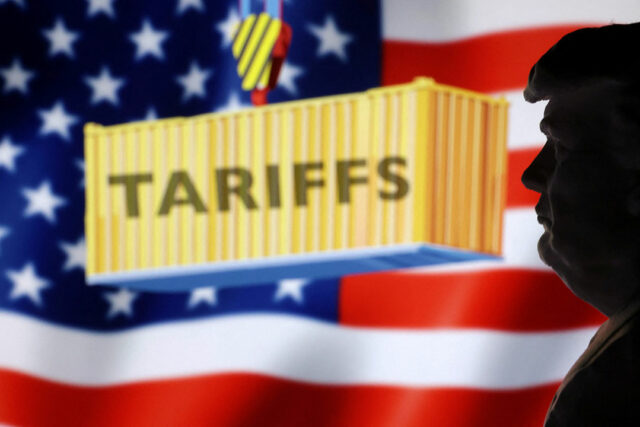
Manila to press US for tariff rollback

US President Donald J. Trump announced he will impose a 10% baseline tariff on all imports to the United States. — REUTERS

THE PRESIDENTIAL PALACE on Thursday raised alarm over the US decision to increase tariffs on Philippine exports to 20%, as a high-level delegation prepares to fly to Washington next week to seek adjustments.

The Philippine Exporters Confederation, Inc. (Philexport) also expressed concern about the country’s shrinking trade leverage with the US after US President Donald J. Trump’s move to hike tariffs from the “Liberation Day” rate of 17%.

“We are concerned that, notwithstanding our efforts and constant engagements, the US still decided to impose a 20% tariff on Philippine exports,” the Trade department said in a separate statement.

Still, Frederick D. Go, special assistant to the President for investment and economic affairs, said the new tariff remains the “second lowest” among Association of Southeast Asian Nations (ASEAN) member states, next to Singapore’s 10%.

Mr. Trump first announced the sweeping tariff changes on April 2 — dubbed “Liberation Day” — and implemented a 90-day pause that ended on July 9.

The US President said in posts on his Truth Social media platform that starting Aug. 1, he would impose a 20% tariff on goods from the Philippines, 30% on goods from Sri Lanka, Algeria, Iraq, and Libya, and 25% on Brunei and Moldova.

Mr. Go said the Philippine government is pursuing further negotiations.

“We remain committed to continuing negotiations with the United States in good faith to pursue a bilateral comprehensive economic agreement or, if possible, a free trade agreement,” he  told a news briefing.

The delegation — composed of Mr. Go, Trade Secretary Ma. Cristina A. Roque, Trade Undersecretary Ceferino S. Rodolfo and Trade Undersecretary Allan B. Gepty — is scheduled to visit Washington from July 14 to 18.

“The economic team and the Department of Trade and Industry will continue to advance key economic reforms to sustain a competitive and investor-friendly business environment,” Mr. Go said, citing the need to build more global trade ties.

Philippine Ambassador to the US Jose Manuel “Babe” G. Romualdez said the Philippines would seek to lower the duty, which remains among the lowest reciprocal duties in Southeast Asia.

“We are still planning to negotiate that down,” he said in a text message.

‘UNILATERAL IMPOSITIONS’
The Philippine Trade department said it understands the US concerns about trade imbalances and its push to boost local manufacturing.

“However, global supply chains are deeply interconnected, and unilateral trade impositions will have adverse effects on the global economy,” it said. “Thus, we believe in the need for constructive engagement to address trade issues.”

US goods trade with the Philippines reached about $23.5 billion last year, according to data from the Office of the United States Trade Representative. US exports to the Philippines stood at $9.3 billion, a 0.4% increase from 2023, while imports from the Philippines hit $14.2 billion, up 6.9% year in year.

The resulting US goods trade deficit with the Philippines widened to $4.9 billion in 2024, a 21.8% increase from a year earlier.

Finance Secretary Ralph G. Recto, for his part, said the Philippines does not plan to retaliate. “Trade negotiations are ongoing. [There are] no plans to increase tariffs on US imports,” he told BusinessWorld in a text message.

Despite the higher levies, Mr. Recto said the economy is still expected to grow by 5.5% to 6.5% this year.

Philexport President Sergio Ortiz-Luis, Jr. described the US tariff hike as “very unfortunate.”

“We do not mind the increase from 17%, except the fact that some of our major competitors have their tariffs decreased, especially Vietnam, which is at the same level with us,” he told BusinessWorld by telephone.

The group expressed concern that the Philippines might no longer be able to offer trade concessions without hurting local industries.

Mr. Ortiz-Luis noted that other countries currently negotiating with the US enjoy more bargaining power.

“Unfortunately, they can negotiate because they have leverage that we do not have because we have given them up already,” he said. “We have given the US [military] bases, they are putting ammunition here, we are buying used equipment from them, but the others are not.”

Mr. Ortiz-Luis urged the government to take the export sector and micro, small, and medium enterprises (MSME) more seriously, warning that the US tariff could still change before Aug. 1.

“It has so far been just lip service in terms of product development, joining international trade, and marketing,” he said. “No funding that matters is coming from the government.”

“Those are the things that are being forgotten… These are investments that we cannot afford to miss,” he added.

He also said any future talks with the US should highlight the country’s limited export volume.

“We cannot offer anything anymore. I cannot think of anything we can offer on the trade side, except things that will probably affect our agricultural imports from the US,” Mr. Ortiz-Luis said.

Instead of focusing solely on the tariff hike imposed by the US, the government should direct its efforts toward export product development and market diversification, he said.

Despite the 20% tariff, he remains optimistic that the country could still meet its revised export goal.

“We have already abandoned the Export Development Council’s target. What we are using now is the PDP target, and I think we can still achieve that,” Mr. Ortiz-Luis said, referring to the $113.42-billion export target under the Philippine Development Plan (PDP).

Foreign Buyers Association of the Philippines (FOBAP) President Robert M. Young said Manila should negotiate with Washington for a 10% tariff.

“Second is the oft-repeated call for the drastic improvement to level up our production capabilities and ease in doing business in order to compete and still remain on the radar of US buyers,” he said by telephone.

The 20% tariff could lead to weaker exports, slower economic growth, employment risks and investment uncertainty, Jonathan L. Ravelas, senior adviser at Reyes Tacandong & Co., said in a Viber message.

“Consider diversifying export markets, exploring US-based manufacturing partnerships, and leveraging ASEAN trade networks,” Mr. Ravelas said.

He also called for an acceleration in free trade agreement talks to cushion the economic impact of the tariff hike.

Semiconductor and Electronics Industries in the Philippines Foundation, Inc. (SEIPI) President Danilo C. Lachica said further clarification is needed on the nature of the higher US tariff.

“There is still a need to clarify if the 20% is reciprocal or the total tariff,” he said.

‘WAKE-UP CALL’
The Philippine Chamber of Commerce and Industry (PCCI) said the 20% tariff could hurt local industries.

“This development underscores the importance of diversifying our export markets, strengthening regional trade partnerships and investing in domestic competitiveness,” PCCI President Enunina V. Mangio said in a Viber message.

She urged the government to boost its support for local industries amid mounting global trade pressures.

Ser Percival K. Peña-Reyes, director at the Ateneo Center for Economic Research and Development, said the 20% duty is “still relatively lower” than most Philippine neighbors “so there’s still the potential to attract businesses from elsewhere.”

But investors won’t come in unless the Philippines boosts competitiveness, he said in a Viber message. He said tax holidays, reduced corporate income taxes, duty-free importation of equipment and raw materials and subsidized infrastructure could draw in investments.

Meanwhile, former Tariff Commissioner George N. Manzano said the Philippines remains in a relatively better position than other export-driven economies due to the lower tariffs and the exemption of key products like semiconductors.

“It’s not really as problematic as other countries that export, like maybe Bangladesh — it exports a lot of garments, which are not exempted,” he said by telephone.

Trade Justice Pilipinas said the higher US tariffs should serve as a “wake-up call” not only for the Philippine government but also for the broader ASEAN.

“Today’s tariff hike is not just a trade issue; it exposes the deep flaws of an export-dependent development strategy that leaves our economy at the mercy of global markets and the political whims of foreign leaders,” it said in a statement.

The group urged the Philippines to use the moment as an opportunity to strengthen ties with regional neighbors.

The recent announcement should compel the Philippines to rethink and deepen regional solidarity with ASEAN, it added. — Chloe Mari A. Hufana, Justine Irish D. Tabile and Aubrey Rose A. Inosante with Reuters


April FDI up 7.1%, boosted by Japan and manufacturing

REUTERS

FOREIGN DIRECT INVESTMENTS (FDI) in the Philippines rose 7.1% year on year in April, boosted by inflows from Japan and investments in the manufacturing sector, according to the central bank.

“Net foreign direct investments (FDI) into the Philippines remained positive in April 2025, with inflows from Japan and into manufacturing taking the lead,” the Bangko Sentral ng Pilipinas (BSP) said in a statement.

Net Foreign Direct InvestmentFDI net inflows hit $610 million in April, up from $570 million a year earlier and from $498 million in March. The latest figure marked a rebound from the 27.8% contraction posted in March.

The BSP attributed the growth to a 24.3% yearly increase in nonresidents’ net investments in debt instruments issued by local affiliates to $522 million.

However, equity capital investments — excluding reinvestment of earnings — plunged by 94.1% to just $4 million from a year ago.

Japan accounted for the biggest share of equity placements at 32%, followed by the US (18%), Singapore (13%), South Korea (13%) and Taiwan (9%).

Almost half (47%) of April’s investments were channeled into the manufacturing sector, while the financial and insurance, and real estate sectors each accounted for 16%.

Reinvestment of earnings also rose 3.3% to $84 million in April.

Total investments in equity and investment fund shares fell 41.1% to $88 million from April 2024.

“The increase in FDIs in April led by higher inflows into manufacturing, particularly from Japan, suggests renewed investor interest in the Philippines as a production hub amid global supply chain shifts,” John Paolo R. Rivera, a senior research fellow at the Philippine Institute for Development Studies, said in a Viber message.

“Strategic sectors like electronics and auto parts are attracting capital as firms diversify away from China and seek cost-effective alternatives in Southeast Asia,” he added.

But he said the 20% tariffs imposed by the US on the Philippines could weigh on FDI sentiment in the months ahead.

On Thursday, the US government raised tariffs on Philippine exports to 20%, up from 17%, under President Donald J. Trump’s sweeping tariffs on US trading partners.

“Investors may reassess the Philippines’ competitiveness compared with peers like Vietnam or Thailand, which may negotiate more favorable trade terms,” Mr. Rivera said.

He urged the government to respond with “swift trade diplomacy,” provide support to affected sectors and enhance the country’s investment appeal through stable policies, incentives and improved logistics.

Michael L. Ricafort, chief economist at Rizal Commercial Banking Corp., said the April FDI was supported by the recent passage of a measure that expands fiscal incentives and reduces corporate income taxes on foreign investors.

Despite the FDI rebound in April, FDI net inflows for the first four months dropped 33.4% to $2.37 billion from a year ago.

Debt instrument investments slid 24.3% to $1.72 billion, while equity capital investments excluding reinvested earnings plunged 68.6% to $302 million.

Equity placements dropped 57.5% to $509 million, while withdrawals fell 11.8% to $207 million.

Major sources of equity investments during the period included Japan (40%), the US (17%), Singapore (14%), South Korea (7%) and Malaysia (6%).

Most investments flowed into the manufacturing sector (47%), followed by real estate (21%) and financial and insurance (14%).

Meanwhile, reinvestment of earnings for January to April rose 7.4% to $348 million from a year earlier. — A.M.C. Sy

Chief PHL economist backs online gambling tax, calls for safeguards

MACROVECTOR_OFFICIAL | FREEPIK

By Aubrey Rose A. Inosante, Reporter

THE PHILIPPINEStop economist on Wednesday backed a proposal to tax online gambling, but said the government’s economic planning agency has yet to study a total ban.

“We discussed that with the economic managers,” Department of Economy, Planning, and Development (DEPDev) Secretary Arsenio M. Balisacan told reporters on Wednesday. “I think at the very least, you can tax [it].”

“You can treat it like your cigarettes — impose taxes, but at the same time, make sure that it will not become a social menace, just like the POGOs (Philippine offshore gaming operators),” he added.

Finance Secretary Ralph G. Recto last week said the government is proposing an online gaming tax, alongside policy options to limit access to gambling platforms.

These may include restricting play time, limiting cash-ins, imposing age restrictions and requiring warnings on the dangers of gambling.

President Ferdinand R. Marcos, Jr. has also expressed support for taxing and regulating the industry to mitigate addiction-related harm.

Still, Mr. Balisacan said present laws might lack the infrastructure to support online gambling taxation.

“I was asking some of my colleagues, ‘Do we have the tools and the infrastructure to tax online gambling?’ And apparently, we still need a law,” he said. “That’s what we need to look at.”

Akbayan party-list group earlier filed a bill at the House of Representatives that seeks to impose a 10% levy on online gambling, with proceeds allocated to addiction treatment, recovery and public education.

Mr. Balisacan said the DEPDev has not made a formal position yet on whether a total ban is feasible.

“We have not been asked, but we also haven’t looked at the issues yet. But we would eventually, because it’s becoming a concern,” he added.

Meanwhile, Philippine Amusement and Gaming Corp. (PAGCOR) Chairman and Chief Executive Officer Alejandro H. Tengco said illegal gambling websites — not licensed operators — are the real threat to the industry.

“The problem of the industry today is not regulated online gamers or online companies, but the illegal [outfits] that have been proliferating all these years,” he told Morning Matters on One News.

PAGCOR monitored almost 11,000 illegal websites in the past two years, taking down about 76% or roughly 8,000 of them. Still, Mr. Tengco said enforcement is difficult due to the internet-based nature of the platforms.

“Because this is internet-based, it is very difficult to cancel or stop them in one blow,” he said. “So that really is the main problem we are trying to address with all our best efforts.”

Mr. Tengco said PAGCOR supports Senator Sherwin T. Gatchalian’s bill seeking tighter regulation through minimum deposit and bet limits. He separately told DZMM radio on Tuesday a total ban on e-gaming is ill-advised, adding that regulation is the better path.

PAGCOR is also planning to launch a 24/7 counseling hotline to support those struggling with gambling addiction.

Analysts and advocates warned that a sweeping ban could lead to underground operations that are harder to regulate.

“If a total ban is pursued, it must be accompanied by strong enforcement mechanisms, public education, and transition support for displaced workers and businesses,” John Paolo R. Rivera, a senior research fellow at the Philippine Institute for Development Studies, said in a Viber message.

He said safeguards remain inadequate to protect vulnerable groups from financial distress, addiction and associated crimes.

Digital Pinoys national campaigner Ronald B. Gustilo said a more practical approach is stricter regulation instead of prohibition.

“The experiences with POGOs and e-sabong  (e-cockfighting) have shown that prohibition often drives operators underground, making the industry harder to monitor and control,” he said via Viber.

He urged the government to focus on restricting access to gambling content, including banning advertisements on social media, digital wallets and other platforms.

“Ultimately, we must strike a balance between public welfare, the regulated presence of both online and in-person gambling and the need to curb its harmful effects,” he added.

PHL may struggle to bring debt ratio below 60%

BW FILE PHOTO

By Aubrey Rose A. Inosante, Reporter

THE PHILIPPINES might struggle to bring its debt-to-gross domestic product (GDP) ratio back to the internationally accepted threshold of 60% as global uncertainties and slower growth weigh on fiscal recovery, analysts warned.

“With the downgrade in growth forecasts and the sustained increase in debt levels, we may not be able to see an immediate return of the debt-to-GDP ratio to 60%,” Diwa C. Guinigundo, country analyst at GlobalSource Partners and a former central bank governor, said in a Viber message.

The country’s debt-to-GDP ratio rose to 62% in the first quarter, the highest since 2005 and exceeding the 60% benchmark widely recognized by institutions like the International Monetary Fund.

While the Bureau of the Treasury had cited a more flexible 70% ceiling for emerging economies, the ratio now is above the Marcos administration’s target of 60.4% by yearend and 56.3% by 2028.

In response to a wider fiscal gap, Finance Secretary Ralph G. Recto recently adjusted the borrowing plan to P2.6 trillion from P2.55 trillion.

Still, some experts see potential for improvement if growth accelerates and borrowing is channeled wisely.

“If the economy sustains a growth rate of around 5.5% to 6% annually, and debt accumulation moderates, we could see the ratio ease back toward 60% within the next 18 to 24 months,” Jonathan L. Ravelas, a senior adviser at Reyes Tacandong & Co., told BusinessWorld in a Viber message.

However, first-quarter GDP came in at a weaker-than-expected 5.4%, down from 5.9% a year earlier and below the government’s 5.5% to 6.5% goal this year.

Mr. Ravelas said the optimistic scenario hinges on the assumption that there would be no “major external shocks” and that borrowings are allocated efficiently.

“If investments go into infrastructure, digitalization and human capital development — areas with high multiplier effects — then yes, growth can outpace debt,” he said.

“But if borrowing merely plugs fiscal gaps and subsidies [are provided] without boosting productivity, the ratio may remain elevated or worsen. The key is quality of spending, not just quantity,” he added.

Jose Ma. Clemente S. Salceda, an economist and former congressman, said the debt ratio remains “manageable,” especially since the bulk of obligations are obtained locally, limiting vulnerability to foreign exchange shocks.

“I’m not worried even if we stay at around 60% debt-to-GDP,” the former Committee on Ways and Means chairman of the House of Representatives said via a Viber message. “Global expectations of debt sustainability evolved during COVID.”

National Treasurer Sharon P. Almanza earlier said 80% of borrowings this year would be raised locally, while 20% will be sourced externally — a strategy meant to buffer the impact of a larger deficit ceiling.

As of end-May, the country’s outstanding debt stood at P16.92 trillion, with 69.6% obtained domestically.

Still, Mr. Salceda flagged concerns over future shocks and fiscal space.

“The real question is whether our economy and tax base are growing fast enough to support another shock,” he said, noting that from 2004 to 2019, the country reduced its debt-to-GDP to 39.6% from 71.6% by expanding the economy and improving tax revenue.

He warned that the proposed 2026 national budget of P6.793 trillion — only 7.4% higher than this year — would be “contractionary in real terms” when nominal GDP is expected to grow by about 8%.

“The government’s role in driving growth will be more limited, so spending must be efficient and well-targeted,” Mr. Salceda said, adding that sectors like infrastructure, food systems, education and digital services are key to widening the tax base and supporting long-term revenue resilience.

Michael L. Ricafort, chief economist at Rizal Commercial Banking Corp., said the Eurozone’s Stability and Growth Pact sets a standard of 60% debt-to-GDP and a 3% deficit ceiling.

Rather than focusing solely on targets, Mr. Ricafort said improving recurring tax collections is crucial, particularly by maximizing existing laws and clamping down on tax evasion.

“In a worst-case scenario and as a final option, new taxes and higher tax rates, among other tax reform measures, [may be needed] to structurally increase the recurring sources of National Government tax revenue collections,” he added.

Despite the concerns, multilateral organizations remain cautiously optimistic.

In its Philippine Economic Update on July 7, the World Bank projected that the country’s debt-to-GDP ratio would fall to 60.2% by 2025 and 59.7% in 2026. The trend is expected to continue, dropping to 59.4% in 2027 and 59.1% by 2028, by the end of the Marcos administration.

“The projected decline in interest rates should also lower the cost of debt financing,” the World Bank said, citing planned fiscal consolidation and recovering growth.

Steering growth in the nation’s ports

Since its inception in 1974, the Philippine Ports Authority (PPA) has been mandated to establish, develop, regulate, manage and operate a rationalized national port system in support of trade and national development in the country. Throughout its journey that spans five decades of institutional reform, infrastructure development, and technological modernization, the agency has aimed at providing port facilities and services aligned with global best practices and a port regulatory environment conducive to national development.

The PPA was created to bring order and centralization to what used to be a fragmented port management system in the Philippines. Through Presidential Decrees 505 and 857, the agency was provided the legal basis to consolidate authority over hundreds of national, municipal, and even privately operated ports by 1977.

The first few years of the PPA were marked by foreign-assisted development projects in key urban ports and highlighted the need for international cooperation. Executive Order 513 restructured the organization by expanding its regulatory powers and institutional reach. Additionally, the Manila International Container Port (MICP) was identified as a specialized hub for selected foreign trade operations, an early move toward creating more efficient trade gateways.

By the mid-1980s, the PPA shifted its focus toward institutional independence and a more coordinated nationwide port system. As it officially became attached to what was then the Ministry of Transportation and Communications, the agency developed a framework encompassing 114 integrated ports. Further support from foreign-assisted programs allowed for technical and operational upgrades, such as hydrographic surveying, interisland transport, and data systems.

Executive Orders 159 and 321 played a leading role in this phase as the legislations granted PPA the power to finance and reinvest its revenues into port development, thus enabling a cycle of self-sustained growth. Opening the door to long-term private sector partnerships, the agency also awarded the Manila International Container Terminal (MICT) contract to the International Container Terminal Services, Inc. (ICTSI) in the decade.

The late 1990s saw the advent of technological advancement and deeper global cooperation for the port authority. Major maritime gateways such as the Manila South Harbor, with support from the Asian Development Bank (ADB) received infrastructure upgrades, while new Port Management Offices (PMOs) in Limay and Calapan were established to improve regional capacities.

The PPA also began cultivating ties with international counterparts, organizing events like the APA Sports Meet and the Port Development Conference, which emphasized knowledge-sharing among port authorities across Asia. Another notable achievement during the decade was the launch of the PPA’s online presence and the securing of international funding for IT modernization.

Throughout the 2000s, the PPA focused on expanding maritime connectivity and enhancing port operations. One of the agency’s most transformative initiatives of the decade was the expansion of the Roll-on, Roll-off (Ro-Ro) terminal network, which improved inter-island transport and supply chain efficiency.

Another paradigm-shifting strategy for the port authority was the implementation of the nationwide Management Information System (MIS) and the rollout of Vessel Traffic Management Systems (VTMS). These projects strengthened both data handling and maritime safety. Furthermore, the integration of advanced IT platforms like Oracle further enhanced back-end efficiency and service reliability.

Kicking off PPA’s 51st anniversary celebration, General Manager Jay Santiago (2nd from left) leads the ribbon-cutting ceremony, joined by (from left) Assistant General Manager for Engineering James Gantalao, AGM for Finance, Legal, and Administration Elmer Nonnatus C. Cadano, AGM for Operations Mark Palomar, and Special Assistant to the Corporate Head II Eric Dimaculangan (right).

For the last decade, the PPA has dedicated time and resources to developing a more modern, transparent, and sustainability-oriented institution. Central to this bureaucratic transformation was the introduction of the Port Terminal Management Regulatory Framework in 2016. The guidelines provided clear procedures for private sector participation and operational efficiency in Philippine ports. With the implementation of the Freedom of Information (FoI) rules, the agency also emphasized transparency and public accountability. Digital innovations like iPORTS, e-payment systems, and the TAPPPS platform streamlined port processes and reduced red tape as well.

Despite the challenges brought by the COVID-19 pandemic, the PPA maintained uninterrupted port operations and prioritized health and safety protocols in the early parts of the current decade. Concurrently, it strengthened its environmental agenda by banning single-use plastics, initiating reforestation programs, and integrating sustainability principles into port management.

Recent accomplishments

Between 2020 and 2024, the PPA achieved holistic growth in various facets of the industry, including infrastructure, trade performance, environmental sustainability, and financial management. On the infrastructure side, the PPA completed 15 Locally Funded Projects (LFPs) and 21 major repair infrastructure asset projects, while continuing work on 66 additional LFPs and 23 repair initiatives. To support these programs, the agency allocated P5.24 billion for LFPs and another P1.2 billion for dredging operations in hopes of maintaining navigability and port efficiency during the span. Complementing its physical upgrades, the PPA also advanced its sustainability efforts by planting nearly 3.91 million mangrove seedlings nationwide in the same period.

Shipping and trade performance saw significant growth in 2024. Cargo throughput rose to 289.41 million metric tons (MMTs), marking a 6.23% increase, while container traffic reached 7.84 million TEUs, up by 4.45% compared to 2023. Similarly, passenger volume expanded to 78.81 million, a 7.02% rise, and ship calls surged by 10.39% to 621,374, indicating improved maritime mobility and logistics activity.

These infrastructure improvements, paired with exceptional sipping and trade numbers, carried over to the authority’s financial performance. Last year, the PPA posted a record-breaking P27.64 billion in total revenue, up by 8.61% from P25.45 billion in 2023, with the agency’s expenses only rising slightly by 2.07% to P17.02 billion. This led to increased Earnings Before Interest, Taxes, Depreciation, and Amortization (EBITDA) by 14.52% to P18.90 billion, while net income before tax climbed by 21.06% to P10.61 billion. The year also saw the PPA remit P5.20 billion in dividends to the national government, a 2.88% increase from the previous year.

Plans and programs for 2025

In alignment with the Philippine Development Plan’s goal of revitalizing the nation’s social and economic landscape, the PPA is set to roll out a series of transformative programs in 2025.

A key focus will be the completion of 20 locally funded infrastructure projects, which include the construction of additional RoRo ramps, cruise ship terminals, port operational areas, operations buildings, passenger terminal buildings, and other critical port facilities all across the archipelago. To further enhance operational efficiency, the PPA also plans to open 10 ports for bidding under the Port Terminal Management Regulatory Framework (PTMRF), encouraging private sector participation in the management and development of port operations.

In pursuit of global standards, the agency is working toward 100% compliance with the International Ship and Port Facility Security (ISPS) Code to increase public confidence in the safety and security of all port facilities. Alongside this, the PPA is looking to attain ISO certifications for both its Quality Management System (QMS) and Integrated Management System (IMS), aiming to boast elevated service delivery and operational excellence.

The authority is also fast-tracking the digitalization of its systems in an effort to improve transaction turnaround times and streamline business processes at the ports. Sustainability is another central pillar of the PPA’s 2025 agenda. The agency is implementing resilient and environmentally responsible development programs, including the use of alternative energy sources and decarbonization strategies. It will also support the country’s growing offshore wind energy sector by modernizing and repurposing key port infrastructures to accommodate this emerging industry. Finally, the PPA will intensify its “Green Port” initiatives under the Green Port Award System (GPAS), reinforcing its commitment to climate action and sustainable port operations.

The port authority is expecting the completion of 20 LFPs in 2025 including 10 projects in Luzon, five projects in Visayas, four in Mindanao, along with the installation of sewerage treatment plants in various PPA offices. — Jomarc Angelo M. Corpuz

Keeping PHL moving through port developments

Photo from Philippine Ports Authority

As a nation of more than 7,600 islands, the Philippines relies heavily on maritime trade. Ports, serving as the main link between regions and the wider global economy, continue to see a surge in ship traffic, cargo volume, and cruise passenger arrivals.

Data from the Philippine Ports Authority (PPA) show that ship calls rose by 3.11% in the first quarter of 2025, reaching 153,867 compared to 149,224 during the same period last year.

Ports across the country handled 65.77 million metric tons (MMT) of cargo throughput, up from 59.52 MMT during the same period last year. Most of the movement came from domestic cargo, which totaled 28.28 MMT. Imports followed at 26.77 MMT, while exports reached 10.71 MMT.

Beyond national trade, ports have a direct impact on consumers. When port operations face congestion or inefficiencies, it often results in increased shipping expenses, which may translate into higher prices of basic goods. On the other hand, efficient port systems help keep transportation costs manageable, ensuring goods reach markets promptly and affordably. In this regard, port performance affects both large-scale business operations and everyday household consumption.

The Department of Trade and Industry (DTI) said more than 90% of the country’s trade by volume passes through ports. The PPA said investment in port upgrades and intermodal transport links remains a priority to strengthen not only commercial shipping activities but also the broader supply chain.

Strengthening port infrastructure

The government, through the PPA and its related agencies, is investing in port infrastructure to meet the growing demands of domestic and international trade. Backed by a P5.23-billion allocation for 2024, the agency has implemented 81 locally funded projects aimed at developing, modernizing, and maintaining key ports across the archipelago.

According to data from the PPA, 33 projects are under way in Luzon, 26 in the Visayas, and 22 in Mindanao. These projects involve the expansion of existing facilities, construction of new terminals, dredging operations, and the establishment of disaster-resilient port structures. The infrastructure enhancements are designed to accommodate growing shipping demands as the country seeks to attract more trade and tourism activity.

15 of the projects have already been completed, including six in Luzon, two in Visayas, and seven in Mindanao. The remaining 66 projects are in various stages of development, with 27 in Luzon, 24 in Visayas, and 15 in Mindanao expected to continue throughout the year.

Photo from Philippine Ports Authority

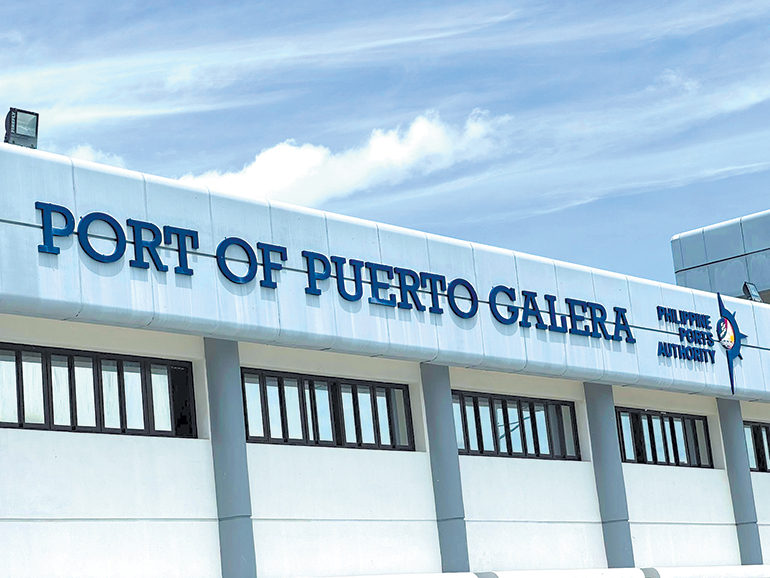
In Luzon, several major accomplishments have been reported. A new wharf and port operational area in San Juan, Batangas, valued at P145.9 million, was completed in December. In Oriental Mindoro, the port of Puerto Galera underwent a P147.6-million expansion. The ports of Mauban and Plaridel-Siain in Quezon province were also upgraded to improve operational capacity.

Pampanga marked the completion of the P89.5-million Philippine Coast Guard-PPA K9 Academy in July, which enhances maritime security training. In June, Ilocos Norte finalized several support facilities in Currimao, including a law enforcement building, staff quarters, and a new gate, all amounting to P222.6 million.

In the Visayas region, significant milestones included the P215.1-million development of the Alegria Port in Buruanga, Aklan. The Catagbacan Port in Loon, Bohol, underwent a P693.5-million upgrade that included the construction of a wharf and a Roll-on, Roll-off (RoRo) ramp.

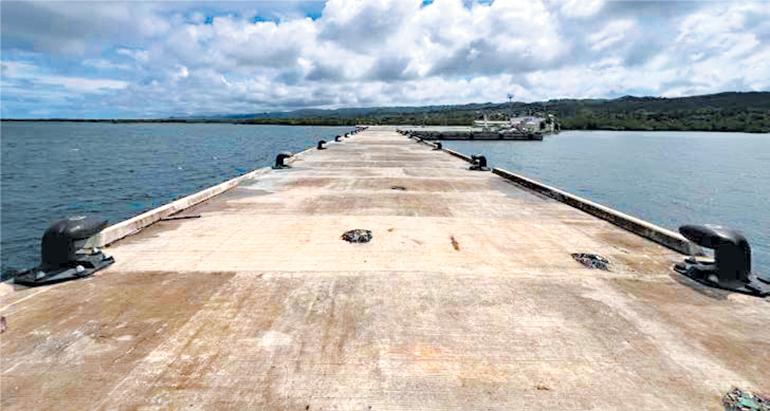
Construction of wharf and port operational area with continuous RoRo ramp in Catagbacan Port — Photo from Philippine Ports Authority

Infrastructure development remains on track in Mindanao. A new operational area was completed at the Opol Port in Misamis Oriental. The general cargo berth of Sasa Port in Davao received a P902-million upgrade, increasing its capacity and efficiency. In Surigao del Norte and Surigao del Sur, construction efforts included a cruise ship port in Jubang, Dapa, and the rehabilitation of the Lipata port facility. Both are expected to boost local tourism and trade activity.

Apart from new construction, the PPA is also focusing on the ongoing maintenance and repair of existing port structures. For 2024, the agency scheduled 488 repair and maintenance activities nationwide. By the end of the reporting period, it completed 21 major repairs and 301 regular maintenance operations to ensure that the country’s maritime infrastructure remains in optimal condition.

Dredging operations were also conducted nationwide with a P1.2-billion allocation. The agency removed more than 3.63 million cubic meters of silt to ensure safe and efficient navigation. Priority dredging areas included the Manila International Container Terminal, North Harbor, Cagayan de Oro, and Iloilo clusters, as well as ports in Zamboanga, Tacloban, Surigao, and Siquijor.

The large-scale investments in maritime infrastructure coincides with a successful financial year for the PPA. In 2024, the agency recorded its highest-ever annual revenue, collecting P27.3 billion. The Department of Finance (DoF) confirmed that the PPA ranked among the top four contributors out of more than 50 government-owned and -controlled corporations, and remitted P5.20 billion in dividends to the National Treasury.

Construction of port operational area in Opol Port — Photo from Philippine Ports Authority

Enhancing travel access

The PPA continues to push for improved inter-island trade and passenger movement through the development of RoRo terminals. These investments support the Strong Republic Nautical Highway, a nationwide network of RoRo ports and roads that enables vehicles to travel across islands with ease.

Recently, the agency has completed or is working on more than 30 RoRo terminals in key provinces experiencing growing trade activity. These include Oriental Mindoro, Masbate, Davao del Sur, and Zamboanga del Norte. The ongoing port development aims to make domestic transport more affordable, faster, and more efficient — especially for small-scale farmers, microentrepreneurs, and regular commuters.

According to PPA officials, the RoRo network significantly shortens travel time and reduces shipping costs. It allows vehicles to cross islands without unloading cargo, minimizing delays and preserving the quality of transported goods. In Oriental Mindoro, for example, local farmers can now send fresh produce directly to Metro Manila via the Batangas-Calapan route. Previously, this required multiple transfers and longer travel hours, which increased freight costs and caused product spoilage.

Recognizing the growing number of passengers and freight using these routes, the PPA is prioritizing the development of ports located along high-demand corridors. Among these are the ports in Matnog, Sorsogon; Dapitan, Zamboanga del Norte; and Allen, Northern Samar.

Attracting private investments

The PPA has confirmed it is moving forward with the privatization of 12 ports located in Luzon and Mindanao, aiming to increase private sector participation in the development and operation of the country’s port infrastructure.

PPA General Manager Jay Daniel R. Santiago announced that feasibility studies have been completed for three Mindanao-based ports. These studies include indicative financial models required under the newly enacted Public-Private Partnership Code and its implementing rules and regulations.

The remaining nine ports in Luzon are undergoing similar assessments. The finalization of feasibility studies and the launch of corresponding bidding processes for these Luzon ports are expected before the end of the year.

The decision to pursue privatization stems from the agency’s recognition of its financial limitations and the growing demand for improved logistics and port services. The PPA emphasized that involving private entities would not only inject necessary capital into the sector but also introduce modern technologies and professional management systems that can improve operational efficiency.

“We are accelerating these initiatives mainly to support the national policy on PPPs as a catalyst for investments, jobs and more competitive logistics across the country,” Mr. Santiago said. — Mhicole A. Moral

ADVERTISEMENT
ADVERTISEMENT