Home Blog Page 1298

Embracing our identity as a maritime nation

FREEPIK

There are many ways to characterize the Philippines as a nation. We have a young, robust population. We are the second-largest archipelagic country. We have more sea than land, and our coastline is the fourth-longest in the world. We belong to the 18 mega-diverse countries in the world. We are a maritime nation.

The current administration of President Ferdinand Marcos, Jr. has acknowledged our identity as a maritime nation. Our maritime identity is “an intrinsic and undeniable part of the national Filipino character,” he said during the ceremonial signing of the historic Philippine Maritime Zones Act and the Philippine Archipelagic Sea Lanes Act in November last year.

And when he talked about the Comprehensive Archipelagic Defense Concept (CADC) during the Shangri-La Dialogue, Asia’s premier defense summit held in Singapore in May 2024, he said it was intended to bolster the Philippines’ capacity to protect its waters and maritime resources.

Indeed, the opportunities for a maritime nation such as ours are immense. Our resources are vast, and our potential is high. We would be able to enhance food security by promoting responsible fisheries and aquaculture, drive economic growth by expanding marine-based industries such as tourism and shipbuilding while creating more jobs, and strengthen energy security through offshore wind projects.

As a result, the Philippines can generate more jobs, boost local industries, and improve the quality of life for its people while ensuring the sustainable use of its vast marine resources.

During his second State of the Nation Address in 2023, President Marcos Jr. emphasized the need to develop the blue economy. This directive is embodied in Senate Bill 2450, or the Blue Economy Act, considered priority legislation. The bill aims to adopt the blue economy as a framework for the sustainable and responsible use of the country’s marine resources, positioning them as a key pillar of the national economy.

It is also expected to boost local industries and generate jobs by promoting sustainable ocean-based economic activities such as fisheries, aquaculture, marine tourism, shipbuilding, renewable energy, and maritime logistics.

A specific provision is the establishment of Blue Economic Zones (BEZs) to encourage investments and economic activities in the country’s coastal and maritime areas. These zones will serve as hubs for marine-based industries and help ensure the sustainable management of the country’s vast ocean resources.

But while there are opportunities, there are also threats. This is why alongside exploring and maximizing the potential of the Philippines’ blue economy, we also need to be mindful of the risks confronting us as a maritime nation.

These threats come in different forms and are multi-faceted.

We have to deal with overfishing and habitat degradation — years of irresponsible exploitation of resources have led to these conditions. Climate change is also causing adverse effects on our seas and corals, posing risks to their sustainability.

Finally, there are increasingly aggressive and provocative actions in the West Philippine Sea. These acts threaten our sovereign rights and access to vital areas and resources. They prevent the Philippine economy from maximizing the benefits from resources within our Exclusive Economic Zone. They try to make a mockery of the rules-based international order and insult the values and principles that the Philippines and other members of the international community hold dear.

They also put the safety and livelihood of Filipino fisherfolk in peril.

In order to address these threats and to continue working toward achieving the potential of our blue economy, the Philippines is correct to adopt a comprehensive and coordinated approach that integrates maritime security, environmental protection, and sustainable economic policies.

We are fortunate to be able to collaborate with like-minded countries. Another blue-economy nation that comes to mind is France, with its extensive expertise in harnessing its own and the marine resources of its territories. By forging stronger partnerships with France, the Philippines can harness its maritime resources more effectively to ensure long-term economic growth while safeguarding its marine environment.

The French Embassy in the Philippines has partnered with the Stratbase Institute in organizing a hybrid event titled “Strengthening Philippines-France Cooperation for a Sustainable Blue Economy.”

The event, happening this Friday, March 28, will focus on strategic blue economy industries where strengthened bilateral cooperation between France and the Philippines could promote growth. It will bring together key stakeholders from the government, diplomatic community, the academe, and think tanks to discuss challenges and actions needed to unlock the potential of the Philippines’ blue economy.

I look forward to the conversations we will have in this event. The avenues for discussion and collaboration are as vast as the potential of our seas. We have now identified this growth area, bolstered by pronouncements from the Executive and initiatives from the Legislative. Now we are emboldened by the show of cooperation and partnership by an established blue nation as France, and driven by a desire to maximize the benefits of our resources and channel them to the ultimate good of our people.

Let’s make our blue economy work, because this is who we are.


Victor Andres “Dindo” C. Manhit is the president of the Stratbase ADR Institute.

Arts & Culture (03/26/25)


One-act play discusses education system perils

THE play Ang Goldfish ni Prof. Dimaandal is a satirical production which dwells on prevailing power struggles and flaws of the education system. Written by three-time Carlos Palanca Memorial Awards first-prize winner Eljay Castro Deldoc, it follows an ongoing investigation led by cranky science teacher Prof. Dimaandal, who seeks justice for her pet goldfish that was allegedly murdered by three students. It is directed by De La Salle-College of Saint Benilde (CSB) alum Mikaella Yoj Sanchez, and presented by Hala Theater under the School of Arts, Culture, and Performance of the Theater Arts Program of CSB. The show is running until March 29 at the Blackbox Theater of the Benilde Design + Arts Campus. Tickets are available for P250 for Benildeans, P300 for regular attendees, and P500 for the gala on Saturday. Tickets are available via https://tinyurl.com/AngGoldfishniProfDimaandal and at the gate for walk-in attendees.


FEU Dance Company holds weekend concert

THE Far Eastern University (FEU) Dance Company is taking center stage on March 28 and 29 for their annual major concert entitled FRAMES: Elevating the Unseen. It will take place at the FEU Auditorium at 6 p.m. on both days. The concert will showcase Philippine folk dances and an open style segment choreographed by its members and artistic director Michael Barry Que. The folk dances are from the Cordillera, Lumad, Muslim, Maria Clara, and Rural suites. Tickets can be purchased via Ticket2Me and on the FEU Dance Company’s official Facebook page. Prices are P100 for the FEU Community and P200 for those from outside FEU.


Artists share how to convey ideas through textile art

TO CONCLUDE the Pacita Abad: Philippine Painter series of discussions, textile artists Aze Ong and Olivia D’Aboville will share their insights into the intricacies of working with textiles. In the talk titled “Textiles, Threads, and the Art of Tapestry,” they will explore the unique skills and perspectives required to convey artistic expressions through this medium. This program is meant to provide a deeper understanding of Pacita Abad’s creative process, particularly her approach to trapunto painting. The conversation will be moderated by Angel Velasco Shaw. It will take place on March 29, 2 p.m., at the foyer of the Metropolitan Museum of Manila in Bonifacio Global City, Taguig. Register via https://bit.ly/4kHL47c.


Theater Titas presents twin-bill production Dedma

THE next production of the Theater Titas is Dedma, a twin bill featuring the plays Let’s Do Lunch and The Foxtrot. The former turns a friendly reunion into a subtle battle for status and control, and stars Naths Everett, Issa Litton, and Ash Nicanor. It is directed by Maribel Legarda. Then, The Foxtrot unravels the tension between a wealthy matron and her dance instructor in a test of precision and power. It stars JC Santos and Jackie Lou Blanco and is directed by Paul Alexander Morales. The production runs from March 29 to April 13 at the Mirror Studio Theatre 2, Población, Makati. Tickets are available on Teeq: https://bit.ly/Dedma2025.


PBT brings back The Merry Widow this April

TO OPEN its 2025 dance season, the Philippine Ballet Theater (PBT) is presenting The Merry Widow, a tale about tangled relationships, near misses, and jealous lovers, all set in Paris. Originally premiered as an operetta by Franz Lehár in Vienna in 1905, it has inspired numerous choreographic adaptations by ballet companies around the world. This version will be choreographed and presented by PBT’s Artistic Director Ronilo Jaynario. Jimmy Lumba will take on the lead role of Count Danilo Danilovistch while Jessa Tangalin will portray the elusive Hanna Glawari. The production opens on April 5, with a matinee at 3 p.m. and a gala performance at 7:30 p.m. It concludes on April 6 with a final matinee at 3 p.m. For ticket inquiries, call 0968-870-8887, 0912-945-5151, and 8671-1968, or e-mail secretariat@pbt.org.ph.


Benilde stages play on effects of trauma, abuse

THIS APRIL, the play Fermata by playwright Dustin Celestino will delve into themes of trauma, abuse, and toxic masculinity as seen through the lens of Gen X. The piece follows decorated music composer Ben (played by Jack Denzel), who uncovers the truth of his father’s dark past while reconnecting with childhood friend Alex (Philip Emilio Macabantad), the old man’s former student. It is the debut production of WID(e)YE Collective, a newly founded group of young artists from the Theater Arts Program of the De La Salle-College of Saint Benilde. Fermata is directed by Edith Garcia. It premieres on April 4 at 6 p.m. and will have performances on April 5 and 12 with shows at 1 p.m. Its weekday shows are on  April 7, 8, 10, and 11, at 3 and 6 p.m. Tickets are priced at P320 for Benildeans and P350 for regular tickets. For updates, visit facebook.com/wideye.collective.


CCP screens Puccini’s Tosca

A SCREENING of Giacomo Puccini’s classic opera Tosca opens the next installation of the Cultural Center of the Philippines’ (CCP) The Met: LIVE in HD Season 10. The filmed three-act Italian opera will be screened on April 8, 5:30 p.m., at Glorietta 4 in Makati City. Tosca is known for dramatic depictions of torture, murder, and suicide, as well as some of Puccini’s best-known lyrical arias. The version that will be screened stars Norwegian soprano Lise Davidsen as the volatile diva Floria Tosca. It also features British Italian tenor Freddie De Tommaso as Tosca’s revolutionary lover, Cavaradossi, and baritone Quinn Kelsey as the sadistic chief of police Scarpia. Regular tickets are priced at P350. Students and young professionals may avail themselves of the special price of P100 upon presenting a valid ID. Tickets can be booked via sureseats.com.


Encore Theater announces final run of Grace

FLOY QUINTOS’ last play, Grace, directed by Dexter M. Santos, will be having its final run in June. Set to take place at the PETA Theater Center in Quezon City, it stars Stella Cañete-Mendoza, Shamaine Centenera-Buencamino, and Frances Makil-Ignacio, who are reprising their roles from the play’s first run in 2024. Matel Patayon will take on a new character while Marynor Madamesila completes the cast of women. Grace brings to life the true story of the supposed apparitions and miracles of Mary which sparked a national controversy in 1948. This run will have performances on the weekends from June 14 to 29, at 2 and 7 p.m.


Creative team for Into the Woods revealed

THEATER GROUP ASIA (TGA) has announced the lineup of creatives behind its upcoming production of Into the Woods. Under the leadership of TGA co-founder and artistic director Clint Ramos, the show will be directed by Chari Arespacochaga, with musical direction by Gerard Salonga, set design by Ohm David, costume design by Raven Ong, lighting design by Cha See, and sound design by Megumi Takayama. The production will run in August.


EastWest Bank gives paintings to clients

TO CELEBRATE its 30th year, EastWest Bank is honoring its most loyal clients. It has given customers who have banked with them since the beginning a commemorative painting titled The Balance of Warmth and Excellence. Created by impressionist artist Raul Patindol of the Tanay Artist Group, it is inspired by the yin-yang symbol, to represent EastWest’s fusion of Eastern heritage and Western progress. The paintings were handed personally to clients across 35 branches.


Shrek The Musical to be staged at Newport World Resorts

THE iconic ogre Shrek and his crew will come to life at Newport World Resorts, where its in-house production outfit Full House Theater Company will be staging Shrek The Musical from October to December this year. The Philippine production of the musical is under the direction of Michael Williams, with Cara Barredo as assistant director, musical staging by Dexter Santos, choreography by Stephen Viñas, and music direction by Rony Fortich. Shrek The Musical is based on the story and characters from William Steig’s book Shrek!, as well as the DreamWorks Animation film of the same name. The musical was originally produced on Broadway by DreamWorks Theatricals and Neal Street Productions in 2008. Open call auditions for all the adult roles will be held on March 29 at the Hilton Manila.

IC proposes insurance coverage rates for MC taxi passengers

BW FILE PHOTO

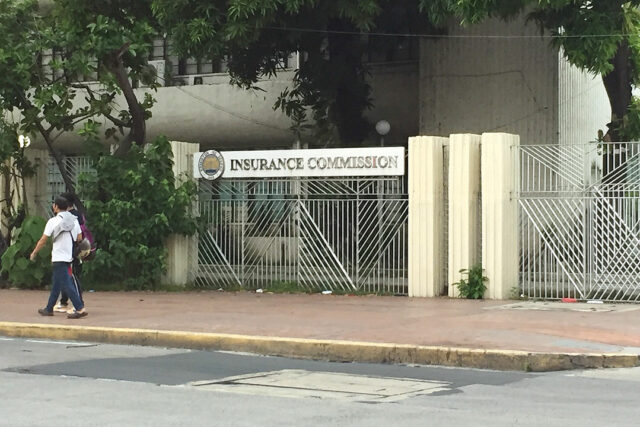
THE INSURANCE COMMISSION (IC) has come up with its proposed premium and benefit rates for the passenger personal accident insurance (PPAI) of motorcycle (MC) taxis, with the coverage amount set at as much as P400,000 per person.

A draft circular letter posted on the regulator’s website showed that the IC is proposing an annual premium of P2,457.14, exclusive of applicable taxes, for the PPAI for motorcycle taxis, which shall be reviewed after one year.

Under the proposal, the PPAI for motorcycle taxis shall have benefit amounts of up to P400,000 per passenger for accidental death and/or dismemberment, depending on the severity of the injury, the IC said.

“The motorcycle taxi has an authorized seating capacity of two, a passenger and the driver. The aggregate limit of liability of the company for death and/or dismemberment, under the policy for any one accident shall be P800,000.”

Additional benefits per passenger can also be provided under the insurance policy. These include burial, ambulance, or legal assistance and medical expense reimbursements, among others.

“The aggregate limit of liability of the company for medical reimbursement, under the policy for any one accident shall be P200,000. Payment of claims shall be made within five working days upon completion of the required documentation,” the IC added.

The Land Transportation Franchising and Regulatory Board requires public utility vehicles (PUV) to secure PPAI coverage to compensate passenger-victims for accidents on top of the compulsory third-party liability insurance.

However, ride-hailing MC taxis are not yet legally considered as PUVs and are still operating under a pilot program in the absence of law regulating the industry.

Only three motorcycle ride-hailing companies are authorized to operate in the country, namely Angkas, Joyride, and Move It, which is a unit of Grab Philippines. The number of motorcycle taxis in Metro Manila is capped at 45,000.

“[Even] in the absence of a law, the motorcycle taxis are now frequently used as an alternative means of public transportation, exposing both the driver and the passenger to accidental injury and death,” the IC said.

The draft rules will cover all nonlife insurance companies with approved PPAI coverage for motorcycle taxis, the regulator said. “The PPAI coverage shall only be provided to motorcycle taxi operators or transportation network companies duly accredited by the Land Transportation Franchising and Regulatory Board to transport a passenger.”

Nonlife insurers must secure IC approval prior to the issuance of PPAI for motorcycle taxis, and shall provide an “all-risk, no fault” insurance coverage in the policy.

The premium and PPAI coverage for motorcycle taxis were proposed by the Philippine Insurers and Reinsurers Association, Inc. (PIRA).

PIRA Executive Director Michael L. Rellosa said in September last year that some motorcycles used in ride-hailing apps have insurance coverage already, but only five companies were writing coverages for motorcycle taxis. — A.M.C. Sy

ALLHC expands cold storage with Pangasinan, Iloilo acquisitions

AYALALAND.COM

LISTED AyalaLand Logistics Holdings Corp. (ALLHC) has expanded its cold storage portfolio with the acquisition of two logistics parks in Pangasinan and Iloilo.

The company’s subsidiaries acquired 3M Pangasinan in Urdaneta City, Pangasinan, and 3M Iloilo in Santa Barbara, Iloilo, ALLHC said in a stock exchange disclosure on Tuesday.

The newly acquired properties, renamed Artico Urdaneta and Artico Iloilo, are the sixth and seventh additions to the company’s Artico Cold Chain brand.

The acquisitions add 11,200 new pallet positions, increasing ALLHC’s total cold storage capacity to 31,500.

“This acquisition is a significant step in our ongoing effort to expand ALLHC’s logistics footprint across the country,” ALLHC President and Chief Executive Officer Robert S. Lao said.

“With the addition of Artico Urdaneta and Artico Iloilo, we are strengthening our ability to support businesses in key regional hubs,” he added.

Artico Urdaneta has 7,400 pallet positions across 15 cold rooms, while Artico Iloilo offers 3,800 pallet positions across eight cold rooms. Both facilities are registered with the National Meat Inspection Service, the Bureau of Plant Industry, and the Bureau of Fisheries and Aquatic Resources.

The new facilities also add over 15,000 square meters of gross leasable area (GLA) to ALLHC’s ALogis portfolio, bringing its total dry storage GLA to approximately 355,000 square meters.

“These facilities cater to businesses requiring both temperature-controlled and dry storage solutions, particularly in Pangasinan and Iloilo — two regions known for their seafood and agricultural industries,” ALLHC said.

ALLHC is a subsidiary of listed property developer Ayala Land, Inc. Its business interests include industrial parks, warehouses, cold storage facilities, data centers, and commercial leasing.

On Tuesday, ALLHC shares declined by 0.65% or one centavo to P1.52 apiece. — Revin Mikhael D. Ochave

The end of BPO as we know it

STOCK PHOTO | Image by DC Studio from Freepik

The business process outsourcing (BPO) industry in the Philippines is at a critical crossroads. As the world rapidly embraces artificial intelligence (AI) technologies, a seismic shift is already beginning to disrupt the very foundation of this sector.

The BPO industry contributes a substantial 8-10% of the country’s GDP, generating over $30 billion in revenue annually. It directly employs between 1.5 to 1.7 million Filipinos and indirectly supports an additional 3-5 million jobs across transportation, food, real estate, retail, and other related sectors. More importantly, call centers, which make up about 60-70% of BPO jobs, are highly vulnerable to the AI wave.

Artificial intelligence is no longer a futuristic concept; it is here and accelerating at an unprecedented pace. AI-powered solutions such as ChatGPT, customer service bots, and robotic process automation (RPA) tools are increasingly being used to streamline customer interactions, respond to queries, and perform repetitive tasks more efficiently than humans can. This places low-level roles like voice-based call center agents, non-complex customer support roles, and data entry work at significant risk of automation. Experts estimate that anywhere from 20-40% of these roles could be automated within the next five years as companies look for cost savings and enhanced efficiency through automation.

If this disruption is not adequately addressed, the economic impact on the Philippines could be devastating. Should just 30% of BPO revenue be disrupted, the country may lose more than $10 billion annually. With thousands of workers at risk of losing their jobs — an estimated 500,000 to 800,000 mostly in urban centers like Metro Manila, Cebu, and Davao — the shockwaves could be felt far and wide. Such massive layoffs would place additional pressure on the overseas Filipino worker (OFW) sector, as more people seek employment abroad to compensate for dwindling local opportunities. This, in turn, could increase the country’s dependence on remittances.

The potential loss of jobs will also significantly affect tax revenues. BPO firms are among the country’s top taxpayers, contributing billions in corporate and personal taxes. A reduction in employment would mean a considerable drop in government income, which could affect funding for essential services and infrastructure projects. The broader financial impact on individuals and families would be no less troubling. Many BPO workers support entire households on monthly salaries ranging from P20,000 to P40,000. With the sudden loss of employment, we could see a spike in poverty rates, loan defaults, household debt, and even a softening of the housing market as condos near BPO hubs lose value.

The repercussions do not stop there. As economic difficulties mount, social and political stability will be put to the test. Urban unemployment surges could lead to potential protests and civil unrest, particularly in BPO-heavy cities. Crime rates could rise out of desperation, and the frustration of unemployed youth, for whom BPO jobs are a key source of first employment, could become a potent social issue. Additionally, the disruption could lead to a brain drain of skilled professionals opting to seek more stable careers abroad. If unaddressed, the erosion of public trust in government institutions could weaken the nation’s ability to respond effectively to the crisis.

However, all is not lost. With proactive planning and immediate action, this disruption can become the biggest opportunity for transformation. The BPO industry, rather than vanishing, can instead evolve into something new and more robust. As automation takes over low-level tasks, demand will rise for highly skilled professionals who can work alongside AI systems rather than be replaced by them. AI operations, prompt engineering, data annotation, analytics, digital marketing, e-commerce, and cybersecurity will likely be the new skillsets required to stay relevant in the future job market.

New outsourcing niches are emerging that Filipinos can capitalize on. AI-human hybrid support, where AI tools are used to assist human agents rather than replace them, presents a viable model. The healthtech and fintech sectors, which require high levels of accuracy and expertise, will likely expand their outsourcing needs. Creative BPO services like animation, content creation, and social media management will continue to be in demand. There is also an opportunity for the Philippines to position itself as a global hub for AI development, training centers, and Filipino-led startups creating innovative AI solutions for the global market.

But this transformation will not happen on its own. The government must act quickly to implement policies that prepare the Filipino workforce for the new digital economy. Nationwide digital skills training and AI upskilling boot camps should be launched to reskill workers whose jobs are threatened by AI. To encourage AI companies to invest locally, tax incentives and other benefits can be offered. Public-private collaboration will be essential in creating industry-government task forces dedicated to planning these transitions.

A social safety net will also be crucial. Unemployment benefits, healthcare, and reskilling stipends can provide short-term relief for those affected by technological disruption. Beyond that, the government should fund Filipino startups focused on automation, AI, and software services to boost innovation and create new economic opportunities.

While it is true that AI will mark the end of BPO as we know it, the industry can still thrive if it embraces change. What is essential is not to resist the wave of AI but to ride it by enhancing skills and moving up the value chain. BPO professionals must focus on acquiring high-demand competencies that AI cannot easily replace, such as creative problem-solving, critical thinking, and emotional intelligence.

Ultimately, the question is not whether AI will disrupt the BPO industry, but how the Philippines will respond to that disruption. The path forward requires collaboration, innovation, and adaptability. If we play our cards right, this transformation could turn a looming crisis into an era of unprecedented growth and opportunity. The end of the BPO industry as we know it is also the beginning of something greater.


Dr. Donald Lim is the founding president of the Global AI Council Philippines and the Blockchain Council of the Philippines, and the founding chair of the Cybersecurity Council, whose mission is to advocate the right use of emerging technologies to propel business organizations forward. He is currently the president and COO of DITO CME Holdings Corp.

Midnight Cowboy given musical makeover

MIDNIGHTCOWBOYMUSICAL.COM

LONDON — Based on the book and subsequent Academy Award-winning movie, Midnight Cowboy is coming to the London theater next month as a musical.

Sticking true to the plot of James Leo Herlihy’s 1965 novel, the story explores the unlikely friendship between Joe Buck (Paul Jacob French), a troubled young sex worker, and Rico “Ratso” Rizzo (Max Bowden), a homeless and disabled man, who join forces to survive life in New York.

“It’s very dark. It’s about homelessness, about poverty. It’s about trauma, masculine fragility, sexual abuse, loneliness and hope,” director and choreographer Nick Winston said at a press event on Tuesday last week.

Mr. Winston said the show, which has been six years in the making, works as a musical because it’s a “fantastic story.”

“The idea of struggle is timeless… the struggle of trying to reach where you want to go,” said actor Paul Jacob French.

“I think what’s incredibly important about this piece as well is… normalizing the sex working community,” he said, adding it was important to shine a light on those characters and show them as humans.

The 1969 movie adaptation, which won three Oscars, including best picture, starred Jon Voight as Joe Buck and Dustin Hoffman as Ratso.

“It was really important to not just do impressions of what people love already, but show Joe Buck and Ratso… from a new angle… which I think the music in this musical allows us to do,” Mr. French said.

Eg White, who has written songs for artists including Adele and Sam Smith, wrote the music for the show and said a challenge was to make sure the production isn’t depressing.

“It’s tragic at the beginning, tragic in the middle, and tragic at the end… the idea was that the songs themselves… moments of resignation would be beautiful enough that it’s not just depressing but is beautiful,” Mr. White said.

The musical will run from April 4 to May 17 at London’s Southwark Playhouse. — Reuters

Pinoy startup uses AI to prevent crop damage

PHILIPPINE STAR/ RYAN BALDEMOR

By Almira Louise S. Martinez, Reporter

AGRICONNECT PH, an artificial intelligence (AI)-powered mobile app being developed by a student, aims to prevent crop loss and damage using farm risk management.

“This is very intuitive and straightforward,” Aldrin “Soj” R. Gamayon, the 22-year-old founder and chief executive officer at AgriConnect PH, told BusinessWorld in an interview. “It makes it more efficient for farmers and agribusinesses to act on things before it’s too late.”

Mr. Gamayon, who comes from a family of farmers, said his internship in Singapore and the challenges that his uncles encountered in the farm inspired him to create an app that could help with crop loss.

After doing his research, the fourth-year Communications Technology Management student from the Ateneo de Manila University noted that most farmers only rely on intuition and the naked eye when faced with production risks such as pests and soil moisture.

While highly respectable, this technique can save only 30% of a crop’s value after seeing visible signs of damage.

“So once you see that the crop has turned yellow, you can only salvage 30%,” he said.

Farm damage caused by El Niño, La Niña, other plant and pest diseases, volcanic eruption and other weather disturbances reached P57.78 billion in 2024, according to the Department of Agriculture.

Mr. Gamayon said AgriConnect could help salvage as much as 90% of the crop because of faster and earlier risk detection.

The app uses smart sensors — crucial components of the Internet of Things —placed on four-corners of the acre of land to detect soil moisture, water level and pest and insect movements.

After gathering data from the sensors, these are uploaded to the AI app to determine the condition of the soil and crops.

The app, which will be launched next year, plans to use a “stoplight system” to help farmers understand the results easily.

Red signifies a serious risk that requires attention within the next 12 to 24 hours; yellow means caution, signaling farmers to be “up on their toes” because pests and weather could destroy the crops; and green stands for good soil and crop health.

“We do acknowledge that farmers and agribusiness owners aren’t really the most technical people,” Mr. Gamayon said. “We’re kind of using a very universalizable concept so that they don’t really need to understand the tech; they just need to know exactly what to do about the information.”

In 2024, AgriConnect won the Red Bull Basement competition, an international program for student innovators. He is also backed by Plug and Play in Silicon Valley, along with Microsoft and Ateneo Blue Nest.

Mr. Gamayon plans to launch the app in 2026 and empower a million farmers by 2030.

“We envision ourselves more as an ally and as a partner of farmers rather than a replacement as others would claim,” he said.

Coin machine collections hit P1.37B

BSP.GOV.PH

THE CENTRAL BANK’S coin deposit machines have collected P1.37 billion worth of coins as of March 17.

This was a 4.6% increase from the P1.31 billion worth of coins collected as of Feb. 15, the Bangko Sentral ng Pilipinas (BSP) said in a social media post.

Data from the central bank showed there were 311,858 transactions made involving 339.8 million coins deposited in the machines.

The BSP and its retail partners launched the deposit machines in June 2023 to promote coin recirculation.

The project aims to address artificial coin shortage in the financial system and help ensure that the public uses only fit and legal tender.

All denominations of the BSP Coin Series and New Generation Currency Coins Series are accepted by the machines.

However, unfit, mutilated and demonetized coins, foreign currency, foreign objects such as tokens and buttons, and coins taped together will get rejected by the coin deposit machines.

The value of coins deposited in the machines may be credited to a person’s e-wallet or bank account or converted into shopping vouchers.

Users do not need to provide any identification documents to use the coin deposit machines.

There are currently 25 deposit machines available in the Greater Manila Area. They can be found in select retail establishments of the SM Store, Robinsons Supermarket and Festival Mall.

The BSP has said it plans to install 25 more coin deposit machine units nationwide this year. — Luisa Maria Jacinta C. Jocson

Manila Water completes upgrades to six major facilities

MANILA WATER Co., Inc. has completed upgrades to six major facilities to improve water services in the east zone, it said on Tuesday.

The company upgraded the power supply at its Balara Pumping Stations 1 and 2 in Quezon City, installing three smart power meters to monitor energy consumption.

Manila Water said it invested P7.6 million to install a 300-horsepower horizontal split-case pump and motor at the Modesta Pumping Station in San Mateo, Rizal.

The San Juan Pumping Station 1 in Quezon City underwent a major electrical system upgrade worth P128.6 million.

The company also said it invested P92.45 million in rehabilitating and modernizing the Makati Pumping Station and enhancing the Cubao Pumping Station.

“These enhancements in our pumping stations are in preparation for the increase in demand as our customer base continues to grow. We are committed to providing 24/7 water service to our customers as we expand our reach,” said Jeric T. Sevilla, Manila Water’s corporate communications affairs group director. — Sheldeen Joy Talavera

From Paper to PDF: The digital shift in Philippine notarization

FREEPIK

In today’s tech-driven world — from remote work to electronic court filings — it was only a matter of time before notarization followed suit. On Feb. 4, the Supreme Court promulgated A.M. No. 24-10-14-SC, also known as the Rules on Electronic Notarization, a long-anticipated innovation that institutionalizes the process of notarizing electronic documents in the Philippines.

At its core, the Rules distinguish between two modes: In-Person Electronic Notarization (IEN) and Remote Electronic Notarization (REN). IEN requires the principal and the notary to be physically present together, although the document itself is in digital form. REN, on the other hand, allows the principal and witnesses to appear virtually before the notary via a videoconferencing tool integrated into an accredited Electronic Notarization Facility (ENF). This means a person in Davao can appear before a notary in Quezon City without ever leaving home.

The Rules recognize that appearing before a notary can be difficult for those with limited transportation options and individuals managing tight schedules. For instance, a professional rushing to catch an international flight from Clark International Airport can now have a document notarized electronically — no detours, no delays. Under the Rules, the Electronic Notary Public (ENP) is authorized to perform electronic notarial acts anywhere in the Philippines — a paradigm shift from the 2004 Rules on Notarial Practice, which confined notaries to act only within the territorial jurisdiction of their commissioning court. In specific cases, the principal may even be located outside the Philippines. However, it is required that they be physically present in a Philippine embassy, consulate, or honorary consulate.

SIGNING AND SECURITY
What exactly can be notarized under these Rules? An electronic document, that is any document in Portable Document Format (PDF) or PDF for Archiving (PDF/A). A scanned copy of a paper document is also an electronic document. Notably, 1.) documents with wet signatures, 2.) notarial wills, and 3.) depositions are not covered under these Rules.

Electronic documents are signed with the use of electronic signatures. Under the Rules, an electronic signature refers to the electronic representation of an individual’s wet signature. This may take the form of any distinctive mark or characteristic in electronic form that represents the identity of a person and is logically associated with the document. It may also include any method or process adopted by a person to authenticate the document.

More advanced forms of electronic signatures include digital signatures, which transform the electronic document using a cryptographic key. This allows others to verify whether the signature was created using the signer’s private key and whether the document has been altered. There is also the concept of a secure electronic signature, which is created and verified through a combination of security procedures to ensure that the signature is unique to the signer, objectively identifies them, and is linked to the document in such a way that any tampering becomes evident.

The ENP has clear responsibilities under both IEN and REN. In either case, the ENP must confirm the principal’s identity, examine the voluntariness of their act, and ensure that the document being notarized is the one acknowledged or affirmed. The notarial act concludes with the ENP affixing an electronic notarial certificate, their electronic signature, and a digital notarial seal that includes a barcode or QR code for authentication.

GOVERNANCE, RECORDS, AND THE ROAD AHEAD
Notably, the Rules introduce separate commissions for traditional and electronic notaries. Being commissioned as a notary public does not automatically authorize one to perform electronic notarization. Lawyers must apply separately, undergo a virtual summary hearing, and secure certification from an accredited ENF provider.

The framework also emphasizes record-keeping through an Electronic Notarial Book, integrated into the ENF. During the transitional period, ENPs are required to send copies of notarized documents and notarial entries to the Electronic Notary Administrator (ENA). Eventually, these records will be automatically uploaded to a Supreme Court Central Notarial Database.

Confidentiality and privacy are of paramount importance. The Rules contain strict provisions prohibiting ENPs from disclosing the contents of notarized documents, except when compelled by law or by order of a competent court. At the same time, ENPs and ENFs must provide access to data when legally mandated, in accordance with the Data Privacy Act of 2012.

The Rules mark a major step forward, though challenges remain — such as achieving compliance, building trust in digital systems, and maintaining accessibility. Still, as legal processes go digital, e-notarization moves the profession toward a more modern, efficient, and inclusive system.

The views and opinions expressed in this article are those of the author. This article is for general informational and educational purposes only and not offered as and does not constitute legal advice or legal opinion.


Daniel Cornelio R. Patron is an associate of the Litigation and Dispute Resolution department of the Angara Abello Concepcion Regala & Cruz Law Offices (ACCRALAW).

(632) 8830-8000

drpatron@accralaw.com

Greek guard charged in crackdown on antiquities smuggling rings

THE PARTHENON IN ATHENS — COMMONS.WIKIMEDIA.ORG

ATHENS — A guard protecting ancient sites in northern Greece has been charged with involvement in a crime ring smuggling out artifacts and selling them abroad, police officials said on Friday.

The man was also suspended from the state body overseeing antiquities in the Serres region, the Culture ministry said, a week after another 23 people were arrested in the north on charges of illegally excavating and exporting treasures.

Police said they confiscated thousands of coins and ancient artefacts including a bronze helmet, vases, figurines, and jewelry during raids on homes and offices in the operation.

Officers also found explosive devices and dozens of metal detectors which the suspects were allegedly using to excavate antiquities, the force said.

In total, 50 people have been charged with playing a role in three separate criminal gangs that have been operating since September 2024. Police in January arrested one man after confiscating more than 2,400 antiquities in the same region, home to the archaeological site of Amphipolis.

In December, dozens of ancient artifacts were found in a basement in Athens, packed in old cardboard boxes and some of them were wrapped in newspapers dating back to the 1940s.

The guard, who worked the night shift, was suspended by order of the Culture minister. — Reuters

PHL is ‘most exciting’ venture capital market in Southeast Asia

WIKIMEDIA

By Beatriz Marie D. Cruz, Reporter

THE PHILIPPINES is the “most exciting” market for venture capitalists in Southeast Asia due to its young workforce and strong macroeconomic fundamentals, according to local venture capital firm Kaya Founders.

“The Philippines is now the most exciting venture ecosystem because of our young population, steady economic growth for the last 20 years and its rapidly digitalizing workforce,” Paulo Campos III, founding managing general partner at Kaya Founders, told BusinessWorld on the sidelines of Sinigang Valley’s BUILD Startup Festival on Tuesday.

The Philippines replaced Singapore and Indonesia, which have been the darlings of venture capitalists for a long time, he added.

Many young Filipinos are interested in working in a startup, Mr. Campos said, citing conversations he’s had with students in schools and universities.

“Our view at Kaya Founders is we’re in a very unique window of time where the next generation of companies will be born in our country over the next few years,” he said in a speech at the event.

The Philippines has one of the youngest working populations in the region that will peak by 2051, according to the ASEAN+3 Macroeconomic Research Office.

Analysts have cited the need for the Philippines to use its young workforce to bolster economic growth.

Mr. Campos also noted the potential of the Philippine digital economy, which is projected to grow to as much as $150 billion in gross merchandise value by 2030 from $31 billion last year, according to Google, Temasek Holdings and Bain & Co.

Despite this, having a predictable business environment remains a key challenge in the Philippines’ startup ecosystem.

“If you contrast what it takes to start a business here compared with Singapore or somewhere else, it’s really night and day,” Mr. Campos said, citing complex regulations and tax rules.

Mr. Campos said the government, private sector and investors should create a “welcoming environment” for startup founders to take risks.

The Philippine startup ecosystem raised $1.12 billion in 2024, a 16% jump from a year earlier, according to the latest Philippine Venture Capital Report by the Boston Consulting Group venture capital fund Foxmont Capital Partners.