
How PSEi member stocks performed — July 15, 2025
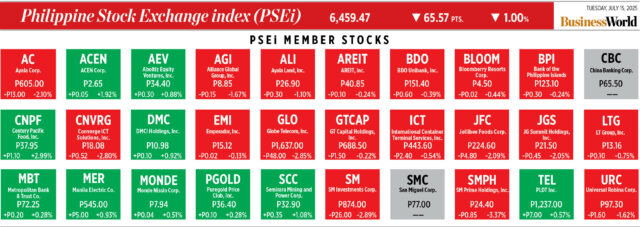
Here’s a quick glance at how PSEi stocks fared on Tuesday, July 15, 2025.
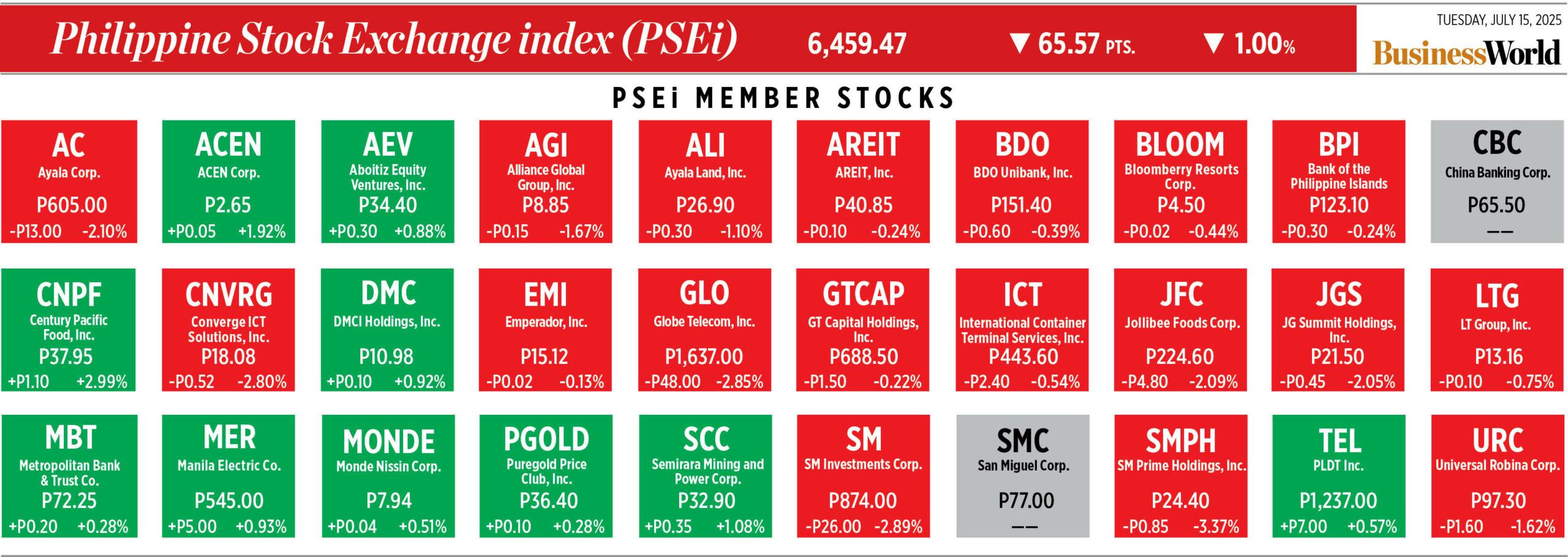

Here’s a quick glance at how PSEi stocks fared on Tuesday, July 15, 2025.

MONEY SENT HOME by overseas Filipino workers (OFWs) rose by an annual 2.9% in May, although the monthly haul was the lowest in 12 months, data from the Bangko Sentral ng Pilipinas (BSP) showed. Read the full story.

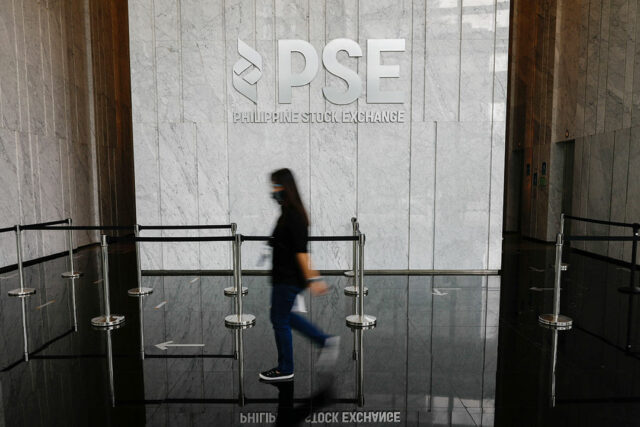
PHILIPPINE SHARES dropped on Tuesday on profit taking in the absence of new trading drivers.
The Philippine Stock Exchange index (PSEi) sank by 1% or 65.57 points to close at 6,459.47, while the broader all shares index went down 0.65% or 25.09 points to 3,807.27.
“The local market pulled back as investors took profits amid the lack of fresh leads,” Philstocks Financial Inc. Research Manager Japhet Louis O. Tantiangco said in a Viber message. “With no new positive catalysts, global trade concerns amid the United States’ planned tariffs got the best of market sentiment.”
“Philippine shares weakened as investors responded to the tariff threats from President Donald J. Trump, as many analyzed whether any measures would likely be softened through negotiations,” Regina Capital Development Corp. Head of Sales Luis A. Limlingan said in a Viber message. “Investors have also been watching other tariff developments after Mr. Trump announced new levies on the European Union (EU) and Mexico, with talks ongoing and key inflation data expected to reveal the economic impact.”
Shares climbed worldwide on Tuesday as market participants entered a key week for US earnings, inflation data and trade talks in a relatively optimistic mood, Reuters reported.
Mr. Trump signaled he was open to discussions on tariffs after his weekend threat to impose 30% duties on the European Union and Mexico from Aug. 1. Japan is reportedly trying to schedule high-level talks with the US this Friday.
MSCI’s broadest index of Asia-Pacific shares outside Japan added 0.8%, while Europe’s STOXX benchmark rose 0.2% and Nasdaq futures gained after Nvidia said it would resume sales of its H20 chips to China.
Investors are also waiting for US consumer price data for June due later on Tuesday and will monitor for any upward pressure on prices from tariffs.
Back home, all sectoral indices closed lower on Tuesday. Holding firms decreased by 1.87% or 107.78 points to 5,636.28; property went down by 1.7% or 42.32 points to 2,434.4; mining and oil retreated by 0.97% or 94.77 points to 9,651.96; services sank by 0.71% or 15.63 points to 2,186.81; financials declined by 0.2% or 4.66 points to 2,235.83; and industrials fell by 0.1% or 10 points to 9,234.49.
“Century Pacific Food, Inc. was the day’s best index performer, climbing 2.99% to P37.95. SM Prime Holdings, Inc. was the worst index performer, dropping 3.37% to P24.40,” Mr. Tantiangco said.
Value turnover decreased to P5.9 billion on Tuesday with 1.65 billion shares exchanged from the P6.5 billion with 2.3 billion shares traded on Monday.
Advancers edged out decliners, 98 versus 96, while 56 names were unchanged.
Net foreign selling reached P322.36 million on Tuesday, a turnaround from the P632.24 million in net buying on Monday. — Revin Mikhael D. Ochave with Reuters

By Justine Irish D. Tabile, Reporter
FURNITURE EXPORTERS are seeking substantial government support in light of the 20% US tariff on Philippine goods.
“We really need the government to back us up (with) drastic export policies and funding support,” Chamber of Furniture Industries of the Philippines Director General Ajun L. Valenzuela told BusinessWorld.
The latest US position is that Philippine goods will be charged a 20% tariff starting Aug. 1, though a Philippine delegation will be in Washington to negotiate a lower rate or even a free trade agreement. President Ferdinand R. Marcos, Jr. is also due to visit Washington later this month.
The new rate is higher than the 17% tariff announced in April and level with the 20% that Vietnam is set to pay.
Mr. Valenzuela said that if the negotiations fail to produce a favorable result, the government should take other steps to help exporters in addressing the disruptions that could ensue from the eventual tariff.
“Since the negotiations might not work, I believe the government should make strategic policy changes and support us by providing the exporters emergency measures like fiscal and export incentives,” he added.
Mr. Valenzuela has said that the Philippines’ initial rate of 17% and Vietnam original tariff of 46% was not enough of a gap to make Philippine furniture exports competitive on price.
“Our price difference with Vietnam is around 40%,” he said in May.
Meanwhile, Foundation for Economic Freedom President Calixto V. Chikiamco said it is difficult to say whether the Philippines can attract investments now with a diminished tariff advantage.
“The future is murky with uncertainty over tariffs and overall global developments,” he said via Viber.
He said the Philippines needs to forge free trade agreements to create more manufacturing jobs, seeking deals with “as many countries as possible, including the US, the European Union, the United Arab Emirates, and Canada, and possibly join the Comprehensive and Progressive Agreement for Trans-Pacific Partnership.”
“It also has to assure investors of energy security and modernize its labor laws,” he added.

THE Subic Bay Metropolitan Authority (SBMA) remitted P1.47 billion worth of dividends to the National Government, the Department of Finance (DoF) said.
The remittance will help in “supporting and contributing effectively to nation-building initiatives, public services, and infrastructure development,” SBMA Chairman and Administrator Eduardo Jose Aliño said in a statement.
Under Republic Act No. 7656 or the Dividends law, government-owned or -controlled corporations (GOCCs) must declare and remit at least 50% of their annual net earnings as cash, stock or property dividends to the Treasury.
Last year, the DoF raised the mandatory dividend remittances of GOCCs to 75% of their net earnings from 50% previously.
The SBMA is tasked to develop and manage the Subic Bay Freeport Zone as a “self-sustaining industrial, commercial, financial, and investment center, generating employment opportunities and attracting investments.”
“The dividend remittance is in line with President Ferdinand R. Marcos, Jr.’s directive to uphold fiscal discipline among GOCCs, ensuring that the government maximizes non-tax revenues to fund priority programs,” the DoF added. — Luisa Maria Jacinta C. Jocson
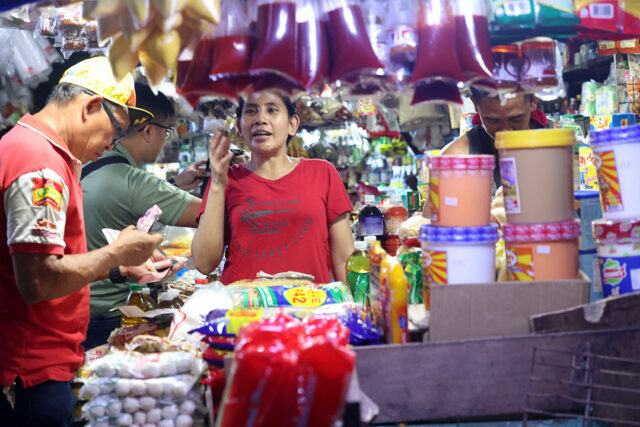
MOST Philippine micro-, small-, and medium-sized enterprises (MSMEs) are expecting stronger results this year after a slow recovery last year, the Boston Consulting Group (BCG) said.
Citing the results of a study conducted with the Department of Trade and Industry (DTI), 73% of 3,098 MSMEs surveyed are expecting “stronger results” in 2025.
BCG Principal Jamie Bawalan, who presented the study at the MSME Bayanihan Caravan on Tuesday, said only 43% of the MSMEs responded that they performed better in 2024 relative to 2023, a sentiment more pronounced among MSME owners in wholesale and retail as well as food services.
“But then we asked about 2025; what we actually found is a very high level of optimism with exactly 73% of all our MSMEs across different sectors actually expressing that they think that they will do and fare much better in 2025 than in 2024,” she said.
“It shows that our MSMEs are hopeful, even though last year was seemingly not easy,” she added.
In the short term, she said MSMEs are more focused on growing their revenue, expanding their customer base, and improving their products and services.
To unlock this growth, she cited the need to make resources available to MSMEs.
“There is room to improve access for MSMEs across most business growth support areas, but access to credit or the ability to take out loans was especially challenged,” she said.
In particular, she said there is only a 33% level of optimism among MSMEs in terms of their ability to access loans and credit.
“We see that there is a big divide between reality and perception. We realized and found that less than 10% of our MSMEs actually ever took out bank loans, and 55% of our MSMEs have actually never taken out a bank loan,” she added.
On Tuesday, the DTI unveiled three programs: NxtGen in Franchising Philippines, Small Business Corp. (SBCorp.) Money App, and a tie-up with GCash.
“Through these programs, we are bridging divides and demonstrating that a Bagong Pilipinas begins with listening and then developing straightforward people-centric solutions,” Trade Secretary Ma. Cristina A. Roque said in a keynote speech delivered by Undersecretary Blesila A. Lantayona.
NxtGen in Franchising Philippines hopes to create a pipeline for future franchise brands.
The SBCorp. Money App is the company’s new mobile application, replacing the previous web-based loan application and evaluation system.
“This shift to PhilSys-enabled electronic Know-Your-Customer simplifies the onboarding process for our clients and enhances security by verifying identities using national ID data,” SBCorp. President and Chief Executive Officer Robert C. Bastillo said.
He said that the new application will help make financing more accessible, efficient, and secure for MSMEs nationwide.
On Tuesday, DTI also signed a memorandum of understanding with GCash to deliver tailored digital business solutions directly to MSMEs.
“By integrating these digital financial tools directly at all DTI regional and provincial offices and the DTI Negosyo Centers, we ensure that these tools and services reach even the most remote communities, helping close the rural-urban digital divide and bringing opportunities of success even closer to home,” Ms. Lantayona said. — Justine Irish D. Tabile
By Kyle Aristophere T. Atienza, Reporter
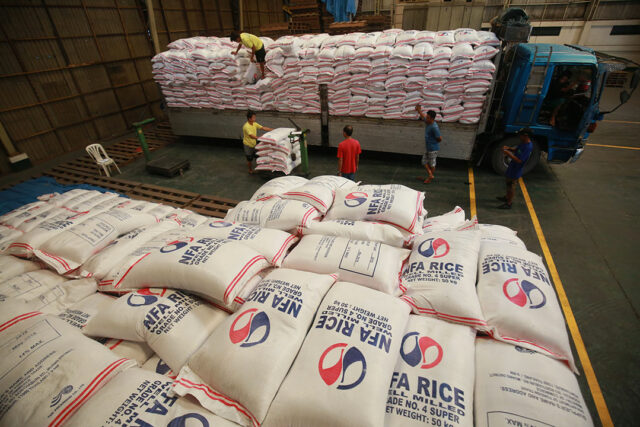
THE further decline in the farmgate price of palay (unmilled rice) was largely caused by competition from cheap imports and the government’s subsidized P20 rice program, a farmer’s group said.
“This confirms what many farmers from various parts of the country have been complaining about,” Federation of Free Farmers Cooperatives, Inc. National Manager Raul Q. Montemayor said via Viber.
“Normally, palay prices go up after the harvest and into the May-June planting season,” he said, “but this time, prices have been going down,” he added.
He noted that rice imports that are already in the country are cheap, with 5% broken-grain rice averaging P29.50 per kilo in June — compared to P40.67 per kilo in June 2024 — ex-pier and with tariffs already paid.
Ex-pier costs include the purchase cost from source country on a free-on-board (FOB) basis, plus freight, insurance, and tariffs.
Meanwhile, the landed price of imported rice with 25% broken averaged P26.34 per kilo in June, against P41.09 a year earlier.
He also said the P20-per-kilo rice program has led traders to hedge and buy palay from farmers at low prices “in case they have to compete with this cheap rice.”
The Department of Agriculture (DA) is pushing Congress to pass a bill seeking stricter oversight of rice imports and restoration of the National Food Authority’s (NFA) regulatory powers.
The farmgate price of palay fell 31.8% year on year in June to an average of P16.99 per kilo. Month on month, the average palay farmgate price fell 4.3% compared to May.
Agriculture Secretary Francisco Tiu Laurel, Jr. in a separate statement said the claim that the P20-per-kilo rice program is behind the declining palay prices is “simply not true,” noting that it has helped the NFA decongest its warehouses and has allowed the government “to buy more palay from farmers.”
“On the contrary, we need to accelerate the expansion of the subsidized rice program,” he said.
“Every bag of rice sold at P20 frees up space for two sacks of palay, which we can purchase at better prices than what private traders offer,” he added.
Mr. Montemayor said NFA’s buying has been minimal “due to congestion of its warehouses and strict standards (clean and dry) when buying palay from farmers.”
“Even without these constraints, its funds can absorb only 5% at most of the harvest volume,” he added.
“The government has passed the blame to palay traders and has asked farmers to report to them traders who are ‘nambabarat,’ (forcing them to accept low prices),” he said.
“But it is very possible that the drop in palay prices is to a large extend due to its own rice subsidy programs, its unlimited import policy, and its failure to support palay prices through the NFA,” he added.
Currently, the NFA buys palay at a minimum of P17 per kilo for fresh grade and up to P24 per kilo for dry.
“To support this effort, the agency is acquiring more trucks, upgrading its warehouses, and requesting a larger procurement budget,” Mr. Laurel said.
As of June 30, the NFA procured 149% of its first half target, approaching capacity “in response to the clamor from farmers for the agency to buy more palay,” he added.
The DA urged Congress to pass the proposed Rice Act before the first harvest of 2026. It is currently conducting “on-the-ground consultations” with farmers and lawmakers in preparation for congressional deliberations.
It said it is backing a provision that would give the NFA “some control” over rice imports.
It’s “critical gap that leaves the DA with limited ability to manage domestic supply,” Mr. Laurel said. The Rice Tariffication Law of 2019 allowed unlimited rice importation by the private sector, though requiring them to pay import tariffs, and removed the NFA’s own power to import rice and sell rice directly to consumers.
The law was amended last year to increase the allocation for the Rice Competitiveness Enhancement Fund to P30 billion from P10 billion, paid out of rice tariff collections.
Mr. Laurel said the consultations will “help shape the government’s response to the recent decline palay prices, which threatens to discourage future planting.”
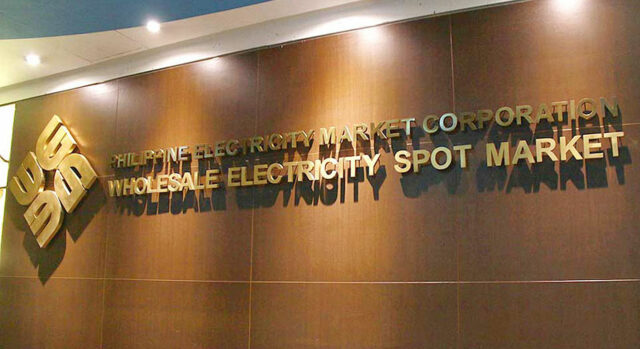
THE Independent Electricity Market Operator of the Philippines (IEMOP), the operator of the Wholesale Electricity Spot Market (WESM), said it is enforcing the rules against market participants that fail to meet their financial obligations.
“IEMOP has religiously enforced the rules of the WESM, including the timely issuance of default and suspension notices, and imposition of financial penalties,” the WESM operator said in a statement on Tuesday.
IEMOP said it is authorized by WESM rules and market manuals to impose appropriate sanctions, including suspension and deregistration, as warranted.
“These measures protect the interests of compliant participants and preserve market discipline,” it said.
The WESM is a centralized venue where energy companies can buy power when their long-term contracted supply is insufficient for customer demand.
The Philippine Chamber of Commerce Industry (PCCI) has urged IEMOP and the Energy Regulatory Commission to address the issue of WESM members defaulting on payments for their transactions.
“These defaults distort market signals and expose law-abiding market players to significant financial risk. Imposing the burden on compliant WESM members effectively penalizes those who fulfill their financial obligations while relieving delinquent members of their responsibility,” the PCCI said in a statement.
“Ultimately, the costs resulting from defaults are passed on to consumers through higher electricity prices or market fees,” the business group added.
The PCCI called on the IEMOP to fully exercise its authority under WESM rules “to protect market integrity and prevent the undue subsidization of noncompliant members by those in good standing.”
“IEMOP should implement a policy framework that ensures defaulters are held accountable and that compliant members are protected from bearing the cost of others’ failures,” the group said.
IEMOP said that it shares the same view with PCCI that all WESM participants must satisfy all their financial obligations on time.
It clarified, however, that any amount unpaid by defaulting WESM customers is not passed on to consumers nor delinquencies subsidized by consumers. These remain receivables borne by generation companies and other WESM sellers.
For noncompliant market participants, IEMOP said it collected penalties consistent with WESM Penalty Manual (Issue 3.0). These penalties are returned to consumers through their respective distribution utilities, electric cooperatives, and electricity suppliers.
“We likewise support PCCI’s call for transparency in the billing practices of Retail Electricity Suppliers (RES),” IEMOP said. “We remain steadfast in our commitment to uphold the principles of transparency, competition, and efficiency in the operation of the WESM — ensuring a fair and reliable marketplace for all.” — Sheldeen Joy Talavera
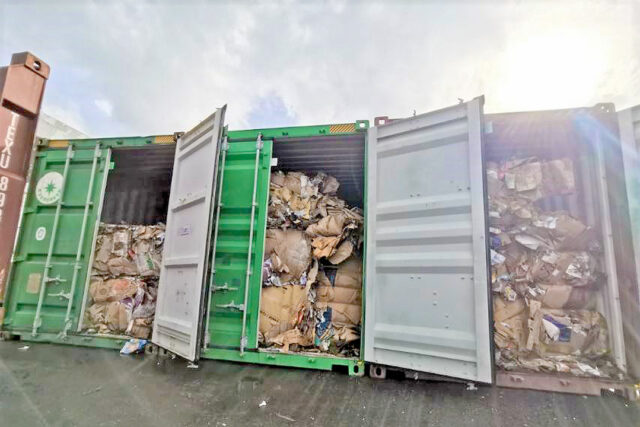
THE INCREASE in hazardous waste volumes in 2024 outstripped any improvements in the Philippines’ capacity to manage waste, according to government data.
Hazardous waste volumes rose 13% year on year to 269,552 tons in 2024, the Philippine Statistics Authority (PSA) said in a report.
Oil accounted for 33% of the total hazardous waste, followed by miscellaneous waste at 51.77 thousand tons and wastes with inorganic chemicals at 39.44 thousand tons.
Calabarzon accounted for 43% or 114,988 tons of the hazardous waste in 2024.
The PSA said the number of material recovery facilities totaled 12,855 in 2024, up 8.7% from 2023.
The number of sanitary landfills rose 14.7% to 343, it added.
However, the number of reported illegal dumpsites increased 84% to 79. — Kyle Aristophere T. Atienza

THE Department of Agriculture (DA) said it suspended the issuance of permits to import certain mackerel and torpedo scad species, following reports permits have been misused in ways that could destabilize the fish market.
Memorandum Order No. 38 orders an immediate halt to the issue of sanitary and phytosanitary import clearances for horse mackerel, including Atlantic and Japanese jack mackerel; Indian mackerel; wahoo; and both torpedo and hardtail scad.
The DA cited reports of misdeclared or diverted shipments of fishery products, which it said undermines efforts to stabilize supply and prices while disrupting legitimate trade channels.
Known as alumahan (mackerel) and galunggong (scad), these fish varieties are household staples for many families due to their affordability, the DA noted.
The DA clarified that the order is not an import ban “but a temporary measure to ensure full compliance with regulations and alignment with national interest.”
“The order will be lifted based on the result of a thorough investigation and review of current importation protocols, with the goal of ensuring integrity and accountability across the fish supply chain,” it said. — Kyle Aristophere T. Atienza

A SENATOR on Tuesday called on the Philippine Amusement and Gaming Corp. (PAGCOR) to quickly take down all ads promoting online gambling instead of waiting for operators to comply with its order on the ad ban with an Aug. 15 deadline.
“I am calling on PAGCOR to do its part,” Senator Rafael “Raffy” T. Tulfo told a news briefing in mixed English and Filipino. “Stop all advertisements for online gambling. It should be banned on TV, radio, newspapers, social media — everything.”
Last week, the state gambling regulator ordered licensed operators, suppliers, system administrators and gaming venue operators to remove online gambling ads by Aug. 15. But Mr. Tulfo questioned the delay.
“Why Aug. 15?” he asked. “Between now and Aug. 15, many more will be addicted to gambling. Let’s do it now because the problem will only get worse.”
The lawmaker said he would file a bill next week seeking a total ban on online gambling platforms, citing growing concerns over their social impact.
“Something has to be done, that’s why I’m filing a bill that will stop [online gambling platforms], not just… strictly regulate them,” he added.
His remarks echo calls from other senators who have argued that the social costs of gambling addiction far outweigh potential government revenues.
Senator Juan Miguel F. Zubiri earlier filed Senate Bill No. 142 or the Anti-Online Gambling bill, which seeks to impose a total ban on online gambling on mobile devices. The bill also requires internet service providers to restrict public access to gambling websites and apps.
Mr. Zubiri described the rise of gambling addiction in the country as a “silent epidemic,” particularly among the youth.
Senator Sherwin T. Gatchalian also raised alarms about the growing number of underage students engaged in online gambling. In an unnumbered Senate resolution, he called for an inquiry into the issue.
“There have been reports that learners are being exposed to and are actively participating in online gambling platforms,” he said.
While existing laws prohibit minors from engaging in gambling, Mr. Gatchalian said there is still no clear national policy or educational initiative aimed at reducing gambling exposure among students.
PAGCOR reported that gambling revenue in the first quarter rose 27.44% to P104.12 billion. Online and electronic gambling businesses accounted for P51.39 billion, or almost half of gross gaming revenue.
President Ferdinand R. Marcos, Jr. has said he is open to regulating or taxing online gambling, following proposals from the Department of Finance to impose levies on gaming sites.
Meanwhile, Party-list Rep. Marcelino C. Libanan said he would file bills that seek to curb the rise of mobile-based gambling platforms.
In a statement, the House of Representatives minority leader said the rapid expansion of gambling apps accessible via smartphones — amplified by social media and influencer marketing — has created an “invisible threat” to Filipino families.
“We are preparing urgent proposals to clamp down on mobile-based gambling platforms, especially those targeting Filipinos through social media, paid influencers and algorithm-driven advertising,” Mr. Libanan said.
“Our laws must evolve swiftly before this invisible threat tears more Filipino households apart,” he added.
He said mobile gambling’s widespread availability has enticed Filipinos, particularly the youth and low-income groups, with the promise of easy money, fostering a new wave of addiction.
He also urged PAGCOR and the Department of Information and Communications Technology (DICT) to strictly regulate online gambling platforms and launch public awareness campaigns about the dangers of digital betting.
“Online gambling is being sold to Filipinos as casual fun,” he said. “But it’s anything but harmless. It is fast becoming a serious public health issue.”
Mr. Libanan also called on civil society including teachers, religious groups and community leaders to help combat online betting.
“The government alone cannot fight this battle,” he said. “We need homes, schools and churches to treat online gambling not as a private shame, but as a public threat.”
The lawmaker did not give details about the specific proposals but said the legislative package would focus on limiting access to gambling apps, regulating digital ads and increasing penalties for unlicensed platforms.
The bills come amid rising concern over gambling-related debt, mental health problems, and family conflicts attributed to unregulated online betting, particularly during and after the COVID-19 pandemic. — Adrian H. Halili and Kenneth Christiane L. Basilio

SIX OF 10 Filipinos think Vice-President Sara Duterte-Carpio should undergo an impeachment trial, according to a poll by the Social Weather Stations (SWS).
Commissioned by think tank Stratbase ADR Institute, the survey found that 66% of Filipinos think the Vice-President should answer the impeachment charges against her before the Senate.
Support for the trial was strongest in Metro Manila, where 76% backed the move. It was followed by Luzon at 69% and the Visayas at 67%. Mindanao, Ms. Duterte’s political stronghold, registered the lowest support at 55%.
“The data indicates growing public expectations for institutional accountability and prompt action,” SWS said in a statement.
Ms. Duterte, a likely contender in the 2028 presidential race, is facing charges of secret fund misuse, unexplained wealth and alleged destabilization efforts including plotting to assassinate President Ferdinand R. Marcos, Jr., his family and Speaker Ferdinand Martin G. Romualdez. She has denied all accusations.
The impeachment complaint, filed in February, gained the support of more than 200 congressmen — well beyond the constitutional threshold of one-third required to elevate the case to the Senate for trial.
In a separate SWS survey conducted from June 25 to 29, 44% of respondents said the Senate was deliberately delaying the start of the trial. This comes despite calls from lawmakers and civil society groups to immediately begin proceedings.
“Transparency, accountability and due process are the foundations of a functioning democracy,” Stratbase President Victor Andres C. Manhit said in the statement. “Any perception of delay or inaction risks undermining public trust — not just in individuals, but in the system itself.”
The Senate earlier voted not to dismiss the complaint but returned the articles of impeachment to the House to certify that the charges do not violate the Constitution and that the lower chamber intends to pursue the case in the 20th Congress.
This decision followed intense debates after a Duterte ally in the Senate filed a motion to dismiss the case on the same day the chamber convened as an impeachment court.
The SWS survey also found that 59% of Filipinos were already aware of the impeachment case. Awareness was highest in Metro Manila, followed by the Visayas (64%), Luzon (57%), and Mindanao (52%).
“This level of awareness reflects a more engaged and vigilant public,” Mr. Manhit said. “Filipinos are watching closely and expect the country’s democratic institutions, particularly the Senate, to act decisively and impartially.”
“When half the population is already informed about an ongoing impeachment case, it shows that citizens are not just passive observers. They are actively following developments, asking questions and expecting accountability from public officials,” he added.
The Senate is expected to reconvene as an impeachment court on July 29, a day after the opening of the 20th Congress. A new set of senator-judges will be sworn in on the same day. — Adrian H. Halili
