Home Blog Page 1240

Eala faces Vondrousova in Montreal first round

ALEX EALA — USOPEN.ORG

ALEXANDRA “ALEX” EALA faces Marketa Vondrousova of the Czech Republic in Round 1 of her hardcourt transition in the 2025 National Bank Open today in Montreal.

The two are not too far apart in the WTA rankings, making it an interesting battle.

Ms. Eala, WTA No. 69, comes into the duel against the WTA No. 65 Czech with fresh legs after a month-long vacation in the Philippines from non-stop action in the grass and clay tournaments in Europe.

The National Bank Open, due to run until Aug. 7, is her first hardcourt tourney since the Miami Open last summer. It serves as one of her warm-up tournaments for a main draw debut in the US Open on Aug. 24-Sept. 7 in New York.

It will be the third Grand Slam main draw stint for Ms. Eala after the French Open and Wimbledon with hopes of finally breaking through the first round.

But first things first for the 20-year-old as she will have her hands full against the 26-year- old Vondrousova, who ruled the 2023 Wimbledon, was a French Open finalist in 2019 and an Olympic silver medalist in the 2020 Tokyo games.

Ms. Eala became the first Filipina WTA semifinalist in the Miami Open and finalist in the Eastbourne Open in England, barging into the world’s Top 100.

After Montreal, Ms. Eala is expected to participate in two more tournaments across North America to prepare against the sport’s titans in the US Open, where she was once a junior champion. — John Bryan Ulanday

MVP Sports Foundation donates weightlifting gear worth P2.2 million

FACEBOOK.COM/MVPSFPH

THE Manny V. Pangilinan Sports Foundation (MVPSF) donated P2.2 million worth of gym equipment for the weightlifting facility of the Philippine Sports Commission (PSC) in Baguio City.

It also funded the renovation of the training hub of national team in the City of Pines.

“We cannot delay something as beautiful as this,” according to PSC chair Pato Gregorio. “Every day we delay opening these spaces for our athletes is a day of training lost.”

Mr. Gregorio said he is expecting more private support like this to come.

“We’re very happy to give help to the PSC and to athletes. We look forward to more programs that we can share with Chairman Pató,” MVPSF Executive Director Paulo Trillo said.

Mr. Gregorio and the PSC board also approved a P5,000 increase of the monthly stipend of national athletes and coaches starting next month.

“We (athletes) will cherish our blessings,” according to Islay Erika Bomogao, the first Filipina Muay Thai world champion.

“Hindi po namin sasayangin ito. Lalo pa po naming paghuhusayan ang training namin, para sa bayan,” Paris 2024 Olympic boxing bronze medalist Aira Villegas said. — Joey Villar

Pogacar says Tour de France this year among toughest ever

PONTARLIER, France — Tadej Pogacar all but sealed his fourth Tour de France title on Saturday after surviving what he claims is one of the most brutal Tours he has ridden, leaving only on Sunday’s ride into Paris between him and another triumph in the world’s greatest race.

The defending champion leads Jonas Vingegaard by 4:24 in the general classification heading into Stage 21, which will feature a spectacular finale with three climbs of the Butte Montmartre in the French capital — a twist on the traditional Champs-Elysees parade.

“Every year we say it’s the hardest Tour ever, but I know that this year’s Tour was something on another level,” Pogacar told reporters after finishing Saturday’s 20th stage in the main bunch.

“Maybe one day we went a bit easier, but if you look at the power files throughout the whole Tour, it’s been really amazing and tough. Even today we almost went all out from start to finish.”

The 26-year-old, who previously won the race in 2020, 2021 and last year, said the gruelling route had tested the peloton to its limits.

“I must say that even though it was the hardest, one of the hardest Tours I ever did, I enjoyed it and had good shape and good legs. Really looking forward to the last day tomorrow,” Pogacar, who has won 10 stages in the last two Tours, added.

After crossing the line on the penultimate stage, Pogacar, who on Friday said he was counting down the kilometers to Paris, hinted at a quick return to his bike despite three punishing weeks on the road.

“Monday, I travel home, Tuesday maybe I go on the bike. You never know — if I feel good, I do a bit of riding, stop for coffee and enjoy summer at home,” he said with a smile.

Asked about a possible appearance at the Vuelta a España later this year, which could further cement his place among cycling’s greatest in case of victory, Pogacar remained non-committal.

“We will decide a couple of days after the Tour, after everything is calm. Then we can make decisions for the next races,” he said.

“I think it’s going to be tough to decide. Of course, I would like to go to the Vuelta. Every year I do the Tour and I would like to do the Vuelta one day also, yeah, we will see.”

World champion Pogacar has won the Tour three times, achieved a rare Giro-Tour double last year, and has already claimed victory in three of the five Monuments — the most prestigious one-day races — prompting comparisons with Belgian all-time great Eddy Merckx. — Reuters

Sparks win at buzzer after Liberty lose Breanna Stewart to leg injury

RICKEA JACKSON scored on a tightly-contested layup at the buzzer, leading the Los Angeles Sparks to a 101-99 win over the host New York Liberty on Saturday night in Brooklyn.

New York’s seven-time All-Star forward Breanna Stewart left the game in the first quarter and did not return due to an injury to the lower part of her right leg. She played just over three minutes and scored three points — 16 below her average — and pulled down one rebound. Kennedy Burke replaced her and finished with two points in six minutes.

It was the fifth straight win for the Sparks, who have scored at least 90 points in each of those contests.

Jackson had 17 of her team-high 24 points in the first quarter, but she cooled off after that… until she made the game-winner in the lane, flipping the ball in with her back to the basket.

Kelsey Plum added 20 points, and Dearica Hamby and Azura Stevens added 17 points each for the Sparks. Stevens added a game-high 11 rebounds, and Hamby had 10 boards.

Also for the Sparks, Julie Allemand had a game-high 10 assists — one short of her career high.

Sabrina Ionescu scored a game-high 30 points for the Liberty, who had their five-game win streak snapped.

The Liberty trailed by 15 points in the first half and battled back to tie the score late in the fourth quarter, but their defense could not contain the Sparks.

Natasha Cloud played inspired ball for the Liberty with 22 points and nine assists.

The Liberty finished 6-2 in an eight-game homestand.

The Sparks were the more rested team as they hadn’t played since Thursday. New York, meanwhile, played its second game in two nights.

Los Angeles won the first quarter, 35-20, including a 13-0 run. The Sparks shot 68.4%, including 7 of 10 on 3-pointers.

The Sparks remained hot in the second quarter and went into halftime with a 58-45 lead.

With 3:08 left in the third quarter, Ionescu hit a 3-pointer that appeared to cut New York’s deficit to 65-64. However, Jonquel Jones was called for an illegal screen, negating the 3-pointer. Ionescu screamed at the referee and was hit with a technical foul, which Plum sank for a 66-61 advantage.

That stunted New York’s momentum, and the Sparks led 74-69 after three periods. The Sparks shot just 29% in the third, including 0-for-6 on 3-pointers.

In the fourth quarter, New York tied the score at 95 on a three-point play by Ionescu with 2:18 left, and she sank a 17-footer to even the score at 99 with 23.1 seconds left before Jackson’s winning shot on Hamby’s assist. — Field Level Media

Liberty fall after another slow start

The Liberty had the contest tied. After clawing back from 15 down early on and expending not inconsiderable energy in the process, they found themselves finally leveling the score with just a little over five seconds left in regulation. The stage was set for overtime; the 16,024-strong crowd at the Barclays Center looked forward to a consolidation of the comeback.

Unfortunately, fate had other plans; following an outstanding play-action inbounds set drawn up by head coach Lynne Roberts, the Sparks claimed victory off a ridiculous over-the-head, back-to-the-basket shot from leading scorer Rickea Jackson that found the bottom of the net at the buzzer.

To be sure, the outcome of yesterday’s set-to didn’t need to be a nail biter for the Liberty. They hosted the supposedly overmatched Sparks, seven and a half games behind them in league standings. Still, it didn’t take long for them to stare at the visitors’ backsides — once again displaying their disturbing predilection to start slow and subsequently work themselves to shape. At any other time, they may well have gotten away with the hubris. Yesterday, however, they were handicapped by the sidelining of resident Swiss Army knife Breanna Stewart just three minutes into the contest due to a non-contact injury.

Meanwhile, the Sparks competed as if they were the favorites. No doubt, their confidence was buoyed by their league-leading four-match winning streak. Jackson carved up the surprisingly porous Liberty defense early and often even as steady hand Dearica Hamby controlled both paint and pace. They scored 35 in the first quarter alone, forcing the hosts to play catchup hoops even before the Gotham faithful had fully settled in.

Significantly, the Liberty’s response was forceful but uneven. It took lights-out shooting from All-WNBA second team selection Sabrina Ionescu and a sterling all-around effort from fellow starter Natasha Cloud to get them going, but they were hampered by a defense that never quite locked in. The rotations lagged by half a step, and by the final stretch, they were ripe for an upset. For all intents, the Sparks deserved the win, the absurdity of Jackson’s go-ahead basket notwithstanding.

Make no mistake. The Liberty are still firmly entrenched at the top of the East, a contender by any measure that counts. Stewart may need some time to convalesce, but they have post presence Jonquel Jones back and vital free agent pickup Emma Meeseman on the way. All the same, the loss isn’t one that can be filed away easily — at home and against a team they should beat on any given day. And it certainly doesn’t help that five of their next six outings are on the road.

At this point, the hope is that the tough schedule gets to knock the Liberty back to fighting form. Unless and until they learn to stay sharp from opening tip to final buzzer, they’ll continue to be vulnerable to upsets — and of the type that gets the Seafoam faithful to contend that they need not look beyond their own backyard to find their worst enemy.


Anthony L. Cuaycong has been writing Courtside since BusinessWorld introduced a Sports section in 1994. He is a consultant on strategic planning, operations and human resources management, corporate communications, and business development.

China proposes new global artificial intelligence cooperation organization

An artificial intelligence (AI) sign is seen in this illustration taken on June 23, 2023. — REUTERS/DADO RUVIC/ILLUSTRATION

SHANGHAI — China said on Saturday it wanted to create an organization to foster global cooperation on artificial intelligence (AI), positioning itself as an alternative to the US as the two vie for influence over the transformative technology.

China wants to help coordinate global efforts to regulate fast-evolving AI technology and share the country’s advances, Premier Li Qiang told the annual World Artificial Intelligence Conference in Shanghai.

President Donald J. Trump’s administration on Wednesday released an AI blueprint aiming to vastly expand US AI exports to allies in a bid to maintain the American edge over China in the critical technology.

Mr. Li did not name the United States but appeared to refer to Washington’s efforts to stymie China’s advances in AI, warning that the technology risked becoming the “exclusive game” of a few countries and companies.

China wants AI to be openly shared and for all countries and companies to have equal rights to use it, Mr. Li said, adding that Beijing was willing to share its development experience and products with other countries, particularly the “Global South.” The Global South refers to developing, emerging or lower-income countries, mostly in the southern hemisphere.

How to regulate AI’s growing risks was another concern, Mr. Li said, adding that bottlenecks included an insufficient supply of AI chips and restrictions on talent exchange.

“Overall global AI governance is still fragmented. Countries have great differences particularly in terms of areas such as regulatory concepts, institutional rules,” he said. “We should strengthen coordination to form a global AI governance framework that has broad consensus as soon as possible.”

SHANGHAI HEADQUARTERS
The three-day Shanghai conference brings together industry leaders and policymakers at a time of escalating technological competition between China and the United States — the world’s two largest economies — with AI emerging as a key battleground.

Washington has imposed export restrictions on advanced technology to China, including the most high-end AI chips made by companies such as Nvidia and chipmaking equipment, citing concerns that the technology could enhance China’s military capabilities.

Despite these restrictions, China has continued making AI breakthroughs that have drawn close scrutiny from US officials.

China’s Vice-Foreign Minister Ma Zhaoxu told a roundtable of representatives from over 30 countries, including Russia, South Africa, Qatar, South Korea and Germany, that China wanted the organization to promote pragmatic cooperation in AI and was considering putting its headquarters in Shanghai.

The foreign ministry released online an action plan for global AI governance, inviting governments, international organizations, enterprises and research institutions to work together and promote international exchanges including through a cross-border open source community.

The government-sponsored AI conference typically attracts major industry players, government officials, researchers and investors.

Saturday’s speakers included Anne Bouverot, the French president’s special envoy for AI, computer scientist Geoffrey Hinton, known as “the Godfather of AI,” and former Google Chief Executive Officer (CEO) Eric Schmidt.

Tesla CEO Elon Musk, who has in past years regularly appeared at the opening ceremony in person or by video, did not speak this year.

Besides forums, the conference features exhibitions where companies demonstrate their latest innovations.

This year, more than 800 companies are participating, showcasing more than 3,000 high-tech products, 40 large language models, 50 AI-powered devices and 60 intelligent robots, according to organizers.

The exhibition features predominantly Chinese companies, including tech giants Huawei and Alibaba and startups such as humanoid robot maker Unitree. Western participants include Tesla, Alphabet and Amazon. — Reuters

Intel planning to spin off networking unit as new CEO Tan overhauls business

INTEL Corporation’s global headquarters is in Santa Clara, California. — INTEL CORPORATION

INTEL is planning to separate its networking and communications unit into a stand-alone company and has begun the process of identifying investors, the chipmaker said on Friday, as new Chief Executive Officer (CEO) Lip-Bu Tan looks to streamline its operations.

Mr. Tan’s plan to rejuvenate the once-iconic chipmaker focuses on shedding non-core assets and reducing expenses by scaling back major investments and cutting workforce numbers.

Reuters reported in May that Intel was considering divesting its network and edge businesses, previously called NEX in its financial reports.

“Like Altera, we will remain an anchor investor enabling us to benefit from future upside as we position the business for future growth,” the company said in an e-mailed statement.

In April, Intel agreed to sell a majority stake in its Altera programmable chip business to buyout firm Silver Lake at a valuation of about $8.75 billion, or nearly half of what it had paid for the business in 2015.

Mr. Tan has been given the challenge of revitalizing the chipmaker after years of missteps and high-capital manufacturing strategies led to growing losses, all while the company grapples with establishing a foothold in the burgeoning artificial intelligence market.

Intel’s shares were down 9% on Friday after the chipmaker warned of exiting chip manufacturing if it failed to secure a major customer. It also reported a surprise second-quarter adjusted loss and forecast a bigger-than-expected loss in the third quarter.

In the latest first quarter, Intel made NEX a part of its data center and PC group and does not report its results as a separate segment.

The unit, which makes chips for telecom equipment, generated revenue of $5.8 billion in 2024, securities filings show. That constituted about 11% of the company’s total sales. — Reuters

Israel to pause operations in Gaza

PALESTINIANS react as they wait to receive food from a charity kitchen, amid a hunger crisis in Gaza City, July 26, 2025. — REUTERS/MAHMOUD ISSA

JERUSALEM/CAIRO — The Israeli military announced on Sunday a daily pause of its operations in parts of Gaza and the establishment of new aid corridors, after months of international pressure over a worsening hunger crisis spreading in the Palestinian enclave.

The military said it would cease activity in Al-Mawasi, Deir al-Balah and Gaza City from 10 a.m. to 8 p.m. (0700-1700 GMT) until further notice, areas where it had not renewed ground operations since March, when it resumed its Gaza offensive.

Designated secure routes for convoys delivering food and medicine will also be in place permanently from 6 a.m. until 11 p.m., the military said.

The Egyptian state-affiliated Al Qahera News TV said on Sunday that aid started moving towards Gaza from Egypt. Hours earlier Israel began aid airdrops in what it described as an effort to ease the humanitarian conditions in the enclave.

On Thursday, the United Nations (UN) said humanitarian pauses in Gaza would allow “the scale up of humanitarian assistance” and said Israel had not been providing enough route alternatives for its convoys, hindering aid access.

International alarm over the humanitarian crisis in Gaza has increased and as Israel and the US appeared on Friday to abandon ceasefire negotiations with Hamas, saying it had become clear that the militants did not want a deal.

Aid organizations said last week there was mass hunger among Gaza’s 2.2 million people, with food running out after Israel cut off all supplies to the territory in March, before resuming it in May with new restrictions.

Dozens of Gazans have died of malnutrition in the past few weeks, according to the Gaza Health Ministry in the Hamas-run enclave. A total of 127 people have died due to malnutrition, including 85 children, since the start of the war, the ministry said.

Israel says there is no starvation in Gaza and that the aid halt was meant to pressure Hamas into giving up dozens of hostages it is still holding in Gaza.

After letting in aid in May, Israel said there was enough food in Gaza but that the UN was failing to distribute it. The UN said it was operating as effectively as possible under Israeli restrictions.

The war began on Oct. 7, 2023, when Hamas-led fighters stormed southern Israel, killing some 1,200 people, mostly civilians, and taking 251 hostages back to Gaza.

Since then, Israel’s offensive against Hamas has killed nearly 60,000 people in Gaza, mostly civilians, according to Gaza health officials, reduced much of the enclave to ruins and displaced nearly the entire population. — Reuters

Frustration, Gaza alarm drove Macron to go it alone on Palestine recognition

A MAN holds a placard reading “Free Palestine” during a demonstration at the Place de la Republique in Paris, France, June 9, 2025. — REUTERS/SARAH MEYSSONNIER

PARIS — President Emmanuel Macron’s announcement that France would become the first Western member of the United Nations (UN) Security Council to recognize a Palestinian state in September has caused diplomatic ructions from the Middle East through Europe to Washington.

But it did not come out of the blue.

When Mr. Macron visited the Egyptian town of Al-Arish on the border with Gaza in April, he was struck by the mounting humanitarian crisis and made clear on his return home that Paris would soon opt for recognition.

Working with Saudi Arabia, Macron came up with a plan to have France plus G7 allies Britain and Canada recognize Palestinian statehood, while pushing Arab states to adopt a softer stance towards Israel through a UN conference. But despite weeks of talks he failed to get others on board.

Three diplomats said London did not want to face the wrath of the United States, and Ottawa took a similar stance, leaving Mr. Macron to go it alone.

“It became increasingly apparent that we could not wait to get partners on board,” said a French diplomat, adding France will work to get more states on board ahead of conference on a two-state solution in September.

Domestically Mr. Macron was under rising pressure to do something amid widespread anger at the harrowing images coming out of Gaza. Although with both Europe’s biggest Muslim and Jewish communities and a polarized political landscape, there was no obvious course of action that would satisfy all sides.

Israel and its staunch supporter the United States have blasted France’s move, branding it a reward for the Palestinian militant group Hamas, which ran Gaza and whose attack on Israel on Oct. 7, 2023 triggered the current war.

Mr. Macron had discussed the matter extensively with both Mr. Trump and Israeli Prime Minister Benjamin Netanyahu in advance.

Mr. Trump said on Friday that France’s decision didn’t “carry any weight” but added Mr. Macron was “a good guy.”

CONFERENCE PLAN
French officials previously considered an announcement at a conference scheduled for June at the UN, co-hosted by France and Saudi Arabia, to sketch out a roadmap to a viable Palestinian state while also ensuring Israel’s security.

But the conference was postponed amid intense US diplomatic pressure and after Israeli air strikes on Iran.

Mr. Macron’s announcement on Thursday is linked to a rescheduled and rejigged version of the UN conference, now planned to take place Monday and Tuesday.

That meeting will be at ministerial level, but Paris decided it would hold a second event with heads of state and government on the sidelines of the UN General Assembly in September, where Mr. Macron will announce formal recognition.

Some analysts say Mr. Macron has used the carrot of recognition to extract concessions from Mahmoud Abbas, the president of the Palestinian Authority which is a moderate rival to Hamas, and other regional players.

“Macron here is acting as a catalyst to get the Palestinians to deliver on the needed reforms, to get the Arabs to deliver on a stabilization force and the disarming of Hamas,” said Rym Momtaz, editor-in-chief of the Strategic Europe blog run by the Carnegie Europe think tank.

Others say while recognition has symbolic value, there will still be no functioning Palestinian state whenever the war in Gaza comes to an end.

“Recognition by a European heavyweight like France is indicative of the rising frustration with Israel’s intransigent policies,” said Amjad Iraqi, senior analyst at International Crisis Group.

“What’s the point of recognizing a state if they’re doing little to stop it from turning into ruins?”

French officials point to months of intense Israeli lobbying to try to prevent Mr. Macron’s move –— and Mr. Netanyahu’s fierce criticism of it — as evidence that it matters a lot to Israeli leaders.

Sources familiar with the matter say Israel’s warnings to France had ranged from scaling back intelligence-sharing to complicating Paris’ regional initiatives — even hinting at possible annexation of parts of the West Bank.

But French officials concluded that Mr. Netanyahu would do whatever he thought was in his interests in the West Bank anyway, regardless of what France did on recognition.

Israel’s parliament voted on Wednesday in favor of a non-binding declaration urging the government to apply Israeli law to the West Bank, widely seen as a de facto annexation of the territory. That added to the urgency in Paris.

“If there is a moment in history to recognize a Palestinian state, even if it’s just symbolic, then I would say that moment has probably come,” said a senior French official. — Reuters

Thai-Cambodia border shelling continues despite Trump’s ceasefire call

STOCK PHOTO | Images by Aranjuezmedina from Freepik

SISAKET, Thailand — Cambodia and Thailand each said the other had launched artillery attacks across contested border areas early on Sunday, hours after US President Donald J. Trump said the leaders of both countries had agreed to work on a ceasefire.

Four days after the worst fighting in more than a decade broke out between the Southeast Asian neighbors, the death toll stood above 30, mainly civilians. More than 130,000 people have been evacuated from border areas in the two countries.

Cambodia’s Defense Ministry said Thailand had shelled and launched ground assaults on Sunday morning at a number of points, including in Phnom Kmoach, which borders Thailand’s coastal Trat province. The ministry’s spokesperson said heavy artillery was fired at temple complexes.

The Thai army said Cambodia had fired shots into several areas, including near civilian homes, early on Sunday. The governor of Surin told Reuters artillery shells had been fired into the province, damaging a house and killing some livestock.

In the Thai province of Sisaket, Reuters reporters heard shelling early on Sunday and said it was unclear which side of the border it was on.

“If there is a ceasefire, things will be better,” Sisaket resident Thavorn Toosawan told Reuters. “It’s great that America is insisting on the ceasefire because it would bring peace.”

TRUMP SPEAKS TO BOTH LEADERS
Mr. Trump said on Saturday that he had spoken with the prime ministers of Thailand and Cambodia and they had agreed to meet immediately to quickly work out a ceasefire to end fighting that began on Thursday. Bangkok and Phnom Penh each say the other side started the hostilities.

“Both Parties are looking for an immediate Ceasefire and Peace,” Mr. Trump wrote on social media. Cambodian Prime Minister Hun Manet endorsed the call for the fighting to stop.

“I made it clear to Honorable President Donald Trump that Cambodia agreed with the proposal for an immediate and unconditional ceasefire between the two armed forces,” Hun Manet posted on Facebook, noting he had also agreed to Malaysia’s earlier ceasefire proposal.

Thailand’s response was more qualified, as it had been with the proposal from Malaysian Prime Minister Anwar Ibrahim, saying Cambodia needed to do more before talks could begin.

“I thanked President Trump for his concern and expressed that Thailand agrees in principle to have a ceasefire in place. However, Thailand would like to see sincere intention from the Cambodian side,” acting Prime Minister Phumtham Wechayachai said on Facebook.

The countries have faced off since the killing of a Cambodian soldier late in May during a brief skirmish. Troops on both sides of the border were reinforced amid a full-blown diplomatic crisis that brought Thailand’s fragile coalition government to the brink of collapse.

Thailand and Cambodia have bickered for decades over undemarcated points along their 817-kilometer (508-mile) land border, with ownership of the ancient Hindu temples Ta Moan Thom and the 11th century Preah Vihear central to the disputes.

Preah Vihear was awarded to Cambodia by the International Court of Justice in 1962, but tension escalated in 2008 after Cambodia attempted to list it as a UNESCO World Heritage site, and skirmishes over several years brought at least a dozen deaths.

Cambodia said in June it had asked the court to resolve its disputes with Thailand, which says it has never recognized the court’s jurisdiction and prefers a bilateral approach. — Reuters

This family self-deported to Mexico, and lost everything

STOCK PHOTO | Image by Jorge Carlos from Pixabay

URUAPAN, Mexico — As broadcasters declared Donald J. Trump the next President of the United States, Sonia Coria turned to her husband and asked if they should go home.

For seven months they had been living in Glendale, Arizona, sharing a two-bedroom apartment with Coria’s aunt and slowly building a life far from the threats and cartel violence that made them flee Mexico.

Coria, 25, took odd jobs as a cleaner and her husband, Carlos Leon, also 25, worked as a gardener. Their eldest child Naomi, eight, was going to a local charter school, making friends and picking up English. In the small kidney-shaped pool of the condominium building where they lived, she had learned to swim. Little Carlos, five, was learning to ride a bike.

Their neighborhood in western Glendale — a city of some 250,000 people just outside Phoenix — was home to lots of Mexican migrants. Opposite their apartment block was a small butcher, Carnicería Uruapan, named after the town they had fled in the dangerous Mexican state of Michoacan.

They had bought their first car on installments — a tan-colored 2008 Ford F-150 pickup truck that cost them $4,000. They were still poor, sometimes going to soup kitchens for a meal or picking up appliances and toys that neighbors had thrown out, but it was a life they could only have dreamed of back home in Mexico.

Mr. Trump’s campaign, and his victory, changed how they felt about living in the United States. They had followed the law, entering the United States at a border crossing and applying for asylum. The application was in process. But they now worried they could lose everything.

“We run the risk of them taking away the little we’ve managed to scrape together,” Coria remembers telling her husband that night as election coverage played on the television.

Leon nodded and hugged his wife. They began to cry quietly, afraid Carlos and Naomi would hear them as they played on the floor in the bedroom they all shared. The kids had been allowed to stay up late, so that Coria and Leon could watch the results come in.

The family’s account is based on interviews with Leon, Coria and NGOs that helped them on their return to Mexico. Reuters was not able to verify all details of their journey, but core facts were supported by photos, videos, messages, and customs documents the family shared.

As the Trump administration vows to enact the “largest deportation operation in American history,” authorities have raided workplaces, sent alleged Venezuelan gang members to a notorious prison in El Salvador, and deployed National Guard and active-duty Marines to contain anti-government protests in Los Angeles.

Beyond the 239,000 people the administration has deported so far, some cuffed and led on to planes, the very public expulsion of migrants has had another effect: triggering tough and complicated decisions in immigrant households across the US on whether to stay or leave.

As they discussed returning to Mexico, Leon set one condition: That they wait until after Trump took office on Jan. 20, to save up some more money and to see if he proved as hardline on migration as he’d promised.

In the end, fear led them to leave before Mr. Trump had even been sworn in.

‘PROJECT HOMECOMING’
Despite high-profile deportations to Guantanamo or El Salvador, the total number of deportations under Mr. Trump trails former President Joseph R. Biden’s last year in office.

Increasingly, persuading migrants to leave of their own accord has become a core strategy.

“Self-deportation is safe,” reads a Department of Homeland Security (DHS) flyer on display at immigration courts in the US “Leave on your own terms by picking your departure flight.”

The Trump administration in March launched an app called CBP Home designed to help people relocate and in May, Mr. Trump unveiled “Project Homecoming,” a sweeping initiative that offers “illegal aliens” $1,000 and a free flight to leave.

Since then, “tens of thousands of illegal aliens” self-deported through CBP Home app, a DHS official told Reuters, without giving further details.

More than 56,000 Mexicans have voluntarily returned from the US since Mr. Trump returned to the White House, according to Mexican government figures. Figures from last year were unavailable.

Self-deportation is not a new idea. During the Great Depression and again in 1954’s Operation Wetback, US deportation campaigns pressured over a million Mexicans and Mexican-Americans to leave — far more than through formal deportations.

“Self-deportation is not an accident, but a deliberate strategy,” said Maria Jose Espinosa, executive director at CEDA, a non-profit organization in Washington that works to improve relations between the US and Latin American countries.

‘LEFT WITH NOTHING’
On Jan. 19, Coria, Leon, and the two kids packed what they could fit into their F-150 and drove toward the Mexican border. It was just a three-hour drive.

A few weeks before, they had witnessed immigration enforcement detaining the father of a Mexican family living two doors down from them. That, Coria said, had made up their minds.

A lawyer they saw at the Mexican consulate in Phoenix reinforced their view, telling them that their asylum application was weak and they would likely be deported.

The consulate told Reuters the lawyer, Hugo Larios, did on occasion offer free consultations, but they did not have access to details of what was discussed or a record of the Coria-Leon family visiting in January, only in April 2024. Larios did not respond to requests for comment.

It was a hard decision to leave. They had fled their hometown in February last year after armed men claiming to be members of the notorious Jalisco New Generation Cartel began showing up at the avocado farm where Leon was working as a guard, demanding protection money. Leon didn’t have the money to pay, and the owner was away.

Now, they were going back.

Uruapan is one of the most violent cities in the world, with an official murder rate of nearly 60 per 100,000 inhabitants. In recent years organized crime has taken over the area, running or extorting farms and businesses and killing those who refuse to pay.

But the family hoped their savings would make a difference. They had managed to scrape together $5,000 and the plan was to buy land and open an auto repair shop using their pickup truck to help with the business.

At 5 p.m., on Jan. 19, they drew up to the Dennis DeConcini border crossing at Nogales.

As they passed Mexican customs, the Mexican National Guard stopped their vehicle and asked for papers, the family said.

Leon didn’t have the car title, just a temporary permit issued that day, so officials confiscated the truck and threatened to arrest him for vehicle smuggling. The officials also took $5,000, the family’s entire savings, for what they called a fine before Leon could go free.

With no car and no money, Coria, Leon, Naomi and Carlos sat on the ground outside customs, surrounded by their remaining possessions — 100 kilos of clothing, tools, kitchen utensils, a television, refrigerator, and children’s toys.

“We lost everything,” Coria recalled, in tears. “We left with nothing and came back worse off.”

A spokesperson from Mexico’s National Customs Agency declined to comment on the specifics of the Coria case. She said in an e-mail to Reuters that its office “acts in strict adherence to the legal framework governing the entry and exit of merchandise, as well as the customs control applicable to persons and vehicles crossing points of entry into the national territory.”

Mexican President Claudia Sheinbaum told journalists this month that her government is strengthening its “Mexico Embraces You” program to receive Mexican migrants voluntarily returning from the US to ensure “they are not subject to any act of corruption by customs or immigration when they enter our country.”

The program offers a $100 cash grant, job placement, free transportation to their places of origin, and facilities for importing goods, but the family returned before it went into action.

As the sun began to set, the dry desert air turned cold. The family worried about where to spend the night and how they would reach Michoacan, some 2,000 kilometers away. They were spotted by Francisco Olachea, a nurse with Voices from the Border, a humanitarian organization that works on both sides of the border.

Olachea remembers approaching the crying family outside customs and offering them a hand. They loaded the Corias’ belongings onto the NGO’s ambulance and a rented pickup truck paid for by Olachea and another NGO, Salvavision.

That night, Olachea took them to NANA Ministries, a Christian organization in the border town of Nogales. They were offered water, fruit, coffee, and pozole, a traditional Mexican broth made from corn kernels with meat and vegetables. The four spent the night in a small room.

Together, Voices from the Border and Salvavision raised just over $1,000 to buy the family bus tickets to Michoacan and send some belongings to Sonia Coria’s mother’s house in black garbage bags. What they couldn’t send was donated to the church where they had spent the night.

On Jan. 20, the family returned to Uruapan.

The four of them shared a small room with no door in the tin-roofed home belonging to Coria’s mother. The couple slept on the floor, and the kids shared a bed with no mattress. They later moved into an even smaller room at an aunt’s house.

Leon eventually found work in a car repair workshop. Coria got a job in a Chinese restaurant. The children complain about leaving the United States. Carlos asks for his bike; Naomi is forgetting her English.

In June, a 62-page letter from customs seen by Reuters informed them that their truck had been seized and had become property of the federal treasury. Also, that they owe the equivalent of $18,000 in customs duties for bringing in the F-150 to Mexico. — Reuters


Taiwan move to recall opposition lawmakers fails

BW FILE PHOTO

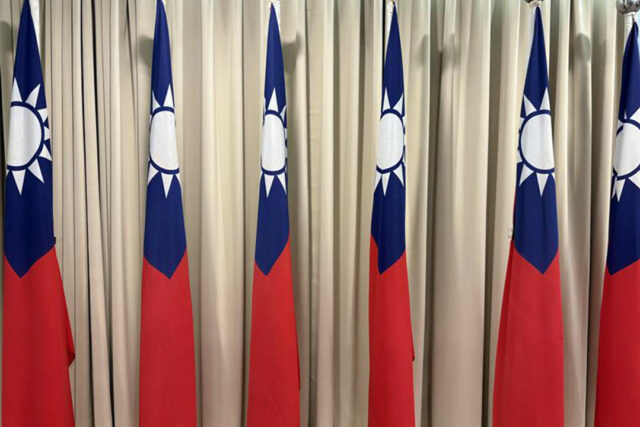
TAIPEI — Taiwan opposition lawmakers survived a major recall election on Saturday, thwarting a bid to oust one-fifth of the island’s parliamentarians — a move supporters had hoped would send a message to China but that opponents called an assault on democracy.

All recall votes against 24 lawmakers from the largest opposition party, the Kuomintang (KMT), were rejected, according to live vote counts by Taiwanese media. The voting followed a campaign begun by civic groups.

The election result is a blow to President Lai Ching-te’s Democratic Progressive Party (DPP), which has missed an opportunity to reshape the Taiwan legislature and regain its majority.

The government said the island’s largest-ever recall vote had faced “unprecedented” election interference by China, which claims the democratically governed island as its own — a claim Taiwan rejects.

While Mr. Lai won last year’s presidential election, the DPP lost its legislative majority. The opposition has flexed its muscles since then to pass laws the government has opposed and impose budget cuts, complicating efforts to boost defense spending in particular.

KMT Chairman Eric Chu thanked Taiwan’s voters and called for Mr. Lai to apologize and reflect on his own governance.

“One should not lose the elections and then call for malicious recalls. One should not seek one-party dominance and destroy democracy,” he told a press briefing in Taipei. “Most importantly, the people of Taiwan chose stability and chose a government that gets things done, rather than political infighting.”

The political drama comes as China ramps up a military and diplomatic pressure campaign against Taiwan to assert its territorial claims. Mr. Lai has offered talks with Beijing many times but been rebuffed. It calls him a “separatist.”

The heated recall campaign has been closely watched by China, whose Taiwan Affairs Office and state media have repeatedly commented on the vote and used some of the same talking points as the KMT to lambaste Mr. Lai, Reuters reported last week.

The Taiwan Affairs Office said in a statement on Sunday that the voting results show that “the DPP’s political manipulation is completely contrary to the people’s will and is unpopular.”

Taipei said on Wednesday that Beijing was “clearly” trying to interfere in its democracy and it was up to Taiwan’s people to decide who should be removed from or stay in office.

Wu Szu-yao, secretary general of the DPP’s legislative caucus, said the party respected the voters’ decision with pleasure, adding that the result would only strengthen the DPP’s “anti-communist and pro-Taiwan” stance.

“This time we saw China was trying everything it could to intervene,” she told reporters at party headquarters in Taipei, pointing to Chinese military pressure and a disinformation campaign. “We must be more vigilant against their possible malicious intentions toward Taiwan.”

The groups seeking the recalls said theirs was an “anti-communist” movement, accusing the KMT of selling out Taiwan by sending lawmakers to China, not supporting defense spending and bringing chaos to parliament. The KMT rejects the accusations, denouncing Mr. Lai’s “dictatorship” and “green terror” — referring to the DPP’s party color.

The KMT campaigned against what it called a “malicious” recall that failed to respect the result of last year’s parliamentary election, saying they have simply been keeping lines of communication open with Beijing and exercising legitimate oversight of Mr. Lai’s government.

Recall votes for seven other KMT lawmakers will be held on Aug. 23. — Reuters

ADVERTISEMENT
ADVERTISEMENT