Home Blog Page 1239

US zero-tariff treatment seen resulting in P3.97 billion in foregone PHL revenue

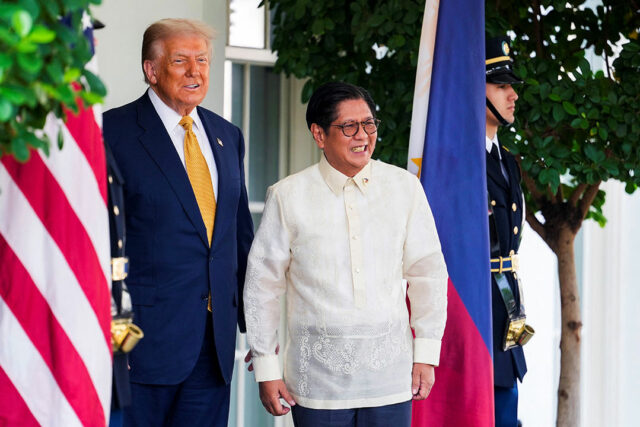
US PRESIDENT Donald J. Trump welcomes Philippine President Ferdinand R. Marcos, Jr. at the White House in Washington, DC, US, July 22. — REUTERS/KENT NISHIMURA

THE Philippines could forego about P3.97 billion in government revenue as a result of its tariff deal with the US, think tank IBON Foundation estimated.

In its IBON Birdtalk Midyear 2025 briefing Friday, Jose Enrique A. Africa, executive director at IBON Foundation, said the revenue foregone as a result of the trade concessions include P1.6 billion from automobiles, P1.2 billion from wheat, P730 million from soy, and P440 million from pharmaceuticals , he said.

He added that this scenario assumes only a selected range of US products is admitted tariff-free.

“If US President Donald J. Trump is to be believed about Philippine going ‘open market’ with 0% tariffs on all products, we roughly estimate a P31-billion revenue loss,” Mr. Africa said.

President Ferdinand R. Marcos, Jr. said many details still need to be worked out on the recent negotiations, which reduced the Philippine tariff rate to 19% from 20%.

The final Philippine rate is two percentage points higher than the 17% “reciprocal tariff” initially announced in April.

“The bigger problem is the loss of policy space. The fact that we’re giving so much to the US, while even forgoing our own protection on the argument that, oh, we don’t have a car industry anyway, that kind of is a bit shortsighted,” Mr. Africa said.

He said the Philippine negotiating performance was poor relative to the deals negotiated by the rest of the region.

He said Vietnam reduced its initial 46% tariff to 20%, with a 40% escalator for goods transshipped through Vietnam.

Indonesia shaved its initial 32% tariff rate to 19%.

“A one-sided deal has actually become worse because of the poor negotiating leverage and the poor negotiating posture of the Marcos administration,” he said.

Separately, Rosario Bella Guzman, executive editor and head of research at Ibon Foundation, flagged the economy’s “steady decline and accelerating political decay.”

“We are seeing economic growth slowing… and the limits of investment-driven growth,” Ms. Guzman said.

The economy has to grow by an average of 6.6% in the next three quarters to reach the middle of the range of the downgraded 5.5% to 6.5% government target — an outcome she called “impossible.”

Gross domestic product (GDP) grew by a weaker-than-expected 5.4% in the first quarter and 5.7% in 2024.

These are both lower than the pre-pandemic growth rate of 6.1% in 2019 and the 6.9% posted in 2012.

Ms. Guzman said poverty and hunger are worsening three years into the Marcos administration.

IBON estimates that the number of families rating themselves as poor has grown to 14.1 million as of the end of April, from 12.2 million in June 2022, at the start of his term.

Meanwhile, Mr. Africa said the “accomplishments” expected to be presented in the upcoming July 28 State of the Nation Address are “micro efforts” that are too small to address poverty, the need for agricultural reform, and national industrialization.

He said agriculture is being “deprioritized” with its share of the national budget falling to 3.9% in 2025 General Appropriations Act from 4.1% in the 2024 budget.

Also, agriculture growth under Mr. Marcos average 0.2% between the third quarter of 2022 to the first quarter of 2025. The equivalent growth rates were 1.2% for his predecessor Rodrigo R. Duterte and 3.5% for former President Benigno S.C. Aquino III. — Aubrey Rose A. Inosante

AI: Placing humans at the center

First of two parts

IN BRIEF:

​• Despite the extensive use of artificial intelligence (AI), a gap in adoption remains, highlighting the difference between individuals’ willingness to use AI and their actual engagement with it.

• Organizations have the opportunity to bridge this divide by fostering trust in AI, showcasing its benefits, and empowering employees to engage with the technology on their own terms.

• Understanding current attitudes toward AI, including comfort levels and practical applications, is essential for leaders to make informed decisions and demonstrate the value of AI to employees.

Artificial intelligence has emerged as a crucial element in contemporary life and work. The AI Sentiment Index Study, conducted by market research firm EY Sweeney, surveying over 15,000 participants globally, found that 82% had actively engaged with AI in the past six months. This trend signifies a significant shift in human capability rather than just a technological advancement. The research utilized a random stratified sampling method to ensure diverse demographic representation across 15 countries, including Australia, Brazil, Canada, China, France, Germany, India, Japan, Saudi Arabia, New Zealand, South Korea, Sweden, the UAE, the UK, and the US.

Despite the extensive use of AI, a gap in adoption remains — this gap highlights the difference between individuals’ willingness to use AI and their actual engagement with it. Issues related to trust, privacy, and control contribute to this gap, along with the current availability of AI tools. Organizations have a substantial opportunity to bridge this divide.

Leadership is vital in this context. Organizations that build trust in AI, showcase its benefits, and place humans at center by empowering them to engage with AI on their own terms will be best equipped to implement AI effectively. By utilizing AI in ways that align with human needs and aspirations, organizations can ultimately enhance human potential rather than diminish it, shaping the role of AI in business and society.

AI’S IMPACT ON EVERYDAY LIFE
Understanding present attitudes toward AI provides insights into its future trajectory. People’s interactions with AI today reflect a practical approach. Most individuals seek to understand how AI can help them achieve their objectives. Currently, AI is mainly employed for straightforward, efficiency-driven tasks such as managing energy consumption, researching topics, or summarizing information. When AI offers immediate, tangible benefits, individuals are more likely to engage.

However, AI adoption hinges on confidence as much as functionality, with clear boundaries around where individuals feel comfortable using AI. More complex systems or tasks requiring personal data, e.g., AI-powered health diagnostics, credit scoring algorithms, personalized marketing, etc., often evoke hesitation. As AI evolves, these boundaries will shift, necessitating that business leaders make informed decisions based on current and emerging trends.

The AI Sentiment Index quantifies global comfort levels with AI, currently scoring 68 out of 100. This index averages comfort levels based on factors such as the presence of AI in daily life, its personal impact, its national impact, and excitement for its future. A higher score indicates greater comfort with AI, and the index categorizes respondents into three groups: uncomfortable, neutral, and comfortable.

Those most at ease with AI engage significantly more, averaging 15 different AI applications in the past six months, compared to six among neutral respondents and just three among the uncomfortable. This data reveals a reinforcing cycle: comfort with AI encourages exploration of more applications, gradually increasing confidence and usage.

DEMONSTRATING THE VISION AND VALUE OF AI
To get employees on board with the vision and the value of AI, it’s critical to demonstrate its value, prioritizing progress over perfection and recognizing how the technology affects emotions within an organization.

These examples illustrate the importance of demonstrating the value of AI to employees, prioritizing progress over perfection, and recognizing the emotional impact of technology within an organization:

1. Training and development programs: Implement AI-driven training tools that personalize learning experiences for employees. By showcasing how AI can enhance their skills and career growth, employees may feel more positive about the technology.

2. Employee feedback systems: Use AI to analyze employee feedback and sentiment in real-time. This can help management understand employee concerns and emotions, fostering a culture of openness and trust.

3. ​Streamlined workflows: Introduce AI tools that automate repetitive tasks, allowing employees to focus on more meaningful work. Highlighting the time saved and increased job satisfaction can help employees embrace AI.

4. Data-driven decision making: Implement AI analytics to provide insights that support decision-making processes. Demonstrating how AI can lead to better outcomes can help employees see its value in their daily work.

5. Collaborative AI tools: Use AI to enhance collaboration among teams, such as AI-driven project management tools that help track progress and allocate resources effectively. This can foster a sense of teamwork and shared purpose.

6. Recognition programs: Create AI systems that recognize and reward employee achievements based on performance data. This can boost morale and show employees that their contributions are valued.

7. Customer interaction improvements: Showcase AI applications that enhance customer service, such as chatbots that provide quick responses. Employees can see how AI improves customer satisfaction, which can positively impact their roles.

8. Emotional intelligence in AI: Introduce AI tools that analyze employee emotions and well-being, allowing management to respond proactively to issues. This shows a commitment to employee welfare and can foster a supportive environment.

The adoption of AI within an organization can be enhanced by initiating small-scale pilot projects that showcase quick wins and celebrating these successes to build enthusiasm and confidence in the technology among employees. Additionally, leaders should maintain transparent communication by regularly sharing the goals and benefits of AI initiatives, addressing any concerns or misconceptions, and fostering open dialogue to mitigate fear and resistance.

In the second part of this article, we discuss the local AI landscape, how organizations can support human agency through AI, and the leadership imperative in keeping humans at the center.

This article is for general information only and is not a substitute for professional advice where the facts and circumstances warrant. The views and opinions expressed above are those of the author and do not necessarily represent the views of SGV & Co.


Rossana A. Fajardo is the country managing partner of SGV & Co.

Congress told to focus on food security, job creation and manufacturing revival

PCOO

By Adrian H. Halili, Reporter

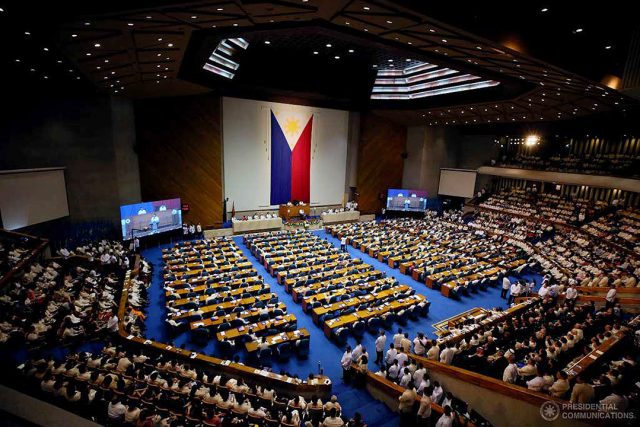
ECONOMISTS are calling on Philippine lawmakers to prioritize legislation that will boost food security, revive manufacturing and create better jobs as the 20th Congress opens on July 28.

Congress should pass measures to modernize the country’s agro-industrial sector, said John Paolo R. Rivera, a senior research fellow at the Philippine Institute for Development Studies. “These efforts will uplift the income of local producers and improve the country’s food security,” he said in a Viber message.

The agriculture sector has long lacked adequate government support, leaving the Philippines dependent on food imports. Local production often fails to meet domestic demand, exposing the country to price fluctuations caused by global trade disruptions.

Inflation rose to 1.4% in June from 1.3% in May. The Bangko Sentral ng Pilipinas warned that geopolitical tensions could still pose inflation risks.

“One priority legislation should be to raise the land retention limits for agricultural land to raise agricultural productivity,” Calixto V. Chikiamco, a political economist, said in a Viber message.

Party-list Rep. Terry L. Ridon, convenor of infrastructure think tank InfraWatch PH, urged lawmakers to push policies that cut the cost of living.

“They should focus on continuing to reduce food and basic commodity prices, generate jobs and implement infrastructure projects which palpably contribute to economic growth and poverty alleviation,” he said in a Viber message.

Mr. Rivera also cited the need to strengthen the manufacturing and electronics sectors to offer better job quality for Filipinos. He said Congress should also promote the digital economy and expand the Information Technology and Business Process Management (IT-BPM) sector.

The employment rate was 96.1% in May, representing about 50.29 million Filipinos with jobs. Most workers came from the service, agriculture and industry sectors, the Philippine Statistics Authority said.

“Lawmakers should push for measures on tourism and creative industries, which are high-potential, labor-intensive sectors, and green infrastructure and renewable energy, which can future-proof the economy and attract climate-aligned investments,” Rivera added.

Ederson DT. Tapia, a political science professor at the University of Makati, said legislators are likely to stay aligned with the Marcos administration’s priorities.

“Because President Ferdinand R. Marcos, Jr. is term-limited in 2028, codifying which issues belong to the administration is crucial,” he said. “These could include industry upgrading, service convenience and sovereignty.”

The 20th Congress will elect its leadership ahead of Mr. Marcos’s fourth State of the Nation Address. Senator Francis G. Escudero and Leyte Rep. Ferdinand Martin G. Romualdez are expected to retain their posts as Senate President and House Speaker, respectively.

Farm damage from PHL storms rises to P1.12B

PHILIPPINE STAR/EDD GUMBAN

DAMAGE to the country’s agriculture sector from three successive tropical storms and the southwest monsoon has climbed to P1.12 billion, the Department of Agriculture (DA) said at the weekend.

The agency said 45,408 farmers and fishermen were affected, with damage covering 43,741 hectares of farmland — mostly rice fields. Of the 41,189 hectares of affected rice areas, 32,445 hectares were partially damaged and still have recovery potential, while 8,744 hectares were completely lost.

Estimated rice production losses reached 19,819 metric tons, equivalent to about a third of the country’s daily consumption and valued at P664.4 million, the DA said.

High-value crops across 918 hectares suffered losses amounting to 4,509 metric tons and were valued at P162.2 million. Corn farms covering 1,613 hectares posted an estimated loss of P55.7 million. Fisheries were also heavily affected, with losses pegged at P202.4 million and 1,436 fishermen affected.

Regions affected include the Cordillera Administrative Region, Ilocos Region, Cagayan Valley, Central Luzon, Calabarzon, Mimaropa, Bicol Region, Western Visayas, Zamboanga Peninsula, Northern Mindanao, Davao Region and Soccsksargen.

The DA said it would distribute P653 million worth of assistance in the form of seeds, livestock, fingerlings and other agricultural inputs to aid recovery.

The National Food Authority has released 43,136 bags of rice to the Ilocos Region, Cagayan Valley, Central Luzon, Calabarzon, Mimaropa, Bicol Region, Soccsksargen and Metro Manila. Central Luzon received the biggest allocation, which was distributed through the Department of Social Welfare and Development.

The Agricultural Credit Policy Council has allotted P400 million in zero-interest loans for affected farmers and fishermen.

Meanwhile, the Philippine Crop Insurance Corp. estimates initial indemnity payouts for 45,980 insured farmers at P268 million.

In a separate report, the National Disaster Risk Reduction and Management Council (NDRRMC) said the death toll from the combined effects of storms Crising, Dante and Emong, as well as the enhanced southwest monsoon, had climbed to 30.

Thirteen of the deaths — nine in the National Capital Region, two in Central Luzon, one in Northern Mindanao and one in Caraga — have been confirmed.

The NDRRMC was still verifying six deaths in Western Visayas, four in Calabarzon, three in the Negros Island Region, two in Northern Mindanao, one in Mimaropa and one in the Davao Region.

The total number of affected families has reached 5.57 million from 1.54 million families across 6,053 villages in 17 regions. Damaged houses stood at 3,592,643 of which were totally destroyed. — Kyle Aristophere T. Atienza

House prosecutors to ask high court to reconsider junking of VP impeachment

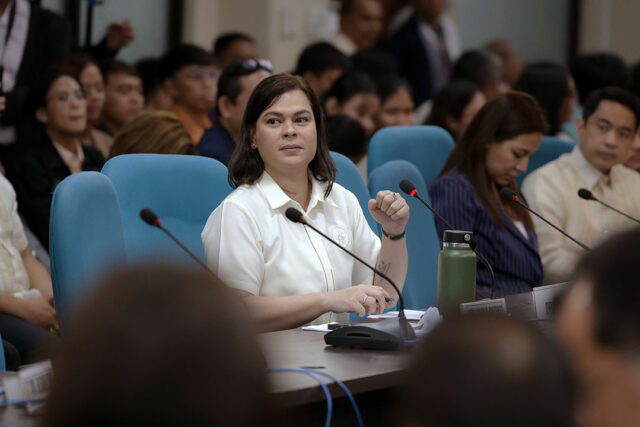
VICE-PRESIDENT Sara Duterte-Carpio, in this Aug. 27, 2024 photo, attended the deliberations on the proposed 2025 budget for the Office of the Vice-President at the House of Representatives in Quezon City. — PHILIPPINE STAR FILE PHOTO/MIGUEL DE GUZMAN

By Adrian H. Halili, Reporter

THE HOUSE of Representatives on Sunday said that it will file a motion for reconsideration before the Philippines’ High Court following its ruling to bar the impeachment proceedings of Vice-President (VP) Sara Duterte-Carpio for being unconstitutional.

“The House, after careful study, will file a Motion for Reconsideration because the decision is anchored on factual premises or findings that are erroneous and contrary to the official record of the House,” House Spokeswoman Priscilla Marie “Princess” T. Abante said in a statement.

Last week, the Supreme Court (SC) ruled that the impeachment of Ms. Duterte was unconstitutional for violating the one-year ban on the filing of more than one complaint against an impeachable official and the right to due process. Any subsequent impeachment complaint against her may only be filed by Feb. 6, next year.

A total four impeachment complaints were filed against the Vice-President. She was impeached on the fourth complaint after more than 200 House members voted to send her impeachment complaints to the Senate, after the first three failed to materialize.

Ms. Abante said that the Court’s primary argument — that the Articles of Impeachment were transmitted to the Senate without plenary approval — was “categorically false.”

“On Feb. 5, 2025, Majority Leader (Manuel Jose “Mannix” M. Dalipe) proposed to forward the February complaint to the Senate, based on the fact that it was verified and signed by at least one third of the members of the House. This motion was approved in plenary, and the House immediately formed a panel of public prosecutors,” she added.

She said that the transmittal to the Senate was a clear result of the House’ plenary action.

The House Spokeswoman also argued that the House had voted to archive the first three impeachment complaints filed in December 2024.

“On the same day that the February complaint was acted upon, the House also voted in plenary to archive the three impeachment complaints filed in December. This was done hours before the session adjourned,” she added.

Ms. Abante said that the SC had issued a new rule that is not in existing laws and has invalidated the Articles of Impeachment based on the new standards of due process for the respondent.

“According to the Court, even a complaint that has been signed and verified by 1/3 of the members still needs to be read by each signatory and then referred back to the plenary for a vote. The respondent should also have been given a copy and an opportunity to respond to the complaint before it is submitted to the Senate. But there is no such requirement in our Constitution or the Rules of the House,” she added.

Ms. Duterte, who is widely seen as a potential presidential contender in 2028, was impeached last February with the backing of more than 200 lawmakers — exceeding the one-third threshold required to transmit the charges to the Senate.

She faces accusations of secret fund misuse, unexplained wealth, destabilization and plotting the assassination of President Ferdinand R. Marcos, Jr., his family, and the Speaker. She has denied all allegations.

FACTUAL INACCURACIES
In a separate statement on Sunday, the 1SAMBAYAN Coalition called for the re-examination of the SC’s decision, also arguing factual inaccuracies.

“The misrepresentation of facts undermines the principles of due process and fair judgment,” the political group added. “1SAMBAYAN advocates for a transparent and accurate accounting of events, ensuring that future legal decisions are grounded on the truth and not flawed interpretations of the facts.”

It also said that the High Court’s decision was supported by a “flawed understanding” of the impeachment timeline and the procedural actions of the House.

“By incorrectly stating the order of events, the Court reached an erroneous conclusion regarding the timeliness of the fourth impeachment complaint,” 1SAMBAYAN added.

This could lead to a Constitutional crisis as some Senators have already shared plans to disregard the SC’s ruling, a political analyst warned.

“It is possible that this will lead to a constitutional crisis since some senators have already publicly declared that they want the trial to proceed believing that the Senate has the sole prerogative to handle and decide on issues pertaining to the impeachment of (Ms. Duterte),” Arjan P. Aguirre, who teaches political science at the Ateneo de Manila University, said in a Facebook Messenger chat.

He added that House prosecutors should use the setback as a way to campaign and raise awareness about the charges against the Vice-President.

“Use this time to gather more evidence too by conducting committee hearings for more discussions and deliberations to ferret out the truth, etc.” Mr. Aguirre said.

Michael Henry Ll. Yusingco, a fellow at the Ateneo de Manila University Policy Center, said that the charges against Ms. Duterte could instead be pursued through the Office of the Ombudsman.

“The House should bring the case to the Ombudsman. The House prosecutors should work to secure a plunder indictment that can be filed with the Sandiganbayan,” Michael Henry Ll. Yusingco, a fellow at the Ateneo de Manila University Policy Center, said in a Facebook Messenger chat.

He added that the High Court’s ruling did not absolve the Vice-President of the charges filed against her.

“So, plunder charges can be pursued and prosecuted through the Ombudsman. The VP can still be held criminally liable and punished accordingly,” Mr. Yusingco said.

Josue Raphael J. Cortez, who teaches diplomacy and governance at De La Salle-College of St. Benilde, noted that House prosecutors should confirm if they will still pursue a case against Ms. Duterte next year.

“It is still imperative that those supportive of the impeachment proceedings must continue doing their due diligence,” Mr. Cortez said in a Messenger chat.

Thailand, Cambodia told to patch up

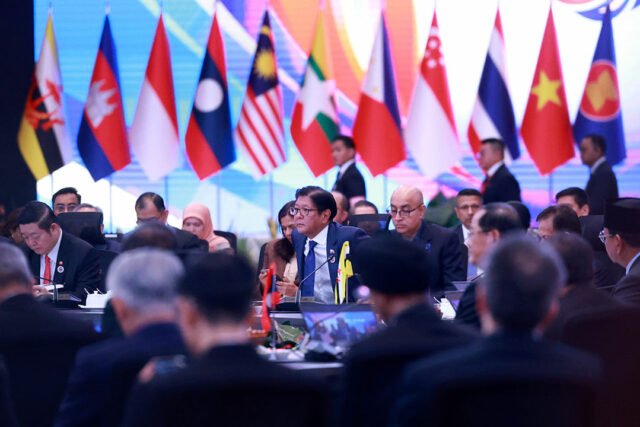
PRESIDENT Ferdinand R. Marcos, Jr. attends the 2nd ASEAN-Gulf Cooperation Council Summit during the 46th Association of Southeast Asian Nations Summit in Kuala Lumpur, May 27. — MARK BALMORES/PPA POOL

PHILIPPINE PRESIDENT Ferdinand R. Marcos, Jr., sounded the alarm over the ongoing conflict between Thailand and Cambodia, two fellow member states of the Association of Southeast Asian Nations (ASEAN), calling for a peaceful resolution grounded in international law.

“The Philippines expresses deep concern over the ongoing conflict between two of our fellow ASEAN Member States,” Mr. Marcos wrote in a Facebook post late Saturday. “[We] urge them to resolve the dispute in accordance with international law and the peaceful settlement of disputes.”

He added Manila “stands ready to assist in any way to restore peace.”

The dispute comes as the Philippines gears up to chair the regional bloc next year.

Under the ASEAN Charter, member states are committed to promoting peace, stability, and the rule of law in the region, including the non-use of force in settling disputes.

In a separate statement issued on July 25, the Department of Foreign Affairs likewise called on both countries to de-escalate the conflict.

In recent days, fighting along the Thailand — Cambodia border has reached its most intense level in over a decade. Reuters reported on July 27 that clashes began around July 24, sparked by a landmine explosion injuring several Thai soldiers, leading to armed exchanges and artillery fire across multiple provinces, including Trat (Thailand) and Pursat (Cambodia).

More than 30 people have been killed and over 130,000 displaced amid the surge in hostilities, prompting mass evacuations on both sides, Reuters added.

US President Donald J. Trump reportedly talked with both Cambodian Prime Minister Hun Manet and Acting Thai Prime Minister Phumtham Wechayachai, announcing that both sides agreed to hold immediate ceasefire talks and warning that trade agreements would be put on hold while fighting continues.

Malaysia’s Prime Minister Anwar Ibrahim, the current ASEAN country chair, proposed a regional ceasefire plan. Phnom Penh backed the proposal unconditionally, while Bangkok initially agreed in principle before retracting, saying that conditions on the ground must be appropriate.

Josue Raphael J. Cortez, an ASEAN Studies lecturer at De La Salle-College of St. Benilde, said the Philippines is taking a proactive stance amid regional tensions by urging peaceful resolution of conflicts in line with international law and ASEAN norms.

Alongside Kuala Lumpur, the current ASEAN chair, Manila’s efforts are seen as significant, given the bloc’s limited capacity for enforcement, he added.

“The fact that the Philippines expressed its willingness to support in any way the resolution of the conflict through peaceful means is our country’s openness to serve as a broker for peace between the warring factions, as escalation of the conflict may trigger actions that can debilitate Southeast Asian order and stability,” he said in a Facebook Messenger chat. — Chloe Mari A. Hufana

Typhoon-related gov’t aid sought

PHILIPPINE STAR/MIGUEL DE GUZMAN

PHILIPPINE Senators have called on the government to continue its support for people affected by a string of weather disturbances last week.

In a statement on Sunday, Senator Erwin T. Tulfo called for urgent support for fisherfolks affected by the recent storms even if they were not directly affected by floods.

“When there are typhoons, or even bad weather, this means zero livelihood for a day or weeks for our fishermen. They will have nothing to feed themselves and their families throughout weather disturbances,” Mr. Tulfo added.

Mr. Tulfo said that he is looking to meet with the departments of Social Welfare and Development, Agriculture, and Labor and Employment to ensure that fisherfolk are not left behind whenever there’s inclement weather.

Senator Christopher Lawrence “Bong” T. Go also called for the implementation of hazard pay for disaster frontliners.

“We know that our country is prone to disasters. Therefore, it is only right that we have concern for our frontliners who are the first to respond to every disaster,” he said separately.

Mr. Go previously filed Senate Bill No. 669, which seeks to grant hazard pay to personnel directly involved in disaster response.

Meanwhile, Senator Sherwin T. Gatchalian called on the Education department to sustain learning activity following the prolonged suspension of classes.

Classes were subsequently suspended or shifted to alternative learning modes due to inclement weather.

“We need, however, to sustain learning recovery efforts, especially as prolonged class suspensions threaten to aggravate learning loss,” he said in a statement also on Sunday.

Last week, the southwest monsoon and a series of storms brought heavy rains that flooded large portions of the Philippines, including the capital region.

This caused the death of about 30 people and had affected at least 3.8 million people, according to the National Disaster Risk Reduction and Management Council. — Adrian H. Halili

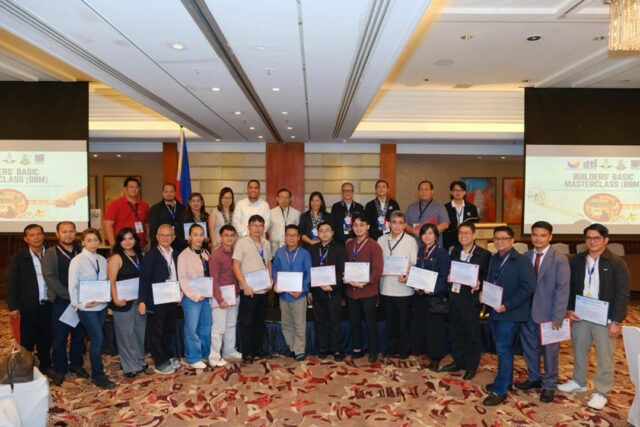
DTI launches masterclass for builders

THE Department of Trade and Industry launched the Builders’ Basic Masterclass (BBM) program, which aims to integrate informal contractors into the formal construction sector.

THE Department of Trade and Industry (DTI) has launched the Builders’ Basic Masterclass (BBM) program, which aims to integrate informal contractors into the formal construction sector.

In a statement sent over the weekend, the trade department said that the program is being spearheaded by the Construction Industry Authority of the Philippines’ Philippine Contractors Accreditation Board (PCAB) and Construction Manpower Development Foundation (CMDF).

“It is designed to facilitate proper licensing and enable wider participation of grassroots builders in the mainstream industry, strengthening the overall construction value chain,” it added.

According to the DTI, it plans to roll out the program nationwide in partnership with local government units and industry associations with the aim of targeting builders in areas with limited access to specialized training.

DTI Fair Trade Group Officer-in-Charge Regino Mallari, Jr. said that the contributions of informal, also known as “pakyaw,” contractors to national development are often unrecognized.

“Though small in size, their impact is immense. From the roads that connect our communities to the schools that nurture our children to the homes that shelter our families, their hands have built the very foundations of our daily lives,” he said.

The BBM program covers modules on project management, regulatory compliance, site operations, and business development.

Currently, there are over 600 licensed “pakyaw” contractors nationwide.

“The program is expected to increase this number, expanding its formal participation in the mainstream construction sector,” DTI said. — Justine Irish D. Tabile

New PLLO head appointed

THE Presidential Legislative Liaison Office (PLLO) officially welcomed Adrian Carlos A. Bersamin as its new undersecretary and head ahead of the fourth State of the Nation Address (SONA) of President Ferdinand R. Marcos, Jr.

In a Facebook post, the PLLO said Mr. Bersamin’s “proven leadership and steadfast dedication to public service,” expressing confidence that his appointment will strengthen stakeholder partnerships and enhance policy coordination in support of the President’s legislative agenda.

“The PLLO Family looks forward to this new chapter of service and collaboration under your guidance,” the agency said.

He will replace former Secretary Mark Llandro L. Mendoza, who was the Presidential Adviser on Legislative Affairs and PLLO head since 2022. Mr. Mendoza vacated the post after his courtesy resignation was accepted by President Marcos.

The new appointment comes as Mr. Marcos delivers his fourth SONA today, July 28. He is expected to lay out his legislative priorities for the second half of his term.

The PLLO serves as the primary link between the Executive and Legislative branches of the Philippine government. Its main role is to facilitate coordination and communication to ensure the smooth passage of the President’s legislative agenda in Congress.  Chloe Mari A. Hufana

4,000 calamity-hit families get aid

BAGUIO CITY — About 4,000 families across typhoon-stricken communities in Central Luzon received immediate relief this week, as the Bases Conversion and Development Authority (BCDA) and its partner local government units mobilized the distribution of rice, food packs, and hot meals to areas severely impacted by three consecutive typhoons and intensified southwest monsoon rains.

Spanning the provinces of Pampanga, Zambales, Tarlac, and Bataan, the multi-site relief operations targeted vulnerable communities near BCDA-managed development zones, where flooding disrupted livelihoods and forced thousands of families into evacuation centers.

“When communities are affected, we make sure we are there to coordinate and respond alongside those who know the ground best. We are committed to supporting our local government partners not only in development, but especially in times of crisis,” BCDA President and Chief Executive Officer Joshua M. Bingcang said.

In Tarlac, BCDA turned over 100 sacks of rice to the Capas municipal government and distributed hot meals to evacuees at the Sto. Domingo 1 Evacuation Center.

Bamban Mayor Joey Salting likewise worked with BCDA to provide food packs and hot meals to displaced families in their municipality.

Additional deliveries were also coordinated in San Jose through local disaster response teams. In Sta. Juliana, an upland Aeta community, 70 indigenous families received rice and essential goods from BCDA, as part of a broader effort to reach geographically isolated and disadvantaged areas.

In Bataan, BCDA turned over 100 sacks of rice to the Municipality of Dinalupihan, received by Mayor German “Tong” Santos, to assist flood-hit barangays surrounding BCDA estate zones.

In Hermosa, the final leg of the Bataan operation, Mayor Anne Lorraine Adorable-Inton received rice donations for distribution to affected residents.

To aid more communities affected by the heavy rains and flooding, BCDA on Friday, continued to mobilize additional relief packages to reach more calamity-hit areas in Pampanga and Zambales, with over 50 sacks of rice turned over to the Mabalacat City Social Welfare and Development Office through Mayor Gerald Guttrie “Geld” Aquino.

The BCDA and Ayala Corporation also turned over another hundred sacks of rice and food packages to the City Government of Olongapo, as received by Mayor Rolen Paulino Jr.

The BCDA team then visited Barangay Diaz in Porac, where over 150 Aeta families received rice, food packs, and hot meals. This leg was also carried out in partnership with Ayala Corporation, which contributed additional food packages for the beneficiaries.

These relief efforts were conducted in close partnership with local government units and the Department of Social Welfare and Development (DSWD).

BCDA also conducted post-flood inspections in critical areas to evaluate long-term infrastructure vulnerabilities, including slope protection, drainage systems, and transport corridor access under extreme weather pressure.

The BCDA and NLEX Corporation conducted an onsite inspection and assessment of the Pasig — Potrero Bridge of the Subic-Clark-Tarlac Expressway, ensuring that it remains stable and safe for public use. — Artemio A. Dumlao

Sulu donates rice, goods to NCR residents

COTABATO CITY — The provincial government of Sulu has donated 2,000 bags of rice and 1,000 cases of canned goods for typhoon-stricken families in the National Capital Region (NCR), military officials announced on Sunday.

Lt. Gen. Antonio G. Nafarrete, commander of the Western Mindanao Command based in Zamboanga City, told reporters on Sunday that the relief supplies from Sulu were channeled through the 11th Infantry Division (ID).

Sulu’s vice governor, Hadji Adbdusakur M. Tan, Sr., who is also functioning as officer-in-charge of their provincial government in concurrent capacity, said on Saturday, that the WestMincom and the headquarters of the Philippine Army will disperse the food supplies to residents of NCR affected by typhoons in recent days.

Mr. Nafarrete and his subordinate-officers in Sulu had said that the 10th ID and the office of Mr. Tan cooperated in the relief effort for the typhoon-stricken communities in the NCR.

Mr. Nafarrete said the WestMinCom is thankful to provincial officials in Sulu for reaching out to needy compatriots in Metro Manila. — John Felix M. Unson

Biado becomes PHL’s first 2-time 9-ball world champ

CARLO BIADO — FACEBOOK.COM/MATCHROOMPOOL

WHEN Efren “Bata” Reyes emerged as the country’s first World Pool champion around three decades ago, it served as a catalyst for a new generation of Filipinos to dream that same glorious dream.

One of them is Carlo Biado. And on this one Saturday night in a cavernous hall in Jeddah, Saudi Arabia, Mr. Biado exuded the same magnificence of Mr. Reyes, his idol, in topping the World Pool Championship.

Not even the fearsome World No. 1 and last year’s titlist Fedor Gorst of the US could block Mr. Biado’s road to greatness as the latter carved an epic 15-13 victory in the nail-baiting finale that overflowed with spectacular shot after spectacular shot.

When Mr. Biado sank the final ball, he couldn’t control his emotions, screamed in jubilation, climbed on top of the pool table where he frantically celebrated again in acknowledgement of the loud, adoring crowd, including flag-waving Filipinos.

He then sat to gather himself, and after a few minutes, went straight to Mr. Gorst and shook hands, embracing his worthy foe.

When it was all over, Mr. Biado was in utter disbelief that he had done what no other Filipino before him, including the iconic Reyes himself, had accomplished — top the strongest 9-ball tilt on the planet twice.

The first one came eight years ago in Doha, Qatar where he beat countryman Roland Garcia, 13-5.

The long wait was worth it.

Mr. Biado also became the seventh player to win the meet more than once in an elite group that included Mr. Gorst himself.

The only one standing taller in this league of extraordinary gentlemen was American Earl Strickland, who has three.

And Mr. Biado will have a chance at shooting for the stars as he seeks to duplicate the feat and join Mr. Strickland at the pedestal starting next year.

Mr. Biado delivered the country its sixth title in the event after Mr. Reyes (1999), Alex Pagulayan (2004), Ronnie Alcano (2006), Francisco Bustamante (2010) and himself.

It was a rollercoaster duel with Mr. Gorst roaring to a strong start, 2-0, before Mr. Biado went on a spree of superb shotmaking, snatching the next nine racks to go up, 9-2.

But Mr. Gorst went on a tear himself and caught up to Mr. Biado at 9-9.

The Filipino charged back again and captured the next four frames to go 13-9 up before the American stubbornly clawed back again to knot it at 13-all.

It proved to be Mr. Gorst’s final gasp as Mr. Biado sent him packing by taking the last two racks and the triumph.

For his effort, Mr. Biado pocketed $250,000, or a cool P14. 3 million.

But more than the mammoth purse, Mr. Biado took the one that mattered the most for all Filipinos back home and across the globe — the honor of producing another world champion from this archipelagic nation.

And it all started with the man that first paved the way for all in Reyes. — Joey Villar

ADVERTISEMENT
ADVERTISEMENT