
How PSEi member stocks performed — July 25, 2025

Here’s a quick glance at how PSEi stocks fared on Friday, July 25, 2025.
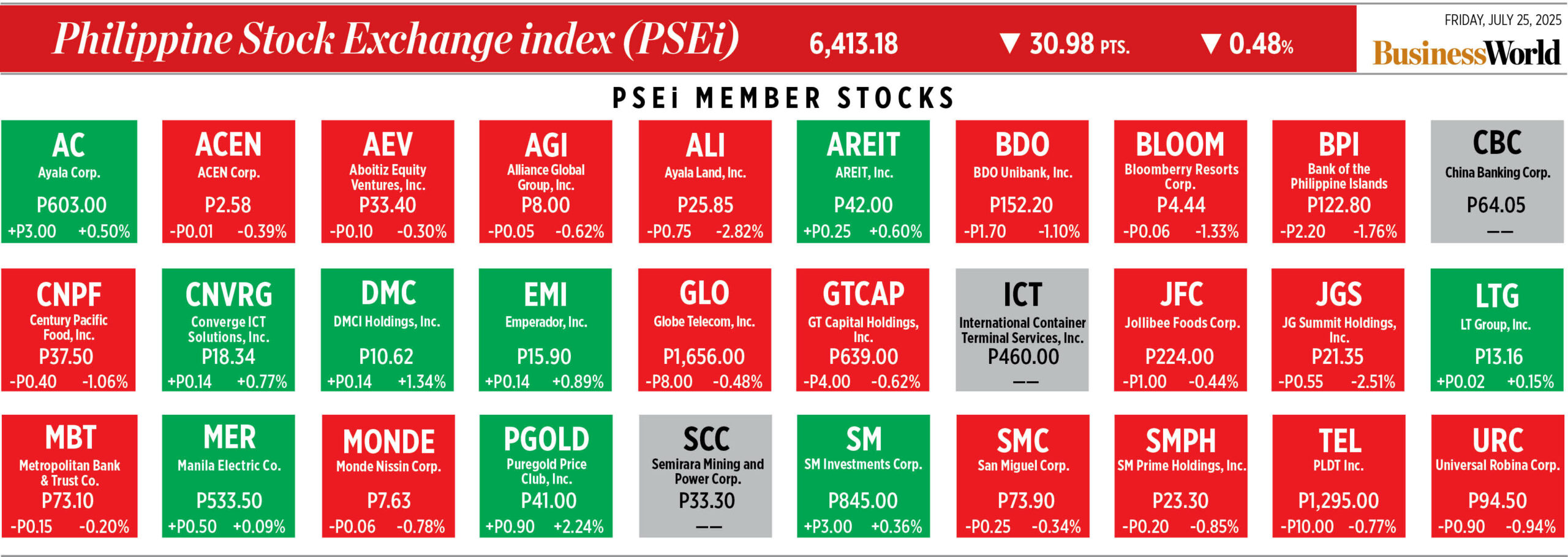

Here’s a quick glance at how PSEi stocks fared on Friday, July 25, 2025.

THREE YEARS into his presidency, President Ferdinand R. Marcos, Jr. faces mounting public frustration as Filipinos say many of the promises he made during his 2022 campaign remain unfulfilled. Read the full story.

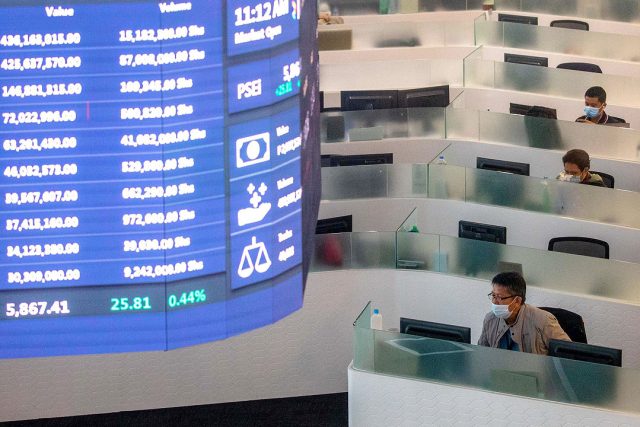
PHILIPPINE SHARES may move sideways this week, with President Ferdinand R. Marcos, Jr.’s fourth State of the Nation Address (SONA) on Monday taking center stage and as investors await more corporate results.
On Friday, the Philippine Stock Exchange index (PSEi) went down by 0.48% or 30.98 points to close at 6,413.18, while the broader all shares index retreated by 0.3% or 11.52 points to 3,796.87.
Meanwhile, week on week, the PSEi jumped by 1.74% or 109.46 points from the 6,303.72 finish on July 18.
“Despite the onslaught of typhoons Dante and Emong, the PSEi remarkably rallied… defying global anxieties over US tariffs,” online brokerage 2TradeAsia.com said in a market note.
“The local market made a comeback last week, regaining its ground above the 6,400 level as bargain hunters take opportunities. However, trading last week was tepid, implying that the climb did not have strong conviction,” Philstocks Financial Inc. Research Manager Japhet Louis O. Tantiangco said in a Viber message.
For this week, the market will look for fresh leads, with the spotlight expected to be on Mr. Marcos’ SONA, he said.
“Detailed plans on how to keep inflation low and how to re-accelerate economic growth may boost investors’ sentiment,” Mr. Tantiangco said.
In the first quarter, Philippine gross domestic product (GDP) grew by 5.4%, weaker than expected and slower than the 5.9% expansion in the same quarter last year.
Economic managers last month lowered the full-year GDP growth target to 5.5%-6.5% from 6%-8% previously.
“Investors are also expected to watch out for the upcoming second quarter corporate reports. Robust results are expected to lift the local market,” he added.
Mr. Tantiangco put the PSEi’s major resistance at 6,600 after the index was able to re-establish support at 6,400 last week.
“However, it is having a hard time securing position above its 200-day exponential moving average (EMA). Moving forward, the 200-day EMA could be tested further,” he said. “The market’s moving average convergence/divergence line is about to cross above the signal line. If this proceeds, it will signal positive momentum for the bourse.”
For its part, 2TradeAsia.com put the PSEi’s immediate support at 6,300 and resistance at 6,600.
“The week ahead demands balancing portfolio resilience against global and local headwinds. We reiterate our call to prioritize high-liquidity, domestically focused valued stocks to navigate near-term risks while capitalizing on BSP’s (Bangko Sentral ng Pilipinas’) supportive policy,” it said.
“In these trying times, stay vigilant for potential pivots into hedge plays should inflation surprise. Markets favor the prepared — seize opportunities with caution and prudence,” 2TradeAsia.com added. — Revin Mikhael D. Ochave
I SQUARED CAPITAL has committed an additional $1-billion investment in critical infrastructure projects in the Philippines, the Office of the Special Assistant to the President for Investment and Economic Affairs (OSAPIEA) said.
Secretary Frederick D. Go, who heads OSAPIEA, said I Squared’s commitment reflects the country’s growing appeal to infrastructure investors.
“These investments will improve lives — from powering homes and businesses with renewables to ensuring safer food through modern cold storage and connecting people and enterprises in the digital age,” he said in a statement over the weekend.
OSAPIEA said the US private equity firm has committed to advance critical projects across energy transition, transport and logistics, and digital infrastructure.
“I Squared has invested over $1 billion in project enterprise value in the Philippines and shared its plans to invest an additional $1 billion in critical infrastructure projects for the nation,” it added.
To date, I Squared is advancing seven strategic investments in the Philippines, including two in the last six months.
These are Aggreko Philippines, HEXA Renewables, Berde Renewables, Royale Cold Storage, Philippine Coastal Storage & Pipeline Corp., HGC, and BDX.
According to OSAPIEA, Aggreko Philippines has so far invested $200 million in modular power and is planning to double this investment, meaning HEXA Renewables is targeting an additional $350-million investment by 2027.
Meanwhile, I Squared is hoping to significantly increase Royale Cold Storage’s capacity in the near term.
“We are proud to partner with the Philippines on its infrastructure transformation,” I Squared Chairman and Managing Partner Sadek Wahba said.
“Our investments are delivering energy security, food resilience, and digital connectivity — building the foundation for inclusive economic growth and long-term prosperity,” he added.
I Squared is among the companies President Ferdinand R. Marcos, Jr. met with in his recent trip to the US. — Justine Irish D. Tabile
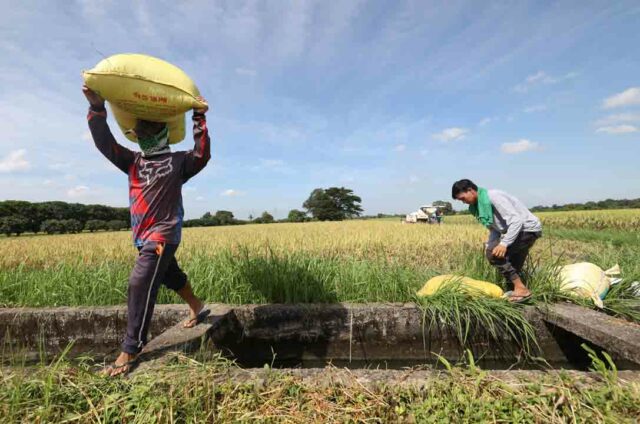
THE Department of Agriculture (DA) said it has been assured by Philippine trade negotiators that no concessions will be made to the US that will harm domestic producers of agricultural goods.
Agriculture Secretary Francisco P. Tiu Laurel, Jr. said the reassurance covers rice and sugar, which the Philippines does not import from the US, as well as corn, chicken, fish, and pork.
Left out of his list is wheat, which the Philippines does not produce in commercial quantities, which domestic industries use for food production and animal feed.
The Philippine negotiating team, led by Secretary Frederick D. Go, who heads the Office of the Special Assistant to the President for Investment and Economic Affairs, and Trade Secretary Maria Cristina Aldeguer-Roque, made the reassurances as they negotiate the technical details of the preliminary trade deal with the US, under which Philippine exports pay a US tariff of 19%.
President Donald J. Trump last week said the Philippines has granted duty-free access to some US imports.
The DA, citing Malacañang, said a final trade agreement is still being hammered out by trade negotiators.
“Secretary Go… assured the Philippines has not made any concessions that would harm local producers,” it said.
The Philippine negotiating team has said that any trade agreement “must strike a balance between improving market access and safeguarding the livelihoods of Filipino workers and farmers,” the DA said. — Kyle Aristophere T. Atienza

THE 20th Congress needs to devote significant attention to stabilizing the rice industry, in particular a measure that will set a floor price of P25 per kilogram (kg) for palay, or unmilled rice, the Integrated Rural Development Foundation (IRDF), a non-government organization (NGO) said.
In a statement, the IRDF said the “primary driver” of the current crisis is the Rice Tariffication Law of 2019, which removed restrictions on private-sector rice imports. In exchange, importers were required to pay tariffs on their shipments, set initially at 35% and since reduced to 15%.
The price of palay at the farmgate level has been recorded at P10 per kg in some areas, below the average production cost of P14.52 per kg estimated in 2024 by the Philippine Statistics Authority (PSA),
Production costs are also rising because of more expensive fuel and inputs, the IRDF added.
In 2024, the Philippines became the world’s largest rice importer, bringing in a record 4.8 million metric tons (MMT) of rice.
House Bill No. 1, or the proposed RICE Act, seeks to restore some regulatory powers to the National Food Authority (NFA), but the IRDF said “farmers remain exposed to price volatility and income uncertainty” if the NFA cannot influence the market with floor prices and grain procurement.
The IRDF called for a comprehensive law that provides integrated production, marketing and post-harvest support to rice farmers.
The 20th Congress should restore and strengthen the power of the NFA to regulate imports and intervene in the market to stabilize prices and buy palay at support levels, it said.
The IRDF supports the repeal of the Rice Tariffication Law, replacing it with a proposed Rice Industry Sustainable Development Act that sets the minimum farmgate price for palay at P25 per kg.
The floor price will help farmers earn at least P50,000 per hectare each harvest, equivalent to about P16,000 per month, thereby incentivizing continued planting and increasing yields.
It also supports legislation enabling the NFA to procure 10%-20% of the palay harvest. — Kyle Aristophere T. Atienza

THE Department of Transportation (DoTr) said it expects to complete the P650-million upgrade of the Davao International Airport by the end of 2026.
The airport project covers the 48% expansion of the passenger terminal to 25,910 square meters by December 2026, the DoTr said, thereby raising seating capacity in the terminal to 1,500 passengers.
The government is currently evaluating an unsolicited proposal for the airport’s operations and maintenance.
The Public-Private Partnership (PPP) Center has said that the proposal is still undergoing assessment.
The P12.9-billion proposal was submitted by the Davao International Airport Consortium, according to the PPP Center.
The consortium consists of Asian Infrastructure and Management Corp.; Filinvest Infra-Solutions Ventures, Inc.; and JG Summit Infrastructure Holding Corp.
The PPP Center said the proposal will be implemented under a rehabilitate-operate-transfer arrangement with a 30-year concession agreement.
The DoTr said it is looking to tap the private sector for the operation and maintenance of up to 20 airports to help expand and upgrade the Philippines’ regional hubs. — Ashley Erika O. Jose

THE ANALYTICS & Artificial Intelligence Association of the Philippines (AAP) said it expects the completion of the detailed implementation plan for nationwide artificial intelligence (AI) upskilling early next year.
AAP President Michelle Alarcon said the group has co-created the National AI Upskilling Plan, which was proposed by the Private Sector Advisory Council (PSAC) Education and Jobs Pillar to President Ferdinand R. Marcos, Jr.
“We will work towards having a pilot, but at least the detailed implementation plan will be there in January 2026,” she told reporters on the sidelines of AICON PH 2025.
“We are tasked to put together the plan and then the associated costs (involved). And then the government will set a realistic amount that can be released, which we have not got around to yet,” she added.
The National AI Upskilling Plan is set to have five tiers addressing the needs of beginners to professionals.
“Right now, we are trying to consolidate all the efforts from the private sector because we are the lead, and we are working with the Commission on Higher Education (CHED) and Technical Education and Skills Development Authority (TESDA),” she said.
“We kicked off weeks ago, and now we are in the process of putting details to the budget,” she added, noting that the upskilling plan is being planned around an initial budget of P1.5 billion.
She said that the PSAC has determined a need to focus on high school students, as those already in the workforce are being taken care of by their employers.
“We will also be careful about which particular segment of the youth we will need to educate on AI,” she said.
“But the rest of the sequence, we have not figured out. It also depends on the budget. Because just high school students is already a lot,” she added.
At the conference last week, the AAP also launched the Code of Ethics of AI Professionals, which it hopes will lay the groundwork for self-regulation.
“Anyone can build anything right now. The code of ethics is just an attempt to self-regulate,” she said.
She said there is no Philippine law that regulates the use of AI, noting that the European Union restricts the use of behavioral data, facial recognition, and data points dealing with physical appearance in certain AI applications.
“What we intend to do is, without any other basis for regulating, removing bias or potential bias,” she said.
She said that the Code of Ethics will serve as a placeholder until a law or an AI governance framework emerges for the Philippines.
Asked what she wants to hear from President Ferdinand R. Marcos, Jr.’s State of the Nation Address on Monday, she said that she hoped for Mr. Marcos to announce the National AI Upskilling Plan.
“If the leader of a country says that we are going to have AI upskilling for everyone, that shows that we are for innovation and that everything that is implied to be needed to power that innovation, be it digital infrastructure or upskilling or whatever, will be provided by the government,” she said. — Justine Irish D. Tabile

THE NATIONAL Government’s (NG) gross borrowing rose 78.16% year-on-year in June, with both foreign and domestic debt expanding, the Bureau of the Treasury (BTr) said.
The BTr reported gross borrowing of P263.99 billion in June, which was up 37.28% against the May total.
Gross external debt grew 514.09% to P96.41 billion in June, which included P86.11 billion in program loans and P10.31 billion in project loans.
Meanwhile, gross domestic borrowing rose 26.50% year-on-year to P167.58 billion, including P127.68 billion in fixed-rate Treasury bonds and P39.90 billion in Treasury bills.
Domestic debt accounted for 63.48% of all gross borrowing.
Rizal Commercial Banking Corp. Chief Economist Michael L. Ricafort said the June borrowing total likely reflected the wider budget deficit that pushed the government to borrow more.
The budget deficit was P241.6 billion in June, according to the Bureau of the Treasury, bringing the first-half total of P613.9-billion.
“This could also be a function of maturing government debt in the coming months, with a large Treasury bond maturity of about P800 billion from August-September 2025, also in view of the upcoming RTB offering/issuance worth about P200 billion as early as 3Q 2025/August 2025,” Mr. Ricafort said via Viber.
NG gross borrowing rose 1.33% to P1.59 trillion in the first six months, driven by foreign loans.
Gross external borrowing rose 50.46% to P402.35 billion during the period, with P191.97 billion in global bonds, P171.31 billion in program loans and P39.08 billion in new project loans.
Domestic debt declined 8.75% to P1.19 trillion at the end of June.
Domestic gross borrowing for the period accounted for 74.72% of total borrowing in the six months.
This consisted of P756.84 billion in fixed-rate Treasury bonds, P300 billion in fixed-rate Treasury notes and P132.31 billion in Treasury bills.
“The borrowing program of the NG exceeded (projections) halfway through June, which may be a sign that they will push for higher government spending in the latter half of the year,” Reinielle Matt M. Erece, an economist at Oikonomia Advisory and Research, Inc., said via Viber.
Finance Secretary Ralph G. Recto has said that the borrowing plan was adjusted to P2.6 trillion from P2.55 trillion to fund the budget deficit. The government is seeking to retain the 80-20 funding split in favor of domestic sources.
At the end of April, government expenditure hit P1.90 trillion, up 11.6% year-on-year.
“This may be as pessimistic trade conditions and weak investor sentiment may continue to drag down GDP (gross domestic product) growth, the government may step in to try and boost growth through faster spending,” Mr. Erece said.
The economy grew by a weaker-than-expected 5.4% in the first three months of 2025 as negative tariff sentiment dampened economic activity.
Economic managers have lowered their growth target range to 5.5%-6.5% from 6-8% previously.
The government caps its deficit at P1.56 trillion, equivalent to 5.5% of GDP.
THE NATIONAL Government’s (NG) gross borrowing rose 78.16% year-on-year in June, with both foreign and domestic debt expanding, the Bureau of the Treasury (BTr) said.
The BTr reported gross borrowing of P263.99 billion in June, which was up 37.28% against the May total.
Gross external debt grew 514.09% to P96.41 billion in June, which included P86.11 billion in program loans and P10.31 billion in project loans.
Meanwhile, gross domestic borrowing rose 26.50% year-on-year to P167.58 billion, including P127.68 billion in fixed-rate Treasury bonds and P39.90 billion in Treasury bills.
Domestic debt accounted for 63.48% of all gross borrowing.
Rizal Commercial Banking Corp. Chief Economist Michael L. Ricafort said the June borrowing total likely reflected the wider budget deficit that pushed the government to borrow more.
The budget deficit was P241.6 billion in June, according to the Bureau of the Treasury, bringing the first-half total of P613.9-billion.
“This could also be a function of maturing government debt in the coming months, with a large Treasury bond maturity of about P800 billion from August-September 2025, also in view of the upcoming RTB offering/issuance worth about P200 billion as early as 3Q 2025/August 2025,” Mr. Ricafort said via Viber.
NG gross borrowing rose 1.33% to P1.59 trillion in the first six months, driven by foreign loans.
Gross external borrowing rose 50.46% to P402.35 billion during the period, with P191.97 billion in global bonds, P171.31 billion in program loans and P39.08 billion in new project loans.
Domestic debt declined 8.75% to P1.19 trillion at the end of June.
Domestic gross borrowing for the period accounted for 74.72% of total borrowing in the six months.
This consisted of P756.84 billion in fixed-rate Treasury bonds, P300 billion in fixed-rate Treasury notes and P132.31 billion in Treasury bills.
“The borrowing program of the NG exceeded (projections) halfway through June, which may be a sign that they will push for higher government spending in the latter half of the year,” Reinielle Matt M. Erece, an economist at Oikonomia Advisory and Research, Inc., said via Viber.
Finance Secretary Ralph G. Recto has said that the borrowing plan was adjusted to P2.6 trillion from P2.55 trillion to fund the budget deficit. The government is seeking to retain the 80-20 funding split in favor of domestic sources.
At the end of April, government expenditure hit P1.90 trillion, up 11.6% year-on-year.
“This may be as pessimistic trade conditions and weak investor sentiment may continue to drag down GDP (gross domestic product) growth, the government may step in to try and boost growth through faster spending,” Mr. Erece said.
The economy grew by a weaker-than-expected 5.4% in the first three months of 2025 as negative tariff sentiment dampened economic activity.
Economic managers have lowered their growth target range to 5.5%-6.5% from 6-8% previously.
The government caps its deficit at P1.56 trillion, equivalent to 5.5% of GDP. — Aubrey Rose A. Inosante

By Beatriz Marie D. Cruz, Reporter
DEVELOPING a virtual nursing industry will depend on upgrades to digital infrastructure and sufficiently attractive pay that can offer workers of a viable option to emigrating, according to Worldwide Resource Solutions (WWRS), Inc., a Manila-based healthcare outsourcing firm.
“If you look at the US market right now, there’s a potential of $40 billion for virtual nursing alone. So, just to get a chunk of that business would really provide jobs for a lot of people and help the economy,” WWRS Managing Director Rosita Lara Lumagui told BusinessWorld.
Worldwide HealthStaff Solutions Ltd., a US medical solutions company, is banking on the Philippines’ strong outsourcing industry and large number of healthcare graduates in expanding virtual nursing services here.
Last month, WWRS launched its virtual nursing hub in Bridgetowne, Quezon City, which allows healthcare workers to care for patients in US hospitals while being based here.
The Philippines itself is grappling with a shortage of 127,000 nurses, which could grow to 250,000 by 2030, the World Health Organization said.
“The Philippine government should strengthen the country’s position as a global leader in outsourced healthcare — particularly in virtual nursing,” Ms. Lumagui said.
She cited the need for national certification programs and government-funded scholarships or training subsidies for virtual healthcare roles.
To support critical telehealth facilities like data centers and secure cloud platforms, the government must improve its digital infrastructure and security standards, she noted. It should also ensure fair wages and safe working conditions for virtual healthcare workers.
“Once they know that we have the capability to do this in the Philippines, then others will follow suit,” Ms. Lumagui said.
The market for health information management services (HIMS), one of the fastest-growing segments in the knowledge process outsourcing industry, is valued at about $4 billion, the Department of Trade and Industry (DTI) estimates.
According to Ms. Lumagui, virtual nursing roles typically require a license to practice nursing in the Philippines or the US, depending on client requirements.
On the other hand, a nursing license is not required for virtual sitters, but they must have at least two years of healthcare experience.
Using video technology, WWRS staff are trained to monitor up to 15 patients, communicating patient needs with bedside staff.
While their employees are paid in pesos, salaries are “adjusted upward to reflect the responsibilities of working within a US clinical framework,” WWRS said.
“For this year, what we (plan to) put in place at least 590 (virtual sitters/nurses,)” Ms. Lumagui said. “But probably (by) 2026, we would need more depending on the market.”
As virtual nursing expands in the Philippines, Ms. Lumagui is counting on healthcare workers staying in the country for long haul, with a living wage that can support family life expected to be attractive to those who would rather not emigrate.
By Chloe Mari A. Hufana, Reporter
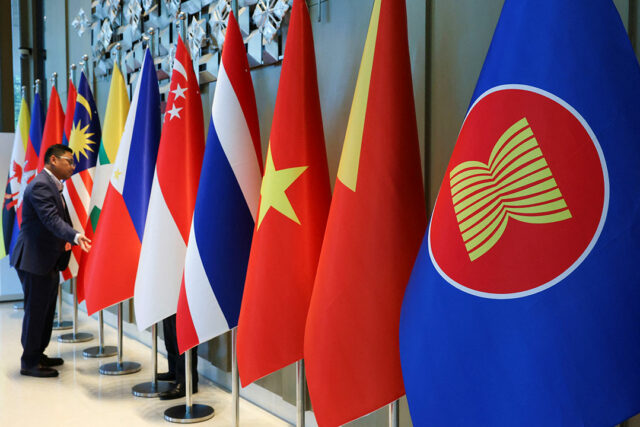
THE EUROPEAN UNION (EU) offers a roadmap to the closer integration of Association of Southeast Asian Nations (ASEAN) economies, an Italian academic said.
Enrico Letta, Dean of the IE School of Politics, Economics, and Global Affairs at IE University in Madrid, said the EU’s own journey toward economic integration — driven by the removal of internal trade barriers — offers valuable lessons for ASEAN.
“The elimination of internal borders is a big boost for growth,” he told BusinessWorld in an interview on July 25. “We have to understand that internal borders are a limit, and this is the same within ASEAN countries.”
The Philippines and the EU are currently in talks to for a bilateral trade pact, which Philippine officials hope to finalize by 2027.
Negotiations between the Philippines and the EU advanced to a third round in Brussels, between June 16 and 20, with both sides covering 19 critical issues, the Department of Trade and Industry (DTI) said in a statement.
The next round of free trade negotiations is scheduled to take place in the Philippines in October.
Mr. Letta, a former Italian prime minister who also wrote the 2024 report Much More Than a Market for the European Commission, said such agreements are critical at a time when global trade is under threat from rising protectionism by the US and China.
“Only through trade cooperation can we have mutual benefits, but this cooperation (implies) the elimination of internal borders,” he added.
He noted that a Philippine‑EU free trade agreement can serve as a launching pad for broader ASEAN‑EU trade cooperation, adding Manila could play an “avant-garde” role for Southeast Asia.
The DTI described the prospective deal with the EU as the most comprehensive such deal in Philippine history, broadening beyond traditional tariff chapters to encompass labor and environmental standards, intellectual property, competition policy, sanitary measures, and state-owned enterprise regulation.
Philippine-EU trade was $15.5 billion in 2024, making the EU the Philippines’ fifth-largest trading partner, accounting for 7.7% of total trade. Philippine exports to the bloc amounted to $8.1 billion.
Singapore and Vietnam both have free trade deals with the EU, which were signed in 2019 and 2020, respectively. Negotiations with the Philippines were relaunched in October.
Josue Raphael J. Cortez, an ASEAN Studies lecturer at the De La Salle-College of St. Benilde, said an EU trade deal could carry strategic weight as the country assumes the ASEAN chairmanship in 2026.
“With our leaders also devising ways to better navigate the negative repercussions of the nuanced reciprocal tariffs imposed by the US, it is high time that we steer discussions on how we can better promote our aspiration of becoming a single market,” Mr. Cortez said via Messenger.
“While ASEAN’s Community Visions and the ASEAN Economic Community Blueprint (AEC Blueprint) have long championed economic integration, actual progress has been slow due to wide development gaps and structural asymmetries between maritime and mainland member states,” he added.
Mr. Cortez noted that, unlike the EU, ASEAN is not geographically contiguous, and its member states specialize in different industries.
“What we can do moving forward is to maximize what we have in common — agricultural products, semiconductors, and mineral resources — and better utilize intra-ASEAN mobility to promote a sustainable production environment,” he said.
He added that a Philippine-EU deal could become a blueprint for regional partners seeking to reduce dependence on traditional trade allies and expand relationships with like-minded economies.
“The Philippines may serve as a negotiating model for how its neighbors can deepen ties with the EU despite normative differences. It may even take the lead in representing ASEAN’s collective interests in future trade negotiations,” Mr. Cortez said. “This agreement, if finalized, won’t just open up European markets. It could also shape how Southeast Asia reimagines its role in global trade.”

THE National Grid Corp. of the Philippines (NGCP) obtained approval from the Energy Regulatory Commission (ERC) to go ahead with its proposed P1.11-billion substation project in Aklan.
“The project must be completed by NGCP on or before Dec. 31,” the ERC said in a notice.
The ERC noted that the approval is “subject to optimization based on actual use, usefulness, and verified expenses incurred, supported by official receipts and other relevant documents.”
The proposed project is part of NGCP’s 2022 roster of capital expenditure (capex) projects.
The grid operator said that the project addresses expected overloading of the Nabas Substation as well as overloading and undervoltage issues along the Panitan-Nabas 69kV Transmission Line.
NGCP capex projects must be approval by the ERC under Republic Act No. 9136 or the Electric Power Industry Reform Act.
Under a congressionally granted 50-year franchise, the company has the right to operate and maintain the transmission system and related facilities, and to exercise the right of eminent domain as needed to construct, expand, maintain, and operate the transmission system.
The ERC approved the NGCP’s fourth regulatory period rate reset spanning 2016 to 2022, under which it is entitled to an additional P28.29 billion in under-recoveries. — Sheldeen Joy Talavera
