Home Blog Page 1235

Labubu fans dote over ugly-cute doll trending at Comic-Con

AN ATTENDEE wears a Labubu at the Pop Mart booth on the convention floor during the opening day of Comic-Con International in San Diego, California July 24. — REUTERS/MIKE BLAKE/FILE PHOTO

SAN DIEGO — San Diego Comic-Con is the latest location where the ugly-cute dolls named Labubu have been trending, with fans carrying the plushies globally popularized by celebrities Rihanna, Lizzo, Dua Lipa, and Lisa from the K-pop group Blackpink.

The wide-eyed and grinning doll was created in 2015 by Hong Kong artist and illustrator Kasing Lung. In 2019, Mr. Lung allowed them to be sold by Pop Mart, a Chinese toy company that sells collectible figurines, often in “blind boxes.”

“Blind boxes” are sealed boxes containing a surprise item that is usually part of a themed collection.

Naomi Galban, from San Diego, waited in line on Sunday at the Pop Mart booth in the San Diego Convention Center for a chance to get her first Labubu.

“Every time I go to a Pop Mart store, they’re sold out,” the 24-year-old told Reuters. She hoped to buy one for her little sister.

Emily Brough, Pop Mart’s head of IP licensing, spoke to Reuters on Thursday about Labubu fans at Comic-Con. “We love to see how fans are personalizing it (Labubu) for themselves,” Ms. Brough said next to the Pop Mart booth.

While Ms. Brough noted that there were many people with a Labubu strapped to their bags and backpacks at Comic-Con, the doll’s popularity did not happen overnight.

Labubus had a huge boost in 2019 after Pop Mart began selling them, and in 2024, when Blackpink’s Lisa, who is Thai, created a buying frenzy in Thailand after she promoted Labubu on social media.

Pop Mart saw sales skyrocket in North America that same year, with revenue in the US in the first quarter of 2025 already surpassing the full-year US revenue from 2024, Pop Mart said.

When he created Labubu, Mr. Lung gave the character, who is female, a backstory inspired by Nordic mythology. He called her and his other fictional creatures “The Monsters.”

Diana Goycortua, 25, first discovered Labubu through social media, and before she knew it, it felt like a “game” to try and collect the dolls.

“It’s a little bit of gambling with what you’re getting,” the Labubu fan from San Diego said on Sunday while waiting at the Pop Mart booth, concluding that her love for the character made it worth trying blind boxes.

Ms. Goycortua already has three Labubus, and was hoping to score her a fourth one at Comic-Con. Reuters

Megaworld sells P1.17B worth of MREIT shares via block sale

MEGAWORLD

LISTED real estate developer Megaworld Corp. sold P1.17 billion worth of shares in its real estate investment trust, MREIT, Inc., through a block sale.

Megaworld sold 84.8 million common shares in MREIT at P13.82 per share on Friday, the real estate company said in a regulatory filing on Monday.

The offer price was at a discount to MREIT’s share price of P14.18 per share on Friday.

Megaworld tapped Maybank Securities, Inc. and BDO Securities as brokers for the transaction.

The block sale proceeds will be settled on Tuesday.

“The company will submit the required reinvestment plan detailing the use of proceeds from the block sale transaction,” Megaworld said.

Unicapital Securities, Inc. Research Head Wendy B. Estacio-Cruz said in a Viber message that the transaction signals a possible asset infusion by Megaworld into MREIT in the second half of the year in support of the latter’s plan to expand its portfolio.

“(MREIT’s) sponsor, Megaworld, has a robust project pipeline and fully owned retail and hotel developments, which may serve as potential acquisitions for MREIT moving forward. Its upcoming asset infusions are expected to follow a target mix of 80% office and 20% retail properties,” she said.

MREIT grew its gross leasable area (GLA) to 482,000 square meters (sq.m.) after its third wave of asset acquisitions last year.

The company’s portfolio comprises 24 prime office properties across five Megaworld townships: Eastwood City, McKinley Hill, McKinley West, Iloilo Business Park, and Davao Park District.

MREIT previously said that it is on track to grow its GLA to 600,000 sq.m. by yearend to support its goal of reaching 1 million sq.m. of GLA by 2030.

On Monday, Megaworld shares rose by 0.5% or one centavo to P2.03 apiece, while MREIT shares increased by 0.14% or two centavos to P14.20 per share. — Revin Mikhael D. Ochave

BDO’s second-quarter net income flat at P20.985B

BW FILE PHOTO

BDO Unibank, Inc.’s net income was flat in the second quarter as higher expenses offset increases in both its net interest and non-interest earnings.

The Sy-led bank’s attributable net profit stood at P20.985 billion in the three months ended June, steady from its income in the same period last year, according to its financial statement disclosed to the stock exchange on Monday.

This brought its first-half net income to P40.76 billion, up by 3.12% from P39.52 billion in the comparable year-ago period, “driven by strong performance of its core businesses,” BDO said.

Its first semester performance translated to a return on average common equity of 13.92% and a return on average assets of 1.64%, both down from 15.05% and 1.73%, respectively, in the same period last year, as its net income increased at a slower pace versus its average common equity and average assets.

“Earnings growth was tempered by the continuing investments in market coverage and IT spending for operational efficiency,” BDO said.

“Amid global uncertainties arising from geopolitical tensions and the imposition of US tariffs, the Philippines is expected to remain resilient, supported by its consumer-driven economy and sustained domestic demand. Likewise, the bank remains well-positioned to manage emerging risks and capitalize on opportunities given its robust capital base and diversified business franchise,” it added.

In the second quarter, BDO’s net interest income increased by 8.32% year on year to P50.38 billion from P46.51 billion.

Broken down, interest income rose by 6.2% to P72.26 billion, driven by higher interest earnings from loans and other receivables. This was faster than the 1.63% increase in its interest expense to P21.88 billion.

For the first half, net interest income increased by 7% to P98.134 billion from P91.455 billion amid the expansion of its earning assets.

Net interest margin inched down to 4.3% as of June from 4.34% a year ago amid lower rates due to the central bank’s monetary easing cycle and “competitive market pricing.”

Meanwhile, the bank’s other operating income went up by 9.2% year on year to P19.35 billion in the second quarter from P17.72 billion, driven by higher service charges, fees and commissions, trust fees, and trading gains.

In the first half, its non-interest income jumped by 15% to P37.956 billion on the back of higher fee-based income and earnings from insurance operations.

On the other hand, the bank’s operating expenses rose by 14.28% to P41.5 billion in the three months ended June from P36.32 billion in the same period last year.

This brought its first half expenses to P82.36 billion, up 15% year on year, which it attributed to higher manpower and occupancy costs, among others.

BDO’s gross customer loans climbed by 14% to P3.4 trillion at end-June amid growth across all market segments.

Despite the growth in its loan book, its nonperforming loan (NPL) ratio was at just 1.75%, with NPL coverage at 140%.

“With an expanded loan portfolio, the bank continued its conservative provisioning stance, setting aside P7.2 billion as provision for impairment losses,” it said.

On the funding side, total deposits grew by 8% to P4.03 trillion as of June, with 69% of the total being low-cost current account, savings account or CASA deposits. Demand and time deposits increased by 13% and 11%, respectively.

BDO’s assets expanded by 9% to P5.13 trillion at end-June amid higher customer loans and mainly funded by deposits.

Total equity went up by 12% year on year to P611.18 billion.

The bank’s capital adequacy ratio was at 15.43% as of end-June, up from 14.81% in the same period last year, as the increase in its capital coming from profits outpaced the growth in its risk-weighted assets.

Its liquidity ratio stood at 31.16%, down from 34.28% last year due to faster growth in loans. Interest rate coverage and profit margin also declined to 214.92% and 22.17% from 221.22% and 23.37%, respectively, amid higher funding costs.

BDO’s shares dropped by P3.20 or 2.10% to close at P149 apiece on Monday. — Aaron Michael C. Sy

Tom Lehrer, musical satirist and math prodigy, 97

Tom Lehrer singing “Poisoning Pigeons in the Park.” — AMAZON.COM

TOM LEHRER, the math prodigy who became an influential musical satirist with his barbed views of American social and political life in the 1950s and 1960s, has died at the age of 97, according to news reports.

Mr. Lehrer died at his home in Cambridge, Massachusetts, on Saturday, his longtime friend David Herder told the New York Times. No cause of death was specified.

Mr. Lehrer’s career as a musician and revered social commentator was little more than a happy accident that began with composing ditties to amuse classmates at Harvard University. His heyday lasted about seven years and, by his own count, produced only 37 songs before the reluctant performer returned to teaching at Harvard and other universities.

“There’s never been anyone like him,” Sir Cameron Mackintosh, the Broadway producer who created Tom Foolery, a revue of Lehrer songs, told BuzzFeed in 2014. “Of all famous songwriters, he’s probably the only one that… is an amateur in that he never wanted to be professional. And yet the work he did is of the highest quality of any great songwriter.”

As the US nestled into the post-war complacency of the 1950s, the liberal-leaning Mr. Lehrer was poking holes in the culture with his songs while maintaining an urbane, witty air.

Some of his works reflected his mathematical interests — “New Math” about subtracting 173 from 342 and “Lobachevsky” about a 19th century Russian mathematician — but his meatier songs were deemed by some to be too irreverent and shocking. In 1959 Time magazine lumped him in with groundbreaking comics Lenny Bruce and Mort Sahl as “sicknicks” who had “a personal and highly disturbing hostility toward all the world.”

The song “I Wanna Go Back to Dixie” looked at racism in the South (“The land of the boll weevil where the laws are medieval”) while “National Brotherhood Week” took on hypocrites (“It’s only for a week so have no fear / Be nice to people who are inferior to you”). “Be Prepared” exposed the dark side of a Boy Scout’s life, “I Got It from Agnes” was about venereal disease, and “We Will All Go Together When We Go” addressed nuclear Armageddon.

“If, after hearing my songs, just one human being is inspired to say something nasty to a friend, or perhaps to strike a loved one, it will all have been worth the while,” Mr. Lehrer wrote on the notes that accompanied one of his albums.

ODE TO ELEMENTS
Thomas Andrew Lehrer was born on April 9, 1928, in New York. He grew up in the Big Apple listening to musical theater and one of his first works was “The Elements,” a recitation of the periodic table set to a Gilbert and Sullivan tune. He enrolled at Harvard at age 15 and his “Fight Fiercely, Harvard” with the line “Won’t it be peachy if we win the game?” became a popular spoof of the school’s sports fight song.

He performed at campus functions and, while in graduate school, compiled enough material to record an album in a Boston studio. He sold Songs by Tom Lehrer around campus and it developed a word-of-mouth cult following around the country.

After serving in the US Army from 1955 to 1957, Mr. Lehrer began performing and recorded more albums but was losing his zest for music. By the early 1960s, working on his doctorate — which he never finished — and teaching became greater concerns, although he did contribute songs to the TV news satire show That Was the Week That Was in 1963 and 1964.

Mr. Lehrer taught math at Harvard and the Massachusetts Institute of Technology and musical theater at the University of California-Santa Cruz.

He said he found math and songwriting to be similar — both a matter of fitting the pieces together in search of a proper and satisfying outcome. When asked why he abandoned musical satire, he said cultural changes had created issues such as abortion and feminism that were too complicated to satirize.

Famously, he quipped that “political satire became obsolete when Henry Kissinger was awarded the Nobel Peace Prize” after the award was given to the controversial secretary of state in 1973.

Mr. Lehrer, who never married, also said the things he once found to be funny were now scary.

“I often feel like a resident of Pompeii who has been asked for some humorous comments on lava,” he told People magazine in 1982.

Mr. Lehrer’s impact lasted decades after he stopped performing. His work was often featured on the syndicated Dr. Demento radio show and Harry Potter star Daniel Radcliffe dazzled a talk show audience by doing “The Elements” on a television show in 2010. The rapper 2 Chainz sampled part of Mr. Lehrer’s “The Old Dope Peddler” in a 2012 song. — Reuters

Robinsons Retail inks deal to buy motorcycle dealer Premiumbikes

PREMIUMBIKES.PH

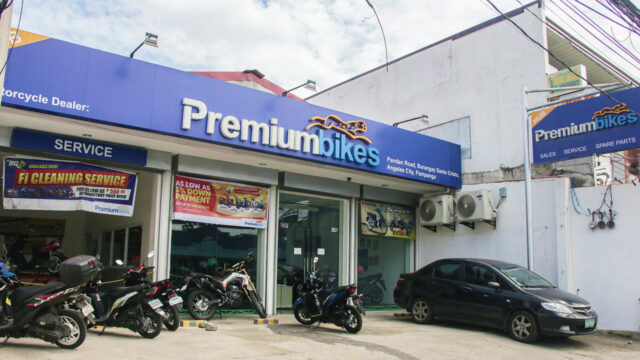
GOKONGWEI-LED Robinsons Retail Holdings, Inc. (RRHI) is entering the motorcycle dealership business through its P146.4-million acquisition of Premiumbikes Corp., after signing a definitive share purchase agreement, subject to regulatory approval.

RRHI, through its subsidiary Robinsons Supermarket Corp., signed a share purchase agreement to acquire 100% of Premiumbikes from Lance Y. Gokongwei, the president and chief executive officer (CEO) of parent company JG Summit Holdings, Inc.

The deal involves the acquisition of 20.15 million shares at P7.27 per share, with the transaction value equivalent to 1.0x the audited book value of Premiumbikes for 2024, RRHI said in a regulatory filing on Monday.

Premiumbikes had 214 stores nationwide as of end-June. It carries motorcycle brands such as Honda, Yamaha, Suzuki, Kawasaki, Kymco, and TVS.

For 2024, Premiumbikes grew its net income by 15.2% to P4.17 billion, while its earnings before interest, taxes, depreciation, and amortization (EBITDA) climbed by 36.7% to P324.2 million.

RRHI said the acquisition signals its entry into the growing Philippine motorcycle market and supports its plan to diversify revenue streams.

“This acquisition marks a key milestone for our company as we enter a new and fast-growing category that is also profitable,” RRHI President and CEO Stanley C. Co said.

“This move reflects our commitment to enhancing the retail experience and providing accessible, reliable, and affordable products that meet the evolving needs of Filipino consumers,” he added.

RRHI said the acquisition is still subject to customary closing conditions, including regulatory clearance from the Philippine Competition Commission.

“The Philippines still has a low motorcycle penetration ratio compared to other Southeast Asian markets, which gives us a lot of room to grow,” Premiumbikes General Manager Joselito O. Pojol said.

AP Securities, Inc. Research Analyst Cholo Miguel C. Ramirez said in a Viber message that the acquisition will provide a boost to RRHI’s financials.

“Based on current details disclosed, the acquisition of Premiumbikes could potentially be earnings accretive as both sales and EBITDA in 2024 were up by double digits year-on-year,” he said.

“While 2025 sales could also be stronger, underpinned by higher motorcycle sales, which from January to May 2025 are already up by 8.31% year-on-year versus the same period last year’s 1.02% growth year-on-year,” he added.

As of end-May, Philippine motorcycle sales rose by 8% to 746,016 from 688,790 in the same period last year, based on data from the Federation of Asian Motorcycle Industries.

In a separate disclosure, RRHI’s board approved the retirement of 158.39 million treasury shares, which the company said has no effect on its operations.

“As a consequence of retirement, the treasury shares are no longer re-issuable,” RRHI said.

The company’s board also approved the election of Mr. Gokongwei as a board director. He filled one of the board seats made vacant by the resignations of Scott Price and Curtis Liu, which took effect on May 30.

Mr. Gokongwei was also concurrently appointed as chairman of RRHI’s remuneration, nomination, and succession planning committee, replacing Robina Gokongwei Pe, who remained as a member.

RRHI is the retail arm of JG Summit. As of end-March, RRHI had 2,448 stores, comprising 760 food stores, 1,131 drugstores, 50 department stores, 225 DIY stores, and 282 specialty stores. It also operates 2,116 franchised stores under The Generics Pharmacy brand.

RRHI shares rose by 0.38% or 15 centavos to P39.60 per share on Monday. — Revin Mikhael D. Ochave

Subic-Clark as catalyst: Igniting manufacturing and MSME growth

A 2019 aerial view of the Subic Special Economic and Freeport Zone. — COMMONS.WIKIMEDIA.ORG

(This column is based on the speech delivered by the author at the Italian Chamber of Commerce during the Philippines’ Subic-Clark Business Conference on July 17.)

At a time when the global economy is in flux — when supply chains are shifting and sustainability is a baseline, not a bonus — the Philippines stands at a pivotal crossroads. The question before us is not whether we can grow. We are already the fastest-growing economy in one of the world’s fastest-growing regions. The question is: Can we transform?

THE TWIN ENGINES OF GROWTH
If we want to enter a virtuous cycle of sustained, inclusive growth, we must build — not just consume. We must do so by fully embracing the manufacturing sector and empowering our micro-, small-, and medium-sized enterprises (MSMEs). These two forces — large-scale industry and agile, homegrown businesses — are not mutually exclusive. They are the twin engines of national prosperity. Currently, they are under-leveraged.

For decades, our economy has leaned heavily on services and remittances. While these sectors have generated stability, they have not built the productive backbone needed to move up the global value chain. We continue to export minerals instead of electronics, bananas instead of food brands. The value created abroad from our raw materials far exceeds what we capture at home.

This has to change. Manufacturing is not just about physical output. It creates jobs for every skill level, drives technological innovation, and forges deep links to both domestic suppliers and global markets. It is the engine that powers middle-class expansion and economic self-sufficiency.

The good news? We have a model playbook — and it has been tested across the ASEAN. Malaysia did not stop at palm oil extraction; it built an ecosystem around value-added production, chemicals, and consumer goods. Thailand linked farmers to food tech clusters and created globally competitive agri-businesses. Vietnam transitioned from low-end textiles to electronics manufacturing by systematically prioritizing value-added production and foreign investment.

And here is the common thread: none of them succeeded by focusing solely on large companies. MSMEs played central roles — not as marginal actors, but as integral parts of modern supply chains.

In the Philippines, MSMEs account for a staggering 99.5% of all registered businesses. Yet they often remain stuck — under-supported, under-financed, and under-connected. They struggle to access capital, adopt technology, or tap into larger markets. This shortcoming is not just a missed opportunity — it is a systemic failure that holds the entire economy back.

It is time to stop treating MSMEs as minor problems to manage. We must start seeing them as the key to unlocking broad-based industrial transformation.

LABORATORY OF PROGRESS
And there is no better place to lead that transformation than the Subic-Clark region.

This region is already a living laboratory of what is possible when infrastructure, innovation, and investment converge. With its deep-water port in Subic, international airport in Clark, and seamless connections via SCTEX and NLEX, it is a logistical powerhouse. Soon, the planned Subic-Clark-Manila-Batangas Railway initiative will cut costs and connect key economic zones across Luzon.

But logistics is only part of the story. Subic-Clark is home to over 2,500 enterprises spanning electronics, food processing, shipbuilding, logistics, and advanced manufacturing. It is a hub for both domestic businesses and foreign direct investors — and increasingly, Filipino entrepreneurs are taking the lead and forming joint ventures. Local MSMEs are supplying parts, managing logistics, packaging food, and embedding themselves into high-value supply chains.

What sets Subic-Clark apart is not just its geography, but its ambition. The region is actively positioning itself as one of Asia’s first carbon-neutral industrial corridors by 2040. Battery manufacturing, EV assembly, and renewable energy projects are already in motion. In an era when ESG standards are shaping trade policy and consumer demand, Subic-Clark is not catching up — it is getting ahead.

SCALING SUCCESS NATIONWIDE
However, to replicate this success across the nation, we need more than just zones and infrastructure. We need a strategy. A national, actionable, urgent strategy.

First, we must build value-adding agro-industrial clusters in regions rich in rice, fruits, seafood, and minerals. Instead of exporting raw goods, we should focus on producing processed fruits, ready-to-eat meals, herbal extracts, healthy snacks, and branded foods. Shared facilities — like maker labs, sterilizers, cryogenic dryers, and packaging plants — must be made accessible to MSMEs and cooperatives so they can meet global standards.

Second, we need to supercharge MSME empowerment. That means easy access to capital via loans, grants, and credit guarantees. It means digital tools — like point-of-sale systems, inventory apps, e-commerce platforms, and cloud accounting — all made affordable and accessible. It means institutionalized mentorship programs that organize MSMEs into clusters and connect them to large firms and research institutions.

Third, we must reform with purpose. Registration and permitting should be fast, online, and uniform across regions. Regulations must be harmonized to eliminate contradictory rules at the national and local levels. Bureaucracy must be streamlined to check endless delays.

Fourth, we must invest — aggressively — in skills and innovation. Technical and vocational training in fields, such as agro-processing, robotics, logistics, and AI, must be expanded. Public-private partnerships should drive research in food tech, packaging innovation, and sustainable manufacturing. We need more maker labs, more incubation centers, and more innovation hubs — especially outside Metro Manila.

Fifth, we must strengthen market access. MSMEs require support in obtaining certifications, such as ISO, HACCP, Halal, and Kosher. They need help entering digital marketplaces, joining global trade fairs, and branding their products for export. “Made in the Philippines” should be known as a mark of quality, sustainability, and innovation.

A CALL TO ACTION
We already have the fundamentals: a hardworking, trainable workforce; strategic geography; improving infrastructure; and a business community ready to lead. What we need now is execution — bold, decisive, and inclusive.

To MSMEs: seize the incentives, tools, and platforms. Organize into clusters. Move up the value chain. The time to grow is now.

To Filipino entrepreneurs: Partner up. Build scale. Compete in the local market against imported consumer goods and compete with the best in the international market.

To policymakers: eliminate red tape, champion science, and protect long-term policy continuity. Enable growth, rather than just regulating it.

And to foreign investors: the Philippines is not just open for business. We are ready for partnership. Come here to co-build, co-invest, and co-innovate.

Imagine a future where Subic-Clark is one of many thriving industrial corridors — Where Filipino MSMEs are recognized not only for their resilience but also for their excellence. Where our exports are not commodities, but branded, high-value products. Where our students learn robotics, supply chain design, alongside agriculture and food technology. Where we are not defined by what we lack — but by what we build, export, and lead.

That future is within reach. But only if we act — with purpose, with urgency, and with belief in our own potential.

Let us build a Philippines that manufactures.

Let us build a Philippines that competes.

Let us build a Philippines that thrives.


Alfredo E. Pascual is a former president of the Management Association of the Philippines, the former trade and industry secretary, and past president of the University of the Philippines.

map@map.org.ph

aepascual@gmail.com

PNB net earnings climb 29% in Q2

PHILIPPINE National Bank’s (PNB) net profit jumped by 28.95% year on year in the second quarter amid the continued growth of its core business.

The bank’s net income went up to P6.43 billion in the three months through June, up from P4.98 billion in the same period last year, it said in a disclosure to the stock exchange on Monday.

In the first six months, PNB’s net earnings rose by 21.63% year on year to P12.52 billion from P10.29 billion “on the back of sustained improvements in core revenues consisting of net interest income and net service fees and commissions,” it said.

“The double-digit growth in profitability is a clear indication that the various strategic initiatives that were put in place are gaining traction. We are excited to unlock new revenue streams to boost our net income as we continue to explore the use of technology, including data science and AI (artificial intelligence), in our businesses as well as forge strategic alliances with partners that will add value to our products and services,” PNB President and Chief Executive Officer Edwin R. Bautista said.

In the second quarter, PNB’s net interest income increased by 5.79% to P13.05 billion in from P12.34 billion a year prior.

This brought its net interest earnings for the first half to P25.77 billion, up 7% year on year, “as the bank’s core earning assets consisting of loans and investments securities grew by 5% and 11%, respectively.”

Net service fees and commissions income also went up by 27.76% year on year to P1.39 billion in the second quarter. In the first semester, this went up by 24% to P2.82 billion, which it said was “mostly from deposit transactions, credit cards and the bank’s bancassurance business as the bank intensifies its cross-selling efforts to its customers.”

Meanwhile, other income grew by 5.38% to P1.21 billion in the second quarter from P1.15 billion a year ago, driven by higher trading and foreign exchange gains, bringing the first semester total to P3.14 billion.

As a result, PNB’s total operating income rose by 7.4% year on year to P15.66 billion from P14.58 billion in the second quarter. In the first half, this also went up to P31.73 billion from P28.64 billion.

Meanwhile, the bank’s operating expenses increased by 8.81% year on year to P7.58 billion in the second quarter and by 9% to P15.64 billion in the six months through June “as robust revenue growth translated to higher business taxes and other business-related expenses.”

PNB’s loans and receivables grew by 5.09% to P669.24 billion in the first six months from P636.82 billion at end-2024.

On the funding side, total deposits went up by 3.23% to P1.003 trillion from P971.67 billion. PNB said this was made up mostly of low-cost current and savings account deposits for the first time.

The bank’s assets stood at P1.29 trillion at end-June, up by 2.81% from P1.26 trillion at end-2024. Total equity also rose by 4.29% to P225.93 billion.

Shares of PNB rose by P2.10 or 3.34% to end at P64.90 each on Monday. — Aaron Michael C. Sy

Metro Manila office vacancy seen below 10% by 2028

STOCK PHOTO | Image by Nastuh Abootalebi from Unsplash

By Beatriz Marie D. Cruz, Reporter

METRO MANILA’S office vacancy rate is projected to drop below 10% by 2028, fueled by the steady expansion of the information technology and business process management (IT-BPM) sector, according to real estate services firm CBRE.

In its Mid-Year Property Market Briefing on Friday, CBRE said the Metro Manila office sector is expected to reach a single-digit vacancy rate by 2028 under two key scenarios.

By 2028, CBRE projects office vacancy could drop to 3.6% if the IT-BPM sector becomes more aggressive in its expansion.

“The lower [vacancy] scenario will be if the IT-BPM sector continues to grow by around 10-15% in terms of number of FTEs (full-time employees) per year,” CBRE Philippines Country Head Jie C. Espinosa told reporters on the sidelines of the briefing.

Under a conservative scenario, office vacancy may fall to 8.3% in 2028, “based on historical data over the past three years, where the growth of demand was around 2.4% only,” he added.

Office vacancy in the Philippine capital slightly rose to 20.3% in the second quarter from 20.1% in the first quarter.

This comes as demand in the Metro Manila office market declined by 1% to 219,400 square meters (sq.m.) in the second quarter from 221,810 sq.m. in the previous quarter.

Third-party outsourcing firms drove office demand during the April–June period, particularly InTouchCX (14,000 sq.m. of take-up), Concentrix (14,000 sq.m.), and Teleperformance (17,260 sq.m.).

Year on year, demand was also 17.21% weaker than the 265,000 sq.m. take-up recorded in the second quarter of 2024, shortly before the ban on Philippine Offshore Gaming Operators (POGOs).

Since the POGO ban last year, about 197,400 sq.m. of office space has been vacated, bringing the total vacated space in Metro Manila to 995,600 sq.m. as of the second quarter.

When asked if office vacancies in Metro Manila could reach one million sq.m. this year, Mr. Espinosa said: “I think it will, but the additional vacated spaces every quarter could go down.”

“Hopefully, the growth of the IT-BPM sector offsets whatever POGO closures there might have been quarter on quarter,” he added.

Mr. Espinosa also noted that office developers have been managing their inventory, adding about 250,000 sq.m. to 300,000 sq.m. of new office space annually.

“Because of the high vacancy situation at the moment, they don’t want to flood the market with supply that ultimately the market cannot catch up and lease,” he said.

“Ultimately, most of the developers here are waiting for the vacancy to go down before they start building aggressively again.”

At present, Metro Manila has 1.84 million sq.m. of office supply, with 54% vacated and 46% consisting of new and unleased space, CBRE said.

Of the available supply, over 808,000 sq.m. is unleased, while 31,300 sq.m. is newly completed space.

Meanwhile, Cebu continues to lead the provincial office market, with a vacancy rate of 17.9% in the second quarter, down from 18.3% in the previous quarter.

CBRE also noted improved vacancies in other provincial submarkets: Iloilo (25.3% in the second quarter from 30.6% in the first quarter); Clark, Pampanga (31.7% from 32.2%); and Davao (11.2% from 11.9%).

The Bacolod office market, however, saw vacancy jump to 53.4% in the April–June period, following the recent completion of the 17,500-sq.m. SM North Block.

Meanwhile, the industrial and logistics sector saw gains in the second quarter, with vacancy improving to 6.7% from 9.6% in the first three months. This covers the submarkets of Cavite, Laguna, and Batangas (Calaba), CBRE said.

As of end-June, the Calaba industrial market had 435,800 sq.m. of total available warehouse space. Of this, 253,000 sq.m. is in Laguna, 101,600 sq.m. in Cavite, and 81,100 sq.m. in Batangas.

For the remainder of the year, the Calaba industrial submarkets have about 46,800 sq.m. of upcoming supply and 5 million sq.m. of total available land.

Marvel’s $80 popcorn bucket sets world record in Los Angeles

AMCTHEATRESSHOP.COM

LOS ANGELES — A colossal $80 popcorn container shaped like Marvel’s planet-devouring villain Galactus is offering a unique twist on movie snacks.

During its unveiling in Los Angeles, the container drew excited fans to the TCL Chinese Theater and set a Guinness World Record.

The mammoth movie snack holder, tied to the Fantastic Four: First Steps film, measures 20 inches (51 cm) wide and 17.5 inches tall. It boasts a capacity of 341 ounces (10 liters) – enough to satisfy even Galactus’ cosmic appetite.

Lacey Noel, a tour guide at the TCL Chinese Theater, presented the bucket to eager onlookers. “It is $80 and people are currently eating it up,” she said.

The Galactus container isn’t just about size. It features a metallic finish and piercing bright blue LED eyes, adding to its appeal as a display piece long after the popcorn is gone. Fans lined up at the theater’s concession stand, eager to get their hands on the limited-edition item.

This record-breaking popcorn bucket represents more than just a novel way to serve cinema snacks. It’s part of a broader strategy by movie studios and theaters to lure audiences back to the big screen with exclusive, tangible experiences that can’t be replicated at home.

Chris Banda, a fan who purchased the Galactus bucket, praised the initiative.

“I think these buckets are fantastic,” he said. “I obviously wouldn’t have got this if I didn’t come to the theaters and I think it’s designed very well and it’s got a lot of popcorn, so cool.” — Reuters

Panlilio joins board of Marcventures Holdings

ALFREDO S. PANLILIO — BW FILE PHOTO

MANAGEMENT Association of the Philippines (MAP) President and seasoned executive Alfredo S. Panlilio has joined the board of listed holding company Marcventures Holdings, Inc.

Mr. Panlilio was elected as an independent director following the annual stockholders’ meeting on July 25, Marcventures Holdings said in a stock exchange disclosure on Monday.

Last month, Mr. Panlilio was appointed as an independent director of listed conglomerate Vivant Corp.

Marcventures Holdings is a holding company. One of its subsidiaries is mining company Marcventures Mining and Development Corp., which holds a mineral production sharing agreement in Cantilan, Surigao del Sur.

Other subsidiaries include BrightGreen Resources Corp., Alumina Mining Philippines, Inc., and Bauxite Resources, Inc., which are also involved in the mining business.

Marcventures Holdings shares dropped by 3.77% or two centavos to 51 centavos per share on Monday. — Revin Mikhael D. Ochave

Europeans, not Trump, ended up chickening out

STOCK PHOTO | Image by Scottsdale Mint and Tahmeed Ahmad from Unsplash

By Lionel Laurent

Donald Trump’s world tour of arm-twisting on trade has landed its latest deal: A 15% baseline tariff on European Union goods, lowered from the recently threatened 30%, in return for an apparent smorgasbord of continental investments into the US and huge purchases of energy and military equipment. Japan sealed a similar deal last week while pushing back on some extravagant Trumpian claims. “It was the best we could get,” European Commission President Ursula von der Leyen said.

Many will agree with her. The US is the EU’s biggest trade partner and a dominant defense and technology supplier — a spiral of tit-for-tat tariffs is something Europeans simply can’t afford, as LVMH Moet Hennessy Louis Vuitton SE boss Bernard Arnault said last week. Sealing the deal before the Aug. 1 deadline at a level big companies say they find “manageable” is market positive, lifting the tariff fog and avoiding a worst-case scenario drag on euro zone gross domestic product of 1.2%, according to Barclays Plc. From German autos to French aerospace, transatlantic trade is looking a little less stuck.

Yet it’s hard to fully reconcile the we-dodged-a-bullet rhetoric with the reality that Europe’s 27-country single market faces a real hit. The combination of a 15% tariff rate and the euro’s 13% rise against the US dollar year-to-date represents a competitiveness double-whammy with little in return. The details are lacking and it’s unclear if this really is the end of hostilities. While US tariffs are expected to curb euro zone GDP by around 0.4%, that could rise to 0.7% if more surprises are to come, warns Bloomberg Economics.

Considering EU officials claimed to be ready in a worst-case scenario from possible retaliation against US tech firms like Amazon.com, Inc. to teaming up with other vulnerable trade targets like Canada, it’s curious that so much has been given up for so little. Trump also claimed the EU is promising to buy $750 billion in US energy, invest $600 billion in the US, and buy “vast” amounts of US weapons — a reminder of the continent’s dependence on American security that has only helped the Trump administration wring concessions on trade and tax. A few months ago, German Chancellor Friedrich Merz called for a more “independent” Europe; today, the Italian left calls this deal “unconditional surrender.”

Maybe the EU’s playbook needed a defter, more political hand. Then again, there may be other, more structural issues at play here, from the US’s weaponization of existing dependencies like defense to a divergence of interests among the EU’s members. France’s Emmanuel Macron has been pushing hardest for a tough response, but Germany’s Merz is clearly not in the mood for a trade war — with a struggling car industry to defend. It’s easy to see how Brussels lowered its ambitions, from tariff-free trade to an “asymmetric” US punishment with no EU riposte.

Of course, tariffs cut both ways. The US consumer will, all things being equal, suffer as protectionist levies are passed on and the global economy suffers a $2 trillion hit that saps investment. A lot now depends on the strategies of multinationals and industries; some will choose to absorb the tariff impact themselves, others will try to keep negotiating with the promise of new factories to come. One of LVMH’s tariff-mitigation strategies is a new plant in Texas — following one it opened in 2019. A lot also depends on just how expansive the part of the deal promising zero-tariff goods turns out to be.

Still, even as markets celebrate the sugar rush of a Trump who’s willing to make deals and not just threats, this feels like a dangerous moment for the EU. Its already weak growth is about to get weaker, while at the same time it drags its feet on closer integration that would make it less dependent on the US and China. Maybe it isn’t Trump who always chickens out.

BLOOMBERG OPINION

Digital banks’ NPL ratio at near 2-year low

BW FILE PHOTO

DIGITAL BANKS’ nonperforming loan (NPL) ratio fell to a near two-year low in May as soured debts declined even as they disbursed more loans, latest data from the Bangko Sentral ng Pilipinas (BSP) showed.

The digital banking sector’s gross NPL ratio declined to 7.15% as of May from 9.5% at end-April and 20.64% a year prior. This was the lowest ratio seen since the 6.1% recorded in June 2023.

The BSP began consolidating data from digital banks starting March 2023.

The data showed that digital banks’ gross nonperforming loans were at P3.87 billion as of May, 21.66% lower than the P4.94 billion seen a year prior.

Loans are considered nonperforming once they remain unpaid for at least 90 days after the due date. These are deemed risk assets since borrowers are unlikely to pay.

Meanwhile, the sector’s total gross loan portfolio, exclusive of interbank loans receivable, was at P54.097 billion, more than doubling from the P23.92 billion in the comparable year-ago period.

BSP data also showed that digital banks’ past due ratio likewise dropped to 13.36% in May from 17.83% a month prior and 26.09% in 2024, with past due loans at P7.23 billion. Restructured loans accounted for just 0.01% of the industry’s total loan portfolio at P6.21 million, lower than the 0.02% in April.

Meanwhile, digital banks’ NPL coverage ratio was at 137.11% as of May, surging from 71.5% a year prior. Their allowance for credit losses rose to P5.3 billion from P3.53 billion, making up 9.81% of their total loan portfolio, down from the 14.76% loan loss reserves ratio seen at end-May 2024.

“The improving trend in digital banks’ NPL ratio may have to do with the expansion in their loan portfolio from very low levels in recent years, thereby leading to a higher base that quantitatively reduced the NPL ratio,” Rizal Commercial Banking Corp. Chief Economist Michael L. Ricafort said.

“Also, learning from past mistakes on lending that led to higher NPL ratio in the past through improved credit risk standards when loan portfolio amounts were much smaller,” Mr. Ricafort said. “That also helped reduce NPL ratio eventually with a much bigger loan portfolio of digital banks that are relatively new in the banking industry.”

BSP data showed that the highest NPL ratio posted by the digital banking sector thus far was the 25.33% recorded at end-March 2024.

Ronald B. Gustilo, national campaigner for Digital Pinoys group, likewise said that the decline in the sector’s NPL ratio may be a “strong indicator of improving portfolio quality and enhanced risk management practices.”

“Digital banks may have become stricter as more Filipinos are burdened with loans that may be very hard for them to pay. It could also indicate that borrowers are also wary of acquiring loans that could further bury them in debt,” he said.

“While it is still higher than the NPLs of traditional banks, the narrowing gap shows that digital banks are stabilizing, proving their viability as inclusive yet responsible financial service providers.”

The central bank in January lifted a three-year moratorium on digital banking licenses, allowing four more players to operate in the country to add to the current six.

The digital banking sector booked a net loss of P1.04 billion as of March, narrower than the P7 billion at end-December and the P2.07-billion loss in the same period a year ago.

Meanwhile, the industry’s assets stood at P133.5 billion as of May, up from P117.66 billion at end-December and P100.35 billion a year prior. — L.M.J.C. Jocson

ADVERTISEMENT
ADVERTISEMENT