Home Blog Page 1219

Government ready to take over power generation in Siquijor

PHILSTAR FILE PHOTO

THE GOVERNMENT signaled its readiness to take over Siquijor Island Power Corp. (Sipcor), the province’s sole power generator, if Sipcor proves unable to deliver continuous power, energy officials said.

“If we can prove that Sipcor can no longer manage, then by all means, I would strongly suggest, and I’m sure my Secretary will agree with me, we should exercise police power to take over operations,” Antonio Mariano C. Almeda, administrator of the National Electrification Administration (NEA), said during the post-State of the Nation Address (SONA) briefings on Wednesday.

Siquijor was placed under a state of calamity in June due to the deteriorating power situation.

According to the Department of Energy (DoE) Electric Power Industry Management Bureau, Sipcor’s capacity is 11.58 megawatts (MW), but only 8.816 MW is being contracted to the Provincial Electric Cooperative of Siquijor.

In his fourth SONA, President Ferdinand R. Marcos, Jr. ordered NEA, the DoE, and the Energy Regulatory Commission to resolve electricity crisis in Siquijor before the end of the year.

Mr. Marcos said that initial investigations showed that Sipcor has “expired permits, broken generators that were clearly neglected, slow response times, and the lack of a system for purchasing fuel and spare parts.”

Energy Secretary Sharon S. Garin reported violations on Sipcor’s part in terms of its ability to maintain an adequate number of generator sets.

“I think we’ve been quite lenient because we’ve been giving chances over and over again. Even in finding those gensets, we’ve been helping look for solutions — but now, we’re back to where we started,” she said.

Mr. Almeda also said that NEA is tapping third-party surveyors composed of engineers from the University of the Philippines to “evaluate the viability of whether or not (Sipcor) can still continue to perform its obligations.”

“If we are not convinced that they can still continue according to the provisions of the contract, and I believe contractual obligations should always give way to the interest of public welfare, and that’s the time that the government will step in,” he said. — Sheldeen Joy Talavera

Employers point to digitalization as most worrisome force affecting PHL economy

REUTERS FILE PHOTO

THE Employers Confederation of the Philippines (ECoP) said the government must confront the challenges posed by the digital transition, among other rapidly evolving factors altering the economy. 

ECoP 46th National Conference of Employers (NCE) Chair Cesar Mario O. Mamon said global institutions are now calling for public-private initiatives to address the interconnected challenges brought about by the so-called triple transition — the shift to more digitalized, and greener society amid rapidly changing demographics.

“The government plays a crucial role in shaping a more sustainable future for the next generation of Filipinos and must lead the initiatives to negate the ill effects of environmental degradation, technological advancements, and shifting demographics,” Mr. Mamon said at the conference.

In particular, he said that global warming has increased the frequency of weather disturbances, while the demographic shift is disrupting the population structure and the labor market.

Meanwhile, he said artificial intelligence could outcompete humans in most tasks, putting some jobs at risk.

Noting resolutions passed by ECoP, Mr. Mamon said that the government must work with the private sector, academia, and other partners “to develop and implement appropriate policies, strategies, and programs to address the triple transition.

ECoP Governor Arturo C. Guerrero III said the most worrisome is the ill effects of the digital transition.

“They say that a lot of jobs are going to be lost to digitalization. In fact, this was the cornerstone of the conference: that everything is going digital … and some people and businesses are not able to cope,” he told BusinessWorld.

“Some people are not able to upskill and reskill. We are afraid of this transition, because you can’t stop it,” he added.

He said that steps should be taken to ensure that employees and businesses are not left behind.

“Our responsibility as employers is to make sure that no employees are left behind, and we need the assistance of the government to help us alleviate the change,” he said.

“We need to talk and have social dialogue so that we can know how we can proceed and how we can do it so that we won’t have a hard time in the transition,” he added.

He said President Ferdinand R. Marcos, Jr.’s promise of putting laptops in schools is a step in the right direction but noted that Filipinos still need to strengthen the basics to adapt.

“For you to adapt, you need to have the basics. You need to have creativity, you have to have knowledge, you have to have understanding, and you have to have basic writing, reading, and arithmetic,” he said.

“Our students right now are not capable of understanding and solving problems on their own. So this is where the government, especially the education sector, can focus,” he added.

He said that addressing the challenges will make the Philippines more attractive for foreign direct investment.

“They are not looking at the Philippines on its own. We are being looked at as members of the Asia-Pacific region. We are being compared to Vietnam, Indonesia, and Malaysia, among others,” he added. — Justine Irish D. Tabile

Export dev’t seen outweighing favorable US tariff — Balisacan

ICTSI.COM

By Kyle Aristophere T. Atienza, Reporter

THE Department of Economy, Planning, and Development (DEPDev) said any tariff concessions the Philippines may yet wrest from the US won’t matter much if its export industries remain underdeveloped.

“Unless you improve your productive capacity here, then even if the US or any country open up their doors as big or as wide as possible, you don’t have anything to export,” Economy Secretary Arsenio M. Balisacan told reporters.

The Philippines is undertaking continued negotiations with the US via electronic communications after it was assigned a 19% tariff on goods shipped to the US.

“The tariff was higher for Vietnam. Before Trump reduced their tariff, it was high… But the question is, do you have exports (like Vietnam does?) Do you have rice to export? Do you have coffee to export?” he noted.

“The issue is really addressing constraints to grow productivity,” he added. “We’re not competitive.”

The Philippine tariff is now level with Indonesia’s, and slightly lower than Vietnam’s 20%. Singapore was assigned the lowest tariff in the region, 10%.

Mr. Balisacan also called for equal attention to domestic issues that affect entrepreneurial growth, including weak infrastructure.

“I would like to say that we need to diversify our export markets,” he said, but not before “improving our production” and “addressing those issues that are being raised by the business community.”

The Philippines’ weak exports reflect the absence of a concrete blueprint for industrial policy, Diwa C. Guinigundo, Philippine analyst for GlobalSourcePartners, said via Viber.

“If we could produce more and achieve greater total factor productivity, any possible decline in exports to the US could very well be matched by higher sales in other markets as we aim to diversify,” he said.

“The point is not just to improve productivity in our current exports — that would enhance our global competitiveness — but to also, and equally important, to expand the whole range of products that we could manufacture and sell abroad,” he added.

“That could likely bring us higher up the value chain.”

Mr. Guinigundo urged DEPDev to pursue private sector partnerships for “technology-driven innovation in production, logistics and other services,” citing the need to deploy artificial intelligence and big data to upgrade production.

“Other important elements are of course ensuring we achieve a critical mass of connectivity, both through physical infra and communication. We also reduce the cost of doing business by having a whole variety of energy including renewable sources,” he added.

Mr. Balisacan said the 19% US tariff won’t significantly hurt growth, noting that there are other export markets and that the Philippines is in better position than many other Southeast Asian countries.

“Much more exports go to many other countries, and what happens to those exports with all this reconfiguration of tariffs matters more. Also, how imports are affected by the tariffs is really more significant in terms of quantitative impact,” he said.

“Of course, we would want to improve the terms of what we can get as much as possible with the US, but insofar as the government targets, for example, our GDP, that would have… no effect.”

Finance Secretary Ralph G. Recto on Tuesday said the government is projecting up to P6 billion in foregone revenue due to the zero tariffs on some US exports such as automobiles, wheat, soy and pharmaceuticals.

Leonardo A. Lanzona, an economics professor at Ateneo de Manila, said even though exports contribute relatively little to the economy, the US tariffs cannot be ignored as “exporting is supposed to be our exit plan for all our productivity programs.”

“We need to create more markets to sustain our productivity in the long run.”

Boosting productivity alone cannot sustain long-term industrial growth because limited competition breeds inefficiency and small demand hinders scalability, he noted.

“Exporting forces firms to improve quality to meet international standards, lower costs to compete with foreign rivals, and innovate to differentiate products,” he added.

The US accounted for about 16% of Philippine exports in the first five months, led by semiconductors and electronic products.

The US trade deficit with the Philippines widened 21.8% in 2024 to nearly $5 billion with US exports to the Philippines amounting to $9.3 billion against imports of Philippine goods of $14.2 billion.

AmCham backs reforms focused mainly on technology upgrades

THE American Chamber of Commerce of the Philippines (AmCham) urged President Ferdinand R. Marcos, Jr. and the 20th Congress to work on reforms mainly focused on improving the country’s technology infrastructure to support the goals outlined in the fourth State of the Nation Address (SONA).

In a statement, AmCham said its reform wish list can “accelerate economic growth, foster sustainable development, and significantly enhance the country’s investment climate.”

These measures include the E-Governance Act, the Digital Economy Act, the Artificial Intelligence Act, the Konektadong Pinoy Act, the National Land Use Act, the Blue Economy Act, the Freedom of Access to Information Act, the Holiday Rationalization Act, and the National Single Window System.

AmCham also expressed support for amending to the Foreign Investors’ Long Term Lease Act, the Electric Power Industry Regulation Act, and the charters of the Civil Aviation Authority and the Philippine Ports Authority.

“We reiterate our strong support for these national policy measures and believe these complement the President’s priorities and support the goals outlined in the SONA,” it added.

In a separate statement, the European Chamber of Commerce of the Philippines (ECCP) welcomed the President’s commitment to transparency and fighting corruption.

“We firmly believe these efforts will only serve to heighten investor confidence, improve market access, and reinforce the country’s position as a credible and attractive destination for trade and investment within the region,” the ECCP said.

The ECCP continued to push for improving the ease of doing business in the Philippines.

“European investors have remained at the forefront of contributing to the development of strategic sectors in the country, especially in renewable energy, which further highlights their willingness to invest in large-scale projects so long as the government maintains an enabling and conducive business environment,” it added.

The group also highlighted the President’s focus on infrastructure development, energy security, education and human capital, digital transformation, defense and security, and disaster preparedness.

“The ECCP remains committed to collaborating with the Philippine government and relevant stakeholders to translate these strategic visions into tangible benefits that will greatly advance good governance, a sound regulatory environment, and sustainable economic growth,” it added. — Justine Irish D. Tabile

DBM sees reenacted 2026 budget setting back PHL growth, upper middle-income aspirations

BW FILE PHOTO

By Aubrey Rose A. Inosante, Reporter

DEPARTMENT of Budget and Management (DBM) Secretary Amenah F. Pangandaman said a reenacted national budget for 2026 would hurt the economy and derail its transition to a higher income tier.

“A reenacted budget would set us back, delay our vital programs, and jeopardize our targets for economic growth, including our goals of achieving single-digit poverty levels, and upper middle-income status,” she told BusinessWorld via Viber on Tuesday.

The Philippines narrowly missed the World Bank’s threshold for reclassification as an upper middle-income economy.

Gross national income (GNI) per capita stood at $4,470 — just $26 short of the low end of the $4,496-$13,935 GNI range for the tier.

Apart from the risk to the budget, analysts are projecting a slowdown in gross domestic product (GDP) growth, citing global uncertainties like those posed by US tariffs.

In the first quarter, GDP grew by a weaker-than-expected 5.4%.

“Under a reenacted budget, our National Government agencies will be forced to operate using a budget that does not align with the programs and projects planned or proposed by the government agencies for 2025,” Ms. Pangandaman said.

President Ferdinand R. Marcos, Jr. warned legislators that he would not sign a General Appropriations Bill (GAB) that significantly departs from the National Expenditure Program, the document prepared by the Executive branch that serves as the basis for budget legislation.

If the GAB remain unsigned, the government automatically reenacts the previous year’s budget running in the same spending allocations, as prescribed by the constitution.

The 2025 spending plan is 6.87% lower than the proposed P6.793-trillion budget for 2026.

Finance Secretary Ralph G. Recto has said that a reenacted budget next year is unlikely, with Congress expected to fall in line after the President’s warning.

The last major reenacted budget crisis was in 2019 under President Rodrigo R. Duterte. After a standoff with Congress, the government operated under the P3.757-trillion national budget from 2018 until the 2019 budget bill was signed four months later.

The delay caused many projects to miss part of the dry season, which is prime weather for construction works. The building slowdown put a damper on government spending, which the economy depends on for much of its growth.

The reenacted budget resurfaced in 2020, though the standoff lasted less than a week, with Mr. Duterte signing the bill for the new year on Jan. 6.

Ms. Pangandaman also noted that a reenacted budget would hinder the creation of new government positions and block salary increases for public-sector employees, including teachers, nurses, and doctors in government hospitals.

“That’s a problem because it delays new projects, slows down disbursement, and hurts economic momentum,” Reyes Tacandong & Co. Senior Adviser Jonathan L. Ravelas said via Viber.

Public spending is a major driver of growth, rising 18.7% in the first three months this year, with the government frontloading much of its spending to skirt the spending ban that set in just before the May midterm elections.

“We’re talking about missed opportunities — especially for infrastructure, social programs, and climate resilience. It’s like trying to grow with last year’s shoes — too tight, not fit for today’s needs,” Mr. Ravelas said.

Ateneo Center for Economic Research and Development Director Ser Percival K. Peña-Reyes said a budget deadlock would not maximize the impact of government spending.

“The budget is best spent on things that generate the greatest benefit for the greatest number of people in the economy through the widest network of industry linkages,” he said.

He urged the government to allocate more funding to agriculture, health, and education, “with meaningful, long-lasting impact, and less on ayuda (cash aid for the poor), whose effects are merely transitory.”

Spaceport, airport upgrades added to P2.86-trillion PPP project pipeline

THE GOVERNMENT now has 230 public-private partnership (PPP) projects in the pipeline valued at P2.86 trillion, including facilities for the Philippine Space Agency to conduct space launches and landings.

In a document released to reporters, the PPP Center said the P17.5-billion Philippine Spaceport solicited project will seek to leverage the Philippines’ location near the equator.

Out of the six new listings, five are national projects.

The second biggest new entry is the bundled project to upgrade the Francisco Bangoy International Airport in Davao City, the Southern Luzon International Airport in Legazpi City and Sayak Airport in Siargao.

The project estimated cost is P16.05 billion and its private partner is Philippine Regional Airports Consortium. The implementing agencies are the Civil Aviation Authority of the Philippines and the Davao International Airport Authority.

The P12.9-billion Francisco Bangoy and P856-million Sayak Airport projects were delisted and merged into a bundled offering.

Also added to the pipeline was the P9.7-billion Renewstable Green Hydrogen Power Plant in Marinduque, with HDF Energy Philippines as the private partner and National Power Corp. as the implementing agency.

The Municipal Government of Naawan in Misamis Oriental will lead the P260-million LUMINA Cluster Water Development Plan and Septage Management Program, with Total Water Solutions, Inc. as the private proponent.

The PPP Center also included two projects from the Department of Finance — the Cross-Border Electronic Invoicing (CBEI) System and the Fuel Marking Program.

The CBEI will be used by verified and registered foreign exporters to generate export invoices on a single electronic platform, the Bureau of Customs said.

Five projects were delisted, including the previously separate upgrades of Sayak and Francisco Bangoy airports.

Other delisted projects include the P1.56-billion unsolicited Metropolitan Manila Development Authority Emergency Response Center project and the P1.42-billion Traveler Information and Data Security System (eTRAVELPLUS) of the Department of Information and Communications Technology.

The PPP Center also delisted the upgrading and improvement of the Iloilo Commercial Port Complex of the Philippine Ports Authority and the P160-million operation and maintenance contract for the Palayan City Hospital in Nueva Ecija were removed from the pipeline.

The hospital project was delisted following its award and is now on the PPPC database as a project under implementation. — Aubrey Rose A. Inosante

KADIWA stores to get priority when pork MAV is expanded

PORK meat products are sold at the Murphy Market in Cubao, Quezon City, Feb. 11, 2021. — PHILIPPINE STAR/ MICHAEL VARCAS

GOVERNMENT-SUBSIDIZED stores in the Kadiwa network will obtain the bulk of pork imports entering the Philippines when the minimum access volume (MAV) for pork is expanded by 150,000 metric tons, according to the Department of Agriculture (DA).

Agriculture Secretary Francisco Tiu Laurel, Jr. said the DA is seeking an MAV Plus quota for pork imports ahead of the holiday season.

MAV items enter the country under favorable tariffs, which escalate for import volumes in excess of the quota.

“The volume that we are asking for under MAV Plus is 150,000 tons. But the majority of this will only be sold to Kadiwa,” he said, noting that the Kadiwa platform will be leveraged to influence the market price for pork.

About 100,000 MT will go to Kadiwa stores, and 30,000 MT to meat processors to stabilize the price of canned goods, he said.

The DA plans to ask meat processors to reduce prices once the pork shipments arrive, he added.

“What we’re trying to do is approve all of this so that by December, rice and pork will be cheaper,” there will be less of a spike, and Christmas will be easier for all of us.”

Mr. Laurel said there will also be an allocation for the food services industry.

The Meat Importers and Traders Association supports imports of at least 200,000 MT in excess of MAV for three years to address what it said is inadequate swine production.

Mr. Laurel said the proposal has been discussed with Finance Secretary Ralph G. Recto.

“It’s already in Malacañang and more or less okay,” he said.

“The rules say that if Congress doesn’t act on this within 15 days, it is considered approved,” he added.

The proposed MAV Plus scheme will be in effect for the whole year. — Kyle Aristophere T. Atienza

Social housing shift to horizontal projects expected to address complaints about cost

PHILSTAR FILE PHOTO

THE Department of Human Settlements and Urban Development (DHSUD) said it is adding horizontal projects to its social housing portfolio to address complaints about the high cost of tower units.

Department Order No. 2025-21 authorizes the Pambansang Pabahay para sa Pilipino (4PH) Program to offer more housing projects configured as subdivisions.

The order also simplified the application process for homebuyers, the department said.

The government has set a target of building six million housing units by 2028. This has since been scaled down to 3.2 million units due to financing and construction issues.

“These new guidelines transform the flagship program into a people-centric, stakeholder-friendly initiative with simplified processes, both for the homebuyers/beneficiaries, our attached agencies and private developers,” Housing Secretary Jose Ramon P. Aliling said.

Since taking office in May, Mr. Aliling has sought to expand the 4PH program to include alternative forms of occupancy like rentals.

Mr. Aliling also approved the revival of 34 projects under the community mortgage program (CMP), which would benefit 5,000 member-beneficiaries.

Overseen by the Social Housing Finance Corp., the CMP assists legally organized associations of low-income persons to acquire and develop plots of land.

“This is to ensure that the expanded programs are not only affordable and accessible but also to promote dignified living conditions and sustainable communities for buyers or beneficiaries,” Mr. Aliling said. — Beatriz Marie D. Cruz

A fighting chance for other adequate records

A common guiding principle across accounting, law, and tax is the concept of “substance over form.” That is, the economic reality of a transaction must prevail over its legal form.

While this may be the case, tax investigations in the Philippines generally apply a stricter measure in reviewing expenses. Specifically, the expense claimed must be compliant in both substance and in form. The higher level of scrutiny is not intended to make it difficult for taxpayers to claim expenses for income tax purposes. Rather, such treatment is anchored on existing tax rules and jurisprudence.

The Supreme Court (SC) has decided on a number of cases involving deductions claimed for income tax purposes. For instance, in a 2003 case, the SC ruled that deductions for income tax purposes take on the nature of tax exemptions. Hence, similar to tax exemptions which are strictly construed, deductions must also be treated likewise.

In the landmark case of H. Tambunting Pawnshop, Inc. vs. Commissioner of Internal Revenue (G.R. No. 173373 dated July 29, 2013), the SC held that when a taxpayer claims a deduction, he must point to some specific provision of the law authorizing that deduction and that he must be able to prove that he is entitled to the deduction which the law allows. In its decision, the SC highlighted that the law requires that taxpayers support their claims for deductions with the corresponding official receipts issued by the service providers concerned. It’s worth emphasizing that the case involved transactions carried out in 1997, prior to the effectivity of the 1997 Tax Code (Jan. 1, 1998). Thus, in its decision, the SC applied the 1977 Tax Code, as amended (Presidential Decree No. 1158), instead of the 1997 Tax Code. Specifically, the SC cited Section 238 (Issuance of receipts or sales or commercial invoices) of the 1977 Tax Code as a supplement for the substantiation requirement of the expenses claimed. At that time, the prevailing Tax Code did not yet include a separate provision on the substantiation requirements for expenses.

Despite the above decision, the SC took a more lenient stance in Pilmico-Mauri Foods Corp. vs. Commissioner of Internal Revenue (G.R. No. 175651 dated Sept. 14, 2016) (“Pilmico case”) when it acknowledged that official receipts are not the only pieces of evidence which can prove deductible expenses. The SC added that if such documents are presented, then they shall be subjected to examination as well. Similar to the Tambunting case, the subject transactions in the Pilmico case were also covered by the 1977 Tax Code.

The 1997 Tax Code (Republic Act No. 8424) introduced specific substantiation requirements for expenses under Section 34(A)(1)(b). It provides that no deduction from gross income shall be allowed unless the taxpayer shall substantiate with sufficient evidence, such as official receipts or other adequate records: (i) the amount of the expense being deducted, and (ii) the direct connection or relation of the expense being deducted to the development, management, operation and/or conduct of the trade, business or profession of the taxpayer. With the introduction of the phrase “or other adequate records,” the law clarified that the acceptable supporting documents for expenses are not limited to official receipts or invoices. It provides more flexibility on the documents that may be used as long as they contain information on (i) the amount of the expense being deducted, and (ii) the direct connection or relation of the expense being deducted to the development, management, operation and/or conduct of the trade, business or profession of the taxpayer. Under this context, “official receipts” appears to have been mentioned only by way of example.

While some may view this interpretation to be too liberal, the BIR has likewise adopted a similar interpretation. In a 2020 ruling, the BIR opined that the official receipts or other adequate records mentioned in Section 34(A)(1)(b) embraces any document evidencing delivery or agreement to sell or transfer goods and services. In this case, our tax authority recognized that other adequate records like acknowledgment receipts, statements of account, and/or vouchers are among those which may substantiate the ordinary and necessary expenses claimed. However, the BIR also took the position that these documents must be registered with the BIR pursuant to existing tax rules and regulations.

Note that tax rulings are unique to the circumstances of the taxpayer who applied for such confirmation from the BIR and may generally not be applied across the board. Nevertheless, this ruling may help loosen the rigid interpretation that only official receipts or invoices may be used to substantiate expenses claimed and it is more consistent with the provisions in the 1997 Tax Code.

Notwithstanding, for taxpayers who would like to stay on the safe side and steer clear of any risk of disallowance of expenses, invoices are still the way to go and these should be maintained as the primary supporting documents for expenses claimed for income tax purposes.

As a reminder, documentation is only one of the requisites for the deductibility of expenses. It is equally important that all the other requisites (i.e., (i) the expenses must be ordinary and necessary; (ii) the expenses must have been paid or incurred during the taxable year; and (iii) the expenses must have been paid or incurred in carrying on the trade or business of the taxpayer) are likewise met.

The views or opinions expressed in this article are solely those of the author and do not necessarily represent those of Isla Lipana & Co. The content is for general information purposes only, and should not be used as a substitute for specific advice.


Paolo John Dantes is a manager at the Tax Services department of Isla Lipana & Co., the Philippine member firm of the PwC network.

+63 (2) 8845-2728

paolo.john.dantes@pwc.com

Phivolcs cancels tsunami advisory hours after warning of ‘unusual waves’

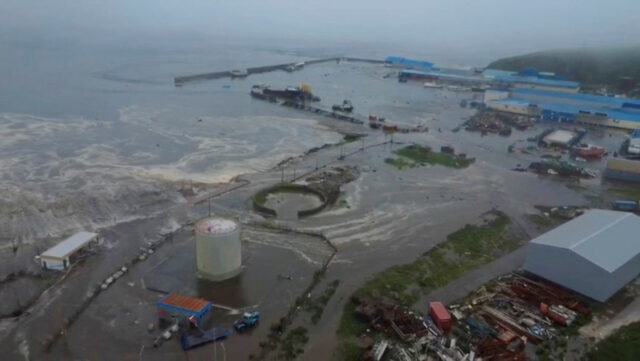
TSUNAMI waves flood an area after a powerful magnitude 8.8 earthquake struck off Russia’s far eastern Kamchatka Peninsula, in Severo-Kurilsk, Sakhalin Region on July 30 in this still image taken from video. — KAMCHATKA BRANCH OF THE GEOPHYSICAL SURVEY OF THE RUSSIAN ACADEMY OF SCIENCES/HANDOUT VIA REUTERS

THE PHILIPPINES’ seismology agency canceled a tsunami advisory on Wednesday hours after warning that residents in 22 coastal provinces facing the Pacific Ocean might experience unusual sea-level disturbances triggered by a magnitude 8.8 earthquake off Kamchatka, Russia.

“Based on available data from our sea level monitoring stations facing the Philippine Sea, no significant sea level disturbances nor destructive tsunami waves have been recorded since the 7:25 a.m. earthquake up until this cancellation,” the Philippine Institute of Volcanology and Seismology (Phivolcs) said in a third advisory at 4:40 p.m.

“With this, any effects due to minor sea level disturbances have largely passed, and therefore, [it] has now canceled the recommendations issued for this event,” it added.

Earlier in the day, the Department of the Interior and Local Government (DILG) ordered the immediate evacuation of coastal communities across eastern Philippines based on Phivolcs’ warning.

“All concerned DILG regional directors must ensure that local government units (LGU) within their jurisdiction are adequately prepared for this threat,” Local Government Undersecretary Marlo L. Iringan said in a memo.

He said local governments should take urgent preparedness actions including evacuating residents living near the shoreline, activating emergency operation centers and establishing clear evacuation routes and safe zones for at-risk communities.

The public was strongly advised to remain on alert for unusual waves and to stay away from beaches and coastal areas.

“The first tsunami waves are expected to arrive [from] 1:20 p.m. to 2:40 p.m. on July 30,” Phivolcs said in the advisory issued at 7:25 a.m. “It may not be the largest and these waves may continue for hours.”

Phivolcs noted that while no destructive tsunami was anticipated, the public should remain alert and avoid beaches, harbors and low-lying coastal areas.

Among the provinces notified were Batanes, Cagayan, Isabela, Aurora, Quezon, Camarines Norte, Camarines Sur, Albay, Sorsogon, Catanduanes, Northern Samar, Eastern Samar, Leyte, Southern Leyte, Dinagat Islands, Surigao del Norte, Surigao del Sur, and parts of the Davao Region.

Several local governments suspended classes as a precaution, including the provinces of Surigao del Sur, Surigao del Norte, Eastern Samar and parts of the Davao Region.

Residents living near the shorelines were advised to move further inland as a precaution. Phivolcs also urged boat operators to secure their vessels and move away from the waterfront.

“Boats already at sea during this period should stay offshore in deep waters until further advised,” it said in the second advisory, before the cancellation.

The earthquake triggered tsunami waves of up to five meters and sparked evacuation orders in Hawaii and across the Pacific on Wednesday, Reuters reported.

The shallow quake damaged buildings and injured several people in a remote part of Russia, according to initial reports. In Japan, authorities ordered evacuations along much of the eastern seaboard — a region still haunted by the devastating magnitude 9.0 earthquake and tsunami of 2011.

In Hawaii, coastal residents were told to move to higher ground or to the fourth floor or above in sturdy buildings. The US Coast Guard also ordered vessels to leave harbors as tsunami waves approached.

In the memo, the DILG ordered local governments to coordinate with regional and provincial disaster response offices, Phivolcs and other agencies to ensure effective risk assessment, technical support and public information campaigns.

The Philippines has experienced several destructive tsunamis since the 19th century, with events recorded as early as 1828, according to the Phivolcs website. That year, a 6.6-magnitude earthquake struck Manila Bay, leading to sudden water level changes attributed to hydraulic effects.

Another notable event occurred in 1863, also in Manila Bay, when a 6.5-magnitude quake created turbulent waves that shook a naval frigate, possibly capsizing one ship.

One of the most devastating tsunamis occurred on Aug. 15, 1918, in Southern Mindanao. Triggered by an 8.0-magnitude earthquake, waves as high as 24 feet struck coastal communities from Port Lebak to Glan, killing many people and animals.

Another deadly event took place on April 14, 1924 in Mati, Davao Oriental, where an 8.3-magnitude quake caused extensive coastal flooding. — Norman P. Aquino and Chloe Mari A. Hufana


SC should have called for hearings on impeachment case, says retired justice

Supreme Court Justice Antonio T. Carpio and Christian S. Monsod, one of the framers of the 1987 Constitution. — PHILIPPINE STAR/RYAN BALDEMOR

By Chloe Mari A. Hufana, Reporter

A RETIRED Supreme Court (SC) magistrate on Wednesday said the tribunal should have held hearings on a lawsuit seeking to throw out the impeachment case against Vice-President Sara Duterte-Carpio before ruling in favor of the plaintiffs.

These oral arguments are essential in resolving significant constitutional issues, former Senior Associate Justice Antonio T. Carpio told a news briefing.

“There should have been an oral argument,” he said, days after the high court dismissed the articles of impeachment against Ms. Duterte. “It’s not mandatory, but… for you to have an overall appreciation of what happened, you have to call for an oral argument.”

The high court ruled on July 25 that the impeachment proceedings were illegal, citing a constitutional bar against initiating more than one impeachment case against the same official within a year.

The tribunal also found that Ms. Duterte’s right to due process had been violated when the House of Representatives transmitted the complaint to the Senate without first allowing her to respond.

The House is preparing a motion for reconsideration, which Mr. Carpio said should prompt the court to revisit the case in open session.

“I am optimistic that… the Supreme Court will decide correctly, and they will consider very seriously the motion for reconsideration because there was really a factual mistake,” he added.

The full-court decision noted that the first three complaints filed in December 2024 had already been archived and dismissed on Feb. 5, the same day a fourth complaint was endorsed and sent to the Senate.

The justices said the House had failed to meet due process standards, including giving the Vice-President a chance to be heard and presenting a complete documentation of the process.

The ruling bars Congress from refiling the impeachment complaint until after Feb. 5, 2026.

Of the court’s 15 members, 13 took part in the decision. Eleven of them were appointed by Ms. Duterte’s father, ex-President Rodrigo R. Duterte.

Christian S. Monsod, one of the framers of the 1987 Constitution, also criticized the ruling, particularly the requirement that due process be observed in the House.

“That is not contemplated by the Constitution; due process is observed in the hearings of the Senate, not in the meetings of the House of Representatives,” Mr. Monsod told the same briefing.

Ms. Duterte, in a statement posted on her Facebook page, thanked her legal team for defending her “even when no one else was willing to stand” by her. “To those whose voices rang out in dissent against persecution — thank you.”

Ms. Duterte is facing charges of culpable violation of the Constitution, bribery, graft and corruption and betrayal of public trust. The complaint also cited alleged misuse of confidential funds and a reported death threat against President Ferdinand R. Marcos, Jr., First Lady Marie Louise Araneta-Marcos and Speaker Ferdinand Martin G. Romualdez.

She has denied all the accusations.

Marcos urged to back SONA education reform promises with action

PHILIPPINE STAR/WALTER BOLLOZOS

AN EDUCATION advocacy group on Wednesday urged President Ferdinand R. Marcos, Jr. to turn his reform pledges into tangible action by boosting funding, decentralizing policies and fixing inefficiencies in the Philippine education system.

In response to the President’s State of the Nation Address (SONA) on July 28, the Philippine Business for Education (PBEd) pressed the government to raise education spending to at least 6% of the country’s gross domestic product (GDP). It also cited the need for transparent and accountable budget management.

“We call on the administration to ensure a transparent and accountable education budget, alongside a substantial increase in overall investment,” it said in a statement. Every peso must be spent efficiently, and leakages and mismanagement must be eliminated to ensure resources reach the classrooms, it added.

PBEd cited the persistent learning crisis highlighted by the United Nations Children’s Fund (UNICEF), which has warned that Filipino children are being held back by low educational outcomes.

Filipino students are five to six years behind their peers in countries with similar income levels, according to the Program for International Student Assessment (PISA) 2022. UNICEF’s 2024 findings also showed learning gaps in the Philippines, with students in the Bangsamoro region falling two years behind those in other parts of the country.

PBEd sought structural reforms and greater decentralization of education delivery. “We urge the President to empower those closest to the ground in order to solve deeply rooted education problems and rally behind decentralization.”

The organization pushed for better coordination among education agencies, improved teacher training and deployment systems and a renewed focus on lifelong learning that balances access and quality.

PBEd reaffirmed its commitment to work with the government and education stakeholders to ensure that education leads to decent work, productive lives and a stronger future for the country.

Meanwhile, the Teachers’ Dignity Coalition (TDC) raised concern over Education Secretary Juan Edgardo M. Angara’s order to hold make-up classes after recent weather-related school suspensions.

The group criticized the lack of clear guidelines and warned that the order could disrupt the work-life balance of both teachers and students.

“Without clear guidelines, such a blanket instruction may lead to confusion in the field,” TDC Chairman Benjo G. Basas said in a statement. “We believe that learning losses due to class disruption can be recovered through effective pedagogy and innovative approaches — without necessarily extending class hours or holding sessions on Saturdays.”

He urged the Department of Education to address more pressing, long-term issues affecting the education sector. The TDC is also seeking a dialogue with Mr. Angara to clarify the order and present on-the-ground conditions faced by schools and educators.

In his SONA, President Marcos acknowledged systemic deficiencies in the education sector and vowed sweeping reforms.

He promised to ease teacher workloads by digitizing administrative tasks and providing laptops, smart TVs, Wi-Fi access and SIM cards. He also announced plans to build 40,000 additional classrooms by 2028 to address severe shortages and overcrowding in schools. — Chloe Mari A. Hufana

ADVERTISEMENT
ADVERTISEMENT