Home Blog Page 119

Philippines says inflation may exceed 4% this year if oil prices stay high, impacting GDP

A stall sells assorted varieties of rice inside a market in Quezon City. — PHILIPPINE STAR/MIGUEL DE GUZMAN

MANILA — Philippine inflation could breach this year’s 2% to 4% target if oil price increases are sustained, the Economic Planning Secretary said on Tuesday, adding that economic growth could fall below target.

Department of Economy, Planning, and Development (DEPDev) Arsenio M. Balisacan said the growth target could be missed due to a combination of higher inflation and lower remittances. — Reuters

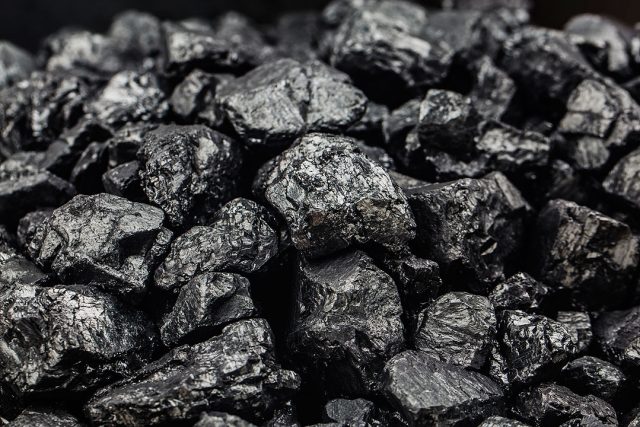
Indonesia has assured Philippines of steady supply of coal, Manila says

FREEPIK

MANILA – Indonesia has assured the Philippines of a steady supply of coal, the Philippine energy minister said on Tuesday.

“We have assurance, and we are good partners,” Energy Secretary Sharon Garin told a news briefing.

The Philippines plans to temporarily increase coal-fired generation amid energy pressures, Ms. Garin said.

The country’s fuel supply remains manageable and the government is working to procure 1 million barrels of oil from countries within and outside Southeast Asia to build its buffer stock.

The Philippines has around 45 days of fuel supply based on current consumption levels, Ms. Garin said.

The Philippines has Southeast Asia’s most coal-dependent power grid.

After ramping up LNG-fired generation, Manila was poised in 2025 for its first decline in coal power in nearly two decades, but rising LNG costs are forcing it to turn back to coal.

Indonesia supplied half of all global thermal coal exports in 2025, and is the top coal supplier to many of the world’s largest coal importing nations. — Reuters

Iran denies talks with US after Trump postpones strikes on power grid

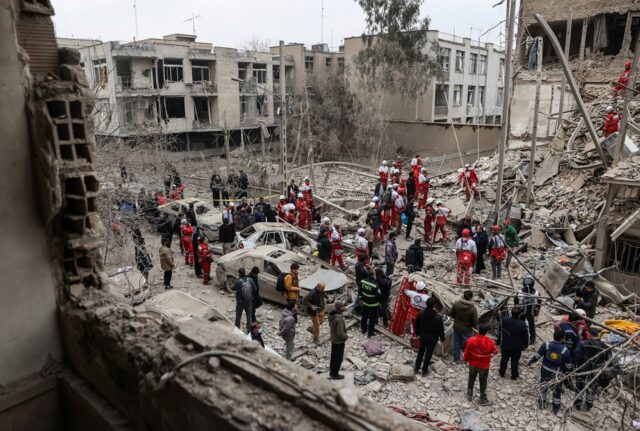
Emergency personnel work at the site of a strike on a residential building, amid the US-Israeli conflict with Iran, in Tehran, Iran, Mar. 16, 2026.—via REUTERS/MAJID ASGARIPOU

WASHINGTON/JERUSALEM/TEL AVIV — Iran denied on Monday that it had engaged in negotiations with the United States, after President Donald Trump postponed a threat to bomb Iran’s power grid because of what he described as productive talks with unidentified Iranian officials.

A European official said that while there had been no direct negotiations between the two nations, Egypt, Pakistan and Gulf states were relaying messages. A Pakistani official and a second source told Reuters that direct talks on ending the war could be held in Islamabad as soon as this week.

Mr. Trump wrote on his Truth Social platform that the US and Iran had held “very good and productive” conversations about a “complete and total resolution of hostilities in the Middle East”.

As a result, he said, he was postponing for five days a plan to hit Iran’s energy grid. His announcement sent share prices higher and oil prices sharply lower to below $100 a barrel, a sudden reversal to a market swoon caused by his weekend threats and Iran’s vows to respond.

Mr. Trump later told reporters his special envoy Steve Witkoff and son-in-law Jared Kushner, who had been negotiating with Iran before the war, had held discussions with a top Iranian official into the evening on Sunday and would continue on Monday.

“We have had very, very strong talks. We’ll see where they lead. We have major points of agreement, I would say, almost all points of agreement,” he told reporters before departing Florida for Memphis.

In Memphis, he said Washington had been negotiating with Iran “for a long time, and this time they mean business,” adding: “I think it could very well end up being a good deal for everybody.”

He did not identify the Iranian official in touch with Mr. Witkoff and Mr. Kushner, but said: “We’re dealing with the man who I believe is the most respected and the leader.”

An Israeli official and two other sources familiar with the matter said the interlocutor on the Iranian side was Iran’s powerful parliament speaker Mohammad Baqer Qalibaf.

‘FAKENEWS’, SAYS IRAN PARLIAMENT SPEAKER
Mr. Qalibaf said on X that there had been no such talks with the United States, and ridiculed the suggestion as an attempt to rig financial markets.

“No negotiations have been held with the US, and fakenews is used to manipulate the financial and oil markets and escape the quagmire in which the US and Israel are trapped,” he wrote.

“Iranian people demand complete and remorseful punishment of the aggressors. All Iranian officials stand firmly behind their supreme leader and people until this goal is achieved.”

Iran’s elite Revolutionary Guards (IRGC) said they were launching fresh attacks on US targets, and described Mr. Trump’s words as “psychological operations” that were “worn out” and having no impact on Tehran’s fight.

The IRGC said late on Monday it targeted several Israeli cities, including Dimona and Tel Aviv and a number of US bases. It said it was “negotiating” with the “aggressors through impact-focused operations.”

Israel’s military said it had detected missiles launched from Iran on Monday night for the first time since Mr. Trump’s earlier comments, and at least one interception blast was heard from Jerusalem.

Israeli Prime Minister Benjamin Netanyahu said in a video statement that he spoke with Mr. Trump on Monday and that Israel would press on with attacks in Lebanon and Iran.

But Mr. Netanyahu said Mr. Trump believed there was a possibility of “leveraging the mighty achievements obtained by the IDF (Israel Defence Forces) and the US military, in order to realize the goals of the war in a deal – a deal that will preserve our vital interests.”

Although there was no immediate confirmation that talks had taken place as described by Mr. Trump, Iran’s foreign ministry described initiatives to reduce tensions.

It said Iran’s Foreign Minister Abbas Araqchi reviewed developments related to the Strait of Hormuz with his Omani counterpart and agreed to continue consultations between the two countries.

Iran has effectively closed the key Strait of Hormuz, through which about a fifth of global oil and liquefied natural gas flows. Mr. Trump has demanded Iran open the strait, but Tehran says it will not do so until the United States and Israel call off their attacks.

The Pakistani official said US Vice President JD Vance, as well as Mr. Witkoff and Mr. Kushner, were expected to meet Iranian officials in Islamabad this week, following a call between Mr. Trump and Pakistan’s army chief Asim Munir.

The White House confirmed Mr. Trump’s call with Mr. Munir. When asked about a possible visit by Mr. Witkoff and Mr. Kushner to Islamabad, White House spokesperson Karoline Leavitt said:

“These are sensitive diplomatic discussions and the US will not negotiate through the press. This is a fluid situation, and speculation about meetings should not be deemed as final until they are formally announced by the White House.”

The Pakistani prime minister’s office and foreign ministry did not immediately respond to requests for comment.

Iranian media reported that Iran’s President Masoud Pezeshkian and Pakistani Prime Minister Shehbaz ‌Sharif discussed the impact of the war on regional and global security.

Mr. Pezeshkian was quoted as saying that Iran was committed “to preserving stability and security and countering foreign interference in regional affairs” and wanted to strengthen cooperation with the countries of the region.

Iran had responded to Mr. Trump’s threats to strike its power plants by saying it would hammer the infrastructure of US allies in the Middle East, raising the prospect that an extreme disruption to global energy supplies could last longer than previously expected.

More than 2,000 people have been killed in the war the US and Israel launched on February 28. — Reuters

PH game dev sector seen matching Korea, Japan — Xsolla

The Xsolla launcher is an all-in-one platform that allows game devlopers and publishers to distribute their games direct to players. — XSOLLA.COM

The Philippine game development sector is likely to grow as large as its Asian neighbors in the coming years, driven by the country’s sizable market and predominantly young, tech-savvy population that could become future creators, according to Xsolla, a global video game commerce firm.

“I think it could be as big as Korea or Japan, and I don’t mean to be condescending,” Eric Lee, head of partnerships for Asia Pacific at Xsolla, said in an interview via Microsoft Teams.

Similar to South Korea, where indie game developers have been growing after years of dominance by large companies, the same trend has been observed in the Philippines in recent years.

“The regional revenue for the Philippines is within the top three countries in Southeast Asia,” Mr. Lee said, referring to countries that make use of Xsolla’s services across its 3,000 game and project partners.

“Meaning there is clearly more growth to be explored within Southeast Asia, and the Philippines is definitely one of them,” he added.

Mr. Lee said that from being a source of outsourced talent, Southeast Asia, including the Philippines, has evolved into an active game development hub in recent years, driven by improved resources and a growing talent pool.

Data from the Philippine Statistics Authority (PSA) showed that the country’s digital interactive goods and services activities — where game development is classified — generated P416.33 billion in 2025.

This accounted for a 19.7% share of the Philippine creative economy, which grew by 6.7% to P2.12 trillion in 2025. However, the growth rate slowed from 10.9% in 2024 and 12.4% in 2023.

In a separate report, IMARC Group projected the Philippine gaming industry to expand to $9.9 billion by 2033, from $4.8 billion, reflecting a compound annual growth rate (CAGR) of 8.29%.

South Korea, one of the key players in the global video game market, was projected to achieve sales revenue of US$14.5 billion in 2025, according to Statista.

To reach the country’s full potential, Mr. Lee said the country must address bottlenecks such as funding, resources, and exposure, noting that several local indie developers are already gaining recognition from foreign studios.

He added that Xsolla aims to address the exposure gap by allowing Filipino student game developers from the De La Salle-College of Saint Benilde to access its launcher system, formalized through a recently signed memorandum of understanding (MOU).

According to its website, the Xsolla Launcher enables developers to distribute, monetize, and manage their games through a fully customizable platform, allowing them to bypass traditional marketplaces and directly engage with players.

“Self-publishing has always been a problem because you just can’t find your target audience globally, or you don’t have the resources to do so. Our launcher system helps address exactly that,” Mr. Lee said.

“We’re trying to help. I think the Philippines could use more exposure. I know developers are getting picked up, but we just want to help a bit more because we see the high quality of talent here,” he added.

As an expert in payment solutions and monetization tools, Mr. Lee said Xsolla can also help student developers generate revenue from their games — an aspect that is often overlooked by creators.

The company could also provide analytics, data, and metrics to developers to help them successfully navigate the market.

When asked why the company wants to help local indie game developers, Mr. Lee said that despite the uncertainty surrounding the success of these games, Xsolla aims to create a conducive environment for future developers.

“So we understand that indies may not stay indie forever,” he said.

“So there is an incentivizing factor for us to provide support from the beginning, but we also need these students, developers, creativity, and new regions to bring more players into the ecosystem and create better games for the future.”

Looking ahead, Xsolla is seeking to engage with both private and public agencies to expand its initiative. Mr. Lee said the company has recently talked with the Department of Trade and Industry (DTI) to help address the industry’s bottlenecks.

If given the right attention, Mr. Lee said the game development industry in the Philippines could capture a share of the growing global market and creatively introduce the country to the world. — Edg Adrian A. Eva

Kim Jong Un says North Korea’s nuclear status is irreversible, threatens South

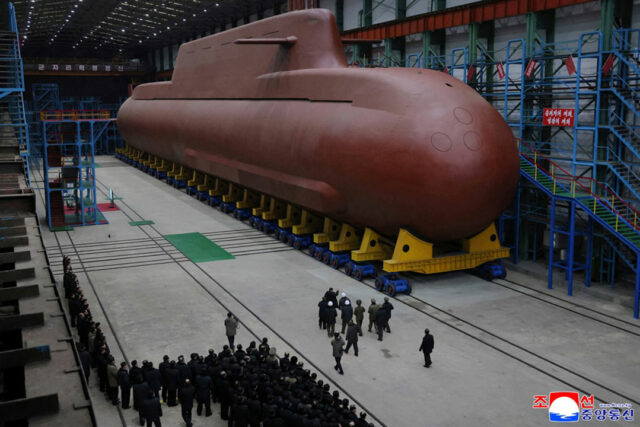
North Korean leader Kim Jong Un visits the construction site of an 8,700-ton nuclear-powered submarine capable of launching surface-to-air missiles in this picture released by North Korea's official Korean Central News Agency (KCNA) on December 25, 2025. — REUTERS

SEOUL — North Korean leader Kim Jong Un said his country would permanently strengthen its nuclear forces and treat South Korea as its most hostile state, as he set out policy priorities in a speech to parliament, state media KCNA reported on Tuesday.

Mr. Kim said Pyongyang’s status as a nuclear‑armed state was irreversible and expanding a “self‑defensive nuclear deterrent” was essential to national security, regional stability, and economic development.

He rejected the idea that nuclear disarmament could be exchanged for economic benefits or security guarantees, saying North Korea had already proven that maintaining nuclear forces while pursuing development was the correct strategic choice.

Nuclear weapons had deterred war and allowed the state to focus resources on economic growth, construction and living standards, he said in the address on Monday to the Supreme People’s Assembly, the communist-run country’s rubber-stamp legislature.

Mr. Kim accused the United States and its allies of destabilizing the region by deploying strategic nuclear assets near the Korean peninsula, but said North Korea no longer viewed itself as a country under threat and possessed the power to threaten others if necessary.

Mr. Kim said South Korea had been “recognized as the most hostile state” and warned Seoul that any attempt to infringe on North Korea’s sovereignty would be met “mercilessly without hesitation or restraint”.

The comments are the latest sign of Pyongyang’s hardening stance toward Seoul since Kim dropped decades of policy seeking peaceful reunification and moved to redefine relations with the South as those between two hostile states.

Analysts have been watching for any sign that this shift had been codified in law. The state media report did not elaborate.

FIVE-YEAR PLAN
Alongside security policy, Kim outlined economic priorities, calling on officials to fully implement a new five-year development plan focused on modernizing industry, boosting electricity and coal production, increasing food output, and expanding housing construction nationwide.

North Korea is one of the world’s poorest countries, with a heavily sanctioned economy and chronic shortages that have left much of its population dependent on state rations and informal markets, according to international assessments.

The parliamentary session adopted amendments to the constitution, and passed legislation endorsing the new five‑year economic plan, KCNA said.

Lawmakers also approved a 2026 state budget that raises defense spending to 15.8% of total expenditure, with funding explicitly allocated to expanding nuclear deterrence and war-fighting capabilities, according to a separate budget report released at the session.

The assembly heard a congratulatory message from Russian President Vladimir Putin, who praised Mr. Kim’s leadership and pledged to deepen a comprehensive strategic partnership between Moscow and Pyongyang. — Reuters

DepEd: field trip, prom not required for graduation

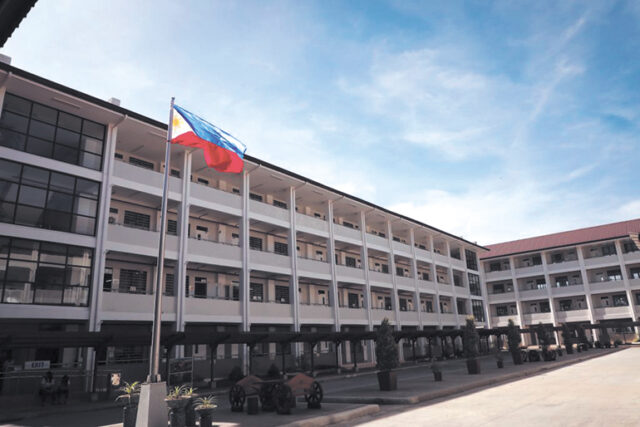
Photo from deped.gov.ph

The Department of Education (DepEd) said on Monday that non-academic activities should not be a requirement for graduation, following the agency’s push for low-cost ceremonies due to rising fuel costs.

“We must ensure that this milestone remains a celebration of achievement rather than a financial ordeal for our parents, especially as we navigate the economic impact of rising fuel costs,” Education Secretary Juan Edgardo “Sonny” M. Angara said in a news release.

Under DepEd Memorandum No. 015 series of 2026, schools are reminded that participation in non-academic activities such as field trips, film showings, Junior-Senior Promenade, and other school events should not be imposed as graduation or completion requirements.

The memorandum also noted that graduation and moving-up rites must commence without collecting any fees from students. Funding for the ceremonies in public schools must come from the school’s Maintenance and Other Operating Expenses (MOOE) budget.

To further minimize costs, schools are encouraged to host the ceremonies in simple venues such as school grounds or covered courts instead of renting.

“Our schools must prioritize the welfare of learners by keeping these ceremonies simple, meaningful, and entirely free of unnecessary expenses,” Mr. Angara said.

According to DepEd, this year’s graduation theme, “Filipino Graduates: Prepared to Lead with Competence and Character,” highlights academically equipped youth who will serve their communities and nation.

About 3.7 million graduating students are expected for School Year (SY) 2025-2026. Of which, 1.9 million are Grade 6 learners, and 1.8 million are Grade 12 students.

The end-of-school-year rites are scheduled to take place on March 30 or 31, 2026.

Trimester system

After receiving the approval from the Economy and Development (ED) Council on Friday, DepEd reaffirmed that the new three-term calendar is a decisive move needed to address long-standing issues in the academic sector, such as learning continuity.

“This reform is about making the school year work better for both learners and teachers, so that every day in school leads to deliberate and deep learning,” the agency said in a statement on Monday.

DepEd said that the reform underwent a “rigorous multi-stage consultation process” since January. “Learners, teachers, school leaders, parents, and other stakeholders, as well as the House of Representatives and the Senate, were engaged.”

However, the Alliance of Concerned Teachers (ACT) Philippines claimed that ordinary teachers had no input in the transition.

“ACT said the decision to proceed with the policy—despite earlier pronouncements on the need for consultation—exposes a pattern of imposing sweeping changes without meaningful participation from rank-and-file educators,” the group said in a statement on Friday.

The trimester system shifts the school calendar from four quarters to three terms and blocks.

“The shift from four quarters to three terms significantly streamlines grading cycles and reduces reporting peaks, easing administrative burden and allowing educators to concentrate on what matters most – effective instruction,” DepEd said.

“By redesigning how time is structured in schools, the reform ensures learning,” it added.

The new calendar will be implemented nationwide in June, as classes open for SY 2026-2027. — Almira Louise S. Martinez

Australia and EU seal trade deal, seek to cut reliance on China for critical minerals

REUTERS

SYDNEY — Australia and the European Union (EU) signed a trade deal on Tuesday that was eight years in the making, removing tariffs for almost all European goods and for nearly all exports of Australian critical minerals.

But some Australian agricultural products like beef and sheep meat, for example, will be subject to export quotas, and Australian farmers sharply criticized the pact for delivering “subpar” access to the bloc.

The agreement comes after both sides stepped up talks in the wake of significantly higher US tariffs under the Trump administration and more angst in the West over China’s dominant position in the supply of rare earths and other critical minerals. The two sides also signed an agreement to boost security and defense ties.

“The EU and Australia may be geographically far apart, but we couldn’t be closer in terms of how we see the world,” European Commission President Ursula von der Leyen said in a statement.

“With these dynamic new partnerships on security and defense, as well as trade, we are moving even closer together.”

The agreement will remove over 99% of tariffs on EU goods exports to Australia, cutting €1 billion ($1.2 billion) a year in duties for companies. EU exports to Australia are now expected to grow by up to 33% over the next decade.

Australian Prime Minister Anthony Albanese told a news conference that the agreement would be worth about A$10 billion ($7 billion) annually to the Australian economy, adding that the removal of almost all import tariffs on Australian critical minerals into the EU will help stabilize global supply chains.

“For both Europe and Australia, getting China right is a strategic imperative, and this is why bringing to life our critical minerals partnership will be crucial to our success,” Ms. von der Leyen told Australia’s parliament.

“We cannot be overdependent on any supplier for such crucial ingredients, and that is precisely why we need each other.”

The deal also signals Europe’s growing engagement in the Indo-Pacific, after striking trade accords with Indonesia in September and India in January.

AUSTRALIA AGREES TO BEEF QUOTAS
Australian tariffs will drop to zero for European wine, sparkling wine, fruit and vegetables and chocolates from day one and for cheeses over three years.

The EU will remove tariffs for many agricultural products, but some key exports will have quotas. For beef — one of the biggest sticking points that sank the previous talks in 2023 — the EU will open two tariff rate quotas of a total of 30,600 metric tons, with about 55% of the volume to enter duty-free.

“Australian farmers are extremely disappointed that negotiations for a free trade deal with the European Union have concluded without commercially meaningful agricultural market access gains since Australia last walked away from negotiations,” Hamish McIntyre, president of the National Farmers Federation in Australia, said in a statement.

Under the agreement, some EU “geographical indications” names for products such as Pecorino Romano or Ouzo, will be fully protected after a relatively short phasing-out period. But some producers of goods like feta will be able to continue to use those names, provided there is clear labelling of the product’s origin.

Australia also agreed to lift the luxury car tax threshold for EU electric vehicles (EVs) to A$120,000 ($83,600), meaning about 75% of EVs from the region will be exempted from the tax.

Trade between the two sides is substantial, with EU firms exporting to Australia 37 billion of goods in 2025 and 28 billion of services in 2023.

As a bloc, the EU was Australia’s third-largest two-way trading partner in 2024 as well as the sixth-largest export destination, official data showed. The bloc was Australia’s second-largest source of foreign investment in 2024. — Reuters

Peso sinks to record P60.30 vs $1

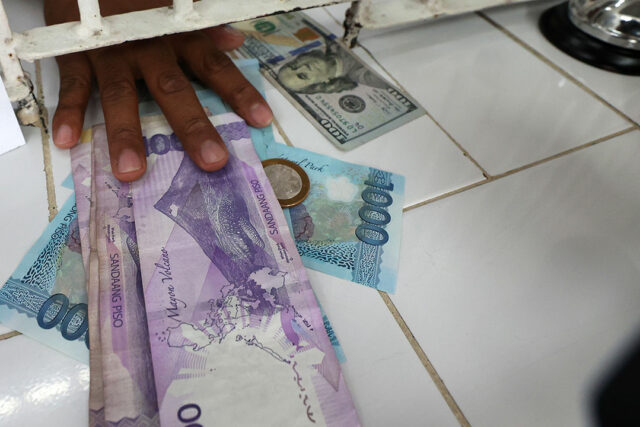
An individual exchanges US dollars for Philippine pesos at a money changer in Quezon City. — PHILIPPINE STAR/MIGUEL DE GUZMAN

By Aaron Michael C. Sy, Reporter

THE PESO fell to a new record low against the US dollar on Monday as global oil prices remained volatile amid escalating threats between the US and Iran.

The local unit weakened by 20 centavos to close at P60.30 against the greenback from its P60.10 finish on Thursday — its previous record low and the first time it breached the P60-per-dollar level, data from the Bankers Association of the Philippines showed.

Year to date, the peso has depreciated by P1.51 or 2.5041% from its P58.790 close on Dec. 29, 2025.

The peso opened Monday’s trading session weaker at P60.15 per dollar, while its intraday best was at P60.146.

Its weakest showing was at P60.37 against the greenback. The lowest level the peso has ever touched was at P60.40 on March 19.

Dollars traded slumped to $1.652 billion from $2.437 billion on Thursday.

“The peso depreciated further after US President Donald J. Trump intensified his threats to Iran over the weekend,” the first trader said in an e-mail.

The dollar-peso closed at a new all-time low on Monday after Mr. Trump’s threats pushed oil prices back above $100 per barrel levels, a second trader said by telephone.

Reuters reported that Iran on Sunday said it would strike the energy and water systems of its Gulf neighbors if Mr. Trump followed through with a threat to hit Iran’s electricity grid within 48 hours, extinguishing any hope of an early end to the war, now in its fourth week.

Mr. Trump warned Iran had two days to fully open the vital Strait of Hormuz, which is effectively closed for most vessels with little prospect of naval protection for shipping, with a deadline culminating at 2344 GMT on Monday.

“The dollar-peso exchange rate closed at a new record high following Trump’s threat of a 48-hour deadline for Iran to reopen the Strait of Hormuz; while Iran threatened to completely close the Strait of Hormuz if attacked,” Rizal Commercial Banking Corp. Chief Economist Michael L. Ricafort said in a Viber message.

Higher global crude oil prices on Monday also reignited fears of faster inflation, higher borrowing costs, and slower economic growth, he added.

Department of Economy, Planning, and Development Secretary Arsenio M. Balisacan earlier said inflation could exceed 7% and economic growth could slow by as much as 0.3 percentage point this year if the oil price shock persists.

Finance Secretary and Monetary Board Member Frederick D. Go said last week that a prolonged surge in oil prices due to the Middle East war could prompt the Monetary Board to raise borrowing costs as early as next month.

BSP Governor Eli M. Remolona, Jr. earlier said they could be forced to hike rates once oil prices hit $100 per barrel as it could bring inflation past 4% or the upper end of their target range.

The Monetary Board will hold its next rate-setting meeting on April 23. If realized, this would be the BSP’s first rate hike in over two years or since October 2023.

For Tuesday, the first trader said the peso may remain under pressure as the Middle East war intensifies.

The first trader sees the peso moving between P60.25 and P60.40 per dollar on Tuesday, while the second trader expects it to range from P60.10 to P60.50.

Mr. Ricafort expects the peso to remain range-bound at P60.10 to P60.40. — with Reuters

Moody’s Analytics trims Philippines growth forecasts

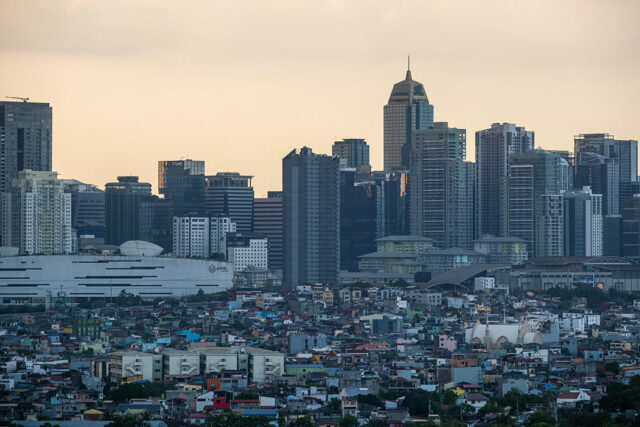
HIGH-RISE OFFICE and residential buildings dominate the skyline of the central business district in Taguig. — PHILIPPINE STAR/RYAN BALDEMOR

By Katherine K. Chan, Reporter

THE PHILIPPINE ECONOMY is expected to expand by 4.9% this year, reflecting weak domestic momentum and the energy crisis caused by the Middle East conflict, Moody’s Analytics said.

In a report on Monday, Moody’s Analytics said it cut the Philippine gross domestic product (GDP) growth projection to 4.9% this year from 5.1% previously.

While it is faster than the post-pandemic low of 4.4% growth in 2025, it will be below the government’s 5-6% growth target for 2026.

“The revision reflects a reassessment of domestic momentum after weaker-than-expected expansion in 2025, rather than any major change in our geopolitical assumptions,” Moody’s Analytics Assistant Director and Economist Sarah Tan said in an e-mail. “In our baseline, we assume the Middle East conflict remains contained and ends soon, so the direct impact on Philippine growth should be limited.”

Still, Ms. Tan noted that the Middle East war could drag their outlook, as the net oil importer Philippines stands vulnerable to oil price shocks.   

“Higher import costs would feed into inflation, widen the trade deficit, and put pressure on the currency, which could force the Bangko Sentral ng Pilipinas (BSP) to pause its easing cycle or even tighten policy if second-round effects emerge,” she said.

In the report, Moody’s Analytics economists noted that the Middle East war could worsen economic shocks from the looming impact of the United States’ new tariff policies.

“This year is shaping up to be an even more difficult year for the region than originally envisaged,” Moody’s Analytics’ Stefan Angrick, Denise Cheok and Ms. Tan said. “A more severe and prolonged conflict in the Middle East would compound existing tariff pain.”

Earlier this year, US President Donald J. Trump threatened to impose a new 15% tariff on all goods entering the US, which analysts warned could dampen the country’s export recovery.

Moody’s Analytics also trimmed its Philippine growth projection to 5.2% from 5.4% for 2027, falling short of the government’s 5.5%-6.5% target.

For 2028, the think tank expects Philippine GDP to expand by 5.3%, unchanged from its previous forecast and well below the Development Budget Coordination Committee’s 6%-7% goal.

The Asia-Pacific (APAC) region is also expected to post a slower growth of 4% this year from 4.3% in 2025, before weakening further to 3.6% next year as new US tariffs bite and the Middle East war triggers major price shocks, Moody’s Analytics noted.

“Conflict in the Middle East has sent commodity prices surging, raising the risk of a fresh inflation surge. US tariff policy remains in flux, with the threat of higher import levies far from gone. And the jittery global backdrop is keeping financial markets on edge,” it said.

According to Moody’s, the Philippines is the sixth most reliant country on imported oil among APAC economies, with net energy imports accounting for over 50% of its total domestic consumption.

Ms. Tan earlier told BusinessWorld that oil price shocks due to the recent strikes on key energy facilities in the Middle East and trade disruptions in the region will likely be temporary, preventing a long-term inflation uptrend.

Moody’s projects inflation to end the year at an average of 2.5%, faster than its 2.3% forecast last month.

However, it lowered its inflation estimate for 2027 to 3% from 3.1% but maintained its 2028 forecast at 3.1%.

Faster inflation could prompt central banks in the region to hold or hike their policy rates, Moody’s said.

Ms. Tan has noted that the BSP will likely opt for a prolonged pause, but oil price shocks driving transport fares and electricity rates higher raise the odds of a rate hike.

SPENDING WOES
Meanwhile, Nomura Global Markets Research said sluggish government spending amid the lingering effects of last year’s flood control mess may derail the Philippines’ economic recovery in the coming months.

This came after government spending fell sharply in January, a trend Nomura economists said signals intensified fiscal tightening amid ongoing probes into the flood control graft scandal. 

“This reflects a worsening of the fiscal tightening, owing to the corruption controversy,” Nomura Global Markets Research Chief ASEAN Economist Euben Paracuelles and Southeast Asia Economist Nabila Amani said in a report dated March 20.

“As we have argued before, the lack of pre-procurement activity last year will contribute to weak budget disbursement in coming months before the government implements [their] catch-up spending plan,” they added.

Latest data from the Bureau of the Treasury showed that government spending came in at P303.5 billion in January, 23.9% lower than the P398.8 billion logged a year ago.

This marked the sixth straight month that expenditures declined on an annual basis.

Primary spending, which excludes interest payments, fell sharply by 40.32% to P175.5 billion during the month from P294.4 billion in January 2025.

Mr. Paracuelles and Ms. Amani said the significant decline in spending “suggests a limited near-term economic recovery,” posing additional pressure on their growth expectations especially amid emerging risks from the US-Israeli war on Iran.

Nomura sees the Philippine economy recovering from last year’s slump to expand by 5.3% this year.

Meanwhile, Moody’s Analytics’ Ms. Tan said the government’s decision to scale back its targeted infrastructure spending-to-GDP ratio would mean less support for domestic demand.

“The lower infrastructure spending target of around 4.3% of GDP versus the earlier planned 5.1% suggests public investment will provide less support to overall demand than previously expected,” she said.

The government wants infrastructure spending to make up 4.3% of GDP this year or about P1.3 trillion, lower than its earlier target of 5.1%.

Pump prices continue to go up this week

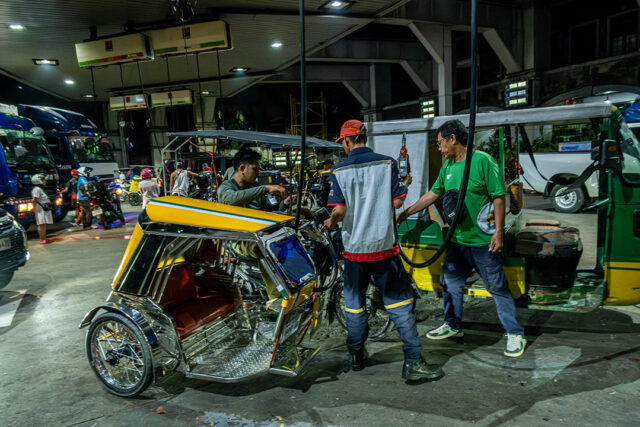
Tricycle drivers line up at a gasoline station in Manila. — PHILIPPINE STAR/RYAN BALDEMOR

By Sheldeen Joy Talavera, Reporter

FUEL PRICES extended their weeks-long run of increases, although the pace of hikes has begun to ease as volatility in the global oil market is showing signs of subsiding, the Department of Energy  chief said on Monday.

Initial estimates showed that gasoline prices will increase by up to P6.47 per liter, diesel by up to P11.88 per liter, and kerosene by up to P13.66 per liter, Energy Secretary Sharon S. Garin said.

“The international oil market has calmed down. The last few days, it looks like there was not much spike (in prices),” she told DZMM radio partly in Filipino.

Jetti Petroleum, Inc. said that it will implement a one-time price hike of P18 per liter for diesel and P8 per liter for gasoline, starting Tuesday morning.

Seaoil Philippines, Inc. and Unioil Petroleum Philippines, Inc. are also implementing one-time price hikes, with diesel going up by P16.80 per liter and gasoline increasing by P9.70 per liter.

This week’s adjustments would mean prices of diesel and kerosene would increase for a 13th straight week, while gasoline will go up for an 11th week in a row.

The prevailing per-liter gasoline and diesel prices in the National Capital Region may go as high as P98.07 and P126.78, respectively, while kerosene costs may reach P157.45 per liter.

Ms. Garin admitted that the fuel prices in the Philippines are higher compared with neighboring countries that subsidize oil prices.

“Also, we don’t have a robust refinery or oil industry. We only have one refinery, but that’s one of the reasons prices increase quickly. Other countries can subsidize, but we don’t do that because of the Oil Deregulation Law,” she said.

The Philippines is a net importer of crude oil and sources most of its supply from the Middle East, making the country vulnerable to global crude price swings.

‘STEADY SUPPLY’
The Energy chief said that the current oil supply is “steady” until the first week of May.

To augment fuel supply, the Philippines is seeking to procure at least two million barrels of oil from other countries.

The country has already secured 500,000 barrels of diesel last week and is trying to lock in an additional 500,000 barrels, Ms. Garin said.

“We still have to lock in the contract, then it will be loaded and shipped here, so it may take another one to two weeks, depending on the origin,” she said.

Asked if the current situation can be considered an “oil crisis,” Ms. Garin sidestepped the question.

“For me, the worst or the crisis that we would face is on supply. We will lack supply, have rationing or we will really fall short,” she said. “In this case, the Philippines has supply. It’s sufficient for the industry and day-to-day consumption.”

Currently, the Strait of Hormuz, a chokepoint for one-fifth of the world’s oil, remains open to all shipping except vessels linked to “Iran’s enemies,” Reuters reported.

Fatih Birol, executive director of the International Energy Agency, said the crisis brought by the ongoing conflict in the Middle East is “very severe” and worse than the two oil shocks of the 1970s, as well as the impact of the Russia-Ukraine war on gas, Reuters said, citing the National Press Club.

He said that the “single most important solution to this problem is opening the Hormuz Strait.”

Asked to comment, Jose M. Layug, Jr., executive board member of the independent energy research institute Philippine Energy Research & Policy Institute, said that the current crisis is “worse” than what happened in 2011 where sanctions against Iran drove up oil prices.

“The problem will not end soon. We need to adopt aggressive measures to reduce demand for petroleum products. It has to be a whole-of-government approach where every department needs to craft plans and programs towards possible supply shortage and price shocks,” Mr. Layug told BusinessWorld.

April hike would be ‘rash,’ says Pantheon Macroeconomics

BW FILE PHOTO

By Katherine K. Chan, Reporter

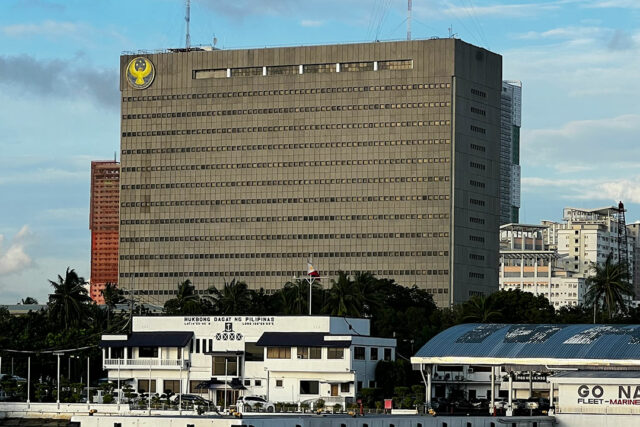
RAISING the key policy rate would be a “rash” move even as headline inflation is expected to breach the Bangko Sentral ng Pilipinas’ (BSP) target band by the second half of the year, Pantheon Macroeconomics said.

In a report on Monday, Pantheon Macroeconomics Chief Emerging Asia Economist Miguel Chanco and Asia Economist Meekita Gupta said an April hike is now “on the table” but the central bank will likely stand pat until next year.

“More aggressive, even if ‘staggered,’ fuel price increases were implemented by the Philippines’ main oil retailers last week, to the point where a target reverse repo rate hike by the Bangko Sentral ng Pilipinas next month is now on the cards,” they said.

However, Mr. Chanco and Ms. Gupta noted that it would be reckless of the BSP to tighten next month as inflation pressures prove supply-driven and amid lingering growth woes.

“Whether or not the Board should hike, however, is a separate question,” Mr. Chanco told BusinessWorld in an e-mail. “From our standpoint, we think that it would be rash.”

“This is not a repeat of 2022, when the economy was booming and global food prices (were) skyrocketing in tandem, which made the energy crisis in 2022 much worse from an inflation standpoint. Fundamentally, there’s also little monetary policy can do to mitigate a supply-side inflation shock,” he added.

Earlier this month, BSP Governor Eli M. Remolona, Jr. said global oil prices staying above $100 per barrel could drive inflation past their 2%-4% target, which could prompt the Monetary Board to lift its key rates.

Finance Secretary Frederick D. Go also said that consistently high energy prices will push the Board to consider tightening as early as next month.

If realized, the central bank would be ending its near two-year easing cycle. Since August 2024, it has slashed the benchmark borrowing rate by a total of 225 basis points (bps) to an over three-year low of 4.25%.

Meanwhile, China Banking Corp. (Chinabank) Chief Economist Domini S. Velasquez said the BSP will likely maintain a “wait-and-see stance” in the near term, noting that monetary policy may not be as helpful considering the current macro backdrop.

“The current oil shock is largely supply-driven, meaning monetary policy has limited ability to offset its impact on prices,” Ms. Velasquez told BusinessWorld in an e-mail.

She said demand conditions remain “soft,” as the central bank estimates a negative output gap through at least next year.

“Given these factors, the BSP is likely to adopt a wait-and-see stance, allowing the effects of the oil shock to play out before making further policy adjustments,” she added.

On the other hand, Deutsche Bank Research said the BSP’s easing cycle likely hit a dead-end, with tightening now possible in the next meeting as the Middle East war drags on.

“Within Asia, as we warned earlier, rising oil prices point to no further rate cuts by BI (Bank of Indonesia) and BSP, with the latter potentially hiking as early as April,” it said in a separate report.

INFLATION OUTLOOK
Pantheon economists said in their report that it is “highly unlikely” for inflation to reach levels last seen in 2022 or when the headline print ranged between 6% and 8% amid Russia’s invasion of Ukraine.

Still, Pantheon now sees inflation breaching 4% from June to September to average 3.8% for the entire 2026, higher than their previous estimate of 3.2%.

If realized, inflation will exceed the BSP’s 3.6% forecast for the year.

“Restarting a rate-hiking cycle now, so soon after the most recent cut in February, would be a blow to the corporate sector too,” Mr. Chanco and Ms. Gupta added. “The BSP’s credit access index remains in the red despite 225 bps in policy rate cuts since late-2024.”

On the other hand, DBS senior economists Chua Han Teng and Radhika Rao said oil price shocks will likely lead to higher food prices, which would affect the Philippines considering food and nonalcoholic beverages comprise about 38% of its consumer price index basket.

“Food carries a significant weight in ASEAN-6’s consumer price index basket, at 20-36%, with Thailand, Vietnam, and Philippines the most vulnerable to accelerating food prices,” they said.

However, Mr. Chanco and Ms. Gupta noted that the suspension of excise tax on fuel would help tame inflation.

“We see a number of reasons why the Board should hold fire,” they said. “For a start, legislation to suspend excise taxes on fuel is now awaiting the President’s signature, a move that we think would be just about enough to stop headline inflation from surpassing the key 4% mark; our 2026 projection would fall to 3.5%.”

Under the 2017 Tax Reform for Acceleration and Inclusion law, the National Government (NG) imposes an excise tax of P10 per liter on gasoline, P6 per liter on diesel and P5 per liter on kerosene.

The NG is seeking to suspend this levy to ease the burden of soaring pump prices on consumers.

As of Monday, a bill authorizing the President to suspend or cut excise tax on petroleum products amid economic emergencies is awaiting President Ferdinand R. Marcos, Jr.’s signature.

Meanwhile, Mr. Chanco noted that the peso’s latest plunge to a record low is not a major concern for the BSP’s second policy review of the year on April 23.

“I doubt that the peso will be too much of an issue for the BSP next month, as it’s not as if the PHP (Philippine peso) is under specific pressure. Most currencies in Asia are feeling the pinch,” he told this paper.

On Monday, the local unit slumped to a fresh low of P60.30 against the greenback after falling by 20 centavos from its P60.10-per-dollar finish on Thursday.

Chinabank’s Ms. Velasquez also sees economic growth weakening amid the widening oil shocks, shifting the pressure to fiscal policy to support the economy.

“Given the sharp rise in oil prices and their spillover to a broad range of goods, we expect growth to come in weaker than previously anticipated this year,” she said. “Higher fuel costs are likely to weigh on household consumption and could lead to some uptick in unemployment as firms adjust to rising input costs.”

“Overall, there remains scope for fiscal policy to play a more active role in supporting growth, especially as monetary policy faces limits in addressing a supply-driven shock,” Ms. Velasquez added.


ADVERTISEMENT
ADVERTISEMENT