Home Blog Page 119

When code writes itself, what happens to Philippine software?

STOCK PHOTO | Image by Pressfoto from Freepik

The $6.8-billion slice of our IT-BPM (Information Technology and Business Process Management) industry built on writing code for the world faces an existential question — and the clock is not waiting for us to answer it.

Thirty percent. That is how much of Microsoft’s code is now written by artificial intelligence (AI), according to the company’s own disclosure. Google reports a similar figure, over a quarter. Gartner forecasts that by the end of 2026, 60% of all new code produced globally will be AI-generated. These aren’t projections from breathless futurists. They are operational realities reported by the people signing the paychecks.

For an economy that has bet a significant portion of its future on writing other people’s software, those numbers should keep policymakers up at night.

The Philippine IT-BPM sector closed 2025 with $40 billion in export revenues and 1.9 million workers, according to the IT and Business Process Association of the Philippines (IBPAP). That is more than 8% of GDP. By almost any measure, a success story. But look closer. An AMRO (ASEAN+3 Macroeconomic Research Office) analysis from December 2025 found that contact centers still accounted for 83% of industry revenue. IT and software development services represented just 16% to 18%, or between $6.1 billion and $6.8 billion per ASEAN Briefing. That software slice is the industry’s upmarket frontier, its claim to a future beyond voice calls. It is also the slice most directly in the path of AI coding agents.

The disruption is not theoretical anymore. A Stanford Digital Economy Lab study released in August 2025, drawing on millions of ADP payroll records, found that employment for software developers aged 22 to 25 declined nearly 20% from its late 2022 peak. Older developers held steady or gained. AI is eating entry-level coding work first. Stack Overflow’s 2025 Developer Survey reported that 65% of developers worldwide now use AI coding tools at least weekly. Last February, one engineer at a major San Francisco tech company told the SF Standard that his entire job had become acting as a proxy. His manager tells him what to do, and he tells Claude to do it.

This is where the Philippine exposure gets specific. A February 2025 IMF working paper on the Philippine labor market found that roughly one third of Filipino workers are highly exposed to AI. But it also noted that about 61% of those exposed jobs are “highly complementary” to AI, meaning productivity could rise if workers learn to use the tools rather than compete against them. The operative word is “if.” The IMF’s finding is a conditional promise, not a guarantee. Complementarity only materializes through deliberate investment in skills, tools, and institutional redesign.

The problem is that the Philippine software outsourcing model was built on a specific value proposition: English-speaking developers at 60% to 70% lower cost than American equivalents, producing competent code on a follow-the-sun schedule. That proposition assumed coding labor was the bottleneck. AI coding agents are dissolving it. A senior architect in Taguig and a senior architect in Ho Chi Minh City both become less differentiated when the routine code between their design decisions gets written by a machine in seconds.

And Vietnam is not standing still. In December 2025, Vietnam’s National Assembly passed a comprehensive AI law, the first standalone AI legislation in Southeast Asia, set to take effect this month. The country is producing over 55,000 tech graduates annually, has attracted AI-focused R&D centers from Samsung, Qualcomm, and NVIDIA, and is actively positioning itself as an AI-native development hub rather than a traditional outsourcing destination. The Philippines’ regional competitors aren’t just adapting to the same disruption. They are building legal and institutional frameworks to capture the next wave while we are still debating how to protect the last one.

So, what do we do about it? Three things, with urgency.

First, IBPAP, the Department of Information and Communications Technology (DICT), and the major outsourcing firms need to redefine the Philippine value proposition away from “we write code cheaper” toward “we deliver AI-augmented outcomes faster.” This requires equipping Filipino developers with AI coding tools and training them to orchestrate, validate, and govern AI-generated output. The companies that wait will find their clients replacing offshore teams with smaller domestic teams armed with AI.

Second, the education pipeline needs a hard reset. CS programs at UP Diliman, Ateneo, De La Salle, and the State Universities and Colleges feeding the IT-BPM talent pool cannot keep teaching students to write code the way they did in 2019. The Stanford data is clear: the market for entry-level developers who only know textbook algorithms is collapsing. Filipino graduates need to emerge fluent in AI-assisted development, prompt engineering, system design, and the security oversight of AI-generated code. Recent industry assessments show that 45% of AI-generated output still contains vulnerabilities. The Commission on Higher Education should be coordinating curriculum reform with IBPAP on a crisis timeline.

Third, the IBPAP roadmap targeting $59 billion in revenue and 2.5 million jobs by 2028 needs a credibility check. Those targets were set before AI coding agents reached their current capability. Growth will come from AI-augmented high-value services, not from adding more seats writing more lines of code. The roadmap should be stress-tested against a scenario where AI reduces the labor content of software delivery by 30% to 50% within three years. If that exercise has not happened, it should happen this quarter.

The Philippine IT-BPM industry has survived predictions of its demise before. Chatbots. The offshoring backlash. The pandemic. Each time, it adapted. But those were threats to efficiency. This one is a threat to the core product. When the code writes itself, the country that still sells code-writing labor holds a depreciating asset.

The $40-billion question is whether we depreciate with it. The window for deciding is not five years. It is now.

This article reflects the personal opinion of the author and does not reflect the official stand of the Management Association of the Philippines or MAP.


Itamar Gero is a member of MAP NextGen Committee. He is founder and CEO of Truelogic, Inc., an AI-enabled digital performance agency working with the country’s largest brands on their digital strategies.


map@map.org.ph

aepascual@gmail.com

Top Line plans P1.5-B preferred share offer to fund import, trading

TOPLINE PRESIDENT and Chief Executive Officer Eugene Erik C. Lim — BW FILE PHOTO

CEBU-BASED fuel retailer Top Line Business Development Corp. is planning to raise up to P1.5 billion through a follow-on offering to support its import and trading operations.

In a statement on Monday, the company said it had filed a registration statement with the Securities and Exchange Commission (SEC) covering the offer and sale of up to P1 billion in perpetual preferred shares, with an oversubscription option of up to P500 million.

The base offer consists of up to 10 million perpetual preferred shares, with an oversubscription option of up to five million shares, priced at up to P100 apiece.

A follow-on offering refers to the issuance of additional shares after an initial public offering to raise capital.

“The preferred share issuance marks an important step in strengthening our capital base while providing stable returns for our investors through fixed dividends,” Top Line President and Chief Executive Officer Eugene Erik Lim said.

“As we build on the momentum from our initial public offering last year, this fundraising will support our vertical integration strategy by enhancing supply chain capabilities, expanding our retail network, and improving procurement flexibility,” he added.

Proceeds from the offer will fund the expansion of the company’s supply chain network, including its planned shift to direct fuel importation through subsidiary Topline Logistics and Development Corp., following the establishment of its trading arm in Singapore.

Last month, Top Line said it plans to set up a wholly owned subsidiary in Singapore to facilitate fuel importation and optimize procurement.

A portion of the proceeds will also be allocated to expand depot infrastructure and storage capacity to support higher import volumes, which the company said will underpin the growth of its retail arm, Light Fuels Corp.

“Through these initiatives, we aim to improve operational resilience, enhance margins, and deliver sustainable long-term value to our shareholders,” Mr. Lim said.

The company has tapped PNB Capital Investment Corp. as sole issue manager and, together with Security Bank Capital Investment Corp., as joint lead underwriters and joint bookrunners.

The offer period is scheduled from May 19 to June 1, 2026, subject to regulatory approvals.

F. Yap Securities Investment Analyst Marky Carunungan said “the raise is less about pure hedging against disruptions and more about repositioning the business toward margin expansion, with volatility becoming a potential earnings lever rather than just a risk.”

“By moving into direct sourcing and expanding storage, the company is effectively increasing its exposure to inventory and trading dynamics. This enhances supply security, but more importantly, it gives TOP the ability to optimize procurement timing and capture spreads across the value chain,” he said in a phone message.

Top Line began in leasing and real estate before entering the fuel sector in 2017. It is now involved in commercial trading, depot operations, and retail fuel distribution in the Visayas. Through Light Fuels, the company opened its first service station in Mandaue City, Cebu, in 2023. — Sheldeen Joy Talavera

T-bills partially awarded as yields jump past 5%

BW FILE PHOTO

THE GOVERNMENT made a partial award of the Treasury bills (T-bills) it offered on Monday as yields jumped past the 5% level amid continued market caution on concerns that the prolonged Middle East war would stoke inflation.

The Bureau of the Treasury (BTr) raised just P19.2 billion via the T-bills it auctioned off, below the P27-billion program even as total tenders reached P36.78 billion, higher than the P31.5 billion in bids recorded last week.

Broken down, the government borrowed P9 billion as planned through the 91-day T-bills as demand for the tenor reached P16.613 billion. The three-month paper fetched an average rate of 5.004%, climbing by 10.4 basis points (bps) from 4.9% last week. Bids accepted had yields ranging from 4.945% to 5.004%.

The Treasury likewise raised the programmed P9 billion via the 182-day debt as tenders reached P13.83 billion. The average rate of the six-month T-bill was at 5.032%, rising by 8.4 bps from 4.948% previously. Tenders awarded carried rates from 4.999% to 5.125%.

Meanwhile, the BTr raised just P3.705 billion from the 364-day securities, below the P9-billion plan as bids totaled just P6.305 billion. The one-year paper’s average yield was at 5.166%, up by 10 bps from 5.066% last week. Accepted bids had rates from 5.1% to 5.25%.

The Treasury said it made a partial award to cap the rise in the one-year tenor’s average yield.

At the secondary market before Monday’s auction, the 91-, 182-, and 364-day T-bills were quoted at 4.9813%, 4.9581%, and 5.0886%, respectively, based on PHP Bloomberg Valuation Service Reference Rates data provided by the Treasury.

“The T-bill auction drew higher demand than last week and some bills were fully awarded except the 364-day bill. As expected, yields were a little higher due to inflationary worries amid the Middle East war,” a trader said by telephone.

T-bill yields rose as oil prices continued to surge, fueling concerns over increasing costs that could lead the Bangko Sentral ng Pilipinas (BSP) to consider a rate hike, Rizal Commercial Banking Corp. Chief Economist Michael L. Ricafort said in a Viber message.

The BSP said last week that it is closely monitoring the impact of the escalating Middle East war on inflation and the broader economy.

The Monetary Board will next meet to discuss its policy stance on April 23. In February, the central bank cut benchmark borrowing costs by 25 bps for a sixth straight meeting to bring its policy rate to 4.25%.

It has now delivered a total of 225 bps in cuts since it began easing in August 2024.

BSP Governor Eli M. Remolona, Jr. earlier said that headline inflation could breach 4% if oil hits $100 a barrel, adding that if fuel prices rise sharply and persistently, they could be forced to tighten their policy stance. The Monetary Board last hiked borrowing costs in October 2023.

Finance Secretary and Monetary Board Member Frederick D. Go also said last week that a prolonged surge in oil prices due to the Middle East war could prompt the Monetary Board to raise borrowing costs as early as next month.

Iran will attack Israel’s power plants and plants supplying US bases in the Gulf if President Donald J. Trump carries out his threat to “obliterate” Iran’s power network, the country’s Revolutionary Guards said in a statement on Monday, Reuters reported.

Iranian attacks have effectively closed the Strait of Hormuz, which carries a fifth of global oil and liquefied natural gas, causing the worst oil crisis since the 1970s.

On Monday, Brent crude futures rose 65 cents to $112.84 a barrel by 0446 GMT. US West Texas Intermediate was at $98.75 a barrel, up 84 cents. Both contracts were down more than $1 earlier in the session.

On Tuesday, the government is targeting to raise up to P40 billion from a dual-tenor Treasury bond (T-bond) offering or P10 billion to P20 billion each in reissued seven year T-bonds with a remaining life of three years and one month and 25-year securities with a remaining life of 23 years and 10 months.

The Treasury wants to raise P248 billion from the domestic market this month, or P108 billion in T-bills and P140 billion in T-bonds.

The government borrows from local and foreign sources to help finance its fiscal deficit, which is capped at P1.647 trillion or 5.3% of gross domestic product this year. — Aaron Michael C. Sy with Reuters

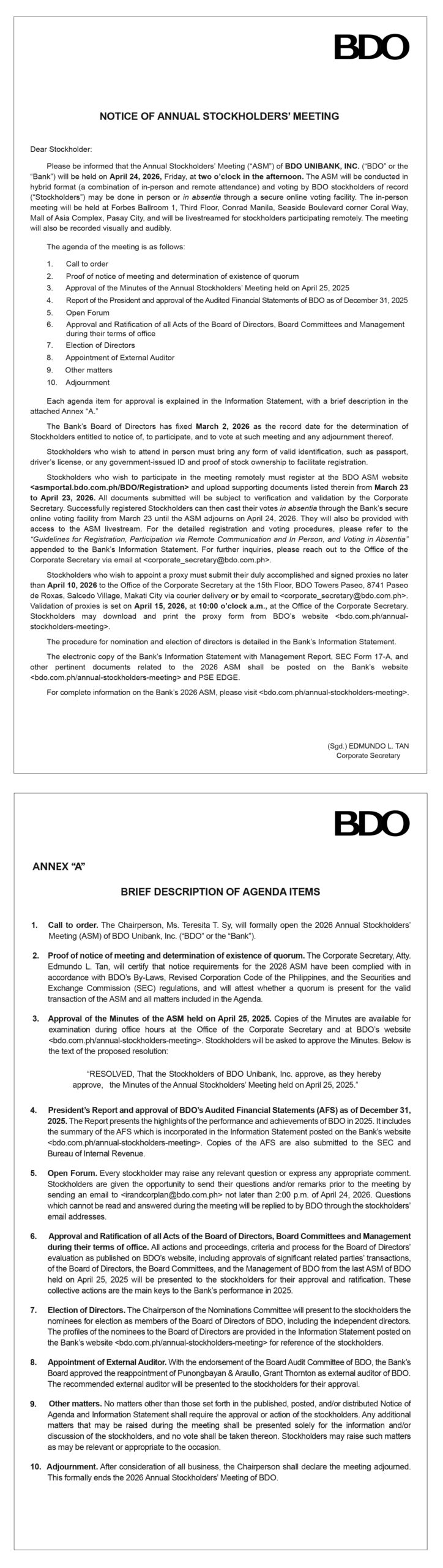
BDO Unibank, Inc.: Notice of 2026 Annual Stockholders’ Meeting

BDO Unibank, Inc. will hold its Annual Stockholders’ Meeting on April 24, 2026, Friday, at 2:00 p.m., at Forbes Ballroom 1, Third Floor, Conrad Manila, Seaside Boulevard corner Coral Way, Mall of Asia Complex, Pasay City, and will be livestreamed for stockholders participating remotely.


Spotlight is BusinessWorld’s sponsored section that allows advertisers to amplify their brand and connect with BusinessWorld’s audience by publishing their stories on the BusinessWorld Web site. For more information, send an email to online@bworldonline.com.

Join us on Viber at https://bit.ly/3hv6bLA to get more updates and subscribe to BusinessWorld’s titles and get exclusive content through www.bworld-x.com.

Netflix, Warner Music strike multi‑year deal for artist documentaries

NETFLIX and Warner Music Group (WMG) have put together an exclusive multi-year deal to produce documentary series and films exploring the lives, music, and legacies of the label’s storied artist roster.

The partnership, announced on Friday, hands Netflix access to one of the most formidable vaults in music history. WMG represents legends like David Bowie, Cher, Fleetwood Mac, Aretha Franklin, and Joni Mitchell, alongside contemporary superstars such as Charli XCX, Coldplay, and Bruno Mars.

The deal marks the latest front in an intensifying race between music-rights owners and streaming platforms eager to turn deep catalogs into premium visual content and subscriber growth.

Music documentaries have increasingly become a vehicle for fan-driven and culturally resonant programming, a trend underscored by Taylor Swift’s Eras Tour film grossing over $260 million globally.

Under the agreement, WMG will work with Unigram — the production company aligned with the label — which will serve as the studio for its long-form projects. Each title will be developed in collaboration with the artists themselves or their estates.

The partnership bolsters Netflix’s growing slate of music-driven programming, where it has already built a reputation as a heavyweight in the genre with titles such as Homecoming: A Film by Beyoncé and Quincy among its highest-profile releases.

Rival platforms have also been aggressively investing in music storytelling. Disney+ hosts a range of high‑profile releases including The Beach Boys, while Max has drawn attention with documentaries such as Stax: Soulsville USA, showcasing historic labels and influential artists.

Apple Music, meanwhile, has pushed into original music video content, producing documentaries and livestreaming concerts through its Apple Music Live series, which has featured artists such as Harry Styles and Billie Eilish. — Reuters

What boards should demand from AI: assessment, audit, and assurance

STOCK PHOTO | Image from Freepik

By Erika Fille T. Legara

IN A PREVIOUS BusinessWorld article, I argued that AI governance goes beyond overseeing a handful of technology projects and now encompasses ensuring that AI-enabled decisions across the organization remain aligned with strategy, risk appetite, and ethical standards. A natural follow-on question for boards is: beyond setting expectations, how does an organization verify that its AI systems are actually performing as intended, responsibly, and within defined boundaries?

The answer lies in three related but distinct disciplines: AI risk assessment, AI audit, and AI assurance. Boards familiar with financial oversight will find the logic intuitive. The challenge, and the opportunity, is applying that same discipline to AI.

3 DISTINCT BUT RELATED CONCEPTS
It helps to be precise about what each term means, because they are often used interchangeably when they should not be.

AI risk assessment is the internal process by which an organization identifies, evaluates, and prioritizes the risks associated with its AI systems. It asks what could go wrong, how likely it is, and what the impact would be. This is the foundation on which everything else rests. Without a credible risk assessment, neither audit nor assurance has a meaningful baseline to work from. Material AI systems exist across every sector: a credit scoring model in a bank, a patient triage tool in a hospital, a student performance predictor in a university, a case prioritization system in a government agency. What they share is the consequence, which includes outputs affecting real people in meaningful ways.

For any such system, risk assessment should be systematic, documented, and revisited regularly as the model evolves and as the operating environment changes.

AI audit is the independent examination of whether an AI system, or the governance framework surrounding it, conforms to defined standards, policies, or requirements. It is an evidence-based process conducted by a party sufficiently independent of those responsible for the system under review. An AI audit might assess whether an organization’s AI management practices conform to an internationally recognized standard, such as ISO/IEC 42001, the world’s first AI management system standard published in 2023, or whether a specific model is performing within approved parameters and without unintended bias. Importantly, the standard governing auditors themselves, ISO/IEC 42006, published in July 2025, now sets out the competence and rigor required of bodies that audit and certify AI management systems. The auditing profession, in other words, is beginning to formalize its own accountability for AI engagements.

AI assurance is the formal, stakeholder-facing conclusion that emerges from that audit process. It is the professional opinion, issued by a qualified and independent party, that gives boards, regulators, investors, and the public confidence that an AI system or AI management framework meets a defined standard. Assurance is what transforms an internal review into a credible external signal.

GROUNDING AI ASSURANCE
The concept of independent assurance is not new to boards. Every year, external auditors examine an organization’s financial statements and issue an opinion; a conclusion grounded in evidence, conducted under internationally recognized standards, and underpinned by the auditor’s professional independence. That opinion carries weight precisely because the framework governing it is rigorous and well-established. This logic applies regardless of industry; whether the organization is a bank, a hospital, a conglomerate, or a public institution, the financial audit is a familiar and trusted mechanism.

The same logic now applies to AI. When an organization makes a public or regulatory claim about its AI systems, that they are fair, transparent, compliant with a defined standard, or free from material bias, the question is: who independently validates that claim, and under what professional framework?

The answer, for the accounting and audit profession, is ISAE 3000, the International Standard on Assurance Engagements issued by the International Auditing and Assurance Standards Board (IAASB). ISAE 3000 governs assurance engagements on matters other than historical financial information, making it the natural home for AI assurance. Under this standard, a professional can conduct either a reasonable assurance engagement, the higher standard analogous to a financial audit, or a limited assurance engagement, which is closer in depth to a review. The choice of level matters and should be deliberate, calibrated to the materiality and risk of the AI system in question.

A close contemporary parallel is sustainability or ESG assurance. Many Philippine-listed companies are already commissioning independent assurance on their sustainability disclosures, often under ISAE 3000. The mechanics are exactly the same: an independent practitioner examines a set of claims against defined criteria and issues a formal conclusion. The subject matter differs; the professional discipline does not.

WHAT THIS MEANS FOR BOARDS
Three practical implications follow from this framework.

First, boards should ask whether their organizations have conducted rigorous AI risk assessments on material systems. Not a one-time exercise, but a living process that is updated as models are retrained, use cases expand, and the regulatory environment evolves. The quality of downstream audit and assurance work is only as good as the risk assessment that precedes it.

Second, boards should distinguish between internal and external AI audit. Internal audit functions play a critical role in providing assurance that AI controls operate as designed. However, boards should also consider whether an independent, third-party audit of material AI systems is warranted, particularly for systems that affect customers, employees, or the public in consequential ways. As with financial auditing, independence strengthens credibility.

Third, as organizations increasingly make public commitments about their AI practices to regulators, investors, and the communities they serve, boards should ask whether those commitments are backed by credible assurance. Assertions without independent validation are, at best, a reputational risk waiting to materialize.

A PROFESSION STILL BUILDING ITS CAPABILITIES
It would be incomplete to present this landscape without acknowledging its current limitations. The infrastructure for AI assurance is still being built. Professional standards are emerging. Auditor competencies in AI, spanning machine learning, algorithmic bias, data governance, and model transparency, are not yet uniformly developed across the profession. ISAE 3000 provides the assurance framework, but the AI-specific methodologies that sit within it are still maturing.

For organizations not yet ready to pursue formal assurance, this is not a reason to stand still. A structured, regular assessment of material AI systems is a meaningful and practical first step. It builds the internal discipline, documentation, and governance habits that assurance-readiness eventually requires. Boards that commission such assessments today, even informally, are developing institutional muscle that will matter when regulatory expectations harden and stakeholder scrutiny intensifies.

This view is one I have explored more deeply in research I have been developing with colleagues examining generative AI governance in economies where regulation has yet to catch up with technology. The central argument is that firms are already moral agents with existing ethical obligations to their stakeholders; waiting for bespoke AI legislation is neither necessary nor sufficient for responsible governance. The obligation to act is already there. What is needed is the organizational will to operationalize it.

This is not a reason for boards to wait on the broader agenda. It is a reason to ask informed questions now, of their external auditors, their internal audit functions, and their management teams, so that when the profession’s capabilities catch up with the demand, their organizations are ready to engage meaningfully.

The financial audit did not emerge fully formed. It took decades of standard-setting, professional development, and hard lessons from corporate failures for the independent audit to become the credible institution it is today. AI assurance is at a comparable early inflection point. Boards that engage with it now, ask sharper questions of their auditors, demand more than management assertions, and build internal capabilities before regulators require them to do so, will not only reduce their own exposure. They will help shape what responsible AI accountability looks like for Philippine organizations and the broader region.


Erika Fille T. Legara is a physicist, educator, and data science and AI practitioner working across government, academia, and industry. She is the inaugural managing director and chief AI and data officer of the Education Center for AI Research, and an associate professor and Aboitiz chair in Data Science at the Asian Institute of Management, where she founded and led the country’s first MSc in Data Science program from 2017 to 2024. She serves on corporate boards, is a fellow of the Institute of Corporate Directors, an IAPP Certified AI Governance Professional, and a co-founder of CorteX Innovations.

CEB 2025 income rises to P12.3B, suspends 5 routes until Oct. 2026 amid Middle East war

JGSUMMIT.COM.PH

CEBU AIR, INC., the listed operator of budget airline Cebu Pacific (CEB), reported a more than twofold increase in its 2025 net income to P12.3 billion, driven by higher passenger revenues.

“Cebu Pacific’s 2025 financial results demonstrate the returns of strategic investments in capacity growth, fleet modernization and operational integrity. The larger, more fuel efficient A330NEOs and A321NEOs helped deliver improved seat economics network wide,” CEB Chief Financial Officer Mark Julius V. Cezar said in a media release on Monday.

Without disclosing comparative figures, Cebu Air said its operating income rose 25% to P11.5 billion. Including additional non-core gains, net income surged to P12.3 billion, more than double its 2024 level.

Cebu Pacific logged total revenue of P119.9 billion for 2025, up 14%. Passenger revenues increased 13% to P80.8 billion. The company carried 26.9 million passengers during the year, supported by an 84% seat load factor, which measures the percentage of occupied seats.

Ancillary revenues and cargo revenues reached P32 billion and P7.2 billion, respectively. The airline said it carried 215 million kilograms of cargo in 2025.

“Together with our focus on efficiency, this helped mitigate the increased expenses in maintenance, airports and fleet related costs due to grounded aircraft… Overall, the 2025 results underscore the strength of Cebu Pacific’s operating fundamentals and financial resilience,” Mr. Cezar said.

The company ended 2025 with a fleet of 100 aircraft, total assets of P264.7 billion, and total liabilities of P245.7 billion.

Cebu Air’s earnings before interest, taxes, depreciation, and amortization (EBITDA) rose 21% to P30.9 billion. Its EBITDA margin expanded to 26%.

For the fourth quarter of 2025, Cebu Air reported operating income of P3.7 billion, up 6% from a year earlier. Revenue for the period rose 6% year on year to P32.3 billion.

During the quarter, the airline carried 6.9 million passengers, resulting in an average seat load factor of 82%, supported by improved average fares and ancillary yields amid strong holiday travel demand.

Passenger revenues for the three months ended December reached P21.1 billion, while ancillary and cargo revenues stood at P9.3 billion and P2 billion, respectively.

For 2026, Cebu Pacific said it will continue to modernize and expand its fleet, expecting the delivery of seven aircraft while retiring seven older units.

“This will retain its fleet size at 100 while increasing the proportion of seats on new generation aircraft. This shift meaningfully enhances the airline’s fuel efficiency, reduces unit costs, and supports sustainable growth,” it said.

NETWORK ADJUSTMENTS
At the same time, Cebu Pacific said it will recalibrate its network, including reducing flight frequencies and canceling selected routes due to the ongoing Middle East conflict.

The airline suspended five routes — Davao-Bangkok, Iloilo-Bangkok, Iloilo-Singapore, Singapore-Iloilo, and Clark-Hanoi-Clark — until October 2026.

It also reduced weekly services for selected domestic and international routes from April to October, including Cebu-Singapore, Singapore-Cebu, Manila-Jakarta, Jakarta-Manila, Manila-Kuala Lumpur, Kuala Lumpur-Manila, Manila-Melbourne-Manila, and Manila-Sydney-Manila.

At the local bourse on Monday, shares in Cebu Air rose by 10 centavos, or 0.34%, to close at P29.95 each. — Ashley Erika O. Jose

PHL banks need clarity on ‘green’ financing to boost ESG compliance, BSP says

STOCK PHOTO | Image from Freepik

PHILIPPINE BANKS are open to incorporating sustainability standards in their frameworks but are still seeking clarity about what kinds of activities are considered environmentally or socially sustainable, a Bangko Sentral ng Pilipinas (BSP) official said on Monday.

BSP Assistant Governor and Chief Sustainability Officer Pia Bernadette Roman-Tayag said a clearer sustainable finance taxonomy would encourage more lenders to support environmental, social, and governance (ESG) measures.

“[Banks need] clarity,” she told reporters on the sidelines of the Economic Journalists Association of the Philippines’ sustainability forum in Makati City. “I think the sustainable finance taxonomy is a good way to show banks this is what we mean by activities that are green, that are contributing to our environmental objectives.”

“So, we want that to be as granular as possible so it’s clear for them, so when they make investment decisions, they know they’re aligned.”

In the BSP’s Banking Sector Outlook Survey for 2023, 90.3% of banks surveyed said they were willing to invest in sustainable financing, particularly in areas such as agriculture, renewable energy, energy efficiency, and sustainable water and wastewater management.

She said local banks have been building their capacity for sustainable financing since the BSP established its regulations six years ago.

“I could say that more banks are now integrating ESG into their governance and their risk management system.”

In April 2020, the BSP introduced a sustainable finance framework for banks, requiring them to integrate sustainability principles into their environmental and social risk management, governance frameworks, strategies, and operations.

Ms. Roman-Tayag said the Philippines is struggling with climate change adaptation amid limited financing, noting that only below 10% of global climate finance goes to this while 90% is allotted for mitigation.

“Our problem really is adaptation. Climate change is already here, and the Philippines is so vulnerable,” she said during a panel discussion, adding that the Philippines needs additional funding for these efforts.

She said these would help cushion the economy from climate risks.   

“Adaptation is what we need to make our economy, our firms, our households, our individuals more resilient,” Ms. Roman-Tayag said. “We also want that financing goes to sound adaptation activities that can reduce the risks of climate change.

The central bank’s mandated credit for agriculture and agrarian sectors has also been effective in pushing for sustainable finance in the banking sector, she added.

Based on preliminary BSP data, banks lent out about P2.52 trillion to the agriculture sector as of September last year. This includes loans for agrarian reform beneficiaries, agrarian reform communities, or other priority sectors.

This accounted for 101.78% of the banking system’s P2.46-trillion total loanable funds during the period, well above the BSP’s 25% quota. — Katherine K. Chan

Central Luzon: A rising economic and property powerhouse

The 22-kilometer Metro Rail Transit Line 7 project, linking North Avenue in Quezon City to San Jose del Monte, Bulacan. — SMCINFRASTRUCTURE.COM.PH

CENTRAL LUZON is emerging as one of the fastest-growing regions in the Philippines, solidifying its role as a vital contributor to the country’s economic development. Based on latest government data, the region recorded a 6.5% gross domestic product (GDP) growth in 2024, an improvement from 6.1% in 2023. This expansion underscores the dynamism of Central Luzon’s economy, driven by construction, manufacturing, and services sectors. Notably, the region accounted for 11.1% of the national GDP, highlighting its strategic importance in the broader Philippine economy over the near to medium term.

Over the past few years, we have seen major developers aggressively landbanking and developing masterplanned communities in Central Luzon, especially in Bulacan, Tarlac, and Pampanga.  We expect proactive landbanking in other parts of the region as developers are gradually positioning and firming up their positions in a constantly evolving property market like Central Luzon.

INFRASTRUCTURE AS A REGIONAL GROWTH CATALYST
The backbone of Central Luzon’s economic surge lies in its massive infrastructure projects. The Central Luzon Link Expressway Phase 1, completed in 2021, has already enhanced connectivity within the region. Looking ahead, transformative projects such as the New Manila International Airport, expected beyond 2028 with a capacity of 100 million passengers annually, and the Manila-Clark Railway, slated for completion in 2028, promise to revolutionize mobility and trade within the region. Other projects, including the North Luzon Expressway–South Luzon Expressway (NLEX-SLEX) Connector (2026) and Metro Rail Transit (MRT) Line 7 (2027), will further integrate Central Luzon with Metro Manila, reducing travel times and boosting commercial activities.

Air transport is also being strengthened, with the expansion of Clark International Airport (completed in 2021) and the Bulacan Airport project, an ambitious airport project that will likely be at par with major airports in Southeast Asia such as Changi in Singapore. These developments will position Central Luzon as a future logistics hub, capable of supporting both domestic and international trade.

CONSTRUCTION AND SERVICES DRIVING GROWTH
The construction sector has been particularly robust, registering 13.7% growth in 2024, nearly doubling its 7.3% expansion in 2023. This surge reflects both public infrastructure spending and private real estate development in central Luzon. With national players positioning to capture office, residential, leisure, retail, and industrial demand in the region, we expect private construction to rise steadily.

Services, including information and communication, also contributed positively, with a 5% growth rate in 2024. The sub-segment is partly propelled by the attractiveness of the region’s outsourcing segment. Big outsourcing firms such as Majorel, Cloudstaff, Concentrix, Alorica, Asurion, Infosys, TaskUs, iQor, and Sutherland are already in the region.

Together, construction and services are reshaping the region’s economic landscape, creating jobs, and attracting investments which result in a more inclusive economic expansion.

REAL ESTATE APPRECIATION IN CENTRAL LUZON AND  ITS CENTRAL ROLE IN NATIONAL PROGRESS
Central Luzon’s economic momentum is mirrored in its real estate market. Lot-only developments have experienced healthy price increases, with projects launched in recent years showing strong compounded annual growth rates (CAGR).

Central Luzon’s growth story is not just regional — it is national. Its proximity to Metro Manila, coupled with massive infrastructure investments, positions it as a key driver of decentralization. By easing congestion in the capital and offering alternative hubs for business and industry, Central Luzon supports the government’s vision of balanced regional development.

AT THE CENTER OF PHILIPPINE PROPERTY’S TRANSFORMATION
Central Luzon’s trajectory illustrates how infrastructure, construction, and services can synergize to propel regional growth and eventually contribute to national progress. With its expanding share to the national GDP, booming real estate market, and transformative public projects on the horizon, the region is poised to become a cornerstone of Philippine economic progress.

As the country continues to pursue inclusive development, Central Luzon stands out as a model of how strategic property investments can unlock long-term prosperity.

Moving forward, Central Luzon’s role to national progress will be pivotal as its growth angle is national and not just regional.


Joey Roi Bondoc is the director and head of Research of Colliers Philippines.

joey.bondoc@colliers.com

Entertainment News (03/24/26)


Benilde hosts free film activities

A THREE-DAY event dubbed BenildeFilm Experiences Week, will be held at De La Salle-College of Saint Benilde. The public is invited to the event’s film screenings, masterclasses, and lectures. Film academic and Benilde faculty Ed Cabagnot will kick it off with a lecture on liminal cinema on March 24, followed by screenings of the 2024 QCinema Shorts, three of which were directed by BenildeFilm alumni: Refrain by Joseph Dominic Cruz, Alaga by Nicole Rosacay, and Supermassive Heavenly Body by Sam Villa-Real. The screening will include a talkback with the filmmakers. Benildean Film Works Day is slated on March 25, featuring screenings of women-led short films and a roundtable discussion with the filmmakers. Then, on March 26, Full Post Asia Chief Executive Officer John Wong is set to hold masterclasses on accelerated post-production, high-speed workflows, and pro techniques, plus viewings of short films. To cap off the affair, the audience can watch a directing showcase which features the short films of the students of director Dwein Baltazar. The event is free and open to the public. For tickets and the complete schedule of activities, visit tinyurl.com/BFXWeekMarch2026.


Thai pop star ALLY is coming to Manila

THAILAND’S rising pop star ALLY (real name: Achiraya Nitibhon) is launching her global push, with performances in Manila on March 24 to 26, the first stop of her international tour. The South Korean-trained artist will be using the tour to expand her Southeast Asian footprint. It follows the release of her first all-English single, “but you,” featuring JHIN. Aside from her music, ALLY is also a brand ambassador for Chanel and an actress in the Netflix series The Believers and upcoming K-pop thriller film Perfect Girl. The schedule of her performances in Manila can be found on her social media.


They Will Kill You now in Philippine cinemas

THE horror-action-comedy They Will Kill You is now showing in Philippine cinemas. Starring Zazie Beetz, Tom Felton, Heather Graham, and Patricia Arquette, it is produced by Andy Muschietti (the director of horror hits It, It Chapter Two, and Mama) and Barbara Muschietti. Set in The Virgil, a hellish place based on Dante’s Inferno, a young woman (played by Ms. Beetz) must survive the night and escape a demonic cult’s lair, each floor of which is literally a different circle of hell. Otherwise, she may become their next offering.


Imago releases new EP

FILIPINO alternative band Imago has dropped their new EP, Pasimple, a five-track collection that marks the band’s first official studio release under Sony Music Entertainment and their sixth overall. It continues their style of emotional introspection paired with expansive, guitar-driven arrangements. It was produced and arranged by the band alongside longtime collaborators Raymund Marasigan and Buddy Zabala. The EP’s focus track, “Lagi Na Lang,” captures the exhausting and repetitive patterns of a relationship in slow decay. It is out now on all digital music streaming platforms.


Kids’ summer fair now open for registration

SM SUPERMALLS’ The Podium will be holding TINY Tycoons, a fair where children get to experience being little entrepreneurs in a fun, safe, and empowering environment, this summer. As part of the program, children can sell their own creations or pre-loved items, join the SM Little Crew experience where they sell in actual stores in different time slots, and enjoy a clean concert at the end of each day. Entrance is free via the SM Online App. If they book on or before March 24, they get to attend a free Mario Galaxy movie screening on April 11 at The Podium.


Spotify holds BTS Music Quiz

ALONGSIDE the release of BTS’ comeback album, Arirang, Spotify has launched a feature called the “BTS Music Quiz,” now live in-app for Spotify Premium listeners globally. Inspired by the journey reflected in Arirang, the experience invites fans to revisit some of the defining moments that shaped BTS’ artistic legacy and flex their BTS knowledge. Under any BTS track, users can scroll down in the “Now Playing” view to find the Music Quiz banner. They can also share their quiz score and challenge a friend to take it as well. The quiz is available for Premium listeners globally in English, Indonesian, Korean, Japanese, Portuguese, and Spanish.


CA7RIEL, Paco Amoroso release new album

MUSICIANS CA7RIEL and Paco Amoroso have released their new album, Free Spirits, which stretches their blend of trap, rock, pop, and left-field spectacle into something bigger. The album is accompanied by a short film which offers a more detailed sense of the groundbreaking techniques employed at the Free Spirits Center. It features guests like Sting, Jack Black, Fred again.., and Anderson .Paak.

On hydropower and net metering

STOCK PHOTO | Image by Brgfx from Freepik

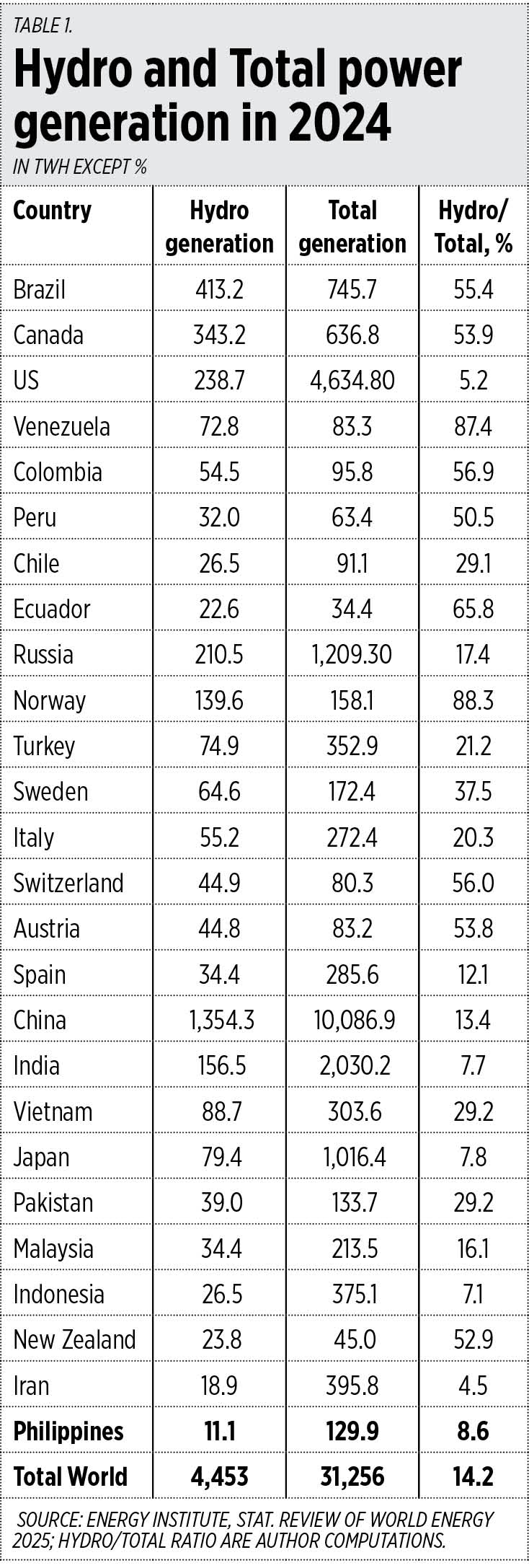
Iran has the fourth largest oil reserves in the world with 157.8 billion barrels, next to Venezuela, Saudi Arabia, and Canada. It also has the second largest gas reserves in the world with 32.1 trillion cubic meters (tcm), next to Russia’s 37.4 tcm. This information is not new.

But I was surprised to learn that Iran also has a large hydropower capacity. In 2019, their hydropower plants produced 33.9 terawatt-hours (TWh) of electricity while the Philippines’ hydro plants produced only 8 TWh that year. But their hydro plants lacked continuing investments and innovation, so by 2024 they produced only 18.9 TWh, which was still larger than our 11.9 TWh that year.

I checked the details on the world’s large hydropower producers. In terms of volume, the largest is China with 1,354 TWh in 2024 or 30% of total global hydro generation. It was followed by Brazil, Canada, the US, and Russia.

In terms of hydro to total generation ratio, the largest is Norway with 88% in 2024, followed by Venezuela with 87%, and Ecuador with 66%. The global ratio is 14% (see Table 1).

TOURING AMBUKLAO
The huge Philippine Electric Power Industry Forum (PEPIF) 2026 was held on March 12 in Baguio City, organized by the Independent Electricity Market Operators of the Philippines (IEMOP) and co-sponsored by four corporations — SN Aboitiz Power (SNAP), Meralco Power Gen Corp. (MGEN), ACEN, and Exist.

After the PEPIF, I asked SNAP if I could visit their nearest hydropower plant; they agreed and toured me through the Ambuklao hydro plant, which is just one hour from Baguio City. SNAP’s Kris Vargas accompanied me as we were brought around by Ambuklao’s Plant Manager, Hollis Fernandez, who gave me something like a brief Mechanical Engineering 101 course in one hour. He’s a cool guy.

Mr. Fernandez drove us deep below the huge water reservoir and showed me Ambuklao’s facilities — a penstock, the three turbines (which produce 37.5 MW each), the electricity generator, the transformer to boost voltage for transmission, the cooling system, the elaborate electrical cables, then a long steep stairs — hundreds of steps with no landings — all the way to the top of the water reservoir. We did not climb it of course; my senior citizen legs would never forgive me if I did, even if I was an active mountaineer in my younger days.

During the PEPIF, SNAP President and CEO Joseph Yu said that their company operates a total of 673 MW of hydro installed capacity in Northern Luzon. He also emphasized that while SNAP owns the hydro plant facilities, the dams, weir, and reservoir are still owned by the government via the National Power Corp.-Power Sector Assets and Liabilities Management  Corp. (NPC-PSALM) and the National Irrigation Administration (NIA).

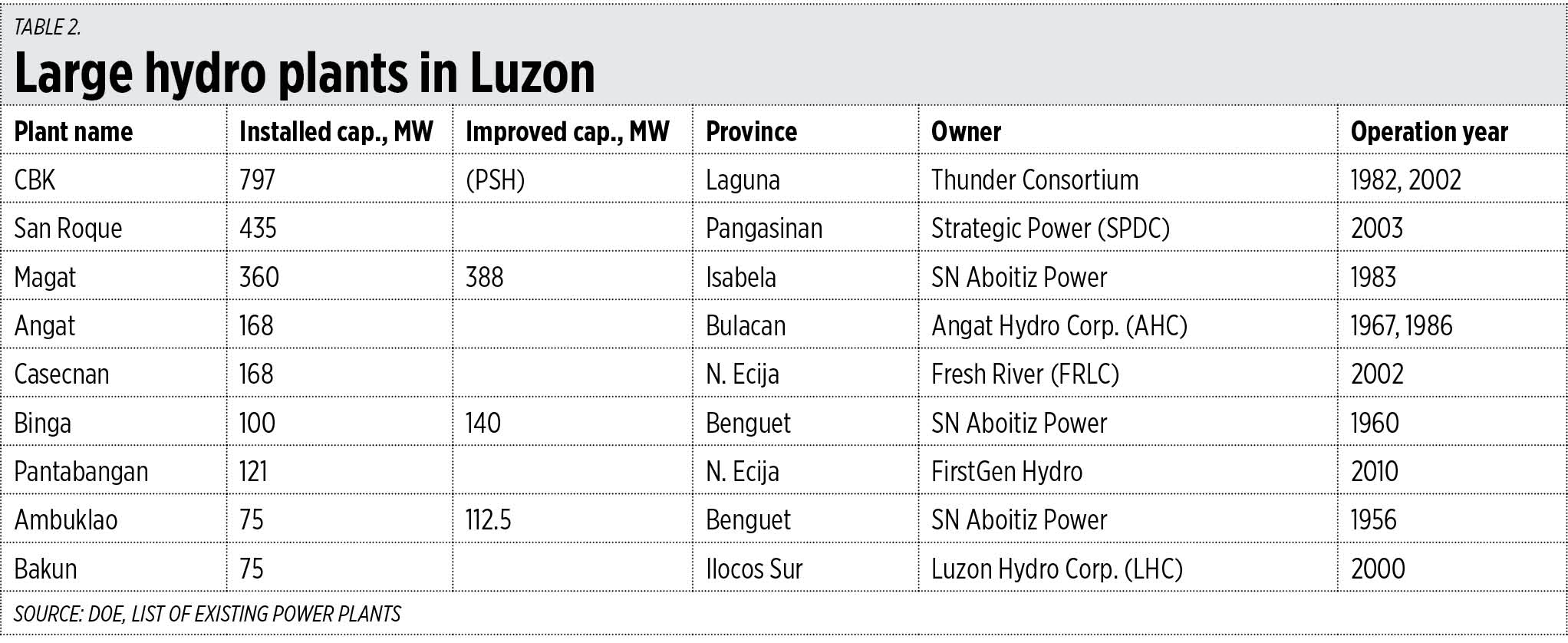
I checked the Department of Energy website for information on the large hydro plants in Luzon. SNAP owns three of the nine plants — Ambuklao, Binga, and Magat. The good thing here as explained by both Messrs. Yu and  Fernandez, is that SNAP has significantly increased the capacity of these three plants. For example, Ambuklao’s capacity was increased from the original 75 MW to 112.5 MW, an expansion of 37.5 MW which was done without raising the height of the dam. It was done just through innovations and modernization of the facilities. Their Norwegian partner Scatec (formerly SN Power) provided the modern facilities and engineering innovations as Norway is the most sophisticated hydropower producer in the world.

Aboitiz Power (AP) is the largest hydro operator in the Philippines, especially with their purchase of the Caliraya-Botocan-Kalayaan (CBK) pumped storage hydro (PSH) via Thunder Consortium, AP’s partnership with Sumitomo Corp. and J-Power, both of Japan. Plus there are SNAP’s three plants and Bakun of Luzon Hydro, an AP subsidiary.

San Miguel Global Power (SMGP) is second largest hydro operator with their huge San Roque plant via subsidiary Strategic Power, and Angat Hydro (see Table 2).

The man responsible for the early expansion of SNAP’s business was Manny Rubio, its president in 2007 when SNAP acquired Magat, then Ambuklao, then Binga. He developed the project financing to acquire the three plants in a year — what a finance wizard! In 2007, Ambuklao was still non-operational after the big earthquake of 1990, Binga was running but degraded, and Magat he converted from a baseload to a merchant peaking plant. Within 18 months of operations, SNAP surpassed its financial targets, supported by effective trading strategies and disciplined operations and maintenance.

Mr. Rubio later became President and CEO of AP, from 2015 until his retirement in 2024. Then, the day after his retirement, Manny V. Pangilinan got him to head MGEN. MGEN is very lucky to have this engineer-finance whiz.

I also spoke to SNAP’s Mr. Yu and I listened to his presentation at PEPIF — the guy is another finance and tech wizard. He spoke not only about megawatts from hydro, megawatt-hours from battery energy storage systems, but also about digital transformation, data science, predictive analytics, and integrated remote operations. Topics that are Greek to me.

NET METERING
Meanwhile, a brief note about how net metering from rooftop solar owners are being paid by private distribution utilities (DUs) and electric cooperatives (ECs). Today it is paid at the average generation cost of DUs and ECs, which is higher than the average wholesale electricity spot market (WESM) prices. When the net metering policy was developed and enacted, WESM prices were high during the day, making the case of buying electricity at average generation cost valid. Also, solar panel costs were more than twice the current costs of around $0.11-0.13 per kWh peak.

Today, WESM prices are low and solar panel prices are low, so why pay the rooftop owners the average generation cost? This raises the rates of DUs and ECS, which are then passed on to customers who cannot afford rooftop solar. The business case for rooftop solar has changed, they do not need incentives like net metering anymore.


Bienvenido S. Oplas, Jr. is the president of Bienvenido S. Oplas, Jr. Research Consultancy Services, and Minimal Government Thinkers. He is an international fellow of the Tholos Foundation.

minimalgovernment@gmail.com

SEC says new reporting rules to improve transparency, trust

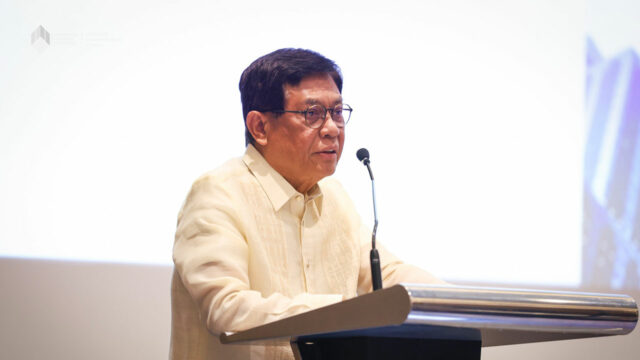
Francisco Ed. Lim — FACEBOOK.COM/PHILIPPINESEC

THE Philippines’ move to adopt International Sustainability Standards Board (ISSB) disclosure standards is expected to strengthen transparency and trust in markets, the Securities and Exchange Commission (SEC) said.

SEC Chairperson Francisco Ed. Lim said during the Economic Journalists Association of the Philippines’ sustainability forum on Monday that companies should not conceal forward-looking risks, as investors consider these in capital allocation decisions across global markets.

“These are questions that investors deem important, and eventually it will decide how investors, how capital will be allocated to the different markets globally,” he said.

“Because I think, as I said again, trust is an invisible currency for markets. The more you disclose and the more complete and clear your disclosure, the credibility to the market will be sustained,” Mr. Lim added.

The SEC last year issued a memorandum adopting the Philippine Financial Reporting Standards (PFRS) on sustainability disclosures, setting guidelines to help covered companies prepare and submit reports aligned with international standards.

Memorandum Circular (MC) No. 16, Series of 2025, implements PFRS S1, which sets general requirements for sustainability-related financial disclosures, and PFRS S2, which covers climate-related disclosures. It repeals MC No. 4, Series of 2019, which required only publicly listed companies (PLCs) to submit sustainability reports. 

“Trust depends on what can be verified. Sustainability claims must not run ahead of facts. They must be grounded, measured, and governed with discipline. Everything less does not just weaken disclosure; it weakens the markets,” Mr. Lim said.

He said traditional corporate reporting focuses on past events, such as material incidents affecting operations, while sustainability reporting requires companies to disclose potential future risks that may affect investor decisions.

“Based on my understanding, you as the listed company should disclose that. You can’t hide it… All that is to disclose what can affect or what will affect the decision of your investors,” Mr. Lim said.

He said regulators are not imposing additional burdens on companies but are encouraging greater transparency in the market.

From the private sector, Metro Pacific Investments Corp. (MPIC) Chief Finance, Risk, and Sustainability Officer Chaye A. Cabal-Revilla said companies view sustainability reporting as part of strengthening operations and preparing for long-term risks.

“We don’t look at it as a burden. We take it as our responsibility to look at our resiliency and future of our businesses because in the case of the Philippines, where we get 20-25 category four to five storms on a yearly basis, we get floodings, etc. If we do not do anything, if we do not do our work too hard in our assets or fortify our network… therefore our businesses will also be impacted negatively,” she said.

Under the memorandum circular, PLCs and large non-listed companies (LNLs) under Section 17.2 of Republic Act No. 8799 must attach board-approved sustainability reports to their annual reports, while other LNLs must submit these alongside audited financial statements.

The adoption of PFRS S1 and S2 will be phased in starting fiscal year 2026. Tier 1 PLCs with a market capitalization of more than P50 billion as of Dec. 31, or upon listing thereafter, must begin PFRS-based reporting in 2027 for fiscal year 2026.

Tier 2 PLCs with market capitalization of over P3 billion to P50 billion will adopt PFRS in 2028 for fiscal years beginning on or after Jan. 1, 2027.

Tier 3 includes PLCs with market capitalization of P3 billion or less, debt-listed PLCs on the Philippine Dealing & Exchange Corp., and LNLs with more than P15 billion in prior-year revenue. These entities will adopt PFRS in 2028 for fiscal years beginning on or after Jan. 1, 2028.

Covered companies may also use other recognized international frameworks alongside PFRS S1 and S2, provided these do not conflict with the standards, obscure material information, and are properly disclosed. — Alexandria Grace C. Magno