Home Blog Page 1187

Marcos: E-gaming policy not final

A person holds cards near a keyboard, chips and dice in this illustration picture. — REUTERS/DADO RUVIC/ILLUSTRATION

PHILIPPINE President Ferdinand R. Marcos, Jr., on Thursday said his administration has yet to finalize its policy on online gambling, amid growing calls from lawmakers and civil society groups to impose tighter regulations or a full ban on the sector.

“We had not — we still have to form the policy on what we are going to do about online gambling, and to this end, I have already started to organize… to convene a conference of… [with] stakeholders,” he said in a video blog posted on his social media.

Mr. Marcos said the government must first hold a broad consultation involving regulators, church leaders, parents, and other affected sectors before laying down rules. He warned that an outright ban could push the industry underground, rendering it even more difficult to regulate.

The President’s remarks come as civil society groups and lawmakers raised concerns over the proliferation of digital gambling platforms, citing addiction and mounting debt among vulnerable communities, particularly the youth.

Despite the urgency, he skipped the subject during his fourth State of the Nation Address (SONA) last July 28.

“The first effect of banning it fully is to put it underground, and then we have no control,” he said. “That’s when there is really no regulation.”

Mr. Marcos distinguished the current debate over online gambling from the previous controversy surrounding Philippine offshore gaming operators (POGOs).

While POGOs were not initially illegal, their operations were later marred by human trafficking and scams, prompting a total ban he announced on his third SONA in 2024.

Rather than targeting online gambling as a whole, the President emphasized that the administration’s priority would be addressing the social costs, such as indebtedness and youth exposure to gambling.

“The problem is not online gambling. The problem[s] are the social effects on our children and those who are addicted to gambling,” he noted.

The government is expected to unveil a clearer policy framework following the outcome of stakeholder consultations.

On the same day, the Bangko Sentral ng Pilipinas (BSP) said it is finalizing new rules to mitigate gambling-related harm by strengthening financial safeguards across banks, e-wallets, and payment platforms.

Proposed measures include biometric ID checks, daily transaction limits, time-based payment restrictions, and user tools for spending caps, voluntary breaks, and self-exclusion.

The BSP said these safeguards aim to curb addiction, fraud, and financial harm while encouraging responsible use of digital finance.

The overall gaming industry booked P215-billion gross gaming revenue in the first half, with P93.36 billion generated by integrated resorts. — Chloe Mari A. Hufana
VP impeachment archiving questioned raps archiving questioned

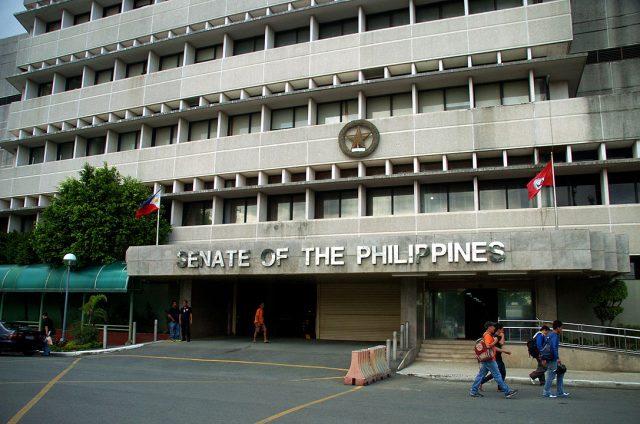
BW FILE PHOTO

HOUSE SPEAKER Ferdinand Martin G. Romualdez on Thursday questioned the Senate’s decision to archive Vice-President Sara Duterte-Carpio’s impeachment complaint, saying the case is still on-going as the Supreme Court (SC) has yet to issue its final ruling on the matter.

In a statement, Mr. Romualdez said the House did not impeach Ms. Duterte out of political vendetta amid tensions between the Marcos and Duterte camps, but as part of its constitutional duty to hold public officials accountable.

“To archive is, in effect, to bury the articles of impeachment,” he said. “Yet the ruling of the Supreme Court is not final.”

The Philippine Senate on Wednesday night archived the impeachment complaint against Ms. Duterte, citing the SC’s ruling that declared the proceedings unconstitutional. Archiving the case means it could be reopened later with majority approval.

The House had asked the High Court on Monday to reverse its ruling that voided the Vice-President’s impeachment.

He questioned why the Senate decided to archive the case despite the House’s motion for reconsideration still pending before the SC.

“The court found our arguments serious enough to require the respondents, including the Vice-President, to submit their comment,” he said. “The case is active.”

“Why the rush?”

A total of three complaints were hurled against Ms. Duterte in December last year. But she was only impeached in February after more than 200 congressmen signed a fourth complaint, allowing the chamber to immediately send the ouster changes to the Senate without any hearing.

“We exercised that power lawfully, transparently, and in good faith — not out of spite, but out of duty. Not to attack, but to ask for answers — answers the Vice-President never gave,” said Mr. Romualdez.

Ms. Duterte’s impeachment was the culmination of a months-long feud with President Ferdinand R. Marcos, Jr., following their falling out after his allies in the House launched an inquiry into her use of confidential and intelligence funds.

“This was never about political maneuvering,” Mr. Romualdez said. “It was about accountability anchored on verified facts and sworn documents.”

UNLIKELY REVERSAL
Meanwhile, a senator on Thursday said that it is “highly unlikely” for the SC to change its ruling after the Senate had voted to archive the case.

“It is dead, but it is not really buried. In effect because it is in the archive, but it can still be pulled out again if the Supreme Court’s decision changes,” Senator Maria Imelda “Imee” R. Marcos told a news briefing, citing the opinion of former Supreme Court Justice Adolfo S. Azcuna.

Ms. Marcos, however, noted that it will be “highly unlikely” for the tribunal to reverse its unanimous decision.

“It is like dismissal but there is still a chance for it to be revived if the Supreme Court reverses its decision. It is highly unlikely that a unanimous Supreme Court decision be overturned on a motion for reconsideration,” she added.

She added that there is also no guarantee that Ms. Duterte would file her own Motion for Reconsideration (MR).

“If the decision is affirmed what is the guarantee that there is no second MR, by the time these motions are resolved, it will definitely be past Feb. 6,” Ms. Marcos said. — Kenneth Christiane L. Basilio and Adrian H. Halili

Visa extension probe sought

STOCK PHOTO | Image from Freepik

A RESOLUTION calling for a probe into alleged anomalies in the processing of tourist visa extensions in the Bureau of Immigration (BI) has been filed in the Senate.

“This is about the (alleged) ‘pay for stay’ of illegal Chinese citizen staying here. We are not sure yet if they are involved in POGOs (Philippine offshore gaming operators) or other illegal activities,” Senator Maria Imelda “Imee” R. Marcos told a news briefing on Thursday.

She said that some foreigners remained in the country despite overstaying their visas or being unqualified for renewal.

Ms. Marcos alleged that foreign citizens seeking an extension of their visas are given a “price menu” between P15,000 to P70,000 depending on how long they plan to stay in the country.

Senate Resolution no. 36 directs the appropriate Senate committee to conduct an inquiry into the alleged anomalies and corrupt practices in the processing of tourist visa extension for foreign nationals in the agency.

“Reports and complaints have surfaced from national and other stakeholders alleging corrupt practices, inefficiency, and irregularities committed by BI personnel, specifically in the processing of tourist visa extensions,” the resolution read.

She added that the alleged corrupt practices have not only resulted in the loss of revenue on the part of the Philippine government but have also undermined public trust in the integrity of government institutions.

It also harmed “country’s reputation as a destination for foreign visitors, and tarnishing the credibility and reputation of the BI and the entire immigration system leading to a lack of confidence in the government’s ability to manage the entry and exit of foreigners into the country.” — Adrian H. Halili

EDSA busway rehab eyed this year

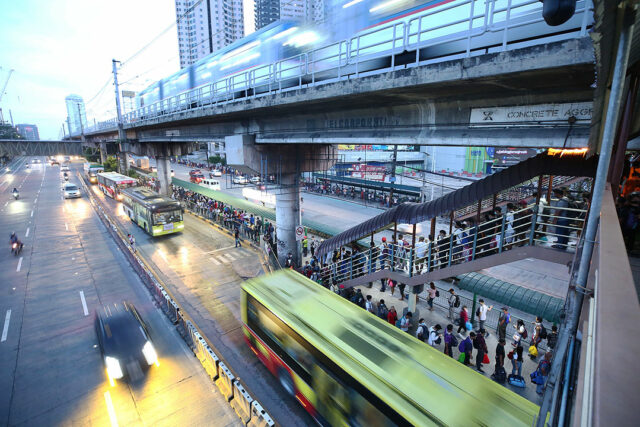
Commuters line up at the Main Avenue station of the EDSA bus carousel in Quezon City, July 18, 2022. — PHILIPPINE STAR/MIGUEL DE GUZMAN

THE Department of Transportation (DoTr) is targeting to start the rehabilitation of the Epifanio de los Santos Avenue (EDSA) busway stations within the year.

Transportation Secretary Vivencio B. Dizon said the agency is working double time to commence the upgrade of the busway within 2025, which will include phases one and two of the project.

“The phases one and two, each worth roughly about P200 million,” Mr. Dizon said, noting that the first phase of the rehabilitation covers the Monumento, Bagong Barrio, North Avenue, and Guadalupe stations. The second phase will cover three more stations.

The design phase of the busway station’s upgrade is projected to be completed within one year and three months while the construction is expected to be completed within a nine-month period.

Further, Mr. Dizon said that the DoTr is still looking at the privatization of the operations and maintenance of the EDSA busway, once the rehabilitation is fully completed.

The DoTr earlier said that the planned privatization of the EDSA busway project is on hold for now as the agency studies improvements for the bus system. — Ashley Erika O. Jose

Sari-sari stores near schools reach 102,000

A vendor sits in a stall selling products in sachet packaging at a public market in Manila, Philippines, Aug. 1, 2019. — REUTERS

MOM-AND-POP stores, also known as sari-sari stores, located near schools have reached 102,058 by June, a study by tech startup Packworks.io showed.

It added that stores within a 400-meter radius of schools grew by 31% to 95,000 last year from 71,000 a year prior.

“This trend reveals a deeper story: in rural regions, these stores are experiencing a significant increase in sales and transaction volume,” it said.

According to Packworks, most sari-sari stores near schools are located in the rural regions, particularly in the Zamboanga Peninsula; Cordillera Administrative Region; northern Mindanao; eastern Visayas; and western Visayas.

Aside from their growing numbers, sari-sari stores also recorded a 130% increase in sales in July last year, coinciding with the beginning of classes on July 29, 2024.

“For the current school season in 2025, stores generated a 71% sales spike in June, with the school year starting on June 16,” Packworks said.

Total sales of school supplies increased by 9% from 2023 to 2024, while the overall gross merchandise value (GMV) last year declined 3% to P1.31 million.

“Our latest findings show that the country’s ‘tingi’ economy extends beyond household commodities to school supplies as well,” said Packworks Chief Data Officer Andoy Montiel.

“The contradiction between the increase in sales transactions and the decrease in the overall GMV between 2023 and 2024 indicates that sari-sari stores, especially those in rural areas, are not just participating in the back-to-school season but strategically adapting to it with a model that works for their communities,” he added.

According to Packworks’ data, pad paper was the top-selling item in sari-sari stores, which had a 7.4% spike in GMV sales from 2023 to 2024.

Other top-selling school products were colored pencils, bond paper, paper glue, and correction tape. — Justine Irish D. Tabile

South Cotabato solar farm to rise

DEPARTMENT OF ENERGY

A SOLAR power project is set to rise in South Cotabato next year which can generate 99 megawatts (MW) and power over 82,000 households, according to the Department of Energy (DoE).

The Tantangan Solar Power Project, being developed by Apolaki Seven, Inc. and German developer ib vogt GmbH, is projected to generate over 150,000 megawatt-hours of electricity per year, the DoE said in a statement on Thursday.

According to the DoE, the facility will generate “clean, indigenous power” that will help Mindanao reduce its reliance on imported fossil fuels and mitigate greenhouse gas emissions.

“Today, we do more than break ground on a state-of-the-art solar facility — we celebrate a vital step toward our national energy aspirations under the National Renewable Energy Program,” said Undersecretary Mylene C. Capongcol.

“This project contributes meaningfully to our goal of increasing the renewable energy share in our power mix to 35% by 2030 and 50% by 2040,” she added.

At present, the share of renewable energy in the country’s power generation mix is 22%.

The initial phase of the solar project was awarded under the second round of the Green Energy Auction Program in 2023 and is slated for completion by end of 2026.

“This initial phase will mark a significant step towards realizing the project’s full potential and delivering its promised benefits to the people of Mindanao,” the DoE said.

As of February, the government has awarded a total of 1,411 renewable energy contracts with an equivalent total potential capacity of 154 gigawatts. — Sheldeen Joy Talavera

Sultan Kudarat road mishap kills 10

COTABATO CITY — Ten individuals, including two preschool children, died while 13 others were injured when the dump truck carrying them plunged into a cliff in Barangay Christianuevo in Lebak, Sultan Kudarat on Wednesday afternoon.

The victims were on their way home to Barangay Senditan in Sultan Kudarat, Maguindanao del Norte from a “salangguni,” a traditional setting of the marriage via an Islamic rite, when they figured in the accident.

Officials of the Lebak Municipal Police Station and local executives told reporters on Thursday that the 10 passengers of the dump truck, the ethnic Maguindanaons Tods S. Mamintal, Tahir L. Nakan, Abylyn M. Sahipa, Aling M. Sahipa, Muhammad P. Digan, Muhammad B. Macarimbang, Ramon L. Manoo, Moner T. Abdullah and two children, died from serious injuries caused by the accident.

Senior employees of the Lebak Municipal Disaster Risk Reduction and Management Office had separately told reporters that the highway mishap left 13 others, Saidamin D. Omar, Umbos K. Uteng, Musib L. Nakan, Benz S. Takpan, Ayreen S. Takpan, Haya G. Matabalao, Ibrahim O.  Ambolodto, Arbaina O. Ambolodto Johair K. Omar, Alvin M. Adam, Morsalin Y. Degan, Aiman W. Pending and Haya K. Bansalan, badly injured.

They were immediately transported by emergency responders to the Cotabato Regional Medical Center in Cotabato City, about a hundred kilometers away, for treatment.

Officials of the Lebak police force and the Sultan Kudarat Provincial Police Office had reported to Brig. Gen. Romeo J. Macapaz, director of the Police Regional Office-12, that the driver of the dump truck was maneuvering through an uphill stretch of the Cotabato-Lebak Highway in Barangay Christiannuevo when he lost control of the wheel due to a mechanical trouble.

Citing accounts of witnesses, barangay officials told reporters that the dump truck first veered towards the side of the highway, flipped, and repeatedly rolled over as it fell into the deep ravine along the route. — John Felix M. Unson

Three soldiers hurt in Basilan clash

COTABATO CITY — Three soldiers were wounded when gunmen fired assault rifles and grenade projectiles at an Army outpost in Campo Uno in Lamitan City on Wednesday.

Officials of the Police Regional Office-Bangsamoro Autonomous Region and the Western Mindanao Command told reporters on Thursday, that the wounded soldiers belong to the Army’s 18th Infantry Battalion (IB), which covers Lamitan City and nearby towns.

Local executives said the gunmen approached the 18th IB’s detachment in Barangay Campo Uno from two directions and opened fire.

The soldiers inside the detachment returned fire, preventing their attackers from closing in.

Three soldiers in the roadside Army base, a corporal and two privates, were wounded in the ensuing gunfight.

Their attackers scampered away when they sensed that Army and police reinforcements, backed by volunteer community watchmen, were getting close.

Villagers reported that the armed men behind the atrocity are extortionists, whose movement in Lamitan City became difficult after local officials, led by Mayor Roderick H. Furigay and the 18th IB set up Army outposts in strategic areas in the city to protect local traders.

Mr. Furigay, chairman of the Lamitan City Peace and Order Council, has condemned the incident that triggered panic among residents of Barangay Campo Uno.

He offered a cash incentive for any informant who can help the police identify the gunmen behind it for prosecution. — John Felix M. Unson

Japan presses US on auto tariff cut, seeks clarification on other levies

STOCK PHOTO | Image by taro ohtani from Unsplash

TOKYO — Japan pressed the US to swiftly implement an agreed cut to auto tariffs and sought clarification on levies for other goods, as conflicting interpretations of the bilateral trade deal further pressured Prime Minister Shigeru Ishiba’s shaky administration.

In a meeting with US Secretary of Commerce Howard Lutnick in Washington on Wednesday, top trade negotiator Ryosei Akazawa urged the US to implement at an early date an agreed cut to US tariffs on Japanese auto and auto parts, Japan’s government said.

Mr. Akazawa also sought confirmation and “immediate execution” of the two countries’ agreement on US levies for other goods imported from Japan, the government said in a statement released on Thursday.

The meeting came hours before US President Donald J. Trump’s higher tariffs on dozens of trading partners kick in on Thursday, as Japan scrambles to clarify divergences with Washington on details of their bilateral trade deal.

Under the deal clinched last month, the US agreed to cut tariffs on Japanese car imports to 15% from levies totaling 27.5% previously but did not announce a timeframe for the change to take effect.

While the two agreed that US duties on most other Japanese goods will be cut to 15% from 25% effective on Thursday, a lack of written confirmation of the deal has led to confusion over whether the new 15% tariffs will be stacked on top of existing levies.

Japan argues the two countries had agreed its goods imported to the US would be exempt from such “stacking,” where they can be affected by multiple tariffs.

Speaking in parliament on Tuesday, Mr. Akazawa said Japan wants to make sure goods such as Japanese beef, which already carries tariffs above 15%, will not be charged the new 15% rate as an additional tariff.

But a Federal Register attached to President Trump’s July 31 executive order that addressed tariff rates for many trading partners showed a “no stacking” condition applies to the European Union, but no such clarification was issued for Japan.

Japan’s Asahi newspaper reported on Thursday, citing an unnamed White House official, that the US will stack the tariffs, adding 15% on all Japanese imports without applying exceptions for items that already have tariff rates above 15%.

In a regular news conference held after the Asahi report, Chief Cabinet Secretary Yoshimasa Hayashi said the US was unlikely to stack 15% tariffs on existing levies. He said Mr. Akazawa confirmed the point with the US side during his visit to Washington on Wednesday.

Given such discrepancies, Mr. Ishiba has been under attack in parliament and domestic media for not crafting a written joint statement stipulating details of the trade deal with the US.

Mr. Ishiba defended the decision, telling parliament on Monday that Japan decided to forgo a written statement for fear that doing so could delay US tariff reductions.

Some lawmakers have warned a lack of written confirmation could backfire given Mr. Trump’s unpredictable decision-making style.

The confusion adds to trouble for Japan’s shaky government led by Mr. Ishiba, who is facing calls to step down after the ruling coalition’s huge loss in last month’s upper house election.

“In negotiating with the US, Minister Akazawa at least ought to have nailed down exactly when US automobile tariffs would be lowered to 15%,” ruling party heavyweight and former trade minister Ken Saito told Reuters on Tuesday.

Yuichiro Tamaki, leader of the opposition Democratic Party for the People, urged Mr. Akazawa to press Mr. Trump’s administration harder to adhere to the bilateral agreement.

“After all, I do feel that a document on the agreement was necessary,” Mr. Tamaki wrote in an X post on Thursday. — Reuters

Trump imposes extra 25% tariff on Indian goods, ties hit new low

STOCK PHOTO | Image by Zoshua Colah from Unsplash

WASHINGTON/NEW DELHI — US President Donald J. Trump on Wednesday imposed an additional 25% tariff on Indian goods, citing New Delhi’s continued imports of Russian oil in a move that sharply escalated tensions between the two nations after trade talks reached a deadlock.

The new import tax, effective 21 days after Aug. 7, will raise duties on some Indian exports to as high as 50% — among the highest levied on any US trading partner.

Mr. Trump’s executive order imposing the extra tariff did not mention China, which also imports Russian oil, but later said he could announce similar further tariffs on Chinese goods.

“It may happen… I can’t tell you yet,” Mr. Trump told reporters. “We did it with India. We’re doing it probably with a couple of others. One of them could be China.”

Analysts said Mr. Trump’s move marks the most serious downturn in US-India relations since his return to office in January. The tariffs threaten to disrupt India’s access to its largest export market, where shipments totaled nearly $87 billion in 2024, hitting sectors like textiles, footwear, gems and jewelry.

It also marks a shift from the warm ties seen during Mr. Trump and Indian Prime Minister Narendra Modi ‘s February meeting, they said, pointing out Mr. Trump’s recent remarks calling India’s economy “dead,” its trade barriers “obnoxious” and accusing the country of profiting from cheap Russian oil while ignoring the killings of Ukrainians in Russia’s three-and-a-half-year-old invasion of its neighbor.

India’s external affairs ministry called the decision “extremely unfortunate,” noting that many other countries are also importing Russian oil in their national economic interest.

“India will take all necessary steps to protect its national interests,” it said, adding that purchases were driven by market factors and the energy needs of India’s 1.4 billion people.

The development comes as Mr. Modi prepares for his first visit to China in over seven years, suggesting a potential realignment in alliances as relations with Washington fray.

Oil prices edged up about 1% on Wednesday after falling to a five-week low in the prior session after Mr. Trump penalized India for buying Russian oil and in light of a larger-than-expected US crude storage draw last week.

Last week, US Treasury Secretary Scott Bessent warned China that continued Russian oil purchases could trigger new tariffs, as Washington prepares for the expiry of a US-China tariff ceasefire on Aug. 12.

BLOW TO INDIAN EXPORTS
Trade between the United States and India — the world’s biggest and fifth-largest economies respectively — is worth over $190 billion.

Exporters and trade analysts warn that the tariffs — which Mr. Trump casts as a driver to reduce US trade deficits and reinvigorate domestic manufacturing — could severely disrupt Indian exports.

“This is a severe setback. Nearly 55% of our shipments to the US will be affected,” said SC Ralhan, president of the Federation of Indian Export Organizations.

The increased duties place Indian exporters at a 30–35% disadvantage versus trade rivals in Vietnam, Bangladesh and Japan.

“With such obnoxious tariff rates, trade between the two nations would be practically dead,” said Madhavi Arora, economist at Emkay Global.

Indian officials acknowledged pressure to return to negotiations with the Trump administration. A phased cut in Russian oil imports and diversification could be a part of the compromise.

“We still have a window,” said a senior Indian official, requesting anonymity. “The fact that the new tariffs take effect in 21 days signals the White House is open to talks.”

Another official said there were no immediate plans for Mr. Modi or senior leaders to travel to Washington, nor were any retaliatory measures being considered.

Instead, the government is weighing relief for exporters, including interest subsidies and loan guarantees.

A sharp drop in US-bound shipments could drag India’s gross domestic product growth below 6% this year, down from the central bank’s 6.5% forecast, said Sakshi Gupta of HDFC Bank.

India’s rupee weakened in offshore non-deliverable forwards market while stock futures fell marginally after the announcement.

“While markets have already started pricing in the risk of a sharp tariff hike, a near-term knee-jerk reaction is inevitable unless there’s swift clarity or a breakthrough in negotiations,” said Mayuresh Joshi, head of equity research for India at Willian O’ Neil.

Mr. Trump’s move follows five rounds of inconclusive trade talks, which stalled over US demands for wider access to Indian agriculture and dairy markets. India’s refusal to cut Russian oil imports — which hit a record $52 billion last year — ultimately triggered the tariff escalation.

US and Indian officials told Reuters a mix of political misjudgment, missed signals and bitterness scuttled trade deal negotiations between the world’s biggest and fifth-largest economies, whose bilateral trade is worth over $190 billion. — Reuters

S. Korea, US to conduct major joint military drills starting Aug. 18

WIKIMEDIA/REPUBLIC OF KOREA ARMED FORCES

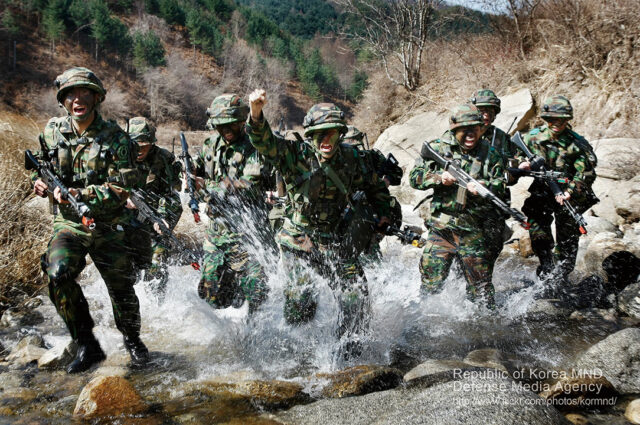
SEOUL — South Korea and the United States will conduct major joint military drills starting on Aug. 18, officials said, although they will delay parts of the annual exercises that have been a source of tension with North Korea to later in the year.

The 11-day annual exercises, called Ulchi Freedom Shield, will be on a similar scale to 2024 but adjusted by rescheduling 20 out of 40 field training events to September, South Korea’s Joint Chiefs of Staff spokesperson Lee Sung-jun said.

The allies agreed to reschedule some parts of the drill to next month over factors “including ensuring training conditions during extreme heat and maintaining a balanced combined defense posture year-round,” Mr. Lee said at a briefing.

This year’s drill will test an upgraded response to heightened North Korean nuclear threats as well as cutting-edge technologies used in modern wars, Mr. Lee said, citing conflicts in Ukraine and the Middle East.

The exercise will include a scenario of a North Korean missile launch but will not cover a potential nuclear test by Pyongyang, he said. The decision to spread out the scheduling included reasons such as extreme weather, Mr. Lee said, denying there were any political factors behind the move.

The drills are due to be staged as the new South Korean government of President Lee Jae Myung seeks to improve strained ties with Pyongyang and revive stalled dialogue with its neighbor.

A senior official from South Korea’s Unification Ministry, which manages relations between the Koreas, said on Thursday that the delay in some training exercises was aimed at easing tensions with North Korea, the Yonhap News Agency reported.

Some analysts were skeptical about Pyongyang’s response.

“North Korea won’t be satisfied with the adjustment at all,” said Cheong Seong-chang, vice-president at the Sejong Institute in Seoul, a research center on North Korean affairs.

“What the regime wants is the termination of the drills with the US, not a slight rescheduling,” said Mr. Cheong.

On Monday, South Korea removed loudspeakers blasting anti-North Korea propaganda near its border with the North in a bid to lower friction with Pyongyang.

So far North Korea has rebuffed such overtures by Seoul.

Kim Yo Jong, the powerful sister of North Korean leader Kim Jong Un, recently said that South Korea’s decision to stop the broadcasts was “not the work worthy of appreciation,” state media KCNA reported. — Reuters

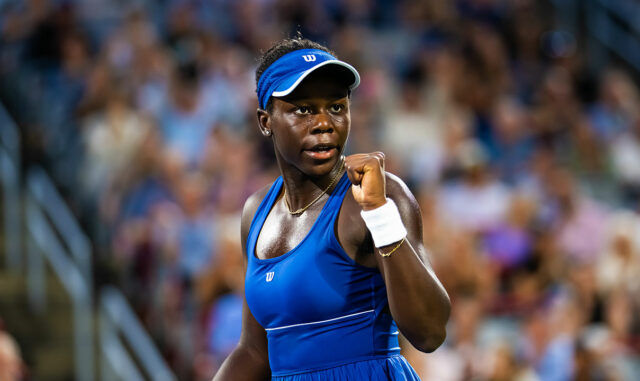
Mboko upsets Rybakina to book Canadian Open final with Osaka

VICTORIA MBOKO — WTATENNIS.COM

TEENAGER Victoria Mboko survived a first-set wobble to battle to a 1-6, 7-5, 7-6(4), win over 2022 Wimbledon champion Elena Rybakina and set up a Canadian Open showdown with Naomi Osaka, while men’s top seed Alexander Zverev was stunned by Karen Khachanov.

Mboko, ranked 85th in the world, saved a match point against Kazakh ninth seed Rybakina in front of adoring home support as the 18-year-old became the first Canadian to beat three former Grand Slam champions in a single WTA event in the Open Era.

She has beaten Sofia Kenin, Coco Gauff and Rybakina in her stunning run to the final in Montreal.

She is also just the third wildcard to reach the final at the Canadian Open in the Open Era after Monica Seles in 1995 and Simona Halep in 2015.

“I had everyone supporting me and pushing me through. Without you guys, I don’t think I would’ve been able to pull this through,” Mboko said after reaching her first WTA 1000 final.

Meanwhile, four-times Grand Slam champion Osaka booked a place in a WTA 1000 final for the first time since Miami 2022 after another impressive display, beating Danish 16th seed Clara Tauson 6-2, 7-6(7), in the second semifinal.

The 27-year-old Osaka, a former world number one, is the first Japanese player in the Open Era to reach the final at the Canadian Open.

In the men’s tournament in Toronto, Zverev, a three-times Grand Slam runner-up, suffered a 6-3, 4-6, 7-6(4), loss against Russian 11th seed Karen Khachanov in the semis.

The 29-year-old Khachanov, who will climb to 12th in the world rankings, saved a match point to reach his second ATP Masters 1000 final, with the previous coming at Paris in 2018 where he upset Novak Djokovic.

“I had to dig deep and lift my level. It was a very demanding, very mental, very physical match. So I’m very happy to get the win after losing some easy ones to him in recent years,” Khachanov, who lost the last three encounters against Zverev, said after their near three-hour battle.

“Today was a real close one. I was match point down, if the ball touches the net and drops over we wouldn’t be talking now.”

Khachanov will face American fourth seed Ben Shelton, who upset second-seeded countryman Taylor Fritz 6-4, 6-3, to become the youngest American to reach an ATP Masters 1000 final since Andy Roddick in Toronto in 2004, in the final.

Australian Open semifinalist Shelton, 22, will be playing his first ATP Masters 1000 final when he takes on Khachanov.

“For me it’s the level — 100%. I’m just looking for things in my game to just kind of improve and I’ve seen so many big improvements this week. So, that’s what I’m most happy about — the way I’m playing, how I’m executing, how little I’m hesitating…,” Shelton said. — Reuters