Home Blog Page 118

Marcos still sees 6% growth by 2028
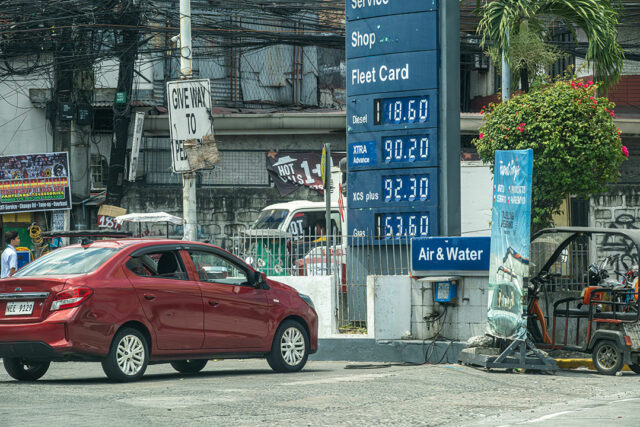
A CAR drives by a gas station in Sta. Ana, Manila. — PHILIPPINE STAR/RYAN BALDEMOR

PRESIDENT Ferdinand R. Marcos, Jr. said economic targets will have to be revised to reflect the impact of the Middle East conflict but remains confident the Philippine economy will grow by 6% by the end of his term in mid-2028.

“With the war in the Middle East, those (targets) have to be redrawn — everything has to be redrawn,” Mr. Marcos said in an exclusive interview with Bloomberg Television’s Haslinda Amin in Manila on Tuesday.

“If the war stopped today, the adjustment isn’t going to be instantly back to $70 per barrel. The uncertainty and the lack of stability is going to factor into that — the general risk factor is still there. And that’s not going to diminish immediately. That’s going to taper off. We hope that it tapers off over a relatively short period,” he added.

The government set a 5-6% gross domestic product (GDP) growth target for this year, 5.5-6.5% for 2027, and 6-7% for 2028.

Asked if 6% growth is attainable by 2028, Mr. Marcos replied: “I think so, yes. We should be able to do that.”

However, the President said the initial 8% GDP growth target by 2028 will be a “tough number to get to” amid recent shocks.

Mr. Marcos said investments and a young workforce will help drive economic growth.

“We have restructured even our tax incentives for investors, the ease of doing business is something we’ve been working hard on… (And) what we always consider our greatest asset is our workforce. We have a relatively young workforce… (and) relatively well-trained,” he said.

ABOVE 4% INFLATION
Meanwhile, the Department of Economy, Planning, and Development (DEPDev) Secretary Arsenio M. Balisacan said inflation will likely quicken above 4% this year even under the least severe scenario where oil prices average $100 per barrel for 60 days.

“The government is assuming 2-4% for 2026 and beyond, but those are going to be breached in any of those scenarios,” he said during a Senate hearing. “So, we will see faster inflation.”

DEPDev sees full-year inflation accelerating to 4% to 8.6% this year, depending on the average price of Dubai crude.

It projected that elevated domestic fuel prices combined with the impact of reduced remittances and tourist arrivals, GDP growth could be lower by 0.15 to 1.95 percentage points (ppts) to bring full-year growth to between 3.5% and 5.3%.

At the Senate hearing, the DEPDev presented simulations of various scenarios of the impact of the price of Dubai crude and the duration of the war on the Philippine economy.

It estimated that domestic diesel prices could rise by 33-86% from the prewar baseline estimates in March, 16.5-160% in April and 9.33-176.49% in May.

It projected domestic gas prices could jump by 27-71% in March, by 13.5-133% in April, and 7.63-146.85% in May.

In the least severe scenario where oil prices average $100 per barrel for 60 days, inflation is expected to range from 4.9-5.7% in March and 4.7-5% in April, bringing the full-year average to 4-4.2% for 2026.

Under a scenario where oil averages $100 per barrel for 90 days, inflation may quicken to 5.6-6.4% in March and 5.2-5.7% in April, bringing the full-year average to 4.2-4.4%.

However, if oil averages $150 a barrel for 90 days, inflation may accelerate to 6-7% in March and 8.7-10.6% in April, while the full-year average will settle at 5.1-5.6%.

If $150 per barrel of oil holds for 120 days, inflation may quicken to 6.5-7.6% in March and 9.5-11.6% in April, with full-year inflation at 5.5-6.2%.

“These scenarios are scary if they happen because they could bring us to double-digit inflation, which we never had in the last couple of years,” Mr. Balisacan said.

These scenarios assume sustained and heavy damage to the critical infrastructure in the Middle East, he added.

In the most severe scenario when oil would average $200 per barrel for 180 days, inflation may surge to 7.4-8.9% in March and 11.4-14.3% in April, bringing the full-year average to 7.3-8.6%.

However, Mr. Balisacan said the likelihood that the most severe scenario will happen is “quite low.”

“The likely source of inflation in the next two years would be non-food because services outputs, for example, are very much oil-dependent, like transport and logistics,” he said.

“Nonetheless, there is a major disruption of fertilizers globally… and that could disrupt local production,” he added.

Under the severe scenario, non-food inflation is expected to reach 8.5-10% in 2026 and 4.7-5.1% in 2027, while food inflation is expected to settle at 4.9%-6.1% in 2026 and 3.3-3.5% in 2027.

In the least severe scenario, non-food inflation is projected at 4.4-4.6% in 2026 and 3.7-3.8% in 2027, while food inflation is expected to be at 3.3%-3.5% in 2026 and 2.8-2.9% in 2027.

OFW REMITTANCES
Meanwhile, Mr. Balisacan said that depending on the level of overseas Filipino worker (OFW) repatriation, the remittances could decline between P63.3 billion and P167.45 billion.

“Remittances, nevertheless, could decline by 41% versus 2025 values, assuming that these scenarios hold, and that would represent 7.5% of the total remittance, so that is quite a sharp decline,” he said.

In 2025, cash remittances jumped by 3.3% to a record high of $35.634 billion.

“The faster inflation and the lower remittance inflows resulting from the conflict may drag economic growth by roughly 1.5 to 2 ppts in the worst-case scenario,” said Mr. Balisacan.

In the severe scenario, GDP growth is expected to settle between 3.5% and 4%, while GDP is seen to expand by 5.3-5.35% in the least severe scenario.

To address the possible impact of the war on inflation and remittances, DEPDev recommended measures including fuel conservation, fuel subsidies to vulnerable groups, promotion of renewable energy use, encouraging innovation, and enabling infrastructure for active mobility. — Justine Irish D. Tabile with Bloomberg


Government allots P20B to buy 2M barrels of diesel

A worker prepares to fill an underground storage tank at a gas station in Quezon City, March 9, 2026. — REUTERS/LISA MARIE DAVID

By Sheldeen Joy Talavera, Reporter

THE PHILIPPINE government has allocated around P20 billion to purchase two million barrels of diesel to boost the country’s stockpile, which is currently equivalent to 45 days of supply.

“We are reserving about P20 billion. It’s very expensive. But what eventually will happen is we sell also the buffer (to fuel retailers) so we can use the money to buy more,” Energy Secretary Sharon S. Garin said in a virtual press briefing on Tuesday.

The planned buffer stock is enough to cover 10 days’ worth of consumption.

Earlier, the Department of Energy (DoE) has tasked the oil and gas exploration arm of state-run Philippine National Oil Co. to procure around two million barrels of fuel to boost the country’s inventory.

So far, the government already secured about 400,000 barrels of oil from Southeast Asian countries and is now negotiating for additional 600,000 barrels outside to ensure arrival this week.

“It’s not that big, but we need to build it up just in case so that we have reserves. It’s better to have little than nothing at all,” Ms. Garin said in a mix of Filipino and English.

The Energy chief said that the country’s existing suppliers of imported supply have assured it will deliver orders even as the Middle East conflict has also affected them.

Currently, the Philippines has 45 days’ worth of fuel supply, Ms. Garin said.

“So far, our supply is still manageable,” she said.

As of March 20, the country’s inventory of gasoline could last  53.14 days, diesel for 45.82 days, and kerosene for 97.93 days.

However, the country’s jet fuel inventory is only 38.62 days, while liquefied petroleum gas or LPG is 23.51 days.

Since the Philippines has very limited domestic oil production to cover its demand, local oil firms mostly rely from imports coming from the Middle East, the world’s biggest oil-producing region that is currently disrupted by the Iran war.

The majority of the finished petroleum products come from Asian countries such as Japan, Korea, and China, but they also source crude oil from the Middle East.

PUMP PRICES SURGE
Meanwhile, pump prices continue to soar this week as the Iran war is about to enter its fourth week.

Starting Tuesday, gasoline prices in Metro Manila rose by P8 to P12 per liter, diesel by P15 to P18 per liter, and kerosene by P12 to P22 per liter.

The latest price adjustments have pushed diesel and gasoline prices to as high as P144.20 and P102.50 per liter, respectively. Kerosene prices could have reached as much as P165.79 per liter.

“Even though it is smaller than last week, this is still a significant jump considering that it will still affect our transportation industry, as well as all industries, as well as the buying power of our households,” Ms. Garin said.

So far, Chevron Philippines, Inc. (Caltex) and TOTAL Philippines Corp. have informed the DoE that they are set to stagger the implementation of their respective price adjustments in two to five tranches.

Ms. Garin said fewer companies are staggering price hikes because of the increasing financial burden.

Aside from local pump prices, the ongoing volatility in the global market is also threatening to push electricity rates upward by 16%, according to the simulation conducted by the DoE.

To temper the expected increase in power rates, the government is looking to increase the use of coal in power generation and calling for advanced completion of renewable energy projects.

Ms. Garin said this move could help reduce the expected spike in power rates by P2.

The Philippines is also a major importer of coal, which is mostly used for power generation. The country relies heavily on Indonesia for its coal supply, sourcing approximately 98% of imported coal.

Ms. Garin said the Indonesian government assured the Philippines of “steady supply of coal.”

“We have assurance from them and we’re good partners with Indonesia. We have a long-standing trade relationship with Indonesia,” she said.

Ms. Garin said the government is also in talks with power generators to assess how much domestic coal they can maximize in their operations.

Philippines remains an underperformer among Asian peers — ANZ

Philippine flag-inspired lanterns are seen along Jose Abad Santos Avenue in San Fernando, Pampanga. — PHILIPPINE STAR/WALTER BOLLOZOS

By Katherine K. Chan, Reporter

NEW ZEALAND-BASED ANZ Research expects slower growth for the Philippines as it sees the country underperforming amid a continued decline in infrastructure spending.

In a report on Tuesday, the think tank trimmed its Philippine gross domestic product (GDP) growth forecast for 2026 to 4.7% from 5% previously. 

“We expect the Philippines to remain the underperformer in the region, similar to the pattern in the previous two quarters,” ANZ Research Chief Economist for Southeast Asia and India Sanjay Mathur said in a report on Tuesday. “The deceleration in public infrastructure spending has permeated through household confidence and corporate investment plans.”

Economic growth sharply slowed to a post-pandemic low of 4.4% in 2025 amid a flood control corruption scandal, wherein some Public Works officials, lawmakers and private contractors allegedly received kickbacks from some infrastructure projects.

Government spending has consistently declined annually in the last six months. Based on the latest data, expenditures fell by 23.9% to P303.5 billion in January from P398.8 billion a year earlier.

Infrastructure spending alone fell 45.2% year on year to P48 billion in November, marking the fifth consecutive month of annual contraction.

Mr. Mathur said the government has to catch up on its infrastructure spending to help spur domestic growth, instead of relying on monetary policy easing.

“Suppressed growth in the Philippines likely warrants further rate cuts, but their efficacy in lifting growth appears very limited,” he said. “The appropriate remedy is a resumption of public infrastructure spending, the outlook for which is unclear.”

Still, ANZ Research maintained its Philippine GDP growth estimate for 2027 at 5.6%.

COMPLICATED POLICY PATH
Meanwhile, analysts are divided on whether the Bangko Sentral ng Pilipinas (BSP) will opt for a pause or completely reverse its monetary policy amid rising inflationary pressures from the Middle East war.

For Maybank Securities, Inc. analysts, the BSP may stand pat throughout the year as high oil prices and a weak peso weigh on inflation.

“For our estimates, we already expect the BSP to not cut rates anymore this year (from another 25-bp (basis-point) cut expectation),” they said in a report on Tuesday.

However, Bank of the Philippine Islands (BPI) Lead Economist Emilio S. Neri, Jr. is anticipating a rate hike next month should benchmark oil prices remain well above $100 per barrel (/bbl).   

“If by April oil prices remain where they are, we think BSP will need to reverse course and hike (at) their April (23) meeting,” he told BusinessWorld in a Viber message.

GlobalSource Partners Principal Advisor Diwa C. Guinigundo also noted that oil may stay costly, likely pushing inflation past the central bank’s target.

“Pretty soon, they would be reflected in oil pump prices as they are now, and consequently, price of transport and energy, and ultimately, consumer prices,” Mr. Guinigundo told BusinessWorld via Viber. “We shall be seeing the second-round effects of such a severe supply shocks that would require a monetary response.”

“Everybody now expects price levels and ultimately inflation could reach beyond targeted levels,” he added.

However, Mr. Guinigundo said they cannot yet determine what level oil prices would have to reach to trigger monetary policy tightening from the BSP, though noted that the Philippines had one of the highest pump price adjustments in Southeast Asia.

BSP Governor Eli M. Remolona, Jr. earlier left the door open to raising interest rates if oil price at above $100/bbl drives inflation beyond 4%, with Finance Secretary Frederick D. Go noting separately that such a move could come as early as April if oil price remains elevated.

The Monetary Board has eased borrowing costs by 225 bps since August 2024, lowering the key policy rate to 4.25%.

For ANZ Research, headline inflation may average 3% by yearend, faster than its 2.4% earlier projection and the midpoint of the BSP’s 2%-4% target. It also raised its inflation forecast for 2027 to 3.2% from 3%.

Risks of higher inflation, Mr. Guinigundo noted, complicates the central bank’s monetary policy, especially as the country still confronts growth concerns from the flood control mess fallout last year.

“If the BSP were to tighten monetary policy that could help stabilize inflation expectations but not necessarily lick inflation because of the strong influence of the supply shocks on consumer prices. At the same time, that could also increase the cost of money and the cost of credit, which could frustrate economic growth,” he said.

“We have reached that point when monetary policy is (at) a crossroads, with both options leading to possible lower growth and higher inflation,” he added.

PESO PRESSURES
Meanwhile, Mr. Guinigundo noted that the BSP could pause or even tighten amid the peso’s depreciation and the US Federal Reserve’s latest policy decision.

“Weak peso, given the exchange rate pass through to inflation, as well as the Fed’s decision to stay could put additional pressure for the BSP to consider a pause, or even symbolic tightening,” he said.

Last week, the Fed left its benchmark rates unchanged at the 3.5%-3.75% range for a second straight meeting amid mounting economic woes worsened by the Middle East war. It has so far delivered 175 bps in cuts since September 2024.

BPI’s Mr. Neri said the central bank may also consider lifting its policy rate to prevent the peso from weakening over 5% year on year against the dollar.

“BSP is watching this very closely… A policy rate adjustment will likely be considered to temper excessive PHP (maybe more than 5% year on year) weakening vs the USD,” he said. 

Uncertainties over threats between the US and Iran brought the peso to a new all-time low close of P60.30 against the greenback on Monday, breaking its previous record of P60.10 on Thursday.

Oil supply disruptions have led to energy price shocks globally, with the Philippines, a net oil importer, facing continued oil price hikes as the three-week-old war drags on.

DA warns food prices to surge if oil prices remain elevated

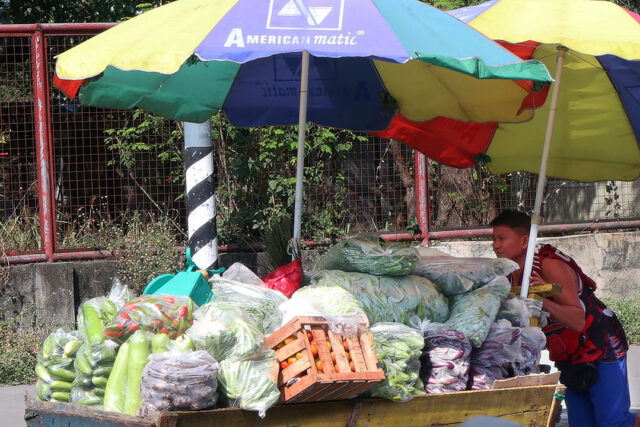
A MAN pushes a cart full of vegetables along Agham Road in Quezon City on March 6, 2026. — PHILIPPINE STAR/MIGUEL DE GUZMAN

By Vonn Andrei E. Villamiel, Reporter

THE Department of Agriculture (DA) said on Tuesday that without government interventions, prices of key agricultural commodities could spike by about 20% to 60% if crude oil prices surge to a 180-day average of $200 per barrel.

Agriculture Secretary Francisco P. Tiu Laurel, Jr. said at a Senate hearing on Tuesday that the projected increase in food prices is largely driven by higher input costs, especially fertilizer and fuel, which are critical to farm production.

“Agriculture and fisheries are especially exposed. Fuel powers farm machinery, irrigation, fishing operations, transport, and post-harvest systems, and when fuel prices rise, costs ripple through the supply chain to consumers,” he said.

Agriculture Assistant Secretary U-Nichols A. Manalo told the hearing that the DA’s latest monitoring data showed significant increases in prices of fuel-derived fertilizer.

Mr. Manalo said the average price of prilled urea rose by 17.15% to P1,948.01 per bag last week from P1,662.84 at the end of December, while granular urea prices increased by 18.88% to P1,969.03 from P1,656.28.

Based on DA simulations, under a “worst-case” scenario that assumes 180 days of infrastructure disruption and crude oil prices at $200 per barrel, farmgate prices of major commodities could double, and retail prices could increase by as much as 60%.

For local well-milled rice, farmgate prices could more than double to P39.72 per kilo from a prewar baseline of P19.53, while retail prices may increase 49.15% to P67.12 per kilo from P45.

Under the same scenario, pork (ham) farmgate prices could jump by 86.6% to P345.19 per kilo from a baseline of P185, with retail prices increasing by 59.5% to P558.10 per kilo from P350.

Chicken prices may also surge, with farmgate prices rising by 96.7% to P199.64 per kilo from P101.50, and retail prices climbing 62.3% to P324.64 from P200.

The DA said retail prices of key vegetables such as tomato, eggplant, cabbage, and carrots could also increase by around 20% under the same scenario.

“As of the moment, technically, [prices] are still in the pre-conflict scenario. In rice, I personally think it will increase until August this year. Pork will not increase for the moment because there is a lot of imported supply in cold storage,” Mr. Laurel said.

While consumers have yet to feel a substantial surge in prices, the agency said costs could accelerate by midyear, particularly during the lean season starting in August and through the next harvest, when elevated input prices would weigh on supply.

Meanwhile, the DA said it is implementing measures to mitigate the impact of rising input costs and prevent a sharp surge in food prices.

“[One of the DA’s priorities is to] strengthen domestic production by supporting key crops, distributing certified and climate-resilient seeds, and improving extension services,” Mr. Laurel said.

He added that the agency is also working to ease input costs through fuel subsidies, the promotion of biofertilizers and organic alternatives, and the diversification of fertilizer sources.

“We will be releasing our budget of P10 billion under the Presidential Assistance for Farmers and Fisherfolk program. We will be giving P2,325 each to 4.175 million beneficiaries enrolled in the Registry for Basic Sectors in Agriculture,” Mr. Laurel said.

CAAP airport fees to drop starting April 1 amid fuel cost surge

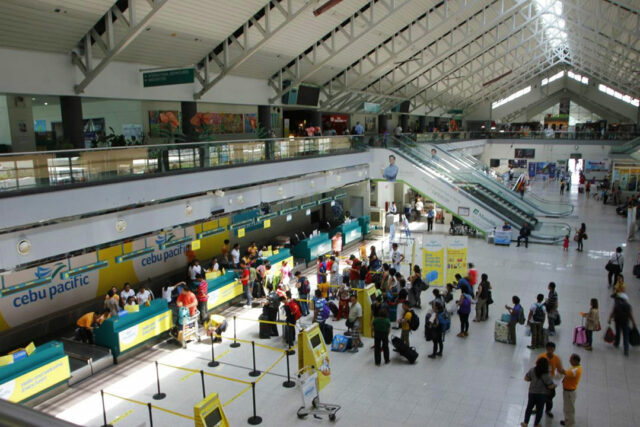
DAVAO INTERNATIONAL AIRPORT — FACEBOOK.COM/DOTRPH

By Ashley Erika O. Jose, Reporter

THE DEPARTMENT of Transportation (DoTr) will implement adjusted airport-related charges, including terminal fees and landing and takeoff fees, for airports operated by the Civil Aviation Authority of the Philippines (CAAP) starting April 1, amid rising fuel prices.

“In order to help passengers and airlines, and to stabilize airfares, we are going to reduce terminal fees as well as landing and takeoff fees,” Transportation Acting Secretary Giovanni Z. Lopez said during a media briefing on Tuesday.

Passenger service charges (PSC), or terminal fees, imposed on departing passengers will be reduced by up to P200 starting April 1 for three months, he said.

CAAP said this will reduce PSC at international airports to P700 from P900 for international flights, while lowering the domestic PSC for flights departing from international airports to the P150-P200 range from the current P350.

CAAP said PSC will be lowered to the P150-P200 range from the current P300 for passengers departing from principal class 1 airports. Those departing from principal class 2 airports will see PSC cut in half to P100 from the current P200, while PSC for those leaving via community airports will be reduced to P50 from P100.

The measure aims to cushion the anticipated rise in airfares in April after the Civil Aeronautics Board (CAB) raised the passenger fuel surcharge to Level 8 for the first half of April, the highest level in two years.

“This will be effective starting April 1, and will be effective for three months after our first assessment,” Mr. Lopez said, noting that the reduction may be extended subject to the agency’s assessment.

The PSC reduction will take effect for three months beginning April 1, regardless of whether jet fuel prices go down, he added.

“We recognize the challenges brought by the ongoing regional tension and its impact on passengers and the aviation industry. CAAP is implementing reductions in passenger service charges and aeronautical fees to provide immediate relief and support, ensuring that air travel remains accessible during these difficult times,” CAAP Director General Raul L. del Rosario said in a separate media release.

According to monitoring by the International Air Transport Association, jet fuel prices climbed 12.6% week on week to $197 per barrel as of March 20. On a yearly basis, jet fuel prices surged by 118%, data from the airline trade association showed.

The DoTr also ordered the reduction of navigation charges, such as landing and takeoff fees, by up to P5,000 for CAAP-run airports.

Landing and takeoff fees are charges levied for the use of airport facilities and services during aircraft landings and takeoffs.

“Under the modified rates, the aeronautical fees, including the landing and takeoff, will be decreased to nearly 50% overall, or as high as approximately P5,000 per landing,” CAAP said.

Based on a CAAP memorandum issued in April 2025, the current landing and takeoff fees are based on the maximum takeoff weight (MTOW) of the aircraft. For international flights, the minimum fee is $260 for an aircraft weighing up to 50,000 kilograms, while for domestic flights, the minimum rate is P54 per 500 kilograms for an aircraft weighing up to 50,000 kilograms.

Earlier this week, local airlines announced reductions in flight frequencies and the temporary suspension of some services.

On Friday, flag carrier Philippine Airlines (PAL) announced the temporary suspension of its flights between Manila and select Middle East destinations, such as Manila-Dubai-Manila, Manila-Doha, and Doha-Manila, until April 30.

“This precautionary measure is being taken considering the security situation affecting parts of the Middle East and the resulting operational uncertainties in certain regional airspace corridors and airport operations,” PAL said.

On Monday, Cebu Pacific said it will recalibrate its network, including reducing flight frequencies and canceling selected routes due to the ongoing Middle East conflict, noting that these changes are driven by the impact of the crisis on global fuel prices.

The airline suspended five routes — Davao-Bangkok, Iloilo-Bangkok, Iloilo-Singapore, Singapore-Iloilo, and Clark-Hanoi-Clark — until October 2026. It also reduced weekly services for selected domestic and international routes from April to October.

The airline’s decision to reduce flight frequencies and suspend some flights may be related to the lack of fuel supply, said Nigel Paul C. Villarete, a senior adviser on public-private partnerships at the technical advisory group Libra Konsult.

“But it’s probably more of the higher costs of maintaining these flights which could be served by a reduced frequency. Airlines know their numbers and know if and when the passenger’s existing volume can be carried by less frequencies of flights,” he said.

Energy Secretary Sharon S. Garin said in a separate briefing on Tuesday that airlines have had “few glitches” in orders due to changes in their supplier countries.

“But so far, we have met them and they have assured us that they are okay. I think the issue is on the price, the constraint on the price puts pressure on the operations of the companies,” she said when asked about the possibility of a lack of jet fuel supply.

Investors in ‘very risk-off mode’ as oil prices stay elevated — PSE chief

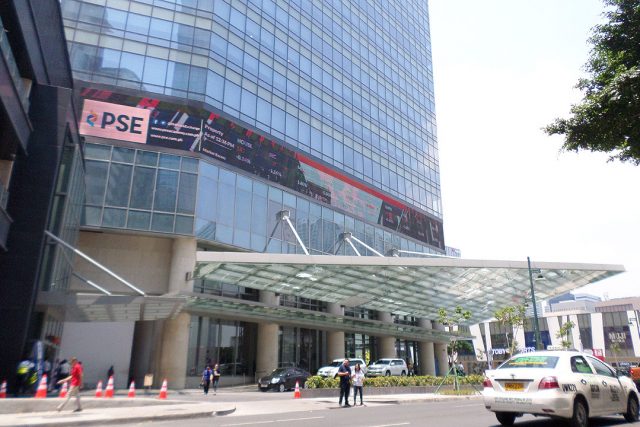
BW FILE PHOTO

PHILIPPINE STOCK EXCHANGE (PSE) President Ramon S. Monzon said investors are in a “very risk-off mode” amid the Middle East conflict, adding that oil prices, currently at $131.97 per barrel, would need to fall to around $80 to signal a return to market stability.

“I think we need to see oil back at the $80 level… When the oil starts going down from $100 to $80, I think it will deliver a strong message to the market that the conflict has somewhat subsided and there will be stability in oil prices,” he said on the Money Talks with Cathy Yang program on One News on Tuesday.

Fuel prices in Metro Manila are set to increase starting March 24, with gasoline rising by P8 to P12 per liter, diesel by P15 to P18 per liter, and kerosene by P12 to P22 per liter. These adjustments will bring diesel prices to as high as P144.20 per liter and gasoline to P102.50 per liter. Kerosene is expected to reach up to P165.79 per liter.

“I think it’s a very risk-off mode,” Mr. Monzon said.

“I hope yesterday (Monday) was an exaggerated fear or anxiety by investors. But as we all know, [US President Donald J.] Trump has come out with a statement that he and Iran leaders are talking about halting hostilities. If that is true, or that really holds, I think the damage to our market would be transitory, not permanent,” he added.

On Monday, the PSE index (PSEi) slid by 1.98% or 119.44 points to close at 5,899.18, while the broader all-shares index declined by 2.04% or 68.28 points to end at 3,276.59.

This marked the PSEi’s worst close so far this year and its lowest finish in nearly four months, or since it ended at 5,887.58 on Dec. 4.

Despite ongoing challenges, the PSE chief cited strong aggregate corporate earnings growth among index companies last year, highlighting potential upside for the market.

He also expressed cautious optimism on the PSEi, noting that while the flood control corruption scandal has eroded investor trust, resilient initial public offering (IPO) performances suggest the impact has not peaked.

“In spite of the market being down 2.5% from last year, the price of Maynilad is still way above their IPO price… So I don’t — I think it’s peaked in that sense. But now we have to get over this new challenge, this new headwind, which is the Iran crisis,” he said.

Mr. Monzon also said the recent corruption scandal has been overshadowed by the Iran crisis, stressing that strong governance is essential across markets, particularly at the government level rather than only in the corporate sector.

“I think Filipinos are still waiting for really concrete action on the results of the investigation. They need to see more criminal cases filed. That’s what everybody’s hoping for,” he added.

The flood control issue has weighed on the stock market, which declined in 2025. The PSEi ended lower on the final trading day of 2025 at 6,052.92, down by 7.29% or 475.87 points from its end-2024 finish of 6,528.79.

On Tuesday, the PSEi rose by 0.62% or 37.02 points to close at 5,936.20, while the broader all-shares index gained by 0.56% or 18.64 points to end at 3,295.23. — A.G.C. Magno with inputs from Sheldeen Joy Talavera

DMCI to keep capex plans despite higher oil costs

FORTIS Residences is a project of DMCI Homes’ premium brand, DMCI Homes Exclusive. — COMPANY HANDOUT

DMCI HOLDINGS, Inc. executives said capital expenditures (capex) will remain unchanged despite higher oil prices linked to the Middle East conflict, although the company may review operating costs and project timelines.

“I think the committed capex will just keep going, no change in plans,” Isidro Consunji, DMCI Holdings chairman and chief executive officer, said during a briefing on Tuesday.

DMCI earlier said it would increase its capex budget for its subsidiaries to P24.6 billion this year, up 11% from P22.2 billion in 2025, to support residential construction, expand off-grid power capacity, and upgrade cement operations.

DMCI Holdings Executive Vice-President and Chief Financial Officer Herbert Consunji, who also serves as president and chief executive officer of Concreat Holdings Philippines, said the capex budget has already been finalized and will be implemented as planned.

“[But] of course, the operating costs will now be revisited because the price is different now,” he said, speaking for Concreat Holdings.

“It’s not just a matter of price, it’s a matter of availability. You may have money to buy it, but it’s not available because other suppliers have downgraded,” Mr. Consunji added.

He said that as costs are reviewed, funding plans will also be reassessed. “Everything will be reset — parang ganon. But we’ll never know what’s going to happen.”

DMCI allocated P2.9 billion for Concreat Holdings Philippines this year for plant capacity improvements, operational upgrades, and preventive maintenance.

In 2025, Concreat Holdings Philippines posted a net loss of P1.9 billion due to higher financing expenses and lower average selling prices, although the company has implemented operational improvements to support recovery.

Meanwhile, DMCI Homes President Alfredo R. Austria said some project launches may be delayed if current challenges persist.

“There will be a possible delay on the launches. Only the launch of the new projects might be delayed. But for existing projects, we have to push through because it’s already committed,” he said.

For 2026, DMCI Holdings will allocate P15.5 billion, or 65% of its capex, to its property arm DMCI Project Developers, Inc. (DMCI Homes).

DMCI Homes’ capex budget this year will fund ongoing and new project construction for four residential developments in Baguio, Laguna, Quezon City, and Taguig, covering premium, leisure, and mid-market segments, as well as land banking, depending on market conditions.

Cristina Gotianun, DMCI Holdings vice-chairman and Semirara Mining and Power Corp. president, said the company has implemented fuel-saving programs at the Semirara power plant, particularly during startup.

“So we are positioned very well to reduce our fuel, as well as at the mine site. We’ve always had this, because fuel is the single biggest cost of our operations. So we’ve always been very cautious and diligently putting all the programs in place to conserve fuel,” she said.

DMCI allocated P1.9 billion for Semirara Mining and Power Corp. this year, mainly for power plant maintenance. Last year, Semirara Mining and Power Corp. remained the group’s largest contributor with P7.3 billion, down 33% from P11.1 billion, due to softer energy prices, reduced shipments, and higher production costs.

Record coal production, power generation, and energy sales helped offset the impact of price normalization.

For 2026, DMCI has also earmarked about P3.3 billion for DMCI Power to fund 44 megawatts (MW) of new capacity in Palawan, Occidental Mindoro, and Calapan; P675 million for DMCI to re-fleet construction equipment and meet project requirements; and P300 million for DMCI Mining Corp.’s mine development initiatives.

On Tuesday, DMC shares rose by 1.05% to close at P9.60 each. — Alexandria Grace C. Magno

Aviation regulator issues demand letter to PHL AirAsia over unpaid fees

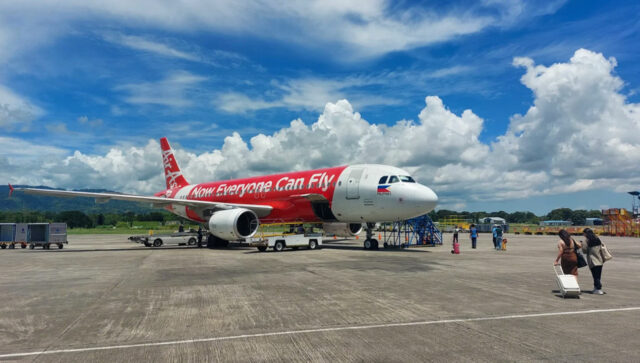
NEWSROOM.AIRASIA.COM

THE Civil Aviation Authority of the Philippines (CAAP) has directed low-cost carrier Philippines AirAsia, Inc. to settle unpaid obligations, including airport fees and unremitted passenger charges totaling P833.66 million.

“The Civil Aviation Authority of the Philippines confirms that it has issued a collection letter to AirAsia Philippines regarding its outstanding account, as part of its regular business processes,” CAAP said in an advisory on Tuesday.

In a final demand letter addressed to AirAsia Philippines President and General Manager Suresh Bangah, through Chief Financial Officer Lee Chue Yee, CAAP ordered the airline to settle its outstanding financial obligations.

CAAP said AirAsia Philippines’ obligations stem from unpaid navigation charges, aircraft landing and parking fees, passenger service charges (PSCs), and other airport-related fees.

AirAsia Philippines’ obligations include unremitted domestic PSCs, or terminal fees, CAAP said in its letter. It noted that this also includes amounts collected for expired and unutilized tickets, which are held in trust for CAAP’s benefit.

“As reflected in our official records, AirAsia’s unsettled accounts receivable reached P833.656 million as of Dec. 31, 2025, net of all payments made up to Feb. 13, 2026, and exclusive of applicable penalties and interest for delayed remittances,” it said.

BusinessWorld sought comment from AirAsia Philippines, but the company declined to comment.

CAAP added in its letter that AirAsia has failed to fully remit domestic PSC collections despite prior correspondence and subsequent follow-ups.

“AirAsia has failed to fully remit DSPC collections, including those derived from expired and unutilized tickets. It is emphasized that such collections constitute a trust fund held for the benefit of CAAP,” it said. — Ashley Erika O. Jose

PXP unit to convert P561 million in debt into new shares for FEPCO

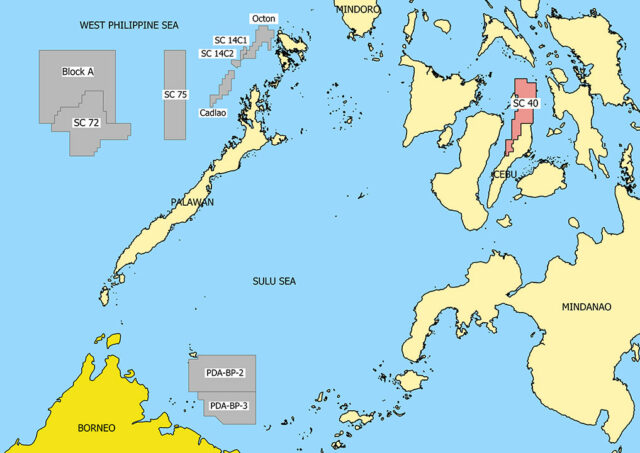
FEI holds a 100% operating interest in Service Contract (SC) No. 40 in Northern Cebu, a key asset within PXP’s portfolio. — PXPENERGY.COM.PH

FORUM EXPLORATION, INC. (FEI), an indirect subsidiary of Pangilinan-led upstream oil and gas exploration firm PXP Energy Corp., will convert P561 million of its debt into new common shares to be issued to Forum Energy Philippines Corp. (FEPCO).

In a regulatory filing on Tuesday, PXP said FEI will issue 561 million new common shares at P1 each to FEPCO as part of the conversion.

“The conversion is intended to strengthen FEI’s balance sheet and improve its capital position by reducing outstanding obligations,” PXP said.

FEI is an indirect subsidiary of PXP through its 98.08% effective interest in Forum Energy Ltd., which holds a 100% interest in FEPCO.

Once completed, FEPCO will increase its ownership in FEI to approximately 91.65% of the total issued and outstanding shares, from 66.67%.

FEI holds a 100% operating interest in Service Contract (SC) No. 40 in Northern Cebu, a key asset within PXP’s portfolio.

SC 40, or the North Cebu Block, is located in the Visayan Basin, covering the northern part of Cebu Island and adjacent offshore areas in the Central Tañon Strait and the Visayan Sea.

Earlier this year, PXP said it continues to evaluate options to advance the block, including potential farm-in arrangements, subject to the finalization of commercial terms and funding considerations.

In 2025, PXP reported a wider core net loss of P50.2 million, from P33.3 million in the previous year, due to lower output from the Galoc Field, softer crude prices, and higher financing and foreign exchange-related charges.

Consolidated petroleum revenues fell by 16.9% to P49.8 million from P67 million, amid weaker crude prices.

At the local bourse on Tuesday, shares in the company rose by 3.81% to close at P3 each. — Sheldeen Joy Talavera

Former PLDT chief Napoleon Nazareno passes away at 77

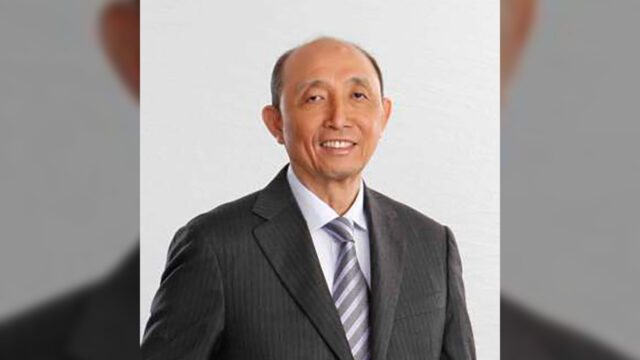
NAPOLEON L. NAZARENO — COMPANY.MERALCO.COM.PH

NAPOLEON L. NAZARENO, who served as president of PLDT Inc. and its unit Smart Communications, Inc., has died at 77.

Mr. Nazareno’s family announced his passing on Tuesday following a spontaneous intracranial hemorrhage, according to a Facebook post by his daughter, Apple Nazareno.

“Polly will be remembered for his kind heart, quiet strength, and remarkable vision. He devoted much of his life to helping shape the future of Philippine telecommunications and believed deeply in innovation, excellence, and making technology serve more people. He led with wisdom, integrity, and a strong sense of purpose, leaving behind a legacy that touched both family and country,” the post said.

His cremated remains will lie at Santuario de San Antonio Parish in Forbes Park, Makati, from March 25 to 27.

Mr. Nazareno retired as president and chief executive officer of PLDT and Smart in 2015. — Ashley Erika O. Jose

BTr partially awards T-bonds as Mideast war pushes up yields

BW FILE PHOTO

THE GOVERNMENT made a partial award of the dual-tranche Treasury bonds (T-bonds) it offered on Tuesday, even rejecting all bids for the shorter tenor, as global markets remained volatile due to the worsening war in the Middle East.

The Bureau of the Treasury (BTr) raised just P5.565 billion via its dual-tenor T-bond offer, below its goal to raise up to P40 billion through the auction, with total bids for both tenors reaching only P27.118 billion.

Broken down, the Treasury rejected all bids for the reissued seven-year bonds it placed on the auction block despite total bids reaching P13.358 billion, within the P10-billion to P20-billion target.

Had the government made a full award, the papers, which have a remaining life of three years and one month, would have fetched an average rate of 6.819%, with bids ranging from 6.65% to 6.895%.

This would have been 86.5 basis points (bps) higher than the 5.954% fetched for the series’ last award on Nov. 28 2024 and also 31.9 bps above the 6.5% coupon for the issue.

The average yield would also be up by 20.7 bps from the 6.612% fetched for the same bond series and 37.3 bps higher than the 6.446% quoted for the three-year bond, the benchmark tenor closest to the remaining life of the issue, at the secondary market before Tuesday’s auction, based on PHP Bloomberg Valuation Service (BVAL) Reference Rates data provided by the BTr.

Meanwhile, for the reissued 25-year T-bonds, the government borrowed just P5.565 billion via the tenor, below the P10 billion to P20 billion goal, even as tenders reached P13.76 billion.

The notes, which have a remaining life of 23 years and 10 months, were awarded at an average rate of 7.4%, with the BTr only accepting bids carrying this yield.

The average rate of the issue jumped by 70 bps from the 6.577% fetched for the series’ last award on Feb. 24 and was also 102.5 bps above its 6.375% coupon.

This was likewise 13 bps higher than the 7.27% fetched for the same bond series and 15.3 bps above the 7.247% quoted for the 25-year bond at the secondary market before Tuesday’s auction, PHP BVAL Reference Rates data showed.

“The back-and-forth headlines on the Middle East conflict continue to dampen investor appetite. As a result, there is a lack of liquidity in the market. Oil prices continue to drive upward movement in yields,” a trader said in a text message.

Expectations of second-round inflationary pressures due to the war also led to weaker demand for the T-bonds, Rizal Commercial Banking Corp. Chief Economist Michael L. Ricafort said in a Viber message.

US President Donald J. Trump’s postponement of the bombing of Iran’s power grid proved no panacea for investors worried about the ramifications of the Middle East war, Reuters reported.

US Treasury yields pushed higher and the dollar regained lost ground, in a retracement of the relief rally that swept markets overnight after Mr. Trump added five days to his Saturday ultimatum for Iran to reopen the Strait of Hormuz within 48 hours, citing “productive” talks Tehran. 

US Treasury yields rose on Tuesday after a sharp fall overnight, as little clarity over an end to the conflict left traders pricing in a more hawkish global interest rate outlook.

The two-year yield jumped 7 basis points to 3.9015% in Asia, while the benchmark 10-year yield was up more than 4 bps to 4.3797%.

The inflationary pulse from energy has seen investors abandon hope for further monetary easing globally and swing to pricing in rate hikes across most developed nations.

Tuesday’s T-bond auction was the last offering of government securities for this month. The government raised P142.358 billion from the domestic market in March, below the P248-billion plan, as the escalating Middle East war spooked investors, causing weaker demand and pushing bond yields higher.

The government borrows from local and foreign sources to help fund its budget deficit, which is capped at P1.647 trillion or 5.3% of gross domestic product this year. — Aaron Michael C. Sy with Reuters

Firms, policymakers urged to rethink strategy as ‘Global 2.0’ takes hold

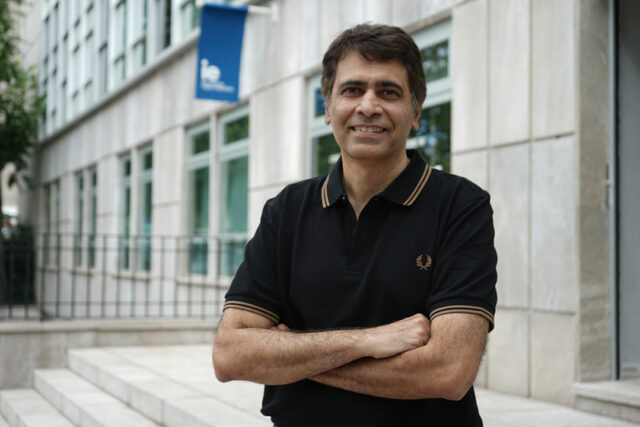
IKHLAQ SIDHU, dean of IE School of Science and Technology in Madrid, Spain.

BUSINESSES and policymakers must rethink how they operate to stay competitive in “Global 2.0,” a new era where resilience matters more than cost efficiency and artificial intelligence (AI) becomes part of everyday infrastructure.

According to Navigating Technological and Geopolitical Transformation, a report from the inaugural IEX Berkeley Collider Summit co-organized by the IE School of Science & Technology and UC Berkeley’s International Co-Lab, the traditional playbook of globalization is being fundamentally “rewired.”

While the previous era prioritized efficiency and cost optimization, the report said the current landscape is increasingly shaped by differing regulations, national priorities, and tighter control over key resources and technology.

For businesses, this means resilience is no longer just a buzzword but a practical requirement in a world where capital, data, and talent move through channels shaped by regional politics rather than fully open markets.

In response to queries on practical execution, Ikhlaq Sidhu, dean of IE School of Science and Technology, said globalization is not retreating but being redesigned.

“The shift from efficiency to resilience means companies must continuously adapt to changes in AI, supply chains, and geopolitics, rather than optimize for a fixed model. For companies in Asia-Pacific, resilience means diversifying supply chains, understanding multiple regulatory systems, and building the ability to reconfigure operations quickly as conditions change,” he told BusinessWorld via e-mail.

AI AS PHYSICAL INFRASTRUCTURE
A key takeaway for the Philippines, particularly its information technology and business process management (IT-BPM) and manufacturing sectors, is the shift of AI from cloud-based software into embedded, real-world infrastructure.

The report said AI is becoming an integral part of logistics, healthcare, robotics, and energy systems.

Mr. Sidhu said this shift will change how technology is valued and delivered.

“AI is no longer something you buy as software — it’s becoming embedded into products, infrastructure, and operations. That makes standalone software harder to sell. In sectors like IT-BPM and manufacturing, value will shift to integrating AI into real-world systems — combining software, hardware, and human expertise to deliver outcomes at scale. The competitive advantage will come not just from using AI, but from embedding it deeply into workflows and going beyond what AI alone can do,” he said.

The report added that the next wave of innovation will come from the convergence of semiconductors, autonomous systems, and digital twins — areas that may require companies to rethink investments toward hardware-software integration and sensor-based systems.

CLOSING THE ‘AGENCY’ GAP
The report also pointed to a widening talent gap between “pedigree” (credentials) and “agency” (the ability to lead and act in uncertain conditions). As AI spreads across industries, traditional credentials alone are no longer enough.

Mr. Sidhu said talent must focus on human judgment and real-world impact to become more valuable in the job market.

“The bar for talent is rising. It’s no longer enough to have credentials — people need the ability to do what AI cannot. Companies need to move learning out of the classroom and into real projects — working with AI, but going beyond it with judgment, creativity, and context. Scale is the new innovation,” he said.

Trond Petersen, associate dean at UC Berkeley, said that institutions must shift toward building “interdisciplinary capability and navigability.”

To address these challenges, the report identified five strategic priorities: promoting adaptable, skills-based education; managing data across different regulatory systems; strengthening cross-border collaboration; improving energy efficiency in computing; and designing systems that can work seamlessly across global markets.

The report also noted that success in innovation is no longer measured by invention alone, but by real-world impact at scale.

“The challenge is not just to innovate, but to ensure systems can work together across boundaries,” said Leticia Cabral Calvillo, executive director of the IEX Research Xcelerator at IE University. — Arjay L. Balinbin

ADVERTISEMENT
ADVERTISEMENT