Home Blog Page 115

Business groups back law allowing fuel tax cuts

BUSINESS GROUPS welcomed the signing of a law that authorizes the President to suspend or reduce the excise tax on petroleum products, saying exporters require a cushion against the impact of rising fuel prices.

In a statement on Thursday, Philippine Exporters Confederation, Inc. President Sergio R. Ortiz-Luis, Jr. said the government must ensure implement the law in a timely and transparent manner.

“We hope that clear guidelines will soon be issued. Predictability is important so businesses can plan accordingly and pass on the benefits efficiently to consumers,” he said.

President Ferdinand R. Marcos, Jr. on Wednesday signed Republic Act (RA) No. 12316, which allows the President, upon recommendation of the Development Budget Coordination Committee, and in coordination with the Energy Secretary, to suspend or reduce fuel excise taxes if the Dubai crude benchmark hits or exceeds $80 per barrel for one month.

Mr. Ortiz-Luis said the high oil prices caused by the Iran war have had a ripple effect across supply chains.

He added that some of the association’s members are looking to shorter work hours due to higher input costs.

Allowing the President to suspend or reduce excise tax on fuel would help reduce operating costs; prevent further price pass-through; and protect jobs, Mr. Ortiz-Luis said.

“For exporters, especially MSMEs, transport and logistics costs are a major component of overall expenses. Any relief on fuel costs will help preserve competitiveness in already volatile global markets,” he added.

The signing of the RA 12316 followed the declaration by Mr. Marcos on Tuesday of a State of National Energy Emergency.

The United Portusers Confederation of the Philippines, Inc. (UPC) said both measures will help stabilize logistics costs and protect the country’s trade competitiveness.

UPC President Ma. Flordeliza C. Leong called such action “timely lifelines that can temper cost surges and prevent further disruption across the supply chain.”

She said that temporarily easing excise taxes for fuel would help reduce transport and handling costs.

The Financial Executives Institute of the Philippines (FINEX) called for full transparency on the government’s emergency fuel procurement, including, the recently announced P20-billion diesel purchase program.

It also urged the government to implement pricing benchmarks, safeguards against overpricing, and post-audit mechanisms will ensure public trust.

“Emergency measures should be assessed not only for energy savings, but also for their second-round effects on jobs, household income, and business viability,” FINEX said in a statement.

The American Chamber of Commerce of the Philippines called for advancing priority reforms such as amendments to the Electric Power Industry Reform Act (EPIRA), and strengthening the energy regulatory framework.

AmCham also cited the need to accelerate renewable energy development, improve grid infrastructure, and encourage greater private sector participation. — Beatriz Marie D. Cruz

Stocks sink as uncertainty weighs on markets

REUTERS

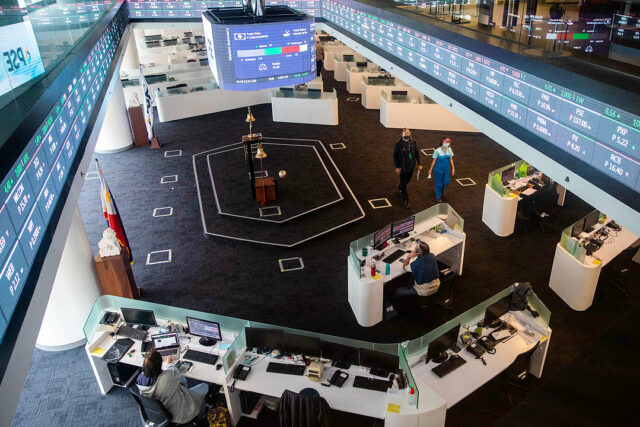
PHILIPPINE SHARES retreated on Thursday as investors cashed in on the market’s two-day climb and amid continued uncertainty over the conflict in the Middle East.

The benchmark Philippine Stock Exchange index (PSEi) fell by 0.99% or 59.97 points to close at 5,984.20, while the broader all shares index went down by 0.65% or 22.05 points to end at 3,334.11.

“The local market pulled back as investors took profits following two straight days of rallying. This comes as Iran stated that it has no intention of holding talks with the US, blurring the possibility of the two reaching a resolution,” Philstocks Financial, Inc. Research Manager Japhet Louis O. Tantiangco said in a Viber message.

“The PSEi closed lower on Thursday due to profit taking and cautious sentiment amid the lingering impact of Middle East tensions, as well as the Bangko Sentral ng Pilipinas’ (BSP) decision to keep interest rates steady, which further weighed on the peso,” Unicapital Securities, Inc. Research Head Wendy B. Estacio-Cruz said in a Viber message.

Asian stocks slid in choppy trading while the oil rose on Thursday as investors treaded cautiously amid the dizzying pace of developments in the Middle East, with Iran saying it would weigh a US proposal to end the conflict, Reuters reported.

US President ​Donald J. Trump said Iran was desperate to make a deal while Iranian Foreign Minister Abbas Araghchi said there had been no dialogue or negotiations with the US, although various messages had been exchanged through intermediaries.

Meanwhile, the Monetary Board was scheduled to have its next policy review on April 23, but BSP Governor Eli M. Remolona, Jr. said they decided to hold a meeting on Thursday as the economic situation has drastically changed since they last met on Feb. 19.

At its review, the BSP kept the policy rate at 4.25%, with Mr. Remolona saying that adjusting their monetary settings would have limited effectiveness as the current inflation risks due to the war in the Middle East are largely supply-driven.

The peso weakened by 13 centavos to close at P60.23 against the greenback on Thursday from its P60.10 finish on Wednesday.

Majority of sectoral indices closed lower on Thursday. Financials fell by 1.35% or 26.15 points to 1,899.30; property sank by 1.28% or 25.60 points to 1,972.84; services dropped by 1% or 27.73 points to 2,731.65; holding firms retreated by 0.42% or 19.56 points to 4,590.55; and industrials went down by 0.34% or 30.65 points to 8,847.43.

Meanwhile, mining and oil climbed by 1.14% or 179.04 points to 15,874.93.

Decliners outnumbered advancers, 100 to 78, while 71 names closed unchanged.

Value turnover rose to P7.88 billion on Thursday with 1.65 billion shares traded from the P7.37 billion with 1.15 billion issues that changed hands on Wednesday.

Net foreign selling was at P135.29 million versus the P224.69 million in net buying in the previous session. — Alexandria Grace C. Magno with Reuters

China signals openness to talks on joint oil exploration with Philippines

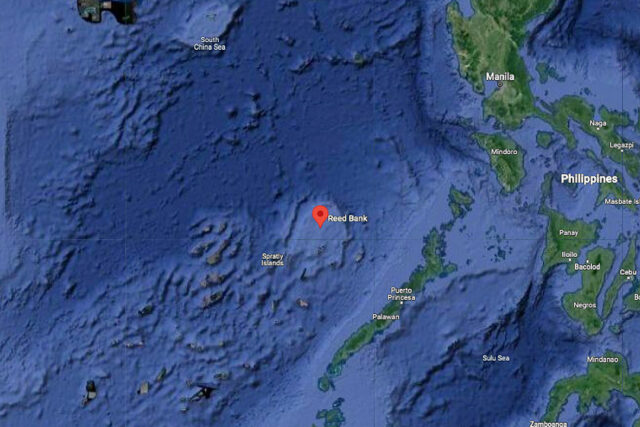
PHOTO FROM GOOGLE MAP

CHINA signaled it remains open to further discussions with the Philippines on joint oil and gas exploration in the South China Sea, a move that could revive stalled energy cooperation between the two countries amid rising concerns over global supply risks.

Beijing thinks setting aside disputes and pursuing joint development could help preserve peace and stability in the contested waters, Chinese Embassy officials in Manila said late on Wednesday.

“Setting aside differences and pursuing joint development is the right path to uphold peace and stability in the South China Sea and deliver benefits to countries in the region and their peoples,” Wei Guo, deputy spokesman of the embassy, said in a statement.

Mr. Wei said China and the Philippines have made “positive progress” in in‑depth discussions on joint oil and gas development in the disputed waters, adding that Beijing remains open to further dialogue “as long as the Philippines demonstrates sincerity.”

The remarks come after Philippine President Ferdinand R. Marcos, Jr. said earlier this week that his government was looking to revive talks on joint energy exploration with China, citing heightened risks to global oil supplies from conflicts in the Middle East, including the Israel‑Iran war, as a possible impetus for renewed negotiations.

He said he is open to resuming negotiations with China on a possible joint oil exploration with China at Reed Bank.

Foreign Affairs Secretary Maria Theresa P. Lazaro later confirmed that exploratory talks could be “forthcoming,” though she said discussions have not formally restarted.

The idea of joint oil and gas development in the South China Sea resurfaced in 2023 following a meeting between Mr. Marcos and Chinese President Xi Jinping, after years of diplomatic tension over maritime claims and security incidents in the area.

Previous negotiations collapsed after the Philippine Supreme Court voided a joint seismic survey agreement involving China and Vietnam, citing constitutional and legal concerns, particularly provisions that appeared to undermine the Philippines’ sovereign rights over its exclusive economic zone.

Any renewed talks could face similar scrutiny. The Philippine Constitution mandates that the country retain full control and supervision over the exploration and development of natural resources, a hurdle that has previously stalled joint agreements with foreign partners.

Malacañang said Manila remains open to renewed dialogue, pushing back against suggestions from Beijing that the Philippines needed to demonstrate sincerity.

“In all circumstances, on all occasions, the Philippines is always sincere in dialogue and negotiation,” Palace Press Officer Clarissa A. Castro told reporters at a separate briefing.

She added that any engagement with China on energy cooperation would ultimately be evaluated based on national interest. If there are negotiations, “the President will not oppose that.”

The South China Sea remains one of Asia’s most volatile geopolitical flashpoints. China claims almost the entire waterway, a position rejected by a 2016 ruling by a United Nations‑backed arbitral tribunal that voided Beijing’s sweeping claims. China has refused to recognize the ruling.

Relations between Manila and Beijing have soured in recent years due to repeated confrontations between Chinese and Philippine vessels near disputed features, prompting Manila to deepen defense ties with the US and other allies.

Also on Thursday, Energy Secretary Sharon S. Garin said the Philippines has received the first delivery of government‑procured imported fuel, bolstering its energy inventory as global supply risks keep prices elevated.

“Government-procured diesel has arrived in Luzon,” she said in a Facebook post. “This is the first delivery and there will be more deliveries in the coming days or weeks.”

The Philippines has been scrambling to ensure fuel supply as the war involving Iran disrupts global oil trade. The country has about 45 days’ worth of oil inventory, according to the Energy department.

The Strait of Hormuz, which carries roughly a fifth of the world’s oil shipments has been shut due to an Iranian blockade, compounding supply pressures.

In a related development, Mr. Marcos said the Philippines has moved closer to extending the life of its largest natural gas asset after a new well in the Malampaya gas field showed stronger‑than‑expected output.

In a video message, the President said Camago‑3 well had been successfully drilled and tested, producing as much as 60 million standard cubic feet of natural gas per day. The test results exceeded initial expectations and could provide additional supply to support power generation and reduce reliance on imported fuels.

The Camago‑3 drilling marks the second major milestone under the $893-million Malampaya Phase 4 development program, aimed at sustaining gas production from the offshore field northwest of Palawan.

‘THREAT ACTORS’
Meanwhile, Philippine Defense Secretary Gilberto C. Teodoro, Jr. called for closer security cooperation with European nations, urging greater alignment in defense policies as Manila seeks to broaden its alliances amid heightened tensions with China.

Speaking at the Paris Defense and Strategy Forum on Wednesday, Mr. Teodoro said the Philippines and Europe face increasingly interconnected security challenges that require coordinated responses to uphold the international rules‑based order.

“We should be as creative as possible to converge and to work towards convergence to address threats and mitigate vulnerabilities,” he said in his keynote address, according to a transcript released by the Department of National Defense on Thursday.

“The threat actors that we face are increasingly intertwined,” he added, citing shared security concerns across Europe and the Indo‑Pacific involving “actors of similar persuasion.”

His remarks come as the Philippines seeks to deepen security engagement with the North Atlantic Treaty Organization, including discussions on aligning military capabilities to counter risks undermining global stability.

Mr. Teodoro’s visit to France also coincides with efforts by Manila and Paris to finalize a visiting forces agreement, which would enable greater military cooperation.

The Philippines has stepped up alliance‑building as it remains locked in a maritime dispute with China over competing claims in the South China Sea. The waterway is a major global trade route and is believed to hold significant energy resources.

Beyond its alliance with the US, Manila has expanded defense ties with Australia, Japan and New Zealand, with similar talks ongoing with the UK.

Mr. Teodoro said conflicts in the Middle East and Russia’s invasion of Ukraine underscore the need for cross‑regional cooperation, noting that global instability affects even countries not directly involved in the fighting. — Adrian H. Halili, Kenneth Christiane L. Basilio, Chloe Mari A. Hufana and S.J. Talavera


Duterte eyes SC lawsuit as House pushes ouster

Vice President Sara Duterte arrives at the Department of Justice, May 9, 2025. — PHILIPPINE STAR/RYAN BALDEMOR

By Chloe Mari A. Hufana, Reporter

LAWYERS aligned with former President Rodrigo R. Duterte’s Partido Demokratiko Pilipino-Laban (PDP-Laban) have begun drafting potential legal challenges to impeachment proceedings against Vice-President Sara Duterte-Carpio, as a House of Representatives committee presses ahead with gathering evidence and summoning witnesses.

Pro‑Duterte lawyers James Patrick “Jimmy” R. Bondoc and Israelito P. Torreon said they prepared a preliminary “mini-draft” of a possible petition to the Supreme Court (SC) questioning actions taken by the House Justice Committee during its opening hearing on the impeachment case.

The draft focuses on whether the panel exceeded its constitutional mandate by issuing subpoenas and conducting evidentiary proceedings that critics say resemble a trial.

“We have not been tasked by anyone to challenge this before the Supreme Court,” Mr. Bondoc told a livestreamed briefing on Thursday. “We did this in the interest of justice.”

He noted that based on lawmakers’ public statements, it would be “very easy to rebut” the allegations raised against Ms. Duterte.

Mr. Bondoc characterized the draft petition as an “academic exercise,” but said procedural violations were difficult to ignore. “We wrote it because it was too easy to write,” he said. “The violations are too blatant.”

PDP-Laban and its legal allies argue that the House Justice Committee has overstepped its role by proceeding beyond a determination of probable cause. Under the Philippine Constitution, impeachment trials are conducted exclusively by the Senate sitting as an impeachment court.

“Only the Senate sitting as an impeachment court can conduct a trial,” Manuelito R. Luna, a former commissioner of the Presidential Anti‑Corruption Commission, told the same briefing in Filipino. He added that the House body’s actions could be struck down by the Supreme Court for grave abuse of discretion if formally challenged.

The House Justice Committee has moved into the evidentiary phase of the impeachment inquiry, issuing subpoenas for financial records and ordering multiple agencies to submit documents.

Lawmakers sought Ms. Duterte’s statements of assets, liabilities and net worth dating back to 2007, along with tax filings, corporate records linked to her business interests, and materials tied to an alleged threat against President Ferdinand R. Marcos, Jr.

Committee leaders said the documents are needed to determine whether there is sufficient basis to endorse the complaints to the full House for a vote. At least 106 lawmakers must support the complaints for the case to advance to the Senate.

The panel also summoned witnesses tied to alleged cash distributions for corrupt activities and officials involved in the management of confidential and intelligence funds, a central issue in the complaints.

The Vice-President skipped the opening hearing, with her legal team arguing that the House lacked authority to conduct proceedings akin to a trial. Committee leaders rejected the claim, framing the inquiry as a preliminary investigation under House rules.

The impeachment complaints accuse Ms. Duterte of misusing hundreds of millions of pesos in confidential funds, amassing wealth disproportionate to her income and plotting actions against senior government officials — allegations she has denied.

The proceedings unfold amid a widening political rift between the Duterte and Marcos camps ahead of the 2028 presidential race, heightening the stakes after a previous impeachment attempt was voided on constitutional grounds.

Transport regulator seeks 50% cut in PUV terminal rents

Passenger jeepneys are parked at the Tandang Sora Terminal in Quezon City, March 18, 2026. — PHILIPPINE STAR/MIGUEL DE GUZMAN

THE Philippines’ transport regulator has asked mall owners and property managers to temporarily cut rental fees for public utility vehicle (PUV) terminals by at least half, as surging fuel prices squeeze operators and trigger a fresh round of transport strikes.

The Land Transportation Franchising and Regulatory Board (LTFRB) said it has sent letters to owners and managers of commercial establishments hosting PUV terminals, urging them to reduce rental charges as a form of assistance to the public transport sector.

“We have already sent letters to as many owners and managers of establishments with PUV terminals to reduce the rental fees as a way of assistance to the public transport sector,” LTFRB Chairman Vigor D. Mendoza II said in a statement on Thursday.

The regulator said the request aims to help PUV operators manage mounting operational costs as global oil prices climb, driven by escalating tensions in the Middle East, including the war involving the US, Israel and Iran.

“The assistance that would be provided by establishment owners will greatly contribute to easing the financial strain currently experienced by the transport sector,” the LTFRB said, adding that lower rental costs could help prevent service disruptions.

Mr. Mendoza said the measure would also support the continued delivery of reliable and efficient public transport services, particularly for commuters affected by sporadic transport stoppages.

Fuel prices in the Philippines surged again this week, with pump prices rising by as much as P12 per liter for gasoline, P18 for diesel and up to P22 for kerosene.

As a result, diesel prices have climbed to as high as P144.20 per liter in some areas, while gasoline has reached P102.50 per liter. Kerosene prices have gone as high as P165.79 per liter, according to industry data.

To cushion the impact, the Department of Transportation (DoTr) and Department of Social Welfare and Development have rolled out fuel subsidies for PUV drivers and operators. 

Authorities said the aid is intended to stabilize transport services while global energy markets remain volatile.

Separately, the LTFRB and DoTr said they deployed 20 government service vehicles to ferry commuters affected by a nationwide transport strike.

Transport groups including Piston, Manibela, transport network vehicle service drivers, UV Express operators, truckers and motorcycle taxi riders are staging a two‑day strike from March 26 to 27 to protest the government’s response to rising fuel prices.

The groups have called for additional fuel subsidies, fare increases and policy relief, warning that sustained price hikes could force smaller operators to shut down operations altogether.

Officials said discussions with transport groups and other stakeholders are continuing as authorities seek short‑term relief measures while monitoring global oil market developments. — Ashley Erika O. Jose

Senators weigh December onion import ban

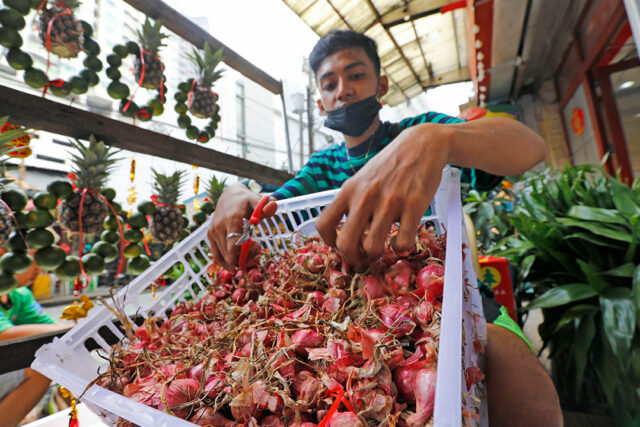
RED ONIONS are sold at a market in Manila in this file photo. — PHILIPPINE STAR/WALTER BOLLOZOS

PHILIPPINE SENATORS are considering tighter limits on onion imports, including a possible automatic ban every December, as lawmakers question the need for large import volumes despite near self‑sufficiency in local production.

During a Senate Agriculture Committee hearing on Thursday, Senator Francis Pancratius N. Pangilinan cited Philippine Statistics Authority (PSA) data showing the country has an onion self‑sufficiency rate of 92.4%.

Onion imports should be limited to what the country needs, Mr. Pangilinan said, arguing that excessive imports are contributing to falling farmgate prices and hurting local growers.

The Senate is probing the sharp decline in onion prices paid to farmers. Senator Lorna Regina “Loren” B. Legarda, who sponsored the resolution, proposed an automatic import ban every December to prevent market oversupply and protect farmers ahead of the peak harvest season from January to April.

PSA data presented at the hearing showed onion production at 308,661 metric tons (MT) in 2025, while imports reached 94,000 MT.

Senator Panfilo M. Lacson cited the Philippine Onion Industry Roadmap, which sets self‑sufficiency at 279,000 MT, arguing that imports might be unnecessary.

The Department of Agriculture (DA) disputed the figures. Assistant Secretary U‑Nichols A. Manalo said local output stood at 245,988 MT against annual consumption of 267,143 MT, leaving a deficit of up to 42,292 MT when seeds and waste are factored in. 

Mr. Lacson urged the PSA and DA to reconcile data, warning that inconsistent figures complicate policy decisions.

Jayson H. Cainglet, executive director of the Samahang Industriya ng Agrikultura, called for halting import clearances every December to shield local producers from foreign competition. — Kaela Patricia B. Gabriel

Frontline services fully operational

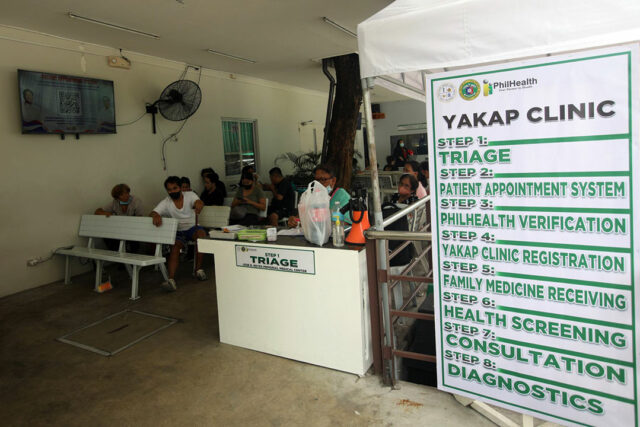
THE Yaman ng Kalusugan Program (YAKAP) at Jose Reyes Memorial Medical Center in Santa Cruz, Manila. — PHILIPPINE NEWS AGENCY/YANCY LIM

MALACAÑANG vowed on Thursday that emergency and frontline government services will remain fully operational despite energy-saving measures imposed across the bureaucracy, as authorities seek to manage fuel use amid tight global supply.

Executive Secretary Ralph G. Recto said agencies delivering healthcare, public safety and emergency response are exempt from reduced on-site work arrangements, underscoring that “essential, basic and vital services” must not be disrupted.

“The language of the President’s order is clear: Agencies that provide frontline services shall keep their services running at all times,” he said in a statement.

The Philippines is under a national state of energy emergency as the Middle East war threatens its limited oil supply.

The assurance comes as the government enforces a four-day onsite workweek and broader energy conservation steps.

Mr. Recto said fuel-saving efforts across nonessential offices are intended to preserve resources for critical services, including ambulances, fire trucks and police patrols.

“We do not cut ambulance service in the name of fuel economy. We do not restrict police response to crime in order to save on gas,” he said.

Under Memorandum Circular No. 114 issued on March 6, support and auxiliary units — even within frontline agencies — are required to reduce energy consumption by at least 20%.

However, operational requirements for emergency response units will not be compromised, Mr. Recto added.

Meanwhile, the Commission on Elections (Comelec) ordered the immediate postponement or cancellation of nonessential activities and travel in response to Executive Order No. 110, which declared a national energy emergency.

In a resolution dated March 25, the poll body deferred high-cost April events, including the Election Expo and Asian Electoral Stakeholders Forum, to mitigate the impact of the global energy crisis.

The commission also authorized a work from home arrangement for its main and field offices every Monday from April 6 to April 27, to reduce its energy footprint while maintaining a standard five-day workweek.

While teambuilding activities and foreign observation missions are suspended, Comelec said core functions, such as the preparations for the Bangsamoro Parliamentary Elections and the 2026 Barangay and Sangguniang Kabataan Elections, remain exempt from the directive.

It added that the newly established Comelec Emergency Response Committee will further study and recommend additional energy-saving and cost-cutting approaches to the Commission en banc.

The suspension of these activities is expected to remain in effect “until the present national energy emergency situation stabilize,” as the commission emphasized its duty to be “in solidarity with the most vulnerable members of the Philippine society” during the ongoing crisis. — Chloe Mari A. Hufana and Erika Mae P. Sinaking

Fleet cards may ease subsidy payout

A jeepney driver queued at Quezon Memorial Circle in Quezon City to receive P5,000 cash assistance to help them cope with rising fuel prices, March 25, 2026. — PHILIPPINE STAR/MIGUEL DE GUZMAN

SENATORS on Thursday suggested the use of fleet cards to improve the distribution of fuel subsidy following criticism over the slow rollout of the cash relief for drivers.

During the Proactive Response and Oversight for Timely and Effective Crisis Strategy committee hearing, Senators Paolo Benigno A. Aquino IV and Sherwin T. Gatchalian, who chairs the ad hoc panel, called on the distributing agencies to consider fleet cards to ensure fast dispersal of fuel subsidies.

According to Mr. Gatchalian, a fleet card would be the most effective method of distribution to ensure the subsidy is truly used for loading fuel, not for other expenses.

Mr. Aquino said the agencies, such as the Department of Transportation and Department of Social Welfare and Development, must have a consolidated approach that would ease the claiming process of the subsidies.

In the same hearing, Manibela President Mario S. Valbuena, Jr. slammed the fuel subsidy distribution system due to bureaucracies and lack of facilities, noting that a fleet card would be more convenient.

Mr. Valbuena shared that his group fell in line for the fuel subsidies on Wednesday but went home empty-handed after hours of enduring the heat without seats and water. He added that the process also disrupted their operations.

“They doubled our struggles,” he said in Filipino, noting they were required to submit their official receipt and certificate of registration.

“We had to take photos with our jeepney holding our driver’s license, with our franchise, and including our voting precinct.”

Transport groups on Thursday, including the No To Oil Price Hike Coalition, have started their two-day protest to push back against oil price hikes, calling for the removal of excise tax on fuel, and roll back the cost of crude to P55.

Meanwhile, Malacañang on Thursday said the government will set a special payout schedule for drivers who failed to receive their subsidies.

Palace Press Officer Clarissa A. Castro said Social Welfare Secretary Rexlon T. Gatchalian and Transportation Secretary Giovanni Z. Lopez have agreed to set a special payout for beneficiaries not included in the initial master lists.

They have not provided specific dates when this will happen.

“There may have been double entries, incomplete details in their names, or they may not have been registered with the Land Transportation Franchising and Regulatory Board, but under the President’s directive, no one will be left behind,” Ms. Castro said, quoting Mr. Lopez in Filipino.

As a net oil importer, the Philippines is highly exposed to global supply disruptions and price volatility, sourcing nearly all of its crude from the Middle East, with Saudi Arabia as its largest supplier.

The government will also study possibly extending cash subsidies to minimum wage earners.

Ms. Castro said the government already rolled out 50% discounts on public trains and free rides to cushion the working class from rising oil prices.

The transport sector was prioritized as it is the hardest-hit sector, said Ms. Castro, but noted President Ferdinand R. Marcos, Jr. wants support balanced.

Targeted subsidies are ongoing in the capital region with provincial rollout set for April. — Kaela Patricia B. Gabriel and Chloe Mari A. Hufana

Ombudsman ready to hand VP’s SALN

VICE PRESIDENT SARA DUTERTE — PHILIPINE STAR/RYAN BALDEMOR

THE ANTI-GRAFT body said Thursday it is prepared to furnish Congress with all available statements of assets, liabilities, and net worth (SALNs) of Vice-President (VP) Sara Duterte-Carpio in its records.

“It’s part of the constitutional process that we have,” Ombudsman Jesus Crispin C. Remulla said in a livestreamed news briefing. “It’s the legal process. And we just abide by the rules and the law when it comes to impeachment proceedings. We just follow the law.”

The move comes after the House Committee on Justice issued a subpoena on Wednesday for certified true copies of Ms. Duterte’s SALNs. The committee is examining allegations of unexplained wealth as part of its determination of probable cause for impeachment, reviewing documents that span nearly two decades of her public service, including her terms as Davao City vice-mayor (2007-2013), Davao City mayor (2016-2022), and Vice-President (2022-2025).

The committee has also subpoenaed Ramil L. Madriaga — a witness in the impeachment proceedings currently detained on unrelated charges — to testify and provide evidence on April 14. Mr. Madriaga has alleged the Vice-President misused confidential funds and acted as “bagman.” Ms. Duterte has denied his claims, calling them “noise” and filing a perjury complaint against him.

The Ombudsman became involved after Mr. Madriaga submitted a sworn affidavit in late 2025 requesting a formal investigation into alleged corrupt activities by Ms. Duterte. 

“Our job is just to pass on the information we can obtain for the impeachment. After all, the senior deputy speaker visited us and spoke with us to request help on this matter,” Mr. Remulla said in Filipino.

He added, “It is our duty to comply with requests for assistance from various government agencies. Congress is one of them.”

The compliance follows a major policy change in October 2025, when Mr. Remulla lifted strict restrictions on SALN access imposed by his predecessor, making notarized consent from officials no longer required for the release of their documents. — Erika Mae P. Sinaking

BARMM poll set for Sept. 14

@BANGSAMOROGOVT

THE Commission on Elections on Thursday said the first regular parliamentary elections in the Bangsamoro Autonomous Region in Muslim Mindanao (BARMM) have been officially rescheduled to Sept. 14, 2026.

This follows the signing of Republic Act No. 12317 by President Ferdinand R. Marcos, Jr. on Wednesday, which resets the date from its original schedule.

Under the newly enacted law, the BARMM parliamentary polls will eventually be synchronized with the national and local elections beginning on the second Monday of May 2031, occurring every three years thereafter.

The commission said that the automated election system, including the same automated counting machines and equipment used in last year’s national and local elections, will be utilized for the BARMM polls.

It will also issue a revised calendar of activities, detailing the filing of certificates of candidacy, the campaign period, and the implementation of the gun ban, in the coming days. — Erika Mae P. Sinaking

Palace declares 4 local holidays

Philippine President Ferdinand Marcos Jr. meets with US President Donald Trump (not pictured), in the Oval Office at the White House in Washington, DC, July 22, 2025. — REUTERS/KENT NISHIMURA

MALACAÑANG declared four special non-working days in select localities to mark their founding and charter anniversaries.

According to the Office of the Executive Secretary, the Palace declared March 27, 2026, a special non-working day in the Municipality of Balangiga in Eastern Samar under Proclamation No. 1196, in celebration of its founding anniversary.

April 1, 2026, is a special non-working day in Tanjay City, Negros Oriental, under Proclamation No. 1199, marking its charter anniversary.

Meanwhile, April 6, 2026, has been declared a special non-working day in the Municipality of Magsaysay in Occidental Mindoro through Proclamation No. 1197, also for its founding anniversary.

Another special non-working day falls on April 24, 2026, in the Municipality of Sulop, Davao del Sur, under Proclamation No. 1198, likewise commemorating its founding anniversary. — Chloe Mari A. Hufana

DTI records 4,000 e-commerce trustmark registrations

THE Department of Trade and Industry (DTI) has received about 4,000 electronic commerce (e-commerce) trustmark registrations as of March 25.

“Around 4,000 [have registered] as of yesterday,” DTI E-Commerce Bureau Director Eryl Royce R. Nagtalon told reporters on the sidelines of an event on Thursday.

E-commerce trustmark registrations remain voluntary until the end of the year to give online merchants flexibility to join the program.

Trustmarks, or digital badges, are issued to online sellers that show good e-commerce practices and comply with the law.

Trade Secretary Ma. Cristina A. Roque last year said it will review whether the e-commerce trustmark should remain voluntary.

Meanwhile, the DTI on Thursday launched its One DTI Portal, streamlining e-services for business owners.

Previously, the DTI’s services were spread across websites, requiring users to create multiple accounts.

Having a single portal for DTI’s e-services also seeks to address ease of doing business while ensuring consumer protection.

The portal covers services, such as the E-Commerce Philippine Trustmark; Online Dispute Resolution System; Online Business Database; Office for Special Mandate on Vaporized Nicotine and Non-Nicotine Products Application System; Business Name Registration System; and the Barangay Micro Business Enterprise.

It also covers DTI’s Integrated Registration and Information System; Philippine National Trade Repository; Consumer Complaints Assistance and Resolution System; E-Licensing System; Search for Conformity Assessment Bodies; and the Product Certification Information Management System. — Beatriz Marie D. Cruz