Home Blog Page 1144

Meralco to receive $2.7-M USTDA grant for small modular reactor study

MERALCO.COM.PH

By Sheldeen Joy Talavera, Reporter

MANILA ELECTRIC CO. (Meralco) said it will secure a $2.7-million (P152.87 million) grant from the United States Trade and Development Agency (USTDA) to fund a feasibility study on adopting small modular reactors (SMRs) in the Philippines.

“This will be formalized via a signing ceremony very soon,” Ronnie L. Aperocho, Meralco’s executive vice-president and chief operating officer, said on the sidelines of a forum organized by the American Chamber of Commerce of the Philippines, Inc. on Thursday.

SMRs, each capable of generating up to 300 megawatts (MW), can be constructed more quickly than traditional nuclear power plants.

USTDA provides grants for feasibility studies, technical assistance, and comprehensive analyses that infrastructure projects need to proceed with implementation.

In 2022, Meralco applied for a grant from the USTDA to conduct a feasibility study on SMRs in line with the government’s goal of including nuclear energy in the country’s energy mix for energy security.

The nuclear initiative is part of the power distributor’s commitment to adopting next-generation clean technologies. It also aligns with the Department of Energy’s (DoE) target of incorporating at least 1,200 MW of nuclear energy in the energy mix by 2032.

Mr. Aperocho said that Meralco’s aggressiveness toward nuclear energy may have contributed to the award of the grant.

“They probably saw that we, as the local player, are very aggressive and supportive of the nuclear agenda,” he said.

While Meralco’s current focus is on small nuclear reactors, Mr. Aperocho said the company remains open to developing conventional power plants, such as rehabilitating the mothballed Bataan Nuclear Power Plant.

He added that the company is still awaiting the enactment of the PhilATOM bill, which has already passed in Congress.

PhilATOM refers to the proposed Philippine Atomic Energy Regulatory Authority, which will have regulatory control over all sources of ionizing radiation, including nuclear and radioactive materials and radiation devices.

REVIEW NUCLEAR LAWS
Under the DoE’s Philippine Nuclear Energy Program, the necessary laws for the nuclear legal and regulatory framework must be in place by 2025.

The Nuclear Energy Program–Inter-Agency Committee, led by the DoE, launched a review of current nuclear laws, regulations, and policies.

From Aug. 12-15, the committee examined existing laws and identified the amendments necessary to establish a national legal framework, in coordination with concerned government agencies and stakeholders.

DoE Legal Services Director Myra Fiera F. Roa said the review of laws, issuances, and policies will identify the “support, constraints and gaps” that need to be addressed for the development of a nuclear power program.

“We want to make sure that all legal hurdles are cleared before we take major steps forward in fulfilling our nuclear power objectives. From the review of the laws and issuances, we will propose enactment or amendment of laws as appropriate,” Ms. Roa said.

In December last year, the International Atomic Energy Agency (IAEA) conducted a follow-up Integrated Nuclear Infrastructure Review (INIR) mission to check on the country’s progress in developing the necessary infrastructure for embarking on a nuclear power program.

While several of the IAEA’s recommendations from its 2018 INIR mission have been fully addressed, the nuclear watchdog advised the Philippines to complete an analysis of laws that may affect its nuclear power program.

One of the key advancements undertaken by the Philippines in response to IAEA recommendations was the ratification of a comprehensive nuclear law via the PhilATOM measure.

“We want to seize every opportunity to get things done right on the potential use of nuclear energy for the benefit of our people,” Ms. Roa said.

BankCom Q2 net profit up 53%

BANK of Commerce (BankCom) saw its net income rise by 53% in the second quarter on the back of double-digit increases in both its net interest and non-interest earnings.

BankCom’s net profit went up to P993.91 million in the three months through June from P649.30 million in the same period in 2024, it said in a disclosure to the stock exchange on Thursday.

For the first semester, its net earnings jumped by 31% year on year to P1.86 billion from P1.42 billion driven by strong revenue growth as its core businesses remained robust.

This translated to a return on equity and return on assets of 11% and 1.39%, respectively, up from 9.12% and 1.23% a year ago.

“The robust performance was underpinned by sustained growth across core revenue streams, driven by net interest income, gains from trading securities, and foreign exchange transactions,” BankCom said.

“BankCom’s strong financial results underscore its strategic focus on growth, operational efficiency, and prudent risk management.”

The bank’s net interest income rose 16% to P2.66 billion in the second quarter from P2.28 billion the prior year as its interest earnings rose while its interest expense declined.

Its net interest margin was at 4.27%, down from 4.53% a year prior.

Non-interest income surged 36% to P409.43 million from P300.03 million, driven by higher service charges, fees and commissions and improved foreign exchange gains.

Meanwhile, operating expenses edged up to P1.76 billion from P1.72 billion.

“The bank’s strategy of improving its revenue streams and prudent spending resulted in a lower cost-to-income ratio of 59%,” it said. At end-June 2024, its cost-to-income ratio was at 62%.

BankCom’s total loans and receivables grew by 5% to P143.58 billion at end-June from P136.51 billion at end-2024.

Its gross nonperforming loan (NPL) ratio was at 1.34%, while its net NPL ratio stood at 0.53%. Its NPL cover was at 86.96%.

Meanwhile, total deposits were “moderately lower,” dropping by 4% to P203.82 billion as of June from P212.01 billion at end-2024 “due to seasonality in the use of larger business accounts,” BankCom said.

“The deposit mix includes 185.39 billion in current account and savings account deposits, P13.40 billion in time deposits, and P5.03 billion in long-term negotiable certificates of deposit.”

This resulted in a loans-to-deposit ratio of 71%.

BankCom’s assets stood at P271.53 billion as of June, while capital funds were at P34.46 billion.

Its capital adequacy ratio was at 17.30% at end-June, down from 17.58% at end-2024 but still well above the regulatory minimum of 10%.

BankCom’s shares closed unchanged at P7.22 each on Thursday. – BVR

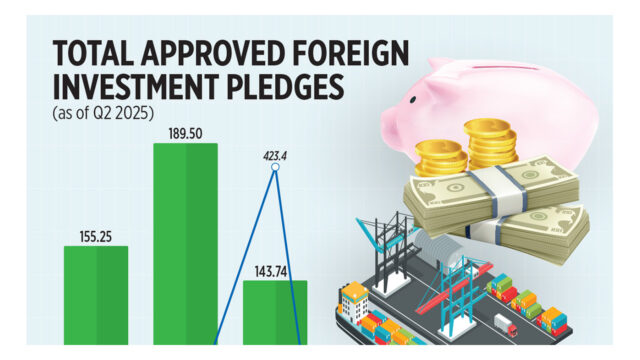
Total Approved Foreign Investment Pledges

FOREIGN INVESTMENT pledges plunged by 64.4% in the second quarter as investor sentiment turned cautious amid heightened global uncertainty driven by flip-flopping US tariff policies. Read the full story.

Total Approved Foreign Investment Pledges

Saudi Arabia is losing its appetite for oil

STOCK PHOTO | Image by Eddie Zhang from Unsplash

By David Fickling

YOU KNOW that horror movie trope where the babysitter gradually realizes the crazed killer is phoning, not from some distant location, but from inside the house? Something similar is happening in the oil market.

That’s because Saudi Arabia, the world’s biggest net exporter of crude, is using renewables to drastically reduce its petroleum consumption. The threat to the kingdom’s producers isn’t coming from the heartlands of electric vehicle adoption in Shenzhen, Oslo, or San Francisco — it’s right inside the house.

This is an extraordinary reversal. Since the start of the 21st century, Saudi Arabia’s oil consumption has increased more than any other country barring China and India. It’s doubled to 2.3 million barrels per day, greater than the incremental demand from Africa, Latin America, or the former Soviet Union.

Between a quarter and a third of the country’s consumption goes into crude- and fuel oil-fired generators that provide electricity to ride out summer heatwaves. The government wants to replace all of that with renewables, with a target of 130 gigawatts (GW) by 2030 — roughly equivalent to all the solar power in India. Such a switch could represent the single largest decline in oil demand over the next five years, according to the International Energy Agency.

It’s not news that the country has such ambitions. One of the cornerstones of Vision 2030, the program announced in 2016 to wean the kingdom’s economy off hydrocarbons, was to switch the grid to an exclusive gas-renewables mix.

However, such bold pronouncements are typically heavily discounted where Saudi Arabia is concerned. This is a country that’s been working on an unfinished one-kilometer skyscraper since 2013, and recently called in consultants to review the feasibility of The Line — an implausible science fiction city being built to house nine million people inside a 170 kilometer-long tower.

Kpler, a data company that tracks commodities flows, reckons only 11.6 GW of the planned 130 GW will be online by 2030. Such a serious shortfall would be enough to sustain crude in power generation well into the future.

It might be time to start reevaluating whether that skepticism is warranted, however. There’s certainly a huge gap between promise and execution where the kingdom’s megaprojects are involved. Still, when it comes to building humdrum energy infrastructure (as opposed to, say, a cube-shaped hollow tower as tall as the Empire State Building), one of the world’s biggest petroleum producers has a decent track record.

That’s now finally showing up not just in wells and export facilities, but in renewables, too. After years in which the only major solar project connected was a relatively modest 0.3-GW plant in the deserts between Jordan and Iraq, generators are now being plugged in at a rapid pace.

Since the start of 2024 alone, ACWA Power Co., the country’s biggest electricity and water developer, started commercial operations at four solar facilities totaling about 4.9 GW. Roughly the same amount is due to start up by the end of next year, the company told investors recently, shortly after completing a 7.125 billion riyal ($1.9 billion) capital raising. Last month, it signed deals with Saudi Arabia’s main utility to build another 15 GW, to be delivered by the middle of 2028.

The broader plan is for ACWA to hit 78 GW by 2030, sufficient on its own to provide all the electricity that Saudi Arabia generated from oil last year. Much more is in the pipeline from other developers.

With ACWA giving investors detailed timelines of further near-term completion dates, the onus is increasingly on the skeptics to explain why the recent run of successful project execution is going to be broken. Thanks to abundant sunlight, Saudi solar plants deliver electricity at less than half of the cost of the grid. Arrays of panels also tend to be much more simple, in engineering terms, than the petroleum extraction, transport, and refining complexes in which the kingdom has long excelled.

Getting those renewables built is also crucial for the country’s overriding obsession: its position in the oil market. One justification given by Saudi Arabian Oil Co. President Amin Nasser for cutting back maximum output capacity last year was that removing crude from the domestic grid would boost exports as effectively as drilling extra wells. The plans to eliminate oil from the grid by 2030 are still “on track,” he told Aramco investors last week.

Saudi Aramco’s competitors might want to reflect on that. For Nasser, the country’s transition is reason enough to trim investments intended to meet hypothetical future demand. The kingdom’s grid uses more oil than all the cars and scooters in India. If such an enormous consumer of the world’s crude is going away by the end of the decade, an already oversupplied market risks heading still deeper into glut.

BLOOMBERG OPINION

How managers avoid costly worker errors

Our factory has clear, well-communicated operating standards. Our workers know them very well. Sometime ago, a worker committed a serious mistake resulting in losses worth millions. Our code of conduct prescribes a maximum one-month suspension without pay, as the owner, with a paternalistic management style, does not want to dismiss anyone. So, the company must absorb the damage and keep the employee on board. How do we prevent this same error from happening again? — Red Falcon.

Except for your paternalistic boss, this scenario sounds uncomfortably familiar. Many organizations fall into the trap of believing that written rules and clarity will prevent worker mistakes. It’s an appealing belief — after all, if the instructions are crystal clear and everyone has signed the acknowledgment form, what could go wrong?

However, policies and clarity are small parts of the productivity net equation. There are a lot more. Human nature, systems design, and company culture all play an equally critical role.

People get tired, distracted, or become overconfident. Systems have gaps that reveal themselves under pressure. And the paternalistic culture — the invisible hand guiding daily behavior  — can either encourage vigilance or breed complacency.

SOLUTIONS
With that in mind, here’s how to make sure those expensive mistakes become an important lesson and prevent the same situation from happening again through the following solutions:

One, do a root cause analysis. When a serious mistake happens, the first impulse is to focus on the what: the broken machine, the ruined batch, or the production delay, among others. But the real learning comes from the why.

Was the person rushing to meet a quota? Was he distracted by a personal issue? Was the tool faulty, the design flawed, or the procedure broken? Or was it willful negligence — knowing the rule but ignoring it?

Two, let the worker come up with a solution. Sure, you’ll want to guide them so they don’t just say, “I’ll be more careful next time.” They must go beyond that. After all, their job is still there waiting.

Therefore, they must be empowered to come up with specific and measurable preventive actions that make them co-owners of the new system.

Three, put the right system in place. Even seasoned operators can become absent-minded. They forget important steps, skip checks, and even make false assumptions — all because of their misplaced confidence.

To avoid that, apply some proven safeguards like having a new checklist, mistake-proofing (Poka-Yoke) the process, and doing peer verification with two people signing off.

Four, match the consequence to the impact. A one-month suspension for losing millions sends mixed signals. It says, “We’re disappointed, but it’s OK. See you next month.” A fair approach is graduated discipline, if not employment termination.

The first offense with minor impact might mean retraining, but a grave mistake with costly damage may require a demotion from a safety and quality-oriented role, or dismissal if willful neglect is proven. But you must convince your management about it.

Five, make the lesson public without shaming people. Every major error is tuition paid to the “school of experience.” The worst thing is to pay the tuition and not attend the class.

Hold a post-incident learning session where the concerned worker explains what happened without bring humiliated. This puts the lesson in everyone’s mind and turns a mistake into a shared responsibility.

Six, retraining is for everyone. Many factories assume that once training is done, knowledge remains perfect. In reality, familiarity breeds shortcuts. Annual or semi-annual, if not quarterly, refresher training on critical processes keeps the standards high in everyone’s mind.

Simulation is powerful. If a mistake happened in the packaging line, recreate the scenario in a controlled setting and walk everyone through the correct handling.

Seven, reward prevention, don’t just punish mistakes. A culture of vigilance doesn’t grow from punishment alone. Fear-based cultures often hide problems until they explode. Balance discipline with recognition for hazard prevention.

Make it easy for people to report an issue. Praise them for preventing a problem before it becomes an accident. Create a “Doing It Right” program where data is captured, recorded, analyzed, and the worker is recognized.

Eight, lead from the shop floor. If standards are important, leaders must be visible in enforcing them. That means walking through the process regularly. Without “snoopervising,” ask the workers to demonstrate a step. Then, point out positive compliance.

Address small deviations immediately, before they grow into big risks. A visible leader communicates that procedures aren’t just words on paper — they’re a living expectation.

REAL CHALLENGE
When rules are clear but violations still happen, the issue isn’t ignorance — it’s the presence of an unreasonable management policy that favors workers who make mistakes. In other words, the fence may be sturdy, but the gate is swinging wide open. The fix?

Close it with a lock made of firm consequences, regular follow-through, and visible leadership. This is the best time for your company, locked in a paternalistic mindset, to change its culture.

There could be legal challenges. But it’s worth challenging a deeply ingrained culture that protects employees at all costs, to the detriment of both performance and profitability.


Ask questions and receive Rey Elbo’s insights for free. E-mail elbonomics@gmail.com or DM him on Facebook, LinkedIn, X, or via https://reyelbo.com. Anonymity is guaranteed.

J-pop idol Kenshin Kamimura found guilty of indecent assault in Hong Kong

JUNSEI MOTOJIMA (L) and Kenshin Kamimura in the TV show Our Youth.

HONG KONG — J-pop star Kenshin Kamimura was found guilty by a Hong Kong court on Wednesday of the indecent assault in March of a woman who served as his interpreter during a fan event.

Mr. Kamimura, 26, was previously a member of the six-member boy group One N’ Only. He pleaded not guilty in April and chose not to testify during the trial in July.

Magistrate Peter Yu said that Mr. Kamimura’s behavior showed obvious disrespect towards women, noting that his touches suggested a sexual undertone.

“Such behavior should be condemned,” Mr. Yu said, fining him HK$15,000 ($1,923) after his lawyer in mitigation urged a financial penalty rather than jail.

On hearing the sentence, Mr. Kamimura hugged his court translator, while a handful of fans wept in the public gallery. Dozens more waited outside after the hearing ended as Mr. Kamimura left court without saying anything.

The victim, identified only as X, testified in July that Mr. Kamimura and actor Junsei Motojima hired her as an interpreter to translate during a fan meeting in Hong Kong on March 1. The group then attended a celebratory dinner at a restaurant in the city’s Mong Kok district.

She told the court Mr. Kamimura moved to sit beside her during a toasting session and started repeatedly brushing and patting her thigh before suggesting they visit the bathroom together. He asked both in Chinese and Japanese if she knew what he meant, she added.

X said she declined, telling him, “If you want to go, you can go by yourself.”

She said she then moved away to get some tea, but Mr. Kamimura blocked her path and again asked her to go outside. She told the court she refused.

After X returned to her seat, Mr. Kamimura also came back and sat beside her. He apologized and said, “Forget what just happened,” she recalled in her testimony. The singer also asked her about her relationship status and whether she planned to marry her boyfriend, she said.

Mr. Kamimura then brushed her inner thigh again with the back of his right hand, X told the court. She shrank away, but he repeated the action about two to three times.

Mr. Kamimura’s lawyer said in mitigation that his client did not intend to coerce or threaten and that alcohol might have affected his judgment.

The magistrate said that Mr. Kamimura had paid a huge price for the incident, saying he was immediately fired by his company and forced to leave the band. — Reuters

ATI Q2 profit soars 48.5% to P1.5B on higher cargo volumes

ASIANTERMINALS.COM.PH

ASIAN TERMINALS, INC. (ATI) saw its second-quarter attributable net income climb 48.5% to P1.5 billion on higher revenues for the period, driven by a surge in cargo volumes.

For the April-to-June period, ATI logged gross revenues of P4.87 billion, 22.05% higher than the P3.99 billion in the same period a year ago.

Total expenses for the three months ending June rose 21.52% to P2.88 billion from P2.37 billion in the second quarter of 2024.

For the six-month period, the listed port operator’s attributable net income surged 65.34% to P2.96 billion from P1.76 billion previously, driven by higher revenues for the period.

ATI’s total revenue for the January-to-June period increased to P9.61 billion, up 28.82% from P7.46 billion in the same period last year.

Broken down, revenues from South Harbor (SH) international containerized cargo and Batangas Container Terminal (BCT) rose 31.8% and 19.2%, respectively, on higher container volumes.

ATI, the operator of the Batangas port, said its operations in Batangas saw higher topline during the first semester, mainly driven by increases in international roll-on/roll-off cargo and higher passenger traffic for the period.

On Wednesday, the Philippine Ports Authority (PPA) said that it had temporarily suspended its review of ATI’s petition for an adjusted terminal fee at the Batangas port while Oriental Mindoro remains under a state of calamity.

ATI had earlier proposed to collect a higher terminal fee of P100 from P30 at the Batangas port, citing that the increase in fees is a recovery measure after improvements at the port and will help the company maintain the terminal.

In 2024, ATI launched the opening of a new and modernized passenger terminal building at the Batangas Port — one of the country’s busiest terminals.

The government’s share in the company’s total revenue for the six months ending June also rose 17.4% to P3.91 billion from P3.33 billion last year.

Total expenses for the first semester expanded 23.5% to P5.73 billion from P4.64 billion last year, citing increases in depreciation and amortization, as well as higher labor and fuel costs, according to its financial statement.

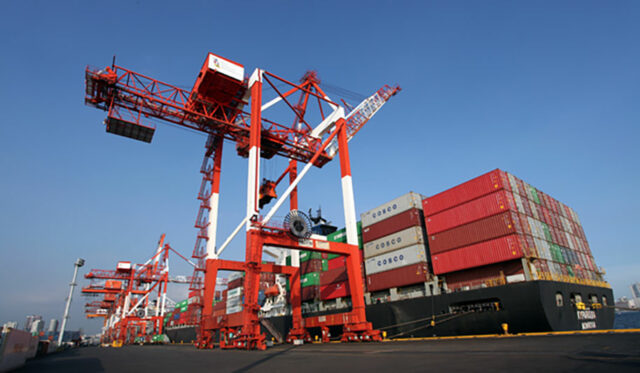
In March, ATI expanded its capacity at Manila South Harbor with the commissioning of two additional ship-to-shore (STS) cranes, aimed at improving handling capacity and operational efficiency.

These complement the terminal’s existing fleet of 11 STS cranes, rubber-tired gantries, and other cargo-handling equipment, aligned with its ongoing modernization efforts.

For full-year 2024, ATI handled nearly 1.6 million twenty-foot equivalent units (TEUs), reflecting a 4% increase from the previous year.

With recent infrastructure upgrades and new equipment deployment, ATI said it is now capable of handling close to 2 million TEUs annually.

At the local bourse on Thursday, shares in ATI closed 30 centavos, or 1.11% higher, at P27.30 apiece. — Ashley Erika O. Jose

Elizabeth Banks: grit, pies, and safety nets

How time flies. It feels just like yesterday when Jaime, a curious toddler with bright eyes, was running around at family gatherings. He recently graduated from the Wharton School of the University of Pennsylvania with a double major in Finance and Management, along with a graduate certificate in Film and Media Studies. The only son of GMA7 director Joel Jimenez and award-winning children’s book author Gidget, Jaime’s journey from Manila to the Ivy League is not just a personal triumph — it is a powerful story of grit, faith, and family love.

Elizabeth Banks, a renowned Hollywood actress, director, producer, and UPenn alumna was the commencement speaker at Jaime’s graduation. Witty, candid, and down-to-earth — a good match for Jaime’s dual interests in business and the creative arts. Ms. Banks shared stories of growing up in a working-class family, navigating Ivy League life on scholarships, and never taking opportunities for granted. She spoke about three powerful ideas: grit, pies, and safety nets.

Her words on grit reminded me of the graduation of Jaime’s sister Bianca from UPenn years ago. The speaker then was psychologist Angela Duckworth, author of the book “Grit: The Power of Passion and Perseverance,” who said: “Grit is working on something you care about so much, you’re willing to stay loyal to it. Grit is not just doing what you love but actively staying in love.”

Ms. Banks echoed this spirit, sharing how rejection shaped her and how she kept going even when the doors didn’t open. “Failure is a great motivator,” she said — and how true that is. Jaime’s own journey reflects this kind of quiet perseverance. From helping build Uber in the Philippines — only for it to be shut down — to later being given the opportunity to lead a product team for Uber in the US, he showed resilience and patience. As leadership expert John Maxwell writes in “Failing Forward,” failure is not final — it’s a stepping stone to growth.

Then came Ms. Banks’ metaphor: the pie. Many people grow up thinking success is a limited pie — if someone else gets more, there’s less for you. But she challenged this mindset: “If there is no more pie, make your own.” What a powerful call to action! She urged the graduates, “Stop waiting for someone to give you your slice. Go and bake your own. And when you do, you make space for others too.”

That idea of expanding the pie struck a chord. I remember back in 2010 when my sister Ate Kay’s grandchildren asked me for gardening tips. I wanted to give them a children’s gardening book but couldn’t find one in local stores. So, Jaime’s mom Gidget and I created one: “The Secret is in the Soil,” which is for ages nine and up. We didn’t realize it then, but we were “baking our own pie,” too.

Ms. Banks also emphasized the importance of safety nets — the people who guide, encourage, pray for, and believe in you. Behind Jaime stands a strong, loving net: his parents Joel and Gidget, who raised their children with discipline, grace, and purpose; his grandparents Carolina “Kay” (known as the Bamboo Queen) and Menardo Jimenez, Sr., (former GMA7 President) firm in their Christian values and open-hearted generosity; and his sisters Bianca and Sofie, both Ivy League graduates themselves, each with accomplishments of their own. Actually, all their other granchildren from children Menard, Jr. ”Butch”, Laurie (Westfall) and Carmen (Ong) are all God-fearing and achievers.

This is no coincidence. The Jimenez children shine because of a foundation built on faith and love. Joel, beyond his professional work, serves as the pro-bono president of The Potter and Clay Christian School in Sanciangco, Malabon, Rizal — a reflection of his family’s heart for service. And in his quiet testimony, Joel always points to the source of it all: God.

As Jaime returns to the Philippines, he brings with him not just a world-class education, but the spirit of Ms. Banks’ challenge: be a builder — of careers, of opportunities, of more pies and better futures.

Jaime’s story is a reminder of what truly matters: grit despite difficulties, creativity that expands the pie, and the steady hands of faith and family holding the safety net below. Congratulations, Jaime. May you lead with courage, share your blessings generously, and continue to walk boldly under the grace of the God who has been faithful every step of the way.

The views expressed herein are the author’s own and do not necessarily reflect the opinion of her office as well as FINEX.


Flor G. Tarriela is a banker and an environmentalist/gardener. She founded Flor’s Garden in Antipolo, an accredited ATI National Extension Service Provider.

Auto Sales (July 2025)

NEW VEHICLE SALES declined in July, as bad weather disrupted retail operations, a joint report by the Chamber of Automotive Manufacturers of the Philippines, Inc. (CAMPI) and Truck Manufacturers Association (TMA) showed. Read the full story.

Auto Sales (July 2025)

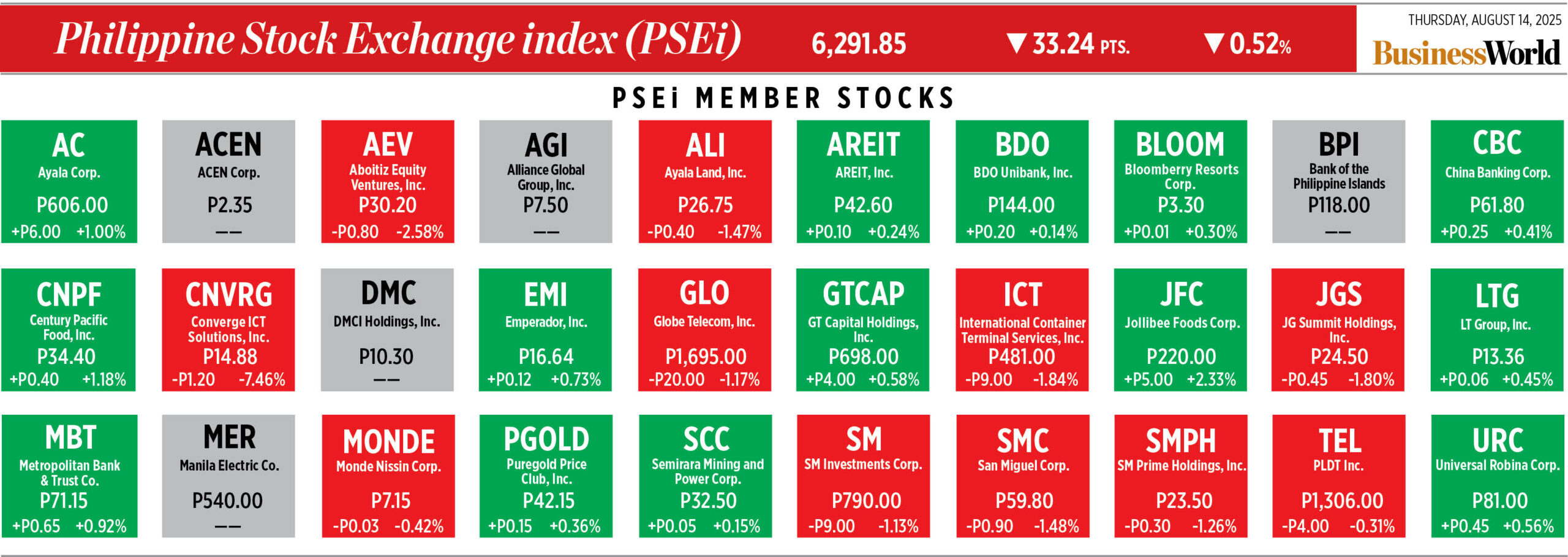
How PSEi member stocks performed — August 14, 2025

Here’s a quick glance at how PSEi stocks fared on Thursday, August 14, 2025.


Light, smart, and surprisingly capable — Two weeks with the Xiaomi Band 10

Photo by Jino Nicolas, BusinessWorld

by Jino Nicolas, BusinessWorld

Source: Xiaomi

Smart bands have come a long way from just counting a person’s steps. Today, they’re compact wellness companion that enable you to monitor sleep quality, workouts, and even stress levels, all while staying light and easy on the eyes.

I’ve worn quite a few over the years, from the earliest of smart bands, to the modern, feature-packed smart watches, but the Xiaomi Band 10 offered me a great balance between comfort, style, and functionality.


FIRST IMPRESSIONS

Photo by Jino Nicolas, BusinessWorld

The Xiaomi Band 10 makes a strong case for minimalism done right. Out of the box, it clearly is not just another fitness tracker. It’s small form factor and design lets it blend through whatever attire, and it’s so compact and lightweight that it doesn’t hinder or bother one’s actions.

In fact, I wore it while sleeping for several nights that it felt so seamless and unobtrusive that I forget I was still wearing it. That level of comfort really enhances its effectiveness as a health tracker.

The responsiveness of the user interface (UI) also stands out to me. Swipes and taps register instantly, and the animations are smooth thanks to the 60Hz refresh rate. It’s a subtle, but welcome upgrade that helps interactions with the device feel more refined.

Switching from one screen to another and checking notifications feel smooth and intuitive.


“Fit in Style”

The design philosophy of the Xiaomi Band 10 is certainly evident in its efficient, minimalistic form.

The 1.72″ AMOLED display is vibrant and crisp, making it easily readable in bright outdoor conditions. The thin bezels give it a sleek, modern look, and the moisture resistant touch control ensures usability during light to heavy workouts, or even under the rain.

I was provided with the black variant of the Band 10, and I have to say, its understated look blends effortlessly with any outfit. The minimalist design adds to its modern look without drawing too much attention, which I believe is something those who prefer subtle tech would appreciate.

Source: Xiaomi Store on Shopee

Accessorizing or personalizing the Band 10 is also simple as there are an abundance of choices. From quick-release straps in silicone, leather, and metal finishes, to pendant-style straps that provides an elegant, tech-savvy alternative to this wearable health tracker.

Metal frames and protective cases are also available not just for style but also for durability, shielding the device from scratches and bumps.

Of course, clock faces are also easily accessible through the Mi Fitness app.


WELLNESS TRACKING

The Xiaomi Band 10 honestly punches above its weight. The device supports tracking of 150+ workout modes, and automatically detects common, popular activities such as walking, running, and cycling.

Admittedly, I am not an overly active person, but the heart rate broadcast feature I found particularly useful. It syncs seamlessly with my phone and allows real-time heart rate readings while I’m on my treadmill.

Photo by Jino Nicolas, BusinessWorld

Given the traffic experienced in Metro Manila, it’s difficult not to notice the increased heart rate — whether it’s from the stress of gridlock or the adrenaline of dodging motorcycles. The Band 10’s real-time heart rate monitoring doesn’t just track workouts; it captures the daily cardio of surviving EDSA.

Sleep tracking has also become more advanced as it goes beyond basic duration and stages. The Band 10 now measures sleep efficiency and distribution, offering a more holistic view of the quality of rest.

Also, the 21-day sleep improvement program that is backed by global sleep authorities like the World Sleep Society, adds a lot of credibility and depth to the device’s function.

Other wellness features include:

  • Swim mode
  • 24/7 heart rate, SpO₂, stress, and menstrual cycle tracking
  • VO₂ max, training load, and recovery time for performance insights
  • Relax reminders and stress monitoring for mental wellness


Source: Xiaomi

ECOSYSTEM INTEGRATION

Admittedly, I was not able to test the Band 10 while paired with a smartphone running HpyerOS 2, but it is said to integrate into the Xiaomi Smart Hub, allowing control over smart home devices directly from the band. This kind of synergy with other smart devices is quite rare at this price point.

Notifications are timely and customizable. Sync calendars, respond to calls, send quick replies, and even mute a paired smartphone discreetly. The Band 10 provides feedback that feels premium, and vibration patterns can be tweaked for different alerts.

Battery life is also another win:

  • Up to 21 days in typical use
  • 9 days with Always-on Display
  • Fast charging in about an hour

For the past two weeks of testing, the Band 10 only required charging twice. That’s quite a difference to some wearables in the market that need charging every other day.


Photo by Jino Nicolas, BusinessWorld

WELL-ROUNDED, STYLISH, ACCESSIBLE

The Xiaomi Band 10 strikes an impressive balance between comfort, aesthetics, and functionality. Thoughtfully designed for both active and casual users, it offers a robust suite of health and wellness features without compromising on style or ease of use.

Its minimalist form blends effortlessly into daily life, while the vibrant display, responsive interface, and long battery life make it a reliable companion for wellness tracking and smart notifications. Despite its accessible price point, the Band 10 delivers a premium experience that rivals more expensive alternatives — making it a standout choice for anyone seeking a fashionable, feature-rich wearable.

Stocks go down on profit taking, fiscal concerns

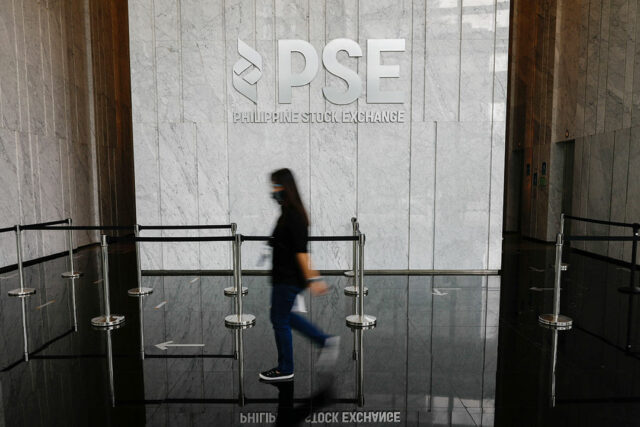
The lobby of the Philippine Stock Exchange in Taguig City, Sept. 30, 2020. — REUTERS

PHILIPPINE STOCKS dropped on Thursday on profit taking after the market’s two-day climb and concerns over the country’s fiscal health.

The Philippine Stock Exchange index (PSEi) fell by 0.52% or 33.24 points to close at 6,291.85, while the broader all shares index sank by 0.57% or 21.61 points to 3,743.03.

“The local market declined as investors took profits following two days of rallying,” Philstocks Financial Inc. Research Manager Japhet Louis O. Tantiangco said in a Viber message.

“Concerns over the outlook of the Philippines’ fiscal position also dampened sentiment as the government’s outstanding debt is projected to hit P19.06 trillion by end-2026,” he added.

The 2026 Budget of Expenditures and Sources of Financing showed that the National Government’s (NG) outstanding debt is expected to increase by 9.78% to a record P19.06 trillion by end-2026 from the revised P17.36-trillion estimate for end-2025.

Finance Secretary Ralph G. Recto said NG debt is still manageable, noting the economy will be worth roughly P31.8 trillion by 2026.

As of June, the Philippines’ outstanding debt hit a fresh high of P17.27 trillion, up 11.5% from P15.48 trillion in the same month in 2024.

This brought the debt-to-gross domestic product (GDP) ratio to 63.1% at the end of June, the highest ratio since 2005. This is above the 60% debt-to-GDP threshold considered by multilateral lenders to be manageable for developing economies.

“The market slipped today as some investors may have already taken profits following the index’s series of uptrends this week,” Regina Capital Development Corp. Head of Sales Luis A. Limlingan said in a Viber message.

“Furthermore, investors are likely still waiting for developments in stock market news that could influence the overall market, along with the upcoming implementation of the PSEi rebalancing,” he added. The rebalancing will take effect on Aug. 18.

Sectoral indices ended mixed on Thursday. Services dropped by 2.42% or 56.03 points to 2,259.55; property retreated by 1.02% or 24.97 points to 2,413.58; and holding firms declined by 0.64% or 34.63 points to 5,302.24.

Meanwhile, industrials climbed by 0.38% or 34.23 points to 8,961.63; financials rose by 0.09% or 1.97 points to 2,152.02; and mining and oil edged up by 0.09 point to 9,330.87.

“Jollibee Foods Corp. was the top index gainer, climbing 2.33% to P220. Converge ICT Solutions, Inc. was the main index laggard, plunging 7.46% to P14.88,” Mr. Tantiangco said.

Value turnover went down to P8.41 billion on Thursday with 2.09 billion shares exchanged from the P10.61 billion with 893.55 million shares traded on Wednesday.

Market breadth was negative as decliners outnumbered advancers, 106 to 84, while 46 names were unchanged.

Net foreign buying went down to P100.92 million on Thursday from P973.04 million on Wednesday. — Revin Mikhael D. Ochave