Home Blog Page 1142

Indonesia avoids ‘high-risk’ tag for deforestation
REUTERS

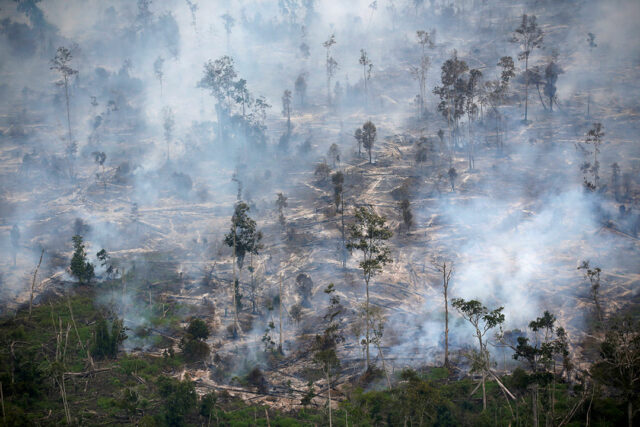
BRUSSELS — Commodities from just four countries will face the strictest checks under the European Union’s (EU) anti-deforestation law, with major forest nations including Brazil and Indonesia spared the toughest rules.

The European Commission said in an act published on Thursday that the law would categorize goods imported from Belarus, Myanmar, North Korea and Russia as having a “high risk” of fueling deforestation.

Countries including Brazil and Indonesia, which have historically had among the world’s highest rates of deforestation, will be labeled as “standard risk” — which means they will face lighter compliance checks on goods exported to Europe.

The world-first law will impose due diligence requirements on companies placing products including soy, beef, palm oil, timber, cocoa, coffee and chocolate onto the EU market. It has been staunchly opposed by countries including Brazil and Indonesia, who say it is burdensome and costly.

A key difference between the groups is that EU countries will be required to carry out compliance checks covering 9% of companies exporting from high-risk countries, 3% from standard-risk countries and 1% for low-risk countries.

The US was among the countries classified as “low risk,” meaning its companies must still collect information on their supply chains, but not assess and address deforestation risks.

Companies in high risk and standard risk countries will need to show when and where the commodities were produced and provide “verifiable” information that they were not grown on land deforested after 2020.

Indonesia Palm Oil Association, GAPKI, said the EU should have branded the world’s largest palm oil exporter Indonesia as a low-risk country, along with the US, China, Thailand and Australia.

“The EU did not see Indonesia’s achievement in significantly reducing the deforestation rate in recent years,” GAPKI secretary general Hadi Sugeng Wahyudiono said, adding that due diligence on shipments would increase cost and reduce palm oil’s competitiveness.

Campaigners criticized the EU decision to impose the strictest checks on only four nations, but said even lower-risk countries would face some, albeit simpler, due diligence obligations.

“In practice, this shouldn’t undermine the power of this law to save forests,” said Giulia Bondi, campaigner at non-profit group Global Witness.

Rainforest Foundation Norway (RFN) was less optimistic and urged the EU to strengthen controls.

“It is simply unbelievable that Brazil, responsible for 42% of tropical forest loss in 2024, more than a doubling since the previous year, is not rated as high risk,” according to RFN director Toerris Jaeger, citing a recent report from Global Forest Watch.

The Commission said it had labeled countries based on scientific evidence and data.

The EU law will apply from the end of 2025 for large companies, and from June 2026 for small firms. Failure to comply could result in fines of up to 4% of a company’s turnover in an EU country. — Reuters

Adidas, Puma expected to hike sportswear prices as US tariffs hit

ADIDAS AND PUMA are likely to hike prices for running shoes and sportswear in the United States, following Nike’s lead, analysts and investors said on Thursday, as US tariffs on imports drive costs up for retailers. Nike on Wednesday said it would raise prices next week, charging up to $10 more for shoes currently costing more than $150, while keeping prices stable for products under $100. It is the biggest sportswear company by sales and market cap.

“That was the moment Adidas and Puma were waiting for,” said Robert Krankowski, sporting goods analyst at UBS.

Both German sportswear brands recently said they would not be the first movers in raising prices, instead waiting to see what rivals do.

“We should probably expect a similar decision from both Adidas and Puma because… this is not Nike-specific, it is an industry issue. Everyone will be impacted by the tariffs,” Mr. Krankowski added. US President Donald J. Trump has imposed a blanket 10% tariff on all imports, and hit China with a higher tariff of 30%. More worrying for sportswear brands, the key footwear and clothing manufacturing hub of Vietnam faces the threat of a steep 46% tariff returning in July.

Nike described the announced price increases as part of its normal seasonal planning, without mentioning tariffs.

Puma said on Thursday it is in talks with its US partners but has not decided whether or how it would adjust prices. Adidas did not immediately reply to a request for comment on its pricing plans.

“Historically, when the leading brand adjusts its prices, competitors tend to follow suit shortly thereafter,” said Federico Borin, an analyst at Janus Henderson.

How high other brands raise prices will depend on their assessments of US shoppers’ willingness to pay, which varies based on how in-demand their sneakers or running shoes are.

Adidas, which has enjoyed a surge in sales thanks to trendy vintage shoes such as the $100 Samba and $120 Gazelle, could easily raise prices, said Simon Jaeger, portfolio manager at Flossbach von Storch in Cologne, Germany, which holds shares in Adidas and Nike.

Nike’s price increases are relatively modest, Mr. Jaeger added, but “what concerns me more is that the US consumer in general is not as strong as a couple of years ago.” US consumer sentiment slumped further in May while one-year inflation expectations surged, according to the University of Michigan Surveys of Consumers on Friday.

Given weaker demand, sportswear brands will have to carefully manage their inventories at retailers, Mr. Jaeger said, to avoid oversupplying and being forced to discount.

Puma, whose sales in the US have been slowing, may have less room to hike prices than Adidas, said UBS’ Mr. Krankowski.

Puma has said it aims to sell four million to six million pairs of its $100 Formula 1-inspired Speedcat sneaker this year but sales have been slower than expected, raising the question of whether it should hike the shoe’s price.

“Puma doesn’t have a massive first-mover advantage because the other brands are taking more momentum,” Mr. Krankowski said.

More expensive brands are also adapting as Nike hikes prices.

Running-focused On, whose adult sneakers sell for $130 and up, plans to increase prices in July on certain products in the US, saying this is part of its ambition to be the “most premium” global sportswear brand and not a reaction to tariffs. — Reuters

Gov’t debt yields mixed as US downgrade roils bond markets

YIELDS on government securities (GS) traded in the secondary market ended mixed last week as investors repositioned in the aftermath of Moody’s Ratings’ downgrade of the United States’ credit rating.

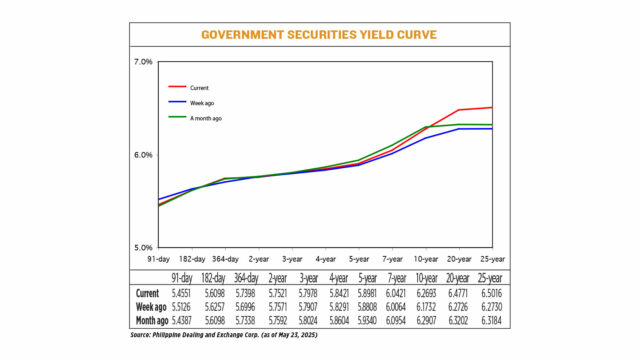
GS yields, which move opposite to prices, rose by an average of 5.13 basis points (bps) week on week, based on the PHP Bloomberg Valuation Service Reference Rates as of May 23 published on the Philippine Dealing System’s website.

At the short end, yield movements were mixed. The rates of the 91- and 182-day Treasury bills (T-bills) went down by 5.75 bps and 1.59 bps week on week to 5.4551% and 5.6098%, respectively. On the other hand, the 364-day T-bill rose by 4.02 bps to yield 5.7398%.

At the belly of the curve, the two-year Treasury bond (T-bond) fell by 0.5 bp to fetch 5.7521%. Meanwhile, yields on the three-, four-, five- and seven-year bonds increased by 0.71 bp (to 5.7978%), 1.3 bps (5.8421%), 1.73 bps (5.8981%), and 3.57 bps (6.0421%), respectively.

At the long end, rates of the 10-, 20-, and 25-year T-bonds surged by 9.61 bps (to 6.2693%), 20.45 bps (6.4771%) and 22.86 bps (6.5016%), respectively.

GS volume traded amounted to P36.79 billion on Friday, lower than the P80.42 billion recorded a week prior.

“Local bonds traded on the back foot after US rates soared as Moody’s Ratings downgraded its credit rating one notch lower to “Aa1” from “Aaa,” aligning with Fitch Ratings and S&P Global Ratings,” Dino Angelo C. Aquino, vice-president and head of fixed income at Security Bank Corp., said in an e-mail.

“US 30-year yields jumped above 5%, with the curve steepening significantly,” Mr. Aquino said. “Local bonds were not spared as yields traded 3-7 bps higher week on week despite the strong showing in the last 10-year auction.”

Moody’s US debt downgrade is raising concerns that investors could reevaluate their appetite for US government bonds, with the potential for rising yields to put pressure on stocks that are trading at elevated valuations, Reuters reported.

Moody’s decision to downgrade the US debt rating by a notch due to mounting government debt and rising interest expenses has rekindled fears of a broader investor reappraisal of US sovereign debt, which could drive up borrowing costs across the economy.

Benchmark 10-year yields, which influence mortgage rates as well as borrowing costs for companies and consumers, rose to over 4.5% early on Monday but the sell-off then moderated. On Tuesday, the bond market sell-off continued, with the 10-year yield last seen at 4.48%, slightly above where it closed on Monday.

Longer-dated 30-year yields rose more sharply, hitting a high of over 5% on Monday, the highest since November 2023, and flirting with that level again on Tuesday.

On Friday, the 30-year US bond yield, which on Thursday hit the highest since October 2023, fell in response to fresh tariff fears.

The yield was down 2.2 bps at 5.042%. The yield on benchmark US 10-year notes fell 3.6 bps to 4.517%.

Thirty-year bonds have taken the brunt of the price sell-off and posted the largest weekly increase in yields since April 7. Yields move the opposite direction to prices.

US President Donald J. Trump on Friday unleashed his latest trade threats, recommending 50% tariffs on European Union (EU) imports from June 1 and considering a 25% tariff on any Apple iPhones made outside the US.

Meanwhile, the Bureau of the Treasury (BTr) last week raised P30 billion as planned from its auction of reissued of 10-year papers, with total bids reaching P109.50 billion.

The papers are part of the P300 billion in new benchmark fixed-rate Treasury notes priced on April 15 and issued on April 28.

The BTr also raised an additional P10 billion via the same bonds from its tap facility window offering held after the auction proper.

The 10-year notes, which have a remaining life of nine years and 11 months, were awarded at rates ranging from 6.21% to 6.24%, bringing the average rate to 6.226%.

For this week, Mr. Aquino said GS yields may continue to be influenced by global market movements amid a lack of catalysts at home.

“The new 15-year supply could be another headwind, with markets seeing some duration fears at the moment after the sharp steepening move in the US,” he said.

On Tuesday, the government will offer P30 billion in reissued 20-year T-bonds with a remaining life of 13 years and eight months.

Jonathan L. Ravelas, senior adviser at professional service firm Reyes Tacandong & Co., said in a Viber message that GS yields may move sideways this week.

“Yields may move sideways to down, supported by dovish global sentiment and stable local macroeconomic data. However, external risks could still introduce some volatility,” he said. — Lourdes O. Pilar with Reuters

Mitsubishi PHL completes internship program for 187 college students

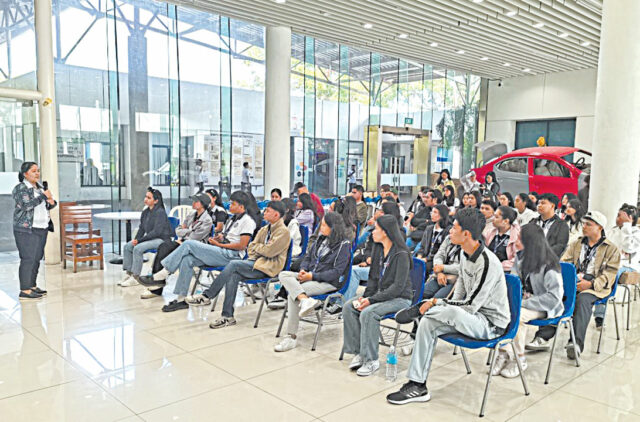
College students are guided by MMPC employees ‘committed to nurturing future industry talents.’ — PHOTO FROM MITSUBISHI MOTORS PHILIPPINES CORP.

IN LINE WITH its “commitment to contribute to nation-building through education and talent development,” Mitsubishi Motors Philippines Corp. (MMPC) once again opened its doors — this time to 187 students from 32 colleges and universities who were given the opportunity to train under the company’s comprehensive internship program, designed to enhance classroom learning with real-world corporate experience.

Since 2022, the internship program has taken in some 250 students, providing valuable on-the-job training across key areas such as human resources, finance, production, engineering, logistics, after-sales, sales, marketing, and IT. Interns were matched to roles aligned with their courses,  including Bachelor of Science (BS) Psychology, BS Human Resource Management, BS Accountancy, BS Business Administration, BS Mechanical Engineering, BS Industrial Engineering, and BS Information Technology.

According to MMPC President Ritsu Imaeda, the company continues to prove that corporate responsibility goes beyond economic and environmental initiatives; it also lies in investing in people, skills, and potential.

“This initiative is one of our contributions to build a strong, competent, and globally competitive Filipino workforce. By working with educational institutions, MMPC amplifies learning and helps raise the chances of higher job qualifications for future graduates. This synergy between academia and industry is key to driving innovation, employment, and sustainable growth,” said Mr. Imaeda.

MMPC Vice-President for Human Resources Marcelo Cenir added that this mentorship is vital in shaping the students’ professional outlook and values, as well as cultivating a workplace culture rooted in excellence, discipline, and integrity. “What makes the program stand out is the active involvement of our employees who dedicate their time, effort, and expertise to coach, mentor, and guide the students — ensuring that the experience is not only productive but also deeply enriching,” said Mr. Cenir.

Furthermore, several students who completed the program have even advanced to become full-fledged MMPC employees — “a testament to the quality of training and the effectiveness of the program in preparing students for real careers.”

DMCI Homes plans two project launches this year

DMCI Homes President Alfredo R. Austria — DMCIHOMES.COM

DMCI PROJECT Developers, Inc. (DMCI Homes) is planning to launch two projects this year as it expands its portfolio.

“Most probably two launches this year, to be launched maybe by the fourth quarter,” DMCI Homes President Alfredo R. Austria said in a media briefing.

This is fewer than its previous target of four launches as DMCI Homes, the property arm of Consunji-led DMCI Holdings, Inc., continues to manage its inventory.

Mr. Austria said the first project is a premium medium-rise development in Baguio City. The land for this project is owned by Consunji-led private holding company Dacon Corp.

“It will be a five- to six-story building, medium rise, but low density. It is in a very prime location, suited for a premium market,” he said. “It is within Baguio City, near the country club,” he added.

The second project is a planned vertical development in Metro Manila. It will offer smaller-sized units priced from P3.5 million to P4.5 million, targeting couples, students, and small families.

Mr. Austria said DMCI Homes still has many projects in the pipeline but has yet to finalize their launch schedules.

“We want to manage our inventory. But the other side of the coin is we also want to give continuity of work to our workers. We just have to balance it out,” he said.

Meanwhile, Mr. Austria said the launch of the Moriyama Nature Park leisure development in Laguna might be postponed depending on the issuance of necessary permits. The project was initially scheduled for launch later this year.

“We’re trying to finish the planning and design permits before the end of the year. But I don’t know if we would finish it because we might have some redesign in the project. I can’t say if we can make this year,” he said.

Moriyama Nature Park is a premium Japanese onsen-inspired destination aiming to capitalize on rising domestic tourism demand.

For 2024, DMCI Homes recorded a 31% decline in net income to P2.8 billion due to lower sales and fewer project launches. — Revin Mikhael D. Ochave

Collective action against noncommunicable diseases

FREEPIK

Noncommunicable diseases (NCD) remain the leading cause of death worldwide, claiming at least 43 million lives in 2021 or 75% of all nonpandemic-related deaths, according to the World Health Organization (WHO). Alarmingly, 18 million of those deaths occurred before age 70, and over 80% of these premature deaths happened in low- and middle-income countries (LMICs).

Cardiovascular diseases accounted for most noncommunicable disease deaths, followed by cancers, chronic respiratory diseases and diabetes. These four conditions represent 80% of all premature NCD-related deaths globally.

In the Philippines, NCDs account for 68% of total deaths. Filipino adults face a 29% chance of dying between ages 30 and 70 due to one of the four major NCDs. From January to August 2024, four of the five leading causes of death in the country — ischemic heart disease, cancer, cerebrovascular disease (including stroke and aneurysm) and diabetes — were all NCDs. Combined, these accounted for 47% of all deaths in that period.

Beyond the human toll, the economic burden is also immense. NCDs cost the Philippine economy an estimated P756.5 billion annually, equivalent to 4.8% of the country’s gross domestic product (GDP). This includes both direct healthcare costs and indirect costs such as lost productivity and diminished workforce participation. Notably, indirect costs are estimated to be nine times higher than direct medical expenditures.

This growing crisis demands a united response. As we mark Hypertension Awareness Month and Cervical Cancer Awareness Month, it is an opportune moment to reaffirm a whole-of-society commitment to reducing premature deaths from NCDs. Timely action can ease the burden on Filipino patients and families, bolster the national healthcare system and support economic resilience.

SPOTLIGHT ON TWO CRITICAL NCDs
Hypertension, or high blood pressure, is a major risk factor for cardiovascular diseases, which alone cause a third of all deaths in the Philippines. A national survey by the Philippine Heart Association revealed a hypertension prevalence of 37%, meaning nearly four in 10 Filipinos are affected. Left unmanaged, hypertension can lead to serious complications such as coronary artery disease, heart failure, kidney damage and stroke.

Cervical cancer is another pressing concern. Each year, 7,897 Filipino women are diagnosed with the disease, and 4,052 die from it. It is the second-most common cancer among Filipino women aged 15 to 44, according to the Department of Health. This is especially tragic given that cervical cancer is largely preventable through early screening and vaccination.

Investing just 1% more of GDP in public health — provided that at least 40% of that is directed to NCDs — could save nearly 5 million lives annually in LMICs. Cost-effective interventions like cardiovascular disease management, diabetes screening and chronic respiratory care can make a tangible difference when backed by sustainable financing and policy support.

These insights come from new research by Airfinity, commissioned by the International Federation of Pharmaceutical Manufacturers and Associations (IFPMA), released ahead of the UN High-Level Meeting on NCDs and mental health scheduled for September 2025. The upcoming meeting is expected to result in a political declaration that will chart the course for global NCD response in the coming decades.

Over the past decade, more than 1,400 medicines have been approved for NCDs, significantly transforming care and quality of life for patients with chronic conditions. Furthermore, 9,600 additional NCD treatments are in various stages of development.

Yet despite these advancements, many barriers remain. Access to existing medicines and vaccines is still limited in many regions. For some NCDs, effective treatment options remain inadequate or nonexistent.

To improve access and outcomes, IFPMA urges coordinated action in four areas:

1. Enable innovation — Foster a robust innovation ecosystem supported by strong intellectual property protection. Promote awareness and uptake of medical advances, particularly innovative medicines, vaccines, diagnostics, and devices. Delivery models should support their integration into national health systems.

2. Invest strategically — Governments must commit to more efficient, better-targeted investments in health systems, backed by actionable financing plans for NCDs and mental health. This will help ensure equitable access to prevention, treatment and care.

3. Deliver equitable access — Strengthen national health systems by integrating early screening, diagnosis, vaccination, comprehensive treatment and rehabilitation. Programs must be designed to effectively reach people living with NCDs and mental health conditions.

4. Ensure accountability — Set high standards and establish accountability mechanisms across government agencies and health stakeholders. This includes measuring the impact of screening, vaccination, diagnosis and treatment efforts.

The anticipated UN declaration offers a unique opportunity to cement these priorities and accelerate progress. With sustained collective action, the world can move toward a 2050 vision where fewer people die prematurely from NCDs, healthcare systems are less strained, and people everywhere have access to the care they need.


Teodoro B. Padilla is the executive director of Pharmaceutical and Healthcare Association of the Philippines, which represents the biopharmaceutical medicines and vaccines industry in the country. Its members are in the forefront of research and development efforts for COVID-19 and other diseases that affect Filipinos.

India’s monsoon rains arrive 8 days ahead of forecast, earliest in 16 years

REUTERS

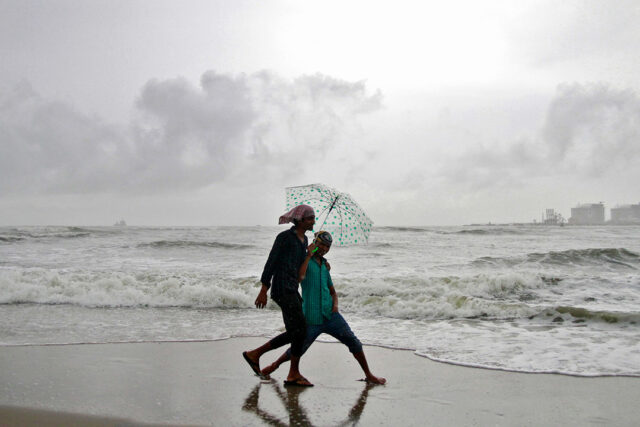
MUMBAI — Monsoon rains hit the coast of India’s southernmost state of Kerala on Saturday, eight days earlier than usual, marking the earliest arrival in 16 years and providing the promise of a bumper harvest and relief from a grueling heatwave.

The monsoon, the lifeblood of the country’s $4-trillion economy, delivers nearly 70% of the rain that India needs to water farms and replenish aquifers and reservoirs. Nearly half of India’s farmland, without any irrigation cover, depends on the annual June-September rains to grow a number of crops.

Summer rains usually begin to lash Kerala around June 1 before spreading nationwide by mid-July, allowing farmers to plant crops such as rice, corn, cotton, soybeans and sugarcane.

The onset of the southwest monsoon over Kerala on May 24 is its earliest onset since May 23, 2009, the India Meteorological Department (IMD) said on Saturday.

The monsoon has covered Kerala and parts of neighboring Tamil Nadu and Karnataka, as well as parts of the northeastern state of Mizoram, the IMD said.

Conditions are favorable for the monsoon’s further spread into Goa, parts of Maharashtra, Andhra Pradesh, the northeastern states, West Bengal, and the remaining parts of Karnataka and Tamil Nadu over the next 2 to 3 days.

Surplus pre-monsoon rainfall and an early monsoon onset will help farmers, especially in the southern and central states, to sow summer crops earlier than usual, said Ashwini Bansod, vice-president for commodities research at Phillip Capital India, a Mumbai-based brokerage.

“Abundant soil moisture and early sowing could potentially boost crop yields,” Bansod said.

Last year, the monsoon reached the coast of Kerala on May 30, and overall summer rains were the highest since 2020, supporting recovery from a drought in 2023.

The IMD last month forecast above-average monsoon rains for the second straight year in 2025.

The department defines average or normal rainfall as ranging between 96% and 104% of a 50-year average of 87 cm (35 inches) for the four-month season. — Reuters

Future queen of Belgium caught up in Harvard foreign student ban

PRINCESS ELISABETH, the 23-year-old future queen of Belgium, has just completed her first year at Harvard University but the ban imposed by US President Donald J. Trump’s administration on foreign students studying there could jeopardize her continued studies.

The Trump administration revoked Harvard University’s ability to enroll international students on Thursday, and is forcing current foreign students to transfer to other schools or lose their legal status in the US, while also threatening to expand the crackdown to other colleges.

“Princess Elisabeth has just completed her first year. The impact of (the Trump administration’s) decision will only become clearer in the coming days/weeks. We are currently investigating the situation,” the Belgian Royal Palace’s spokesperson Lore Vandoorne said.

“We are analyzing this at the moment and will let things settle. A lot can still happen in the coming days and weeks,” the Palace’s communication director, Xavier Baert, added.

Elisabeth is studying Public Policy at Harvard, a two-year master’s degree program that according to the university’s website broadens students’ perspectives and sharpens their skills for “successful career in public service.”

The princess is heir to the Belgian throne, as the eldest of four children born to King Philippe and Queen Mathilde. Before attending Harvard, she earned a degree in history and politics from the UK’s Oxford University.

Harvard said on Thursday the move by the Trump administration — which affects thousands of students — was illegal and amounted to retaliation. — Reuters

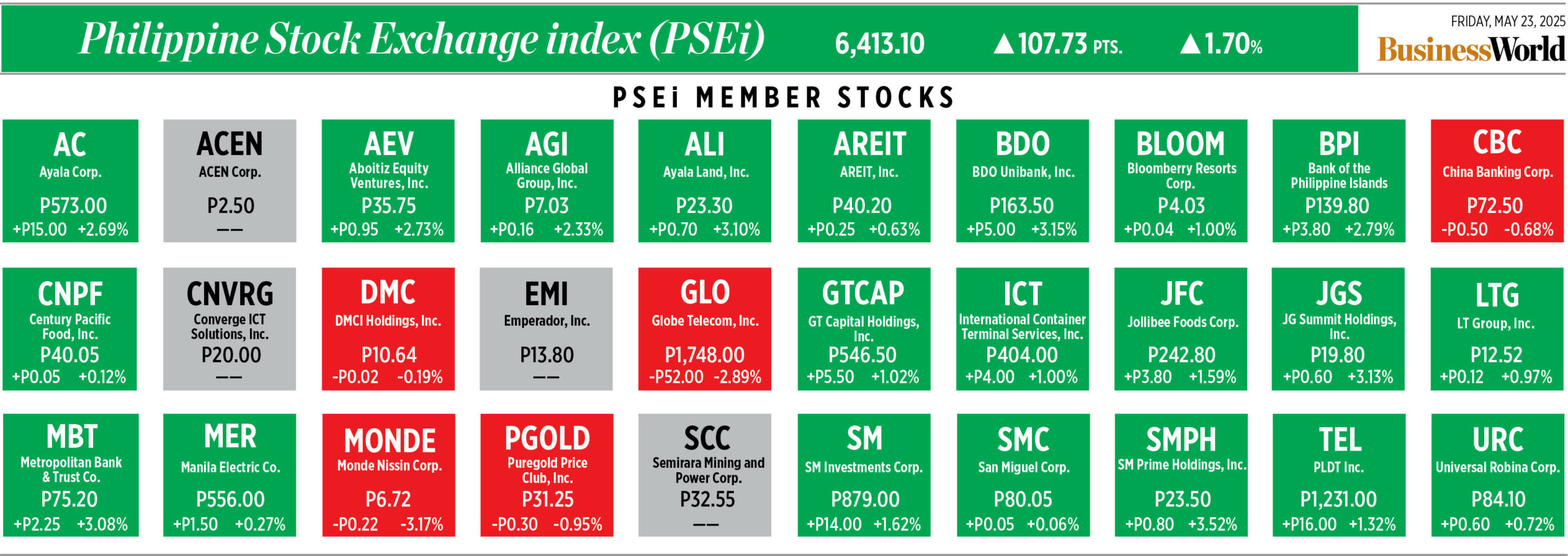
How PSEi member stocks performed — May 23, 2025

Here’s a quick glance at how PSEi stocks fared on Friday, May 23, 2025.


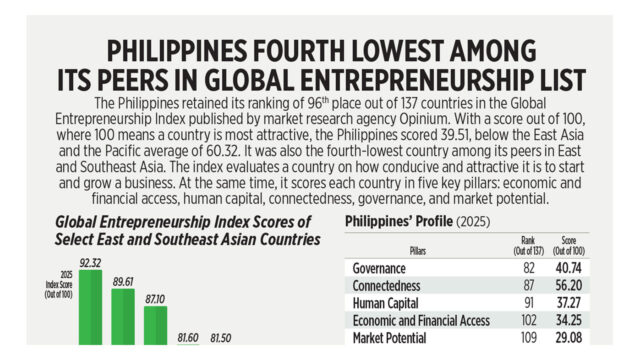
Philippines fourth lowest among its peers in global entrepreneurship list

The Philippines retained its ranking of 96th place out of 137 countries in the Global Entrepreneurship Index published by market research agency Opinium. With a score out of 100, where 100 means a country is most attractive, the Philippines scored 39.51, below the East Asia and the Pacific average of 60.32. It was also the fourth-lowest country among its peers in East and Southeast Asia. The index evaluates a country on how conducive and attractive it is to start and grow a business. At the same time, it scores each country in five key pillars: economic and financial access, human capital, connectedness, governance, and market potential.

Philippines fourth lowest among its peers in global entrepreneurship list

Peso may strengthen further vs dollar before Fed comments, US data

BW FILE PHOTO

THE PESO may strengthen further against the dollar this week ahead of a scheduled speech from the US Federal Reserve chief and key US economic data.

The local unit closed at P55.25 per dollar on Friday, jumping by 33.5 centavos from its P55.585 finish on Thursday, Bankers Association of the Philippines data showed.

This was the peso’s strongest finish in almost 22 months or since its P55.19 close on Aug. 2, 2023.

Week on week, the peso gained by 38.5 centavos from its P55.635-per-dollar close on May 16.

The peso’s surge on Friday was supported by the latest rate cut signals from the Bangko Sentral ng Pilipinas (BSP), Rizal Commercial Banking Corp. Chief Economist Michael L. Ricafort said in a Viber message.

“This can be attributed to a combination of positive sentiment from the US-China tariff truce, some dovish cues from the BSP and soft inflation data, which helped temper expectations of further tightening,” Philippine Institute for Development Studies Senior Research Fellow John Paolo R. Rivera likewise said in a Viber message on Friday.

BSP Governor Eli M. Remolona, Jr. said on Friday that the Monetary Board could cut rates two more times this year, with the next reduction on the table as early as next month.

“Maybe two more cuts. Not necessarily consecutive. Still 25 basis points (bps) at a time, given what we know about what’s going on,” Mr. Remolona said. “The hard part is we don’t know. It’s new territory for most central banks. That’s the most uncomfortable part.”

He said easing inflation gives them “plenty of room” to cut, although they don’t want to cut “too much” as this could stoke prices anew.

The Monetary Board in April cut benchmark interest rates by 25 bps to bring the policy rate to 5.5%. It has now lowered borrowing costs by a cumulative 100 bps since beginning its easing cycle in August last year.

There are four remaining Monetary Board policy meetings this year scheduled for June, August, October and December.

For this week, Mr. Ricafort said the peso could maintain its strength ahead of a scheduled speech by Fed Chair Jerome H. Powell overnight and the release of the minutes of the Fed’s April meeting on Wednesday.

The release of the latest estimate for first-quarter US gross domestic product and the personal consumption expenditure price index on Thursday could also drive peso-dollar trading this week.

“Key factors to watch would be global market mood post-US tariff truce, upcoming US inflation and jobs data, and local follow-through from April inflation and hints from the BSP on the pace of easing,” Mr. Rivera added.

Mr. Ricafort sees the peso moving between P55 and P55.50 per dollar this week, while Mr. Rivera said it could stay at the P55 level with a slight strengthening bias. — Aaron Michael C. Sy

Stocks may climb as BSP hints on two more cuts

PHILIPPINE STAR/KRIZ JOHN ROSALES

PHILIPPINE SHARES may climb this week on easing uncertainty at home and with the Bangko Sentral ng Pilipinas (BSP) hinting on more rate cuts this year.

On Friday, the Philippine Stock Exchange index (PSEi) rose by 1.7% or 107.73 points to end at 6,413.10, while the broader all shares index climbed by 1.04% or 38.61 points to 3,746.79.

Week on week, however, the PSEi dropped by 0.81% or 52.43 points from its 6,465.53 finish on May 16, ending its five-week winning run.

“Moody’s Ratings’ sovereign credit rating downgrade on the United States set the tone during the week, leading to volatile trades across markets. Recession odds continue to rise, and the US just recently losing its ‘Aaa’ credit rating,” online brokerage 2TradeAsia.com said in a market note.

“The local market broke its five-week winning streak last week as it fell amid a mix of negative factors from fiscal worries in the US to concerns over President Ferdinand R. Marcos, Jr.’s sudden move to revamp the government. On a positive note, the market was still able to close above the 6,400 level,” Philstocks Financial, Inc. Senior Research Analyst Japhet Louis O. Tantiangco said in a Viber message.

Mr. Marcos on Thursday last week called on Cabinet-level officials to resign as part of the government’s “bold reset.” On Friday, the administration announced that the President decided to retain his Trade, Finance, Budget, and Economic Planning secretaries.

For this week, Mr. Marcos’ decision to keep members of his Cabinet’s economic team may boost market sentiment as it eases uncertainty over the continuity of his administration’s policies, Mr. Tantiangco said.

“Signals from BSP Governor Eli M. Remolona, Jr. of two more possible rate cuts this year may also strengthen market confidence,” he said. “However, concerns over the outlook of the US’ fiscal position amid risks of increasing debt may continue to weigh on the bourse. Investors are also expected to watch out for fresh leads particularly on the trade negotiations with the US.”

Mr. Tantiangco said the PSEi may continue to test its 6,400 support, while resistance is seen at 6,600.

Rizal Commercial Banking Corp. Chief Economist Michael L. Ricafort said in an e-mail that the PSEi’s minor support is at 6,290-6,300 while resistance is at 6,500.

For its part, 2TradeAsia.com put the bellwether’s immediate support at 6,300 and resistance at 6,650.

“With risks leaning asymmetrical, mid-year outlook will be about finding balance amid macro and micro tensions. Gradual unfolding of the rate path plus fiscal policy will direct flows in the second half, on top of monitoring in margin and cash flow behavior at the corporate level amid elevated uncertainty on the ground,” it said.

“We suggest keeping positioning tight but curious, exposed where the data warrants, but patient where the signal remains incomplete,” it added. — Revin Mikhael D. Ochave