



Home Blog Page 1139

Style (08/18/25)


DiaGold, Cary Santiago holding gala show

THIS SEPTEMBER, two icons from Cebu will unite for an evening. Fine jewelry brand DiaGold will present a couture gala by fashion designer Cary Santiago at Shangri-La The Fort in Taguig. Mr. Santiago will unveil a 50-piece couture collection inspired by the movement and grace of plumage, reimagined with a modern softness. The show will mark Mr. Santiago’s solo return to Metro Manila’s runways after a decade. As both producer and the creative force behind the show, DiaGold will debut a high jewelry collection specially designed to complement Mr. Santiago’s couture, featuring organic forms, rich jewel tones, and elegant craftsmanship. DiaGold has branches at Ascott Makati, Glorietta 1, SM Grand Central, SM City Iloilo, SM City Cebu, SM Seaside City Cebu, Ayala Malls Capitol Central Bacolod, Ayala Center Cebu, and Nustar Resort & Casino. For more information, visit www.diagold.com.ph, or follow @diagoldjewelry on Instagram and Facebook.


Avon launches Ultra Lipstick Collection

IN CELEBRATION of Lipstick Month, Avon released 10 new shades of its Ultra Lipstick, a global favorite with one sold every eight seconds. Each Ultra Lipstick is packed with 25% more pigment for high-impact color in one swipe and is enriched with ingredients like Vitamin E, and a blend of natural oils for comfortable wear. Whether a customer opts for Ultra Creamy or Ultra Matte, their lips will stay nourished. New Ultra Matte Shades include Maiden Mauve, Smokey Brown, Terracotta Rouge, Ravishing Rose, and Lush Cocoa. Meanwhile, new Ultra Creamy Shades include Dirty Red, Toasted Rose, Pink Dream, Country Rose, and Cinnamon Vibe. The new Ultra Lipstick shades are available through Avon representatives, or online via Shopee, Lazada, TikTok Shop, and in-store at Watsons and SM Beauty.


HOKA launches new trail shoe

HOKA introduces the Mafate 5, the latest evolution of the brand’s iconic trail franchise. Engineered to help ultra-runners conquer trails with confidence, the Mafate 5 delivers enhanced durability, adaptability, and cushioning for long-haul endurance on rough terrain. The Mafate 5 is available now on HOKA.com and at authorized dealers worldwide. The Mafate 5 debuts the all-new Rocker Integrity Technology that helps maintain rocker shape over multiple miles. This curved plate, made from light, pliable TPU, delivers snap with every step. Placed between a firmer SCF EVA layer directly underfoot and a softer CMEVA foam layer beneath it, the shoe boasts a suspended ride experience unlike its predecessors and redefines traditional dual-density foam systems. This new technology allows the shoe to absorb uneven terrain and adapt to the trail, while maintaining a responsive foot strike and efficient toe-off. The outsole utilizes Vibram® Megagrip with Traction Lug technology, ensuring grip on any surface. The Mafate 5 is available at HOKA exclusive stores in One Ayala Mall, GH Mall, SM Aura, Ayala Malls Manila Bay, and R.O.X. Bonifacio High Street.


Foot Locker, reimagined

MAP ACTIVE Philippines, Inc., an exclusive partner of Foot Locker in Southeast Asia, announced the opening of the first Foot Locker Reimagined store in the Philippines. Launched on Aug. 15, this new concept store marks the brand’s 18th store in the Philippines. Key features of the Reimagined store include a focused section showcasing latest drops, displays designed to highlight key features and innovations, a communal try-on area, and an Omni Hub offering exclusive personalization experiences like custom lacing and Omni-channel ordering. Customers can shop an assortment across footwear, apparel, accessories, and shoe care, featuring top global brands including Nike, adidas, Jordan, New Balance, ON, Hoka, Puma, Converse, Salomon, Asics, New Era, Crep Protect, Forcefield, and more. Exclusive drops and product launches are expected throughout the year. The store is located on the R2 Level, Power Plant Mall in Makati.

Ethical collaboration builds trust and ensures patient well-being

STOCK PHOTO | Image by CDC from Unsplash

In today’s evolving healthcare landscape, the partnership between research-based pharmaceutical companies and healthcare professionals (HCPs) remains a cornerstone of patient well-being and medical progress. Rooted in a shared commitment to patients, evidence, innovation, and ethics, this collaboration ensures that life-saving therapies are not only developed with scientific rigor but also reach the people who need them most.

The Pharmaceutical and Healthcare Association of the Philippines (PHAP) regards HCPs, including doctors, nurses, pharmacists, and clinical practitioners, as indispensable partners in saving lives and improving health outcomes. PHAP is committed to transparency and accountability, and we deeply value the contributions of all healthcare professionals, particularly physicians who tirelessly serve at the frontlines of patient care. Respect for their dedication and professionalism is fundamental to our work.

Integrity is the foundation of these partnerships. At the heart of everything we do lies a singular priority: the health and well-being of patients. We believe that integrity and ethical practice are collective responsibilities shared by all healthcare stakeholders without exception. This is why PHAP and its members adhere to strict self-regulatory measures anchored on ethical interactions, ensuring that medical decisions are made in the best interests of patients. But we also recognize that no one sector can do this alone.

As the Philippine counterpart of the International Federation of Pharmaceutical Manufacturers & Associations (IFPMA), PHAP has been at the forefront of promoting ethical interactions in the healthcare community. In 2018, healthcare organizations adopted the Philippine Consensus Framework for Ethical Collaboration, based on the global “Consensus Framework for Ethical Collaboration Between Patients’ Organizations, Healthcare Professionals, and the Pharmaceutical Industry.”

This global framework, first launched in 2014, was developed by leading organizations including the IFPMA, the International Alliance of Patient Organizations, the World Medical Association, the International Council of Nurses, the International Pharmaceutical Federation, and the International Hospital Federation.

Locally, the signatories include PHAP, the Philippine Alliance of Patient Organizations, the Philippine Medical Association, the Philippine Pharmacists Association, and the Philippine Nurses Association. In a historic milestone last year, all 87 Department of Health-retained hospitals signed the Philippine Consensus Framework for Ethical Collaboration, signaling a nationwide commitment to principled healthcare partnerships.

The Consensus Framework outlines seven guiding principles that shape interactions across the healthcare sector:

First, “Put Patients First.” Patients must always remain the top priority in every healthcare decision.

Second, “Support Ethical Research and Innovation.” Partners encourage and engage in basic and applied research, ensuring that clinical trials and health studies are conducted ethically to generate new knowledge that benefits public health.

Third, “Ensure Independence and Ethical Conduct.” Interactions between stakeholders must remain ethical, professional, and free from undue influence.

Fourth, “Promote Transparency and Accountability.” Institutions and individuals alike must support openness and accountability in all activities.

Fifth, “Establish Trust and Solidarity.” Integrity and honesty must guide every action, with truthful communication and shared responsibilities to improve patient care.

Sixth, “Prioritize Quality Care and Innovation.” Healthcare must advance patient well-being and safety through evidence-based, innovative solutions, particularly in times of crisis.

Seventh, “Respect for All.” Every patient, healthcare worker, institution, and organization deserve dignity, fairness, and respect for their values, rights, and privacy.

The abovementioned principles create a culture of trust where collaboration flourishes and patient welfare is always safeguarded.

Beyond the Consensus Framework, the biopharmaceutical industry in the Philippines has established the PHAP Code of Practice, which aligns with global and regional standards as well as national laws. The Code preserves the independence of healthcare professionals in prescribing medicines and underscores that all industry relationships must support HCPs in fulfilling their professional duties to patients.

The Code requires PHAP members to uphold the highest ethical standards in all engagements with healthcare providers, patient organizations, and communities. Compliance is a prerequisite for PHAP membership and is overseen by an independent ethics committee composed of respected leaders from health and academe.

PHAP has also supported the Department of Health in developing and adopting guidelines on the promotion and marketing of prescription medicines and medical devices. These guidelines are aligned with international commitments, such as the 2011 Mexico City and Kuala Lumpur Business Codes of Ethics endorsed by APEC heads of state, including the Philippines.

The Consensus Framework is document which emphasizes that the healthcare sector must never be reduced to a battlefield of competing interests. Instead, it should serve as a platform for constructive collaboration where patients benefit from the combined strengths of government, healthcare professionals, the industry, civil society, and the media.

Ethical interactions build the trust necessary for progress. They ensure that innovations reach patients fairly, that healthcare decisions are guided by science and integrity, and that the system as a whole remains resilient in the face of challenges.

PHAP calls on all stakeholders — from healthcare professionals, patient groups, industry leaders, government, media, to civil society — to continue working together to uphold the highest ethical standards. By doing so, we ensure that patient welfare is always placed above all else.

Our first and ultimate loyalty is, and must remain, to the Filipino patient. Collaboration rooted in ethics is the best way to honor that loyalty and to build a healthcare system that is both trustworthy and sustainable.


Teodoro B. Padilla is the executive director of Pharmaceutical and Healthcare Association of the Philippines which represents the biopharmaceutical medicines and vaccines industry in the country. Its members are at the forefront of developing, investing and delivering innovative medicines, vaccines and diagnostics for Filipinos to live healthier and more productive lives.

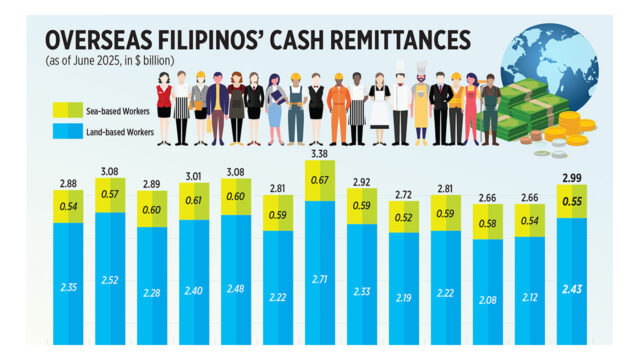
Overseas Filipinos’ Cash Remittances

MONEY SENT home by Filipinos abroad grew faster in June to hit a six-month high, driven by remittances from land-based workers, the Bangko Sentral ng Pilipinas (BSP) said.
Read the full story.

Overseas Filipinos’ Cash Remittances

UK rules out bioethanol industry bailout

PHILSTAR FILE PHOTO

LONDON —  Britain’s government will not provide financial support to the struggling bioethanol industry, leaving a sector hit hard by the UK’s tariff deal with US President Donald Trump facing imminent collapse.

The failure of the industry, which supports thousands of jobs, could prove to be an embarrassment for Prime Minister Keir Starmer, who hailed May’s trade deal as a boost to businesses that would protect employment and attract investment.

It would also serve as a stark example of the global impacts of Mr. Trump’s reordering of world trade, with the industry’s collapse set to deal a blow to production of byproducts including animal feed and carbon dioxide as well as the British farmers who supply the sector.

“We … have taken the difficult decision not to offer direct funding as it would not provide value for the taxpayer or solve the long-term problems the industry faces,” a government spokesman said.

The spokesperson said the trade deal had protected hundreds of thousands of jobs in the auto and aerospace industries.

However, under the agreement, the UK’s 19% tariffs on US ethanol fell to zero, through a 1.4 billion-liter quota — a figure equivalent to the size of the UK’s entire ethanol market.

Bioethanol is produced from crops such as wheat and is used to make automotive fuel greener and to produce sustainable aviation fuel.

In June, Starmer’s government launched its industrial strategy, promising to invest in the green economy.

Britain has two major bioethanol plants in northern England — Associated British Foods’ Vivergo plant and one operated by Ensus, owned by Germany’s Sudzucker Group — which account for nearly all of its production capacity.

Both groups have said the trade deal, along with existing regulations that already gave US producers an advantage in the British market, had made the environment impossible.

AB Foods, which had said in June it would shutter the Vivergo plant unless the government stepped in with an aid package, said on Friday it would start an orderly closure process immediately with production of bioethanol and animal feed ceasing by Aug. 31.

“It is deeply regrettable that the government has chosen not to support a key national asset,” a spokesperson for AB Foods said, adding that the decision threw away Britain’s sovereign capability in clean fuels.

“Jobs in clean energy will now move overseas — principally to the US but also to other countries with a more sensible regulatory environment,” the spokesperson added.

Ensus’ plant will remain open, for the time being at least.

Ensus’ plant differs from Vivergo’s in that it also produces carbon dioxide which is used in the soft drinks, packaged foods and nuclear industries and in hospitals. Ensus produces up to 60% of the UK’s annual needs.

Grant Pearson, chairman of Ensus UK, said the government was looking at options to secure an ongoing supply of carbon dioxide from its facility.

“Urgent discussions will be taking place to provide a level of assurance to the Sudzucker and CropEnergies Boards that there is a very high level of confidence that an acceptable long term arrangement can be reached,” he said. CropEnergies is another unit of Sudzucker.

Separately, the government said it was looking at increasing the amount of ethanol in UK fuel from the current 10% to assist the industry, though that will come too late for Vivergo. Reuters

How PSEi member stocks performed — August 15, 2025

Here’s a quick glance at how PSEi stocks fared on Friday, August 15, 2025.


Bargain hunting, BSP easing hopes may lift PSEi

BW FILE PHOTO

PHILIPPINE STOCKS may continue to move sideways this week and get a lift from hopes of further monetary easing and bargain hunting as investors wait for new catalysts.

On Friday, the bellwether Philippine Stock Exchange index (PSEi) rose by 0.38% or 24.08 points to close at 6,315.93, while the broader all shares index increased by 0.21% or 8.20 points to 3,751.23.

Week on week, however, the PSEi fell by 0.37% or 23.45 points from the 6,339.38 finish on Aug. 8.

“The PSEi closed marginally lower [last] week as investors sifted through second-quarter earnings data while weighing a potential Federal Reserve rate cut,” online brokerage 2TradeAsia.com said in a market note.

“Profit taking took over last week as local economic concerns weighed on sentiment. The local market has been alternately moving between gains and losses for 10 weeks already as investors remain indecisive of its direction,” Philstocks Financial Inc. Research Manager Japhet Louis O. Tantiangco said in a Viber message.

For this week, Philippine shares could remain range-bound, he said.

“With the market at attractive levels, we may see some bargain hunting in this week’s trading,” Mr. Tantiangco said. “A strong rally is not expected, however, unless we see fresh positive leads. Investors are still expected to maintain a cautious stance while waiting for new catalysts.”

He added that expectations of a rate cut at the Bangko Sentral ng Pilipinas’ (BSP) Aug. 28 policy meeting could give the market support.

Last week, BSP Governor Eli M. Remolona, Jr. said a rate cut is “quite likely” at their meeting this month as inflation is likely to settle within its annual target.

The central bank has lowered borrowing costs by 125 basis points (bps) since it began its easing cycle in August 2024, bringing the benchmark rate to 5.25%.

Mr. Remolona said they are expecting to deliver two more rate cuts this year. However, three reductions are “unlikely.”

Mr. Tantiangco said the PSEi is expected to trade between 6,150 and 6,400 this week. “From a technical standpoint, the local market is still bearishly biased as it continues to form lower highs.”

Meanwhile, Rizal Commercial Banking Corp. Chief Economist Michael L. Ricafort put the PSEi’s support at 6,204.04 and resistance at 6,591.94.

“BSP Governor Remolona reiterated dovish signals on possible monetary easing in terms of possible two 25-bp rate cuts for the rest of 2025 amid benign inflation and external uncertainties that could slow down local economic growth, signaling policy priority of boosting the local economy,” Mr. Ricafort said in an e-mail.

2TradeAsia.com placed the PSEi’s immediate support at 6,250 and resistance at 6,550.

“The divergence between a potential global risk-on rally and local market lull creates a tactical consideration for market participants… The impending easing cycle may be a significant potential catalyst for equities,” it said. — Revin Mikhael D. Ochave

Rice, pork prices fall in early August

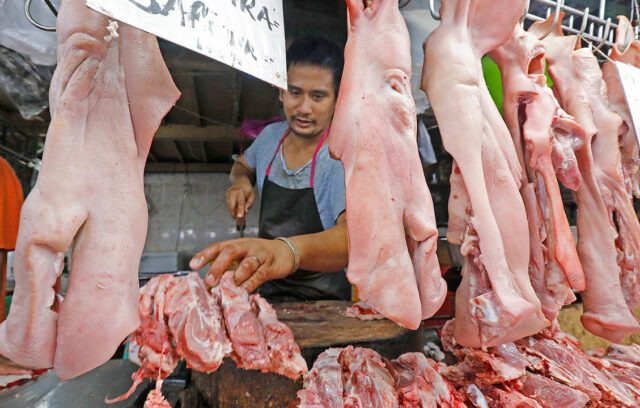
A MEAT VENDOR at the Marikina Public Market. — PHILIPPINE STAR/ WALTER BOLLOZOS

THE average retail price of rice fell to P47.15 per kilogram in the Aug. 1-5 period, which the Philippine Statistics Authority (PSA) calls the first phase of August, against P48.20 per kilo in the second phase of July.

The PSA said in a report that the month-earlier price had averaged P48.51.

The PSA said fresh bone-in pork averaged P333.74 per kilo at retail in the first phase of August, against P337.74 in the second phase of July and P338 in the first phase of July.

Meanwhile, the average retail price of galunggong (round scad) rose to P227.60 per kilo in early August from P220 in the second phase of July and P216.01 a month earlier.

A kilo of carrot fetched P169.69 at retail in the first phase of August, against P120.91 in the second phase of July and P115.38 in the first phase of July.

It said- carabao mango retailed for P164.07 per kilo in the first phase of August against P160.30 in late July and P156.33 in early July.

The average retail price of cooking oil rose to P184.47 per liter in early August from P182.72 in the second phase of July P182.16 a month earlier. — Kyle Aristophere T. Atienza

NGCP seeks expedited approvals to connect offshore wind projects

BUHAWIND.COM.PH

THE National Grid Corp. of the Philippines (NGCP) said it will require support to obtain expedited permits to connect offshore wind projects to the grid.

NGCP Assistant Vice-President Cynthia P. Alabanza said in a recent briefing that it is “very critical… to provide support to the transmission service provider in terms of approvals and cost recovery.”

The Philippines is aiming to unlock the potential of offshore wind for gigawatt-scale power generation, with the grid capacity deemed adequate for the projects being lined up.

She noted that the typical timeline for bringing offshore projects online is “7-10 years… even in developed countries,” but added that the grid can accommodate the projects currently being developed.

To date, the NGCP has 10,260 megawatts (MW) worth of capacity available for new power generation assets.

“Our actions in planning generation should be aligned and moving in the same direction (with transmission), so we can identify which areas to prioritize when new plants are quickly coming online,” Ms. Alabanza added.

The Department of Energy is preparing for the auction stage of the fifth green energy auction round (GEA-5) focused on offshore wind. This round will offer 3,300 MW of capacity, with installation targeted for between 2028 and 2030.

The NGCP recently started to recover its maximum allowable revenue and under-recovery, equivalent to an increase of P0.1013 per kilowatt-hour in the transmission charge.

This forms part of NGCP’s fourth regulatory period reset, spanning the 2016 to 2022 period. — Sheldeen Joy Talavera

Finnish elevator company KONE banks on market growth outside Metro Manila

KONE.US

By Justine Irish D. Tabile, Reporter

URBANIZATION outside Metro Manila is expected to drive demand for building modernization and elevator and escalator solutions, according to Finland’s KONE Corp.

“The megatrends are all positive, like urbanization, gross domestic product growth, the relatively young population, and how it’s driving people to the cities,” KONE Managing Director for the Philippines Petteri Kyrklund said on the sidelines of KONEct 2025 on Friday.

“There’s the trend that digitalization is also something that is helping the smart city initiatives. Many cities have already existing initiatives to make the cities smarter, greener, and sustainable. So all the megatrends are supporting long-term growth,” he added.

In particular, KONE projects the size of the Philippines’ elevator and modernization market to hit $52.6 million by 2030.

However, Mr. Kyrklund said he expects developments outside Metro Manila to drive growth for companies like KONE.

“I think it’s going to be more and more outside. Of course, most of the projects are still in Metro Manila. Modernization is 90% probably in Metro Manila, but the new-building growth will be more and more outside,” he said.

“This makes sense to me because why would you want to over-congest one place over others? So we already see massive growth in Bacolod, Cebu, Iloilo, and Davao. There are many places where the growth is going to be more and more,” he added.

He estimated the urbanization rate in the Philippines at about 49%, indicating that about 50 million people living in cities.

“By 2050, it is estimated to double, so it is going to be over 100 million. So, obviously this will put a lot of pressure on urbanization and the need to build taller and to have smart cities,” he said.

“The Philippines is a sizable market. It is a good market to be in because there are opportunities, and there is growth. The modernization market, I think, after Singapore, is very big here because there are also a lot of old buildings here,” he added.

He said that residential projects remain the industry’s biggest market.

“That is not specific to the Philippines. I think that is everywhere. So then we have office, retail, and hotels. And one that is growing very fast is medical. But residential continues to be the biggest,” he said.

He said most developers have been moving towards retail and hospitality but noted that the trend might be short-lived.

“In the long term I expect all of these residential buildings will bounce back. There is a lot of need for residential buildings in the Philippines, especially outside Metro Manila,” he added.

On Friday, the company introduced its KONE High-Rise MiniSpace DX elevator, which is designed for new and existing buildings over 150 meters.

PCC clears INFRONEER purchase of Sumitomo Mitsui Construction

NSCR.SMCON.COM

THE Philippine Competition Commission (PCC) said that it has cleared the acquisition of Japan’s INFRONEER Holdings, Inc.’s of Sumitomo Mitsui Construction Co., Ltd.

“In its review, the PCC found that the two companies do not have horizontal overlaps — that is, they do not operate in the same line of business — and no vertical relationships, such as one company supplying goods or services to the other,” the PCC said in a statement sent over the weekend.

INFRONEER plans to acquire Sumitomo through a public takeover bid.

INFRONEER is involved in infrastructure services, while its subsidiaries are involved in construction, paving, manufacturing, and construction machinery sales.

According to the PCC, INFRONEER does not have direct construction operations in the Philippines.

“Because of this, the Commission concluded that the transaction is unlikely to result in a substantial lessening of competition in the local construction and infrastructure sector,” it added.

Sumitomo Mitsui Construction is active in Philippine infrastructure projects funded by Japanese official development assistance.

Its completed projects in the Philippines include the Taganito Hydrometallurgical Processing Plant Project, the Agas-Agas Bridge Project, and the Northern Negros Geothermal Power Plant.

It is also involved in the Metro Manila Subway Project and the North-South Commuter Railway Project.

“This assessment is part of the PCC’s mandate to ensure that mergers and acquisitions do not harm competition, restrict consumer choice, or hinder innovation in Philippine markets,” the PCC said.

“The PCC can also review transactions involving foreign entities if these meet the notification thresholds under the Philippine Competition Act,” it added.

If realized, the transaction will make Sumitomo Mitsui Construction a wholly owned subsidiary of INFRONEER along with Maeda Corp., Maeda Road, Maeda Seisakusho, and Japan Wind Development.

According to a notice dated May 14, the company aims to start the process of business integration in December. — Justine Irish D. Tabile

Financial confidence growing in PHL but savings still low

PHILSTAR FILE PHOTO

THE feeling of financial security and confidence in the short term is growing, though long-term confidence is weaker, according to the findings of a survey by Sun Life of Canada, Inc.

“These findings highlight both the resilience and the vulnerability of Filipino households. We are encouraged by the growing financial confidence and commitment to saving, but it’s clear that more support is needed to help families plan for the long term. Sun Life remains committed to empowering Filipinos through financial education, innovative products, and community engagement,” Sun Life Philippines Chief Executive Officer and Country Head Benedict C. Sison said in a statement.

Sun Life surveyed 1,000 respondents from the Philippines between April and May 2025.

Some 66% said they were confident in their ability to manage month-to-month finances, up from 57% a year earlier.

However, long-term financial confidence fell to 64% from 72% due to limited emergency savings.

“One in three Filipinos say that they could not last more than three months without external support following income loss or serious illness,” Sun Life said.

The survey also indicated that respondents are forced to  delay major purchases to focus on day-to-day survival.

Some 61% said they are focused on managing day-to-day expenses over the next 12 months, with 45% saying they are building emergency funds. Starting a business and paying or saving for their children’s education tied at 34%.

When asked what respondents will focus on in the next three to five years, the top priority was building financial security.

About 45% said their long-term priority is saving for retirement, followed by saving for a home and building a financial legacy for their children at 39%, then building an emergency fund at 37%.

“This shift underscores the impact of inflation and cost-of-living concerns on financial planning.

Nearly all respondents reported that inflation has affected their ability to cover monthly expenses. The biggest cost increases were seen in food (73%), energy (60%), health (43%), and transportation (41%). In response, many are cutting non-essential spending and educating themselves about personal finance,” Sun Life said.

“Trust in banks (55%) remains high but has slightly declined, and cost remains a barrier to seeking professional advice. The rise of AI and digital sources reflects growing comfort with self-guided learning,” Sun Life said.

The survey also found a growing commitment to financial discipline, with 67% of respondents saying they save or invest at least 10% of their income, with 78% reviewing their investments at least monthly. — Aaron Michael C. Sy

ADB includes PHL agriculture in PPP Monitor

BW FILE PHOTO

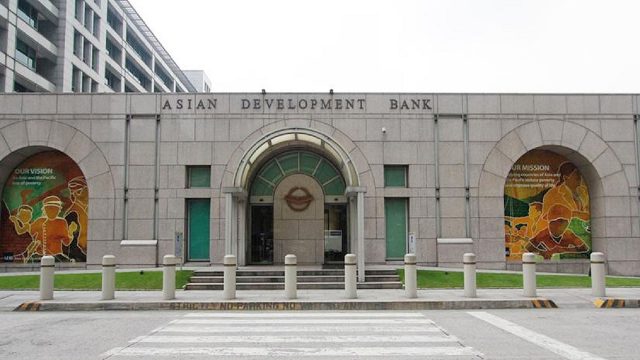
THE ASIAN Development Bank (ADB) said it included agriculture projects in the 2025 edition of its public-private partnerships (PPP) monitor for the Philippines.

“We have conceived this product as a comprehensive reference document of developing member countries’ PPP environment. It has details on the PPP regulatory and legal framework at the national and local level and also detailed analysis of sectors that are covered in the monitor, including transport, energy, as well as solid waste, health, education, housing, and financial. And for the first time, and for the Philippines, it includes agriculture and fishery. The reason for that is because we aligned the document with the country partnership strategy between Philippines and ADB, which highlights the catalytic role of the private sector in food security,” Isabelle Chauché, ADB Office of Markets Development and PPP, said in a speech on Friday.

A flagship ADB publication, the PPP Monitor profiles a country’s ability to successfully build and sustain PPPs.

The downloadable documents can be used by investors to identify priority sectors and helps governments identify gaps in legal, regulatory, and institutional frameworks.

“Agriculture is an important and timely focus. It is a priority for the government. It’s a priority for the Asian Development Bank. We together with the Department of Agriculture and other partners have been engaging with the private sector in ventures, such as the Dali supermarket chain. We are exploring opportunities in aquaculture and fishing ports etc.,” ADB Southeast Asia Department Director General Winfried F. Wicklein said.

The ADB noted that challenges remain in the Philippines’ PPP landscape, including delays in right-of-way or site acquisition by the government, political and regulatory risks, challenges within the implementing agencies such as weak absorptive capacity and coordination, and climate impacts.

Ms. Chauché added that climate change also poses a risk to PPPs in the Philippines, and cited “the need to properly assess any PPPs structure before processing.”

From 1990 to 2023, Ms. Chauché said 305 Philippine projects qualified as PPPs, valued at $25 billion to $50 billion.

“The PPP market growth has been driven by an active private sector and availability of liquidity.

57% of the PPP procurement has been done through unsolicited proposals. So as the capacity of the government and the LGU (grow), we expect this number to decrease to the single digits, as is the case of most of the PPP markets in the developed world,” she said.

“We are increasingly ramping up our work also with private sector on a non-sovereign basis,” Mr. Wicklein said. — Aaron Michael C. Sy

ADVERTISEMENT
ADVERTISEMENT