Home Blog Page 112

South Korean alleged ‘drug lord’ running ring from Philippines jail extradited

TIM HUFNER —UNSPLASH

SEOUL — South Korean police on Wednesday took into custody an alleged “drug lord” accused of running a narcotics ring in the country from a Phillipines prison, officials said on Wednesday.

Park Wang-yeol, who was serving a 60-year term for triple homicide, was flown to South Korea on Wednesday on temporary extradition, after President Lee Jae Myung requested the handover to Philippine President Ferdinand R. Marcos Jr. at a summit meeting earlier this month.

The temporary clause under a treaty between the two countries halts the sentence in the Philippines to allow the suspect to be investigated in South Korea, foreign and justice ministry officials in Seoul said.

South Korean authorities have said Mr. Park, believed to be 47, operated an alleged a ring smuggling “large quantities” of illegal narcotics and conspiring with accomplices in the country to distribute them.

Justice ministry and police officials declined to comment on the scale or value of Mr. Park’s alleged drug trade. Some South Korean local media reported he had been distributing about 60 kilograms of methamphetamine a month with street value of 30 billion won ($20 million).

Illegal drug use in South Korea has steadily grown despite a tough anti-drugs policy and crackdown on illicit drug imports and sales.

President Lee thanks Mr. Marcos for Mr. Park’s extradition and said the country “will chase anyone harming the country to the end of the earth.”

It was important to ensure Mr. Park was investigated and face trial in South Korea so his alleged involvement in illegal activities while under incarceration abroad does not become an example for potential copycat criminals, the foreign ministry said separately in a statement.

Mr. Park had broken out of Philippines prison twice taking advantage of inadequate inmate supervision that allowed some prisoners to use smuggled mobile phones and continue illegal activities, Justice Ministry official Lee Ji-yeon and police official Yoo Seung-ryeol told a briefing.

Philippine government officials could not be immediately reached for comment. ($1 = 1,498.3700 won) — Reuters

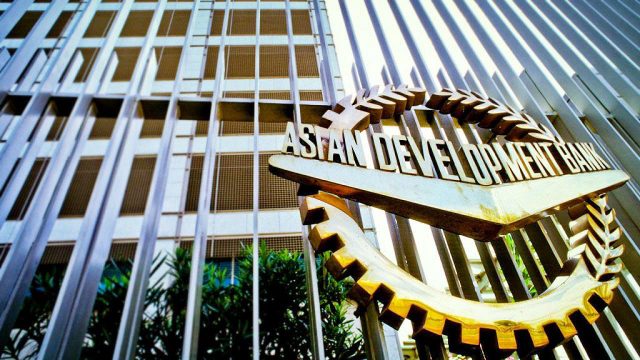
ADB announces support package for developing member states hit by Middle East conflict

MANILA — The Asian Development Bank announced on Tuesday a financial support package to help developing member countries mitigate the economic impact of the Middle East conflict.

ADB President Masato Kanda said in a statement the lender will deliver “fast-disbursing budget support and trade and supply chain finance to secure the import of essential goods now, including oil.”

The ADB did not provide details on the size of the package.

  • The ADB said the financial support has two main components. First, is the use of the Countercyclical Support Facility to help stabilize economies and mitigate the impact of shocks on vulnerable groups.
  • The second is the Trade and Supply Chain Finance Program support to keep critical imports, especially energy and goods, flowing, including the temporary reactivation of oil import support.
  • The ADB said it has started discussions with all severely affected developing member countries on possible immediate support.

Reuters

Trump cites progress with Iran, US proposes plan to end war

A drone view shows part of an Iranian missile that landed on a building's roof, amid the US-Israel conflict with Iran, in East Jerusalem March 16, 2026. — REUTERS

ISLAMABAD/JERUSALEM — US President Donald Trump said on Tuesday the US was making progress in its efforts to negotiate an end to war with Iran, including winning an important concession from Tehran, while a source confirmed that Washington had sent Iran a 15-point settlement proposal.

Mr. Trump told reporters at the White House the US was talking to “the right people” in Iran in order to reach a deal to end hostilities, adding the Iranians wanted to reach a deal very badly.

“We’re in negotiations right now,” he said.

Tehran has denied that direct talks have taken place. Iran’s powerful parliament speaker Mohammad Baqer Qalibaf on Monday dismissed such reports as “fake news.”

The New York Times reported on Tuesday that Washington sent Iran a 15-point plan to end the war in the Middle East. Israel’s Channel 12, quoting three sources, said the US was seeking a month-long ceasefire to discuss the 15-point plan.

A source familiar with the matter confirmed that the US had sent a plan to Iran but provided no further details.

The Israeli media outlet said the plan would include the dismantling of Iran’s nuclear program, ceasing support for proxy groups, and the reopening of the Strait of Hormuz.

Israeli Prime Minister Benjamin Netanyahu’s office did not immediately respond to a request for comment.

Mr. Trump told reporters at the White House that Iran had made a valuable concession related to non-nuclear energy and the Strait of Hormuz, although he did not elaborate.

Iran has told the United Nations Security Council and the International Maritime Organization that “non-hostile vessels” may transit the Strait of Hormuz if they coordinate with Iranian authorities, according to a note seen by Reuters on Tuesday.

Iran has effectively shut the waterway, where 20% of the world’s oil normally transits, since the US and Israel launched attacks four weeks ago, creating the worst energy supply shock in history and sending fuel prices soaring.

“It was a very big present, worth a tremendous amount of money,” Mr. Trump said in his comments on Iran, adding: “It was a very nice thing they did.”

But US, Israeli, and Iranian strikes continued and sources said Washington was preparing to send more troops to the region.

Two people familiar with the matter told Reuters on Tuesday that the US was expected to send thousands of soldiers from the Army’s elite 82nd Airborne Division to the Middle East.

The forces will add to the 50,000 US troops already in the region and accelerate Washington’s massive US military buildup there, fueling fears of a longer conflict.

Pakistan’s prime minister said on Tuesday that he was willing to host talks between the US and Iran on ending the war, a day after Mr. Trump postponed threats to bomb Iranian power plants, saying there had been “productive” talks.

In a post on X, Prime Minister Shehbaz Sharif said Pakistan fully supported ongoing efforts to pursue dialogue and was ready to host “meaningful and conclusive talks for a comprehensive settlement.”

A Pakistani government source said discussions on a meeting were at an advanced stage and if it did happen, “a big ‘if’,” it would take place within a week. Pakistan has long-standing ties to neighboring Iran’s Islamic Republic and has been building a relationship with Mr. Trump.

The US and Israel launched strikes on Iran on February 28 after saying they had failed to make enough headway in talks aimed at ending Iran’s nuclear program, although mediator Oman said significant progress had been made. — Reuters

Philippines working with Washington to obtain oil from US-sanctioned countries

REUTERS

MANILA — The Philippines is working with Washington to secure waivers and exemptions that will allow it to obtain oil from US-sanctioned countries and guarantee supplies, its ambassador to the United States said.

The Philippines, which relies heavily on imported fuel, declared a state of national energy emergency on Tuesday to deal with the fallout from the Middle East war, including the disruptions to oil procurement.

“We are working with the State Department to get waivers or exemptions to purchase oil from US-sanctioned countries,” Jose Manuel Romualdez, Philippine ambassdor to the US, told Reuters in an exchange of phone messages.

Asked if imports of oil from Venezuela and Iran were part of the discussions, Mr. Romualdez said “all options are being considered.”

Asked what has been the response from the State Department, the ambassador said: “Work in progress.”

As of March 20, the government said the Philippines had around 45 days of fuel supply, and is procuring 1 million more barrels of oil to build its buffer stock.

Philippine President Ferdinand R. Marcos Jr. said in a televised address on Wednesday that the country’s fuel supply would not run dry after 45 days as his government has been looking for other sources.

“We are exploring other sources not affected by the war,” Mr. Marcos said. “Things are beginning to open up…we can be confident that after the 45 days we will have a flow of oil.”

The Philippines imports almost all of its crude from the Middle East, with Saudi Arabia its biggest supplier, making it vulnerable to oil price shocks and supply disruptions.

Mr. Marcos said the emergency declaration was a “precautionary tool” allowing the government to be ready “for whatever comes next.”

The declaration, which will be in effect for one year, authorizes the government to purchase fuel and petroleum products and pay a portion of the contract amount in advance to ensure timely and sufficient supply, among other special powers.

“We should not panic,” Mr. Marcos said, while assuring the public that his government is doing everything it can to alleviate the situation.

Transport workers, commuters, and consumer groups are planning a two day strike from Thursday to protest the increase in fuel prices and what they describe as the Marcos administration’s failure to act.

Manila has temporarily increased coal-fired generation due to energy supply pressures and allowed the temporary and limited use of cheaper but dirtier Euro II fuel to ensure supply.

At least two Russian ESPO crude cargoes are heading to the Philippines this month, while a cargo of Abu Dhabi Murban crude is expected to arrive at its Bataan terminal on April 8, Kpler data showed.

The shipment would be the country’s first imports of Russian crude oil in five years, following a 30-day waiver issued by the United States.

Washington on Friday also issued a 30-day sanctions waiver for the purchase of Iranian oil already at sea. The waiver applies to oil loaded on any vessel on or before March 20 and discharged by April 19, including tankers under sanctions. — Reuters

Philippines declares energy emergency over Middle East conflict risks

President Ferdinand R. Marcos, Jr. answers questions from the media after his first Cabinet meeting at the Heroes Hall of the Malacañan Palace, July 5. — PHILIPPINE STAR/KRIZ JOHN ROSALES

MANILA – Philippine President Ferdinand R. Marcos Jr on Tuesday declared a state of national energy emergency in response to the Middle East conflict and what he called an “imminent danger” posed to the country’s energy supply.

Mr. Marcos said a committee has been formed to ensure the orderly movement, supply, distribution and availability of fuel, food, medicines, agricultural products and other essential goods.

In an executive order shared with the media, Mr. Marcos said the conflict had created uncertainty in global energy markets, severe supply-chain disruption and significant volatility and upward pressure on international oil prices, “thereby posing a threat to the country’s energy security”.

“The declaration of a state of national energy emergency will enable the government…to implement responsive and coordinated measures under existing laws to address the risks posed by disruptions in the global energy supply and the domestic economy,” he said.

EMERGENCY STAYS IN EFFECT FOR A YEAR
The declaration, which will remain in effect for one year, authorizes the government to procure fuel and petroleum products to ensure timely and sufficient supply and, if necessary, pay part of the contract amount in advance.

Philippine Energy Secretary Sharon Garin earlier on Tuesday told a news briefing that the country had around 45 days of fuel supply based on current consumption levels.

She said the government was working to procure 1 million barrels of oil from countries within and outside Southeast Asia to build its buffer stock, but there will likely be uncertainties in the next round of orders.

The declaration should enable the government to act more swiftly and bypass usual processes in responding to the fallout from the Middle East conflict, which has pushed up oil prices and upended global markets.

Mr. Marcos also directed the finance ministry, in coordination with the Philippine central bank, to closely monitor the impact of the Middle East conflict on the Philippine peso, remittances, including risks of peso depreciation.

Ahead of the executive order, senators probing the government’s preparedness criticized the administration for what they said was a lack of unified and coordinated response to the surge in oil prices, which the economic planning minister warned could fuel inflation to levels not seen in years and weaken economic growth.

Transport workers, commuters and consumer groups are planning a two‑day strike from Thursday to protest the increase in fuel prices and what they describe as the Marcos administration’s failure to act. — Reuters

Denmark’s Frederiksen bruised in election, coalition talks loom

GREENLAND’s flag flutters on a tourist boat as it sails past icebergs near Ilulissat, Greenland, Sept. 13, 2017. — REUTERS

COPENHAGEN/NUUK — Danish Prime Minister Mette Frederiksen’s Social Democrats were headed for their worst election outcome in over a century on Tuesday, as migration and welfare concerns obscured broad support for her defiant stance toward Washington over Greenland.

In power since 2019, Ms. Frederiksen, 48, had campaigned on a promise that her tough and tested leadership skills would help the Nordic nation of six million navigate a complex relationship with US President Donald Trump and the European response to Russia’s war in Ukraine.

But on Tuesday she emerged bruised both from the left and the right at home, where the cost-of-living crisis has come to the front of voter concerns, observers said.

SOCIAL DEMOCRATS SEEN WINNING 38 SEATS
Ms. Frederiksen’s Social Democrats, the architects of Denmark’s cradle-to-grave welfare state, were seen winning 38 seats in the legislature, the Folketing, compared with 50 four years earlier.

Her chances of staying in power for a third term were not gone although coalition talks could take weeks.

“I’m ready to take on the responsibility,” she told supporters in the parliament building in central Copenhagen late into the night. “It will be difficult.”

Ms. Frederiksen sought to downplay the decline in her party’s popularity, which comes amid a wave of anti-incumbent sentiment globally and several external shocks.

“We’ve had to deal with war, we’ve been threatened by the American president and in those almost seven years we’ve gone down 4 percentage points, I think that’s okay,” she said.

Ms. Frederiksen’s left-wing bloc was seen winning 84 seats in parliament, in the 179-seat legislature, versus 77 for the right-leaning parties, projections by local media based on 100% of votes counted showed.

Many of her left-wing supporters appeared frustrated with an immigration policy they saw as too tough, while some on the right saw her too soft and untrustworthy on economic issues.

“She is between a rock and a hard place because the numbers are bad for her,” said Andreas Thyrring, a partner at Ulveman & Borsting public affairs advisory firm.

In Brussels, Ms. Frederiksen is widely respected for her clear line on Greenland and for her efforts to ramp up Denmark’s defence spending in the wake of the Ukraine conflict. But her negotiating style is seen by some as abrasive and many Danes sought change.

The vote was also being closely watched in Greenland, with many hoping it will be a chance for the territory to leverage Mr. Trump’s unprecedented desire to wield control over the Arctic island to wrangle concessions from its former colonial power in Copenhagen.

MIGRATION POLICY IN FOCUS
Underscoring the broad backlash against Ms. Frederiksen, support for the anti-immigration Danish People’s Party, led by Morten Messerschmidt, surged to 9.1% with all votes counted according to public broadcaster DR, up nearly 7 percentage points compared to the last election.

Mr. Messerschmidt had campaigned on a pledge to ensure zero net migration of Muslims and to abolish petrol taxes as a measure to ease living costs.

“The fact that the Danish People’s Party has now tripled its support clearly shows that Danes are fed up with this and that there are a great many people who want a different direction for Denmark,” Mr. Messerschmidt said after exit polls were published.

The non-aligned Moderates party of Lars Lokke Rasmussen could hold the key to the next ruling coalition, some observers said, with the outgoing foreign minister calling on Ms. Frederiksen to drop her calls for a wealth tax.

“There is no hard-red majority to our left, and no hard-blue majority to our right,” Mr. Rasmussen said at his party’s election-night party in Copenhagen.

Ms. Frederiksen proposed the tax – at a modest rate of 0.5% aimed at funding education reform – to rebuild her leftist credentials that had been damaged by a coalition with the center-right.

She has also overseen one of the toughest approaches to migration in Europe, with refugee status temporary, conditional support and expectations of integration in society.

She also co-led a push by nine EU countries for easier expulsion of foreign criminals, and earlier this year proposed legislation to increase deportations.

The leader of the Liberal Party, Defense Minister Troels Lund Poulsen, said he was no longer interested in coalition rule with Ms. Frederiksen, underscoring complex talks ahead for her.

“The possibility is there, Lars!” Mr. Poulsen said in Copenhagen in an apparent nudge to Mr. Rasmussen. — Reuters

US safety agency says tracking system failed at LaGuardia jet collision

Grounded aircraft operated by United Airlines, as a damaged Air Canada Express jet and a ground vehicle that collided are seen in the background at La Guardia Airport in Queens, New York, US, Mar. 23, 2026. — REUTERS

NEW YORK/MONTREAL — The National Transportation Safety Board said on Tuesday that a system which would have allowed a New York airport controller to track movement of aircraft and vehicles did not alert during a Sunday night collision between an Air Canada commercial jet and a truck that killed two pilots.

The NTSB, an independent safety agency, is leading the investigation into the fatal collision of the Air Canada Express CRJ-900 jet with a firetruck at LaGuardia Airport. The flight, operated by regional partner Jazz Aviation, had 72 passengers and four crew.

The truck, which was on its way to assist another plane that had reported an emergency, crossed the runway just nine seconds before the crash, according to the plane’s cockpit voice recorder.

“ASDE-X did not generate an alert due to the close proximity of vehicles merging and unmerging near the runway, resulting in the inability to create a track of high confidence,” NTSB Chair Jennifer Homendy told reporters in New York.

ASDE-X, or the Airport Surface Detection Equipment Model X, is a surveillance system designed to help reduce runway incursions that allows air traffic controllers to track surface movement of aircraft and vehicles.

TRUCK LACKED TRANSPONDER
Ms. Homendy also said the truck did not have a transponder, unlike similar vehicles at other airports in the US The Federal Aviation Administration has encouraged airports to equip firetrucks with transponders because it makes the vehicles’ movement easier to track at busy airports.

She said it is unclear if an alerting technology would have prevented the incident since it happened so fast.

Air crashes typically are caused by multiple factors with the investigation’s goal to improve aviation safety and not assign blame.

US air safety experts have said communications between the plane ⁠that was landing, the controller and the trucks would be key areas of the investigation. The collision has raised questions about the controller’s workload and staffing at the busy New York airport.

The NTSB, which has sounded the alarm about close calls and runway incursions for years, last month found the deadly January 2025 mid-air collision of an American ​Airlines regional jet and an Army helicopter was caused in part because the high workload “degraded controller performance and situation awareness”.

Ms. Homendy said the tower had standard staffing for a Sunday night. She added that there were two controllers working in a glass-enclosed section of the airport’s traffic control tower.

Ms. Homendy said on Tuesday that the NTSB will interview the local controller who started at 10:45 p.m. ET after a shift change 15 minutes earlier and whose interactions with different planes and the truck were heard on liveatc.net. A separate controller in charge was providing clearances for departing aircraft.

It is not clear who was conducting the duties of ground controller, or assigning directions to airport vehicles.

Air traffic controllers make the decisions about when planes can land and take off, and when ground vehicles can enter runways. The controller who made the call for the Air Canada flight ​to land had been trying to find a gate for a separate United Airlines flight that complained of a bad odor, according to the recording.

The incident has raised questions about whether the controller was distracted by the United Airlines flight, which had declared an emergency.

“I would caution pointing fingers at controllers and saying distraction was involved,” she said. “This is a heavy workload environment.” — Reuters

Marcos still sees 6% growth by 2028

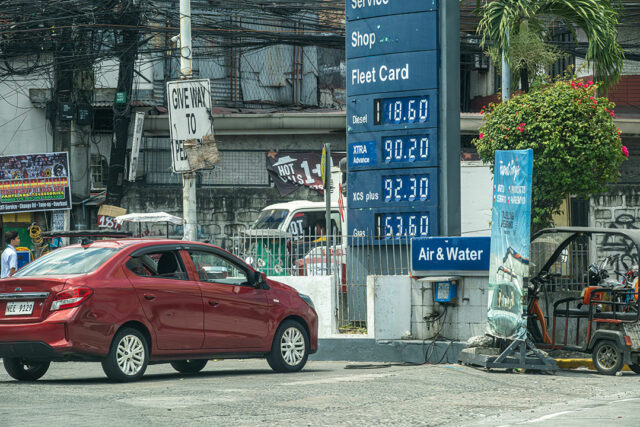
A CAR drives by a gas station in Sta. Ana, Manila. — PHILIPPINE STAR/RYAN BALDEMOR

PRESIDENT Ferdinand R. Marcos, Jr. said economic targets will have to be revised to reflect the impact of the Middle East conflict but remains confident the Philippine economy will grow by 6% by the end of his term in mid-2028.

“With the war in the Middle East, those (targets) have to be redrawn — everything has to be redrawn,” Mr. Marcos said in an exclusive interview with Bloomberg Television’s Haslinda Amin in Manila on Tuesday.

“If the war stopped today, the adjustment isn’t going to be instantly back to $70 per barrel. The uncertainty and the lack of stability is going to factor into that — the general risk factor is still there. And that’s not going to diminish immediately. That’s going to taper off. We hope that it tapers off over a relatively short period,” he added.

The government set a 5-6% gross domestic product (GDP) growth target for this year, 5.5-6.5% for 2027, and 6-7% for 2028.

Asked if 6% growth is attainable by 2028, Mr. Marcos replied: “I think so, yes. We should be able to do that.”

However, the President said the initial 8% GDP growth target by 2028 will be a “tough number to get to” amid recent shocks.

Mr. Marcos said investments and a young workforce will help drive economic growth.

“We have restructured even our tax incentives for investors, the ease of doing business is something we’ve been working hard on… (And) what we always consider our greatest asset is our workforce. We have a relatively young workforce… (and) relatively well-trained,” he said.

ABOVE 4% INFLATION
Meanwhile, the Department of Economy, Planning, and Development (DEPDev) Secretary Arsenio M. Balisacan said inflation will likely quicken above 4% this year even under the least severe scenario where oil prices average $100 per barrel for 60 days.

“The government is assuming 2-4% for 2026 and beyond, but those are going to be breached in any of those scenarios,” he said during a Senate hearing. “So, we will see faster inflation.”

DEPDev sees full-year inflation accelerating to 4% to 8.6% this year, depending on the average price of Dubai crude.

It projected that elevated domestic fuel prices combined with the impact of reduced remittances and tourist arrivals, GDP growth could be lower by 0.15 to 1.95 percentage points (ppts) to bring full-year growth to between 3.5% and 5.3%.

At the Senate hearing, the DEPDev presented simulations of various scenarios of the impact of the price of Dubai crude and the duration of the war on the Philippine economy.

It estimated that domestic diesel prices could rise by 33-86% from the prewar baseline estimates in March, 16.5-160% in April and 9.33-176.49% in May.

It projected domestic gas prices could jump by 27-71% in March, by 13.5-133% in April, and 7.63-146.85% in May.

In the least severe scenario where oil prices average $100 per barrel for 60 days, inflation is expected to range from 4.9-5.7% in March and 4.7-5% in April, bringing the full-year average to 4-4.2% for 2026.

Under a scenario where oil averages $100 per barrel for 90 days, inflation may quicken to 5.6-6.4% in March and 5.2-5.7% in April, bringing the full-year average to 4.2-4.4%.

However, if oil averages $150 a barrel for 90 days, inflation may accelerate to 6-7% in March and 8.7-10.6% in April, while the full-year average will settle at 5.1-5.6%.

If $150 per barrel of oil holds for 120 days, inflation may quicken to 6.5-7.6% in March and 9.5-11.6% in April, with full-year inflation at 5.5-6.2%.

“These scenarios are scary if they happen because they could bring us to double-digit inflation, which we never had in the last couple of years,” Mr. Balisacan said.

These scenarios assume sustained and heavy damage to the critical infrastructure in the Middle East, he added.

In the most severe scenario when oil would average $200 per barrel for 180 days, inflation may surge to 7.4-8.9% in March and 11.4-14.3% in April, bringing the full-year average to 7.3-8.6%.

However, Mr. Balisacan said the likelihood that the most severe scenario will happen is “quite low.”

“The likely source of inflation in the next two years would be non-food because services outputs, for example, are very much oil-dependent, like transport and logistics,” he said.

“Nonetheless, there is a major disruption of fertilizers globally… and that could disrupt local production,” he added.

Under the severe scenario, non-food inflation is expected to reach 8.5-10% in 2026 and 4.7-5.1% in 2027, while food inflation is expected to settle at 4.9%-6.1% in 2026 and 3.3-3.5% in 2027.

In the least severe scenario, non-food inflation is projected at 4.4-4.6% in 2026 and 3.7-3.8% in 2027, while food inflation is expected to be at 3.3%-3.5% in 2026 and 2.8-2.9% in 2027.

OFW REMITTANCES
Meanwhile, Mr. Balisacan said that depending on the level of overseas Filipino worker (OFW) repatriation, the remittances could decline between P63.3 billion and P167.45 billion.

“Remittances, nevertheless, could decline by 41% versus 2025 values, assuming that these scenarios hold, and that would represent 7.5% of the total remittance, so that is quite a sharp decline,” he said.

In 2025, cash remittances jumped by 3.3% to a record high of $35.634 billion.

“The faster inflation and the lower remittance inflows resulting from the conflict may drag economic growth by roughly 1.5 to 2 ppts in the worst-case scenario,” said Mr. Balisacan.

In the severe scenario, GDP growth is expected to settle between 3.5% and 4%, while GDP is seen to expand by 5.3-5.35% in the least severe scenario.

To address the possible impact of the war on inflation and remittances, DEPDev recommended measures including fuel conservation, fuel subsidies to vulnerable groups, promotion of renewable energy use, encouraging innovation, and enabling infrastructure for active mobility. — Justine Irish D. Tabile with Bloomberg


Government allots P20B to buy 2M barrels of diesel

A worker prepares to fill an underground storage tank at a gas station in Quezon City, March 9, 2026. — REUTERS/LISA MARIE DAVID

By Sheldeen Joy Talavera, Reporter

THE PHILIPPINE government has allocated around P20 billion to purchase two million barrels of diesel to boost the country’s stockpile, which is currently equivalent to 45 days of supply.

“We are reserving about P20 billion. It’s very expensive. But what eventually will happen is we sell also the buffer (to fuel retailers) so we can use the money to buy more,” Energy Secretary Sharon S. Garin said in a virtual press briefing on Tuesday.

The planned buffer stock is enough to cover 10 days’ worth of consumption.

Earlier, the Department of Energy (DoE) has tasked the oil and gas exploration arm of state-run Philippine National Oil Co. to procure around two million barrels of fuel to boost the country’s inventory.

So far, the government already secured about 400,000 barrels of oil from Southeast Asian countries and is now negotiating for additional 600,000 barrels outside to ensure arrival this week.

“It’s not that big, but we need to build it up just in case so that we have reserves. It’s better to have little than nothing at all,” Ms. Garin said in a mix of Filipino and English.

The Energy chief said that the country’s existing suppliers of imported supply have assured it will deliver orders even as the Middle East conflict has also affected them.

Currently, the Philippines has 45 days’ worth of fuel supply, Ms. Garin said.

“So far, our supply is still manageable,” she said.

As of March 20, the country’s inventory of gasoline could last  53.14 days, diesel for 45.82 days, and kerosene for 97.93 days.

However, the country’s jet fuel inventory is only 38.62 days, while liquefied petroleum gas or LPG is 23.51 days.

Since the Philippines has very limited domestic oil production to cover its demand, local oil firms mostly rely from imports coming from the Middle East, the world’s biggest oil-producing region that is currently disrupted by the Iran war.

The majority of the finished petroleum products come from Asian countries such as Japan, Korea, and China, but they also source crude oil from the Middle East.

PUMP PRICES SURGE
Meanwhile, pump prices continue to soar this week as the Iran war is about to enter its fourth week.

Starting Tuesday, gasoline prices in Metro Manila rose by P8 to P12 per liter, diesel by P15 to P18 per liter, and kerosene by P12 to P22 per liter.

The latest price adjustments have pushed diesel and gasoline prices to as high as P144.20 and P102.50 per liter, respectively. Kerosene prices could have reached as much as P165.79 per liter.

“Even though it is smaller than last week, this is still a significant jump considering that it will still affect our transportation industry, as well as all industries, as well as the buying power of our households,” Ms. Garin said.

So far, Chevron Philippines, Inc. (Caltex) and TOTAL Philippines Corp. have informed the DoE that they are set to stagger the implementation of their respective price adjustments in two to five tranches.

Ms. Garin said fewer companies are staggering price hikes because of the increasing financial burden.

Aside from local pump prices, the ongoing volatility in the global market is also threatening to push electricity rates upward by 16%, according to the simulation conducted by the DoE.

To temper the expected increase in power rates, the government is looking to increase the use of coal in power generation and calling for advanced completion of renewable energy projects.

Ms. Garin said this move could help reduce the expected spike in power rates by P2.

The Philippines is also a major importer of coal, which is mostly used for power generation. The country relies heavily on Indonesia for its coal supply, sourcing approximately 98% of imported coal.

Ms. Garin said the Indonesian government assured the Philippines of “steady supply of coal.”

“We have assurance from them and we’re good partners with Indonesia. We have a long-standing trade relationship with Indonesia,” she said.

Ms. Garin said the government is also in talks with power generators to assess how much domestic coal they can maximize in their operations.

Philippines remains an underperformer among Asian peers — ANZ

Philippine flag-inspired lanterns are seen along Jose Abad Santos Avenue in San Fernando, Pampanga. — PHILIPPINE STAR/WALTER BOLLOZOS

By Katherine K. Chan, Reporter

NEW ZEALAND-BASED ANZ Research expects slower growth for the Philippines as it sees the country underperforming amid a continued decline in infrastructure spending.

In a report on Tuesday, the think tank trimmed its Philippine gross domestic product (GDP) growth forecast for 2026 to 4.7% from 5% previously. 

“We expect the Philippines to remain the underperformer in the region, similar to the pattern in the previous two quarters,” ANZ Research Chief Economist for Southeast Asia and India Sanjay Mathur said in a report on Tuesday. “The deceleration in public infrastructure spending has permeated through household confidence and corporate investment plans.”

Economic growth sharply slowed to a post-pandemic low of 4.4% in 2025 amid a flood control corruption scandal, wherein some Public Works officials, lawmakers and private contractors allegedly received kickbacks from some infrastructure projects.

Government spending has consistently declined annually in the last six months. Based on the latest data, expenditures fell by 23.9% to P303.5 billion in January from P398.8 billion a year earlier.

Infrastructure spending alone fell 45.2% year on year to P48 billion in November, marking the fifth consecutive month of annual contraction.

Mr. Mathur said the government has to catch up on its infrastructure spending to help spur domestic growth, instead of relying on monetary policy easing.

“Suppressed growth in the Philippines likely warrants further rate cuts, but their efficacy in lifting growth appears very limited,” he said. “The appropriate remedy is a resumption of public infrastructure spending, the outlook for which is unclear.”

Still, ANZ Research maintained its Philippine GDP growth estimate for 2027 at 5.6%.

COMPLICATED POLICY PATH
Meanwhile, analysts are divided on whether the Bangko Sentral ng Pilipinas (BSP) will opt for a pause or completely reverse its monetary policy amid rising inflationary pressures from the Middle East war.

For Maybank Securities, Inc. analysts, the BSP may stand pat throughout the year as high oil prices and a weak peso weigh on inflation.

“For our estimates, we already expect the BSP to not cut rates anymore this year (from another 25-bp (basis-point) cut expectation),” they said in a report on Tuesday.

However, Bank of the Philippine Islands (BPI) Lead Economist Emilio S. Neri, Jr. is anticipating a rate hike next month should benchmark oil prices remain well above $100 per barrel (/bbl).   

“If by April oil prices remain where they are, we think BSP will need to reverse course and hike (at) their April (23) meeting,” he told BusinessWorld in a Viber message.

GlobalSource Partners Principal Advisor Diwa C. Guinigundo also noted that oil may stay costly, likely pushing inflation past the central bank’s target.

“Pretty soon, they would be reflected in oil pump prices as they are now, and consequently, price of transport and energy, and ultimately, consumer prices,” Mr. Guinigundo told BusinessWorld via Viber. “We shall be seeing the second-round effects of such a severe supply shocks that would require a monetary response.”

“Everybody now expects price levels and ultimately inflation could reach beyond targeted levels,” he added.

However, Mr. Guinigundo said they cannot yet determine what level oil prices would have to reach to trigger monetary policy tightening from the BSP, though noted that the Philippines had one of the highest pump price adjustments in Southeast Asia.

BSP Governor Eli M. Remolona, Jr. earlier left the door open to raising interest rates if oil price at above $100/bbl drives inflation beyond 4%, with Finance Secretary Frederick D. Go noting separately that such a move could come as early as April if oil price remains elevated.

The Monetary Board has eased borrowing costs by 225 bps since August 2024, lowering the key policy rate to 4.25%.

For ANZ Research, headline inflation may average 3% by yearend, faster than its 2.4% earlier projection and the midpoint of the BSP’s 2%-4% target. It also raised its inflation forecast for 2027 to 3.2% from 3%.

Risks of higher inflation, Mr. Guinigundo noted, complicates the central bank’s monetary policy, especially as the country still confronts growth concerns from the flood control mess fallout last year.

“If the BSP were to tighten monetary policy that could help stabilize inflation expectations but not necessarily lick inflation because of the strong influence of the supply shocks on consumer prices. At the same time, that could also increase the cost of money and the cost of credit, which could frustrate economic growth,” he said.

“We have reached that point when monetary policy is (at) a crossroads, with both options leading to possible lower growth and higher inflation,” he added.

PESO PRESSURES
Meanwhile, Mr. Guinigundo noted that the BSP could pause or even tighten amid the peso’s depreciation and the US Federal Reserve’s latest policy decision.

“Weak peso, given the exchange rate pass through to inflation, as well as the Fed’s decision to stay could put additional pressure for the BSP to consider a pause, or even symbolic tightening,” he said.

Last week, the Fed left its benchmark rates unchanged at the 3.5%-3.75% range for a second straight meeting amid mounting economic woes worsened by the Middle East war. It has so far delivered 175 bps in cuts since September 2024.

BPI’s Mr. Neri said the central bank may also consider lifting its policy rate to prevent the peso from weakening over 5% year on year against the dollar.

“BSP is watching this very closely… A policy rate adjustment will likely be considered to temper excessive PHP (maybe more than 5% year on year) weakening vs the USD,” he said. 

Uncertainties over threats between the US and Iran brought the peso to a new all-time low close of P60.30 against the greenback on Monday, breaking its previous record of P60.10 on Thursday.

Oil supply disruptions have led to energy price shocks globally, with the Philippines, a net oil importer, facing continued oil price hikes as the three-week-old war drags on.

DA warns food prices to surge if oil prices remain elevated

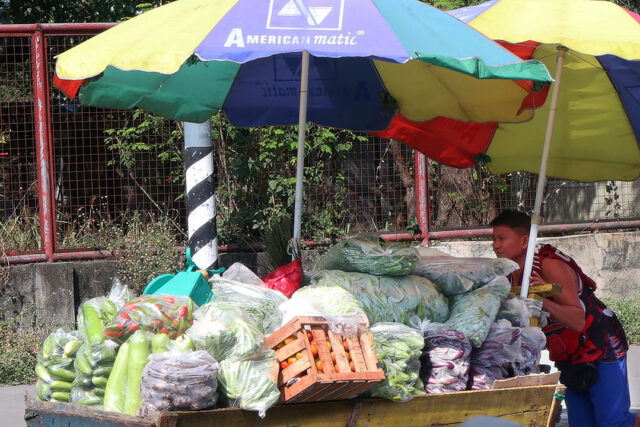
A MAN pushes a cart full of vegetables along Agham Road in Quezon City on March 6, 2026. — PHILIPPINE STAR/MIGUEL DE GUZMAN

By Vonn Andrei E. Villamiel, Reporter

THE Department of Agriculture (DA) said on Tuesday that without government interventions, prices of key agricultural commodities could spike by about 20% to 60% if crude oil prices surge to a 180-day average of $200 per barrel.

Agriculture Secretary Francisco P. Tiu Laurel, Jr. said at a Senate hearing on Tuesday that the projected increase in food prices is largely driven by higher input costs, especially fertilizer and fuel, which are critical to farm production.

“Agriculture and fisheries are especially exposed. Fuel powers farm machinery, irrigation, fishing operations, transport, and post-harvest systems, and when fuel prices rise, costs ripple through the supply chain to consumers,” he said.

Agriculture Assistant Secretary U-Nichols A. Manalo told the hearing that the DA’s latest monitoring data showed significant increases in prices of fuel-derived fertilizer.

Mr. Manalo said the average price of prilled urea rose by 17.15% to P1,948.01 per bag last week from P1,662.84 at the end of December, while granular urea prices increased by 18.88% to P1,969.03 from P1,656.28.

Based on DA simulations, under a “worst-case” scenario that assumes 180 days of infrastructure disruption and crude oil prices at $200 per barrel, farmgate prices of major commodities could double, and retail prices could increase by as much as 60%.

For local well-milled rice, farmgate prices could more than double to P39.72 per kilo from a prewar baseline of P19.53, while retail prices may increase 49.15% to P67.12 per kilo from P45.

Under the same scenario, pork (ham) farmgate prices could jump by 86.6% to P345.19 per kilo from a baseline of P185, with retail prices increasing by 59.5% to P558.10 per kilo from P350.

Chicken prices may also surge, with farmgate prices rising by 96.7% to P199.64 per kilo from P101.50, and retail prices climbing 62.3% to P324.64 from P200.

The DA said retail prices of key vegetables such as tomato, eggplant, cabbage, and carrots could also increase by around 20% under the same scenario.

“As of the moment, technically, [prices] are still in the pre-conflict scenario. In rice, I personally think it will increase until August this year. Pork will not increase for the moment because there is a lot of imported supply in cold storage,” Mr. Laurel said.

While consumers have yet to feel a substantial surge in prices, the agency said costs could accelerate by midyear, particularly during the lean season starting in August and through the next harvest, when elevated input prices would weigh on supply.

Meanwhile, the DA said it is implementing measures to mitigate the impact of rising input costs and prevent a sharp surge in food prices.

“[One of the DA’s priorities is to] strengthen domestic production by supporting key crops, distributing certified and climate-resilient seeds, and improving extension services,” Mr. Laurel said.

He added that the agency is also working to ease input costs through fuel subsidies, the promotion of biofertilizers and organic alternatives, and the diversification of fertilizer sources.

“We will be releasing our budget of P10 billion under the Presidential Assistance for Farmers and Fisherfolk program. We will be giving P2,325 each to 4.175 million beneficiaries enrolled in the Registry for Basic Sectors in Agriculture,” Mr. Laurel said.

CAAP airport fees to drop starting April 1 amid fuel cost surge

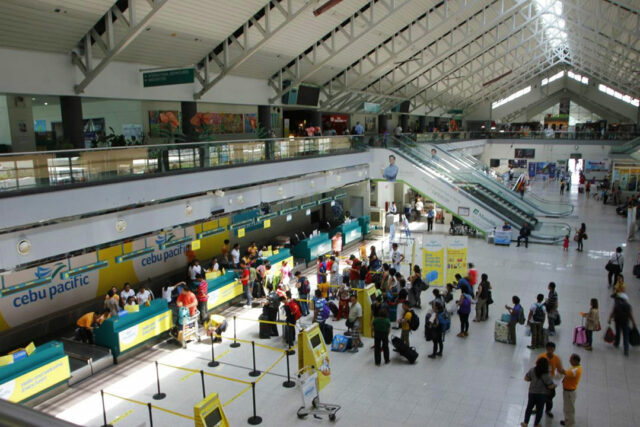
DAVAO INTERNATIONAL AIRPORT — FACEBOOK.COM/DOTRPH

By Ashley Erika O. Jose, Reporter

THE DEPARTMENT of Transportation (DoTr) will implement adjusted airport-related charges, including terminal fees and landing and takeoff fees, for airports operated by the Civil Aviation Authority of the Philippines (CAAP) starting April 1, amid rising fuel prices.

“In order to help passengers and airlines, and to stabilize airfares, we are going to reduce terminal fees as well as landing and takeoff fees,” Transportation Acting Secretary Giovanni Z. Lopez said during a media briefing on Tuesday.

Passenger service charges (PSC), or terminal fees, imposed on departing passengers will be reduced by up to P200 starting April 1 for three months, he said.

CAAP said this will reduce PSC at international airports to P700 from P900 for international flights, while lowering the domestic PSC for flights departing from international airports to the P150-P200 range from the current P350.

CAAP said PSC will be lowered to the P150-P200 range from the current P300 for passengers departing from principal class 1 airports. Those departing from principal class 2 airports will see PSC cut in half to P100 from the current P200, while PSC for those leaving via community airports will be reduced to P50 from P100.

The measure aims to cushion the anticipated rise in airfares in April after the Civil Aeronautics Board (CAB) raised the passenger fuel surcharge to Level 8 for the first half of April, the highest level in two years.

“This will be effective starting April 1, and will be effective for three months after our first assessment,” Mr. Lopez said, noting that the reduction may be extended subject to the agency’s assessment.

The PSC reduction will take effect for three months beginning April 1, regardless of whether jet fuel prices go down, he added.

“We recognize the challenges brought by the ongoing regional tension and its impact on passengers and the aviation industry. CAAP is implementing reductions in passenger service charges and aeronautical fees to provide immediate relief and support, ensuring that air travel remains accessible during these difficult times,” CAAP Director General Raul L. del Rosario said in a separate media release.

According to monitoring by the International Air Transport Association, jet fuel prices climbed 12.6% week on week to $197 per barrel as of March 20. On a yearly basis, jet fuel prices surged by 118%, data from the airline trade association showed.

The DoTr also ordered the reduction of navigation charges, such as landing and takeoff fees, by up to P5,000 for CAAP-run airports.

Landing and takeoff fees are charges levied for the use of airport facilities and services during aircraft landings and takeoffs.

“Under the modified rates, the aeronautical fees, including the landing and takeoff, will be decreased to nearly 50% overall, or as high as approximately P5,000 per landing,” CAAP said.

Based on a CAAP memorandum issued in April 2025, the current landing and takeoff fees are based on the maximum takeoff weight (MTOW) of the aircraft. For international flights, the minimum fee is $260 for an aircraft weighing up to 50,000 kilograms, while for domestic flights, the minimum rate is P54 per 500 kilograms for an aircraft weighing up to 50,000 kilograms.

Earlier this week, local airlines announced reductions in flight frequencies and the temporary suspension of some services.

On Friday, flag carrier Philippine Airlines (PAL) announced the temporary suspension of its flights between Manila and select Middle East destinations, such as Manila-Dubai-Manila, Manila-Doha, and Doha-Manila, until April 30.

“This precautionary measure is being taken considering the security situation affecting parts of the Middle East and the resulting operational uncertainties in certain regional airspace corridors and airport operations,” PAL said.

On Monday, Cebu Pacific said it will recalibrate its network, including reducing flight frequencies and canceling selected routes due to the ongoing Middle East conflict, noting that these changes are driven by the impact of the crisis on global fuel prices.

The airline suspended five routes — Davao-Bangkok, Iloilo-Bangkok, Iloilo-Singapore, Singapore-Iloilo, and Clark-Hanoi-Clark — until October 2026. It also reduced weekly services for selected domestic and international routes from April to October.

The airline’s decision to reduce flight frequencies and suspend some flights may be related to the lack of fuel supply, said Nigel Paul C. Villarete, a senior adviser on public-private partnerships at the technical advisory group Libra Konsult.

“But it’s probably more of the higher costs of maintaining these flights which could be served by a reduced frequency. Airlines know their numbers and know if and when the passenger’s existing volume can be carried by less frequencies of flights,” he said.

Energy Secretary Sharon S. Garin said in a separate briefing on Tuesday that airlines have had “few glitches” in orders due to changes in their supplier countries.

“But so far, we have met them and they have assured us that they are okay. I think the issue is on the price, the constraint on the price puts pressure on the operations of the companies,” she said when asked about the possibility of a lack of jet fuel supply.

ADVERTISEMENT
ADVERTISEMENT