Home Blog Page 1110

Health maintenance organizations post higher income in first semester

PHILSTAR FILE PHOTO

HEALTH maintenance organizations’ (HMO) combined net income surged by 131.12% year on year in the first half as they posted higher revenues.

The sector’s net profit went up to P1.47 billion in the first semester from P636.6 million in the same period last year, data from the Insurance Commission showed.

“Despite the big increase in the payout of healthcare benefits, the HMO industry continued its return to profitability due to higher revenues,” the regulator said.

The sector’s total revenues climbed by 21.36% to P47.03 billion in the first six months from P38.754 billion last year.

This was driven mainly by a 25.23% increase in membership fees to P45.79 billion from P36.57 billion.

Meanwhile, HMOs’ total expenses went up by 19.53% year on year to P45.56 billion in the period. This came as total benefits and claims paid out by the industry rose by 19.63% to P36.29 billion.

The industry’s total assets grew by 21.14% to P83.91 billion at end-June from P69.27 billion a year prior.

Of this, P18.23 billion were invested assets, 13.15% lower than the P20.99 billion recorded last year due to the “maturity of cash equivalents, with net decrease of 25.87%, or P2.51 billion, during the first half.”

Meanwhile, total liabilities increased by 23.88% year on year to P72.25 billion in the first six months from P58.32 billion.

Total equity was up by 6.57% to P11.66 billion from P10.94 billion.

INSURERS’ ASSETS
Meanwhile, the combined net income and assets of both the life and nonlife insurance sectors also rose in the first half, separate data released by the IC showed.

The life sector’s total net income increased by 4.05% to P20.72 billion driven by the 12.01% growth in premiums collected to P195.05 billion. 

Life companies’ new business annual premium equivalent also increased by 11.29% to P37.01 billion.

Their combined assets expanded by 7.74% to P1.995 trillion at end-June from P1.85 trillion a year ago.

Total invested assets climbed by 11.89% to P1.93 trillion. Total net worth also rose by 8.77% to P287.72 billion.

Meanwhile, total liabilities went up by 7.57% to P1.71 trillion.

The sector’s paid-up capital increased by 8.4% to P35.19 billion in the six-month period from P32.36 billion.

For the nonlife insurance sector, its combined net income rose by 2.71% to P5.12 billion in the first six months from P4.98 billion in the same period last year.

This came even as total claims paid out by companies grew by 32.67% year on year to P15.69 billion.

Meanwhile, nonlife insurers’ total premiums earned climbed by 20.63% to P37.08 billion in the first half from P30.74 billion a year ago.

Net premiums written (NPW) grew by 20.48% year on year P39.63 billion.

“As in previous reporting periods, the motor car business remained the leading contributor, accounting for 40.52% of total NPW. It registered a 16.2% increase, equivalent to P2.24 billion, growing from P13.82 billion to P16.06 billion,” the IC said.

Gross premiums written also rose by 9.92% to P65.599 billion in the first half from P59.68 billion a year ago.

The nonlife sector’s total assets went up by 5.72% to P377.21 billion at end-June from P356.8 billion.

Of this, P184.51 billion were invested assets, up by 5.54% from P174.83 billion.

The industry’s combined net worth was at P137.97 billion in the first half, rising by 8.98% year on year from P126.599 billion.

On the other hand, nonlife insurers’ liabilities increased by 3.93% to P239.25 billion from P230.2 billion.

Total paid-up capital went up by 7.77% to P48.47 billion from P44.98 billion. — A.M.C. Sy
The Giving Entrepreneur

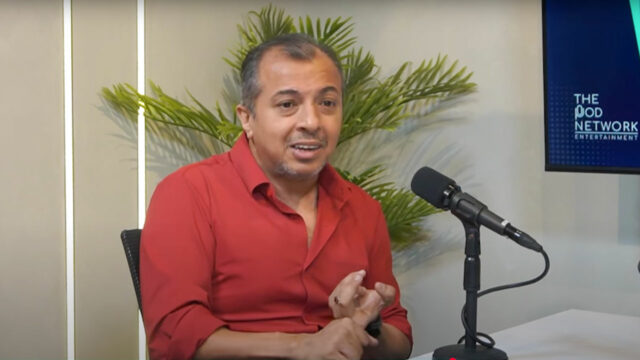
A SCREENGRAB of an episode of the RJ Ledesma Podcast with Mahesh Mirpuri, president of the Federation of Indian Chambers of Commerce Philippines. — THE POD NETWORK ENTERTAINMENT YOUTUBE CHANNEL

The more I talk to entrepreneurs, the more I realize that the best of them are in business because of a larger mission, a passion in their hearts, or the simple desire to solve a problem and give back to the communities they are in. Profits, of course, are an essential part of business. But they are secondary for these entrepreneurs — a measuring stick to tell them how far they’ve gone. One entrepreneur who embodies this “giving entrepreneur” spirit is Mahesh Mirpuri, president of the Federation of Indian Chambers of Commerce here in the Philippines, and the entrepreneur behind numerous successful businesses.

I’ve known Mr. Mirpuri for a long time, and what’s interesting to see is how he has grown as a businessman as he has pursued his own personal growth. As he gained prominence as a businessman, he devoted himself to growing the business community. And through the years, he has sought to become a better manager, helping team members and fellow entrepreneurs to achieve their goals. Or maybe it is the other way around. Maybe it is personal growth that led to his business success.

Mahesh Mirpuri and I recently reconnected in an unlikely way — a gym date. This gym date is typical of what he is about today. It’s not about networking — though, yes, if an opportunity arises, he will pursue it as any good entrepreneur will. The morning we spent working out, and later talking over coffee, was about exploration. It was about rediscovering each other as friends and as entrepreneurs, without any pressure for next steps. And it was also about finding ways to learn how we could help each other — and the world — which he did by sharing his most precious commodity: his time.

Entrepreneurs can learn so much from his leadership and management style. We spoke at length over on the RJ Ledesma Podcast, and you can check out the highlights here by reading to the end.

GIVING BACK TO THE COMMUNITY
Mahesh Mirpuri is, most prominently, the President of the Federation of Indian Chambers of Commerce in the Philippines. In his time as president, he has led the largest growth of the federation.

The Filipino-Indian community has been in the Philippines for many decades now. And just like the Filipino-Chinese community, it has grown into a powerhouse of commerce locally. Speaking about the community in the Philippines and how it has evolved over the years, he said, “It’s really about trading, right? I consider the Indian a negosyante (businessman). So they’re very good at talking, negotiating, sourcing, and things like that. So it’s really changing, right? Tech seems to be where things are going.” He also mentioned the BPO industry as an area where the Filipino-Indian community plays a vital role.

While growing the federation, he has placed particular focus on the future generation of business leaders. He explains, “The biggest change that I see — because 72 years as a chamber, that means it’s a generational change — we have second gens, third gens coming into the business. And at the end of the day, these are the guys that are going to run their parents’ business.”

By bringing the next generation into the fold, he aims to help them grow their respective businesses by providing them with tools, by networking, and by helping them achieve their goals.

He said, “They need to step in, and they need to be the future leaders of the community and of the chamber as well. So I see that slowly happening now. So I’m excited for what’s in store for the future.”

ENTREPRENEURS’ ORGANIZATION
As a belated introduction to Mahesh Mirpuri, he leads Styletex, a garment business with a presence in India, Bangladesh, China, and the Philippines, which he inherited from his businessman father. He also has a glassware and tableware business which serves restaurants and hotels, among other businesses. Early in his career as an entrepreneur, he was successful, but not fulfilled.

“All I did before was buy A, sell B, and I was happy,” he says. “But that’s not it. Today, you live in a world where you need to manage your people. You need to make them feel good at work. And this is one of the biggest learnings that I had in my life.”

The turning point for him came when he joined the Entrepreneurs’ Organization (EO), a prestigious group that supports the entrepreneurial community.

“I never got to do an MBA. I used EO as my MBA,” he said. “I used it to change my business, improve my business, fix things inside that I could never have done without it. And it just absolutely changed my life.”

Through EO, he found his purpose. He said, “I learned what I like is leading people, guiding people, talking to people, helping them understand what are their strengths. So finally, when I found my passion, that’s how I’ve been able to move things across.

“I can help people, right? Yes, they’re good at their jobs. But once you find out what you’re good at, that’s how you move. And so far, that’s been the biggest game changer for me.”

Learning this, Mahesh Marpuri’s entrepreneurial journey changed track to become one marked by generous leadership for his community, guidance for his team members, and giving to entrepreneurs. Watch the full interview to learn more.


RJ Ledesma (www.rjledesma.com) is a Hall of Fame Awardee for Best Male Host at the Aliw Awards, a multi-awarded serial entrepreneur, motivational speaker, and business mentor, podcaster, an Honorary Consul, and editor-in-chief of The Business Manual. Mr. Ledesma can be found on LinkedIn, Facebook and Instagram. The RJ Ledesma Podcast is available on Facebook, Spotify, Google and Apple Podcasts. Are there entrepreneurs you want Mr. Ledesma to interview? Let him know at ledesma.rj@gmail.com.

ICTSI signs four-year labor deal at Victoria terminal in Australia

VICT.COM.AU

INTERNATIONAL CONTAINER Terminal Services, Inc. (ICTSI), through Victoria International Container Terminal (VICT), has signed a new enterprise agreement with local unions covering its operations until March 2029.

“This outcome demonstrates our commitment to working collaboratively with our people and unions. This agreement not only delivers meaningful benefits for employees but also provides VICT with the flexibility needed to service our customers and meet the evolving industry demands,” VICT Chief Executive Officer Bruno Porchietto said in a media release on Wednesday.

The listed global port operator said the agreement was secured without any disruption to operations.

The agreement outlines enhanced benefits and conditions for employees, flexible alignment with customer and industry requirements, and an industrial relations framework to support growth and innovation, according to the company.

“The agreement is a positive agreement for everyone involved, giving VICT employees security and improved benefits, while providing the ICTSI subsidiary and its customers the continuity and certainty needed in today’s competitive supply chain environment,” it said.

VICT, which started operations in 2017, is a unit of ICTSI in Melbourne, Australia. It is a fully automated container terminal servicing large vessels.

Last year, VICT logged five million twenty-foot equivalent units since its operations began. ICTSI said previously that this will fuel its commitment to further invest in the terminal to accommodate the increasing demand for shipments.

At the local bourse on Wednesday, shares of the company gained P31.80, or 7.02%, to close at P485 apiece. — Ashley Erika O. Jose

Resort News (08/28/25)

LAGEN REIMAGINED Forest Suite


Renovated Lagen to open in September

LAGEN ISLAND, the island sanctuary in the heart of Palawan’s Bacuit Bay, will reopen this September following a sweeping renovation. The redesign thoughtfully curates its accommodations into 42 Forest Rooms and Water Villas. Every detail of Lagen tells a story honoring Filipino tradition. Guests are welcomed into an arrival hall inspired by the iconic paraw sailing boats, adorned with hand-carved wood and ceramic beadwork crafted by local artisans. Within the room’s interiors, intricate weaves and fine woodwork pay homage to Filipino craftsmanship, while design elements draw from indigenous patterns. The renovation was a multidisciplinary collaboration between WATG, Wimberly Interiors Studio, Henning Larsen, and Ayala Land Hospitality’s Creative Team. Each suite and villa features a main bedroom, walk-in wardrobe, ensuite bathroom with double vanity, freestanding bathtub, and dedicated outdoor spaces — sunken lounges that draw Water Villa guests closer to the sea, and balconies in Forest Rooms and Suites with coastal vistas. Architectural nods to the traditional bahay kubo with intricate wall designs and partitions inspired by the Batak tribe’s Giyangganan weaving pattern, while indigenous motifs of the Tagbanua, Tausug, and Maranao people subtly weave throughout its interiors. Aside from the rooms there is a state-of-the-art Dive Centre, a Marine and Biodiversity Conservation Center, and a two-level sanctuary for holistic wellness with a spa garden, a yoga studio, a healing pool, and private treatment rooms.


Banwa named in Greatest Luxe Hotel list again

FOR THE THIRD TIME, Banwa Private Island, an ultra-exclusive private island in Palawan, has been included in Robb Report’s 50 Greatest Luxury Hotels on Earth. The list, established in 2023, is put together by 26 “Travel Masters,” described as “globally respected luxury travel specialists renowned for crafting extraordinary journeys for an elite international clientele.” Each nominates their top five exceptional properties, encompassing both new openings and icons across Europe, the Americas, Africa, and Asia. This latest inclusion in Robb Report adds to Banwa Private Island’s growing list of international accolades, including the Editor’s Choice Award in The Gallivanter’s Guide 2024; being named “Private Island of the Year” by Destination Deluxe for three non-consecutive years (2020, 2022, and 2023); “Best Beach, Island or Upcountry Resort in the Philippines” by the Travel + Leisure Luxury Awards Asia Pacific in 2023; “Best of the Best in Travel” by Robb Report Hong Kong in 2024; and “World’s Leading Luxury Private Island” by the World Travel Awards in 2019. Banwa Private Island has only six contemporary beachfront villas — each with expansive interiors, private terraces and gardens, a jacuzzi, and a full-sized spring water pool. The villas offer complete seclusion, with discreet service staff available at a moment’s notice but never in view. Located in the heart of the Sulu Sea, the resort is surrounded by one of the country’s most biodiverse marine corridors. Each guest’s stay contributes to conservation efforts through the Aquos Foundation, which supports habitat protection and scientific research. The resort island operates its own organic farm that supplies fresh produce to its kitchens; a self-replenishing artesian well provides natural water for drinking, bathing, and pools. The island is also uniquely mosquito-free, maintained through an entomologist-designed trapping system that eliminates the need for chemical sprays while safeguarding the delicate ecosystem. Dining is entirely bespoke — there are no menus. Each meal is crafted by the island’s chef, who takes time to understand every guest’s preference and dietary needs. Meals are served in locations chosen to suit the moment — whether it’s a romantic dinner at Bantigue sandbar, sunset dining at the Platform, or an alfresco lunch by the pool. Guests enjoy a seamless, all-inclusive island journey that extends to curated excursions, wellness treatments, and private aviation coordination. From snorkeling the vibrant house reef to exploring UNESCO World Heritage sites like Tubbataha Reefs Natural Park and the Puerto Princesa Subterranean River, each itinerary is crafted to inspire discovery and connection with nature. Villa rates begin at $3,050 per night, with a two-night minimum stay. Full island buyouts are available upon request. For more information, visit www.banwaprivateisland.com.

PHL organizations must accelerate AI adoption

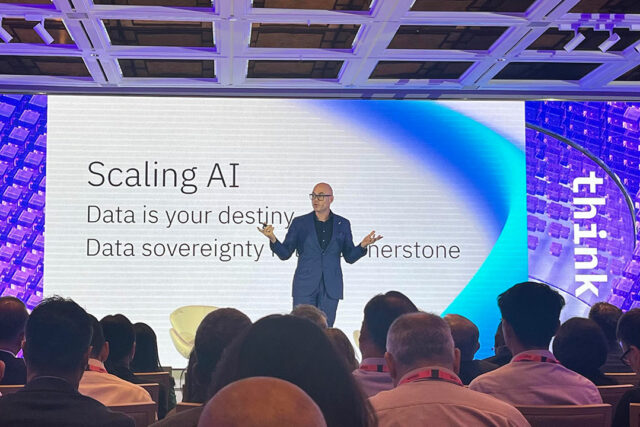
IBM on Aug. 20 held its Think 2025 conference in Singapore with the theme “Unlocking the Value of Enterprise AI.” — CHARMAINE A. TADALAN

By Charmaine A. Tadalan, Sub-Editor

SINGAPORE — Philippine businesses have mostly transitioned from experimentation to application of artificial intelligence (AI) solutions, but adoption needs to be accelerated as these technologies continue to evolve, with agentic AI now on the rise, IBM said.

“There was a lot of experimentation last year. To me, the very big change moving on to this year is really testing it for… their own organizations,” IBM Philippines Country General Manager and Technology Leader Aileen Judan-Jiao told reporters on the sidelines of IBM Think 2025 held here on Aug. 20. 

Ms. Jiao said leaders have shifted from asking whether AI is relevant to their organizations to finding out how it can be integrated into their operations. 

“Last year, you met a lot of business leaders [who’d say] ‘I want to do AI, but my team is not ready. I don’t know when they will be ready,’” she said.

“This year, you see that whether or not they’re ready, [they’ll say] ‘I’m going to learn anyway.’ They will learn anyway because they know the window of opportunity is now.”

Hans Dekkers, IBM General Manager for Asia-Pacific, likewise noted a significant change in board-level discussions around technology.

“There is a vast difference between then and now at the C-level,” he said at a briefing.

“Now, where are many companies struggling, especially the big ones? It’s the processes, the complexities, the bureaucracy that was built. But technology has a huge ability to cut through it with the right leadership.”

In its 2025 Global chief executive officer Study, IBM found that 55% of Philippine executives are actively adopting AI agents and preparing to implement at scale. While business leaders are pressured to deliver returns on their investments, around 60% said it’s better to be “fast and wrong” than “right and slow.”

The growth of AI adoption in the Philippines is picking up compared to last year, Ms. Jiao said, adding that fear of using AI has subsided, with businesses getting more clarity on how to approach it.

“[Last year,] it’s like almost an analysis paralysis on when to invest in AI, right? But I think there’s getting to be better clarity now as to what to do first — shall I start small? Which department will go first?” she said.

“[Business leaders] don’t necessarily have to be technical to start today,” she added, noting the availability of no-code AI tools.

Still, Ms. Jiao said AI adoption could still be faster, but gaps remain in the readiness of the data architecture.

Asked how she sees AI evolving in the next year, she said “across industries, we will be working alongside AI assistants and more and more AI agents.” 

“It will require a different kind of mindset to collaborate effectively and manage teams efficiently. We can, in turn, see amazing potential for growth.”

AI adoption is most evident in the finance and services sector, led by the business process outsourcing (BPO) industry, she said, adding it has also emerged in the food manufacturing industry. 

“It’s really coming up more into where the AI apps are. It’s in food manufacturing because we have a lot in FMCG (fast-moving consumer goods), in consumer industries.”

However, AI adoption is slower in the retail industry as businesses still prefer the brick-and-mortar model.

Mr. Dekkers said the Philippines, along with Indonesia, is among the few countries in the region that has the advantage of scale due to its large population and number of enterprises.

“I think they have an ability to go very, very fast with technologies like AI because they have that scale,” he said. 

Businesses have also become more open to AI in recognition of how tech-savvy their customers are, Ms. Jiao said.

“Businesses… are actively scaling up at all levels, believe it or not. But we still need to be faster because the pace is faster,” she said.

“We need to catch up and we need to do it at scale.”

AGENTIC AI
AI technologies have shifted from generative AI to AI assistants and now to agents, Parul Mishra, vice-president for WW Sales, AI Assistants, and AI Productivity at IBM, said during her keynote speech at the event.

Ms. Mishra said AI agents have more autonomy compared to assistants. They are also more proactive and adaptive, allowing them to learn and improve, but still can’t act on behalf of humans.

During a tour of its i4 Studio, IBM showcased its latest innovations, including an autonomous mobile robot powered by AI avatars called Mandy.

Mandy is a digital ranger deployed at the Mandai Wildlife Reserve in Singapore where it assists and guides guests. It can also curate itineraries and compute costs upon request.

IBM data scientist Ai Kiar Ang said their clients have expressed interest in deploying Mandy at the front office to greet visitors and manage appointments. 

“Mandy is able to host visitors, lead guests to meetings, and at the same time, notify host,” she said in an interview on the sidelines of the tour. “This one (Mandy) is for the offices, and all the parks, hospitals and airports. So, for Mandy, the application is huge.”    

IBM has also developed robot dogs equipped to conduct autonomous facility patrols using AI vision, sensors, and thermal imaging. In a demo, it showed a robot dog inspecting a data center servers, which it then converted into a natural language report that can be consumed by the specialist agents. 

“Robot dog is for cache environment. It’s able to go to power transformer tower, where nobody wants to go, but yet we need a dog to inspect cable, transformer, and things like that,” Ms. Ang said.

In a separate demonstration, the company showcased the IBM watsonx Orchestrate, which it uses to assist organizations to seamlessly integrate agents into their operations. Orchestrate not only builds an agent for businesses but also ensures all agents work together.

“Because a year from now, two years from now, everybody in this room is going to have thousands of agents working on their behalf,” Rob Thomas, senior vice-president for Software and chief commercial officer at IBM, said in his speech.

“So think of Orchestrate as exactly what it is — the orchestrator for how those agents work together.”

Outside offices, parks, and cache facilities, IBM has also entered into partnerships with sports clubs to improve how they scout talent and for fan engagement. As part of its partnership with Sevilla FC, IBM developed a tool to provide a comprehensive, data-driven identification and evaluation of potential recruits.

“They partnered with us to analyze data across the globe that they gather to choose the best player to recruit into their club,” said Kitman Cheung, pre-sales engineering leader at IBM ASEAN.

For the US Open, IBM designed a tool that monitors the tennis match and tracks every ball movement and serve to create player profiles, which it summarizes into AI commentary.

This technology can also be applied to other use cases, Mr. Cheung said, such as summarizing real-time events, news, or statistics.

Companies may not see immediate outcomes as they have only begun deploying AI agents and assistants, Ms. Mishra said.

“It is real when you deploy it at scale and with the right mechanism.”

Biometrics, AI risk scoring to improve authentication methods in finance sector

REUTERS

By Beatriz Marie D. Cruz, Reporter

PHILIPPINE financial institutions should consider adopting biometric authentication measures and artificial intelligence (AI)-based risk scoring as an alternative to one-time passwords (OTPs), according to ADVANCE.AI, a Singapore-based software-as-a-service (SaaS) risk management company.

“When combined, biometric authentication and AI-based risk scoring gives financial institutions a 360-degree view of the customer and validates not just what they know about the customer, but who they are and how they behave,” ADVANCE.AI Country Manager Michelle Anne Chan said in an e-mail.

The Bangko Sentral ng Pilipinas (BSP) has told financial institutions to shift away from the use of interceptable authentication mechanisms like OTPs through short message service (SMS) or e-mail as cyberattacks are becoming more sophisticated.

BSP-supervised financial institutions lost about P5.82 billion from cyberattacks in 2024, the central bank earlier said.

However, many Philippine banks still rely on “static and obsolete” verification methods, Ms. Chan said, like manual ID checks and photo uploads, OTPs and basic passwords, and physical branch verification.

This leaves banks and their customers vulnerable to deepfake scams, SIM swapping, and account takeovers.

Biometric authentication, which offers physical and real-time identity verification, offers a powerful layer of protection compared to OTPs or passwords, Ms. Chan said.

“It’s nearly impossible to spoof — unlike passwords or OTPs, which can be phished or intercepted,” she said.

AI-based risk scoring also provides detection signals such as device integrity, behavioral anomalies, and synthetic identities and deepfakes, she added.

However, consumers could face difficulties with advanced authentication systems due to the lack of stable and reliable data and ID issues, Ms. Chan said.

Other challenges include low digital literacy and social media hygiene, she added. Some customers also have older or basic mobile phones with cameras that are unsuitable for biometric authentication.

Also, while biometric authentication measures may be susceptible to spoofing and false acceptance, firms can adopt multi-layered security measures, according to Ms. Chan.

“Combining biometrics with other factors (e.g. device intelligence, behavioral signals, real-time liveness detection) can reduce spoofing and errors,” she said.

Companies must also work with trusted tech partners when adopting biometric verification systems and conduct regular tests and auditing to help reduce false positives or negatives.

“When banks and fintech companies implement advanced verification (such as facial biometrics, document authentication, business license validation), they show consumers that security is a priority — this builds confidence in using digital finance and overall ecosystem,” Ms. Chan said.

Importing and exporting electricity

STOCK PHOTO | Image by Pvproductions from Freepik

Slowly but surely, the ASEAN is moving towards deeper integration of national economies into a single, unified regional market. By next year, for instance, various national payment systems are expected to operate under a shared digital framework that allows the use of any ASEAN member’s e-money anywhere in the region.

Further ahead, but already in motion, is the vision of an interconnected electricity grid that will allow one ASEAN member to sell or buy electricity from another. The idea is simple: surpluses can cross borders to strengthen energy security, not just domestically but regionally.

This is relatively straightforward for landlocked members such as Thailand, Vietnam, Laos, Cambodia, and Myanmar. The challenge is far greater for maritime states like the Philippines, Indonesia, Malaysia, Singapore, and Brunei. These countries require underwater or subsea transmission lines, which are capital-intensive, technically complex, and geopolitically sensitive.

The target for a fully integrated ASEAN Power Grid (APG) is 2045. That may appear distant, but in energy infrastructure terms, 20 years is not far at all. Planning for underwater cables, nuclear plants, and major grid upgrades must begin now, because all take years to design, finance, and build.

The ASEAN Power Grid is no longer just a dream; it is already being built. Just this year the ASEAN launched the ASEAN Power Grid Financing Facility (APGF) with the support of the World Bank and the Asian Development Bank. The APGF is intended to finance feasibility studies, project preparation, and construction of APG-related projects, with a special focus on subsea interconnection.

By 2045, the ASEAN envisions a web of cross-border links enabling regional electricity trade. The Laos-Thailand-Malaysia-Singapore Power Integration Project (LTMS-PIP), launched in 2022, has already proven that multilateral electricity trade in the ASEAN is feasible.

This initiative allowed Singapore to import up to 100 megawatts (MW) of renewable hydropower from Laos through existing grid connections in Thailand and Malaysia. That imported electricity accounted for about 1.5% of Singapore’s peak demand in 2023.

The next step is to extend such integration to Borneo and the Philippines, which are more isolated from the regional grid. For Manila, the most realistic projects are a Mindanao-Sabah subsea power cable, or alternatively, a shorter Palawan-Kudat link in Northern Borneo. Either would give the Philippines its first entry point into regional power trading.

But for either link to succeed, Philippine-Malaysia relations will be crucial. Despite the short geographic distance between Southern Palawan or Western Mindanao and Borneo, nothing can be achieved without close cooperation between both governments under the ASEAN framework.

Interconnection, however, is not a panacea. It is only a carrier. To import energy, another country must have a surplus. To export, you must have excess capacity. The Philippines therefore cannot treat interconnection as a substitute for building its own baseload. It is a complement, a regional insurance policy. Imports are possible only if you also have the capacity to export. This road cannot remain one-way forever.

Here is where Philippine capacity-building comes in. If interconnection is the regional insurance policy, then nuclear is the option for a domestic insurance policy. Both must proceed in parallel. I believe we need both, and soon, to secure energy for the future.

The Philippines needs power sources that run 24/7, regardless of weather, to complement variable renewables like solar, wind, and hydro. Today, coal provides most of the power mix, but it is largely imported. Malampaya’s gas is running out. Renewables are expanding, but intermittency remains a challenge.

Heavy industries, the growing information and communications technology sector, including data centers, and the services sector, especially BPOs, all require guaranteed baseload supply. Nuclear is not the only option, but it is one we must seriously consider.

One promising pathway I mentioned in a previous column is through Small Modular Reactors (SMRs). Unlike conventional large nuclear plants, SMRs generate 70-300 MW per unit, can be manufactured in modular sections, and deployed where needed. They can directly serve demand hubs in Luzon, Visayas, or Mindanao, or provide reliable power for off-grid islands and communities.

But the reality is that nuclear reactors still require imported fuel. We cannot produce our own enriched uranium. Most light-water SMRs need refueling every four years, while some advanced micro modular designs offer sealed cores lasting up to 20 years before replacement.

This makes it essential for the Philippines to select SMR or MMR vendors that bundle long-term fuel supply contracts into their reactor agreements. These contracts typically cover initial core loading, several reloads, and sometimes include spent fuel take-back options.

Since the Philippines does not mine uranium, and lacks facilities to convert or enrich it, we will have to import nuclear fuel periodically — much as we already import coal, oil, and liquefied natural gas. Crucial here is establishing a clear nuclear fuel supply policy and securing long-term contracts with trusted suppliers.

This is precisely why the Philippines cannot prioritize nuclear alone, nor maintain the status quo, without pursuing ASEAN interconnection in parallel. Nuclear, particularly SMRs, can help provide steady baseload for domestic needs. Interconnection offers flexibility by enabling imports of electricity during shortages, not just fuel. We can even export surplus power in the future.

Among the challenges is that a Mindanao-Sabah or Palawan-Kudat subsea link will require massive investment estimated at around $2 billion for a 300-500 MW line, including converter stations at both ends. This is where the APGF with World Bank and ADB can help.

Such a project will also require regional agreements on power prices, transmission charges, and dispatch protocols; environmental clearances, particularly for subsea cables traversing marine protected areas; maritime security arrangements to safeguard cables from piracy or sabotage; and, more important, clear Philippine control of its national grid, to reassure neighbors and financiers alike.

In an earlier column, I outlined a roadmap for nuclear capacity building. For ASEAN interconnection, the Philippines must immediately initiate APGF-backed feasibility studies for a Mindanao-Sabah or Palawan-Kudat link, or both. We must establish quickly whether interconnection makes technical, financial, and political sense, and how it can be achieved.

The imperative stems from the fact that coal is imported, gas is finite, and renewables are variable. And the present energy mix does not bode well for energy security. Nuclear, particularly SMRs, can serve as the domestic insurance policy, while ASEAN interconnection can be the second line of defense.

To be clear, nuclear is not the only option for capacity building. But it is among the alternatives to caseload coal and gas. Also, pursuing interconnection indirectly advances another critical objective: ensuring Philippine control of its transmission grid.

Cross-border projects will require absolute clarity on who owns, controls, and secures the Philippine power grid. I am certain foreign partners and financiers will demand this assurance before committing to multibillion-dollar interconnection projects.

If Manila gets both tracks right — domestic capacity-building and regional interconnection — then maybe by 2045, the Philippines may not just be importing electricity, but exporting it too. Along with this is a declining dependency on imported coal and oil.


Marvin Tort is a former managing editor of BusinessWorld, and a former chairman of the Philippine Press Council

matort@yahoo.com

Globe gears up for market shake-up under Konektadong Pinoy law

BW FILE PHOTO

GLOBE TELECOM, INC. is ramping up its technology solutions and fiber offerings in anticipation of increased competition in the broadband sector under the Konektadong Pinoy Act.

“I think the DNA of Globe is about innovation and innovation actually addresses the pain points of the customers. In the prepaid or fiber space, we would just continue the formula that works. We will continue developing things for them, then the demand will come,” Globe Chief Commercial Officer Darius R. Delgado told reporters on Wednesday.

Mr. Delgado made the remarks in response to the expected entry of new players in the data transmission sector following the lapse into law of the Konektadong Pinoy bill on Sunday.

The Konektadong Pinoy Act, or the Open Access in Data Transmission Act, aims to increase internet access by easing regulations and allowing more entrants into the data transmission industry.

Globe will continue developing new offerings and solutions for its customers amid the growing demand for data and reliable internet connections, Mr. Delgado said.

On Wednesday, Globe launched its new wireless broadband product, “The Loop,” which it expects to unlock opportunities for the company as it captures the rising home internet market.

“It’s actually big because it provides the level of reliability and convenience that a fiber connection cannot give or cannot afford… We are hopeful that it will capture a big size of the market today — young families, small households,” Mr. Delgado said.

Unlike traditional home broadband or mobile pocket Wi-Fis, The Loop is an all-in-one device powered by Globe’s 5G network. This device offers an average of 75 megabits per second (Mbps), which is described as sufficient for smaller families’ internet consumption.

The Loop, priced at P10,999, is a hybrid device that functions as an Android phone, a smart speaker, and a modem, and it comes with a SIM or subscriber identity module card slot.

“We can easily scale the regions. What’s important is we want to give the best and most consistent 5G experience,” Mr. Delgado said, noting that the rollout of the device is currently focused in Luzon, although Globe plans to scale up the rollout of the solution in the future. — Ashley Erika O. Jose

Peso hits 3-week low ahead of BSP review

BW FILE PHOTO

THE PESO dropped to a three-week low against the dollar on Wednesday before the Bangko Sentral ng Pilipinas’ (BSP) policy meeting, where it is expected to cut benchmark rates further.

The local unit closed at P57.16 per dollar, down by nine centavos from its P57.07 finish on Tuesday, Bankers Association of the Philippines data showed. This was the peso’s worst finish since it ended at P57.475 on Aug. 6.

The peso opened the session stronger at P56.93 against the dollar, which was also its intraday high. Meanwhile, it hit a low of P57.23 against the greenback.

Dollars exchanged rose to $1.9 billion on Wednesday from $1.44 billion on Tuesday.

“The US dollar-peso exchange rate corrected slightly higher… partly due to the widely expected 25-basis-point (bp) BSP rate cut tomorrow (Aug. 28) that would bring the interest rate differential between BSP and Federal Reserve rates to 50 bps, the narrowest on record,” Rizal Commercial Banking Corp. Chief Economist Michael L. Ricafort via Viber.

The peso weakened as “dollar demand was fueled by reports saying that Fed Governor Lisa Cook filed a lawsuit that challenged her removal from office,” a trader said by phone.

For Thursday, the trader sees the peso moving between P56.90 and P57.30 per dollar, while Mr. Ricafort expects it to range from P57 to P57.25. — A.M.C. Sy

OpenAI plans to update ChatGPT after parents sue over teen’s suicide

BW FILE PHOTO

OPENAI is making changes to its popular chatbot following a lawsuit alleging that a teenager who died by suicide this spring relied on ChatGPT as a coach.

In a blog post on Tuesday, the artificial intelligence (AI) company said that it will update ChatGPT to better recognize and respond to different ways that people may express mental distress — such as by explaining the dangers of sleep deprivation and suggesting that users rest if they mention they feel invincible after being up for two nights. The company also said it would strengthen safeguards around conversations about suicide, which it said could break down after prolonged conversations.

In addition, OpenAI plans to roll out controls that let parents determine how their children use ChatGPT and enable them to see details about such use.

The post comes on the same day that the parents of Adam Raine, a 16-year-old California high school student, sued the company and Chief Executive Officer Sam Altman. The suit alleges that ChatGPT systematically isolated Mr. Raine from family and helped him plan his death. Mr. Raine died by hanging in April.

The suit adds to a number of reports about heavy chatbot users engaging in dangerous behavior. More than 40 state attorneys general issued a warning this week to a dozen top AI companies that they are legally obligated to protect children from sexually inappropriate interactions with chatbots.

“We extend our deepest sympathies to the Raine family during this difficult time and are reviewing the filing,” a spokesperson for San Francisco-based OpenAI said in response to the suit.

Launched in late 2022, ChatGPT kicked off a boom in generative AI. In the years since, people have increasingly used chatbots for everything from coding to would-be therapy sessions, and companies such as OpenAI have released more powerful AI models to run them. ChatGPT has remained intensely popular and now has more than 700 million users a week.

Yet the chatbot, along with others from competitors such as Google and Anthropic, has come under mounting scrutiny in recent months from consumers and mental health experts. Critics have expressed concern about potential harms from such software — including some risks that OpenAI previously addressed, such as by rolling back an update to ChatGPT in April after users complained it was sycophantic.

At least one support group, the Human Line Project, has sprung up to help people who say they’ve experienced delusions and other problems from using chatbots.

In its post Tuesday, OpenAI said it tells users who express thoughts of suicide to contact professional help. The company has also begun to push people toward local assistance in the US and Europe — and will enable clickable access within ChatGPT to emergency services. The company said it’s also considering how to help people earlier when they’re experiencing a crisis, such as by potentially creating a network of licensed professionals that users could connect with via the chatbot.

“This will take time and careful work to get right,” the company said.

OpenAI also acknowledged that ChatGPT’s existing safeguards for dealing with users who appear to be in distress work best across short, typical conversations — and can be less reliable over lengthy chats.

Mr. Raine’s parents said in their suit that “ChatGPT became Adam’s closest confidant, leading him to open up about his anxiety and mental distress.” When his anxiety became bad, he told the chatbot it was “calming” to know that he “can commit suicide,” they said. ChatGPT responded by telling him that “many people who struggle with anxiety or intrusive thoughts find solace in imagining an ‘escape hatch’ because it can feel like a way to regain control,” according to the suit.

OpenAI said it’s working to improve ChatGPT’s ability to maintain safeguards through long conversations. It’s also researching ways to enable this to work across numerous conversations. ChatGPT has the ability to reference previous elements of a chat with a user and to draw on details from one conversation during a separate chat.

The startup also said that it’s adjusting its software to avoid situations where content that should have been blocked by ChatGPT slips through — a problem the company said can occur when ChatGPT underestimates the gravity of a user’s input.

Jay Edelson, an attorney for Mr. Raine’s parents, said they appreciate that the company has taken some responsibility, but added, “Where have they been over the last few months?”

OpenAI said it had planned to provide more detail about how it’s responding to ChatGPT users who are in mental and emotional distress after the product’s next big update, but that “recent heartbreaking cases of people using ChatGPT in the midst of acute crises weigh heavily on us, and we believe it’s important to share more now.”

In a separate case, Character Technologies, Inc. failed in May to persuade a federal judge to wholly toss a suit alleging it designed and marketed predatory chatbots to minors that encouraged inappropriate conversations and led to a teen’s death by suicide. — Bloomberg

Miguel Camahort steps down as LBC Express chairman; Rene Fuentes to take over

BW FILE PHOTO

LBC EXPRESS Holdings, Inc. (LBC) has implemented a management reshuffle following the resignation of its chairman, Miguel Angel A. Camahort.

Mr. Camahort is also resigning as the company’s president and chief executive officer (CEO) effective Oct. 1, LBC Express told the stock exchange on Wednesday, citing retirement as the reason for Mr. Camahort’s decision.

The company’s board of directors has approved the appointment of Rene E. Fuentes as chairman effective Oct. 1.

Meanwhile, Enrique V. Rey, Jr. is set to replace Mr. Camahort as president and CEO and will serve the remainder of Mr. Camahort’s term until a successor has been duly elected and qualified, the company said.

LBC Express is a publicly listed holding company with two primary business segments: logistics and money transfer services. The logistics segment serves both retail and corporate customers, while the money transfer segment covers domestic and international remittance services.

The company has returned to profitability, recording a second-quarter attributable net income of P31.68 million, a turnaround from a loss of P183.59 million, driven by lower expenses for the period.

For the second quarter, LBC’s gross revenue declined by 5.1% to P3.34 billion from P3.52 billion in the same period last year.

At the local bourse on Thursday, shares in the company closed 76 centavos, or 9.77% lower, to end at P7.02 apiece. — Ashley Erika O. Jose

Rice can feed the world — even with fewer farmers

STOCK PHOTO | Image by Suksao from Freepik

By Javier Blas

IN A WORLD worried about looming food shortages triggered by the climate crisis, the collapse in rice prices — now approaching their lowest in 18 years — is evidence that interventions by governments and modern agricultural methods may save the day. The key is productivity: more food from fewer farmers.

When we think about technological advances, what comes to mind are the internet, smartphones, and now the arrival of artificial intelligence. But farming has enjoyed a dramatic and often overlooked productivity revolution: Over the last century, crop yields have exploded.

Rice is a great example. In 1975, farmers around the world harvested an average of 2.4 metric tons per hectare; the yield improved to 3.8 tons by 2000, and today it’s almost doubled to 4.7 tons. Other crops, from corn to soybean to wheat, have also experienced massive gains, allowing larger crops even in more difficult climate conditions. And those gains can be sustained.

The corn market is also paradigmatic of our newfound ability to produce more food. For decades until the early 1940s, yields flatlined at about 20 to 30 bushels per acre. From 1945 onward, they’ve steadily improved, first at a rate of about one bushel per acre every year, and more recently at a rate of about two per year. This year, the US Department of Agriculture expects farmers to reap nearly 189 bushels per acre — a record, and double what was possible 50 years ago.

We’re all benefiting from that little-known productivity boom: Without it, food prices would be significantly higher, and larger swathes of the world would regularly go hungry.

Still, opposition to modern farming methods keeps increasing, often accompanied by calls for a return to yesteryear’s ways: A world with little mechanized farming, without fertilizers, pesticides, genetically modified seeds, or irrigation.

The benefits of government investments in modern farming are most evident in rice, the world’s most important crop for food security. Even if largely ignored by investors and Wall Street, rice is a staple for half the world’s population. Over the last four years, Asian and African nations had been on edge: A dangerous mix of bad weather, protectionism, and panic buying fueled an inflationary spike in prices. In Asia, the grain has the potential to topple governments; national leaders watched with apprehension as the regional benchmark, Thai 5% white rice, surged to a 10-year high of $650 a ton by early 2024, up more than 60% from $400 a ton in mid 2021.

The concern was that prices could revert to the record high of more than $1,000 a ton seen in 2007-2008, when food riots spread from Bangladesh to Senegal to Haiti. Some feared that this was the new normal, due to the impact of climate change on crops. Certainly, the weather was at play; but rather than the climate crisis, the main culprit was the on-and-off El Niño weather phenomenon, which disturbs rain patterns in Asia. Worries that carbon emissions would make rice perennially more expensive proved overblown.

Now that rain has returned to most of Asia, modern farming is helping. The world will reap a record rice harvest of about 541 million tons in 2025-2026. For perspective, that would be double the crop of 1980-1981, while the amount of land in cultivation has changed little. No wonder prices are down.

The world — and Asia in particular — can do more to extend the productivity boom. The key is ensuring that farmers have plentiful access to credit so they can invest in modern machinery, fertilizers, and pesticides. Irrigation is also essential, and that demands public investment, which should also be channeled into research to improve seeds. Advances in agricultural genetics, which can create plants that tolerate both less rainfall and flooding, should be encouraged, not banned. Chinese scientists have completed trials of new genetically modified rice varieties that offer much hope; others in the region should do similar work.

With every technological advance, there are risks. Over-fertilization is one, but that can be tackled by educating farmers to adopt the best techniques. Meantime, GMO seeds pose risks to neither health nor the environment, in my opinion; they’ve been banned in much of the world for no good reason. In a 2010 report, the European Commission reviewed more than 25 years of scientific research on GMO, concluding that “biotechnology, and in particular GMOs, are not per se more risky than conventional plant breeding technologies.” The United Nations World Health Organization has said that after several decades of GMO cultivation in several countries, “the consumption of GM foods has not caused any known negative health effects.”

There’s a final challenge: More productive farming ultimately means fewer farmers. And that’s a good thing — Asia and Africa need more food, not more people working the land. Governments need to manage migration from rural areas to cities, from tilling the soil to being employed in industry or the service economy — the path to riches in America and Europe over the last 100 years.

As the price of rice shows, science can help the world to cope with the changing climate without going hungry.

BLOOMBERG OPINION