Home Blog Page 1109

Yields on BSP securities go down following latest cut in benchmark rates
BW FILE PHOTO

YIELDS on the Bangko Sentral ng Pilipinas’ (BSP) short-term securities ended lower on Friday after it delivered its third straight rate cut.

The BSP bills fetched bids amounting to P83.946 billion on Friday, well below the P120-billion offer as both tenors were undersubscribed. However, this was higher than the P59.557 billion in tenders for the P100 billion auctioned off the week prior.

The central bank accepted all the submitted bids for the one-month and two-month securities.

Broken down, tenders for the 28-day BSP bills reached P39.812 billion, below the P50-billion placed on the auction block but above the P17.921 billion in bids seen for the P40 billion offered the prior week.

Accepted yields were from 5.16% to 5.41%, a wider and lower range compared to the 5.34% to 5.42% margin seen a week prior. With this, the weighted average accepted rate of the one-month securities fell by 4.56 basis points (bps) to 5.3328% from 5.3784% previously.

Meanwhile, bids for the 56-day securities amounted to P44.134 billion, lower than the P70-billion offer but higher than the P41.636 billion in tenders for the P60 billion offered in the previous week’s auction.

Banks asked for rates ranging from 5.19% to 5.42%, widening from the 5.358% to 5.4% spread seen a week earlier. This caused the average rate of the two-month securities to decline by 4.67 bps to 5.3382% from 5.3849% logged a week prior.

“Weighted average interest rates fell following the policy rate cut announced the day prior,” the BSP said in a statement on Friday.

This also came even as both tenors went undersubscribe after the central bank increased the total volume on offer.

On Thursday, the Monetary Board reduced its target reverse repurchase rate by 25 bps for a third straight meeting to 5%, as expected by all 20 analysts in a BusinessWorld poll.

The BSP has so far slashed borrowing costs by a cumulative 150 bps since it began its easing cycle in August 2024.

BSP Governor Eli M. Remolona, Jr. said they could deliver one more 25-bp cut this year to support the economy if needed, which could mark the end of their current easing cycle.

The Monetary Board has two remaining meetings this year to be held in October and December.

The central bank uses the BSP securities and its term deposit facility to mop up excess liquidity in the financial system and to better guide short-term market rates towards its policy rate.

The BSP bills also contribute to improved price discovery for debt instruments while supporting monetary policy transmission, the central bank said.

The central bank securities were calibrated to not overlap with the Treasury bill and term deposit tenors also being offered weekly.

Data from the central bank showed that around 50% of its market operations are done through its short-term securities.

The BSP bills are considered high-quality liquid assets for the computation of banks’ liquidity coverage ratio, net stable funding ratio, and minimum liquidity ratio. They can also be traded on the secondary market. — Katherine K. Chan
Muji offers exclusive drink at newly opened 9th store

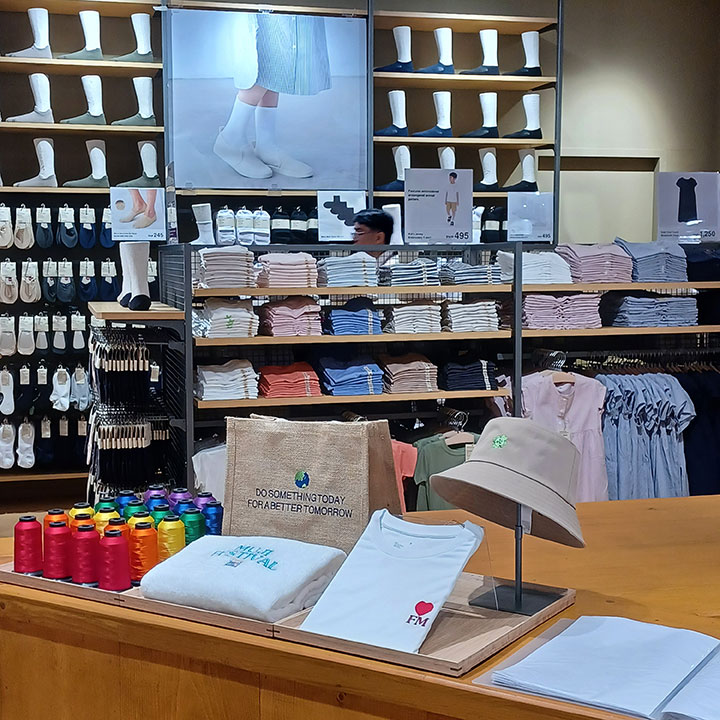
THERE is a full range of household items, clothing, stationery, and food to be found at Muji, the Japanese minimalist lifestyle brand that now has nine stores in the Philippines.

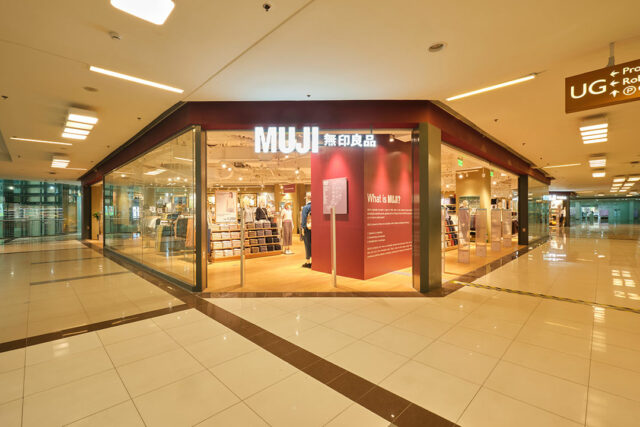
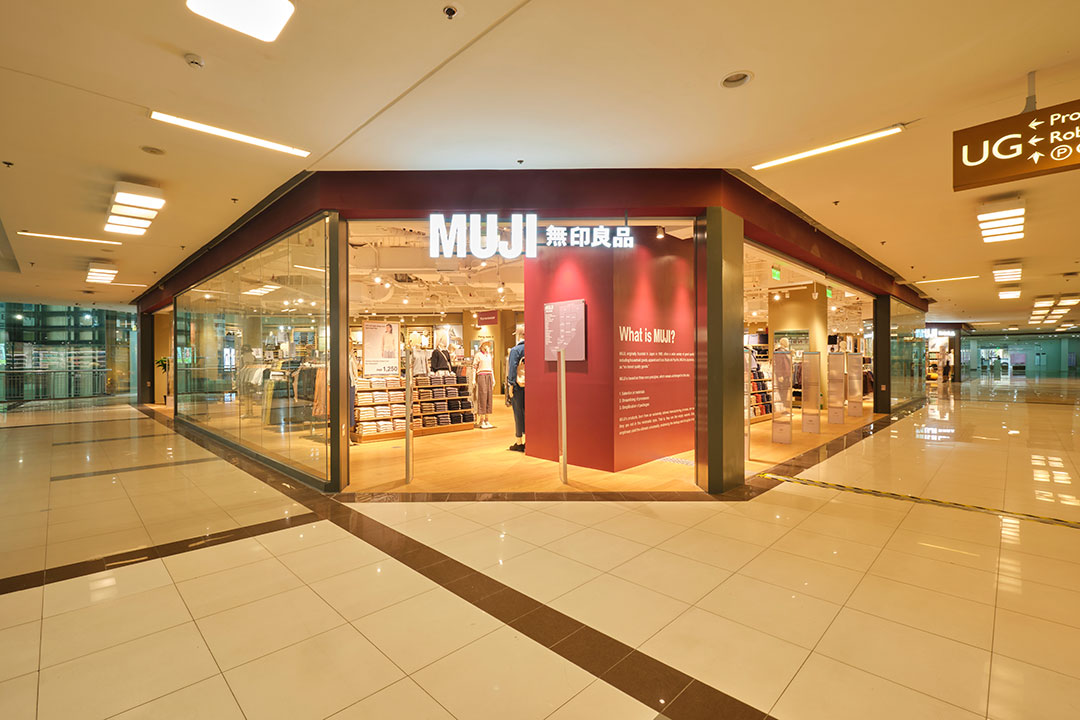
Last week, Muji opened its newest branch — its 9th — in Festival Mall in Alabang, Muntinlupa, which is also its first in the south part of Metro Manila. Four months ago, it opened its flagship store at Glorietta 3 in Makati.

The Aug. 28 launch saw guests browse through the expansive selection of items. Though not as large as the Makati store, the Alabang branch offers a good variety of lifestyle essentials, along with special services like spare parts replacement, in-house alterations, embroidery, and a coffee counter.

Most notably, the new store has an exclusive drink that can’t be found in any of the other eight branches — the Macadamia Latte, which can be served hot or iced.

“Metro Manila is a very big city. The people here know about trends, fashion, and sustainability,” Takeshi Akiyoshi, president of Muji Philippines, told BusinessWorld at the Alabang branch opening. “We really have to deliver.”

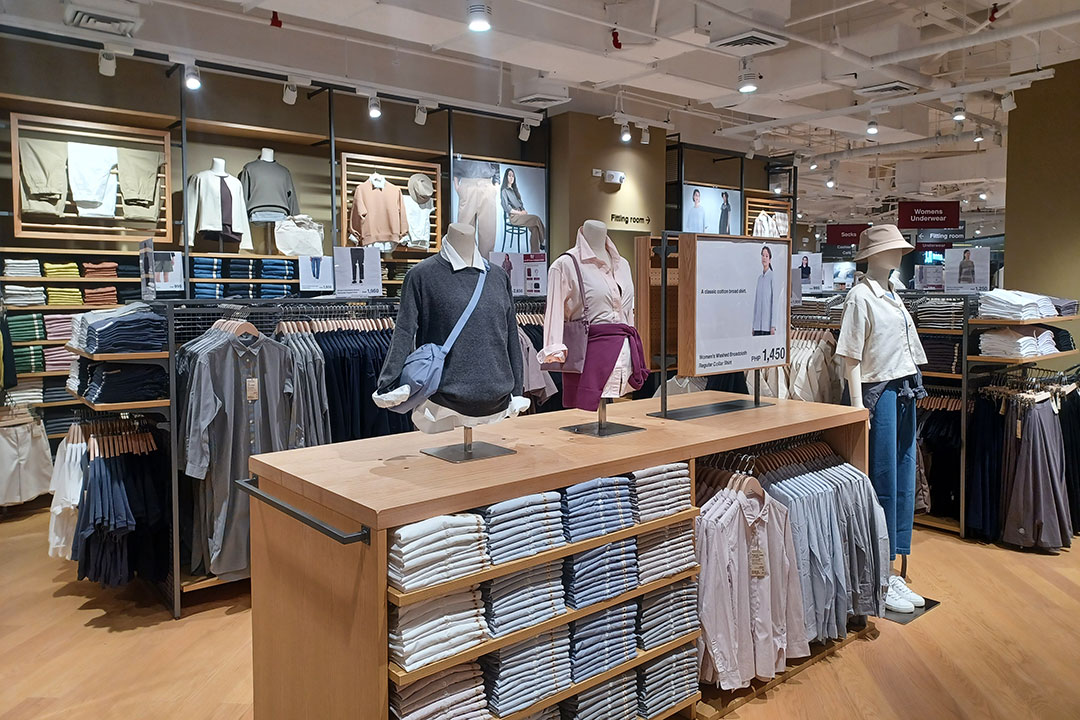
The 1,649-square-meter store has interiors made of local materials like Philippine reclaimed wood. It carries a careful selection of 3,000 items from the 7,000 items offered by the Muji brand.

“The Philippines has no winter. We choose the ASEAN-friendly products, so spring and summer products. Short-sleeved shirts, sleeveless shirts, hats, and water-resistant products — we choose these for the Philippine market,” Mr. Akiyoshi said.

The latest collection of clothing at Muji stores features linen as the main material, which is optimal for tropical climates.

EXPANSION
Muji Philippines’ Marketing Manager Christina Dagdag explained that opening the Alabang store is because they have a big market south of Metro Manila, which includes provinces like Laguna and Batangas.

“We get lots of orders in the south from our online catalog, which is why we’re really looking at more locations in the south,” she said.

Within the next few months, expansion will mainly be within Metro Manila. The 10th and 11th branches are set to open in Greenhills in September and Estancia Mall in October.

Mr. Akiyoshi added that they are still searching for good locations down south, as well as in major cities in the rest of the archipelago, like Cebu and Davao.

“For now, we are concentrating on advancing our brand awareness in Metro Manila,” he said.

THE COFFEE COUNTER
Muji’s Coffee Counter — which opens at 9 a.m. daily regardless of mall hours — is designed for relaxation, work, and study. It offers coffee, tea, and matcha-based beverages as well as sweet and savory breads.

“I recommend our matcha-based products, like our Ichigo Matcha Latte,” said Mr. Akiyoshi, when asked what Filipino customers should order. The drink combines the sweetness of matcha with some milk and a dash of strawberry flavor.

Since the Alabang store offers an exclusive drink, the Macadamia Latte, many guests tried this on opening day. It blends a shot of espresso, milk, and macadamia flavor, and is more refreshing than the usual coffee beverage. (A tip: substituting regular milk with oat milk brings out the rich, roasted notes of the macadamia.)

Dessert lovers can also try the soft serve ice cream, made from Hokkaido Holstein milk from northern Japan.

Muji Philippines Corp. is a joint venture between the SSI Group, Inc. and Japan’s Ryohin Keikaku Co., Ltd.

Aside from the Festival Mall branch in Alabang, Muji has stores at Glorietta 3, Greenbelt 3, and Power Plant Mall in Makati, Shangri-La Plaza in Mandaluyong, SM Mall of Asia in Pasay City, SM North EDSA in Quezon City, and Uptown Mall and Central Square in BGC, Taguig. — Brontë H. Lacsamana

Thailand-Cambodia Conflict: Open-ending the truce is better than full-scale war

STOCK PHOTO | Images by Aranjuezmedina from Freepik

The Thailand-Cambodia truce which began July 29 is fragile but holding. It gives hope that conflict parties use the agreement as an opportunity to negotiate a long-term solution to the border conflict.

While guns are silent, conditions are susceptible to the resurgence of violence. Military units on both sides maintain positions without a third-party peacekeeping force to act as a buffer. The Thai army vows no retreat from 11 border positions. Cambodia also reinforced its military presence in border zones a day after the truce was agreed upon.

Between the two frontline forces are issues of un-retrieved corpses of Cambodian soldiers, other Cambodian soldiers held by Thai forces as prisoners-of-war, and landmines that date back to the Cambodian civil war and Vietnamese invasion against the Khmer Rouge. Meanwhile, displaced communities have lost opportunities for cross-border economic exchanges.

The points of contention are the Preah Vihear and Ta Muem Thom temples, ancient temples dedicated to the Lord Shiva. The majority of Thais and Cambodians are Theravada Buddhists who do not worship the Hindu deity. The border conflict has nothing to do with religion. It is about claims of sovereignty over cultural heritage and the pieces of territory around the temples etched in colonial cartography. These are competing claims that can go on for a long time, as it had been, without use of force and mainly through international arbitration of the International Court of Justice.

The July 24 escalation of violence was not driven by renewed desire for territorial conquest. It was triggered by internal struggles of power and rule. In Thailand, it was an opportunity for the Thai military, royalists, and the Yellow Shirt movement to dislodge the Shinawatra political dynasty.

In Cambodia, it was an opportunity for Hun Sen to secure indispensability and further solidify clan-based political succession with nationalism as a banner. His son, Hun Manet, is the Prime Minister and Commander-in-Chief of the Royal Cambodian Armed Forces. His other son, Hun Manith, is Head of Military Intelligence at the Defense Ministry. The youngest son, Hun Many, is Deputy Prime Minister and Minister of Civil Service as well as President of the Union of Youth Federation of Cambodia. Hun Sen himself is in charge of the Cambodian People’s Party and Head of the Senate with authority to sign bills into law and act as head of state if the King is out of the country.

National political stakes do not necessarily represent the interests of the local people living near and around the temples and other zones along the 817-kilometer border. Communities on both sides use the border not as a barrier but as a bridge for social and economic exchanges. According to the International Organization for Migration, 251,312 Cambodians crossed over to Thailand while another 199,950 crossed back to Cambodia in May 2019.

This number pertains only to official movement based on records of border passes and passports. In July 2019, in two border posts alone (Ou Anlouk and O Rumdoul), 40,774 Cambodians crossed the border on foot (71.5%), by motorbike (16.5%), and the rest by car or by bicycle. The more than 260,000 people displaced on both sides of the border are eager to return to their homes and resume social and economic exchanges.

Neither Cambodia nor Thailand is prepared to engage in costly wars of conquest. No ASEAN member-country has waged war on another since the association was formed in 1967. (The 1978-1989 Vietnam-Cambodia war occurred when both countries were not yet members of the ASEAN.) There are larger stakes beyond internal struggles of power. Both countries can inform decisions based on broader national economic interests and welfare of citizens.

A full-scale war could propel the conflict into the orbit of US-China geo-political contests in Southeast Asia beyond the control of ASEAN. Thailand is one of only two countries in Southeast Asia (the other being the Philippines) with a bilateral security agreement with the United States. The military assistance agreement signed on Oct. 17, 1950 is reinforced by the Thanat-Rusk communiqué in March 1962 wherein the United States promised to come to Thailand’s aid if there is aggression by neighboring nations. The 1966 US-Thai Treaty of Amity and Economic Relations also gives special rights and benefits to American citizens and companies who wish to establish their businesses in Thailand.

China has big interests to protect in Cambodia even as it maintains economic relations with Thailand. It is Cambodia’s largest investor and trade partner. China’s investments in Cambodia averaged $466.75 million annually from 2003, reaching a total of $1.37 billion in 2023. Between January and November 2024, trade between the two countries reached nearly $14 billion. Cambodia also benefits from China’s Belt and Road Initiative (BRI) such as Chinese investments in the Sinahoukville Special Economic Zone, Phnom Penh-Sihanoukville Expressway, the Siem Reap Angkor International Airport, and the $1.7-billion Funan Techo Canal that connects Phnom Penh to deep water ports along Cambodia’s coastline, including the Sihanoukville Port, which is also funded by China.

China has bound Cambodia to a basket of agreements: the 2022 Regional Comprehensive Economic Partnership (RCEP), the China-Cambodia Free Trade Agreement (CCFTA), and the 2024 China-Cambodia “Diamond Hexagon” cooperation framework to deepen cooperation in various sectors. With the CCFTA, China has eliminated tariffs on 97.53% of Cambodian exports, while Cambodia has removed tariffs on 90% of Chinese imports.

Thailand and Cambodia need to protect economic gains not by war. The Cambodian economy is now worth $46.35 billion, more than 40 times bigger than it was at the fall of the Khmer Rouge regime in 1979. The GDP per capita as of 2024 was $2,183. Remittances from Cambodian workers overseas rose from $1.15 billion in 2021 to $1.25 billion in 2022 comprising 4.4% of GDP. This has since risen to $2.6 billion in 2022, accounting for 9.2% of GDP, further rising to $2.95 billion in 2024.

Thailand is undoubtedly a bigger economy with a GDP of $526.41 billion and GDP per capita of $6,573 (as of 2024) but it needs migrant workers to ease labor shortages.

Migrant work in fishing, agriculture, construction, domestic work, and other services contributed 4.3% to 6.6% of Thailand’s GDP in 2010. As of 2013, there were 899,658 Cambodian migrant workers in Thailand out of a total of 3.6 million. This number has since grown to over a million in 2017. In 2018, Cambodian migrants comprised 32.12% of the total number of registered migrant workers in Thailand. As of 2021 it had an estimated 1.2 million Cambodian migrant workers.

Internal logics for waging war remain but there are weightier collective reasons for peaceful co-existence.


Ed Quitoriano specializes in peace and conflict studies. He works as senior advisor of the Council for Climate and Conflict Action Asia and principal consultant of Visus Consulting.

Trump demand for Japan to buy more US rice stalled trade talks — report

STOCK PHOTO | Image by Vinn Koonyosying from Unsplash

TOKYO — A Trump administration request that Japan buy more US rice caused this week’s snag in bilateral trade talks as Tokyo “strongly objected” to the condition, the Nikkei newspaper reported.

Japan’s top tariff negotiator abruptly canceled a US trip on Thursday over unspecified “points that need to be discussed at the administrative level,” a government spokesperson said, as the two sides try to hammer out details of a July agreement on a reduced 15% tariff on US imports from Japan.

The Nikkei, citing Japanese government officials it did not identify, said a revised order from President Donald Trump included a commitment for Japan to buy more American rice.

One official criticized the proposal as an “interference in domestic affairs,” the business daily said.

The office of negotiator Ryosei Akazawa, Japan’s minister for economic policy, and the agriculture and foreign ministries, as well as the US embassy could not be reached for comment on the report outside business hours.

The Nikkei said the new demand contradicted an agreement that Japan would not need to lower its tariffs on agricultural imports.

In the July deal, the White House said Japan would boost US rice purchases by 75%. Prime Minister Shigeru Ishiba said the share of US rice imports might increase under an existing tariff-free framework but that the agreement did “not sacrifice” Japanese agriculture.

Mr. Akazawa’s trip was meant to finalize Japan’s agreement to a $550-billion package of US-bound investment through government-backed loans and guarantees, the contents of which remain obscure.

Japanese officials have repeatedly said they want an amended presidential executive order — removing overlapping tariffs on Japanese goods — before releasing a joint document on the investment details.

Opposition leader Yuichiro Tamaki on Saturday questioned the government’s competence and transparency on the trade deal, posting on X that the confusion highlights the danger of operating without a formal text of the deal.

“Because there is no written agreement, we cannot confirm what the problem is,” said Mr. Tamaki, head of the Democratic Party for the People.

Citing “heightened uncertainty” for Japan’s auto industry and its workers, he urged Mr. Ishiba to swiftly convene parliament and provide a full explanation, saying any new agricultural concessions would require legislative approval. — Reuters

PHL businesses need structured data, clear governance policies to adopt AI — Hitachi Vantara

AYALALAND.COM.PH

PHILIPPINE enterprises need to reduce unnecessary data and strengthen their artificial intelligence (AI) governance policies to generate significant value from their AI-related investments, according to data management and storage firm Hitachi Vantara.

“Companies in Asia are already hiring AI-relevant talent at higher-than-global rates and engaging external experts to accelerate outcomes. For Philippine enterprises, focusing on these fundamentals such as clean data, clear governance, and the right partners — shortens time to value,” Octavian Tanase, chief product officer at Hitachi Vantara, said in an e-mail.

However, most companies in the region still struggle with scattered data, making it harder to utilize AI at scale, Mr. Tanase said.

In Asia, only 30% of enterprise data is structured, with models delivering accurate outputs only 32% of the time, according to Hitachi Vantara’s latest State of Data Infrastructure Survey.

Philippine companies must invest in data preparation to reduce ROT (redundant, obsolete, trivial) data and close the digital skills gap through targeted hiring and trusted partners.

Mr. Tanase also cited the importance of reskilling and upskilling to ensure that employees apply the best use cases of AI.

“Enterprises that combine better data practices with proactive workforce development will be better positioned to adopt AI responsibly and at scale,” he said.

A report by Boston Consulting Group showed that AI and generative AI are expected to contribute around $120 billion to the gross domestic product of six ASEAN (Association of Southeast Asian Nations) countries by 2027, namely Indonesia, Malaysia, the Philippines, Singapore, Thailand, and Vietnam.

“The enterprises that succeed in structuring and governing their data will be the ones to capture the lion’s share of this value, because organized data directly translates into more accurate, revenue-generating AI models,” Mr. Tanase said.

The growing adoption of AI is also driving the expansion of Southeast Asia’s data center market. ASEAN is projected to triple its data center capacity by 2027, with an expected addition of 2,100 megawatts in the next few years.

“The rise in regional data center investment is encouraging but readiness isn’t just about numbers. The best outcomes come from data centers that emphasize interoperability, governability, sustainability, and performance,” Mr. Tanase said. — Beatriz Marie D. Cruz

Toyota Gazoo Racing Philippines eSports GT Championship qualifiers on

IMAGE FROM TOYOTA MOTOR PHILIPPINES

TOYOTA MOTOR PHILIPPINES (TMP) recently announced the start of its e-motorsports season with the launch of its refreshed sim racing tournament, the Toyota Gazoo Racing Philippines eSports GT Championship 2025 (TGR PH eSports GT Championship). The series continues TMP’s drive of “staging the country’s premier virtual racing competition.” Participants go head-to-head in sprint races using the Gran Turismo 7 game on PlayStation.

Winners bring home cash prizes, original GR merchandise, and an invitation to the Toyota Gazoo Racing Academy. Top three finishers also get the honor of representing the country at the Asia Finals in Thailand later in the year, where they will be up against some of the best sim racers in the region.

To be eligible for the competition, a player must be a permanent resident or citizen of the Philippines and reside in the country during the tournament schedule. Minors (17 years old and below) must secure the permission of a guardian before participating. Participants may do their qualifiers online or offline at select Toyota GR Performance dealerships. Those who opt to do their qualifiers online must have a PlayStation 4 or 5 with active PSN account and PS Plus subscription, and a copy of Gran Turismo 7.

For offline qualifiers, participants may check the list of participating Toyota GR Performance dealerships on the official TGR PH eSports GT Championship Facebook group (https://www.facebook.com/groups/tgresportsgtchampionship/). Offline participants only need to bring a valid government-issued ID for verification at the dealership. Interested participants may register through https://forms.office.com/r/rqhiXM2Bef to schedule their qualifying. The qualifiers will determine the top 40 players who will advance to the quarterfinals.

The quarterfinals, which will narrow down the pool to the 20, will be held on-site at the Ayala Malls Manila Bay in Pasay City on Oct. 11. This will be followed by the semifinals and national finals on Oct. 12.

Since its launch in 2020, TGR Philippines’ e-motorsports program has been providing an avenue for aspiring racers to kick-start their motorsport dreams. Winners are promoted to real-life racing through TMP’s premier racing series, the Toyota Gazoo Racing Philippine Cup, where they are given the opportunity to get behind the wheel of the Vios one-make-race (OMR) car. Previous e-motorsports champions Russel Reyes and Luis Moreno have even gone on to claim the championship in the TGR Philippine Cup Novice Class in 2024 and 2025, respectively.

“As we conclude one racing series this year, we are thrilled to begin another one — now for sim racers! Although the racing will be virtual, the action will surely be felt, especially at the finals at the Ayala Malls Manila Bay this October. We invite everyone to participate in this very exciting opportunity to live out their racing dreams,” shared TMP Assistant Vice-President for Marketing Services Andy Ty in a release.

The Toyota Gazoo Racing Philippines eSports GT Championship 2025 is sanctioned by the Automobile Association Philippines and is presented by official fuel and lubricants partner Petron, and official tire partner GT Radial. This event is also supported by official timekeeper Seiko, Toyota Financial Services Philippines, Tuason Racing, AVT, 3M, Denso, OMP, Rota, Autoplus, PIAA, Vinyl Frog Premier Vehicle Wraps, AutoQuix, Sparco, myToyota Wallet, and Kinto One.

For more information, follow Toyota Gazoo Racing Philippines on Facebook, Instagram, X, YouTube, and TikTok (tgrphilippines). Participants are also encouraged to join the official TGR PH eSports GT Championship Facebook group for tournament updates.

Follow TMP’s official pages (ToyotaMotorPH) on Facebook, Instagram, and X; join the Viber community at Toyota PH for updates.

Banks could face sanctions, charges for failure to update fraud management systems

REUTERS/KACPER PEMPEL/FILE PHOTO

THE BANGKO Sentral ng Pilipinas (BSP) could impose both civil and administrative sanctions and penalties against banks that are unable to comply with the new fraud management system (FMS) requirements under the Anti-Financial Account Scamming Act (AFASA).

“There is what we call the civil aspect, where a scam victim will be adjudicated by the BSP and we act like a judge. Now, on top of that, I can complain to BSP that my bank is violating rules. In that case, the bank can be held administratively liable. These are separate procedures,” BSP Deputy Governor Elmore O. Capule told reporters last week.

The BSP has given banks until June 25, 2026 to adopt new fraud management systems, as well as upgraded security and authentication measures for consumers. Lenders were also given six months to update their risk management frameworks in line with the AFASA’s implementing rules.

Mr. Capule said the BSP could suspend a bank’s license if they are unable to comply with updated FMS requirements by the deadline.

“Number one, remember, we are the regulator of banks. We are supposed to ensure that the banks comply with our regulations. So, if they fail, administratively, we can hold them liable. We can impose fines, penalties, even suspension of license. That’s possible,” he said.

Mr. Capule added that under the Financial Products and Services Consumer Protection Act, clients can also hold their banks liable for restitution if they are scammed and the financial institution is found to have an outdated fraud management system.

“What this means is, if I am a client, and I get scammed, and then it turns out they are not complying with this fraud management system, they will now be obliged to repay me. I don’t have to go after the scammer — I go after the bank. I was scammed because [their] system is totally inadequate to save me. Remember, that is their product,” he said.

“If I establish that my bank is not compliant with that requirement, that’s all I have to prove.”

In this kind of case, Mr. Capule said the BSP will act as an adjudicator and determine through a hearing if they will obligate the bank to repay the victim.

Asked if the central bank would be willing to extend the FMS compliance deadline, he said they will have to monitor industry developments,

“We will find out after one year. But for now, banks are treating it seriously because they have to spend a lot of money for that. After one year, it will be hard for the BSP to say we will extend it because there are people getting victimized by scams,” Mr. Capule said.

“So, if we will extend it, they can tell us, you’re not protecting the public.” — A.M.C. Sy

Giorgio Armani sees succession as a ‘gradual transfer’ of responsibilities

DESIGNER Giorgio Armani appears on the runway at the end of the Giorgio Armani Fall-Winter 2025/2026 menswear collection during Milan Fashion Week in Milan, Italy on Jan. 20. — REUTERS FILE PHOTO/ALESSANDRO GAROFALO

MILAN — Giorgio Armani sees his succession as a gradual handover to his closest collaborators and family, the Italian fashion designer told the Financial Times on Friday, after poor health forced him to miss the recent Milan and Paris fashion shows.

Before skipping Milan in June, Mr. Armani, 91, who is both creative director and chief executive officer of the company he founded, had never missed one of his catwalk events.

“My plans for succession consist of a gradual transition of the responsibilities that I have always handled to those closest to me… such as Leo Dell’Orco, the members of my family and the entire working team,” he told FT’s How To Spend It supplement.

Pantaleo (Leo) Dell’Orco is head of men’s design and Mr. Armani’s right-hand man.

“I would like the succession to be organic and not a moment of rupture,” Mr. Armani added.

One of the fashion world’s best-known figures, Mr. Armani is sole shareholder of the company he set up with his late partner Sergio Galeotti in 1975, which generated revenue of €2.3 billion ($2.69 billion) in 2024. — Reuters

Cracker Barrel logo is corporate mediocrity’s latest casualty

MIKE MOZART/COMMONS.WIKIMEDIA.ORG

By Adrian Wooldridge

THE latest battle in America’s woke wars featured a country-themed restaurant-and-store which gloried in the name of Cracker Barrel. The senior management of Cracker Barrel Old Country Store, Inc. tried to modernize their enterprise by simplifying its logo and removing the image of an overall-clad man leaning on a barrel. MAGA spotted a plot by woke managers to destroy another corner of Old America. Battle ensued.

“WTF is wrong with @CrackerBarrel??!,” roared Donald Trump, Jr. on X. “Cracker Barrel must be broken,” urged Christopher Rufo. The company’s stock lost almost $100 million. Donald Trump himself took time off from undermining the independence of the Federal Reserve to urge the company to go back to its old logo. And the company duly obliged and restored the overall-clad man to his rightful place.

MAGA is now celebrating yet another victory over the woke revolution: Conservative intellectuals who have never eaten in Cracker Barrel can now visit one to toast their triumph with a glass of Wild Berry Tea. But the victory is not only ridiculous but Pyrrhic. Ridiculous because the people behind the redesign were not woke revolutionaries but paint-by-numbers managers. Pyrrhic because the corporate homogenization of American culture will continue. Cracker Barrel’s retention of its “Old Timer” will not change the numbing monotony of America’s increasingly generic and boring popular eateries. The real threat to America is not wokery. It is mediocrity.

We like to think of “mediocrity” as a mistake: Management’s job is to pursue excellence and to weed out mediocrity. Yet today’s corporate landscape suggests a darker reality: Mediocrity is not so much a bug as a feature. We increasingly live in a world of corporate lookalikes, so much so that I frequently find myself trying to get into someone else’s car because it looks exactly like mine. All logos have gone through the same process of simplification. All brands speak the same language of openness and inclusivity. All restaurants, from the slowest to the fastest, partake of the same minimalist ethic.

Cultural critics rage about such homogenization. Alex Murrell talks about a “creative convergence” toward the bland and average. Adam Mastroianni complains that “until 2000 about 25% of top grossing movies were prequels, sequels, spinoffs, remakes, reboots or cinematic universe expansions… In recent years, it’s been close to 100%.” There is even a name for the phenomenon: “Blandification.” The critics are howling into the wind. The corporate world is in the grip of three management techniques that weave mediocrity into everything it produces.

The first is measurement and standardization. Standardization is as old as mass production if not the Industrial Revolution. But the process is reaching hitherto protected areas of the knowledge economy. The 3M Co. was once famous for giving its workers spare time to noodle away at new products, a process that produced Post-it notes as well as other innovations. But in 2001 a new CEO, James McNerney, introduced “Six Sigma,” a data-driven methodology aimed at eliminating defects in any process, into every corner of the company, including innovation. Out went “noodling” and in came bureaucratic accountability and market segmentation.

The result was a creativity crisis — at best a collection of me-to products and at worse innovation paralysis. (McNerney went on to lead Boeing Co. into a tailspin from which it has yet to recover.) This paint-by-numbers spirit is spreading into the creative world: More and more companies are using digital tools to monitor knowledge workers, tracking their key strokes and watching their performance on Zoom, in a bid to boost productivity.

The second is managed feedback. To buy something is to be immediately presented with a “how did we do” survey on a scale of one to five. Manage someone and you are required to produce regular reports on their performance (often, again, on a scale of one to five). But all this feedback is designed to squeeze out anything that is spontaneous or heartfelt. Anybody who wants to make a genuine complaint about poor service, as I did recently about British Telecom, finds it impossible to get through to a live human being. Some of this managed feedback is designed to create the illusion that giant bureaucracies are listening. But, alas, some of it does have an effect.

One reason Netflix series are becoming so insipid is that the company cares about all those thumbs-up and thumbs-down buttons. Feedback rewards the predictable and punishes the original, squeezing shows into “categories” and then squeezing examples of these categories into rigid formulae. And one reason products are so generic is that designers are always polling their customers.

The third is globalization: The more companies try to reach global markets, the more they produce generic slop impervious to the quirks of culture. Comic book heroes are much easier to export than angst-ridden characters. But what is true about cultural products is also true of car dashboards or washing-machine control panels.

Globalization may be fading. A revival of quirky national traditions is unlikely to replace it. Two of the most powerful forces in modern business are sending the mediocrity revolution into overdrive. The most obvious is artificial intelligence. AI operates by scraping the internet for established knowledge and then serving up that knowledge in a predigested form. If the biggest money-spinner of 2025 turned out to be the latest Fast and Furious (whose iterations are now in double digits), then AI will mechanically churn out more of them in an infinite feedback loop. Artificial intelligence is mediocrity memeified, magnified, and mummified.

The other is consolidation. Over the past two decades, three out of four US industries have grown more concentrated, as giant companies have muscled aside competitors and swallowed startups. The biggest danger with consolidation is that it forestalls radical products that might challenge the status quo. But in the shorter term it homogenizes existing products.

Take the case of The Walt Disney Co., which seems to be trapped in a mediocrity doom loop. Since 2006, the Mouse has been far more accomplished at buying other companies — Pixar for $7.4 billion in 2006, Marvel for $4 billion in 2009, Lucasfilm for $4 billion in 2012, and 20th Century Fox for $71 billion in 2019 — than for its artistic creativity. Its remake of Snow White was, like the current remaking of Cracker Barrel, distinguished not by wokeness but by mediocrity. But the more it focuses on corporate jiggery-pokery, the more it loses the creative magic that first made it great.

MAGA warriors are right to worry that something has gone wrong with corporate America — and that the vertiginous stock prices conceal a reality of sloppy standards and juiced returns. But they err in obsessing over the culture wars rather than a deeper crisis of creativity. And they err, above all, in not seeing wokery for what it is — a mere symptom of the bigger problem of mediocrity.

BLOOMBERG OPINION

India push for ethanol-mixed fuel sparks backlash from motorists

PHILIPPINE STAR/KRIZ JOHN ROSALES

NEW DELHI/LUCKNOW — The Indian government is facing a backlash from motorists after the nationwide rollout of fuel blended with 20% ethanol, amid fears — stoked by a lack of clarity from some automakers — that it may affect the performance of particularly older vehicles.

India, the world’s third largest car market, set a 2025 target years ago for 20% ethanol blending in fuel, called E20, as part of Prime Minister Narendra Modi’s focus on clean energy.

But in recent weeks it has become the only choice at nearly all of the country’s 90,000 fuel stations. Older blends, like E5 and E10, typically seen as more compatible with old cars, have mostly been removed, leaving drivers with just one choice.

The government says E20 lowers carbon emissions, but has conceded in press statements addressing consumer worries that there could be a “marginal” hit on fuel efficiency of old cars.

Automakers, already battling slower sales and shortages of rare-earth magnets, have provided mixed guidance, adding to consumer anger over the lack of choice. Public interest litigation against the move will be heard in the Supreme Court on Monday.

Two fuel station managers in the northern city of Lucknow told Reuters that drivers were getting so angry that some stations had stopped providing information about the change.

“People hurl abuse at us. We then decided to not tell people about it,” said one manager, Ramesh Pandey.

The ministries of petroleum and road transport did not respond to requests for comment.

“India’s ethanol journey is unstoppable,” petroleum minister Hardeep Singh Puri said on Aug. 8, adding that “some lobbies with vested interests are actively attempting to create confusion.”

Days later, Mr. Puri’s ministry said, “in case of certain older vehicles, some rubber parts and gaskets may require replacement” calling it a “simple process.”

Automakers are racing to assuage concerns, but there is little clarity on the future of old cars in particular.

Skoda has issued an FAQ on its website saying that components of its cars sold in India before April 2020 “are not evaluated” for E20. In a statement to Reuters on Friday, it said vehicles sold after that date were “fully material-compatible,” without explaining what happens to older cars.

Toyota said in a statement that “a modest variation” in fuel economy in its cars was likely with E20.

On Monday, Renault told tech consultant Ankur Thakur, 28, via e-mail that his 2022 Renault Triber had “not been tested” for E20 and it was “not advisable” to use the fuel.

He posted the screenshot of the e-mail on X, which went viral and attracted more than 700,000 views. Renault then told Mr. Thakur — and Reuters in a statement on Friday — that based on government tests E20 poses “no serious challenges” for old cars.

Mr. Thakur, unconvinced, is now using a pricey no-ethanol fuel still available at select pumps. “Just give me the right fuel my car was originally made for,” he told Reuters.

A Reuters review of a fuel tank flap and user manual of an Audi Q3 purchased last year in India showed it recommended only E5 and E10 fuel.

The fuel tank of a 2024 Mahindra Scorpio was pasted with a warning sticker: “CAUTION. PETROL/E10 FUEL ONLY.”

Mahindra and Audi did not respond to Reuters queries. — Reuters

ERC approves Meralco, First Gen power supply deal extension until 2026

PHILIPPINE STAR/JESSE BUSTOS

THE ENERGY Regulatory Commission (ERC) has approved the request of Manila Electric Co. (Meralco) and a unit of First Gen Corp. to continue procuring power supply from a 1,000-megawatt (MW) gas-fired power plant in Batangas until Jan. 31, 2026.

In an order dated Aug. 27, the ERC authorized the implementation of the interim extension of the power purchase agreement (PPA) between Meralco and First Gas Power Corp. (FGPC) for the dispatch from the latter’s Sta. Rita power plant.

The application was approved a day before the expiration of the PPA.

First Gen owns and operates four gas-fired power plants with a combined capacity of 2,017 MW located in Batangas. FGPC, a subsidiary of First Gas Holdings Corp., supplies electricity from the Sta. Rita plant to Meralco under a 25-year PPA.

The companies earlier filed a motion with the ERC to extend the PPA, as FGPC said it would likely be constrained to shut down the power plant due to loss of offtake.

Should the shutdown happen, they said this may further limit the availability of generation capacity and result in yellow/red alerts to the grid that will “inevitably impact Meralco’s customers.”

In its simulation, Meralco forecast that the interim extension of the PPA would result in an increase in blended generation costs of between P0.4117 per kilowatt-hour (kWh) and P0.5093 per kWh in the next three months.

The ERC also directed the Independent Electricity Market Operator of the Philippines (IEMOP), the operator of the Wholesale Electricity Spot Market (WESM), to simulate potential rate increases that would occur in the WESM if the Sta. Rita power plant, along with other natural gas plants, were to operate as merchant plants.

Based on IEMOP’s simulations, spot market prices could increase to as high as P6.23 per kWh with the Sta. Rita power plant operating as a merchant plant compared to operating with a PPA.

In its explanation, the ERC said that although the motion would affect Meralco’s generation charge, there are still “other equally compelling and urgent reasons that justify the proposed extension.”

“The rate consequences would be significantly more severe than the estimated increase in the generation charges calculated by Meralco for the affected months,” the ERC said.

In approving the extension, the ERC ordered that the dispatch of FGPC’s Sta. Rita plant should be at its minimum level only.

“Nevertheless, the Commission remains cognizant of the difficulties imposed on Meralco’s consumers in the pursuit of energy security for the entire power system,” the ERC said.

In exercising its rate-making authority, the regulator said it is compelled to approve a pass-through rate for the Sta. Rita plant’s supply to Meralco under the interim extension.

The rates are equivalent to the previously approved rates but based on an 83% plant capacity factor.

The ERC said that Meralco must manage its electricity purchases in a manner that ensures the least-cost supply to its captive market.

Meralco’s controlling stakeholder, Beacon Electric Asset Holdings, Inc., is partly owned by PLDT Inc.

Hastings Holdings, Inc., a unit of PLDT Beneficial Trust Fund subsidiary MediaQuest Holdings, Inc., has an interest in BusinessWorld through the Philippine Star Group, which it controls. — Sheldeen Joy Talavera

GWM PHL targets sales growth with key hires

GWM Philippines Sales Director Jude Racadio (left) with GWM Philippines Deputy Director for Training and Product Planning Vincent Marquez — PHOTO FROM GWM PHILIPPINES

LUXURIANT AUTOMOTIVE Group, Inc. (LAGI), the official importer and distributor of GWM vehicles in the Philippines, announced the recent appointment of two “seasoned automotive professionals” to its growing leadership team. This strategic move underscores the company’s commitment to strengthening its market presence and to further gear up for “an exciting second half of 2025 and beyond.”

Jude Racadio joins GWM Philippines as its sales director. With “an extensive career in the automotive industry,” Mr. Racadio brings with him expertise in manufacturing, parts planning, inspection processes, and sales and marketing. From starting as a production manager to eventually becoming a national sales director in his previous role, his career trajectory “exemplifies dedication and leadership.” At GWM, he will be leading sales operations and dealer development efforts to drive sustainable growth and competitiveness in the market.

Meanwhile, Vincent Marquez steps in as deputy director for training and product planning. Previously serving as a senior training manager, Mr. Marquez is “highly regarded for his deep experience in designing and executing training programs focused on product knowledge and sales for automotive dealerships.” He is expected to play a vital role in shaping GWM Philippines’ training and product planning strategies, ensuring that both dealers and customers benefit from enhanced product awareness and service excellence.

“These appointments mark another step forward for GWM Philippines as we continue to build a strong and capable team,” said GWM Philippines Brand Head and Marketing Director Dax Avenido.

“Both Jude and Vincent bring valuable industry knowledge and proven track records that will help us accelerate our growth and reinforce our commitment to delivering world-class vehicles and customer experiences to the Filipino market.”