Home Blog Page 110

Asia looks to COVID-era playbook to tackle fuel crisis
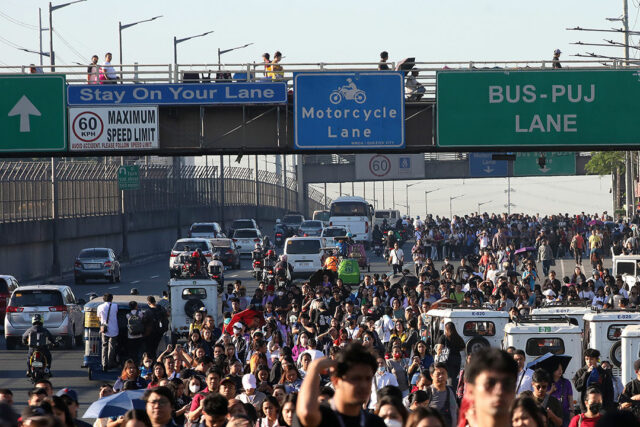
Commuters wait for buses and jeepneys along Commonwealth Avenue in Quezon City, March 25, 2026. — PHILIPPINE STAR/MIGUEL DE GUZMAN

Countries across Asia are weighing up work-from-home policies and stimulus measures enforced during the COVID pandemic, as they scramble to respond to global fuel shortages triggered by the Iran war.

Asia is at the frontline of the fuel crisis, buying more than 80% of the crude that transits the Strait of Hormuz, which has been almost totally blocked by Iran since the war broke out on February 28.

No country in the region has enforced work-from-home measures yet, but some have said they are on the table.

“I think it is a good idea,” South Korean Energy Minister Kim Sung-whan said on Tuesday when asked about an International Energy Agency (IEA) recommendation for people to work from home.

The IEA, which agreed a record release of around 400 million barrels of oil from strategic stockpiles to deal with the crisis, has outlined proposals to ease oil price pressures such as working from home and avoiding air travel.

IEA Executive Director Fatih Birol repeated those calls at a conference in Sydney this week.

“There were real-life tests, such as after the Russian invasion of Ukraine, European countries adopted these measures, and it was announced by the European governments. It helped them a lot to go through these difficult times without Russian energy … but keeping the lights on,” Birol said.

Industrial powerhouse South Korea on Tuesday launched a public campaign asking people to cut shower time, charge phones during the day and run vacuums on weekends.

“We will consult with relevant ministries and actively consider measures for work-from-home,” Energy Minister Kim told a briefing.

The Philippines, which relies heavily on Middle Eastern oil for its energy needs, shortened the work week in some government offices earlier this month. President Ferdinand Marcos declared a state of national energy emergency saying the conflict poses an “imminent danger” to the country’s energy supply.

Pakistan closed schools for two weeks and said office workers would work more from home. The island nation of Sri Lanka declared a public holiday every Wednesday to help make its fuel supplies go further.

Singapore, an Asian financial hub, urged people and businesses to switch to energy-efficient appliances, use electric vehicles and set the temperature higher on their air conditioners.

Thai Prime Minister Anutin Charnvirakul ordered bureaucrats to suspend overseas trips, set air conditioning temperatures above 25 degrees Celsius (77 degrees Fahrenheit), avoid suits and ties, use stairs instead of elevators, and work from home.

COST-OF-LIVING RELIEF
Some countries have turned to stimulus measures as rising fuel costs bite into household budgets.

The Japanese government said on Tuesday it plans to tap 800 billion yen ($5 billion) in reserve funds to finance subsidies aimed at keeping gasoline prices at about 170 yen per litre on average. The measure would cost as much as 300 billion yen per month.

New Zealand said on Tuesday that it would provide temporary financial support of NZ$50 ($29.30) every week from April for low-income families.

“We know these families will be hit particularly hard by the global fuel-price shock. We are delivering them timely relief,” New Zealand Finance Minister Nicola Willis said.

In neighbouring Australia hundreds of petrol stations are running dry from panic buying and shortages, which are acutely hitting the remote regional areas of the vast continent.

The center-left government introduced legislation in the parliament to double penalties for fuel price gouging.

Several Asian countries have also released petrol and diesel from domestic reserves and temporarily loosened gasoline and diesel quality standards to increase supply.

POLICY DILEMMA
The glaring contrast with the pandemic, however, is that central banks are not rushing to cut interest rates. In fact, they are considering hikes.

During the pandemic, demand collapsed as many economies were essentially shuttered for health reasons, so policymakers responded with massive stimulus.

Now, the Reserve Bank of Australia has already hiked rates twice this year. It cited energy risks as a material risk to inflation and a reason for raising rates to a 10-month high last week.

Investors expect Japan, Britain and Europe will all raise rates in coming months, and pressure on Asian economies may be even more acute as their currencies slip against the dollar.

“Central banks face a classic policy dilemma when oil prices surge – inflation rises but growth might weaken,” Jennifer McKeown, chief global economist at Capital Economics, said in a note last week.

“The right response depends crucially on why oil prices are rising, how persistent the shock is, and whether inflation expectations are at risk,” she added. — Reuters


Financial regtech firm Tookitaki opens Manila office

SINGAPORE-BASED regulatory technology (regtech) firm Tookitaki has opened a satellite office in the Philippines amid growing demand for anti-money laundering (AML) compliance solutions among local players.

In a statement on Tuesday, the company said its new office at Ayala Triangle Tower One in Makati City aligns with its plan to expand its presence in Southeast Asia. 

Tookitaki’s satellite office is expected to help grow its local team, boost engagement with financial institutions, and offer more on-the-ground support. 

This comes amid the increased demand for advanced technologies as financial crimes grow more complex, said Tookitaki Founder and Chief Executive Officer Abhishek Chatterjee.

“Our presence in Manila allows us to bring these capabilities closer to Philippine financial institutions and support their continued growth,” he was quoted as saying. 

He noted that Tookitaki’s artificial intelligence-driven solutions and federated approach to fighting financial crime would help financial firms detect complex fraud patterns, uncover hidden risks, and strengthen AML compliance.

“By strengthening our local presence, we can collaborate more effectively, respond more quickly to client needs, and continue providing exceptional service as institutions navigate an increasingly complex financial crime landscape,” Tookitaki Co-founder and Chief Operating Officer Jeeta Bandopadhyay said.

Tookitaki launched its Philippine operations in 2022.

The company supports key financial technology (fintech) players in the country, including electronic wallets GCash, Maya, and payment gateway platform PayMongo.

With the Philippines growing into a key fintech player in the region, Tookitaki’s local expansion helps utilize the country’s local talent amid evolving financial crimes, Tookitaki President Isabel Ridad said.

“We see tremendous potential in the country’s talent pool, and we are proud to invest in Filipino professionals who will help drive innovation and strengthen the global fight against financial crime,” she added.

In February last year, the Philippines was officially removed from the Financial Action Task Force’s “grey list” of jurisdictions under increased monitoring for money laundering and terrorism financing. — Beatriz Marie D. Cruz

Japan’s cherry blossom picnics feel the pinch of global inflation

A woman smiles between the early flowering cherry blossoms in Kyoto, Japan March 13, 2020. — REUTERS

TOKYO — Global inflation is taking a bite out of Japan’s iconic “hanami” cherry blossom picnics, with an index tracking food and drink costs up 25% since 2020, private think tank Dai-ichi Life Research Institute said on Tuesday.

Around late March to early April of each year, the Japanese fill parks and riverbanks with blue tarps, lunch boxes, snacks and drinks to picnic under blooming cherry trees with family and friends in a custom called “hanami.”

The event, a must-do for many Japanese, is not immune to the hit from rising raw material costs that has prodded companies to charge more for a wide range of food and beverages.

To gauge the degree of pain, Hideo Kumano, chief economist at Dai-ichi Life Research, updated an index he created in 2020, using the latest data to track the weighted average price of 14 popular “hanami” items including rice balls, bento boxes, fried chicken, potato chips and beer.

The findings showed the cost of “hanami” was up 4.2% in February from year-before levels, and rose 25.0% from the base year of 2020.

Japanese sweet buns recorded the biggest price rise, up 46.1% from 2020 levels, followed by carbonated drinks at 45.7% and rice balls at 45.0%, the index showed.

“A weak yen and rising global commodity prices are causing cost-push inflation in Japan,” Kumano said. “Hanami is clearly facing the negative effect of the global inflationary trend.”

After being mired in decades of deflation, Japan has seen inflation creep up since the Ukraine war as a falling yen and rising commodity prices boosted the cost of raw material imports.

Core consumer inflation stayed above the Bank of Japan’s 2% target for nearly four years before slowing to 1.6% in February due largely to generous government fuel subsidies. — Reuters

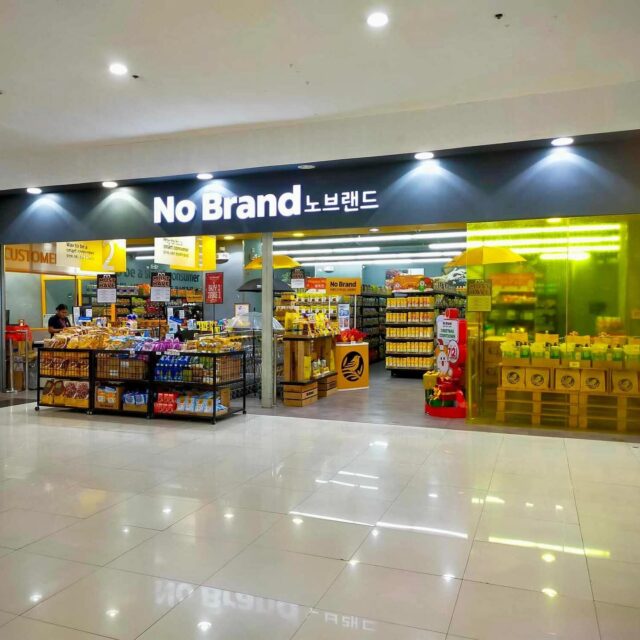
Robinsons Retail to close No Brand standalone stores by June

Photo from No Brand Philippines Facebook page

Robinsons Retail Holdings, Inc. (RRHI), the retail arm of the Gokongwei group, will close its 11 No Brand standalone stores across the Philippines by the end of June.

“The decision reflects evolving consumer preferences and how customers are choosing to shop across our retail formats,” RRHI President and Chief Executive Officer Stanley C. Co said in a disclosure on Wednesday.

“Our focus remains on meeting customer needs by providing relevant assortments in the most appropriate formats. We thank Emart for the partnership over the past several years,” he added.

RRHI said it does not expect the closures to have a material impact on its financial performance. No Brand accounts for about 0.2% of annual net sales and a minimal share of total assets.

“No Brand’s 11 stores are immaterial relative to RRHI’s network of more than 2,700 company-owned stores—including 157 Robinsons Supermarket, 159 Robinsons Easymart, 38 The Marketplace, 16 Shopwise, and 415 Uncle John’s under its food segment—and over 2,100 franchised TGP branches, as of Dec. 31, 2025,” RRHI said.

No Brand entered the Philippine market in 2019 through a master franchise agreement between RRHI and South Korea’s Emart, which owns the No Brand label and authorized RRHI to operate standalone stores nationwide. — Alexandria Grace C. Magno

Retirement planning 101: The basics of enjoying the latter years of life

AI-generated image via Microsoft Copilot

By Jomarc Angelo M. Corpuz, Special Features and Content Writer, BusinessWorld

All roads lead to retirement. After graduating from college, working for decades, and climbing the career ladder, most Filipinos eventually retire to rest and reap the fruits of their labor. While that phase of life may seem distant, it is actually one of the most important stages to prepare for as early as possible.

According to a survey by World Finance, Filipinos believe that savings equivalent to 2.1 years’ worth of personal income is enough for their retirement, a few months below the regional average of 2.9 years and a few years off for those who opt to retire early. In the Philippines, the optional retirement age currently stands at 60 years, with the mandatory age set at 65. While the numbers are still impacted by deaths during the pandemic, the latest data from the World Health Organization shows the country’s life expectancy to be at 66.4. This means that Filipinos would have to fund between 1.4 and 6.4 years of retirement after leaving their main source of income.

“Many Filipinos are still underprepared for retirement. A large number rely on family support, limited savings, or mandatory benefits alone. The challenge is not just income, but also delayed planning and low awareness of how much preparation retirement really requires,” Raymund Benedict C. Zalamea, President and CEO of leading retirement consulting firm E.M. Zalamea Actuarial Services, said in an e-mail.

“In general, Filipinos are ill-prepared for retirement, and there are many factors contributing to this. Among other factors, first and foremost, we are a spending economy; we spend most of what we earn and even money that we have not earned yet,” Rafael G. Ayuste, Independent Director of the Bank of Commerce, added.

Wirestock | FREEPIK

The realities that Mr. Zalamea and Mr. Ayuste mentioned go to show the urgency of financial preparation and reinforce the need to begin planning for retirement as early as one starts earning to ensure long-term security and stability during retirement.

“Ideally, people should begin as soon as they start earning. Starting early gives savings more time to grow and makes the discipline easier to build. In retirement planning, time is one of the biggest advantages a person can have,” he explained.

Meanwhile, despite the clear advantages of starting early, Mr. Ayuste explained that financial realities and competing responsibilities often delay retirement planning for many Filipinos until later in life.

“We have to be realistic; that is not likely to happen in the Philippine setting. In addition to the reasons cited above, the Philippine salary base is low compared to the rest of Southeast Asia. Realistically, if one is looking to retire at age 60, then the earliest one can start saving for retirement is at age 40, after most of the family obligations are settled or partially settled and income has grown to a comfortable level,” he said.

Expounding on starting retirement planning early, Mr. Zalamea notes that the foundation of effective retirement planning lies in developing sound financial habits early on that allow young and retirement planning Filipinos to save for their later years.

“The first steps are financial awareness, discipline, and consistency. That means learning to budget, avoiding unnecessary debt, building an emergency fund, and setting aside savings regularly, even if the amount is still small. Retirement planning starts with good habits,” he said.

Building on this emphasis on early habits, Mr. Ayuste shared that the next crucial step is to translate financial discipline into a clear and purposeful retirement plan.

“Time is the greatest advantage of the young, because compounding works best when given many years. Retirement planning is not something that begins in your 40s or 50s. The earlier you start thinking about it, the more choices and freedom you will have later in life,” he said.

Similarly, Mr. Zalamea also highlighted that the principle of retirement planning is a continuous process that requires discipline and awareness rather than a single endeavor. He stated how, over time, consistent financial habits and informed decisions will eventually lead to building long-term security.

“Starting early, staying disciplined, and building financial awareness are very important. Budgeting, debt management, emergency savings, and continuous financial education all play a role. In many cases, retirement security is built not by one big decision, but by consistently practicing good habits over time,” he added.

Alongside building strong financial habits, Mr. Zalamea also pointed to the need to consider the social and cultural factors that influence retirement planning. With the Philippines being a family-oriented society, he emphasized the importance of balancing personal financial security with the Filipino tradition of supporting one’s family.

“Supporting family is part of Filipino culture, but people also need to prepare for their own future. The goal is balance. People should help where they can, but also maintain boundaries, follow a budget, and continue building their own retirement fund. Preparing for one’s own retirement is also a way of protecting the next generation from future financial burden,” he said.

Reinforcing this balance between personal responsibility and family obligations, Mr. Ayuste emphasized the importance of discipline in navigating the financial pressures faced by many Filipinos, particularly those supporting both older and younger generations.

“Being part of the sandwich generation is a very real and personal situation for many Filipinos. If there is one piece of advice, it is discipline. Discipline means learning to distinguish between needs and wants, and having the courage to say no to wants… The goal is balance: caring for loved ones while still setting aside resources for retirement. Because in the end, preparing for our own retirement is also a way of protecting our family from financial burden in the future,” he said.

These considerations become even more pressing when viewed against the country’s shifting demographic landscape. At present, the Philippines has around 7.6 million Filipinos aged 60 and above. In 2032, this number is expected to rise to nearly 9 million or 7% of the populace, making the country an aging population. This only means that more people would have to rely on their savings and other institutions to fund their retirement.

The Philippines’ Social Security System (SSS) provides a monthly pension ranging from P2,200 to nearly P30,000 to retirees, depending on reforms.

“The SSS and the Government Service Insurance System (GSIS) are important because they provide a foundational layer of retirement support. For private sector employees, retirement benefits under RA 7641 add another layer,” Mr. Zalamea said.

Despite the presence of these institutional support systems, gaps in retirement funding remain a significant concern for many Filipinos. Mr. Zalamea said this backs the importance of strengthening personal savings and investment strategies alongside existing benefits.

“However, even taken together, these are often still not enough to sustain the kind of retirement most people would want. That is why personal savings and investments remain very important, especially when started early and allowed to grow through compounding,” he explained.

“For most, the private sector SSS pension alone will not sustain a comfortable life at retirement. Reduction in expenses at retirement does not take effect immediately, it happens gradually. By the time expenses are substantially reduced, the heathcare expenses kick in. Filipinos, without a doubt, should prepare additional savings or investments as part of their retirement planning,” Mr. Ayuste mirrored.

Given these limitations, Mr. Zalamea emphasized the importance of turning financial awareness into concrete action. He noted that starting early, even with small and consistent steps, can significantly improve one’s chances of achieving a secure and sustainable retirement.

“Retirement planning should not be postponed. You do not need to start big, but you do need to start. Small and consistent steps taken early can make a meaningful difference later in life. The important thing is to move from awareness to action,” Mr. Zalamea said.

This article appears on the latest BusinessWorld In-Depth’s special edition with the Trust Officers Association of the Philippines for Trust Consciousness Week. To get your free copy, go to https://bworld-x.com/product/free-beyond-today-a-modern-strategy-for-retirement-planning/.


Spotlight is BusinessWorld’s sponsored section that allows advertisers to amplify their brand and connect with BusinessWorld’s audience by publishing their stories on the BusinessWorld Web site. For more information, send an email to online@bworldonline.com.

Join us on Viber at https://bit.ly/3hv6bLA to get more updates and subscribe to BusinessWorld’s titles and get exclusive content through www.bworld-x.com.

South Korean alleged ‘drug lord’ running ring from Philippines jail extradited

TIM HUFNER —UNSPLASH

SEOUL — South Korean police on Wednesday took into custody an alleged “drug lord” accused of running a narcotics ring in the country from a Phillipines prison, officials said on Wednesday.

Park Wang-yeol, who was serving a 60-year term for triple homicide, was flown to South Korea on Wednesday on temporary extradition, after President Lee Jae Myung requested the handover to Philippine President Ferdinand R. Marcos Jr. at a summit meeting earlier this month.

The temporary clause under a treaty between the two countries halts the sentence in the Philippines to allow the suspect to be investigated in South Korea, foreign and justice ministry officials in Seoul said.

South Korean authorities have said Mr. Park, believed to be 47, operated an alleged a ring smuggling “large quantities” of illegal narcotics and conspiring with accomplices in the country to distribute them.

Justice ministry and police officials declined to comment on the scale or value of Mr. Park’s alleged drug trade. Some South Korean local media reported he had been distributing about 60 kilograms of methamphetamine a month with street value of 30 billion won ($20 million).

Illegal drug use in South Korea has steadily grown despite a tough anti-drugs policy and crackdown on illicit drug imports and sales.

President Lee thanks Mr. Marcos for Mr. Park’s extradition and said the country “will chase anyone harming the country to the end of the earth.”

It was important to ensure Mr. Park was investigated and face trial in South Korea so his alleged involvement in illegal activities while under incarceration abroad does not become an example for potential copycat criminals, the foreign ministry said separately in a statement.

Mr. Park had broken out of Philippines prison twice taking advantage of inadequate inmate supervision that allowed some prisoners to use smuggled mobile phones and continue illegal activities, Justice Ministry official Lee Ji-yeon and police official Yoo Seung-ryeol told a briefing.

Philippine government officials could not be immediately reached for comment. ($1 = 1,498.3700 won) — Reuters

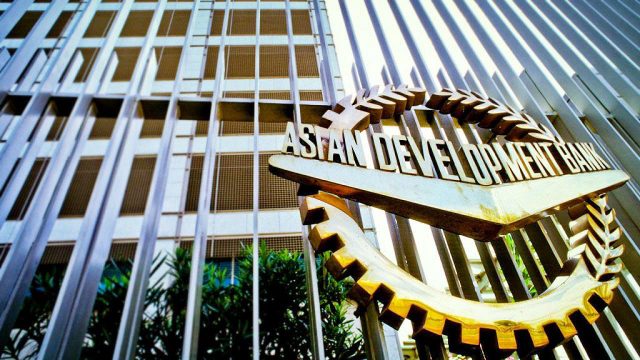
ADB announces support package for developing member states hit by Middle East conflict

MANILA — The Asian Development Bank announced on Tuesday a financial support package to help developing member countries mitigate the economic impact of the Middle East conflict.

ADB President Masato Kanda said in a statement the lender will deliver “fast-disbursing budget support and trade and supply chain finance to secure the import of essential goods now, including oil.”

The ADB did not provide details on the size of the package.

  • The ADB said the financial support has two main components. First, is the use of the Countercyclical Support Facility to help stabilize economies and mitigate the impact of shocks on vulnerable groups.
  • The second is the Trade and Supply Chain Finance Program support to keep critical imports, especially energy and goods, flowing, including the temporary reactivation of oil import support.
  • The ADB said it has started discussions with all severely affected developing member countries on possible immediate support.

Reuters

Trump cites progress with Iran, US proposes plan to end war

A drone view shows part of an Iranian missile that landed on a building's roof, amid the US-Israel conflict with Iran, in East Jerusalem March 16, 2026. — REUTERS

ISLAMABAD/JERUSALEM — US President Donald Trump said on Tuesday the US was making progress in its efforts to negotiate an end to war with Iran, including winning an important concession from Tehran, while a source confirmed that Washington had sent Iran a 15-point settlement proposal.

Mr. Trump told reporters at the White House the US was talking to “the right people” in Iran in order to reach a deal to end hostilities, adding the Iranians wanted to reach a deal very badly.

“We’re in negotiations right now,” he said.

Tehran has denied that direct talks have taken place. Iran’s powerful parliament speaker Mohammad Baqer Qalibaf on Monday dismissed such reports as “fake news.”

The New York Times reported on Tuesday that Washington sent Iran a 15-point plan to end the war in the Middle East. Israel’s Channel 12, quoting three sources, said the US was seeking a month-long ceasefire to discuss the 15-point plan.

A source familiar with the matter confirmed that the US had sent a plan to Iran but provided no further details.

The Israeli media outlet said the plan would include the dismantling of Iran’s nuclear program, ceasing support for proxy groups, and the reopening of the Strait of Hormuz.

Israeli Prime Minister Benjamin Netanyahu’s office did not immediately respond to a request for comment.

Mr. Trump told reporters at the White House that Iran had made a valuable concession related to non-nuclear energy and the Strait of Hormuz, although he did not elaborate.

Iran has told the United Nations Security Council and the International Maritime Organization that “non-hostile vessels” may transit the Strait of Hormuz if they coordinate with Iranian authorities, according to a note seen by Reuters on Tuesday.

Iran has effectively shut the waterway, where 20% of the world’s oil normally transits, since the US and Israel launched attacks four weeks ago, creating the worst energy supply shock in history and sending fuel prices soaring.

“It was a very big present, worth a tremendous amount of money,” Mr. Trump said in his comments on Iran, adding: “It was a very nice thing they did.”

But US, Israeli, and Iranian strikes continued and sources said Washington was preparing to send more troops to the region.

Two people familiar with the matter told Reuters on Tuesday that the US was expected to send thousands of soldiers from the Army’s elite 82nd Airborne Division to the Middle East.

The forces will add to the 50,000 US troops already in the region and accelerate Washington’s massive US military buildup there, fueling fears of a longer conflict.

Pakistan’s prime minister said on Tuesday that he was willing to host talks between the US and Iran on ending the war, a day after Mr. Trump postponed threats to bomb Iranian power plants, saying there had been “productive” talks.

In a post on X, Prime Minister Shehbaz Sharif said Pakistan fully supported ongoing efforts to pursue dialogue and was ready to host “meaningful and conclusive talks for a comprehensive settlement.”

A Pakistani government source said discussions on a meeting were at an advanced stage and if it did happen, “a big ‘if’,” it would take place within a week. Pakistan has long-standing ties to neighboring Iran’s Islamic Republic and has been building a relationship with Mr. Trump.

The US and Israel launched strikes on Iran on February 28 after saying they had failed to make enough headway in talks aimed at ending Iran’s nuclear program, although mediator Oman said significant progress had been made. — Reuters

Philippines working with Washington to obtain oil from US-sanctioned countries

REUTERS

MANILA — The Philippines is working with Washington to secure waivers and exemptions that will allow it to obtain oil from US-sanctioned countries and guarantee supplies, its ambassador to the United States said.

The Philippines, which relies heavily on imported fuel, declared a state of national energy emergency on Tuesday to deal with the fallout from the Middle East war, including the disruptions to oil procurement.

“We are working with the State Department to get waivers or exemptions to purchase oil from US-sanctioned countries,” Jose Manuel Romualdez, Philippine ambassdor to the US, told Reuters in an exchange of phone messages.

Asked if imports of oil from Venezuela and Iran were part of the discussions, Mr. Romualdez said “all options are being considered.”

Asked what has been the response from the State Department, the ambassador said: “Work in progress.”

As of March 20, the government said the Philippines had around 45 days of fuel supply, and is procuring 1 million more barrels of oil to build its buffer stock.

Philippine President Ferdinand R. Marcos Jr. said in a televised address on Wednesday that the country’s fuel supply would not run dry after 45 days as his government has been looking for other sources.

“We are exploring other sources not affected by the war,” Mr. Marcos said. “Things are beginning to open up…we can be confident that after the 45 days we will have a flow of oil.”

The Philippines imports almost all of its crude from the Middle East, with Saudi Arabia its biggest supplier, making it vulnerable to oil price shocks and supply disruptions.

Mr. Marcos said the emergency declaration was a “precautionary tool” allowing the government to be ready “for whatever comes next.”

The declaration, which will be in effect for one year, authorizes the government to purchase fuel and petroleum products and pay a portion of the contract amount in advance to ensure timely and sufficient supply, among other special powers.

“We should not panic,” Mr. Marcos said, while assuring the public that his government is doing everything it can to alleviate the situation.

Transport workers, commuters, and consumer groups are planning a two day strike from Thursday to protest the increase in fuel prices and what they describe as the Marcos administration’s failure to act.

Manila has temporarily increased coal-fired generation due to energy supply pressures and allowed the temporary and limited use of cheaper but dirtier Euro II fuel to ensure supply.

At least two Russian ESPO crude cargoes are heading to the Philippines this month, while a cargo of Abu Dhabi Murban crude is expected to arrive at its Bataan terminal on April 8, Kpler data showed.

The shipment would be the country’s first imports of Russian crude oil in five years, following a 30-day waiver issued by the United States.

Washington on Friday also issued a 30-day sanctions waiver for the purchase of Iranian oil already at sea. The waiver applies to oil loaded on any vessel on or before March 20 and discharged by April 19, including tankers under sanctions. — Reuters

Philippines declares energy emergency over Middle East conflict risks

President Ferdinand R. Marcos, Jr. answers questions from the media after his first Cabinet meeting at the Heroes Hall of the Malacañan Palace, July 5. — PHILIPPINE STAR/KRIZ JOHN ROSALES

MANILA – Philippine President Ferdinand R. Marcos Jr on Tuesday declared a state of national energy emergency in response to the Middle East conflict and what he called an “imminent danger” posed to the country’s energy supply.

Mr. Marcos said a committee has been formed to ensure the orderly movement, supply, distribution and availability of fuel, food, medicines, agricultural products and other essential goods.

In an executive order shared with the media, Mr. Marcos said the conflict had created uncertainty in global energy markets, severe supply-chain disruption and significant volatility and upward pressure on international oil prices, “thereby posing a threat to the country’s energy security”.

“The declaration of a state of national energy emergency will enable the government…to implement responsive and coordinated measures under existing laws to address the risks posed by disruptions in the global energy supply and the domestic economy,” he said.

EMERGENCY STAYS IN EFFECT FOR A YEAR
The declaration, which will remain in effect for one year, authorizes the government to procure fuel and petroleum products to ensure timely and sufficient supply and, if necessary, pay part of the contract amount in advance.

Philippine Energy Secretary Sharon Garin earlier on Tuesday told a news briefing that the country had around 45 days of fuel supply based on current consumption levels.

She said the government was working to procure 1 million barrels of oil from countries within and outside Southeast Asia to build its buffer stock, but there will likely be uncertainties in the next round of orders.

The declaration should enable the government to act more swiftly and bypass usual processes in responding to the fallout from the Middle East conflict, which has pushed up oil prices and upended global markets.

Mr. Marcos also directed the finance ministry, in coordination with the Philippine central bank, to closely monitor the impact of the Middle East conflict on the Philippine peso, remittances, including risks of peso depreciation.

Ahead of the executive order, senators probing the government’s preparedness criticized the administration for what they said was a lack of unified and coordinated response to the surge in oil prices, which the economic planning minister warned could fuel inflation to levels not seen in years and weaken economic growth.

Transport workers, commuters and consumer groups are planning a two‑day strike from Thursday to protest the increase in fuel prices and what they describe as the Marcos administration’s failure to act. — Reuters

Denmark’s Frederiksen bruised in election, coalition talks loom

GREENLAND’s flag flutters on a tourist boat as it sails past icebergs near Ilulissat, Greenland, Sept. 13, 2017. — REUTERS

COPENHAGEN/NUUK — Danish Prime Minister Mette Frederiksen’s Social Democrats were headed for their worst election outcome in over a century on Tuesday, as migration and welfare concerns obscured broad support for her defiant stance toward Washington over Greenland.

In power since 2019, Ms. Frederiksen, 48, had campaigned on a promise that her tough and tested leadership skills would help the Nordic nation of six million navigate a complex relationship with US President Donald Trump and the European response to Russia’s war in Ukraine.

But on Tuesday she emerged bruised both from the left and the right at home, where the cost-of-living crisis has come to the front of voter concerns, observers said.

SOCIAL DEMOCRATS SEEN WINNING 38 SEATS
Ms. Frederiksen’s Social Democrats, the architects of Denmark’s cradle-to-grave welfare state, were seen winning 38 seats in the legislature, the Folketing, compared with 50 four years earlier.

Her chances of staying in power for a third term were not gone although coalition talks could take weeks.

“I’m ready to take on the responsibility,” she told supporters in the parliament building in central Copenhagen late into the night. “It will be difficult.”

Ms. Frederiksen sought to downplay the decline in her party’s popularity, which comes amid a wave of anti-incumbent sentiment globally and several external shocks.

“We’ve had to deal with war, we’ve been threatened by the American president and in those almost seven years we’ve gone down 4 percentage points, I think that’s okay,” she said.

Ms. Frederiksen’s left-wing bloc was seen winning 84 seats in parliament, in the 179-seat legislature, versus 77 for the right-leaning parties, projections by local media based on 100% of votes counted showed.

Many of her left-wing supporters appeared frustrated with an immigration policy they saw as too tough, while some on the right saw her too soft and untrustworthy on economic issues.

“She is between a rock and a hard place because the numbers are bad for her,” said Andreas Thyrring, a partner at Ulveman & Borsting public affairs advisory firm.

In Brussels, Ms. Frederiksen is widely respected for her clear line on Greenland and for her efforts to ramp up Denmark’s defence spending in the wake of the Ukraine conflict. But her negotiating style is seen by some as abrasive and many Danes sought change.

The vote was also being closely watched in Greenland, with many hoping it will be a chance for the territory to leverage Mr. Trump’s unprecedented desire to wield control over the Arctic island to wrangle concessions from its former colonial power in Copenhagen.

MIGRATION POLICY IN FOCUS
Underscoring the broad backlash against Ms. Frederiksen, support for the anti-immigration Danish People’s Party, led by Morten Messerschmidt, surged to 9.1% with all votes counted according to public broadcaster DR, up nearly 7 percentage points compared to the last election.

Mr. Messerschmidt had campaigned on a pledge to ensure zero net migration of Muslims and to abolish petrol taxes as a measure to ease living costs.

“The fact that the Danish People’s Party has now tripled its support clearly shows that Danes are fed up with this and that there are a great many people who want a different direction for Denmark,” Mr. Messerschmidt said after exit polls were published.

The non-aligned Moderates party of Lars Lokke Rasmussen could hold the key to the next ruling coalition, some observers said, with the outgoing foreign minister calling on Ms. Frederiksen to drop her calls for a wealth tax.

“There is no hard-red majority to our left, and no hard-blue majority to our right,” Mr. Rasmussen said at his party’s election-night party in Copenhagen.

Ms. Frederiksen proposed the tax – at a modest rate of 0.5% aimed at funding education reform – to rebuild her leftist credentials that had been damaged by a coalition with the center-right.

She has also overseen one of the toughest approaches to migration in Europe, with refugee status temporary, conditional support and expectations of integration in society.

She also co-led a push by nine EU countries for easier expulsion of foreign criminals, and earlier this year proposed legislation to increase deportations.

The leader of the Liberal Party, Defense Minister Troels Lund Poulsen, said he was no longer interested in coalition rule with Ms. Frederiksen, underscoring complex talks ahead for her.

“The possibility is there, Lars!” Mr. Poulsen said in Copenhagen in an apparent nudge to Mr. Rasmussen. — Reuters

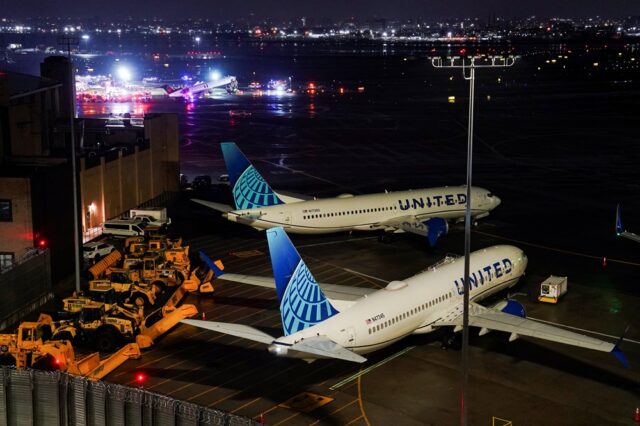
US safety agency says tracking system failed at LaGuardia jet collision

Grounded aircraft operated by United Airlines, as a damaged Air Canada Express jet and a ground vehicle that collided are seen in the background at La Guardia Airport in Queens, New York, US, Mar. 23, 2026. — REUTERS

NEW YORK/MONTREAL — The National Transportation Safety Board said on Tuesday that a system which would have allowed a New York airport controller to track movement of aircraft and vehicles did not alert during a Sunday night collision between an Air Canada commercial jet and a truck that killed two pilots.

The NTSB, an independent safety agency, is leading the investigation into the fatal collision of the Air Canada Express CRJ-900 jet with a firetruck at LaGuardia Airport. The flight, operated by regional partner Jazz Aviation, had 72 passengers and four crew.

The truck, which was on its way to assist another plane that had reported an emergency, crossed the runway just nine seconds before the crash, according to the plane’s cockpit voice recorder.

“ASDE-X did not generate an alert due to the close proximity of vehicles merging and unmerging near the runway, resulting in the inability to create a track of high confidence,” NTSB Chair Jennifer Homendy told reporters in New York.

ASDE-X, or the Airport Surface Detection Equipment Model X, is a surveillance system designed to help reduce runway incursions that allows air traffic controllers to track surface movement of aircraft and vehicles.

TRUCK LACKED TRANSPONDER
Ms. Homendy also said the truck did not have a transponder, unlike similar vehicles at other airports in the US The Federal Aviation Administration has encouraged airports to equip firetrucks with transponders because it makes the vehicles’ movement easier to track at busy airports.

She said it is unclear if an alerting technology would have prevented the incident since it happened so fast.

Air crashes typically are caused by multiple factors with the investigation’s goal to improve aviation safety and not assign blame.

US air safety experts have said communications between the plane ⁠that was landing, the controller and the trucks would be key areas of the investigation. The collision has raised questions about the controller’s workload and staffing at the busy New York airport.

The NTSB, which has sounded the alarm about close calls and runway incursions for years, last month found the deadly January 2025 mid-air collision of an American ​Airlines regional jet and an Army helicopter was caused in part because the high workload “degraded controller performance and situation awareness”.

Ms. Homendy said the tower had standard staffing for a Sunday night. She added that there were two controllers working in a glass-enclosed section of the airport’s traffic control tower.

Ms. Homendy said on Tuesday that the NTSB will interview the local controller who started at 10:45 p.m. ET after a shift change 15 minutes earlier and whose interactions with different planes and the truck were heard on liveatc.net. A separate controller in charge was providing clearances for departing aircraft.

It is not clear who was conducting the duties of ground controller, or assigning directions to airport vehicles.

Air traffic controllers make the decisions about when planes can land and take off, and when ground vehicles can enter runways. The controller who made the call for the Air Canada flight ​to land had been trying to find a gate for a separate United Airlines flight that complained of a bad odor, according to the recording.

The incident has raised questions about whether the controller was distracted by the United Airlines flight, which had declared an emergency.

“I would caution pointing fingers at controllers and saying distraction was involved,” she said. “This is a heavy workload environment.” — Reuters