Home Blog Page 1060

Harvard-trained tax expert urges new Philippine lawmakers to prioritize economic reforms supporting MSMEs and attracting foreign investment

Mon Abrea, Harvard-trained tax expert and Chief Tax Advisor of the Asian Consulting Group (ACG), is calling on the newly elected Philippine lawmakers to expedite critical economic reforms that will not only attract foreign investors but also protect and support Micro, Small, and Medium Enterprises (MSMEs).

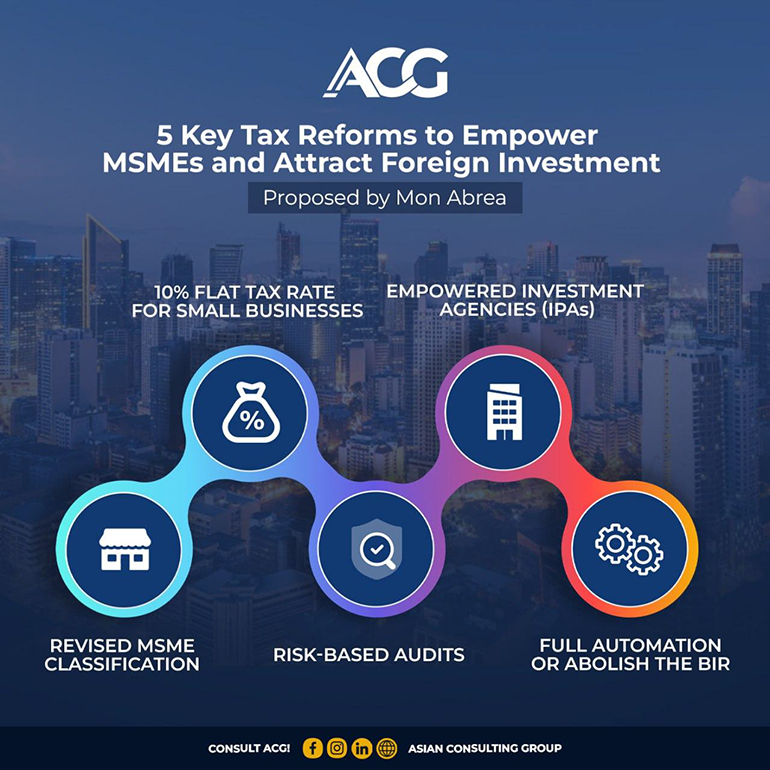
Mr. Abrea emphasizes that MSMEs, which comprise over 99% of Philippine businesses, are the backbone of the economy. However, they often face disproportionate tax compliance burdens that hinder their growth and competitiveness. To address these challenges, Mr. Abrea advocates for the following reforms:

  1. Revised MSME Classification: Increase the income and asset threshold for micro enterprises from P3 million to P50 million, and eliminate outdated and redundant bookkeeping requirements, as VAT taxpayers already file the Summary List of Sales and Purchases (SLSP) to the Bureau of Internal Revenue (BIR).
  2. 10% Flat Tax Rate for Small Businesses: Implement a simplified tax regime for small businesses with annual sales of P100 million or less, offering a flat tax rate with a minimum of P100,000 and a maximum of P10 million, without the need for extensive documentation or audits.
  3. Risk-Based Audits: Adopt a risk-based audit system that prioritizes higher-risk taxpayers, reducing the compliance burden on MSMEs and focusing resources on identifying large-scale tax evaders.
  4. Empowered Investment Promotion Agencies (IPAs): Grant more authority and autonomy to IPAs like the Philippine Economic Zone Authority (PEZA), allowing them to handle all government and regulatory requirements, including taxes, for Registered Business Enterprises (RBEs).
  5. Full Automation or Abolish the BIR: Implement full automation of tax administration or consider abolishing the BIR to address bureaucracy and corruption, thereby motivating voluntary compliance and attracting more foreign investors.

Mr. Abrea’s advocacy aligns with his previous contributions to tax reform, including his advisory role in the amendment of the Corporate Recovery and Tax Incentives for Enterprises to Maximize Opportunities for Reinvigorating the Economy (CREATE MORE) Act where he proposed the creation of a separate VAT Refund Center and electronic tax refund system. ACG played a significant role in shaping provisions that prioritize transparency and benefit businesses across industries.

“The proposed reforms are essential for creating a business-friendly environment that supports MSMEs and attracts foreign investment,” said Mr. Abrea. “By simplifying tax compliance and empowering IPAs, we can foster economic growth and job creation.”

ACG continues to engage with policy makers and stakeholders to advocate for these reforms and ensure their swift implementation.

For media interview, please contact Rafael James Suarez, Asian Consulting Group Executive Assistant:

Email: rafael@acg.ph

Phone: 0917-116-9864


Spotlight is BusinessWorld’s sponsored section that allows advertisers to amplify their brand and connect with BusinessWorld’s audience by publishing their stories on the BusinessWorld Web site. For more information, send an email to online@bworldonline.com.

Join us on Viber at https://bit.ly/3hv6bLA to get more updates and subscribe to BusinessWorld’s titles and get exclusive content through www.bworld-x.com.

Trump’s tariff blitz prompts ‘firefighting’ response from Fed researchers

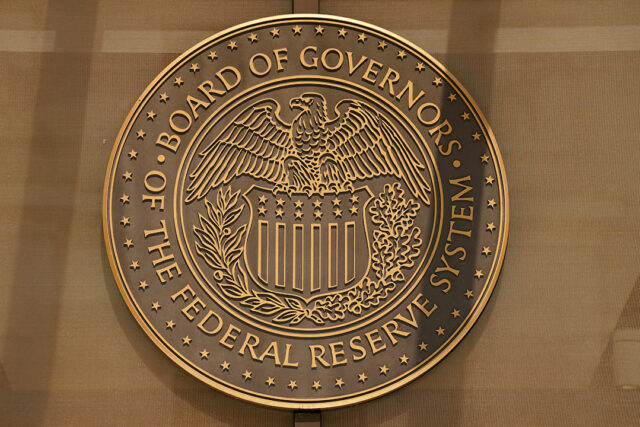
A sign for the Federal Reserve Board of Governors is seen at the entrance to the William McChesney Martin Jr. building in Washington, D.C. — REUTERS

WASHINGTON/SAN FRANCISCO – U.S. Federal Reserve staffers have scrambled since January to decipher what Trump administration trade policies will mean for the economy, with published tallies of potential income losses, inflation estimates running as much as 2 percentage points higher, and breakdowns showing state-by-state winners and losers.

The research papers and notes, at least a dozen and counting, have taken different approaches to estimate the implications of the still evolving trade war, which has pushed U.S. import taxes to levels not seen in decades and, at times, to their highest since the Great Depression.

Given the shifting administration announcements, with some of the stiffest tariffs now on hold, none stands out as a definitive take.

But the research effort has been systemwide and steady, reflecting the overarching role of trade policy in the national economic debate and in Fed deliberations over monetary policy.

The Fed held its policy interest rate steady in the 4.25% to 4.5% range at its last meeting, with officials saying they are reluctant to change it until they know which way inflation and jobs will pivot. Minutes of that meeting will be released on Wednesday and may provide more detail about how Fed staff and policymakers perceive the impact of the tariffs imposed so far.

Fed governor Christopher Waller said in a May 14 speech the central bank is in “firefighting” mode to understand what he has called “one of the biggest shocks to affect the U.S. economy in many decades” — an all hands effort to analyze a potential rewrite of the global trading system after decades of closer economic integration among nations.

After Trump’s April 2 tariff announcements proved larger and more extensive than anticipated, “questions were asked of staff around the Federal Reserve system such as, ‘What will this do to the U.S. economy? What will happen to inflation and unemployment?,'” Waller said “The answers to these questions are obviously time sensitive.”

The ongoing research, Fed officials say, will be particularly useful once the final tariff rates and any retaliatory steps by other nations are in place.

But staff’s initial findings and analysis may already be influencing the debate, generally undergirding Fed officials’ topline conclusion that tariffs will raise prices paid by U.S. households and lower purchasing power.

Administration officials argue that the tariffs and trade details they will impose or negotiate will raise money for the U.S. Treasury and boost U.S. manufacturing jobs without sparking higher inflation.

INFLATION IN FOCUS
Fed researchers have been particularly keen to understand how import taxes influence prices, a complex process that depends on things that shift in reaction to each other, like the willingness of producers or retailers to offset tariffs with lower profits, and the ability of consumers to pay more for imported goods, change what they buy, or forego some purchases altogether.

A May note by Fed board economists estimated that the tariffs imposed on China in February and March had already added about a third of a percentage point to goods prices excluding food and energy in the first months of the year, and that but for the tariffs those prices would have fallen — a conclusion that helps explain why policymakers are reluctant to cut interest rates until they know more about inflation that may be in the pipeline.

Larger tariffs have been put in place since that study was done, and even bigger ones are threatened.

“Once we start to get some clearer contours, I think that’s the time to really start to use these models more robustly, ” Atlanta Fed president Raphael Bostic said in comments to reporters on May 20 in Florida.

A Boston Fed study in February of general inflation and an Atlanta Fed study released the same month looking at everyday consumer items both saw prices moving higher, with the estimates depending on the tariffs used to make the estimates.

The fact that the final level of tariffs remains in such flux is another factor keeping Fed officials on the sidelines. Trump has said there will be a baseline tariff of 10% on imports, but some of the paused tariffs exceed 100%, and unexpectedly on Friday the president said there would be a 50% tariff on all imports from the European Union and a 25% levy on all imported iPhones.

CONSUMPTION AND INCOME
Along with rising prices Fed officials are concerned about how changes in trade policy may influence U.S. economic growth if consumers, for example, are left with less purchasing power.

The Dallas Fed in May highlighted one of the hurdles to sorting that out. The outcomes for the U.S. economy depend heavily on whether other countries respond to Trump’s tariffs with retaliatory levies on U.S. exports.

A 25% across-the-board tariff without retaliation could actually boost U.S. consumption by around 0.5%, assuming that proceeds from the tariffs were funneled back to consumers, perhaps through tax cuts.

The same tariffs with retaliation lead to an overall 1% decline in consumption, unevenly distributed across states with effects ranging from a 2.9% decline in Washington state to a 2.6% boost in Wyoming. As with any tax, tariff impacts vary from location to location based on the structure of the local company, with states that are exposed to global supply chains or whose citizens consume more imported goods likely to be hit harder than others.

San Francisco Fed researchers, meanwhile, published a working paper in May that showed high tariffs and retaliation from other countries would lower inflation-adjusted income by 1% nationally, with the biggest hits felt in California, Texas, and the important political swing state of Michigan.

RAISE PRICES OR FIRE WORKERS?
Along with quantitative studies, the Fed has fielded surveys to ask businesses how they may respond to rising tariffs, a staple issue also in conversations officials and staff are holding around the country to sense whether firms are primed to raise prices or fire workers.

Boston Fed researchers, in a survey of small business tariff-related expectations conducted just before Trump took office, found that firms on average anticipated less-aggressive tariffs than actually seen, with 20% tariffs seen imposed on China, 15% on Mexico and non-Asian countries, 14% on Europe, and 13% on Canada. The firms indicated they would pass cost increases to consumers over two years; non-importers felt tariffs would have little impact on prices and potentially lower their costs.

The Cleveland Fed in April published results of a February survey of regional businesses.

The firms largely expected that while tariffs would lead to higher input costs, higher selling prices, and lower demand, there would be no effect on employment — a finding that also buttresses U.S. policymakers’ willingness to keep interest rates on hold given a still, relatively strong, job market. — Reuters

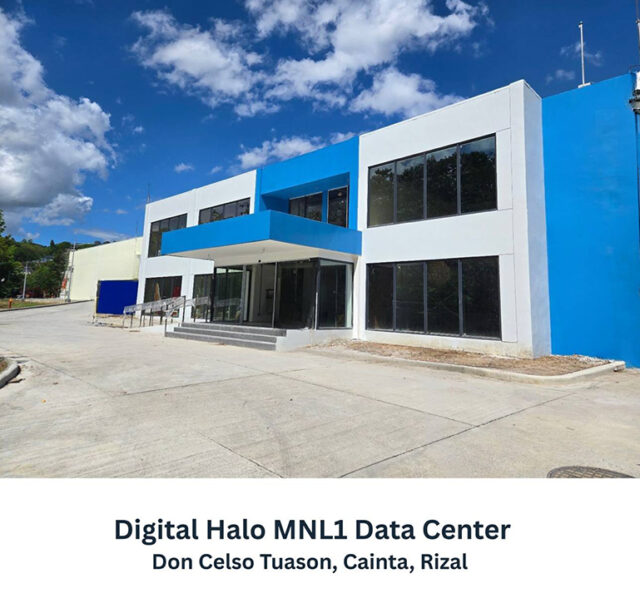
Digital Halo to officially launch DH MNL1 Data Center in Metro Manila on June 3

Regional data center operator Digital Halo will officially launch its flagship data center, DH MNL1, on June 3, 2025, marking a significant milestone for the country’s digital transformation and regional technology leadership. DH MNL 1 is the first of the three buildings in the planned 70-MW sustainable and AI-ready data center campus. The event follows a major US$400-million investment from global private markets firm Partners Group and existing investor Arch Capital, signaling strong international confidence in the Philippines as a strategic digital hub.

Strategically located in the eastern portion of Metro Manila’s central business district, DH MNL1 is designed to serve as a critical digital backbone for both local and regional enterprises. The facility offers robust colocation, carrier-neutral connectivity, and disaster recovery (DR) services — all in a location intentionally chosen to mitigate risks from flooding, fault lines, and volcanic activity.

“We are proud to officially launch DH MNL1 as a secure and future-ready platform for the Philippine digital economy,” said Kai Goh, Co-founder and CEO of Digital Halo. “As digital services become essential across all industries, our mission is to bring the infrastructure closer to where it’s needed most — right here in the Philippines.”

The MNL1 data center has been in operation for over a year and already supports hyperscale, enterprise and carrier clients. With its formal launch, Digital Halo aims to position the facility as a
neutral digital hub, connecting internet service providers (ISPs), cloud providers, and enterprise customers under one roof.

“DH MNL1 is more than just a data center — it’s a digital community,” added Goh. “It’s where infrastructure, innovation, and industry meet securely and seamlessly.”

Maricar Burgos Nepomuceno, Country Director for Digital Halo Philippines, emphasized the importance of DH MNL1 to the local business landscape:

“As a carrier-neutral facility, DH MNL1 is designed to support mission-critical operations for companies of all sizes. From high-availability rack space to connectivity and business continuity tools, this facility empowers Philippine businesses to scale confidently in the digital age.”

In addition to DH MNL1, Digital Halo recently broke ground on its second data center facility in Johor Bahru, Malaysia, as part of a broader regional expansion. Backed by Partners Group, the company plans to scale its capacity to over 500 MW across Asia.

The June 3 launch event will gather local industry leaders, technology partners, government stakeholders, and members of the media to officially unveil the DH MNL1 facility and celebrate a new era for Philippine digital infrastructure.

About Digital Halo

Digital Halo (DH) is a next-generation Asian data center platform sponsored by Partners Group. DH will own, develop and operate sustainable and AI-ready data center campus to service hyperscale and enterprise customers in Southeast and North Asia. DH will offer innovative and sustainable solutions
to overcome constraints in mature markets and to serve substantial untapped demand in nascent markets; empowering our customers to grow, building the foundation for the digital ecosystem while supporting energy transition in the region. For additional information, please visit www.digitalhalo.net
or follow us on LinkedIn.

About Partners Group

Partners Group is one of the largest firms in the global private markets industry, with around 1,800 professionals and over US$150 billion in overall assets under management globally. The firm has investment programs and custom mandates spanning private equity, private credit, infrastructure, real estate, and royalties. With its heritage in Switzerland and primary presence in the Americas in Colorado, Partners Group is built differently from the rest of the industry. The firm leverages its differentiated culture and its operationally oriented approach to identify attractive investment themes and to transform businesses and assets into market leaders. For more information, please visit www.partnersgroup.com or follow us on LinkedIn.


Spotlight is BusinessWorld’s sponsored section that allows advertisers to amplify their brand and connect with BusinessWorld’s audience by publishing their stories on the BusinessWorld Web site. For more information, send an email to online@bworldonline.com.

Join us on Viber at https://bit.ly/3hv6bLA to get more updates and subscribe to BusinessWorld’s titles and get exclusive content through www.bworld-x.com.

Retailers pummeled by Trump’s trade war entertain more ‘take-private’ offers

REUTERS

NEW YORK – Boards and the owners of retailers whose shares have been pummeled by U.S. President Donald Trump’s trade war are increasingly warming to offers to sell – and to escape the market chaos that has caused company valuations to seesaw in recent months.

Following sneaker-maker Skechers’ take-private deal earlier this month, dealmakers expect other retailers to clinch their own deals to go private in the near-term, especially if Trump does not soon settle on a more stable trade policy, according to interviews with 10 investment bankers and M&A lawyers.

Retailers in particular have been hard-hit by Trump’s rapidly shifting tariff announcements, and are frustrated with an inability to provide earnings guidance.

Skechers was in talks with investment firm 3G Capital long before its market value began a precipitous drop from an all-time high of around $11.85 billion on January 30 – the day before the White House announced its first round of tariffs against China – according to two people familiar with the matter.

The flood of tariff announcements beat the company’s value down to about $7.4 billion by the end of April. Skechers, which manufactures most of its goods in China and Vietnam, pulled its 2025 earnings guidance around that time, citing “macroeconomic uncertainty stemming from global trade policies.”

Skechers is majority-owned by the Greenberg family. The tariff turmoil made the idea of going private all the more attractive to the Greenbergs, said the sources, who asked not to be named because the negotiations were private.

The company announced plans on May 5 to sell to 3G Capital in a so-called take-private deal for about $9.4 billion. Selling to a privately held firm like 3G removes the company’s shares from public exchanges, which effectively shields its earnings from public scrutiny and protects its valuation from unpredictable market swings.

Skechers declined to comment.

Other retailers are already in talks to sell to investment firms and other companies, the sources said.

“The breakneck pace of the instability, the volatility, and the macro changes have made board members start thinking, ‘Would it be better to manage this business in private where we don’t have to report out to the street with the same quarterly cadence and where we can control operational, financial, and capital allocation decisions in private?’” said Kurt Anthony, head of consumer and retail investment banking for the Americas at UBS.

TAKE-PRIVATE TARGETS
Few industries have been hit harder by Trump’s tariffs than retailers, many of which manufacture most of their goods overseas and have had to pull earnings guidance amid fickle foreign policy. After de-escalating his trade war, Trump on Friday levied fresh threats against Apple AAPL.O and the European Union, sending markets that had mostly recovered from his initial trade moves reeling once again. The S&P Retail Select Industry index had fallen by 6% year-to-date as of Friday’s market close, while the broader S&P 500 Index had fallen 1.1% in the same period.

“There are a lot of CEOs that reached out to me and said ‘I’m tired, I love what I do, but maybe it’s time I go private,’” said Jamie Salter, CEO of Authentic Brands Group. The company, which owns the intellectual property of several apparel companies including Reebok and Champion, acquired Dockers’ IP from Levi’s last week. “I think you’re going to see good companies either stay private, or go private.”

And companies where a family – as in the case of Skechers – or a single investor has a controlling stake can sign these deals faster and more easily than those that need broad shareholder approval.

Investment bankers and advisers pointed to other retailers with similar ownership structures as potential take-private targets: Under Armour where founder and CEO Kevin Plank has majority voting control, Columbia Sportswear Company where chairman and CEO Timothy Boyle and his family are the biggest shareholders, and Birkenstock with private equity firm L Catterton holding a majority stake. Under Armour, Columbia, Birkenstock and L Catterton did not respond to requests for comment.

In Skechers’ case, navigating the market uncertainty in private made sense to father-son duo Robert Greenberg, chairman and CEO, and Michael Greenberg, president, said the two people familiar with the family’s thinking. And a buyer like 3G, which has held some investments for over a decade, can afford to ride out short-term tariff and market volatility compared with traditional private equity firms that tend to hold their investments for a handful of years, the people said. — Reuters

Chinese savers decry falling deposit rates but still won’t spend more

REUTERS

BEIJING/SINGAPORE – After Chinese banks reduced deposit rates last week, Miro Chen launched a social media poll: “When interest rates fall, do you save or spend?”
More than 80% of some 5,000 responses chose saving, underlining the challenge for policymakers seeking to shore up demand and economic growth.

“The result is one-sided, indicating people are very worried,” said the 37-year-old, who works for an internet company in southern China. “I am not sure how long my company can survive,” he added, explaining why he also saves.

China’s central bank eased monetary policy last week to limit damage from the trade war with Washington. On Friday, it lowered the ceiling for deposit rates to offset margin pressure on banks and prompt savers to spend or invest more.

But successive cuts to deposit rates in recent years have failed to curb explosive growth in Chinese household savings, intensifying concerns over the side-effects that lower returns have on the country’s consumers, who tend to build their own safety net.

At the end of March, total household deposits surpassed 160 trillion yuan ($22.30 trillion), up 10.3% from a year before, and equivalent to 118% of last year’s gross domestic product (GDP), official data show. Retail sales, by comparison, rose 4.6% year-on-year in the first quarter.

Minxiong Liao, senior economist at GlobalData.TS Lombard APAC, says lower interest rates “likely reduce income growth” for China’s population.

“People, especially those born in the 1980s, may need to save more rather than spend in the coming decade to secure retirement cashflow, as low interest rates are likely to persist.”
Chinese households have been saving more due to worries over job security in a stuttering economy facing deflationary pressures, as well as wealth concerns caused by a prolonged property crisis.

Liao and other economists say the best policies to increase consumption in China would be bolstering its pension system and other social benefits to curb households’ savings needs.
Since losing his marketing job a year ago, 30-year-old Lawrence Pan, now a freelancer, no longer pays his social insurance contributions, although he could if he chose to.

He prefers to save money on his own as he doesn’t trust the state system, which the Chinese Academy of Sciences sees running out of money by 2035.

Pan saves about two-thirds of his income into his current account. He says fixed-term savings offer too little interest for him to bother with deposits.

“I feel my savings and spending habits would be more balanced if deposit rates were higher. A higher interest rate signals that the economy is getting better,” said Pan. “In such a scenario, I would spend more.”

‘PAINKILLERS’
China has repeatedly pledged to make household consumption – which is about 20 percentage points of GDP below the global average – a more important driver of economic growth.

The world’s second-largest economy relied heavily on exports last year to hit its roughly 5% expansion target and analysts say higher U.S. tariffs call for greater urgency on measures that rebalance the economy towards domestic demand.

But lower interest rates may work against that aim.

Michael Pettis, senior fellow at Carnegie China, says they facilitate a transfer of resources from the net savers in the economy – mainly households in China’s case – to the net borrowers, which are the business and government sectors.

“In a financial system like that of China today, and also of Japan in the 1990s, lower real interest rates don’t seem to boost consumption,” Pettis said.

Also like in Japan, which has grappled with decades of economic stagnation, the side effects on borrowers are growing as well.

Elisabeth Werenskiold, senior economist at Fathom Consulting, says monetary policy easing in China makes many businesses dependent on low borrowing costs in the long run, leading to the “zombification” of entire industries.

She says cash flow in sectors such as construction, airlines, travel and computer services covers less than five months of interest expenses, describing anything below five as the “danger zone”.

“It’s a bit like painkillers,” Werenskiold said. “You can treat the pain, but unless you treat the source you’ll have to keep taking the painkillers, increasing the risk of negative side effects.”

Thrifty households can also force cost-cutting measures throughout the economy, risking a deflationary spiral.

Book editor Erin Yao, 32, moved last year from Beijing to cheaper Wuhan in central China to save more of her income. Her company’s strategy shift to lower-cost books makes her worry about the economy, so she plans to put money aside for rainy days even if deposit rates drop to zero.

“My first reaction to the deposit rate cut was: has the economy entered a downturn?” Yao said.

“I won’t spend all my money to enjoy life now. I will keep something aside in case my parents or I become ill,” she said. — Reuters

US business spending on equipment softening as tariff uncertainty persists

REUTERS

WASHINGTON – New orders for key U.S.-manufactured capital goods plunged by the most in six months in April amid mounting uncertainty over the economy because of tariffs, suggesting business spending on equipment weakened at the start of the second quarter.

The report from the Commerce Department on Tuesday also showed shipments of these goods falling last month. Economists said President Donald Trump’s flip-flopping on import duties was making it difficult for businesses to plan ahead. That has been evident in the deterioration in sentiment among businesses.

“I have predicted for months that business investment will be the main driver of a softer economic performance this year, as executives postpone their capital projects until they have more clarity on policy,” said Stephen Stanley, chief U.S. economist at Santander U.S. Capital Markets. “These data offer the first confirming evidence of that hypothesis.”

Non-defense capital goods orders excluding aircraft, a closely watched proxy for business spending plans, tumbled 1.3% last month. That was the largest drop since last October and followed an upwardly revised 0.3% gain in March, the Commerce Department’s Census Bureau said. Economists polled by Reuters had forecast these so-called core capital goods orders dipping 0.1% after a previously reported 0.2% drop in March.

Core capital goods shipments slipped 0.1% after increasing 0.5% in March. Nondefense capital goods orders slumped 19.1%. Shipments of these goods rebounded 3.5% after falling 1.1% in March. Front-running by businesses eager to avoid higher prices from Trump’s sweeping tariffs on imports contributed to business spending on equipment, mostly information processing equipment, surging at its fastest rate in 4-1/2 years in the first quarter.

That helped to limit the drag on gross domestic product from a flood of imports. Trump has delayed higher import duties on most countries until July. The White House this month announced a deal with Beijing to slash tariffs on Chinese goods to 30% from 145% for 90 days.

The truce in the trade war between Washington and Beijing helped to lift consumer confidence in May after deteriorating for five straight months. Consumers, however, continued to worry about tariffs raising prices and hurting the economy.

The Conference Board’s consumer confidence index increased 12.3 points to 98.0 this month, blowing past economists’ expectations for an improvement to 87.0.

But concerns about the labor market lingered, even as consumers planned to spend more over the next six months on big-ticket items such as motor vehicles and household appliances, take vacations and buy houses.

The survey’s so-called labor market differential, derived from data on respondents’ views on whether jobs are plentiful or hard to get, narrowed to 13.2 from 13.7 in April. This measure correlates with the unemployment rate in the Labor Department’s monthly employment report.

Trump last week ratcheted up his trade war, proposing a 50% tariff on European Union goods starting June 1 and threatened Apple AAPL.O with a 25% duty on any iPhones manufactured outside the United States. Trump at the weekend, however, backed off his threat against the EU, restoring a July 9 deadline.

Stocks on Wall Street were trading higher. The dollar rose against a basket of currencies. U.S. Treasury yields fell.

FRESH ROUND OF FRONT-LOADING
Economists are anticipating a period of volatility for business spending, with the pauses in higher tariffs for Chinese and EU products seen unleashing a fresh round of front-loading. Ultimately, they expect investment to soften this year.

Trump sees tariffs as a tool to, among other things, revive a long-declining U.S. industrial base, a feat that economists argue would be difficult to achieve in the short-term because of structural issues, including labor shortages.

While orders for computers and electronic products rebounded 1.0% last month, bookings for communications equipment decreased 2.6%. Electrical equipment, appliances and components orders fell 0.2%. But orders for machinery increased 0.8% as did those for fabricated metal products.

Orders for durable goods, items ranging from toasters to aircraft meant to last three years or more, dropped 6.3% last month after a slightly upwardly revised 7.6% rise in March.

Durable goods orders were previously reported to have jumped 7.5% in March. They were last month weighed down by a decline in orders for commercial aircraft as well as the fading boost from the tariff-related front-running.

Boeing reported on its website that it had received only eight aircraft orders in April, down from 192 in March. Orders for motor vehicles and parts decreased 2.9%.

Overall transportation orders plummeted 17.1% after soaring 23.5% in March. The Atlanta Federal Reserve lowered its second-quarter GDP growth estimate to a 2.2% annualized rate on the data from a 2.4% pace earlier. The economy contracted at a 0.3% rate in the January-March quarter.

Some economists expect business spending on equipment to hold up if companies more or less maintain the first quarter’s robust pace of front-running of imports.

“It is not until this import-driven boost fades later this year that we expect investment growth in that category to slow sharply,” said Thomas Ryan, an economist at Capital Economics. “We expect business equipment investment to flatline in the second half of the year.”

The tariff-driven economic uncertainty and higher mortgage rates are weighing on demand for homes, resulting in a rise in supply that is curbing house price growth. New housing inventory is at levels last seen in 2007, while the supply of previously owned homes is the highest in more than four years.

A third report from the Federal Housing Finance Agency showed house prices increased 3.7% in the 12 months through March after advancing 3.9% in February.

“Prospects for house prices do not look strong,” said Carl Weinberg, chief economist at High Frequency Economics. “A new slowing trend is emerging as the economy slows and real incomes falter.” — Reuters

US drops COVID vaccine recommendation for healthy kids, pregnant women

REUTERS

The US has stopped recommending routine COVID-19 vaccinations for pregnant women and healthy children, Health Secretary Robert F. Kennedy Jr announced in a social media post on Tuesday, circumventing the CDC’s traditional recommendation process.

Kennedy, FDA commissioner Marty Makary and National Institutes of Health director Jay Bhattacharya said in a video that the shots have been removed from the Centers for Disease Control and Prevention’s recommended immunization schedule.

The changes come a week after they unveiled tighter requirements for COVID shots, effectively limiting them to older adults and those at risk of developing severe illness.

Traditionally, the CDC’s Advisory Committee for Immunization Practices would meet and vote on changes to the immunization schedule or recommendations on who should get vaccines before the director of the CDC made a final call. The committee has not voted on these changes.

Kennedy, a long-time vaccine skeptic whose department oversees the CDC, has been remaking the U.S. health system to align with President Donald Trump’s goal of dramatically shrinking the federal government.

“Last year, the Biden Administration urged healthy children to get yet another COVID shot despite the lack of clinical data to support repeat booster strategy in children,” Kennedy said in the video.

The CDC, following its panel of outside experts, previously recommended updated COVID vaccines for everyone aged six months and older.

Insurers said they are reviewing the regulatory guidance to determine their policies, which typically follow the ACIP recommendations.

A spokesperson for CVS Health said the company is determining whether changes in health insurance coverage are required as the federal government reassesses COVID-19 vaccine eligibility, while a Blue Cross Blue Shield Association spokesperson said preventative health benefits, including COVID vaccines, are essential in keeping patients healthy.

‘TURNED UPSIDE DOWN’
“The recommendation is coming down from the secretary, so the process has just been turned upside down,” said William Schaffner, professor of infectious diseases at Vanderbilt University Medical Center and a consultant to the ACIP.

Schaffner said the CDC’s panel was to vote on these issues at a June meeting, where he had expected them to favor more targeted shots instead of a universal vaccine recommendation. “But this seems to be a bit preemptory,” he said.

Dorit Reiss, professor of law at UC Law San Francisco, said in a Facebook post that going around the advisory committee might hurt the agency in the case of potential litigation.

Studies with hundreds of thousands of people around the world show that COVID-19 vaccination before and during pregnancy is safe, effective, and beneficial to both the pregnant woman and the baby, according to the CDC’s website.

But Makary said in the video that there was no evidence that healthy children need routine COVID shots. Most countries have stopped recommending it for children, he added.

COVID vaccine makers Moderna and Pfizer did not respond to requests for comment.

Dr. Cody Meissner, professor of pediatrics at Dartmouth who co-wrote an editorial with Makary during the COVID pandemic against masks for children, said he agreed with the decision.

He said he felt the U.S. had been overemphasizing the importance of the COVID vaccine for young children and pregnant women, and that previous recommendations were based on politics, adding that the severity of the illness generated by the virus seems to have lessened over time in young children. — Reuters

ASEAN leaders agree tariff deals with US should not harm fellow members

In this photo illustration, the Association of Southeast Asian Nations (ASEAN) emblem is seen on a smartphone screen in front of the ASEAN flag. — PAVLO GONCHAR / SOPA IMAGES/SIPA VIA REUTERS CONNECT

KUALA LUMPUR – Southeast Asian leaders reached an understanding on Tuesday that any bilateral agreements they might strike with the United States on trade tariffs would not harm the economies of fellow members, Malaysia’s premier Anwar Ibrahim said.

Anwar, the current chair of the Association of Southeast Asian Nations, said there was consensus during an ASEAN summit in Kuala Lumpur that any deals negotiated with Washington would ensure the interests of the region as a whole were protected.

The ASEAN meeting came at a time of global market volatility and slowing economic growth, and amid uncertainty over a trade war that has ensued since U.S. President Donald Trump’s announcement of sweeping “Liberation Day” tariffs.

Southeast Asia is among the regions hardest hit by the tariffs, with six of its countries facing levies of between 32% and 49% in July if negotiations on reductions fail.

“While proceeding with bilateral negotiations …, the consensus rose to have some sort of understanding with ASEAN that decisions should not be at the expense of any other country,” said Anwar, who on Monday said he had written to Trump requesting an ASEAN-U.S. meeting on the tariffs.

“So we will have to protect the turf of 650 or 660 million people,” he said of ASEAN.

ASEAN, a region with combined gross domestic product of more than $3.8 trillion, is in a precarious position in relation to the United States, which is the biggest market for the region’s exports, key drivers of its growth.

The 10-member bloc on Tuesday released a five-year strategic plan to better integrate its economies, citing challenges that meant “carrying on business as usual will not suffice”.

Tuesday’s meetings also included an economic gathering of leaders of the ASEAN, Gulf countries and China, which was represented by Premier Li Qiang.

One absentee was Brunei’s 78-year-old ruler, Sultan Hassanal Bolkiah, who was admitted to a Kuala Lumpur hospital after feeling tired, but was in good health according to his office.

At a dinner event late on Tuesday, China’s Li urged Gulf and ASEAN countries to remove trade barriers and expand liberalization in the face of rising protectionism and unilateralism.

“We all need to firmly maintain the multilateral trading system with the World Trade Organization as the core, and promote the creation of a stable and orderly international market environment,” he said.

CALL TO EXPAND TRUCE
ASEAN leaders also called for a temporary ceasefire in army-ruled Myanmar to be expanded nationwide, to enable warring sides to build trust and work towards convening dialogue.

Myanmar has been in crisis since its military overthrew an elected civilian government in 2021, triggering pro-democracy protests that morphed into a widening rebellion, with more than 3.5 million people displaced.

A devastating earthquake in March that killed more than 3,800 people led to a series of temporary ceasefires in affected areas of Myanmar, but the military government has continued air strikes and artillery attacks.

“We further called for the sustained extension and nationwide expansion of the ceasefire in Myanmar, as an initial step towards the cessation of violence,” ASEAN leaders said in a statement.

“We encouraged all relevant stakeholders in Myanmar to build trust towards convening an inclusive national dialogue.”

Anwar hailed “significant” engagement steps on Myanmar on Monday after last month holding a closed-door meeting in Bangkok with junta chief Min Aung Hlaing and virtual talks with the rebel-aligned shadow National Unity Government.

On Tuesday, Anwar said ASEAN leaders had agreed that the path forward was to engage all sides in Myanmar.

“Now we have gone to a stage where both parties are now in consultation, although at the lower key level,” he said. — Reuters

NG posts P67.3-B surplus in April

The National Government posted a P67.3-billion budget surplus in April. _ PHILIPPINE STAR/EDD GUMBAN

THE NATIONAL GOVERNMENT’S (NG) fiscal position swung to a surplus in April as an uptick in tax revenues offset the decline in state spending, the Bureau of the Treasury (BTr) said on Tuesday.

Data from the Treasury posted a P67.3-billion surplus in April, a turnaround from the P375.73-billion deficit in March.

National Government outstanding debtThe surplus was also 57.51% higher than the P42.7-billion surplus seen in April 2024.

This was the first budget surplus since the P68.36-billion surplus in January.

Revenue collections slid by 2.82% to P522.1 billion in April from P537.2 billion in the same month last year, “due solely to the timing of nontax collections.”

Nontax revenues plunged by 68.08% to P24.1 billion in April from P75.4 billion in the same month in 2024.

“This is because most government-owned and -controlled corporations (GOCCs) have yet to remit dividends, unlike the same period last year,” it said.

BTr revenues dropped by 77.42% to P14.5 billion in April, while other offices saw a 15.64% decline to P9.6 billion.

The Department of Finance last week reported that state-run firms remitted P76 billion worth of dividends to the Treasury as of May.

On the other hand, tax revenues jumped by 7.84% to P498 billion in April from P461.8 billion in the same month in 2024.

The bulk of tax revenues came from the Bureau of Internal Revenue (BIR), whose collections rose by 11.1% to P420.5 billion in April from P378.5 billion a year ago.

“This strong performance was driven by higher collections from corporate income tax (CIT), value-added tax (VAT), and personal income tax (PIT),” BTr said, noting the annual tax filing deadline was April 15.

Improvements in personal income tax and VAT collections were attributed to BIR’s efforts to simplify tax filing through digital services, it added.

“The increase in VAT collections was also supported by the Bureau’s crackdown on the use of fake receipts and its continued campaign against illicit trade,” the BTr said.

The Bureau of Customs saw revenues fall by 7.48% to P74.7 billion in April from P80.7 billion a year ago.

“This is partly due to the fewer working days for the month and the impact of lower import volumes amidst global trade challenges,” the Treasury said.

In April, US President Donald J. Trump announced a baseline 10% tariff on all its trading partners, as well as higher reciprocal tariffs on some countries, including the Philippines. The reciprocal tariffs have been paused until July.

Meanwhile, government expenditure fell by 8.03% to P454.8 billion in April from P494.5 billion in the same month last year.

The BTr attributed the drop in state spending to lower interest payments, and subsidies to government corporations, particularly the National Irrigation Administration.

“The timing of transfer of the capitalization requirement of the Coconut Farmers and Industry Trust Fund also weighed down on the growth of April spending. In the previous year, the transfer was taken up in April while this year’s capitalization requirement was released in March,” it said.

Primary spending — which refers to total expenditures minus interest payments — slipped by 4.37% to P408.3 billion in April from P427 billion a year earlier.

Interest payments fell by 31.19% to P46.4 billion in April this year from P67.5 billion in the same month in 2024.

The annual decline in interest payments was attributed to the shift in the timing of payments of both domestic securities and external loans related to Lenten and Eid’l-Fitr holidays.

“Fundamentally, budget surpluses are expected during the month of April in a given year during the tax collection/filing month on a yearly basis. The budget surplus could reduce the need for additional borrowings/debt by the NG,” Rizal Commercial Banking Corp. Chief Economist Michael L. Ricafort said.

Reinielle Matt M. Erece, an economist at Oikonomia Advisory and Research, Inc. said the drop in spending may have been due to the election ban on some public spending which started in late March and ran until election day.

“However, this surplus may not last long as faster government spending is expected this year to support the economy,” he said.

4-MONTH GAP
At the same time, the NG’s fiscal deficit widened to P411.5 billion in the January-to-April period, 78.98% bigger than the P229.9-billion gap a year ago, as the pace of expenditures outpaced revenues.

The BTr said the deficit ballooned due to the “faster expansion in public spending to fuel economic activity and support priority programs of the Marcos Jr. administration.”

State spending went up by 13.57% to P1.93 trillion in the first four months from P1.7 trillion in the same period last year.

Primary spending increased by 14.16% to P1.64 trillion, while interest payments rose by 10.35% to P287.4 billion.

On the other hand, revenues inched up by 3.35% to P1.52 trillion in the January-to-April period from P1.47 trillion a year ago.

Taxes, which account for 94.03% of the total revenues, increased by 11.49% to P1.43 trillion.

BIR revenues rose by 14.5% to P1.11 trillion in the first four months, due to the intensified campaign against fake receipts, illicit trade, digitalized tax filing and higher excise tax collections.

Customs collections inched up by 2.16% to P306.1 billion as of end-April.

Meanwhile, nontax revenues slumped by 51.94% to P90.7 billion in the January-to-April period from P188.8 billion a year earlier. 

The NG’s deficit ceiling for 2025 is capped at P1.54 trillion or 5.3% of gross domestic product. — Aubrey Rose A.Inosante

PHL eyes more investments from UAE sovereign wealth funds

A general view of Burj Al Arab in Jumeirah area in Dubai, United Arab Emirates, June 22, 2024. — REUTERS

By Justine Irish D. Tabile, Reporter

THE PENDING Comprehensive Economic Partnership Agreement (CEPA) with the United Arab Emirates (UAE) will create a framework that will allow the Philippines to secure more investments from the UAE’s sovereign wealth funds, an official of the Department of Trade and Industry said.

This as the Philippines-UAE CEPA is expected to be signed next month.

“This will be historic in the sense that it will be our first FTA (free trade agreement) with a Middle Eastern country,” the President’s Special Envoy to the UAE for Trade and Investment Ma. Anna Kathryna Yu-Pimentel said.

Even before the FTA is signed, Trade Undersecretary Ceferino S. Rodolfo said that the UAE’s sovereign wealth funds and private sector have already been investing heavily in private equities.

“Those are the ones that are investing in the Philippines,” he said on the sidelines of the Doing Business with the Philippines Forum of the Philippine Chamber of Commerce and Industry (PCCI).

While the UAE sovereign wealth funds can already invest in the Philippines, Mr. Rodolfo said the CEPA will be important as it will provide the framework on how the Philippines can receive investments from these funds.

“I think for Dubai, they place a high importance on the CEPA as a way of also unraveling the potential for more investments, particularly from the sovereign wealth funds,” he added.

Data from the Global SWF showed that the sovereign wealth funds (SWF) managed by the UAE reached $2.39 trillion as of May 2025.

Mr. Rodolfo said that the Philippines hopes to attract UAE investments in renewable energy, infrastructure, logistics, digital infrastructure, and high-tech agriculture through the FTA.

A delegation consisting of 17 companies from Dubai visited the Philippines on Tuesday to explore potential partnerships with local companies.

These companies are in the areas of agriculture, automotive, construction, human resources and service, hospitality, food and beverages, industrial lubricants, and perfume.

“CEPA will provide the framework (for these investments) through these missions, and we already have an investment protection agreement with them, so all of the things are in place,” Mr. Rodolfo said.

Mr. Rodolfo said that the Philippines-UAE CEPA would also be the country’s first FTA with a Gulf Cooperation Council (GCC) country.

“So, very important also would be the access that we can get through Dubai to the other GCC countries and onwards towards Africa,” he said.

“The unique thing with the UAE CEPA is that even before the agreement has been signed and has entered into force, the private sector from both sides is already actively working on deals on the commercial engagement side,” he added.

Dubai Chamber of Commerce (Dubai Chambers) Vice-President for International Relations Salem Al Shamsi said that they are already thinking ahead on how Dubai and the Philippines can benefit from the CEPA. They are already organizing a Philippine business delegation that will go to Dubai next year.

He said the CEPA is anticipated to boost bilateral trade and provide opportunities for Dubai companies to invest in the Philippines. In the past four years, he said investments from Dubai to the Philippines amounted to $193 million.

Among high-potential Philippine exports to Dubai include leather, car parts, fertilizers, flat-rolled iron or steel, organic chemicals, and flooring materials.

Dubai Chambers also sees tourism, agri-industry, telecommunications, logistics, and healthcare as promising sectors for UAE firms.

On Tuesday, the PCCI and Dubai Chambers signed a memorandum of understanding (MOU) aimed at strengthening bilateral trade relations and exploring new areas of collaboration.

“This MOU transcends formality, creating concrete pathways for trade collaboration, investment opportunities, and joint ventures. It serves as our strategic framework for deeper economic partnership,” said PCCI President Enunina V. Mangio.

“Through PCCI’s extensive network of over 35,000 enterprises countrywide, we are positioned to connect businesses across priority sectors such as renewable energy, innovation, agribusiness, infrastructure, healthcare, and technology startups,” she added.

According to Ms. Mangio, the Philippines’ top exports to the UAE are electrical equipment, machinery, food products, and steel. The country’s top imports from the UAE include mineral fuels, plastics, vehicles, and metals.

“The UAE presents promising opportunities for Filipino products, particularly halal goods, tropical fruits, garments, and premium consumer items,” she said.

“We are optimistic that the proposed Philippines-UAE FTA will unlock wider market access, enhanced export opportunities, and greater investment flows for both economies,” she added.

ADB set to approve $400-M PHL loan for ‘blue economy’

Fishermen are seen at sea in this file photo. — PHILIPPINE STAR/EDD GUMBAN

THE ASIAN Development Bank (ADB) on Tuesday said it is set to approve this year a new $400-million loan for the Philippines, which would fund efforts to boost the country’s marine ecosystem and “blue economy.”

“Today, I am pleased to share that a $400-million loan for the Philippines is set for approval this year, to strengthen marine ecosystems and support the blue economy under its National Adaptation Plan,” ADB President Masato Kanda said during the Brunei Darussalam-Indonesia-Malaysia-Philippines East ASEAN Growth Area (BIMP-EAGA) Summit in Kuala Lumpur.

Mr. Kanda was referring to the loan for the Marine Ecosystems for Blue Economy Development Program (Subprogram 1). The program falls under the National Adaptation Plan, which aims to reduce the country’s vulnerability to climate change impacts by boosting adaptive capacity, fostering resilience, and integrating adaptation into relevant policies and programs.

According to the ADB’s website, this project aims to establish an integrated and inclusive management of coastal and marine ecosystems, improved plastic and solid waste circularity.

The “blue economy” refers to the responsible use of ocean resources to foster economic growth, improve livelihoods, and ensure the long-term sustainability of marine ecosystems.

Valued at P943.05 billion in 2023, the blue economy covers fisheries, manufacturing of ocean-based products, tourism, shipping, and offshore energy.

Meanwhile, Mindanao Development Authority Chairman Leo Tereso A. Magno said the multilateral lender has committed to extending assistance to projects in Mindanao.

“They gave an amount during the meeting earlier and they committed for some funds, additional funds for our country, to develop Mindanao and Palawan,” he told reporters in Kuala Lumpur.

Separately, the ADB also expects to approve a $62.7-million loan for the first phase of the Mindanao Irrigation Development Project in 2026.

It aims to improve irrigation planning and promote climate-resilient farming systems to boost agricultural productivity in Mindanao.

Another related initiative scheduled for approval next year is the $61-million Promoting Sustainability and Productivity for Enterprise Resilience and Upscaling in the Philippines (ProSPER) Project.

ProSPER supports agricultural diversification and food value chain development in Mindanao by “promoting private investments in agro-industry, improving agricultural logistics and services, and enhancing product quality and competitiveness.”

‘DYNAMIC GROWTH HUB’
Meanwhile, Mr. Kanda said the ADB supports BIMP-EAGA’s Vision 2035, which positions the region as a “dynamic growth hub.”

“We stand at a crucial juncture and must navigate a great deal of uncertainty. The region must face the impacts of trade and geopolitical tensions, rapid technological shifts, and threats to food and energy security,” he said.

To unlock the region’s potential, Mr. Kanda said there is a need to tackle vulnerabilities in the food system.

“BIMP-EAGA is known as ASEAN’s (Association of Southeast Asian Nations) food basket, sustaining millions through agriculture, fisheries, and aquaculture. But climate change threatens food security and marine ecosystems. We must act to address this,” he said.

Mr. Kanda said the ADB is scaling up its investment in food security to $40 billion through 2030.

“In the Philippines, we have deployed $500 million for agricultural development through policy and regulatory reforms, enhanced public services and financial support, and protection of rural families,” he said.

To boost regional energy integration, Mr. Kanda said the ADB is also prepared to commit up to $10 billion to advance the ASEAN Power Grid.

Mr. Kanda also sees opportunities in BIMP-EAGA’s expanded economic corridors and special economic zones.

The ADB chief said the bank is ready to double trade finance in the ASEAN to more than $2.5 billion annually by 2030. — A.R.A. Inosante

New mid-income condo launches unlikely in the next 3 to 4 years

Condominium and office buildings are seen in the Ortigas Business District, April 4, 2025. — PHILIPPINE STAR/MIGUEL DE GUZMAN

IT MAY TAKE up to four years before launches of new middle-income residential condominium projects in Metro Manila begin picking up again, amid lingering oversupply in the market, according to real estate consultancy firm Cushman & Wakefield.

“Based on historical experience, it will take about three to four years before the market begins to react again and new launches will be announced,” Claro dG. Cordero, Jr., director and head of research, consulting and advisory services at Cushman & Wakefield, said at a news briefing on Tuesday.

The Metro Manila condominium market, particularly for the middle-income segment, continues to experience excess inventory, Cushman & Wakefield said.

“Prior to the pandemic, I think the annual launches were about, on average, 15,000 units a year from around 2005 up to 2020. After the pandemic, we noticed that the launches have gone down to about 5,000 [units] annually,” Mr. Cordero told BusinessWorld.

In its first-quarter property market report, Cushman & Wakefield estimated there are around 450,000 units available in the middle-income and high-end segment.

Mr. Cordero said the high-end residential condominium segment has maintained its growth momentum, while noting an increasing demand for house and lot properties outside Metro Manila.

“For residential condominium markets, investors are shifting again towards high-end residential for capital appreciation, and rental yields have remained attractive in major central business districts like Makati, Ortigas, and Bonifacio Global City,” he said.

This year, Cushman & Wakefield said around 5,000 units will be added to the available supply in Metro Manila, covering middle-income to luxury residential segments.

Meanwhile, high vacancy rates persist in the office sector due to hybrid work schemes, policy changes and the exit of Philippine offshore gaming operators (POGO), Mr. Cordero said.

He said the Metro Manila office vacancy rate rose to 17.3% in the first quarter, from 16.5% in the same period a year ago.

The Metro Manila office sector has a consolidated stock of 9.83 million square meters (sq.m.), mostly Prime and Grade “A” facilities. About 69,200 sq.m. of new supply was added in the first quarter, Mr. Cordero said.

“We’re looking at again more than half a million square meters [of new supply] by end of 2025 mainly coming from Quezon City, Makati and Taguig,” he also said. “We’re looking at persistently high vacancy rates over the next few quarters.”

In the first three months of the year, headline rents averaged P987 per sq.m. per month — declining annually by 2.4% — reflecting pressures from excess supply in the market, Mr. Cordero said.

Despite a positive net absorption of 32,000 sq.m. year-to-date, demand remains “on the low side” due to office spaces that have remained vacant since the exit of POGOs.

“The overall absorption rate is positive, but some areas like Parañaque and Quezon City still have negative absorption figures because of the amount of spaces vacated by the POGO industry,” Mr. Cordero said.

To attract tenants, office developers in Metro Manila should consider offering flexible leasing strategies and fit-out incentives, Mr. Cordero said.

Meanwhile, the retail sector is expected to stay resilient, driven by the growing middle class as well as new commercial developments outside the Philippine capital.

“We’re seeing a significant supply of new shopping mall developments outside of Metro Manila primarily by SM [Prime Holdings, Inc.] and Ayala [Land, Inc.],” Mr. Cordero said.

These malls are expected to complement developers’ township projects in regional areas, he added.

Cushman & Wakefield said around 250,000 sq.m. of new retail spaces came online in the January-March period, while it expects a total of 345,000 sq.m. to be completed by end-2025. — Beatriz Marie D. Cruz