Home Blog Page 1055

BAP to set up centralized fraud verification system

THE BANKERS’ Association of the Philippines (BAP) will set up a centralized system for the reporting and verification of accounts suspected to be involved in prohibited acts under the Anti-Financial Account Scamming Act (AFASA).

“So, the BAP is coming out with what we call a coordinated verification protocol. They have one year to come up with that. Now, it will be a computerized system. You have to use big data, you have to use AI (artificial intelligence), so that all of these things can be done real-time. Theoretically, the whole system should be alerted if I report potential fraud,”Bangko Sentral ng Pilipinas (BSP) Deputy Governor Elmore O. Capule told reporters on the sidelines of an event last week.

“Plus, there will be a database. All the scam-related accounts will be in the database. So, it will make this faster.”

The BAP has one year to come out with the coordinated verification protocol, the BSP official said.

“They are working on it now. They already passed something to us, and I think the way they are doing it, they are very enthusiastic. Once it becomes operational, it will be very smooth.”

The AFASA was signed into law by President Ferdinand R. Marcos, Jr. in July 2024 and seeks to help prevent and penalize financial cybercrime.

Under the law, the BSP can now investigate and inquire into financial accounts involved in prohibited acts or offenses, which include money mule activities and social engineering schemes, mass mailers, or human trafficking, as well as other offenses such as opening a financial account under a fictitious name or using the identity or identification documents of another person.

BAP President Jose Teodoro K. Limcaoco, who is also Bank of Philippine Islands’ president and chief executive officer, earlier said the group had proposed a coordinated fraud reporting center.

Mr. Limcaoco told reporters at the same event last week that the BAP was scheduled to meet with the central bank to clarify how fraud reporting will be implemented under the AFASA. He added that the BAP is also working with the Philippine Payments Management, Inc. (PPMI) on establishing the rules of engagement.

“It’s being circulated now. It’s being discussed by the operations team at PPMI.”

BANK SECRECY
Meanwhile, Mr. Capule allayed industry concerns that implementing the AFASA could conflict with existing bank deposit secrecy laws.

“The law is very explicit that it is an exception to bank secrecy… So, you can’t invoke bank secrecy. If you put bank secrecy, then you can’t investigate,” he said.

“The coordinated verification among banks, that’s exempt from bank secrecy. Opening of deposits [suspected of violating the AFASA], that’s exempt from bank secrecy. The BSP is given the authority to open bank accounts,” Mr. Capule added.

Under the AFASA and its implementing rules, bank secrecy laws will not apply to any financial accounts under inquiry or investigation by the BSP for violating the law, as well as the coordinated verification process among financial institutions identified or involved in a disputed transaction chain.

Mr. Capule also said that the bank secrecy exceptions granted under the AFASA are “already huge.” — A.M.C. Sy
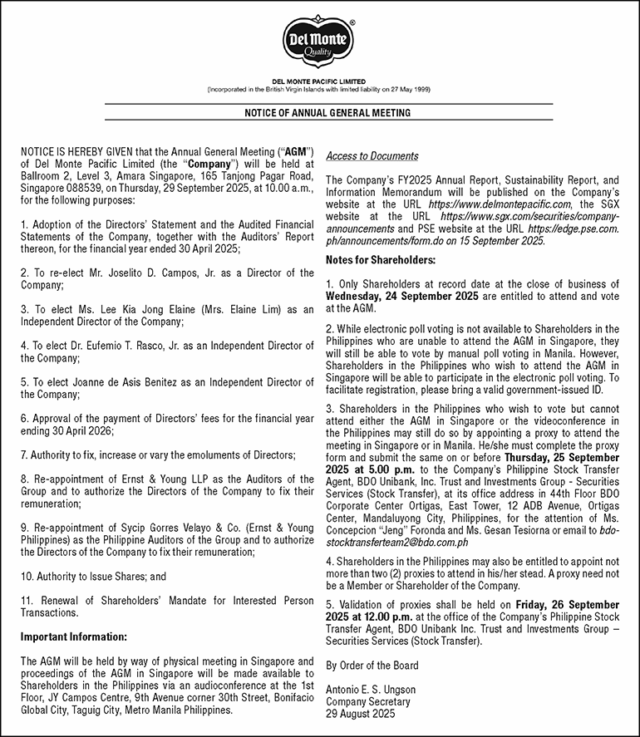
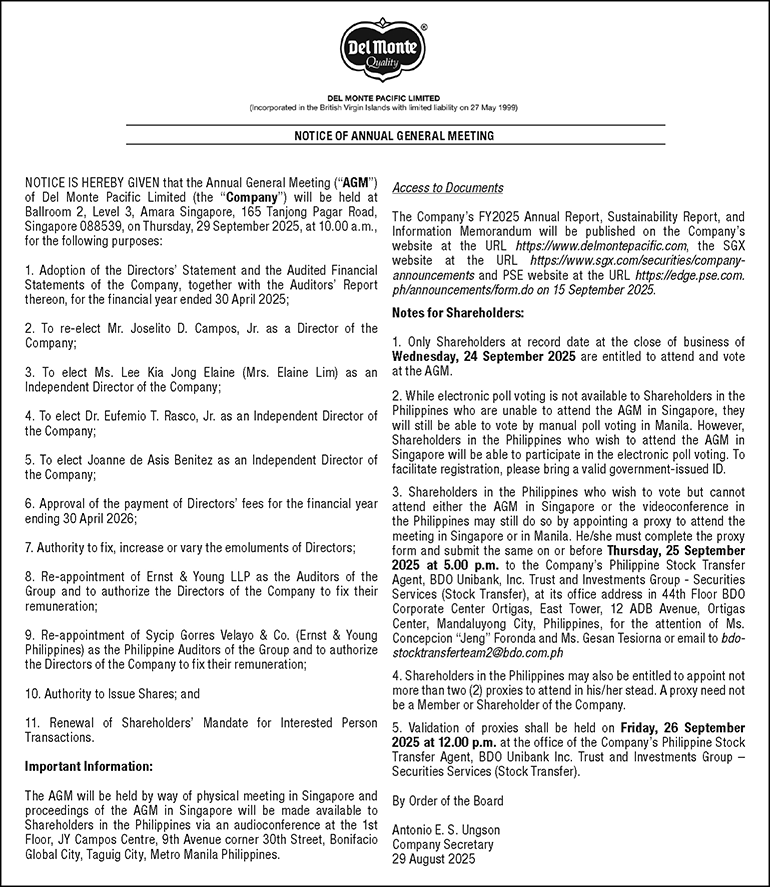
Del Monte Pacific Limited to hold Annual General Meeting in Singapore on Sept. 29


Spotlight is BusinessWorld’s sponsored section that allows advertisers to amplify their brand and connect with BusinessWorld’s audience by publishing their stories on the BusinessWorld Web site. For more information, send an email to online@bworldonline.com.

Join us on Viber at https://bit.ly/3hv6bLA to get more updates and subscribe to BusinessWorld’s titles and get exclusive content through www.bworld-x.com.

Thinking Machines, OpenAI to help APAC firms leverage AI adoption

An artificial intelligence (AI) sign is seen in this illustration taken on June 23, 2023. — REUTERS/DADO RUVIC/ILLUSTRATION

THINKING MACHINES Data Science, Inc., an artificial intelligence (AI) and data science consultancy firm, is collaborating with ChatGPT creator OpenAI to help Asia-Pacific (APAC) organizations in scaling responsible and human-first AI adoption.

“The roadmap that we have envisioned together with OpenAI is to bring this to Singapore, the Philippines, Thailand, and to the wider APAC region,” Niek van Veen, vice-president for growth at Thinking Machines, said in a virtual briefing last week.

A study by the IBM Institute for Business Value reported that while 55% of Philippine leaders are actively adopting AI agents, only 23% said their AI initiatives have delivered expected returns so far, reflecting a mismatch between companies’ investments and their desired results.

“The bigger problem is that a lot of these companies have launched AI initiatives in the last two years and haven’t yet figured out how to deliver value at scale,” said Thinking Machines Founder and Chief Executive Officer Stephanie Sy.

“For me, software is not just about scaling the technology infrastructure… It’s about redefining how work is being done in an organization.”

Under the partnership, Thinking Machines and OpenAI will provide targeted hands-on training programs, customized implementation frameworks, and the design and deployment of bespoke Agentic AI apps utilizing OpenAI’s application programming interfaces (APIs).

“Enterprises in the region will now have a partner that can take OpenAI’s innovative AI technology and really support them with enablement, helping organizations to maximize AI successfully and responsibly,” Mr. Van Veen said.

Asia-Pacific businesses can now get access to official OpenAI enterprise services via Thinking Machines.

Meanwhile, Thinking Machines’ executive leadership programs aim to provide C-suite leaders and senior managers with tools to implement AI responsibly, establish governance frameworks, and drive productivity gains across their organizations.

Under its Enterprise Transformation Services, Thinking Machines and OpenAI will deliver end-to-end support for ChatGPT Enterprise adoption. These include designing custom workflows and integrating them into their existing systems.

Thinking Machines is also building agentic AI applications for businesses, utilizing OpenAI’s API, it said.

Lastly, the two companies will co-publish white papers and use cases tailored to APAC organizations and conduct executive roundtables and industry fora with regional business leaders, Ms. Sy said.

“This initiative with Thinking Machines will give leaders the know-how and hands-on support to embed our latest GPT-5 model into their daily operations, helping them move from experimentation to impact,” said Andy Brown, OpenAI head of go-to-market for Asia-Pacific. — Beatriz Marie D. Cruz

Synergy Grid & Development Phils., Inc. to hold Annual Stockholders’ Meeting on Oct. 16 via remote communication


Spotlight is BusinessWorld’s sponsored section that allows advertisers to amplify their brand and connect with BusinessWorld’s audience by publishing their stories on the BusinessWorld Web site. For more information, send an email to online@bworldonline.com.

Join us on Viber at https://bit.ly/3hv6bLA to get more updates and subscribe to BusinessWorld’s titles and get exclusive content through www.bworld-x.com.

8990 Holdings, Inc. notifies common shareholders of the delisting tender offer

Click to Enlarge


Spotlight is BusinessWorld’s sponsored section that allows advertisers to amplify their brand and connect with BusinessWorld’s audience by publishing their stories on the BusinessWorld Web site. For more information, send an email to online@bworldonline.com.

Join us on Viber at https://bit.ly/3hv6bLA to get more updates and subscribe to BusinessWorld’s titles and get exclusive content through www.bworld-x.com.

Fogo de Chão opens in Manila

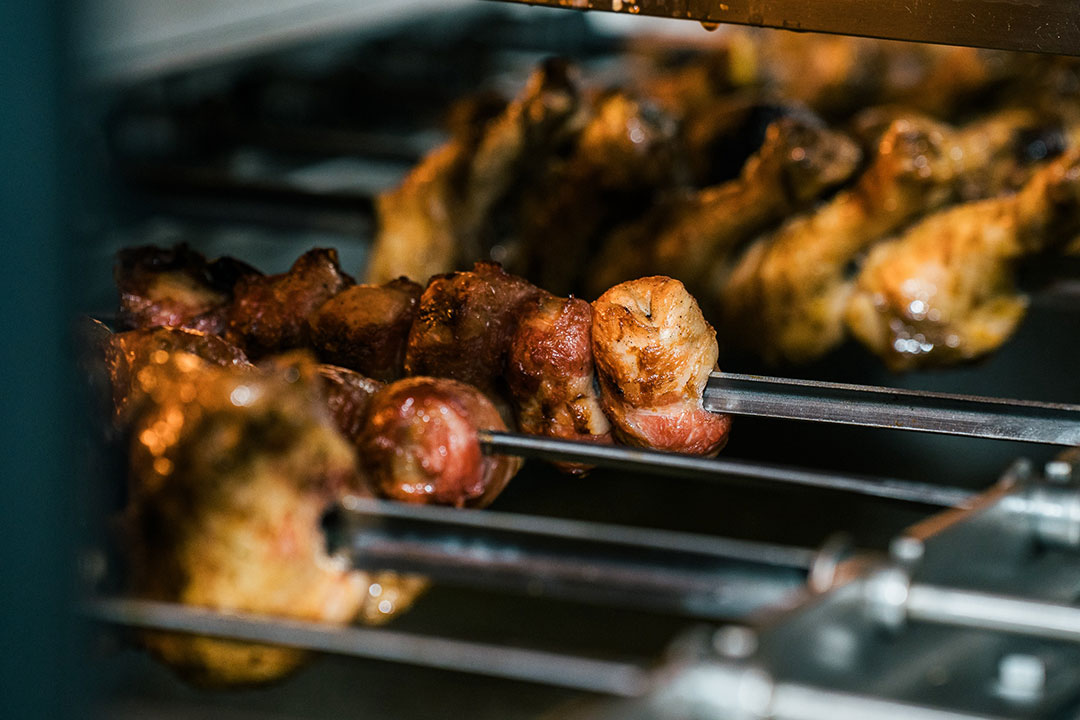
HIGH-QUALITY cuts of protein over an open flame.

WHILE it was announced that it was coming way back in 2022, it took a while before it came to pass — Fogo de Chão finally opened in Glorietta 4 on Aug. 18, with an opening ceremony on Aug. 28.

This marks the 45-year-old Brazilian brand’s first location in Asia, after expanding into the rest of the Americas. Barry McGowan, chief executive officer of Fogo de Chão, counts their locations currently at 110.

“We’re already an international brand, in a very diverse city — São Paulo. We’re growing in the US,” he said in a group interview before the opening ceremony.

Fogo de Chão specializes in churrasco — simplified, it’s Brazilian barbecue, with meats cooked over wood or charcoal-fired rotisseries. In practice, “We don’t grill meat; we slow-cook it,” said Mr. McGowan. “All our gaucho chefs are trained butchers. All they do is butcher all day. They focus on the meat, the way they handle it.”

The butcher-chefs also serve the meat, slicing it from the skewer and straight onto your plate. They know when to stop serving the meat by your coaster: flipping it red is a signal for them to stop; green means go on.

While their managers were trained in the US, the restaurant sent over trainers to prepare the Philippine staff for 30 days.

As for the ingredients, “The culinary art form’s the same; we buy all the meats locally. Whatever’s highest-quality available through the markets here is what we use,” said Mr. McGowan. Guia Abuel, chief operating officer of The Bistro Group (which brought Fogo de Chão here) said, “We use available raw materials that are similar to the US locations.” This means all the beef is American, and there are some local pork and chicken in the mix.

THE MEAT OF THE MATTER
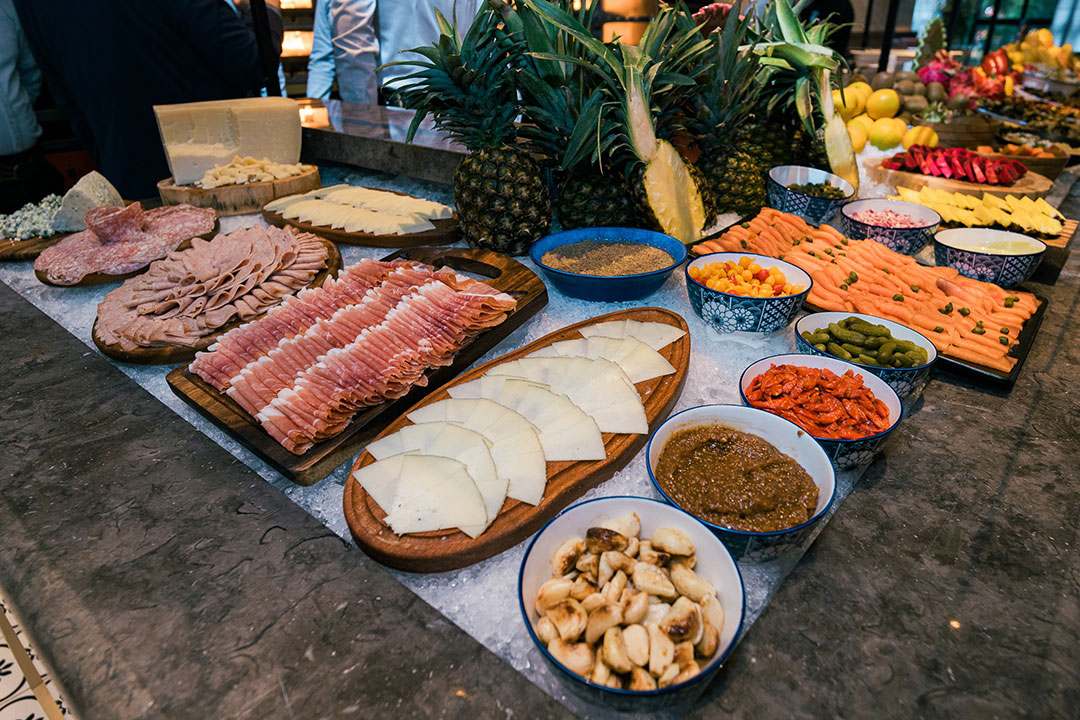
BusinessWorld got a taste of what the Brazilian experience had to offer. The prices differ from weekdays to weekends, and from brunch to dinner (P3,200 for weekday lunch to up to P4,200 for dinner on weekends). There are about 16 cuts of meat available, complemented by the Market Table, with charcuterie, cheese, salads, carbs, and even a delightful Brazilian bean stew (though at those prices, why decrease your stomach’s real estate).

We flipped our coaster green, and we were immediately served the Picanha (top sirloin). It had a very forward beef flavor and just the right tenderness so you’ll know you’re having what was an excellent animal. The Lombo (porkloin) had a very mild flavor accented with Parmesan, while a steak wrapped in bacon gave a smoky flavor. We liked the lamb, which came with a mild gamey flavor, but was extra soft to suggest its origin. The filet mignon had a nice rustic taste; strange but welcome to find in a storied, fancy cut.

All our praise goes to the Alcatra, also taken from the sirloin: all-caps praise in our notes, an excellent ruby color, and a hint of smoky caramel in its aftertaste. Frankly, we’ve never had anything like this.

Is it worth it? The price means that you can just add a little bit more and find yourself in a nice buffet at a hotel, but we wouldn’t say no to impressing a date or throwing a birthday party here. The overall cheery atmosphere, despite the wood-paneled serious interiors, makes it perfect for such occasions.

MORE, MORE, MORE
“I go back to the culture of Manila: family,” said Mr. McGowan, about the reasons why they chose Manila as their first Asian location. “We found the best operator that matched our culture. What we want to do long-term… we’re not just trying to open a bunch of restaurants. We’re trying to be in the heart of this city.”

Ms. Abuel says that they look forward to opening more, with the first three locations in the city.

“We’d like to build five in all of the Philippines, over time. But for us… just one at a time,” said Mr. McGowan.

Fogo de Chão is located on the ground floor of Glorietta 4 in Makati, opening at 11 a.m. on weekdays and 10 a.m. on weekends. — Joseph L. Garcia

Eudor Group in Iligan offering unregistered securities, SEC warns

BW FILE PHOTO

THE Securities and Exchange Commission (SEC) has cautioned the public against investing in Eudor Group of Companies, Inc., which operates under several business names, including Fu Dalu Agricultural Products, Skinlogics Wellness and Beauty Center, and M. Textilis Plant Nursery, among others.

In an advisory dated Aug. 19, the SEC said the Iligan City-based company, registered under SEC No. 2023090115681-12, has been “enticing the public to invest in an unauthorized investment scheme that promises guaranteed monthly passive income ranging from 5% to 15%, along with a 10% discount on all services offered by its affiliated beauty clinic, Skinlogics Wellness and Beauty Center.”

The scheme, also offered through Fu Dalu Agricultural Products’ office in Sta. Filomena, Iligan City, reportedly includes three investment packages.

The first type offers a 5% monthly return on investment, paid every month.

The second type provides a 10% monthly return on investment under a one-year lock-in period, with the principal and total returns paid after one year.

The third type promises a 15% monthly return on investment under a three-year lock-in period, with the principal and total returns paid after three years.

The SEC noted that these offerings qualify as “investment contracts,” which are securities under the Securities Regulation Code (SRC).

The regulator said Eudor Group of Companies, Inc. is not authorized to solicit investments or sell securities to the public.

The scheme “appears to exhibit the characteristics of a Ponzi scheme,” the advisory added.

The SEC advised the public not to invest or to stop investing and warned that anyone acting as a promoter or recruiter for the scheme may face criminal liability under the Financial Products and Services Consumer Protection Act and the SRC, with penalties of up to P5 million or 21 years imprisonment, or both.

The SEC said investors with information about Eudor Group or its representatives may report it to epd@sec.gov.ph or to the Cagayan de Oro Extension Office at sec-cdoeo@sec.gov.ph.

Eudor Group of Companies, Inc., Skinlogics Wellness and Beauty Center, and Fu Dalu Agricultural Products have yet to respond to BusinessWorld’s requests for comment sent by e-mail and through their publicly available contact information. — Alexandria Grace C. Magno

Yields on term deposits continue to decline after BSP’s latest rate cut

BW FILE PHOTO

YIELDS on term deposits eased further on Wednesday after the Bangko Sentral ng Pilipinas (BSP) delivered its third straight rate cut last week.

The BSP’s term deposit facility (TDF) fetched bids amounting to P98.18 billion, slightly below the P100 billion placed on the auction block but higher than the P74.45 billion in tenders for the P80 billion offered a week earlier.

However, the central bank only awarded P89.548 billion in papers as the one-week tenor went undersubscribed for the sixth straight week.

Broken down, the seven-day term deposits attracted only P39.548 billion in tenders, lower than the P50-billion offer but more than the P28.675 billion in bids recorded for the P40 billion placed on the auction block last week. The central bank accepted all the submitted bids.

Banks asked for rates ranging from 4.96% to 5.2498%, lower and wider than the 5.165% to 5.27% margin logged a week ago. With this, the weighted average accepted yield for the seven-day deposits declined by 13.74 basis points (bps) to 5.1101% from 5.2475% previously.

Meanwhile, bids for the 14-day deposits amounted to P58.632 billion, above the P50 billion offered by the central bank and the P45.775 billion in tenders seen for the P40 billion auctioned off a week prior. The BSP fully awarded P50 billion in two-week papers.

Accepted yields ranged from 5.05% to 5.19%, lower than the 5.24% to 5.2799% band seen a week earlier. This caused the average rate for the 14-day papers to fall by 13.81 bps to 5.1294% from 5.2675% last week.

The BSP has not auctioned off 28-day term deposits for nearly five years to give way to its weekly offerings of securities with the same tenor.

Both the TDF and BSP bills are used by the central bank to mop up excess liquidity in the financial system and to better guide market rates towards the policy rate.

“BSP TDF average auction yields were again slightly lower after the widely expected 25-bp BSP rate cut on Aug. 28,” Michael L. Ricafort, chief economist at Rizal Commercial Banking Corp., said in a Viber message.

Signals of potentially one more cut this year from monetary officials also affected TDF rates, he added.

The Monetary Board last week trimmed the target reverse repurchase rate by 25 bps for a third straight meeting to 5%, as expected by all 20 analysts in a BusinessWorld poll.

The BSP has so far slashed borrowing costs by 150 bps since it began its easing cycle in August 2024.

BSP Governor Eli M. Remolona, Jr. said after last week’s policy meeting that the latest cut puts the policy rate at a “sweet spot” in terms of both inflation and output, signaling that the central bank is nearing the end of its rate-cut cycle.

However, he left the door open to one last reduction within this year to support the economy if needed.

Finance Secretary Ralph G. Recto on Tuesday also said another cut is possible before yearend, depending on economic data.

The Monetary Board has two remaining meetings this year scheduled in October and December. — Katherine K. Chan

Afternoon traditions and the art of slowing down

A SELECTION of sweet and savory finger food served in a tea caddy.

Story and photos by Anna Isabel C. Sobrepeña

THERE are hours between midday and evening when the rhythm of the day seems to move at a slower cadence. Either by design of human constitution to recharge or to indulge the palate with preferred company, afternoon rituals have evolved through time. High tea in 19th century England began when workers on long shifts took breaks to maintain productivity. It was a necessity for laborers during the Industrial Revolution to replenish their energy, typically with meat pies, bread, and, naturally, the English staple of tea.

Sometime in the 1840s, the 7th Duchess of Bedford Anna Maria Russell elevated the sine qua non into a refined social tradition. Addressing her hunger pangs which occurred after the noonday meal and before the late evening dinners, she would request for a tray of light foods. Friends were invited to share her tea, bread, and cakes, and unknowingly started a trend that quickly became popular among the highborn. Such agreeable gatherings were held with the refinements of aristocracy, served on a high table, hence, the term high tea.

Centuries earlier, the Spanish tradition of merienda was becoming part of the Filipino lifestyle. The Iberian practice from the colonial period of taking a light snack before a late dinner was translated into a break featuring sweet and savory servings of rice cakes, empanadas, turon, pancit, and halo-halo, among many others. It was a distinctly Filipino menu as varied as the flavors in the archipelago.

These two traditions from countries separated by an ocean and centuries have found a home in the Lounge on the mezzanine of the Grand Hyatt Manila.

GENUINE CLOTTED CREAM AND BINGSU
One level above the massive lobby is an open space with plushy couches and chairs. It provides a panoramic view of the interiors while affording a discreet presence. Every day from 2 p.m. till late afternoon, this spacious stretch is a watering hole for easy listening music and light finger food. A pianist plays popular melodies that set the mood at the Grand Merienda Cena. It spreads a selection of curated cakes, savory sandwiches, and tarts. Included are the signature cheesecake, almond Florentine cake, pistachio kataifi cake, Earl Grey mousse, mocha hazelnut and ice cream sundaes. Some of the open-face sandwiches available are crispy sisig cigar prepared with pork, chicken liver and calamansi aioli, home cured Norwegian salmon with citrus, dill cream cheese and capers, beef salpicao with striploin steak and shrimp toast enlivened with tobiko spicy aioli.

A live station prepares waffles alongside a choice of sauces and compote to top or slather on the freshly made honeycomb, batter-cooked cake. A favorite of habitués are the scones with authentic clotted cream, a winner on all counts, which Chef de Cuisine Alexandre Esnaud prepares in a 24-hour process.

Weekends indulge the Filipino palate with the addition of kinilaw na tuna, bao bun sandwiches with pork asado and chicken adobo, lumpiang sariwa, and calamansi tarts. Recently, pancit palabok has returned to the menu, much to the delight of many.

Executive Pastry Chef Won Young takes advantage of season availabilities like Japanese peaches to whip up a sorbet with the generous slices of the delicate pinkish fruit. A stellar mainstay is the bingsu, an elevated version of the Korean dessert made with milk-based, shaved ice topped with strawberries and blueberries. Every teaspoonful of this visually striking treat brings pleasure and a surprise within.

ART OF TEA
The choice to serve loose tea leaves over tea bags enhances the tea drinking experience with the more nuanced flavors of whole tea leaves. Besides the English breakfast, summer gold Darjeeling, Earl Grey, Ceylon decaffeinated, jasmine gold, fancy sench, and milky oolong, there are herbal infusions of peppermint, pure chamomile, rooibos balance, red fruit, and lemon grass. Coffee drinkers are not neglected and can choose brewed, americano, flat white, cappuccino, or cafè latte. The choice of beverage expands with a light rosé. Fruity and refreshing, the chilled wine enhances sweet and savory bites.

Weekend teatime extends beyond the afternoon to the early evening at 6 p.m. The all-day menu remains available till 11 p.m. for those who wish to linger for the music, preferred company and conversation.

‘Chip in with Taiwan’ for global peace and prosperity

STOCK PHOTO | Image from Freepik

By Lin Chia-lung

TODAY, the world faces mounting uncertainties and challenges — from prolonged conflicts and democratic backsliding to economic coercion and disinformation campaigns. Authoritarian regimes increasingly employ gray-zone tactics that undermine the rules-based international order. In this fragile global environment, peace cannot be taken for granted. Democracies must unite to bolster resilience and safeguard our cherished values and way of life.

Taiwan is a key player and an indispensable partner in the Indo-Pacific region, working toward global peace, stability, and prosperity. It stands on the front line of the Indo-Pacific’s first island chain, defending democracy and freedom from authoritarian expansionism. Taiwan also contributes significantly to stability and prosperity through its robust economy and semiconductor ecosystem. As the 21st largest economy, Taiwan leads in artificial intelligence and semiconductors — producing over 60% of the world’s chips and 90% of its most advanced ones. This economic strength fuels global growth and makes Taiwan an indispensable partner for global development in various fields.

Taiwan is determined to defend democratic values, both at home and abroad. President Lai Ching-te launched the Four Pillars of Peace action plan last year, which commits to raising Taiwan’s defense spending and boosting whole-of-society resilience. Taiwan does not seek conflict with China and will not provoke it. In fact, Taiwan is urging Beijing to resume dialogue on the basis of parity and dignity.

In addition, the Ministry of Foreign Affairs adopted an “Integrated Diplomacy” to leverage Taiwan’s diplomatic, defense, technological, and economic strengths. With this smart power approach, Taiwan is navigating complex international relations, enhancing its global presence, and contributing to a more stable and prosperous world.

Through the global democratic values chain, Taiwan strengthens partnership with democracies facing uncertain geopolitical risks to resist authoritarian influence, promote human rights, advance digital governance, and uphold the rules-based international order. Taiwan’s resilience in the face of authoritarian threats proves that democracy can endure and thrive under pressure.

As a thriving economic powerhouse, Taiwan leads in semiconductor production and advanced technologies. Its economic strengths fuel innovation and growth in sectors of AI, digitalization and healthcare. To reinforce this position, Taiwan has launched an economic diplomacy strategy focused on non-red supply chains, aiming to build trusted and transparent networks that safeguard critical industries from authoritarian interference.

Taiwan also actively advances the Diplomatic Allies Prosperity Project, harnessing public-private collaboration to consolidate government resources and leverage Taiwan’s industrial strengths to promote mutually beneficial development. Initiatives include collaborating with Paraguay to develop an integrated hospital information system (HIS) to enhance nationwide medical information management; partnering with Eswatini on an oil reserve facility project to strengthen energy security and stimulate local industry; and assisting Palau in becoming a smart and sustainable island nation to exemplify Taiwan’s commitment to sustainable international cooperation.

Regrettably, despite Taiwan’s significant global contributions, it remains largely unrecognized by the international community and is unable to participate in the United Nations system. Taiwan’s unwarranted exclusion stems from China’s deliberate misrepresentation of United Nations General Assembly (UNGA) Resolution 2758. The resolution is falsely linked with the so-called “one China principle” and continues to be wrongfully weaponized to block Taiwan’s participation.

However, UNGA Resolution 2758 does not mention Taiwan at all — it merely addresses China’s representation in the United Nations. The resolution does not state that Taiwan is part of the People’s Republic of China (PRC), nor does it grant the PRC the right to represent Taiwan in the UN system. Nevertheless, the United Nations has yielded to China’s political pressure, using the resolution as a pretext to exclude Taiwan from the international community.

In response, Taiwan is speaking out against this injustice and garnering ever-more support. As international backing for Taiwan grows, countries worldwide are increasingly emphasizing the importance of peace and stability across the Taiwan Strait at bilateral and multilateral forums such as the Group of Seven (G7) summit. And the executive and legislative branches of numerous nations have publicly clarified that UNGA Resolution 2758 neither determines Taiwan’s status nor precludes its participation in the international organizations, including the UN system.

As the United Nations celebrates its 80th anniversary — and with only five years remaining to realize the Sustainable Development Goals (SDGs) — it is time for it to fulfill its vision of “leaving no one behind” and becoming “better together” by including Taiwan.

Taiwan invites the world to “chip in” and help by recognizing Taiwan’s rightful place on the world stage and embracing the contributions it has to offer. Only by working together can we create a better and brighter future for the Indo-Pacific region and the world.


Lin Chia-Lung is the minister of Foreign Affairs of the Republic of China (Taiwan).

In a slowing economy, it pays to modernize

STOCK PHOTO | Image by Nathana Rebouças from Unsplash

By Anouska Ladds

IT’S NO surprise that rising costs, fragile supply chains, and cooling demand are forcing Philippine businesses to rethink their future strategies. But economic slowdowns don’t just test resilience — they expose inertia. Limited understanding of financial tools, poor line of sight into finances, and constant exposure to theft and operational inefficiencies are daily battles to overcome. In the Philippines, where around 995,000 micro, small, and medium enterprises (MSMEs) make up 99.5% of all businesses in the country, many still operate in cash-dominated environments, which could further hold them back from fully embracing digital tools and scaling.

CAPITALIZING ON CARDS
In today’s tight-margin environment, effectively managing working capital is the key to navigating financial pressures and seizing new opportunities. Eight in 10 SMEs fail due to ineffectively managing their cash flow. Even as financial institutions embrace digital and data-driven ways to assess SME credit risk and unlock tailored support in the digital economy, card adoption stands out as a simple yet powerful solution to deliver flexibility, security and control to key processes like vendor payments.

Businesses that accept cards are 14 percentage points more efficient at maximizing working capital than those who don’t. This is especially critical in volatile economic conditions, where liquidity and responsiveness are essential for resilience. Beyond checkout, integrating cards into unified API-driven platforms enable SMEs to automate reconciliation processes, reduce manual errors, and gain real-time visibility into cash flow. Research estimates that by simply digitalizing the expense process businesses can save as many as 30,000 hours a year and boost productivity by more than 70% — a crucial opportunity for Philippine small businesses that contribute roughly 63% of jobs and 36% of gross domestic product and play a key role in the economy. With enhanced financial control and forecasting accuracy, SMEs can prioritize innovation and growth.

WHEN PROGRESS PAYS OFF
For SMEs navigating uncertainty, your instinct may be to slow down investments in favor of stockpiling. But standing still poses a bigger risk. Around the world, we see a robust ecosystem of digital platforms transform how SMEs launch, operate, and scale their businesses. In markets like the US and Chinese mainland, marketplaces have enabled small businesses to reach global customers. Several other platforms have also provided small players with access to financial services, logistics, and other capabilities once reserved for large enterprises. In the Philippines, e-commerce platforms like Shopee and Lazada have expanded the reach of MSMEs across the archipelago and simplified the digitization process for business owners. Card transactions through electronic fund transfer services like InstaPay, which are available on these platforms, have helped the country surpass its retail digital payments target for 2024.

It’s clear that modernizing your payments infrastructure can bring critical value during this period of flux. However, it can also be a daunting undertaking — one with plenty of unknowns, a plethora of partners to choose from and murky regulatory complexities to overcome. But the path forward is clearer than you think. Getting started is as easy as A-B-C:

• Audit – Audit current payment and reconciliation touchpoints to identify automation opportunities that reduce risk and delays. When combined with unified payment platforms with global reach, open APIs, and built-in reconciliation tools, your operations move from fragmented to focused.

• Bridge – The right partner doesn’t just provide the tech; they’re the bridge to operational excellence and sustained growth. They’re a trusted guide that minimizes risk and recognizes that small steps lead to big changes. Together, you’ll solve real challenges and drive meaningful change every step of the way.

• Checkout – In an increasingly digital-first era, your checkout is the last — and often most decisive — touchpoint with a customer. A frictionless payment journey boosts conversions and cements loyalty: when every tap, scan or click feels effortless, customers come back.

Card-based solutions may not be the cure-all, but they can be the catalyst for transforming working capital and operational pain points into competitive advantages. Ultimately, progress does pay off — especially for those who move first.


Anouska Ladds is the Mastercard Executive Vice-President, Commercial and New Payment Flows, Asia-Pacific

Alternergy to raise funds for next round of RE projects

BW FILE PHOTO

ALTERNERGY HOLDINGS CORP. plans to raise funds for its next round of renewable energy (RE) projects by converting 500 million existing common shares into a new series of perpetual preferred shares.

“The reclassification of Alternergy’s new series of perpetual preferred shares is in anticipation of our next capital raising exercise to fund our next round of renewable projects,” Alternergy president Gerry P. Magbanua said in a statement on Wednesday.

“Our Green Perpetual Preferred Shares Program will allow Alternergy to access a wider base of both retail and institutional investors to broaden our sources of capital,” he added.

The company said it secured unanimous approval from a special stockholders meeting for the reclassification of 500 million common shares into a new series of perpetual preferred shares.

The reclassified 500 million preferred shares are subdivided into non-voting Perpetual Preferred Shares 2, Series D, E, F, G, and H, with a par value of P0.10 per share, and broken down into 100 million shares per series, with features identical to the existing Perpetual Preferred Shares 2 Series A, B, and C.

The amendment of the articles of incorporation is subject to regulatory approval by the Securities and Exchange Commission.

Alternergy has been developing four renewable projects in wind, solar, and run-of-river hydro as part of its Triple Play portfolio.

In the 12 months ending June, the company raised P9 billion to accelerate construction of its 4.6-megawatt (MW) Dupinga hydro, 28-MW Solana Balsik solar, 64-MW Alabat wind, and 128-MW Tanay Rizal wind projects.

These projects are slated to commence operations by the end of 2025 and early 2026, on track to meet Alternergy’s Road to 500 MW by 2026. — Sheldeen Joy Talavera

ADVERTISEMENT
ADVERTISEMENT