Home Blog Page 1037

LemFi, GCash team up to help 94 million Filipinos receive Instant remittances

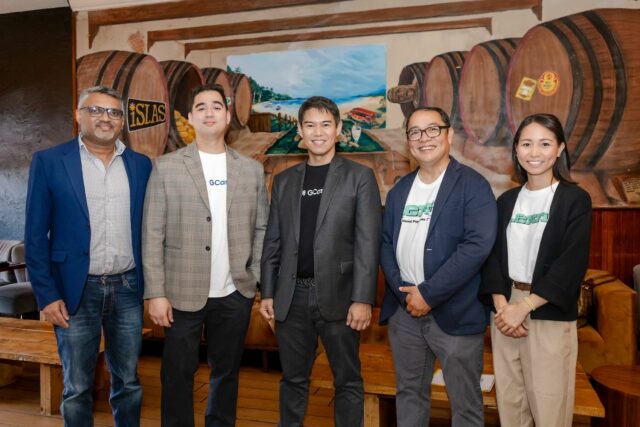
From L- R: Philip Daniel, Anton Mercado, Paul Albano, Raymund Abog, Patricia Alonte-Estrella

LemFi, a leading financial technology platform serving Filipinos and other immigrants across North America, the United Kingdom, and Europe, announces its partnership with GCash, the Philippines’ renowned mobile wallet, which has 94 million active customers. This collaboration will enable Filipinos in North America and Europe (including the United Kingdom) to send money directly to their GCash wallets.

This comes after key achievements by LemFi this year, including a Series B fundraise, the strategic acquisition of a money remittance license in Europe, and, more recently, the acquisition of Pillar, a credit fintech, to expand access to financial services for the broader diaspora community, including Filipinos in diaspora.

GCash is widely regarded as the #1 finance mobile app in the Philippines, with over 94 million registered users worldwide. With expanded offerings in payments, savings, credit and insurance, GCash has become a vital tool for Filipinos at home and abroad, particularly with the introduction of its GCash Overseas service, which enables users to register using international phone numbers.

This partnership positions LemFi as one of GCash’s official remittance partners in North America & Europe (including the United Kingdom). Users can load GCash wallets through the LemFi app. The integration provides Filipinos in Diaspora with a seamless and low-cost way to support their loved ones, whether paying bills, topping up mobile data, or covering everyday expenses.

“This is more than convenience—it’s connection, said Paul Albano, GCash International General Manager. “Our kababayans abroad want speed and reliability. This partnership delivers both, while making financial support feel immediate and intentional.”

“As the largest mobile wallet in the Philippines, GCash plays a critical role in the financial lives of Filipinos, said Patricia Estrella, Community Lead at LemFi. “With this partnership, we’re giving the Filipino diaspora in North America, the United Kingdom, and the EU the tools to take care of their families and feel even closer to home.

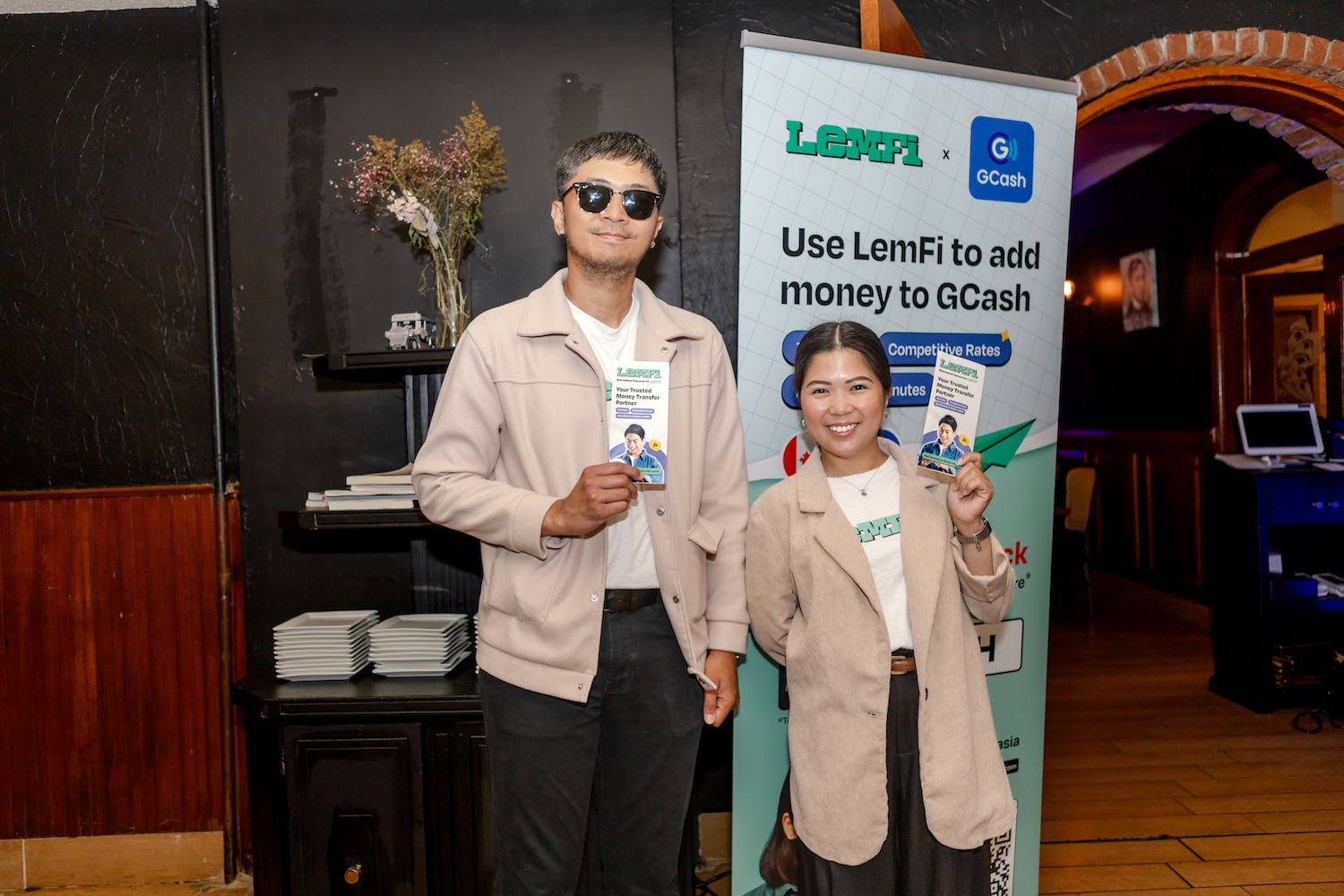
Through the LemFi app, “Customers can deposit funds, converted automatically into their GCash wallet, at zero transfer fees, competitive exchange rates, no minimum transfer limits, and delivery in minutes”, added Raymund Abog, LemFi’s Head of Growth for South East Asia. “For millions of Filipinos using GCash, this partnership represents convenience, connection and a commitment to serve Filipinos wherever they are.”

Philip Daniel, LemFi’s Head of Global Expansion and Growth, emphasised the broader vision: “Our mission is to make international payments easier, quicker, and more inclusive. This partnership with GCash is a milestone for us, especially in connecting global Filipinos to trusted financial tools they already use. We are proud to support communities like those in North America, the UK, the EU, and soon, even more countries across the globe.”

This announcement was made at a community brunch in Toronto, hosted by LemFi and GCash. The event brought together 50 key Filipino community leaders, including organisers behind major cultural festivals, professionals across healthcare and finance, and long-time remitters.

As LemFi grows globally, its mission remains clear: To improve the financial life of the next generation of immigrants. This partnership is a significant step in delivering on that promise for the Filipino diaspora.

To learn more about LemFi and their work, please visit www.lemfi.com. For enquiries, contact legal@lemfi.com.


Spotlight is BusinessWorld’s sponsored section that allows advertisers to amplify their brand and connect with BusinessWorld’s audience by publishing their stories on the BusinessWorld Web site. For more information, send an email to online@bworldonline.com.

Join us on Viber at https://bit.ly/3hv6bLA to get more updates and subscribe to BusinessWorld’s titles and get exclusive content through www.bworld-x.com.

Bringing world-class living closer to home

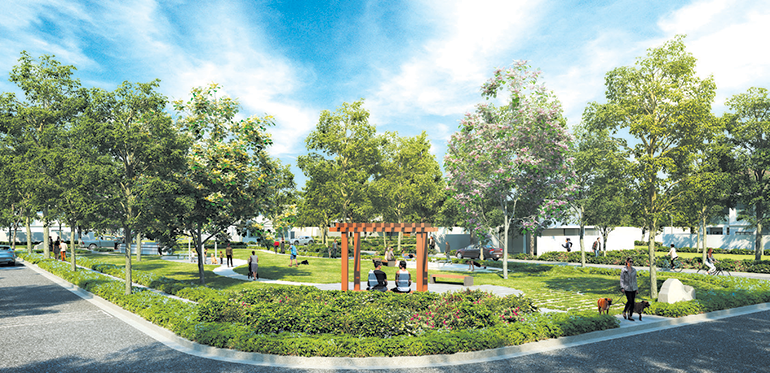
The Observatory’s first tower, Sora, will rise soon. It will introduce Japan-inspired living at the center of the metro. (Artist’s perspective)

FNG brings Japanese standards to the Philippine property market

Evolving lifestyles and the search for well-designed, livable spaces are reshaping the country’s real estate landscape. As central business districts grow denser, new developments are racing to meet the demand for modern homes.

Federal Land NRE Global, Inc. (FNG), a partnership between Federal Land, Inc. and Japan-based Nomura Real Estate Development Co., Ltd. (NRE), has quickly emerged as a force in the industry. Since its launch in 2022, FNG has focused on residential and mixed-use projects blending Japanese and Filipino expertise.

Partnership built on a common goal

The collaboration between Federal Land and NRE is built on a shared goal: to make life better for our customers through developments that are meaningful for generations. With this foundation, FNG has grown a portfolio of projects that showcase Japanese innovation while responding to the aspirations of Filipino homeowners.

One of its latest projects is The Observatory, a 4.5-hectare mixed-use development in Mandaluyong. Strategically located near Ortigas, Makati, and BGC, the project brings together residences, retail, and lifestyle spaces. Its first tower, Sora, takes inspiration from Tokyo’s Shibuya district and offers flexible layouts for professionals and young families.

The Observatory Sales Pavilion along Pioneer Street in Mandaluyong showcases the project through scaled models, interactive tools, and virtual walkthroughs. To complete the experience, Japanese brands such as UCC Mentore, MOS Burger, and CoCo Ichibanya are featured in the showroom, offering visitors a taste of the culture that inspires their development.

Developing projects beyond Metro Manila

FNG is also extending its reach outside the capital with Yume at Riverpark, an 18-hectare residential community in General Trias, Cavite.

Yume at Riverpark’s clubhouse is a collaboration by Architect Ed Calma and UDS Japan. (Artist’s perspective)

Yume at Riverpark is designed around wellness and community living, featuring wide open spaces, landscaped areas, and a clubhouse designed by UDS Japan and architect Ed Calma. Amenities include a pool, function rooms, fitness areas, and a Japanese garden, complemented by long-term plans for a school, church, and adventure park that will cater to residents of various life stages, such as those starting families or enjoying their retirement. Its house-and-lot product line is also unveiling soon, with curated designs to choose from that match lifestyles and life stages.

It also sits near the Cavite-Laguna Expressway (CALAX), making the project easily accessible. Future interchanges at Riverpark North and South are set to connect directly to the development.

Riverpark is also positioned as a hub for commerce and retail, designed to support the local economy and create employment opportunities. In 2024, FNG partnered with Fast Retailing Philippines to build UNIQLO’s logistics center at Riverpark North. The same year, it teamed up with SM Prime Holdings to begin construction of SM City General Trias.

Commercial parcels in Riverpark North have been in strong demand, with the first phase selling out during its exclusive launch. FNG is preparing for the second phase to meet the interests of firms looking south of Metro Manila for growth opportunities.

Balancing tradition and Balancing tradition and innovation

In just three years, FNG has gained recognition across the region. In 2024, it was named Best Breakthrough Developer at the 19th PropertyGuru Asia Property Awards, while Yume at Riverpark won Best Subdivision Development at the 12th PropertyGuru Philippines Property Awards.

The company applies Japanese principles such as kaizen—continuous improvement—across planning, design, and operations. This approach emphasizes efficient use of space, integration of greenery, and comfort-driven layouts while maintaining awareness of how Filipinos build communities. The result is a culture that promotes high standards while remaining aware of community needs.

From vision to legacy

FNG’s strength lies in the experience of its parent companies. Federal Land has completed multiple projects across the country, ranging from luxury condominiums to affordable homes, and continues to shape key urban landscapes.

Nomura Real Estate, meanwhile, has been a leading player in Japan since the 1950s, with expertise spanning housing, leasing, property management, and real estate investment.

Together under FNG, the two groups are working on projects covering more than 250 hectares across Metro Manila, Cavite, and soon, in Cebu—carrying forward a vision of communities that balance tradition, innovation, and a global standard of living.


Spotlight is BusinessWorld’s sponsored section that allows advertisers to amplify their brand and connect with BusinessWorld’s audience by publishing their stories on the BusinessWorld Web site. For more information, send an email to online@bworldonline.com.

Join us on Viber at https://bit.ly/3hv6bLA to get more updates and subscribe to BusinessWorld’s titles and get exclusive content through www.bworld-x.com.

Boffi: The Ferrari of kitchens marks 10 years in the Philippines

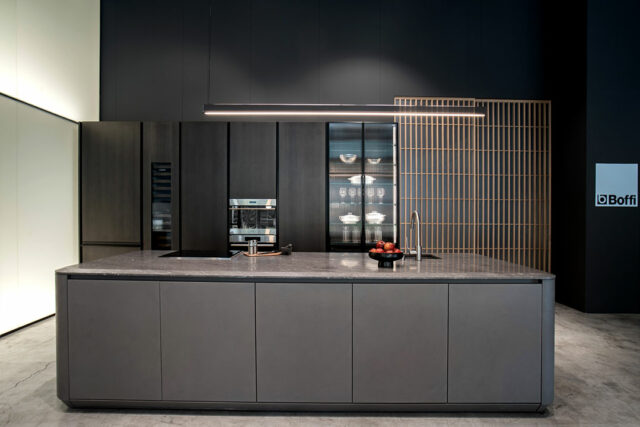
Cove Kitchen

LUXURY ITALIAN furniture and interiors brand Boffi, founded in 1934, celebrated its 10th year in the Philippines on Sept. 3 by throwing a party where the food was prepared in its show kitchens.

Boffi, brought here by Focus Global Inc., threw a tour and cocktails at their showroom at The Residences at Greenbelt (TRAG, the kids call it). The Italian-themed cocktail spread, prepared in Boffi’s kitchens, were to show off the quality of their counters and cabinets: Boffi remains the only kitchen manufacturer with a Compasso d’Oro, one of the most prestigious awards in industrial design.

As part of its ongoing evolution, Boffi Studio Manila recently refreshed its showroom with key new pieces. These include the Cove Kitchen by Zaha Hadid, the Xila Tall Units by Luigi Massoni, the Antibes Walk-In Closet and Case 5.0 bathroom system by Piero Lissoni, as well as ADL’s Japo sliding, Deco Rototranslating, and Showering doors.

Part of the appeal lies in Boffi’s choice of materials: Holly Quiec, business unit director of Focus Global walked with us to a wall with several of Boffi’s finishes. These include metallic lacquers, as well as a cabinet finished with multiple layers of polyester, resulting in a mirrored finish with no distortion. Boffi, part of Fondazione Altagamma (an association of luxury brands in Italy), also has access to several materials that their competitors don’t, such as certain woods.

“We like to say that Boffi is the Ferrari of kitchens. The emotion you feel in having a Ferrari, it would be the same as having a Boffi kitchen,” said Ms. Quiec to BusinessWorld.

Meanwhile, Angela Sy, chief of finance for Focus Global (which has brought many brands in the furniture and interior business to the Philippines, including Ethan Allen and Fendi Casa) says that Boffi “is for those customers who want something that is completely unique; only for them alone.”

“We saw an evolution in terms of people’s tastes,” she said about their decision to bring the brand 10 years ago. A lot of people who traveled abroad, including to Europe, would come back to Manila with ideas and purchases. “We felt that 10 years ago, it was time for us to be able to represent that level of quality and craftsmanship in the Philippines.”

Attilio Tettamanti, chief executive officer of Boffi Asia Pacific, meanwhile, discussed the importance of Italian heritage in forming that distinct Italian design DNA. “Luckily, we were born in a super-nice country with a lot of heritage coming from the past. It’s really a matter of taste that we actually have in our DNA. Beauty, the capacity to work on quality, to invest in innovation.” — Joseph L. Garcia

The Velocity Q&A: Jose Maria ‘Jing’ Atienza (Executive Vice-President, Toyota Motor Philippines Corp.)

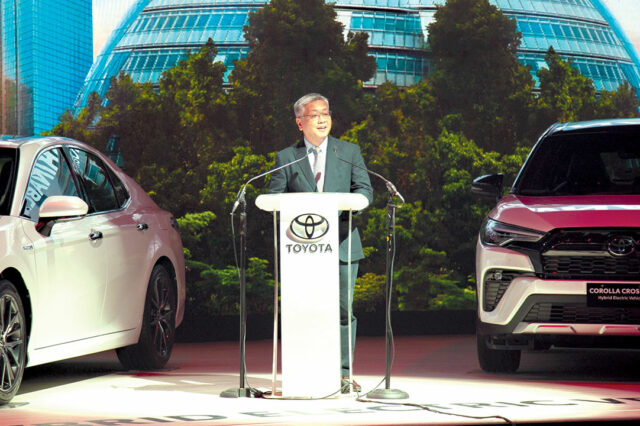
PHOTO FROM TOYOTA MOTOR PHILIPPINES CORP.

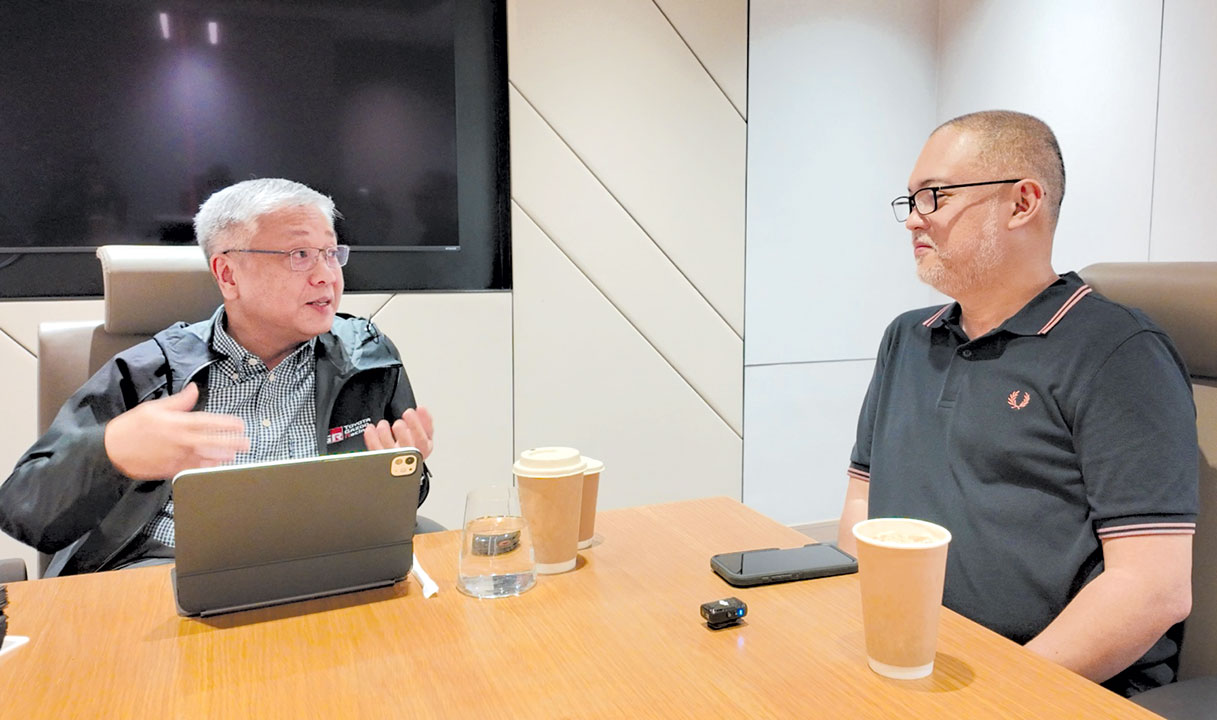
Interview by Kap Maceda Aguila

IT’S AN IMPOSSIBLE proposition to even try understating the significance of Toyota Motor Philippines Corp.’s feat. Twenty-three consecutive years of automotive market leadership evidenced in securing the much desired, so-called “triple crown” to signify dominance in passenger-, commercial-, and overall-vehicle sales is unprecedented and unequaled.

“We think it’s just very normal for us to work hard,” comments TMP Executive Vice-President Jose Maria “Jing” Atienza with a laugh. He’s not wont to harp on Toyota’s sustained level of success here, and humbly chalks it up to the organization doing what needs to be done, helped along by a spate of good luck.

“It’s not even about market share,” he submits. It’s about meeting the customers’ demands for certain models, rather than, say, being the leader in individual vehicle segments. At some point, TMP had incredibly accounted for half of new vehicle sales. As of July this year, the brand cornered 48% of the market, with a YTD sales figure of 129,334 units — up by 5.4% versus the same period in 2024 (122,730), per the report of the Chamber of Automotive Manufacturers of the Philippines, Inc. (CAMPI) and Truck Manufacturers Association (TMA).

“We monitor that (share), but it’s really more about understanding what the market needs, and asking if we could introduce certain models.”

We catch up with the TMP veteran on the eve of the final race weekend of the 2025 season of the Toyota Gazoo Racing Philippine Cup — the most recent iteration of what had once been the Vios Cup. “We are into mobility, and in this industry, you have to enjoy cars — and there are many ways of enjoying the vehicles,” he maintains. “But also for the Philippines, there’s a big need to promote racing vehicles. And we found this (series) a very good venue, starting at the grassroots and developing more approachable and reachable racing vehicles. We started with the Vios, and we’re expanding this to our next-generation Tamaraw.”

Mr. Atienza — part of the pioneer batch of De La Salle University’s Manufacturing, Engineering, and Management graduates — is from Parañaque, and the plant then of TMP in Bicutan was near his place. “It was very normal for me to have applied for Toyota,” he quips. Mr. Atienza joined the company on Aug. 1, 1991. While he applied to other companies as well, he insists that Toyota was his first choice.

“My first project for the company was to work on this training manual for sales people,” he recalls. For which product? The Toyota Tamaraw.

Here are excerpts from our exclusive interview with Mr. Atienza:

VELOCITY: How’s the reception been for the next-generation Toyota Tamaraw? How important is this workhorse this time around to TMP, and why?

JOSE MARIA “JING” ATIENZA: Of course, it’s one of the most important models in our lineup. Not only that, we are able to reach out to a new customer base (whom) we’re helping achieve what they want in terms of business and mobility. And since this is a locally assembled vehicle, we’re able to help people, we’re promoting employment, we’re promoting development of our parts industry, and a lot more in terms of nation-building. It’s been quite good in terms of market reception. Of course, we just started. For us, even if it’s around six, seven months later, we (feel we’ve) just started, and we’re able to discover a lot of things. You know, our approach with the Tamaraw is quite different from the many models we have. The Tamaraw enables us to understand better what’s happening in the country. We go out and talk to our customers.

What have you noticed in Toyota from the years that you started and then how it has evolved?

It was very different then, because the new automotive industry just started. We were just maybe three or four brands at that time. So I was a product planning person, and we only had three or four cars: Corolla, Corona, Crown, and the Lite Ace — then the Tamaraw had just come in. I knew all the grades, the colors, the prices. Now, we have 25 or 26 models in Toyota; if you add Lexus, that’s another 12. We’ve grown a lot from that time. We’ve grown a lot from just selling cars and servicing vehicles. Now we have 75 outlets already, and our coverage is quite large. Now we have used cars, Toyota Insure, Toyota Financial Services, Toyota Mobility… So we’re not just selling cars, but we’re really offering so many services to our customers.

How would you describe the corporate culture at Toyota? One of the things we’ve noticed in from our side of the fence for media is that, of course, we know that there are a lot of personnel movements, especially now that there are a lot of brands, and we’ve seen that people seem to want to stay in Toyota. You personally are a testament to that.

You have to enjoy it to stay for that long… I still remember when we started and I was joining those pre-CAMPI industry meetings. Most of those attending for other brands are not there anymore, and I’m still here (laughs). I can mention that, more or less, our teams from the 1990s, 2000s, and 2010s are still here with us. That continuity is probably one of those things which help Toyota grow.

But I’ve also heard of people liking a job, but perhaps not liking the corporate culture, and that will make them leave. So what is it about Toyota itself? I would like to tie this to an observation that, of course, we know that Toyota is also about the Japanese working harmoniously with the Filipinos. There must be some sort of fit culturally that has allowed not just the success, but lasting relationships to be formed.

I think maybe it’s a good combination. Also, I wouldn’t say what we are and what Japanese workers would be, but it’s more of a Toyota culture and Toyota way of doing things.

What is that? How would you describe the Toyota way?

We’re a very process-based organization; not personality-based. You wouldn’t see anyone of us emerge as a “star.” We’re in a team. And what we want to do is very clear, and the way we want to do it. You’ve probably heard about the Toyota production system. I don’t know how other brands do it, but for us, for example, if we have an expat coming in, let’s say, five years ago, then a new one now, it’s just a continuation because we all think alike. Filipino or Japanese, we’re all Toyota people. If I go to another country and join all those conferences, we speak the same language.

Unofficially, there are more than 50 auto brands now in the country. About half of these are Chinese brands. So maybe when you look at the grand scheme of things, or when you see this sort of layout in the industry, what goes through the mind of Toyota right now? How are you seeing the state of business? From the customer side, we will always say the same thing. We would always say that it’s for the benefit of consumers.

That’s what we’re saying also. It’s expected. For us, the more brands there are, the better it is for the customers, better for the industry. For Toyota and for a company like ours, what’s good for the industry is good for us. If there is more competition, then the market will change, and us also as Toyota, we change with the times. It’s good that there are more brands; that also shows a good outlook for the Philippine economy. By the way, if you asked me that 20 years ago, I would have said the same thing.

What is the secret to TMP’s success?

We listen to the customer. We say that we create happiness with the customer, and that means many things: the right car, the right price, the right specifications, and we take care of them during the vehicle’s life cycle. But there are still so many things around these that customers probably don’t see. We do our own things like logistics, planning, and such; how we store and deliver our vehicles, how we deliver our parts, how we train our technicians. And these are things we continuously try to improve upon.

Rethinking startup support in the Philippines

vectorjuice | Freepik

By Bjorn Biel M. Beltran, Special Features and Content Assistant Editor

The Philippines has no shortage of smart people with good ideas. That’s been proven again and again. So, where are all homegrown startup unicorns?

Aside from Mynt and Voyager Innovations, the companies behind fintech giants GCash and Maya, there has been a noticeable lack of Filipino startups that have majorly disrupted the country’s business landscape. If talent is not the problem, then the bottleneck must be somewhere else.

For many founders, especially outside Metro Manila, the bottleneck is systemic: a lack of mentorship, capital friction, weak founder pipelines, and the plethora of insufficient startup support programs that end before the real work begins.

After all, founders do not emerge fully formed. Most of them start with little more than a brilliant idea, a lot of questions, and a hope that someone will take them seriously. For many such young visionaries, incubators are where the idea either grows — or dies.

“While each offers a distinct value proposition, incubators and accelerators play a crucial role in providing startups with resources and opportunities that might otherwise take years to gain through experience, education, and market exposure,” startup accelerator Launchgarage explained. “These are delivered in a shorter time frame and through cost-effective, scalable approaches.”

To put it simply, incubators and accelerators are “the on-ramps” as Miguel Lorenzo L. Macale, senior investment manager at IdeaSpace Ventures, put it. “Beyond first checks, they shape founder know-how and discipline, give access to networks, and act as convenors in a fragmented ecosystem. They turn talent, hope, and dreams into ambitious and investable companies.”

IdeaSpace Ventures is among the few prominent startup incubators that bring these companies to life. For many, that means survival. Packworks, a startup that now supports thousands of sari-sari stores across the country, traces its early lifeline to the QBO Innovation Hub.

“Incubators and accelerators are often the spark that turns a good idea into something real. And it wasn’t just the program or the initial investment; it was the belief,” the company said. “They supported us at a time when we were on the verge of burning out. That kind of support had huge emotional and intangible value. It gave us the confidence to keep going.”

“What makes QBO Innovation special is that they didn’t stop supporting us after the official program ended. They had no obligation contractually or financially, but they’ve stayed in our corner over the years. Such a long-term commitment is rare. And it shouldn’t be. Every startup deserves that kind of support system,” it added.

Packworks noted that incubators like QBO Innovation and IdeaSpace matter immeasurably in the startup space because they provide the structure, sense of community, and resource access in what is otherwise a very lonely, chaotic journey.

The African proverb “It takes a village to raise a child” is a popular mantra in the Philippine startup ecosystem, because often the success of any venture is only guaranteed by the strength of its place in the community. Yet, those villages still only live within Metro Manila, and Packworks pointed out that many of them follow Western models that do not align with local realities.

Decentralize opportunity

For a startup aiming to serve a nationwide audience beyond the capital, the infrastructure gap becomes impossible to ignore.

Mober, a green logistics startup, put it more bluntly: “[Incubators] are essential especially for first-time founders. At Mober, we were fortunate to connect with global partners like Clime Capital and IKEA. But not every founder has that access.”

Too much support is concentrated in Metro Manila, and too much of it is built for ideal conditions that Philippine rural environments do not have. Many programs are simply not suited for with analog economies, slow-moving local government units, or low-data rural communities.

“We need more accelerators that are grounded in the Philippine context with a focus on rural product-market fit, low-data usage design, logistics, and regulatory hurdles,” Packworks said. “And we need to stop treating support as a three-month boot camp. Founders require ongoing guidance, not just a Demo Day.”

“We need to decentralize opportunity,” Mr. Macale said. “That means: Regional investors and accelerators in Cebu, Iloilo, Davao, etc.; hybrid incubation that enables flexibility between NCR (National Capital Region) and other regions; and role models from the regions, so students can see that world-class startups can come from their hometowns.”

“The Philippines becomes a true startup nation when founders from anywhere in the Philippines have the same access and ambition as those in Makati or BGC (Bonifacio Global City in Taguig),” he added.

Education that works

But even the best incubators can only work with what comes through the door. The gaps in support startups face today often trace back to an earlier failure, with education systems that reward compliance over curiosity — or worse, ones that simply do not work.

According to the Philippine Statistics Authority’s Functional Literacy, Education and Mass Media Survey (FLEMMS), about 24 million Filipinos are functionally illiterate, with 5.8 million being basically illiterate. One in five high school graduates in 2024 were reported as functionally illiterate, with over 18.9 million struggling with basic skills such as reading, writing, arithmetic, and comprehension. The World Bank reports that 91% of Filipino children aged 10 struggle to read simple text, a rate that has been worsened by the pandemic.

In the 2022 Programme for International Student Assessment (PISA), which measured students’ ability to generate and improve ideas using imagination and creativity, 15-year-old Filipinos scored an average of 14 points in creative thinking, ranking the Philippines among the bottom four out of 64 countries.

If young Filipinos are struggling with basic comprehension and creativity, then it’s no surprise that so few are equipped to think entrepreneurially. If the country wants to produce founders, not just employees, then classrooms need to change.

“Our schools shouldn’t just prepare students for employment; they should empower them to build and lead,” said Mober. “Tech is evolving fast. If we don’t catch up through better education, stronger incubation, and international partnerships, we risk being left behind.”

What does “catching up” actually look like? For Mober, it means classrooms that function more like innovation studios, places where students can design climate-tech solutions or logistics platforms before they graduate. It means project-based learning that mirrors market needs. It means letting students fail early and often.

“But that can only happen if schools and companies like Mober work hand-in-hand aligning internships, research, and project-based learning with actual market needs. We’ve openly encouraged students and universities to learn from Mober’s model and technology, and we hope it inspires them to build sustainable, tech-driven solutions of their own,” the company said.

“If we can bridge education and entrepreneurship meaningfully, we can unlock the kind of talent and thinking that will define the future of sustainable business in the Philippines and beyond,” it added.

Launchgarage echoed the need for change at the source: “When it comes to talent development, higher education has traditionally struggled to keep pace with the rapid evolution of technology and the changing environment it brings.”

“The ability to quickly create relevant and up-to-date curricula increasingly lies with the post-formal education sector, such as bootcamps and short courses. Many of these programs are now being delivered through online platforms, making them more accessible and adaptable to emerging industry needs.”

Entrepreneurship right at the start

As accessible as these resources are in the era where even remote provinces have smartphones, it still highlights a fundamental flaw in the education system. Entrepreneurship, innovation, and creativity are qualities that need to be nurtured from a young age.

“Our education system still trains people to be parts of machines, follow instructions, play it safe, and avoid mistakes. But that’s not the world we live in anymore. And that’s not how startups, and real change, are built,” Packworks said.

“We need to start teaching entrepreneurship as early as high school. Not just theory, but with real stakes. Real money. Real execution. Let students start ventures, fail, and try again. Let them pitch, budget, launch, and learn. Let it count for actual credit.”

That includes launching ventures for credit, internships in startups instead of just corporates, and treating business-building as a skill to be developed over time, not a one-off gamble.

Progress is visible in places. IdeaSpace’s Mr. Macale pointed to student-led organizations like Affiliated Stanford Entrepreneurial Society Manila (ASES Manila) as leading the charge in making startup life a desirable and viable path.

“I’m extremely excited and hopeful for the youth,” he said. “They’re certainly more exposed and equipped than 10 years ago.”

But exposure alone is not enough. What students, especially those outside elite campuses, need is the same kind of village that makes entrepreneurship in Metro Manila feel possible. Otherwise, the next generation of builders will be trained to follow blueprints instead of drawing new ones.

As Packworks noted, entrepreneurship is a skill like any other, one that needs the structured repetition, failure, and iteration that a school is best at providing.

“We need to build local startup success stories, so that young people in Bukidnon, Basilan, or Bicol don’t think you have to be in BGC to launch a big idea,” the company said.

“We need to raise a generation that doesn’t just memorize our country’s problems, but starts solving them. A generation that knows that losing battles is okay, so long as you’re still in the fight to win the war.”


With clean energy push, PHL recharts power roadmap

STOCK PHOTO | Image by from Freepik

By Sheldeen Joy Talavera, Reporter

With five years remaining to reach its 35% renewable energy (RE) target, the Philippines is stepping up efforts to expand clean energy capacity, supported by new policies, auctions, and increasing private sector participation.

The RE industry is “very dynamic, active, and aggressive,” according to Jose M. Layug, president of the Developers of Renewable Energy for AdvanceMent, Inc.

“On the short term, we’re finally increasing the targets, increasing additional capacities,” he said. “And that would help us address in the next two to three years our need for more electricity and more capacity during the peak months.”

Seventeen years since the effectivity of the Renewable Energy Act, a landmark legislation aimed at promoting the development and utilization of RE sources in the country, the sector has delivered around 3,753 megawatts (MW) of additional capacity.

At present, the Philippines has a 22% RE share in the power mix — quite a long way to go to unlock the potential of substantial resources spanning solar, wind, hydro, and geothermal.

To push this further, the country has made significant strides in boosting RE development, with record-breaking capacity additions of 794.34 MW — exceeding the total RE capacity installed over the past three years, according to the Department of Energy (DoE).

“We have seen how this government has pushed all investors to invest in the Philippines and build a lot of power plants primarily through your green energy auction programs (GEAP) and also with the DoE’s push for more power plants to get built at faster times,” Mr. Layug said.

This year alone, the government has launched three green energy auctions (GEAs), expected to deliver more than 20 gigawatts of capacity between 2025 and 2030.

These auctions cover renowned RE technologies such as solar, onshore wind, and hydro, as well as emerging ones such as offshore wind and RE equipped with energy storage systems.

The GEAP aims to promote RE as one of the country’s primary sources of energy through competitive selection. RE developers compete for incentivized fixed power rates by offering their lowest price for a certain capacity.

Winning RE projects will be awarded a 20-year supply contract starting from the commercial operation date of the plant.

Mr. Layug said that GEAP presents a ready market for investors as it provides a faster and more efficient way to sell electricity.

“Programs such as the Green Energy Auction, the steady growth in renewable energy capacity, and the increasing investor confidence in our energy transition framework underscore our collective progress in advancing the President’s policy agenda,” Energy Secretary Sharon S. Garin said.

“These initiatives are aligned not only with our long-term energy goals but also with broader aspirations for inclusive and sustainable national development,” she added.

Right after hitting the goal five years later, the Philippines is also pushing to reach a 50% mix of RE generation by 2040.

In assessing the long-term impact of higher RE penetration, Mr. Layug said that the increased entry of renewables will help reduce electricity costs due to the downtrend in prices.

“They are much lower than your spot market and much lower than your conventional fuel prices,” he said.

REDUCING COSTS
Reducing capital costs is critical in paving the way for an affordable energy transition, according to experts.

“The financing gap is not so much availability of loans. It’s really the price of borrowing, the cost of borrowing,” Mr. Layug said.

“So I’m hoping that someday, banks will be able to lend money at a lower cost of borrowing.”

For RE players, harnessing vast RE resources also entails risks such as in geothermal, according to Jerome H. Cainglet, president and chief operating officer of Energy Development Corp., the country’s largest geothermal power producer.

“It’s very risky in the sense that you have to spend a huge amount of capex (capital expenditure) just to be able to drill. And when you drill, you’re not sure right away if you are able to produce steam,” he said.

He said that the government’s initiative to facilitate a geothermal de-risking program gives existing and potential geothermal producers the financial muscle to push through.

While the Philippines has demonstrated strong momentum in renewable energy development, RE targets must be “realistic and achievable,” according to Noel M. Baga, co-convenor of think tank Center for Energy, Research, and Policy.

He said that significant challenges continue to hinder the Philippines’ energy security, particularly gaps in grid infrastructure and transmission capacity.

“Without adequate grid readiness, adding renewable capacity becomes ineffective, and our renewable energy targets must be grounded in realistic infrastructure capabilities and comprehensive planning to ensure they align with our fundamental priority of energy security for all Filipinos,” he said.

Mr. Baga said that “critical blind spots” remain, particularly in energy reliability and delivery.

“The most significant hindrance is grid congestion and lack of transmission infrastructure, which delays plant connections and results in curtailed power production even as the country adds new capacity from solar and wind sources,” he said.

According to the National Grid Corp. of the Philippines, the country’s sole grid operator, the grid has an available transmission capacity of 10,260 MW for integrating new power generation assets.

Mr. Baga said that the Philippines must recalibrate its energy strategy by addressing energy reliability issues — prioritizing energy security first, then affordability, and finally sustainability.

“This requires implementing energy plan roadmaps with definite timelines for energy infrastructure construction including power plants and transmission projects, improving transparency in how the Philippine Energy Plan is constructed, and de-risking energy investments through streamlined permitting and stronger investor protections,” he said.

He highlighted that the country needs “all forms of energy” to meet the growing demands.

“Any energy transition must follow a measured approach that ensures stable power supply while recognizing that the Philippines contributes minimally to global emissions and must balance environmental goals with immediate development priorities for all Filipinos,” he said.

Nicanor S. Villaseñor III, former energy engineering professor at the University of the Philippines Diliman, said that the implementation of the RE program has been slow.

“As an RE observer, I find the implementation of the RE program to be very slow. This program was drafted a long time ago. And there are problems in the implementation. And most of the problems in the implementations are structural in nature, in place,” he said.

He said that some areas, especially in remote areas, experience persistent power interruptions despite an adequate supply of electricity.

In order to accelerate full electrification in off-grid areas, he said that the adoption of solar rooftop systems should be encouraged as it can make a dent in the country’s power supply.

“If more will install solar for their own needs, it will really help a lot in ensuring stability in price and supply,” he said.

With a few more years to go, the government is on track to hit its RE targets with the help of its flagship programs.

“We’re still working on that. If you see our green energy auction program it’s really pushing for a number of capacities,” Energy Undersecretary Mylene C. Capongcol said.

The DoE, together with its partner agencies such as the Energy Regulatory Commission, National Transmission Corp., and the National Grid Corp. of the Philippines, is looking for all the available support to push for the entry of renewables, she said.

UST marks 414th year with EdTech 5.0 conference on sustainable innovation

Panel discussion featuring Engr. Ericson D. Dimaunahan from Mapua University, Prof. Wilben Christie R. Pagtaconan from the Philippine eLearning Society, Prof. Elfritzson M. Peralta from the University of Santo Tomas, and Dr. Naoki Suzuki from the Tokyo Gakugei University

The University of Santo Tomas (UST) capped its 414th founding anniversary with the staging of the EdTech 5.0 Conference, an event that also marked the 30th year of its Educational Technology (EdTech) Center.

The two-day gathering, held in partnership with C&E Adaptive Learning Solutions, drew more than 250 participants from the academe, government, and industry to discuss how intelligent and human-centered technologies can shape the future of education. The program featured four plenary sessions, two panel discussions, 19 research presentations, and eight workshops on themes ranging from ethical artificial intelligence to digital sustainability and workforce readiness.

Jointly organized by the UST Educational Technology (EdTech) Center and C&E Adaptive Learning Solutions, and backed by a roster of esteemed sponsors and partners, the conference served as a dynamic platform to exchange insights and showcase innovations aligned with EdTech 5.0.

Keynote speakers included Dr. Naoki Suzuki of Tokyo Gakugei University, who discussed “Transforming Learning Through Innovative Pedagogies, Immersive and Emerging Platforms for Future-Proofed Skills Development;” and UST College of Education Assistant Dean Louie B. Dasas, Ph.D., who presented “Unlocking EdTech 5.0’s Potential: Human-Centered AI, Ethical Data, and the Future of Personalized Education.”

Jullian Dominic D. Ducut of the UST Senior High School also talked about “Powering Industry 5.0: Data, Skills, and the Future-Ready Workforce” while Prof. Donald G. Manlapaz, Ph.D., of the UST College of Rehabilitation Sciences discussed “Connected for Good: Technology at the Intersection of Sustainability, Security, and Health.” Their talks underscored the importance of personalized learning, cross-sectoral collaboration, and technological adaptability in building future-ready education systems.

Panel discussions also gathered the nuanced insights of Dr. Elenita N. Que (UP College of Education), Prof. Takashi Fukushima (Tokyo Gakugei University), Dr. Devy M. Galang (Philippine eLearning Society), Raphael Walker (Accredify), Engr. Ericson D. Dimaunahan (Mapua University), Assoc. Prof. Wilben Christie R. Pagtaconan (Philippine eLearning Society), and Asst. Prof. Elfritzson M. Peralta, MSc (UST College of Science), in the topics “EdTech 5.0: Charting a Course for Sustainable and Transformative Innovations” and “Securing Our Future: EdTech 5.0 and the Call to Action for Sustainable and Transformative Living.”

The conference showcased UST’s recent induction into the prestigious Digital Education Council and highlighted its recognition in the Silver Tier of the Times Higher Education Online Learning Rankings. Interactive workshops such as the Student StartUP event “ClashBytes,” XR & Metaverse Integration workshop, AI workshops for teachers and students, Arduino workshop, STEAM solutions workshop, and the EdTech Ecosystem showcase provided opportunities for real-time innovation demonstrations and collaboration.

In addition, a nostalgic summary of the EdTech Center’s history was also presented at the conference, with former administrators honored on stage for their contributions.

In line with its theme, the event adopted sustainable practices, such as reusable lanyards, digital credentials, and eco-friendly dining materials. UST officials said these efforts reflect the university’s broader commitment to sustainability as framed in Pope Francis’ encyclical Laudato Sí.


SparkUp is BusinessWorld’s multimedia brand created to inform, inspire, and empower the Philippine startups; micro, small and medium enterprises (MSMEs); and future business leaders. This section will be published every other Monday. For pitches and releases about startups, e-mail to bmbeltran@bworldonline.com (cc: abconoza@bworldonline.com). Materials sent become BW property.

MHSD-BARMM, GCash partnership brings faster and safer cashless transactions in the Bangsamoro Autonomous Region in Muslim Mindanao

At the signing of the Memorandum of Agreement between the Bangsamoro Autonomous Region in Muslim Mindanao (BARMM)-Ministry of Human Settlements and Development (MHSD) and GCash: (left to right) Cleo Celeste Santos, GCash Vice-President and Head of Public Sector; Jong Layug, General Manager of GCash B2B; Renren Reyes, CEO & President of G-Xchange, Inc.; Atty. Hamid Aminoddin Barra, Minister of MHSD-BARMM; Aldin Asiri, Deputy Minister of MHSD-BARMM; and Director-General Esmael Ebrahim of MHSD-BARMM

Bangsamoro communities can now experience faster, safer, and more convenient access to digital payments—thanks to a new partnership between the Ministry of Human Settlements and Development (MHSD) in the Bangsamoro Autonomous Region in Muslim Mindanao (BARMM) and the country’s leading finance app, GCash. This joint initiative marks a significant step towards advancing inclusive and sustainable finance across the region.

The partnership is anchored on MHSD’s push for digitalization by enabling cashless payment collection for its housing and settlement-related services. By moving away from manual, cash-based processes, MHSD aims to make transactions more efficient, secure, and accessible for both the agency and the public, particularly for residents in remote or underserved areas.

“This partnership is an important step toward making financial services more accessible to every Bangsamoro. By leveraging digital platforms like GCash, we can improve the way public service is delivered, especially to those in remote communities,” said MHSD-BARMM Minister Atty. Hamid Aminoddin Barra.

While the primary focus is on providing a convenient payment option for its collections, MHSD is also taking steps to enhance its disaster response capabilities. With the Financial Disbursement Service (FDS) of GCash in place, the Ministry will have a ready and reliable tool to send shelter assistance to households affected by calamities or disasters, ensuring timely support when and where it’s needed most.

“Guided by our strategic focus on financial inclusion, GCash is proud to be working toward Shari’ah-compliant finance, in partnership with the Bangko Sentral ng Pilipinas (BSP) and BARMM ministries. Our goal is to ensure that Muslim Filipinos can participate confidently in the digital economy, honoring their values while gaining the benefits of modern finance,” said G-Xchange President and CEO Ren-Ren Reyes.

Our partnership with the MHSD-BARMM marks a new chapter in this journey. Together, we will amplify initiatives that uplift vulnerable communities, integrate digital payments in government services, and accelerate the delivery of social and economic support to those who need it most. Digitizing public service reduces barriers and inefficiencies, providing faster, safer access to essential resources for all, especially the underserved,” he added.

This collaboration supports the shared vision of MHSD and GCash for citizen-centric governance powered by digital tools. It also highlights how public-private partnerships can help bridge the digital divide and strengthen government services in underserved areas.

As the country continues to embrace digital innovation, this collaboration signals a shared commitment to building a more inclusive and responsive region, where financial access is not only widespread but also respectful of cultural and religious values. With the digital financial solutions of GCash increasingly being tailored to the practices of the Islamic faith, every Bangsamoro citizen can move toward safe, timely, and dignified access to public services.

For more information, please visit www.gcash.com.


Spotlight is BusinessWorld’s sponsored section that allows advertisers to amplify their brand and connect with BusinessWorld’s audience by publishing their stories on the BusinessWorld Web site. For more information, send an email to online@bworldonline.com.

Join us on Viber at https://bit.ly/3hv6bLA to get more updates and subscribe to BusinessWorld’s titles and get exclusive content through www.bworld-x.com.

Giorgio Armani: Farewell to the visionary designer who defined modern elegance

THE COFFIN of designer Giorgio Armani at the Armani/Teatro as he lies in state, following his death at the age of 91 in Milan, Italy, Sept. 6. — REUTERS/ALESSANDRO GAROFALO

GIORGIO ARMANI’S passing at the age of 91 has closed a golden age in high fashion, and consolidated the legacy of a visionary who forever redefined the codes of contemporary style. The designer’s death marks a crucial moment for an empire that generates annual revenues of €2.3 billion.

Armani transformed fashion with unstructured silhouettes that challenged decades of sartorial tradition. At a time when shoulder pads dominated the catwalks and men’s suits still followed rigid Victorian codes, the Milanese designer proposed something radically different: sophistication through simplicity.

His genius lay in understanding that true luxury did not shout, but whispered — the relaxed structure and flowing lines of Armani jackets freed both men and women alike from the strictures of extreme formality. Armani’s business success was, in essence, this concept of understated elegance turned into a multi-million-euro empire.

DRESSING THE DREAMS OF MILLIONS
Armani is recognized for having invented red carpet fashion, an achievement that transcends the textile industry and enters the realm of popular culture. From Richard Gere in the 1980 film American Gigolo to today’s stars, the Italian designer understood that dressing Hollywood meant dressing the dreams of millions of people.

His creations did more than just adorn bodies. They constructed characters, defined eras, and set global standards of aspiration. On screen, each Armani suit became a silent expression of what it meant to be elegant, powerful and desirable.

Armani also helped to make the “made in Italy” label synonymous with quality for consumers, elevating Italian manufacturing to the highest levels of prestige. Far more than a fashion designer, he was a cultural ambassador who exported Mediterranean sophistication to global markets, from Tokyo to New York.

The Armani empire is not only a testament to commercial success, but also to the ability to transform a coherent artistic vision into an enduring cultural phenomenon.

A MAXIMALIST MINIMALIST
In an industry beholden to ostentation, Armani embraced sober restraint as his creative philosophy. His neutral palettes, exquisite textures and impeccable cuts proved that it was possible to be both revolutionary and subtle. Each garment was an exercise in subtraction, in stripping away the unnecessary to reach the pure essence of the design.

This minimalist approach was not one of coldness, but distilled warmth. His garments enveloped the wearer in a second skin of confidence, transforming clothing from mere attire to psychological armor.

For more than five decades, Armani shaped modern elegance with a clarity of vision that extended far beyond fashion.

His influence extends from the architecture of his boutiques to the philosophy of life he represented: beauty found in simplicity, power expressed with moderation. Today, as the fashion world mourns this irreparable loss, it is clear that Giorgio Armani did not just dress bodies: he dressed an era.

His legacy will live on in every silhouette that celebrates elegance over ostentation, in every garment that favors subtlety over flashiness, and in every designer who understands that true revolution sometimes talks to us in the quietest of voices.

Il Signore Armani,” as he was affectionately known, leaves behind not only a commercial empire, but also a masterclass in how authentic artistic vision can transform entire industries. In an increasingly noisy world, his quiet voice now resonates more strongly than ever.

AN ASTUTE ENTREPRENEUR
The Armani empire was more than a brand. It was a meticulously structured financial ecosystem, and the business’ design reflects its founder’s strategic vision: Giorgio Armani as the flagship haute couture brand, Emporio Armani as the accessible luxury segment, and Armani Exchange for the youth market. This segmentation allowed the group to reach multiple demographics without undercutting or jeopardizing its core business.

In an industry dominated by conglomerates like LVMH and Kering, Armani was the exception: he was both CEO and sole major shareholder of the company, and maintained absolute control over its creative vision and commercial strategy.

This independence was ideological, but also financially astute. Without pressure from external shareholders, the group was able to maintain healthy profit margins and consistently reinvest in its global infrastructure.

The company is estimated to be worth between €6 billion and €7 billion today, but regardless of the exact figure, Armani has established himself as one of the most successful entrepreneurs in the history of fashion.

BEYOND CLOTHES
Armani’s financial genius was evident in his ability to diversify. The company operates a line of restaurants and cafés around the world, and is planning, together with UAE-based firm Emaar Properties, to launch a chain of luxury hotels and resorts in major cities including New York and Tokyo. This expansion is the logical extension of a brand that had managed to transcend fashion and become synonymous with an aspirational lifestyle.

The Armani business had also expanded into music, sport, and Italian cuisine, creating an ecosystem of mutually reinforcing brands that maximized the value of its intellectual property.

This paid off, as at times when other luxury groups were hit by market fluctuations, Armani showed exceptional resilience — its revenue grew by 16.5% in 2022, despite volatile markets.

The group’s conservative strategy of maintaining a cash reserve of over €1 billion also enabled it to navigate economic crises without relying on external financing or strategic partners. This liquidity provided stability, as well as bargaining power and the ability to make countercyclical investments.

A BUSINESS MODEL TO EMULATE
Armani’s financial success was no fluke. His model combined vertical control of production with strategic geographical expansion, as well as brand management that maximized the price of Armani’s superior quality.

As the fashion world mourns his loss as a designer, financial analysts will be eulogizing Armani as a business strategist who built one of the luxury sector’s most profitable and stable companies.

He managed to maintain margins above 20% for decades, expand globally without losing its brand identity, and resist the pull of industry consolidation. All of this makes his legacy required reading for any business school student.

The empire Armani leaves behind is not just a collection of assets. It is the embodiment of an understanding that true luxury cannot be bought, it must be built. Brand by brand, shop by shop, season after season.


Pedro Mir is a professor of the Faculty of Economics and Academic Director of ISEM Fashion Business School at the Universidad de Navarra.

Better than ever

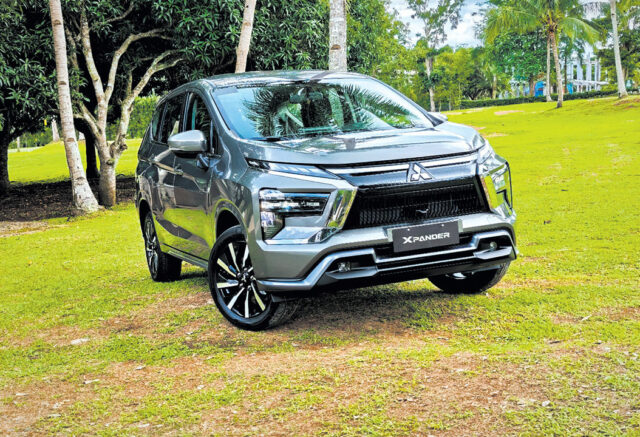
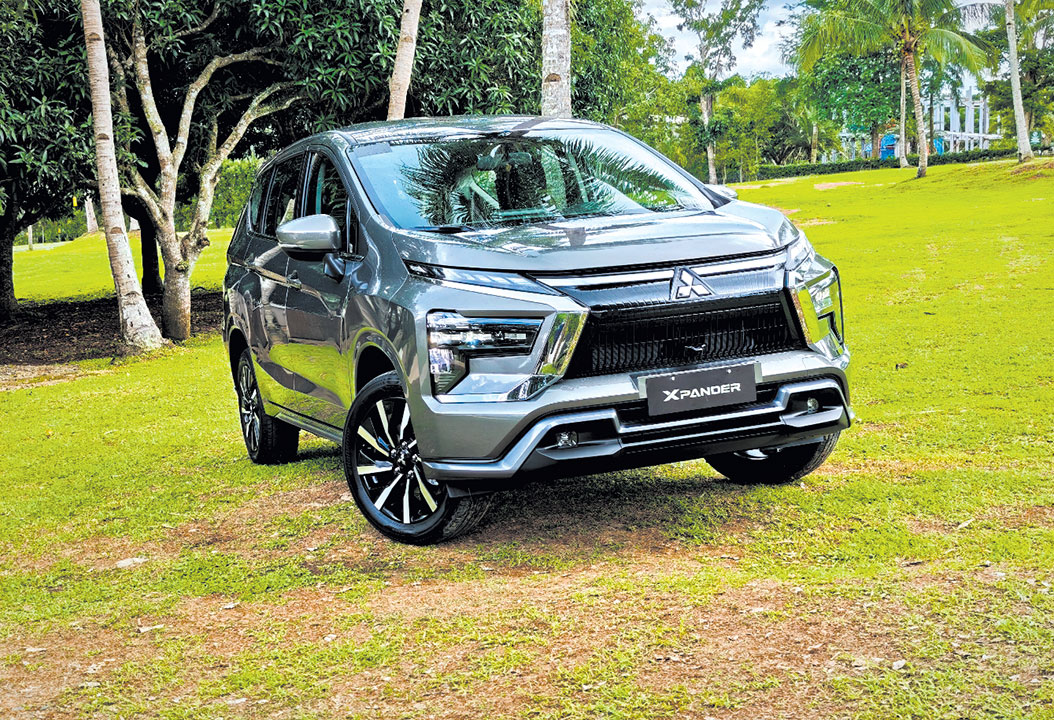
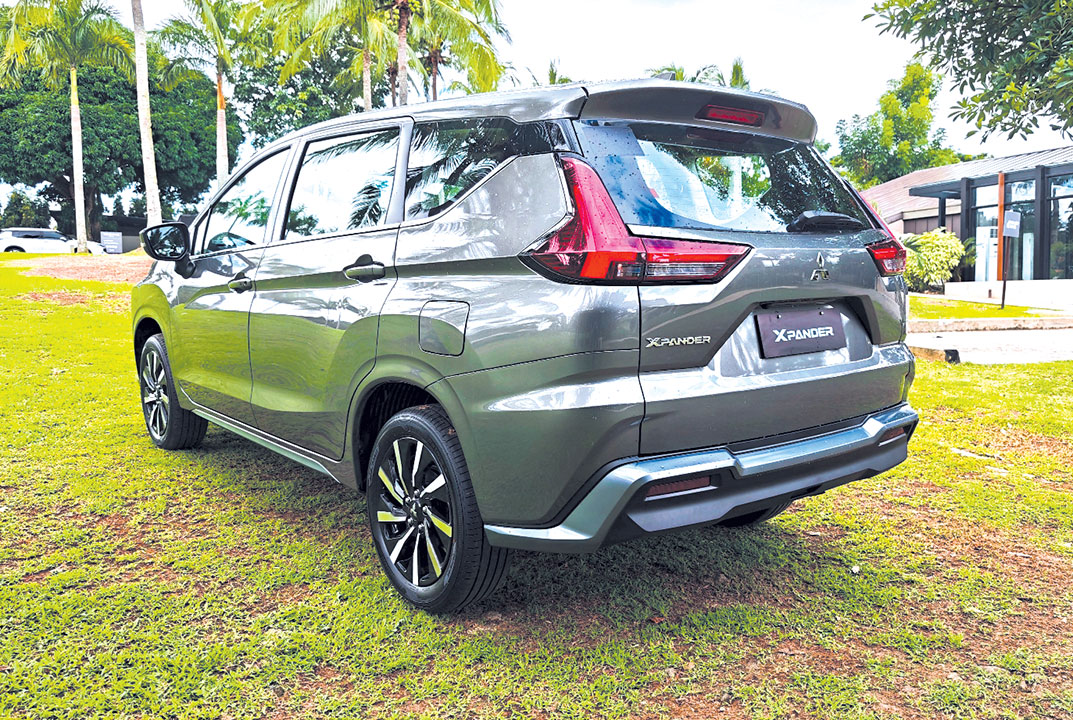
The Mitsubishi Xpander and Xpander Cross receive improvements inside and out. — PHOTO BY PABLO SALAPANTAN

Updated Mitsubishi Xpander and Xpander Cross revealed

By Pablo Salapantan

WHEN IT COMES to the very definition of MPVs (or multi-purpose vehicles), people look no further than the Mitsubishi Xpander. Ever since its debut, it has become the go-to family vehicle of Filipino car buyers looking for space, comfort, and reliability.

Recognizing this, Mitsubishi felt it was time to upgrade the current model just to keep it up to date against its rivals.

SHARPER LOOKS
Starting off with the looks, the Xpander gets a bolder exterior styling with a new front and rear bumper design, redesigned headlights with daytime running lights (DRLs), LED fog lamps, and 17-inch two-tone alloy wheels.

Also receiving updates for 2026 is the Xpander Cross, Mitsubishi’s idea of a more rugged MPV. The Xpander Cross receives the same updated design treatment as the Xpander, with a new front bumper and rear bumper design, DRLs, fog lights, and a new rim design as well.

INTERIOR UPDATES
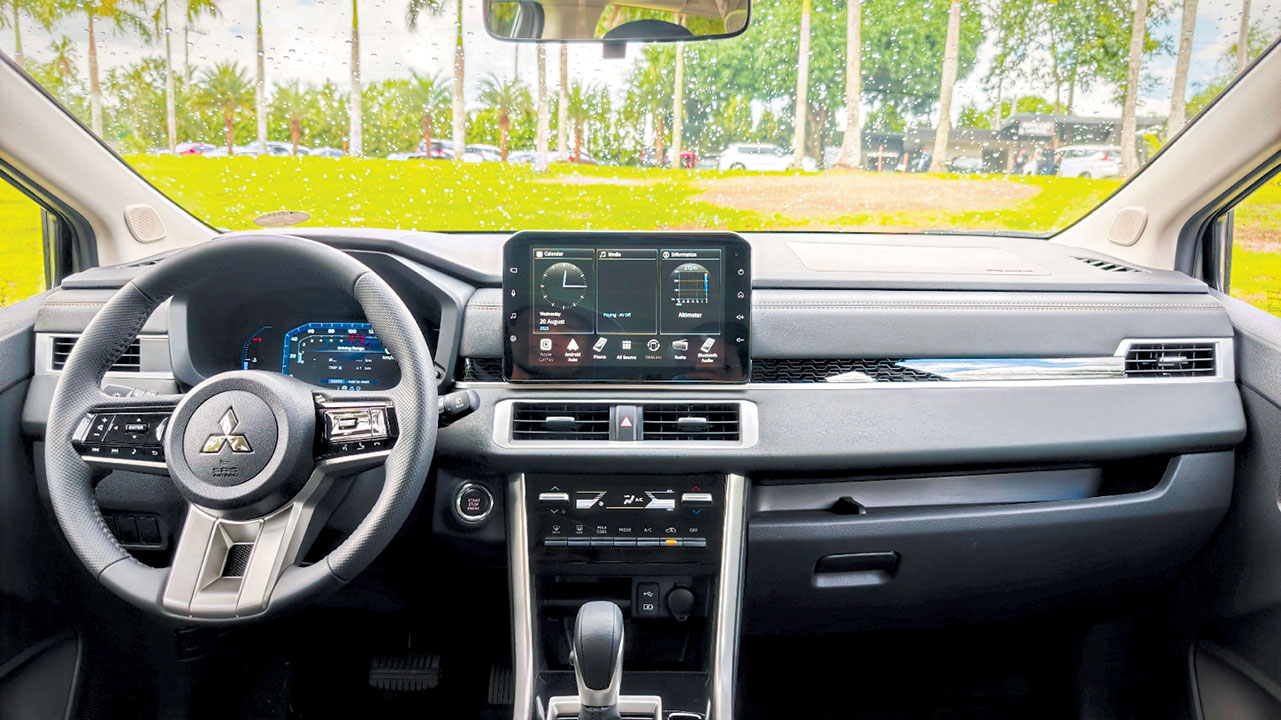
It isn’t all about the exterior, though; the automaker decided to spruce up some key features inside the Xpander and Xpander Cross. Specifically, new black and burgundy synthetic leather seats with heat guard technology are now affixed onto the Xpander Cross, while the Xpander offers premium black fabric seats. Occupants will also enjoy the new 10-inch Smartphone Link Display Audio (SDA) touchscreen with wireless Apple CarPlay and Android Auto, and the new eight-inch information meter cluster.

As the Xpander is a family vehicle, safety is a vital aspect to make it a true top-choice MPV. Both the Xpander Cross and Xpander now get the Multi-Around Monitor (MAM), a feature that gives drivers a 360-degree view of their surroundings. Furthermore, the Xpander GLS top variant gets Active Yaw Control (AYC) to better aid in cornering stability.

The 2026 Mitsubishi Xpander model comes in the following variants: Xpander GLX 1.5G 2WD MT (P1.099 million), Xpander GLX 1.5G 2WD AT (P1.159 million), Xpander GLS 1.5G 2WD AT (P1.259 million), and Xpander Cross 1.5G 2WD AT (P1.378 million).

The Xpander comes in nine different exterior choices, and three two-tone options for the Xpander Cross. The Quartz White Pearl color option is available for an additional P15,000.

T-bill, bond rates may be mixed on easing hopes

BW FILE PHOTO

RATES of the Treasury bills (T-bills) and Treasury bonds (T-bonds) to be offered this week could end mixed in line with secondary market yields on expectations of monetary easing here and in the United States.

The Bureau of the Treasury (BTr) will auction off P25 billion in T-bills on Monday, or P8.5 billion each in 91-day and 182-day securities and P8 billion in 364-day papers.

On Tuesday, the government will offer P30 billion in reissued seven-year T-bonds with a remaining life of four years and 10 months.

T-bill yields could go down while the T-bonds could fetch slightly higher rates in line with the week-on-week movements in secondary market rates amid the release of key economic data here and in the US that affected monetary easing bets, Rizal Commercial Banking Corp. Chief Economist Michael L. Ricafort said in a Viber message.

Mr. Ricafort said the August Philippine inflation data released on Friday could still support another rate cut by the Bangko Sentral ng Pilipinas (BSP) within the year despite picking up from the July print.

The spate of US labor data reported last week also bolstered expectations that the US Federal Reserve would deliver its first rate cut this year at its Sept. 16-17 meeting, he added.

At the secondary market on Friday, the rates of the 91-, 182, and 364-day T-bills dropped  by 5.52 basis points (bps), 7.86 bps, and 6.58 bps week on week to end at 5.1769%, 5.3135%, and 5.4699%, respectively, based on PHP Bloomberg Valuation Service Reference Rates data as of Sept. 5 published on the Philippine Dealing System’s website.

Meanwhile, the seven-year bond rose by 2.88 bps week on week to end at 5.9299%, while the five-year debt, the benchmark tenor closest to the remaining life of the reissued bonds on offer on Tuesday, went up by 3.5 bps to close at 5.8445%.

A trader said that market players were mostly positioning on Friday following the Philippine inflation data and as they awaited the US nonfarm payrolls report released later in the day.

Headline inflation picked up to 1.5% in August from 0.9% in July, but was slower than the 3.3% recorded in the same month a year ago, the Philippine Statistics Authority reported on Friday.

The consumer price index (CPI) for last month was slightly higher than the 1.3% median estimate in a BusinessWorld poll of 16 analysts but was within the central bank’s 1%-1.8% forecast for the month.

August also marked the sixth month in a row that inflation settled below the BSP’s 2-4% target range.

For the first eight months, inflation averaged 1.7%, matching the central bank’s forecast for this year.

The Monetary Board on Aug. 28 lowered benchmark borrowing costs by 25 bps for a third consecutive meeting to bring the target reverse repurchase rate to 5%.

The central bank has now slashed rates by a cumulative 150 bps since the start of its rate cut cycle in August 2024.

BSP Governor Eli M. Remolona, Jr. has said that the central bank could deliver one more 25-bp rate cut this year to support the economy if needed, which would likely mark the end of their current easing cycle.

The Monetary Board’s two remaining meetings this year are scheduled in October and December.

Meanwhile, US job growth weakened sharply in August and the unemployment rate increased to nearly a four-year high of 4.3%, confirming that labor market conditions were softening and sealing the case for a Federal Reserve interest rate cut later this month, Reuters reported.

Nonfarm payrolls increased by only 22,000 jobs last month after rising by an upwardly revised 79,000 in July, the US Labor department’s Bureau of Labor Statistics said on Friday. Economists polled by Reuters had forecast payrolls would rise by 75,000 jobs after a previously reported gain of 73,000 in July.

Financial markets expect the Fed will deliver a quarter-percentage-point rate cut at its Sept. 16-17 policy meeting, with two more such moves at its remaining two meetings in 2025. The central bank has kept its benchmark overnight interest rate in the 4.25%-4.50% range since December.

The unemployment rate edged up from 4.2% in July to the highest level since October 2021. The household survey from which the jobless rate is derived showed 436,000 people entered the labor force, but employment only increased by 288,000.

Last week, the BTr raised P25 billion as planned from the T-bills it auctioned off as the offer was more than five times oversubscribed, with total bids reaching P125.504 billion.

Broken down, the Treasury borrowed P8.5 billion as planned via the 91-day T-bills as total tenders for the tenor reached P28.33 billion. The three-month paper was quoted at an average rate of 5.173%, down by 2.2 bps from the previous auction. Yields accepted ranged from 5.08% to 5.183%.

The government likewise raised P8.5 billion as programmed from the 182-day securities as tenders amounted to P47.774 billion. The average rate of the six-month T-bill was at 5.323%, falling by 7.5 bps from the previous week, with accepted yields spanning from 5.288% to 5.35%.

Lastly, the Treasury sold the planned P8 billion in 364-day debt as demand for the tenor totaled P49.39 billion. The average rate of the one-year T-bill dropped by 6.5 bps to 5.457%. Tenders accepted carried rates from 5.45% to 5.46%.

Meanwhile, the reissued seven-year T-bonds to be offered on Tuesday were last auctioned off on July 1, where the government raised P30 billion as planned at an average rate of 5.896%, well below the 6.375% coupon.

The Treasury wants to raise P220 billion from the domestic market this month, or P100 billion through T-bills and P120 billion via T-bonds.

The government borrows from local and foreign sources to help fund its budget deficit, which is capped at P1.56 trillion or 5.5% of gross domestic product this year. — Aaron Michael C. Sy with Reuters

Meralco seeks ERC nod for 20-year biogas supply deal

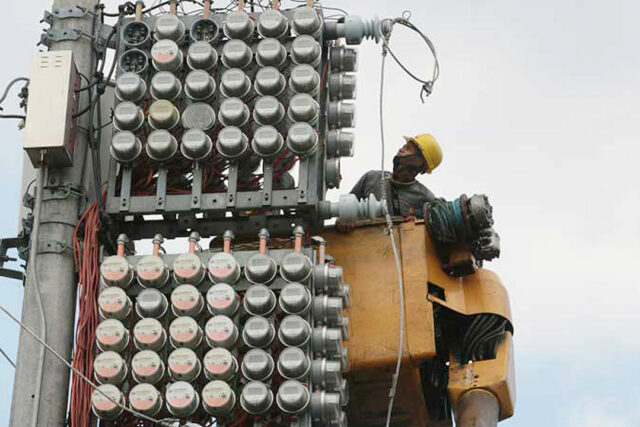
PHILIPPINE STAR/ MICHAEL VARCAS

By Sheldeen Joy Talavera, Reporter

MANILA ELECTRIC CO. (Meralco) is seeking Energy Regulatory Commission (ERC) approval for a 20-year renewable energy (RE) supply deal with First Quezon Biogas Corp. (FQBC), which is expected to generate P15.2 million in consumer savings.

In a joint filing, the companies sought ERC approval for their power supply agreement (PSA) covering 1.25 megawatts (MW) of baseload supply from FQBC’s biogas plant.

In March, FQBC submitted an unsolicited proposal to Meralco for a long-term PSA, which was signed on July 15.

Citing a circular issued by the Department of Energy and the ERC in 2023, the companies said that a competitive selection process is not required as a distribution utility (DU) may procure RE supply below 10 MW.

The power distributor will source from FQBC’s 1.429-MW biogas plant in Candelaria, Quezon, a facility that converts locally sourced agricultural waste into electricity.

The plant will utilize “advanced anaerobic digestion technology to convert agricultural waste into clean, renewable energy,” the joint application said.

“This process not only generates electricity, but also yields significant environmental benefits by providing a sustainable disposal solution to agricultural waste and manure, thereby reducing greenhouse gas emissions and supporting the Philippines climate change mitigation goals,” they said.

The companies said the RE deal will help Meralco comply with its obligations under the Renewable Portfolio Standards (RPS), which require DUs to source a portion of their energy supply from eligible RE sources.

“This allows Meralco to meet its RPS obligations while taking advantage of an indigenous RE waste-to-energy facility offering baseload supply embedded in its franchise area,” the companies said.

They said the delivered rate would be P6.5 per kilowatt-hour (kWh), excluding value-added tax, citing a rate impact analysis.

This is lower by about P1.3890 per kWh than the effective cost of P7.8890 per kWh if the equivalent capacity under the PSA were to be sourced from the Wholesale Electricity Spot Market, the trading floor of electricity.

“In fact, by sourcing the capacity through the Meralco-FQBC PSA, Meralco’s average blended generation rate will be reduced by about P0.0004 per kWh… resulting in savings to consumers of about P15.2 million,” they said.

The RE deal forms part of Meralco’s long-term supply procurement plan covering 2026 to 2046, with a capacity totaling over 2,100 MW.

As the country’s largest private DU, Meralco serves over eight million customers across Metro Manila and nearby areas.

Meralco’s majority owner, Beacon Electric Asset Holdings, Inc., is partly owned by PLDT Inc.

Hastings Holdings, Inc., a unit of the PLDT Beneficial Trust Fund subsidiary MediaQuest Holdings, Inc., has an interest in BusinessWorld through the Philippine Star Group, which it controls.