THE Philippines’ Department of Foreign Affairs (DFA) on Monday said it had lodged “firm representations” with China’s embassy in Manila after a series of public exchanges between Chinese diplomats and Philippine officials, as frictions over overlapping claims in the South China Sea continue to test bilateral ties.
In a statement, the DFA said disagreements over the disputed waterway should be addressed through diplomatic channels and handled with restraint, warning that heated public exchanges risk undermining efforts to manage tensions and preserve regional stability.
“While the Philippines values debate on differences in national positions, the department recognizes the need for sober, professional and respectful exchanges in the public sphere,” it said. “Such is not contradictory to the national interest.”
The Chinese Embassy in Manila did not immediately respond to a request for comment sent via Viber.
The move follows a spate of statements from Beijing’s embassy criticizing remarks by Philippine politicians and security officials who have taken a more vocal stance on Manila’s claims in the South China Sea.
Those remarks have drawn pushback from Philippine officials, who say public messaging that singles out local leaders crosses diplomatic norms.
The DFA said “circumspection in language and actions” is needed to prevent further escalation and to safeguard efforts to manage disputes, including initiatives aimed at improving communication between coast guards and promoting cooperation in areas such as scientific research, trade and agriculture.
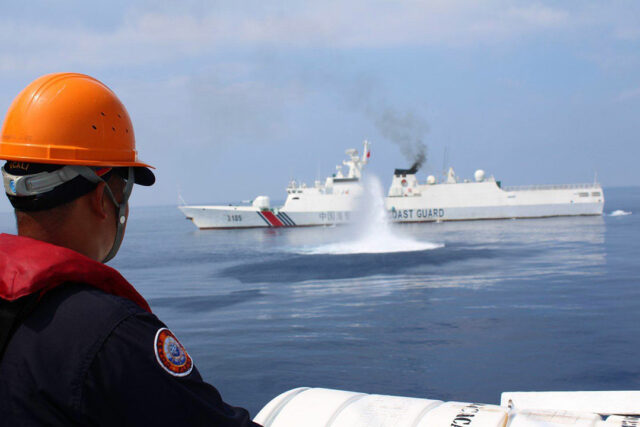
Public messaging has taken on greater prominence as confrontations between Philippine and Chinese vessels persist in contested waters. Manila has accused Chinese coast guard and maritime militia ships of harassment and dangerous maneuvers, including the use of water cannons near features the Philippines considers part of its exclusive economic zone.
China claims most of the South China Sea under its U-shaped nine-dash line, overlapping with the maritime zones of several Southeast Asian states.
‘DIRECT CHALLENGE’
The Philippines has repeatedly rejected those claims, citing a 2016 arbitral ruling that voided China’s position under international law. Beijing has refused to recognize the ruling.
Philippine Coast Guard spokesman Jay Tristan Tarriela, who has drawn criticism from China’s embassy for his statements on maritime incidents, said remarks directed at Philippine lawmakers and officials amounted to a challenge to the country’s sovereignty.
“This attack on our sitting senators by foreign diplomats is not merely an assault on the Senate as a democratic institution, but a direct challenge to our sovereignty and to the Filipino people as a whole,” he said in a post on social media platform X.
The Palace also weighed in on Monday, saying it supports Philippine officials in defending the country’s claims while underscoring the administration’s preference for diplomacy.
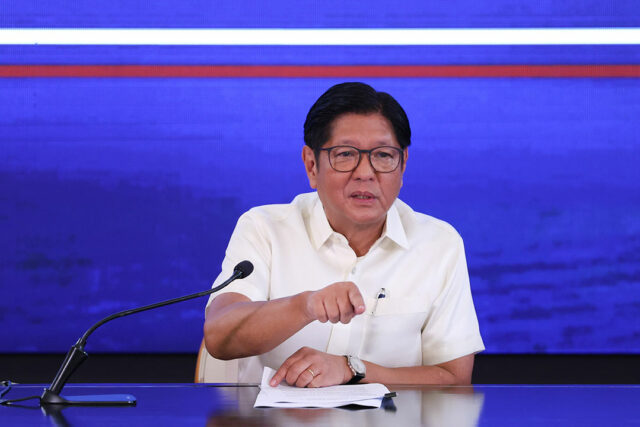
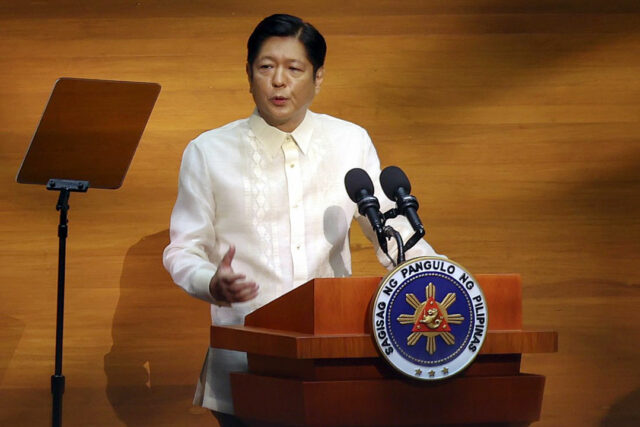
Palace Press Officer Clarissa A. Castro said President Ferdinand R. Marcos, Jr. has been clear that the Philippines would not concede any part of its territory, even as the government seeks to manage disputes through dialogue.
“Whatever our agencies are doing to defend the country’s interests reflects the President’s position and his directive,” she said. At the same time, diplomacy remains essential.
Ms. Castro also condemned what she described as disinformation following reports that China’s embassy exerts influence over Chinese-language media outlets operating in Manila.
“We respect freedom of expression, but we condemn any disinformation or fake news,” she told a news briefing, adding that authorities are coordinating with the Department of Information and Communications Technology and the Cybercrime Investigation and Coordination Council.
Her remarks followed findings by the SeaLight Foundation, a nonprofit maritime transparency group, which said some Chinese-language outlets in Manila republished Chinese state media content as news and showed signs of coordination with Beijing’s embassy.
Ray Powell, the group’s executive director, also cited links between people involved in the outlets and China’s United Front Work Department.
Ms. Castro said transparency is essential as the Philippines confronts concerns about foreign interference. “What we should fight for, preserve and protect is the interest of our country and not the interest of other countries,” she added.
The DFA and several lawmakers have also expressed support for Philippine officials and institutions involved in asserting the country’s maritime rights, framing the dispute as both a legal and governance issue.
Tensions between Manila and Beijing have intensified in recent years as the Philippines deepens security cooperation with allies and adopts a more public approach to documenting incidents at sea.
China has criticized those moves as provocative, while Philippine officials say transparency is necessary to counter misinformation and uphold international law.
Despite the sharper tone, Manila has said it remains committed to managing differences through diplomatic engagement, even as it signals it will continue to assert its claims in waters it considers part of its sovereign rights. — Kenneth Christiane L. Basilio and Chloe Mari A. Hufana