
Waiting for truth and justice
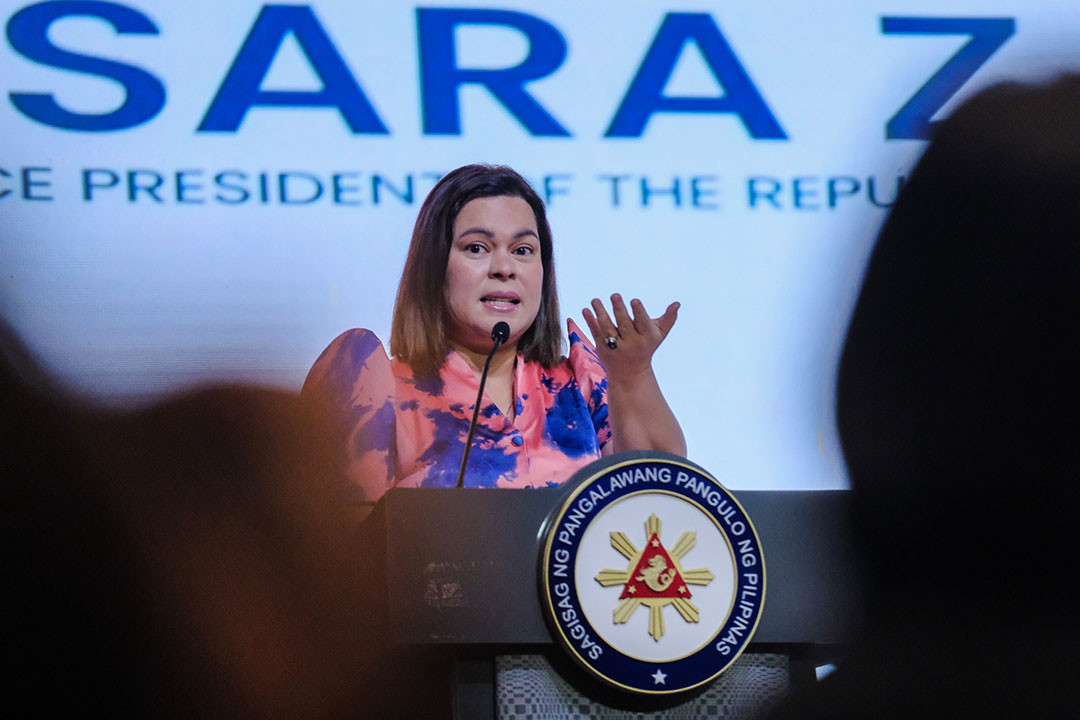
It’s “the second time around” that formal impeachment complaints filed against Sara Duterte, the vice-president of the Philippines, were validated by the House of Representatives. These then have to be endorsed to the Senate for the formal impeachment trial.
The first round of legislative efforts to try Ms. Duterte covered four impeachment complaints: three cases filed on Dec. 2, 4, and 5, 2024, and the last one on Feb. 5, 2025, in which 215 members of the House of Representatives signed an impeachment complaint (which was above the minimum 102 signatures or one third of the House body needed) to be brought up to the Senate for concurrence. However, the Senate did not convene until months later (because of the Congressional recess from February to June 2025 and the May 25 elections). This despite proponents of the impeachment case calling for the trial to begin immediately. On June 10, 2025, the Senate remanded the articles of impeachment back to the House of Representatives.
On July 25, 2025, the Supreme Court ruled that the impeachment complaint against the vice-president was unconstitutional, thus barring any attempt to file a case against Ms. Duterte until Feb. 6, 2026 (to observe the one-year bar rule). No trial in the Senate would proceed as it could not acquire jurisdiction. The Court, however, maintained that it was not absolving Ms. Duterte of the charges filed (“Supreme Court bars Sara impeachment, can be refiled next year,” Rappler, July 25, 2025).
After the year’s wait, four impeachment complaints were formally initiated and referred to the House Committee on Justice: on Feb. 2, 2026, two impeachment complaints, from the Makabayan bloc and from a group led by Tindig Pilipinas, Akbayan, and Mamamayang Liberal (ML) were filed against Ms. Duterte. The two complaints were verified and transmitted to House Speaker Bojie Dy on Feb. 5. A third impeachment complaint by religious leaders against Ms. Duterte was filed on Feb. 9. A fourth complaint was filed by lawyer Nathaniel Cabrera on Feb. 18 and was transmitted to Mr. Dy’s office the following day.
The House Committee on Justice, chaired by Batangas Rep. Gerville Luistro, voted unanimously (53-0) on April 29 to finding probable cause to impeach Ms. Duterte. The complaints, including those filed by Mr. Cabrera and the group led by priests and lawyers, were consolidated into a single set of Articles of Impeachment. After receiving subpoenaed reports from the Anti-Money Laundering Council (AMLC), the Commission on Audit (CoA), the Securities and Exchange Commission (SEC), the Bureau of Internal Revenue (BIR), and hearing the testimony of former Senator Antonio Trillanes, the lawmakers found probable cause, citing allegations of misuse of confidential funds, unexplained wealth, and threats against President Ferdinand Marcos, Jr., First Lady Liza Araneta Marcos, and former House Speaker Martin Romualdez.
The Committee Report and the attached resolution setting forth the Articles of Impeachment against the Vice-President were unanimously approved (55-0) on May 6 by the House Committee on Justice. The consolidated articles are scheduled for a plenary vote on May 11 (today!) where a one-third vote of the House would transmit the case to the Senate for trial.
Can the House of Representatives match or come close to the 215 signatories it gathered when it impeached Vice-President Sara Duterte the first time last year? Bicol Saro Rep. Terry Ridon, a member of the committee, said: “a vote for impeachment by 215 lawmakers is attainable ‘at the very best.’ The projected number is 109 votes, more than the one-third of the chamber required for impeachment, or 106 of the 318 House members. So [this] 106 is all but certain, it’s just a question of how many more votes we will get.” (inquirer.net, May 6)
The newspaper article that included the interview of Ridon interjected that “While a source claimed the report already has the support of 200 lawmakers, another source who works closely with the congressmen disputed that information, saying much work is still needed to secure 200 votes. What is clear so far is that 55 lawmakers will support Duterte’s impeachment.”
Senator Imee Marcos is already anticipating the transmission of the articles of impeachment from the House of Representatives to the Senate. “I think 106 votes (needed in the Lower House for transmittal) is easy to get. So, we were expecting it, we were planning it…” (inquirer.net, May 4).
Should the impeachment case reach the Senate, Senate Minority Leader Alan Peter Cayetano vowed: “We’ll follow all the rules and procedures. We are all guided because there are many lawyers in the minority, so whatever is right, whatever the Constitution, whatever the law, that’s what we will follow.” (Ibid.)
“Following the rules,” the majority of senators (19) voted to archive the first impeachment complaint against Vice-President Sara Duterte. Four senators (the opposition) voted “No” (not to archive) and there was one abstention (Rappler, Aug. 7, 2025). What will the voting be like in the Senate when the second try to impeach Ms. Duterte comes up?
“Mahihirapang i-convict si VP Sara sa senado (It will be hard to convict VP Sara in the Senate),” said Ateneo de Manila Political Scientist Arjan Aguirre in an interview on Morning Matters at TV5 on April 30. According to the professor, “it is likely that 11 to 12 senators will vote to acquit VP Sara Duterte at her impeachment trial. At least 16 votes are needed to remove her from the position. Right now, that number is difficult to get, because the VP is still very popular for the coming 2028 elections (translated from Pilipino).” Last February, Ms. Duterte declared her intent to run for president in the 2028 elections amid the fresh impeachment complaints filed against her.
In an interview with dzBB radio, Senate President Tito Sotto said the Senate, sitting as an impeachment court, will need a “reasonable time” before they can start with the trial proper.
“We must convene (not yet starting trial) once we receive the Articles of Impeachment. Once the Articles of Impeachment are transmitted to the Senate, we will report the receipt of the complaints in plenary, forward these to the Bills and Index Service, and then refer them to the Committee on Rules,” Mr. Sotto said (Malaya.com.ph, May 5).
After the necessary proceedings are completed, he said he will then convene the impeachment court, during which senators will then take their oaths as impeachment court judges. Once the impeachment court is convened, a copy of the Articles of Impeachment will be furnished to the Vice-President, who will be given a non-extendible 10 working days to submit her comment or counter-affidavit. The House prosecution panel will then be furnished with a copy of Duterte’s response and will have five working days to submit their comment (Ibid.).
“During the pre-trial period, there will be a marking of the evidence and determination of witnesses, among others, so we can expedite the case and manage the court. To my estimate, the trial proper can start by the middle of June or at least, last week of June if the pre-trial goes smoothly,” Mr. Sotto said. He said the Vice-President is not obliged to physically attend the trial, but it would be best for her if she does.
Mr. Sotto said the Senate “will be ready for anything” once the impeachment articles are transmitted to the upper chamber.
“We will be ready for any eventuality. I’m speaking for most of the members of the Senate,” he said, as he dismissed notions that senators still need to vote on the issue of convening the impeachment court.
“We must follow the Constitution, which is to convene once we receive the Articles of Impeachment,” Mr. Sotto repeated. “That is part of our work, that is part of our job. Based on the Constitution, it should be automatic. So, whatever others are thinking, we’ll just have to wait,” he said.
And the Filipino people will still be waiting for Truth and Justice.
Amelia H. C. Ylagan is a doctor of Business Administration from the University of the Philippines.