Is your wardrobe predicting an AI bubble?

By Andrea Felsted
IT’S NOT JUST Michael Burry comparing AI to the dot-com bubble, or dystopian reports that the tech could trigger massive unemployment, or even Berkshire Hathaway Inc. hoarding record cash: Fashion, too, is signaling economic danger.
After ruling sartorially for the past few years, the 1990s are finally giving way to another nostalgia trip: the 1980s. For retailers, the shift is necessary and much appreciated. Fresh looks help to drive purchases: Think the post-pandemic transition from skinny to wide-legged jeans. But for the broader economy the adjustment may be less welcome. The 1980s, from which the latest styles take inspiration, was a period of excess, unleashing the animal spirits that led up to the 1987 stock market crash.
In some ways, the aesthetic oscillation is inevitable. Fashion typically rebels against the prevailing norm, and the ’90s vibe has been turbocharged by everything from Beyoncé’s 2022 Renaissance, which borrowed heavily from house music, to Oasis’ reunion tour last year, which sent sales of bucket hats soaring.
Just when the decade was due to fade away, along came the TV series Love Story: John F. Kennedy Jr. & Carolyn Bessette. But it turns out Bessette’s sleek ’90s minimalism was a finale, not a renewal.
In December, US Pinterest searches for “’80s” convincingly overtook “’90s” and have remained elevated since, despite Love Story’s popularity. The platform identified “Glamoratti” as a key trend for 2026 after a surge in search terms including ’80s luxury, gold cuff, and chunky belt.
Saint Laurent has led the revival, with Creative Director Anthony Vaccarello sending tailored suits with exaggerated shoulders and pencil skirts in clashing jewel tones down the runway for the past few seasons. This is resonating. The Kering SA-owned house took the number one slot on shopping platform Lyst’s quarterly ranking of fashion’s hottest brands in the second half of last year.
Dario Vitale’s first and only collection for Versace, now owned by Prada SpA, and the accompanying campaign image of a pile of people wearing primary colors — a reference to early ’80s ads from the house — have continued the theme. Even Alessandro Michele, who put the ’70s on the map at Kering’s Gucci, has incorporated elements from the decade, such as polka dots, satin dresses, and pumps, into his most recent collections for Valentino.
Such styles have begun to filter through to main street, according to research company EDITED. Garments with sculpted shoulders are leading the way. The number of padded-shoulder tops appearing on retailers’ websites in the US and UK this year is up 188% from 2025.
Stores are also stocking stirrup leggings, shown on the runway by Cie Financiere Richemont SA’s Chloé, as well as garments with funnel necks, peplums, and ruffles. Color palettes are reflecting the period too, with purple, cobalt, tomato red, and orange burning bright, according to EDITED.
The “greed is good” era’s renaissance isn’t confined to womenswear. Menswear is experiencing a return to ’80s tailoring, reflecting the broader revival of formal dressing, which Helen Brocklebank, chief executive officer of British luxury association Walpole, says is helping lift Savile Row’s bespoke orders. The mass market is following: EDITED found that the number of double-breasted blazers appearing on US and UK retailers’ websites in the final quarter of 2025 rose 28% year on year.
Miami Vice-style suiting is also en vogue, with searches for Vintage Armani on resale platform Depop up 50% over the past month. Armani itself is capitalizing by reissuing a series of pieces from 1979 to 1994. Retailers are also seeing high demand for knitted polo shirts and suede loafers.
The return of ’80s maximalism is a response to the old money aesthetic that has prevailed for the past three years. It’s notable that lace and bold colors build on some of the cracks in quiet luxury, such as the Mob Wife micro trend (exemplified by red lips and huge fur coats), that briefly burned bright on social media in early 2024.
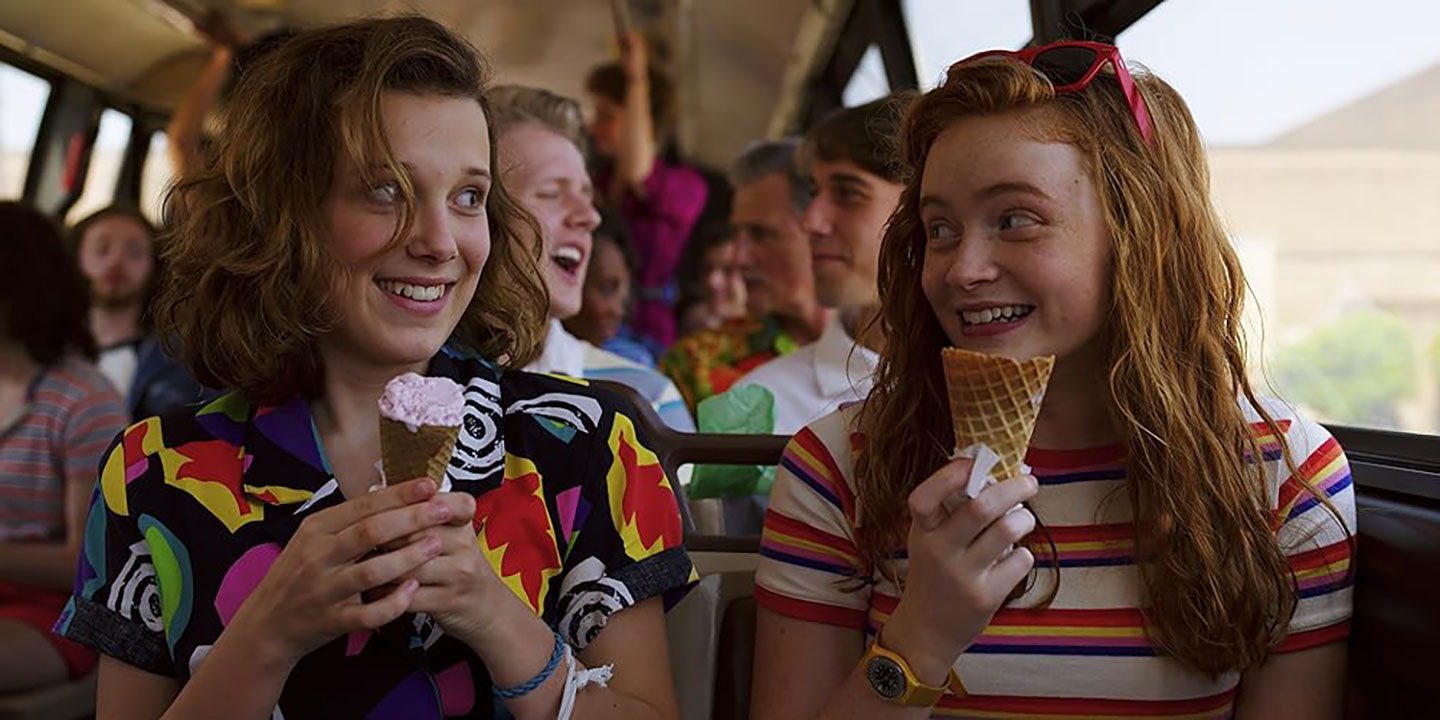
Pop culture is playing a part, too. Stranger Things, one of the earliest phenomena to put the era back on the popular radar, may have come to an end, but not before sending Depop searches for ’80s inspiration up more than 800% when the final season aired in late 2025. The TV adaptation of Jilly Cooper’s 1988 novel Rivals returns next month, promising more big hair and bubble-hem dresses.
Perhaps the decade of decadence has come to prominence because it dovetails with aspects of today’s politics and economics.
US President Donald Trump, whose worldview is rooted in the ’80s, embraces money and power — as well as sharp-shouldered suits. MAGA women have their own particular uniform, not too far from the era’s over-the-top glamor.
My colleague Kathryn Anne Edwards has argued that the current economy resembles the one leading up the global financial crisis in 2007 and 2008. And with the stock market at record levels, there are also parallels with the exuberance of the mid-’80s that preceded the 1987 crash, the peak of the Savings and Loan Crisis and, as the decade turned, recession.
Given the number of ’80s references for men and women at recent fashion shows, it’s a fair bet that power dressing will only get bigger. Looking ahead, Vitale’s successor at Versace, Pieter Mulier, will unveil his first collection early next year. The ’80s were a golden time for the brand, so that too could give the trend lace-covered legs.
That should provide retailers with plenty of time to buy into the glitzy look — and investors to ponder the potentially less glamorous implications for their portfolios. — Bloomberg Opinion