Record lows sweep Asian currencies as oil spike revives risks

A renewed rise in oil prices past $120 a barrel is intensifying pressure on some of Asia’s most fragile currencies, with several trading back at all-time lows.
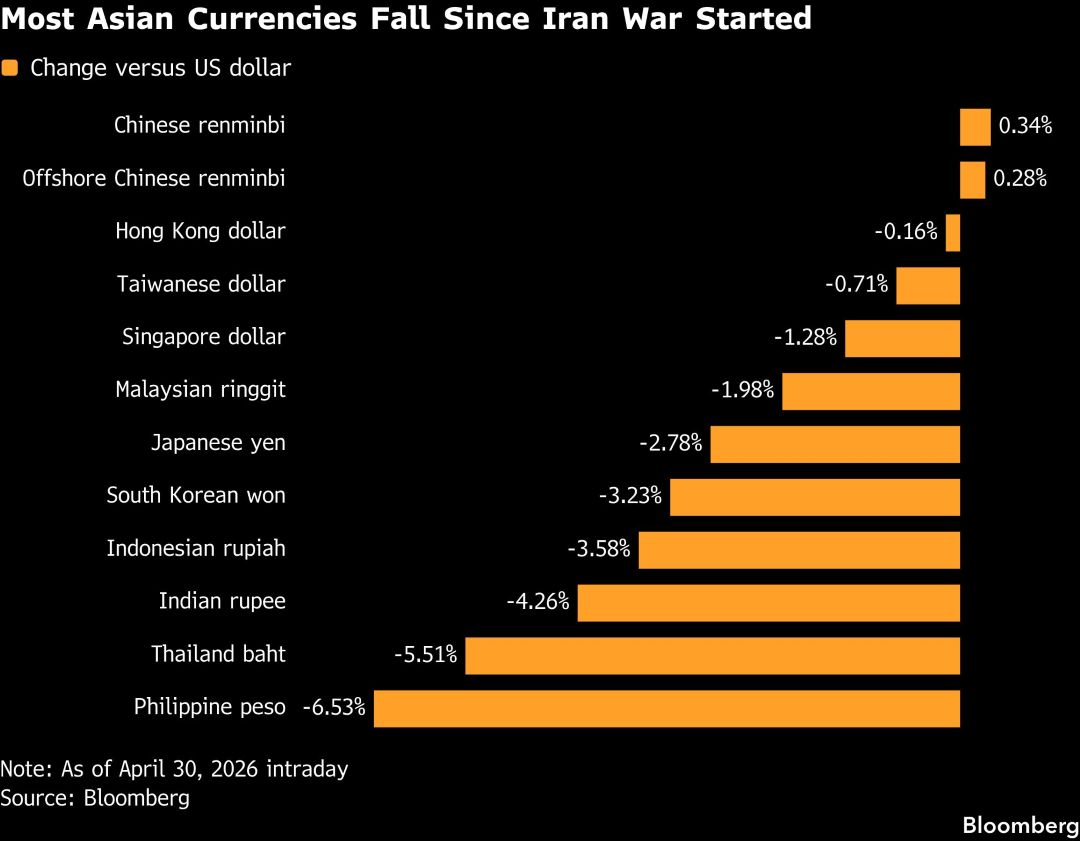
The Indonesian rupiah, Philippine peso and Indian rupee have all tumbled since the start of the war two months ago to rank among the region’s worst performers. The rupiah and rupee slid more than 0.3% against the dollar to lows on Thursday, while the peso traded within half a percentage point of similar levels.
The selloff reflects the three economies’ heavy reliance on imported oil, which has left their currencies highly exposed to the energy supply shock. As costs climb, investors are growing wary about fuel-driven inflation and widening external and fiscal deficits, factors that risk complicating central banks’ efforts to keep the economy afloat while containing prices.
“Central banks are likely to recalibrate the magnitude of currency intervention to preserve foreign exchange reserves,” said Wee Khoon Chong, a strategist at BNY, adding that the high oil prices are a key consideration into how aggressively to step into markets.
The weakness followed the Federal Reserve’s decision on Wednesday to keep interest rates unchanged, a move that some analysts say would heighten pressure on emerging-market currencies as investors increasingly price in rate cuts being pushed further out, boosting the dollar.
Adding to the strain was Brent crude hovering at the highest level in nearly four years after the US stepped up pressure on Iran and media reports that President Donald Trump would not lift a naval blockade of Iran’s ports without a nuclear agreement with Tehran.
Central banks have already tried to contain the fallout. The Reserve Bank of India, for example, has rolled out a series of measures — including opening a dedicated dollar-swap window for oil refiners and barring banks from offering the most widely used offshore rupee trading instrument — to curb speculation and support the currency. Those measures are on top of the central bank’s increased intervention efforts.
Indonesia’s central bank has said it is ready to do more to stabilize the rupiah and vowed to keep intensifying both offshore and onshore intervention. It also tightened rules on dollar buying to stem outflows.
Meanwhile, the Philippine central bank has signaled that it’s willing to deliver a series of modest interest-rate increases to rein in inflation.
Still, analysts say the efforts appear to be limited without a better sense that the war in Iran is nearing an end. “More credible signs of de-escalation are needed to ease depreciation pressures,” Lloyd Chan, strategist at MUFG Bank, wrote in a Thursday note.
The pressure is appearing beyond emerging markets. Market participants also expect Japanese officials to step into the market to offer support for the yen as it slid beyond 160 per dollar, its weakest level this year. — Bloomberg