
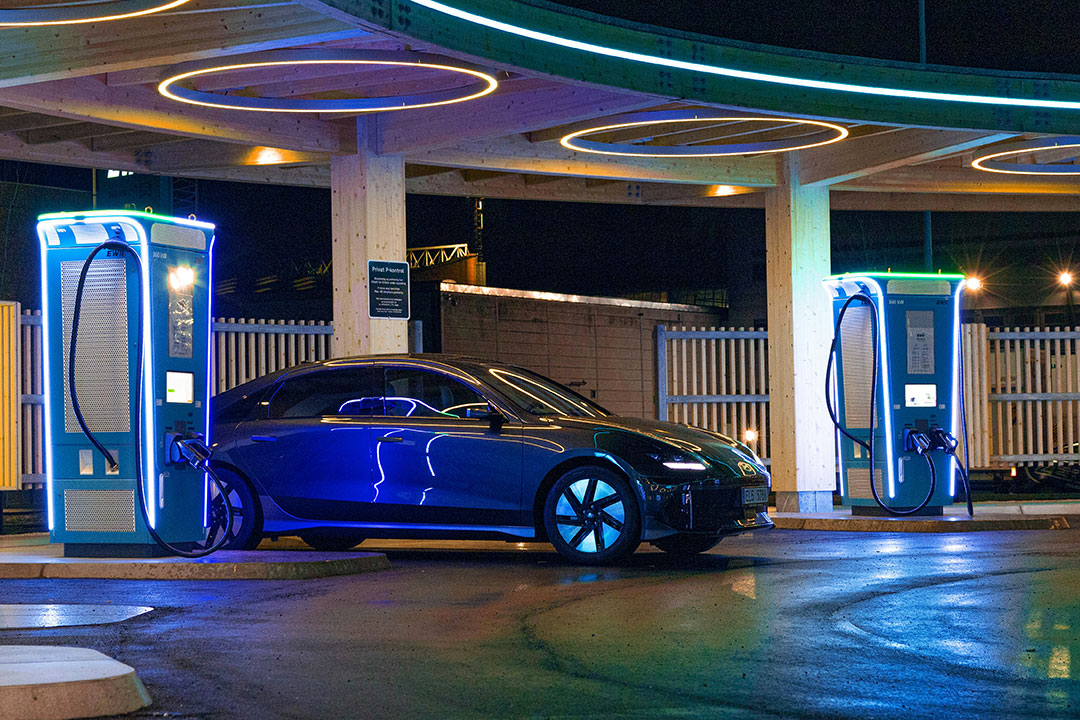
The market is now moving towards EVs faster than anyone predicted, driven not by environmental conviction but by a national emergency caused by the surge in prices of gasoline, diesel, kerosene, and other fuel. Given present EV sales number, no one can deny that the transition is real.
But there is a problem hiding inside it, one that the government has not addressed and most drivers will not discover until they are standing at a charging station wondering why the savings are smaller than they expected. And it has to do with tax.
Existing government policy allows you to buy an EV without paying excise tax on the vehicle. You even enjoy number-coding exemption for a time. The incentive is real. But it stops at the showroom door. Because once that EV is on the road and needs power, the policy quietly reverses course.
The Department of Energy’s unbundled fee structure for EV charging as of March 31 puts AC charging at P24.03 per kilowatt hour (kWh), DC charging at P30.15 per kWh, and battery swapping service at P53.46 per kWh. A simple average of those rates is P35.88 per kWh, with taxes accounting for about 11.4% of the total fee. That blended charging rate already includes the electricity fee, service fee, maintenance fee, administrative fee, and taxes.
Available data online puts EV consumption at roughly 18 kWh per 100 kilometers. At Meralco’s April 2026 residential electricity rate of P14.3496 per kWh, that works out to about P2.58 per kilometer. That is, if you charge only at home every time. Also, you still pay a tax on the electricity used.
But if you charge outside, at the blended public-charging average of P35.88 per kWh, the cost rises to about P6.46 per kilometer. In contrast, a gasoline car consuming 10 liters per 100 kilometers at P100 per liter costs about P10 per kilometer. And yes, tax is paid on the electricity used.
Either way, the EV still wins decisively on energy cost. But note that with home charging, the EV running cost is only about a quarter as much per kilometer as the gasoline car. But even at the blended public-charging average, it still costs materially less.
And this is why the tax question matters. The issue is not that EVs have ceased to be cheaper to run. They are cheaper, often by a wide margin. The issue is that a meaningful portion of that efficiency advantage is quietly clawed back by a charging tax structure that was not designed for electric mobility. The more an EV owner depends on public charging rather than home charging, the more that advantage narrows.
The driver saves on energy, but then gives back part of that saving through a tax burden at the plug that no one ever clearly justified and no one appears to have calibrated to the country’s own EV transition goals. What we have is a tax on electricity that applies whether the power is consumed at home, at work, or for mobility. But mobility has now become a national transition objective, and the pricing structure has not adjusted to reflect that.
One common metric puts gasoline at about 8.9 kWh of energy per liter, while an internal combustion engine converts only about 30% of that into motion. An EV, on the other hand, converts roughly 85%. So, to travel the same distance as one liter of gasoline, an EV needs approximately 3.35 kWh of electricity.
At an effective tax component of about P4.09 per kWh under the blended public-charging average, the government collects roughly P13 to P14 in taxes for every liter-equivalent of electric driving. In comparison, gasoline has an excise tax of P10 per liter, plus 12% VAT on the pump price.
While EV “fuel” still carries a lower total tax burden than gasoline once gasoline VAT is counted, the fact remains that the driver who switched to an EV expecting to leave the fuel-tax burden behind has not done so. Even if the EV is charged at home, there is still a tax paid on the home electricity rate.
The electric vehicle industry development law tax exempts EVs at the point of purchase, but the running cost still carries a tax load. That load was not deliberately designed, publicly debated, or calibrated to the government’s own EV strategy. It simply emerged from an electricity pricing system built for another purpose. And that is the part that now deserves review.
As things are, the tax on diesel and gasoline, etc. is already controversial. So, why should it be any different for tax on EV “fuel,” which is electricity? If diesel and gasoline users are to get tax relief, shouldn’t it be the same for EV users? Why discriminate on the basis of “fuel” type? And why tax even electricity used at home?
We are debating tax relief for gasoline and diesel because the burden on motorists is too high, while saying almost nothing about the fact that electric mobility already carries a significant running-cost tax burden that no one deliberately set. The government is debating relief for the past while passively benefiting from a windfall from the future?
This is the question that needs to be asked before the transition goes any further: should the shift from gasoline to electricity become a tax windfall for the Treasury? Because that is what the current structure is starting to produce. On the other hand, the transition will also result in lost fuel revenues. And the government surely feels we need to make up for that one way or the other.
Every driver who switches to an EV believing he is escaping the tax logic of fossil fuel dependence will soon discover that he is not escaping it at all. He is merely encountering a different version of it, embedded in the charging bill. That is not what EV industry development law promised.
We shouldn’t wait until after the national fleet has shifted to EV to change the charging tax structure. The longer we wait, the more entrenched the windfall becomes, the more dependent the budget grows on it, and the harder the correction gets. The time to remove the tax on electricity and electric mobility is now.
The tax on charging EVs is an unintended penalty. We are taxing the behavior we want to encourage, transition to EV, and debating tax relief for the behavior we want to phase out — the dependence on imported and expensive and pollutive diesel and gasoline. A transition contradiction?
I believe that for the economy as a whole, electrification still makes more sense. An EV converts energy to motion far more efficiently than an internal combustion vehicle, and electricity can increasingly be produced from domestic sources. Geothermal, hydro, solar, and other future capacity can generate motion without every kilometer requiring imported fuel.
Every kilometer shifted from gasoline or diesel to domestic electricity reduces exposure to oil shocks, eases pressure on the current account, and weakens one more channel through which global energy prices hit the peso, inflation, and the national budget.
The economy-wide case for electrification is strong and will only get stronger as the grid diversifies. That is exactly why the charging tax question matters. We should not dilute one of electrification’s biggest national advantages through an uncalibrated electricity pricing structure inherited from a different era.
The charging tax structure is not just a problem for the driver at the mall charger. It is a systemic issue for every transport operator that draws from the grid, and we are about to have a lot more of them. Imagine if more bus and jeepney fleets transition to EVs.
Electric railways also pay for the electricity that runs their trains. If the same tax that now burdens EV drivers at public charging stations is reflected in the electricity bills of rail operators, then they face higher operating costs than they otherwise should. Those costs will show up in higher fares, or in subsidies, or in the decision to run fewer trains during off-peak hours to manage the bill.
There should be tax relief at the plug. Better yet, tax only the negative externalities of fossil fuel use. The effective tax burden on electric driving should be deliberately removed and brought into line with the government’s own EV transition objectives.
Marvin Tort is a former managing editor of BusinessWorld, and a former chairman of the Philippine Press Council.