






Abortion and the best Pride Month ever
By Jemy Gatdula
It started June 23, with the US Supreme Court upholding the right to “keep and bear arms,” as provided for in the US Constitution’s 2nd Amendment.

Food recycling
By Marvin Tort
People are now struggling with higher prices for fuel and food. Couple this with long-term issues in agriculture, which ultimately impact food supply. Even food imports have been disrupted, by rising transportation costs as well as the trouble in Ukraine — a major exporter of wheat and other food products. And, instead of saving resources, many people still end up wasting food.
Asia-Pacific countries should tackle unprecedented education crisis
By Ville Skinnari and Woochong Um
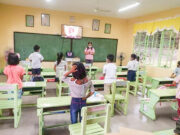
OVER TWO YEARS since the start of the pandemic, the global learning crisis has expanded to become an unprecedented crisis threatening education budgets, increasing learning poverty, widening inequality, and undermining sustainable development.

Faulty planning and failed transportation systems
By Philip Ella Juico
Observers of the transport sector have repeatedly opined that “we are aware of the issues hounding the sector.” They add that practitioners and scholars have identified the challenges that confront the transport sector and are therefore not too interested in another discussion of these same issues. They are, however, interested in specifics. They claim there is no shortage of opinions on the issues but there is a shortage of facts.

Seeking attention
By Tony Samson
IT SEEMS that social media has been changing the rules not just on how news and information is delivered but also on how ratings are measured. It’s no longer circulation or audience rating that determines popularity.
Guidebook for the next administration
By Bernardo M. Villegas
Chapter 3 of the book is a record of what happened to the Philippine economy during the pandemic, hopefully recording for posterity this very tragic period in the history of the whole world when more than 6 million people perished from the virus.
China has yet to learn the rules of the Pacific chess game
By David Fickling
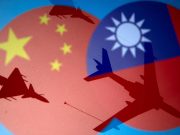
CHINA’s growing influence in the microstates of the Pacific Ocean has raised alarm among the powers that traditionally dominated the region — Australia, New Zealand, and the US. If they want to halt Beijing’s advance, they’re going to have to start offering more in return.

A developmental outlook
By Victor Andres C. Manhit
The national and international crises caused by the coronavirus disease 2019 (COVID-19) pandemic, the Russia-Ukraine war, the economic slowdown in China, and the threat of economic recession should not be perceived as defining downturns in the second decade of the 21st century.

The lords of Philippine basketball are troubled
By Oscar P. Lagman, Jr.
Philippine Basketball Association (PBA) Commissioner Wilfrido “Willie” O. Marcial will soon meet with Shinji Semada, chairman of Japan’s B.League, and Kim Hee-ok, commissioner of the Korean Basketball League (KBL) to discuss, among other things, the recruitment of Filipino basketball players by the two foreign basketball associations.

May Congress delimit through legislation the constitutional coverage of ‘public utilities’
By Cesar L. Villanueva
In its Article XII on National Economy and Patrimony, the 1987 Constitution provides in no uncertain terms that “No franchise, certificate, or any other form of authorization for the operation of a public utility shall be granted except to citizens of the Philippines or to corporations or associations organized under the laws of the Philippines at least sixty per centum of whose capital is owned by such citizens nor shall such franchise, certificate, or authorization be exclusive in character or for a longer period than fifty years.” (Sec. 11, Art. XII, 1987 Constitution).

The Bulacan Ecozone veto and Ben Diokno books
By Bienvenido S. Oplas, Jr.
A number of important policies and events caught my attention last week. I will discuss three of them.

Reflections of domestic tourists
By Jenelyn Legaspi and Jose Luis Legaspi
White sand, blue skies, and waves … and people housed in rectangular boxes in a meeting. The beach became the default background in Zoom meetings and the closest we had to the real thing as we immersed ourselves online, trying to live our lives in the new normal.