BPI Q1 profit climbs to P16.9B
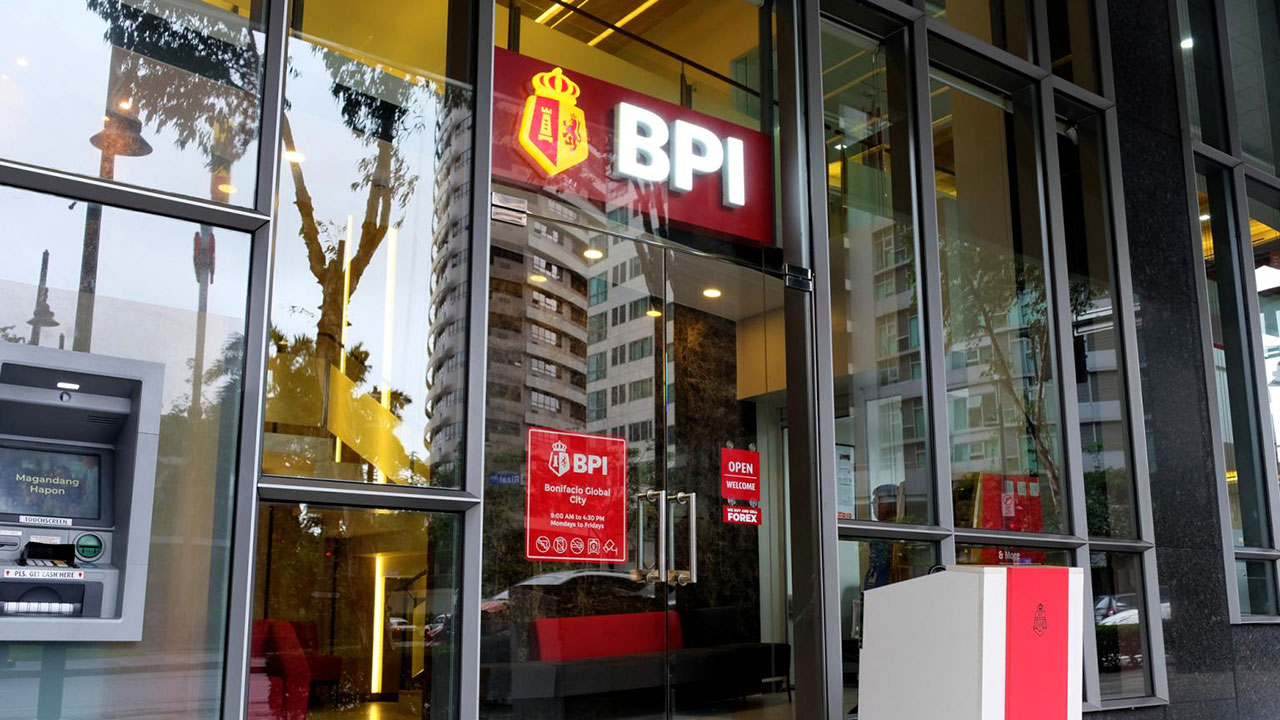
BANK of the Philippine Islands’ (BPI) net profit rose 1.7% in the first quarter, backed by continued growth in its loan portfolio and strong fee-based earnings.
The bank’s net income climbed to P16.9 billion last quarter from P16.6 billion in the same period last year, it said in a disclosure to the stock exchange on Monday.
This translated to a return on equity of 14.3% and return on assets of 1.9%.
BPI President and Chief Executive Officer Jose Teodoro K. Limcaoco told reporters on the sidelines of their annual stockholders’ meeting on Monday that the slower profit growth came as it continues to expand its consumer lending business.
“Our pre-provisioning operating profit is growing by 12.5%… But our revenue growth is very strong, our operating expenses are manageable, and we are making investments in the right fields.”
Revenues went up 13.9% year on year to P50.9 billion in the period.
This came as net interest income rose by 13.7%, supported by a 11.9% increase in its average earning asset base. Its net interest margin also widened by seven basis points (bps) to 4.57%.
BPI’s non-interest income likewise increased by 13.5% to P11.8 billion in the quarter on higher credit card fees, foreign exchange and trading income gains, and stronger deal activity.
Meanwhile, operating expenses went up by 15.8% year on year to P23.5 billion in the first quarter, which it attributed to higher volume-related technology and manpower costs.
This resulted in a cost-to-income ratio of 46.2%.
The bank set aside loan loss provisions amounting to P5.5 billion in the first quarter.
“Total loans increased by 13.5% year-on-year to P2.6 trillion, with broad-based portfolio growth. Institutional loans rose by 8.9%, while non-institutional loans rose at a faster rate of 24.9%, led by Business Banking, up 96.3%, Credit Cards, up 33.3%, and Personal Loans, up 26.9%,” BPI said.
Its nonperforming loan (NPL) ratio was at 2.42% in the period, while its NPL coverage ratio was 87.15%.
On the funding side, total deposits grew by 10.4% year on year to P2.8 trillion.
This brought the loan-to-deposit ratio to 91.95%.
BPI’s assets grew by 13% year on year to P3.7 trillion at end-March.
Total equity was at P479.5 billion, up by 6.9% year on year.
The bank’s common equity Tier 1 ratio was at 13.94%, while its capital adequacy ratio stood at 14.8%, both well above regulatory requirements.
Mr. Limcaoco said the Middle East conflict has led them to become more cautious as they expect the economic fallout from the war to hit credit quality.
“What we know is that there’s a very strong correlation between the state of the economy and NPLs or loan quality. So, obviously, as the economy slows down, we expect NPLs to rise… So, we’ve taken a little proactive stance in the first quarter by provisioning a little more than what our expected credit loss models predict,” he said.
“But we do expect that NPLs will rise. And for us, because we’re more focused on the consumer book, you’ll see that rise a little more significantly than our peers who don’t. But our margins in the consumer book are also much wider.”
To mitigate asset quality risks, BPI is tightening its credit standards and ramping up collection efforts, he said.
Meanwhile, growing interest in electric vehicles and solar power amid the energy crisis could boost demand for BPI’s related financing products.
“We’ve also seen, even on the real estate side, people holding back on new purchases. But those who have enough, they see opportunities in looking at bargains, and therefore, we’ve seen the secondary market to be a strong source of demand for real estate,” BPI Head of Consumer Banking and Executive Vice-President Maria Cristina “Ginbee” L. Go said.
BPI shares went down by 60 centavos or 0.6% to close at P98.60 each on Monday. — Aaron Michael C. Sy