CICC calls for ‘harmonized’ anti-scam, financial protection laws
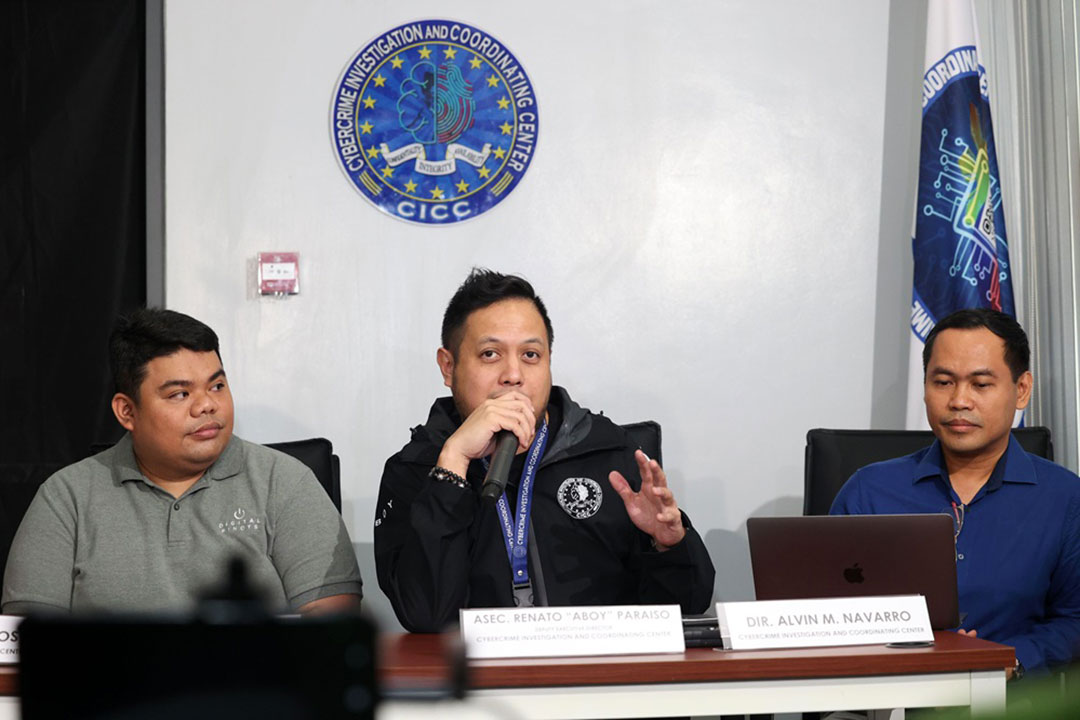
The Cybercrime Investigation and Coordinating Center (CICC) urged financial institutions and law enforcement authorities to have “full coordination” in implementing financial protection and anti-scam laws.
“We already have a set of powerful core laws… There’s always a need to harmonize that,” CICC Director Alvin M. Navarro said in a forum on Tuesday.
“One of the inadequacies of the ecosystem of laws is the lack of very effective enforcement and the cooperation of all stakeholders,” he added.
Among the current laws designed to combat and penalize financial cybercrimes, such as phishing, vishing, and money muling, is the Anti-Financial Account Scamming Act (AFASA) or Republic Act No. 12010.
Offenders under AFASA could face penalties ranging from P50,000 to P10,000,000.
“I think the AFASA is encouraging news,” Mr. Navarro told BusinessWorld in an interview. “If law enforcement wants to get the details of a financial account involved in scamming, they can go to the BSP CAPO (Bangko Sentral ng Pilipinas Consumer Account Protection Office).
“They don’t have to go through the courts to get the name, address, and relevant details of the financial account involved in the scam,” he added.
The Securities and Exchange Commission (SEC) noted that it is already revising its framework to better align with the existing laws implemented by other government agencies.
“We agree to that, and we will come up with our revised circular maybe next week for the public to cover,” SEC Counsel Joseph Bar Paulo V. Moises said during the forum.
However, Mr. Moises warned that harmonizing all consumer protection and anti-scam laws could impose a financial burden on the private sector.
“I think it will add more cost on certain industry players that do not have the capacity to immediately adapt to what the laws require,” he said.
“So on the SEC, we are currently balancing everything. We balance the comments of the stakeholders and the views of the regulators,” he added.
The Philippine National Police-Anti-Cybercrime Group (PNP-ACG) in March reported 67 individuals arrested for violating AFASA from January to February this year.
The nabbed individuals were involved in illegal sales and misuse of financial accounts, such as ATM cards, online banking profiles, and e-wallets, as well as other cybercrime activities. — Almira Louise S. Martinez