Peso still Asia’s ‘weakest link’ despite BSP policy tightening
By Katherine K. Chan, Reporter
THE PHILIPPINE PESO will likely remain the weakest Asian currency despite further monetary policy tightening by the central bank as the economy remains vulnerable to volatile global oil prices amid the ongoing Middle East war, analysts said.
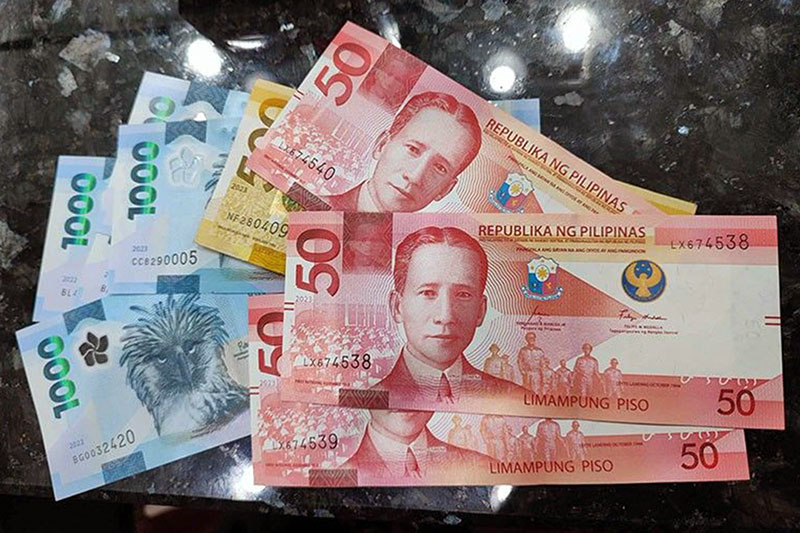
This as the peso on Tuesday closed at the record-low level of P61.75 versus the greenback, the same finish logged on Monday, Bankers Association of the Philippines data showed.
In a report published late on Monday, ING Think economists noted that the impact of oil price swings on the local unit could offset the expected support of additional policy rate hikes by the Bangko Sentral ng Pilipinas (BSP). (See related story)
“We continue to expect a frontloaded but measured tightening cycle, worth 75 bps (basis points) in 2026,” said ING Regional Head of Research for Asia Pacific Deepali Bhargava, Senior Economist for South Korea and Japan Min Joo Kang, and Chief Economist for Greater China Lynn Song.
“While this could provide some near-term support to the PHP (Philippine peso), the currency’s trajectory will remain closely tied to oil price dynamics,” they added.
A separate report from MUFG Bank, Ltd. on Tuesday showed that the peso suffered the sharpest depreciation among currencies in emerging markets in Asia since the Middle East war erupted on Feb. 28.
Based on the report penned by MUFG Senior Currency Analyst Michael Wan, the local unit declined by 6.6% against the dollar from Feb. 28 to May 18.
This was followed by the Indian rupee, which went down by 5.6%, Indonesian rupiah (5%), Thai baht (4.8%), South Korean won (4%), Malaysian ringgit (2.1%), Japanese yen (1.8%), Singapore dollar (1.1%), Vietnamese dong (1.1%), and Taiwan dollar (1%).
The peso has traded around the P60- to P61-a-dollar handle for about a month or since late April, even plunging to back-to-back historic lows versus the greenback.
This came even after markets anticipated some relief for the peso following the BSP’s move to lift the benchmark borrowing cost during its April 23 meeting.
The key interest rate now stands at 4.5% after the Monetary Board delivered its first 25-bp hike last month as it sought to temper second-round price effects and keep inflation expectations anchored amid rising risks from the energy crisis.
ING analysts said the BSP may deliver its second-straight hike at its June 18 review as inflation risks prove more urgent than growth concerns.
“The latest data points suggest inflation risks are now outweighing growth concerns,” they said. “In this context, we do not see the weak GDP (gross domestic product) print deterring Bangko Sentral ng Pilipinas from hiking in June.”
Inflation breached the central bank’s 2%-4% target and market projections for the second month in a row as soaring oil prices spilled over to other key commodities.
In April, high food and utility prices amid still elevated energy costs led the headline print to accelerate to an over three-year high of 7.2%.
On the other hand, the economy faltered in the first quarter, with growth easing to 2.8% from 3% in the previous quarter and 5.4% a year ago as oil shocks added to the lingering effects of last year’s flood control mess.
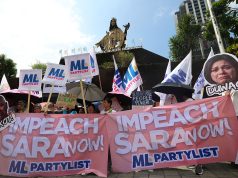
For ING analysts, however, the economy could remain under pressure amid growing political uncertainty surrounding Vice-President Sara Duterte-Carpio’s impeachment.
“Higher political uncertainty with the impeachment of the vice-president can further push out reforms and growth recovery,” Ms. Bhargava, Ms. Kang, and Mr. Song said.
Meanwhile, Metropolitan Bank and Trust Co. (Metrobank) also sees further BSP tightening as still elevated oil prices and uncertainties over Iran and the US’ peace talks are expected to stoke inflation in the coming months.
“Metrobank still sees elevated risk and volatility in the near term while a peace deal has not been struck,” it said in a note on Monday. “Oil prices are poised to stay high, as global supply remains constricted due to the war’s impact on Middle East oil facilities. Consequently, domestic inflation is expected to quicken in the coming months.”
However, it noted that increased demand for the US dollar will continue to drag the peso, with global dollar flows, not domestic factors, likely driving foreign exchange movements.
Still, the peso’s depreciation may be capped at P62 against the dollar, according to the bank.
“USD/PHP strategy remains range-bound with a slight USD-positive bias, as strong dollar fundamentals and steady corporate demand continue to support the pair, particularly on dips,” Metrobank said.
“However, the upside remains capped near the P61.75-P62.00 resistance zone due to strong supply and positioning. The pair is likely to remain driven by external USD flows rather than domestic catalysts, reinforcing a tactical trading approach,” it added.
On the other hand, ING said global oil prices potentially averaging around $100 per barrel in the quarter will continue to weigh on the country’s current account deficit.
The BSP earlier said the Philippines may see a wider current account gap of $20.3 billion or -4% of GDP this year as the Middle East war could strain the country’s external position.
In 2025, the country had a current account deficit of $16.291 billion or -3.3% of GDP.