Marcos raises concern over stagflation risk
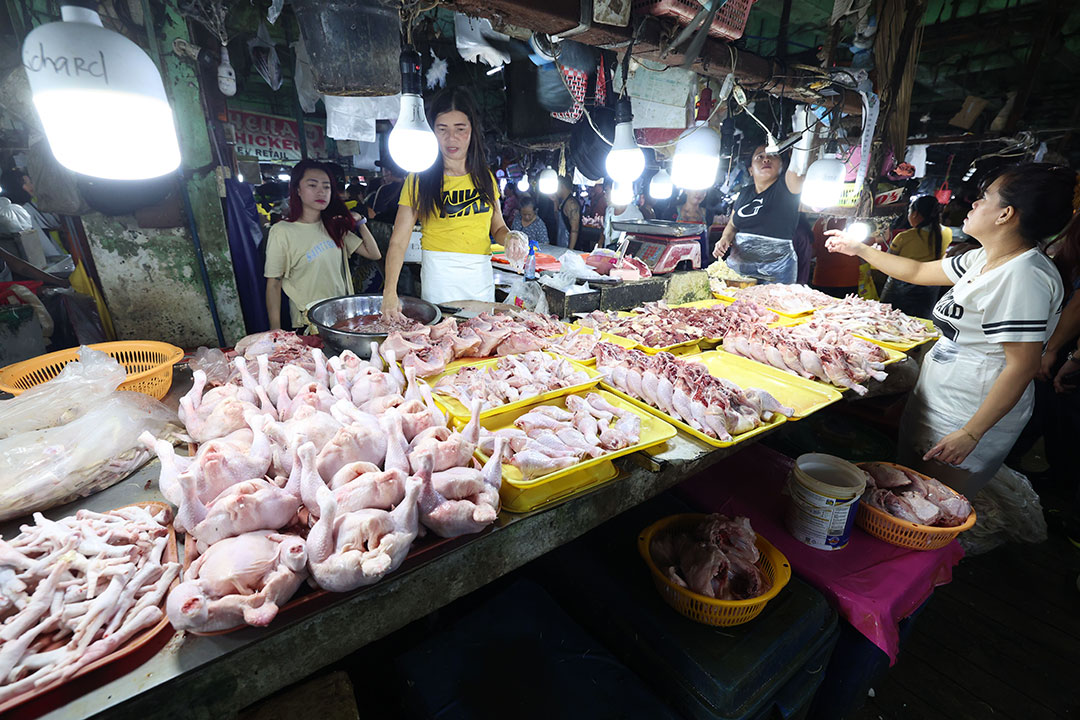
PRESIDENT Ferdinand R. Marcos, Jr. warned of a possible stagflation scenario, citing the threat of slowing economic growth alongside persistent inflation, while signaling that his government may tolerate higher prices for certain nonessential food items.
“We were able to keep food prices stable, but supplies are feeling the pinch,” Mr. Marcos said during a roundtable discussion with Japanese media in Malacañang on Monday. A video and transcript were provided to Palace reporters.
Mr. Marcos said some producers and suppliers had sought government permission to increase the prices of “non-critical” food products.
The Philippines, which relies heavily on imported fuel, has been hit hard by the ongoing Iran conflict. This has prompted the government to declare a year-long energy emergency amid threats to oil supply and rising inflation.
“To the economy, the concern that we have is the concern about stagflation… so this is what we have been trying to control,” Mr. Marcos said.
Stagflation refers to a period of weak economic growth combined with persistently high inflation.
Some analysts have earlier flagged stagflation risks after inflation quickened to a near three-year high of 7.2% in April from 4.1% in March due to soaring gas prices. This was the fastest headline print since the 7.6% seen in March 2023, and also well-above the central bank’s 5.6%-6.4% estimate for the month.
In the first quarter, gross domestic product (GDP) grew by 2.8%, slowing from the 5.4% expansion in the same quarter last year and the revised 3% GDP growth in the fourth quarter of 2025.
The President said the government will make efforts to slow down rising food costs. Last week, he imposed a P50 price cap on rice.
Mr. Marcos added that public spending has been accelerated to support growth, following earlier delays in budget execution this year.
“Public spending has been accelerated so that the GDP (gross domestic product) growth is still being assisted. We had a delay in public spending in the beginning of this year, basically in the first quarter,” he added, according to a separate statement from his office.
Mr. Marcos remains optimistic that public spending will fuel economic growth within the next quarter and next year.
“Luckily, I suppose, or at least we are still continuing to see marked interest in investment in the Philippines,” he said.
“Perhaps this is because of the policies that we adopted, the incentives that we have put out for investors. So, slowly, we can see the way through this, where we will recover through this.”
Mr. Marcos said spending is increasingly being directed toward “direct spending” to ensure that assistance is felt more immediately by households, including subsidies and transport-related fuel discounts.
He also said the government is seeking ways to encourage investment and support for micro, small and medium enterprises.
“Let us keep the economic machine running… Let us continue to invest,” he said. “We have a total economic mandate that, as much as possible, let us find that money wherever and in other places, such as in the government’s operating expenses.”
Meanwhile, the Philippines is already in a “stagflationary episode,” according to Leonardo A. Lanzona, Jr., an economics professor at the Ateneo de Manila University.
“For a high-growth economy like the Philippines, sub-4% GDP expansion already constitutes stagflationary conditions — the Philippines is experiencing a combination of slowing, very weak/stagnant GDP growth and high and rising inflation, placing the Bangko Sentral ng Pilipinas (BSP) in an unenviable position,” he said via Facebook Messenger.
Whether this stagflationary episode is sustained would depend on “whether the oil shock proves durable (high probability) and whether fiscal catch-up (in infrastructure) materializes (uncertain, given the Department of Public Works and Highways’ track record),” Mr. Lanzona said.
He noted that downgraded growth forecasts by several firms could put Philippine economic growth on track for its weakest performance in 18 years outside of the pandemic period.
“The Marcos signal on food price relief for nonessential items is almost certainly a political pressure valve, not a structural fix — and risks entrenching expectations that the government will accommodate rather than absorb the shock,” he said. — C.M.A. Hufana