Rethinking leadership and culture in a multigenerational workforce
By Jomarc Angelo M. Corpuz, Special Features and Content Writer
Work could, perhaps, be the second most important aspect of life for adult Filipinos, right after their families or their individual pursuits. After all, employees spend a large part of their day commuting to work, completing tasks, collaborating with colleagues, and navigating the rhythms of their workplaces.
Yet, not all employees experience work the same way. Key factors, including differences in age, background, and expectations, mean that today’s workforce is more diverse and even isolated from each other, more than ever. Understanding these varying needs, motivations, and perspectives is therefore needed for companies seeking to boost engagement, productivity, and instill a positive work culture.
Shedding light on how to deal with this diversity and other issues around the work environment was a key area in this year’s BusinessWorld Forecast 2026 forum.
Decoding generational dynamics in the workplace
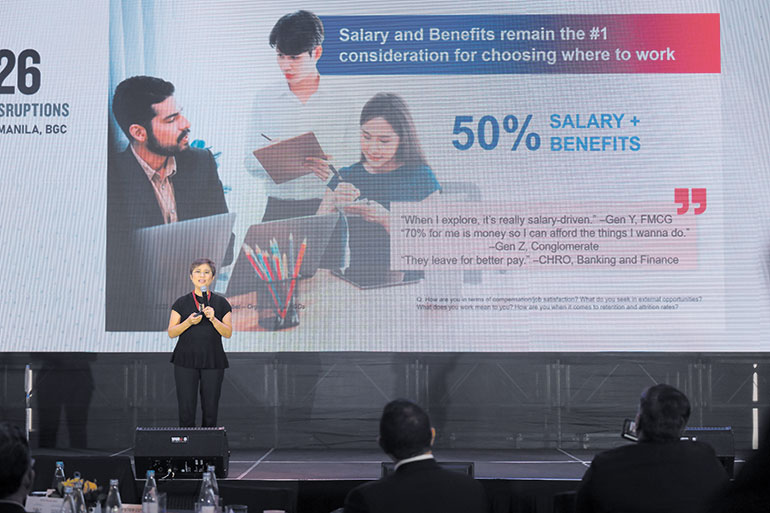
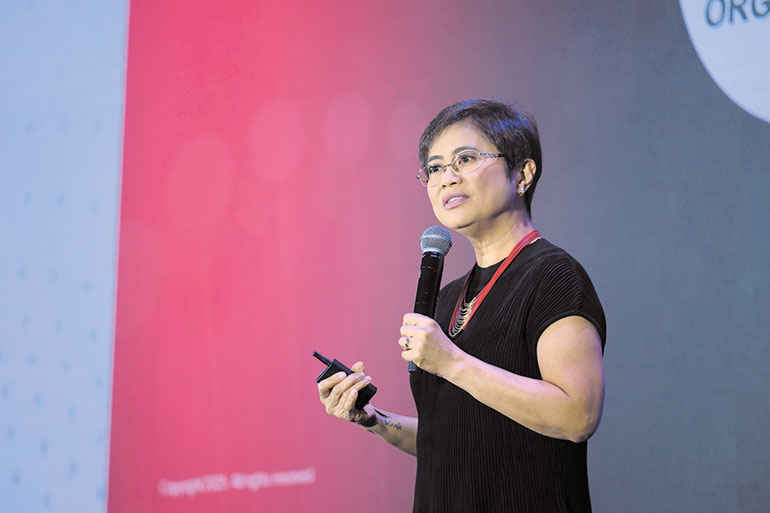
One of the forum’s highlights was a presentation that examined how generational differences shape work styles, expectations, and leadership approaches in Filipino organizations. Providing insights on this topic, Acumen Strategy Consultants President and Chief Executive Officer (CEO) Pauline Fermin gave a presentation surrounding the theme “Project Alphabet: Decoding Filipinos Across Generations” during the forum.
Project Alphabet is a study by Acumen that takes a critical look at the generational divide in the workplace, complete with in-depth interviews with employees from benchmark companies representing a variety of industries, local and multinational companies.
Citing the study, Ms. Fermin revealed that 75% of today’s Filipino workplace is composed of Gen Zs and Gen Ys, considered the digital generations, while 25% are Gen Xers and Boomers, who comprise the majority of the senior leadership.
She also mentioned that over 75% of business leaders viewed differences in management and leadership styles as a major issue in the company. But despite recognizing these challenges, many companies actually do not have plans yet in place to address this.
Ms. Fermin also distinguished the distinct values that generations in the workforce bring based on their upbringing. Boomers, she said, were raised in militaristic environments, prioritize independence, security, loyalty, and stability, serving as legacy keepers in the workplace. On the other hand, Gen X, shaped by structure and self-sufficiency, now leads with resilience and reliability. Millennials, raised during the digital boom, seek purposeful work, flexibility, and balance, acting as connectors across generations; while Gen Zs, the first true digital natives, value freedom, empathy, and innovation, preferring direct communication and healthy work cultures.
“To turn this generational diversity into an organizational strength, it is very important to recognize and leverage what each one uniquely brings to the organization. We Gen Xers and boomers should appreciate the fresh ideas and energy of the younger generations. Gen Ys and Zs must respect the wisdom and experience that Gen Xers and Boomers have accumulated over the years,” she said.
To remain competitive in a multigenerational workforce, Ms. Fermin shared five mandates organizations must act on. First, rewards must modernize. While salary remains the top factor for attraction and retention, expectations now vary widely. Younger employees prefer cash-based or experiential rewards, while older generations value more traditional forms of recognition.
“Rewards must evolve beyond fairness to become transparent, inclusive, and multi-modal. This means dismantling one-size-fits-all models and building systems that flex by generation, by lifestyle, and contribution while restoring trust in how pay and recognition are managed,” she explained.
She also mentioned that careers must be redesigned. Growth motivates all generations, but employees now pursue multiple pathways such as technical mastery, project leadership, mobility, or better balance. Ms. Fermin concludes that career models must shift from linear progression to fluid, life-stage-responsive options.
The presentation also highlights the possibility of reimagining work. Ms. Fermin said that retention hinges on balance, communication, and supportive environments. Tensions around hybrid work, communication styles, and skill disparities require adaptable structures and stronger cross-generational collaboration, especially as AI transforms roles.
“All generations say work-life balance is a priority; but balance does not mean the same thing for everyone, and the difference plays out most visibly in how work is structured,” she added.
Ms. Fermin also gave emphasis on strengthening the work culture. She mentioned that toxic workplace norms remain a leading cause of resignations. Aligning expectations around boundaries, commitment, and purpose is critical to fostering healthier, more cohesive environments, according to the Acumen president.
“We have two main tensions that drive the perception of toxicity at work. First, boundaries versus commitment. Boomers and Gen Xers expect long hours as proof of commitment, but the younger generation sets very clear boundaries as to when work starts and when it should end. The other concern revolves around the divide between prioritizing purpose, fulfilment, and personal values over traditional metrics and KPIs (key performance indicators) on productivity and compensation,” she said.
Finally, Ms. Fermin shared that leadership must be redefined. Employees expect leaders who are inclusive, communicative, and development-focused. Building generational fluency and investing in mentorship will allow organizations to convert generational diversity into long-term strategic advantage.
“We need new leadership approaches, inspire and empower young leaders to flex their unique leadership styles, invest in cross-generational leadership development, and build people management skills that balance empathy, confidence, and clarity,” she concluded.
Making the multigenerational workforce work
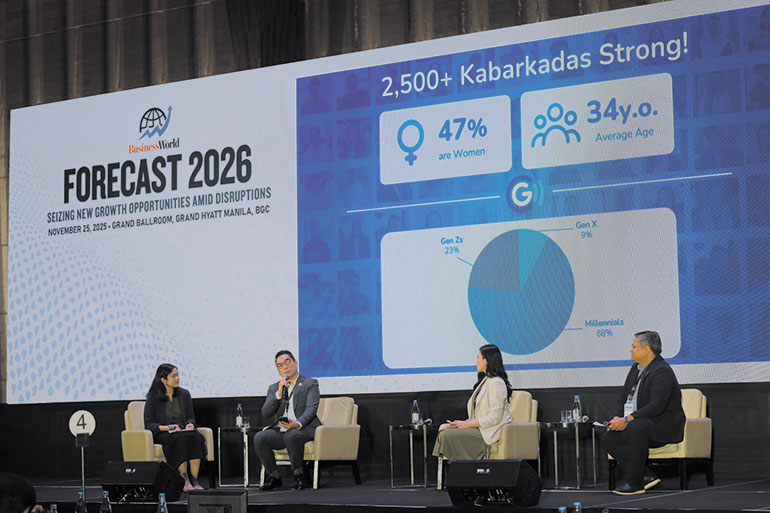
Building on insights from the Project Alphabet presentation, the forum then turned to a broader conversation about how organizations can practically apply these lessons to shape the future of work through the event’s third panel discussion.
Paneled by executives from telecommunications company Converge ICT Solutions, Inc., wellness platform Empath, and mobile finance services corporation Mynt, the conversation centered on the topic “The Future of Work: Managing a Multigenerational Workforce.” The discussion covered various themes, including understanding and bridging generational differences, the value of Gen Z in the workforce, technology adaptability, as well as feedback and communication.

Empath Founder and Chief Executive Officer Stephanie Angelica “Steph” S. Naval emphasized that managing a multigenerational workforce is about policies, technology, and fostering effective communication and mutual understanding between generations.
“I think it’s really both generations adjusting to how to communicate with each other. Does it come off as too straightforward, too casual, or understanding? And, maybe, there should also be an element of a boundary — that’s your boss or your head, rather than your high school friend. It’s really educating each other. And, I think, the first thing you can think of [educating yourself with is] good communication styles,” she said.
Building on the importance of communication, Converge ICT Solutions Vice-President and Head of Strategic Business Partnering Enrique Antonio Reyes highlighted the broader challenge of leading multiple generations in today’s workplace, framing generational diversity as both an opportunity and a management test.
“I wanted to make a point that this is a unique point in critical management history, where we’re faced with several generations at a time — from three to four, maybe even up to five. Now, given that, in recent times we have embraced diversity as a strength, as a source of competitive advantage. But, of course, it will always have its challenges,” he added.
Ms. Naval added that despite the challenges of managing multiple generations, business leaders and companies have a unique opportunity to create workplaces that uplift and empower Filipinos.

“This can go either way, but business leaders, HR (human resources) experts, and companies are in a very good position to really ensure that it uplifts Filipinos, empowers them, and guides them toward a more empowered future,” she explained.
Mr. Reyes added that beyond communication and leadership, fostering mutual learning between generations through mentoring and reverse-mentoring is key to making multigenerational workplaces thrive.
“We also take on things that we give to the younger ones and vice-versa. Learning from each other is important — the tenured ones mentoring the younger ones, and the younger ones reverse-mentoring the tenured ones,” he said.
In addition, Ms. Naval of Empath noted that this mutual learning goes both ways, as younger employees such as Gen Z bring technological skills, adaptability, and fresh perspectives that can become valuable assets for companies.
“Despite the pains that I know business owners might feel when Gen Zs are in the workplace, I think there’s really a lot that [Gen Zs] can offer. Part of it is a competitive advantage when it comes to technology. We are also fast if guided properly and well. We could also be a really good asset for companies that want to be competitive, whether it comes with innovation and change from AI, we’re most open to learning,” she said.
Furthermore, Mr. Reyes mentions that when the experience of tenured employees is combined with the energy, adaptability, and innovative mindset of younger workers, companies can achieve faster execution and more effective outcomes.
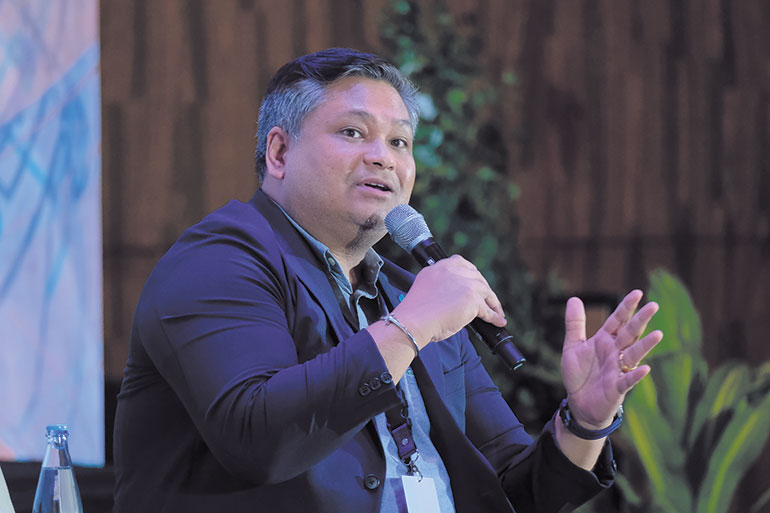
“We have the pattern recognition of the tenured people, and then the new information and new context brought by the younger ones. Apart from innovation — because the younger ones are more into testing — there is also faster execution. The focus of the tenured generation, combined with the energy and quickness of the younger generation, results in faster execution,” he maintained.
Mr. Reyes also explained that alongside leveraging generational strengths for faster execution, careful task allocation and clear communication are essential to ensure workers across generations contribute effectively.
“One observation I see when different generations work on a project is task ownership. Usually, the more labor-intensive tasks are given to the younger generation. If you’re a leader, task distribution is important. It’s important to talk to different individuals and ensure that we share the same ways of working,” he said.
As the discussion shifted from generational dynamics to the tools shaping the future workplace, Mynt Head of Leadership and Culture Miguel Lim Lanuza underscored how technology and artificial intelligence (AI) readiness now play a central role in building an inclusive and future-proof workforce.

“Emerging technology is essential to our business and to financial inclusion. We don’t see it as a threat. We require company-wide AI training and have built AI adoption into performance ratings. Next year, we’re rolling out AI learning pathways tailored to roles,” he said.
Following the discussion on technology and AI readiness, Mr. Reyes stated that even with new tools transforming workplace processes, communication remains a core challenge that every generation must navigate carefully.
“Communication will always be a point of tension — whether the younger generation prefers more informal, more frequent communication, or the tenured generation will focus more on structured, scheduled, more formal types of interaction. Technology plays a part, but accuracy is very important,” he said.
“For me, feedback is paramount. Creating an environment that welcomes feedback and equipping everyone — leaders and employees — with the ability to ask for, receive, and give feedback is essential. Through feedback loops, we clarify issues, build momentum, and strengthen collaboration. Communication is key,” Mr. Lanuza added.