Home Blog Page 997

DepEd seeking ‘other avenues’ for classroom construction
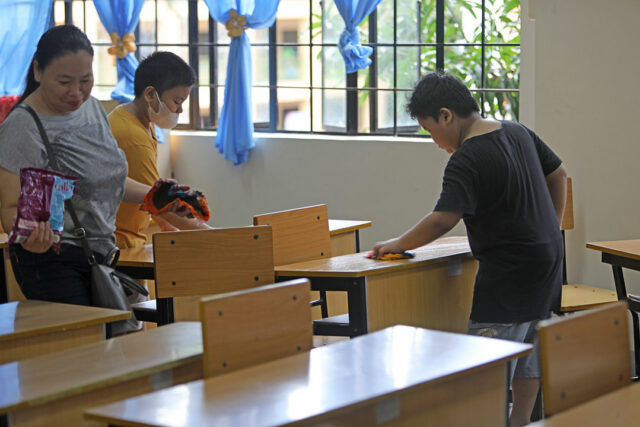
Students help teachers clean the classroom at a school in Marikina. — PHILIPPINE STAR/ WALTER BOLLOZOS

THE DEPARTMENT of Education (DepEd) on Tuesday said that it is looking to tap other avenues in constructing local classrooms to help ease the backlog in learning facilities.

There is a special provision in the (national expenditure plan or NEP) that expands the construction (of classrooms), Education Secretary Juan Edgardo “Sonny” M. Angara told senators in a budget hearing.

“For this year and last year, it was limited to the Department of Public Works and Highways as the authorized institution who could construct classrooms. We are trying to move away from that paradigm and create multiple avenues,” he added.

Mr. Angara said that the agency is also looking to tap civil society organizations (CSO) to construct local classrooms, following the recommendation of Senator Paolo Benigno “Bam” A. Aquino IV.

“It would be better if there were many actors participating,” Mr. Angara said. “I think we can even improve on that provision, which is to allow CSOs as well with proven track records in construction.”

The Senator had filed Senate Bill No. 121, the Classroom-Building Acceleration Program (CAP) bill, which will allow local government units and CSOs to build classrooms in compliance with national standards and guidelines within their jurisdictions, with funding support from the national government.

“If we finish (the committee report) by December, then the classroom acceleration program can be added as an item in the GAA (General Appropriations Act) for 2026,” Mr. Aquino, who also heads the Education committee said.

He added that if the report is not completed by December, the programs will be placed in a special provision.

Earlier this year, DepEd estimated it would take 55 years to bridge the backlog of about 165,000 classrooms if the present pace of construction continues.

A report by the Philippine Institute for Development Studies (PIDS) said that the government must build at least 7,000 classrooms annually in the next 15 years to close the country’s severe public school classroom gap.

The education department had been allocated P928.52 billion under the 2026 NEP, it is equivalent to about 4% of the country’s economic output.

About P13.2 billion will be used to put up about 4,900 classrooms next year. The department will also use P11.8 billion for its feeding program, P16 billion for new laptops for teachers, and another P6 billion for teacher career progression. — Adrian H. Halili

Kalinga elders ask NCIP to halt hydro projects consultations

TABUK CITY, Kalinga — A group of elders and Indigenous leaders in Kalinga is asking the National Commission on Indigenous Peoples (NCIP) to stop the consultation process for two planned hydropower projects.

The process was unfair and did not properly include the community, the group claimed.

Most villagers fear environmental harm and the possible loss of their cultural heritage when the hydropower projects are pursued.

The elders told NCIP-Cordillera Director Roland P. Calde that the consultation process violated the rules, referring to Section 29 of NCIP Administrative Order No. 3, 2012, which allows discontinuation of the process if there is evidence of cheating, pressure, or lack of real community involvement.

The Free, Prior and Informed Consent (FPIC) process is a legal requirement. It ensures Indigenous Peoples (IPs) agree to any project on their ancestral land before it begins.

The petition highlights the need for fairness, honesty, and respect for Indigenous rights in big development projects.

Director Calde said he received the petition and promised to review it carefully. He added that any decision to stop the process will follow the proper legal steps. — Artemio A. Dumlao

BARMM’s Sulu police force now under PRO-9

COTABATO CITY — Officials of the Police Regional Office-Bangsamoro Autonomous Region (PRO-BAR) turned over the Sulu Provincial Police Office (PPO) to counterparts in Region IX on Monday.

The Supreme Court removed Sulu last year from the core territory of the Bangsamoro Autonomous Region in Muslim Mindanao (BARMM) as petitioned by its governor then, Hadji Abdusakur M. Tan, Sr.

Mr. Tan was elected vice-governor of Sulu during the May 12 elections.

PRO-BAR’s director, Brig. Gen. Jaysen C. De Guzman, told reporters on Tuesday, that they turned over the Sulu PPO to officials of the Police Regional Office-9 during a symbolic rite on Monday at the Camp Police Senior Superintendent Julasirin Kasim in Barangay Asturias in Jolo, the capital of the island province.

The turnover by PRO-BAR officials of the Sulu PPO to Region IX’s police director, Brigadier General Eleazar P. Matta, was done in the presence of representatives from different sectors in the province.

The ceremony was also witnessed by Sulu Gov. Abdusakur A. Tan II, and ranking officials of the Philippine National Police from Camp Crame in Quezon City, led by the chief of its directorial staff, Major Gen. Neri Vincent D. Ignacio, and the director for plans, Major Gen. Lex Ephraim C. Gurat.

Mr. De Guzman said his counterpart in Region IX, Mr. Matta, was accompanied to Sulu by his deputy for operations, Col. Narciso C. Paragas, and Col. Elmer S. Lim, chief of PRO-9’s regional staff.

“I know these officers as efficient and hardworking officers. They can together efficiently manage, along with the police officers in Sulu, the Sulu Provincial Police Office,” Mr. De Guzman said.

Sulu’s first termer governor, Mr. Tan, said he will continue to support extensively the peacekeeping and law-enforcement activities of the Sulu PPO, now under PRO-9’s control, just the way he supported it while under PRO-BAR. — John Felix M. Unson

Stocks rebound on bargain hunting before Fed

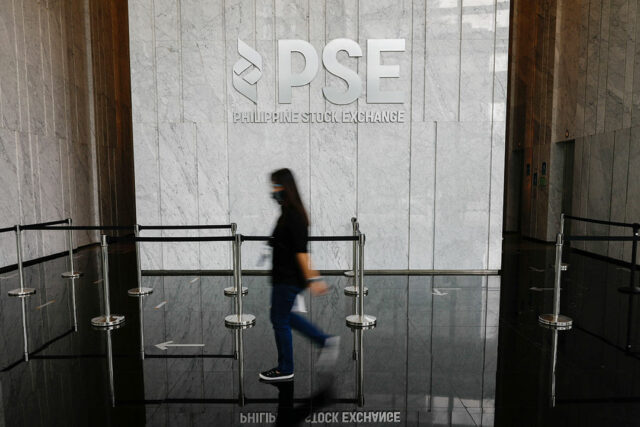
The lobby of the Philippine Stock Exchange in Taguig City, Sept. 30, 2020. — REUTERS

PHILIPPINE SHARES rebounded on Tuesday as investors picked up cheap stocks after the market’s drop, although the mood remained cautious as the US Federal Reserve was set to begin its two-day meeting overnight.

The Philippine Stock Exchange index (PSEi) jumped by 1.5% or 91.31 points to close at 6,148.74, while the broader all shares index rose by 0.97% or 35.63 points to end at 3,706.20.

“After the market closed in the red yesterday (Monday), buyers took control of today’s session as bargain hunting persisted. However, firm catalysts are still needed to determine whether this marks the beginning of a true market recovery,” Regina Capital Development Corp. Head of Sales Luis A. Limlingan said in a Viber message.

“The local market surged on the back of a technical rebound in battered banking names as investors take the opportunity to pick up blue-chip banks like BDO and BPI at a discount,” AP Securities, Inc. said in a market note. Shares of BDO Unibank, Inc. climbed by P5.40 or 3.96% to close at P141.80 each on Tuesday, while Bank of the Philippine Islands surged by P7.40 or 7.23% to end at P109.70 apiece.

Mr. Limlingan added that the local market tracked Wall Street’s rise overnight.

“Investor sentiment was lifted by expectations of an upcoming interest rate cut from the Fed, which slightly offset the concerns about slowing job growth,” he said.

The three major US stock indexes closed higher on Monday, with the S&P 500 and the Nasdaq notching intraday record-high closes, as investors await the US Federal Reserve’s crucial policy meeting later this week, Reuters reported.

The Federal Open Market Committee meeting on Sept. 16-17 looms large over sentiment this week, with market participants widely expecting a 25-basis-point reduction following recent economic data signaling labor market weakness.

Traders on Monday are pricing in a 96% chance of a 25-basis-point cut at this week’s meeting.

The Fed has kept its target rate at the 4.25%-4.5% range since December last year.

The majority of sectoral indices closed higher on Tuesday. Financials jumped by 3.69% or 74.18 points to 2,080.42; mining and oil climbed by 3.21% or 367.98 points to 11,804; services rose by 1.29% or 28.15 points to 2,206.69; holding firms increased by 0.84% or 42.29 points to 5,028.02; and industrials went up by 0.5% or 45.16 points to 9,029.01.

Meanwhile, property declined by 0.43% or 10.78 points to 2,462.58.

Value turnover increased to P6.56 billion on Tuesday with 3.69 billion shares traded from the P6.24 billion with 3.48 billion shares exchanged on Monday.

Market breadth was positive as advancers beat decliners, 101 to 93, while 59 names closed unchanged.

Net foreign selling thinned to P35.46 million on Tuesday from P473.25 million on Monday. — Alexandria Grace C. Magno with Reuters

DPWH lifts 2-week freeze on local project bid activities

DPWH

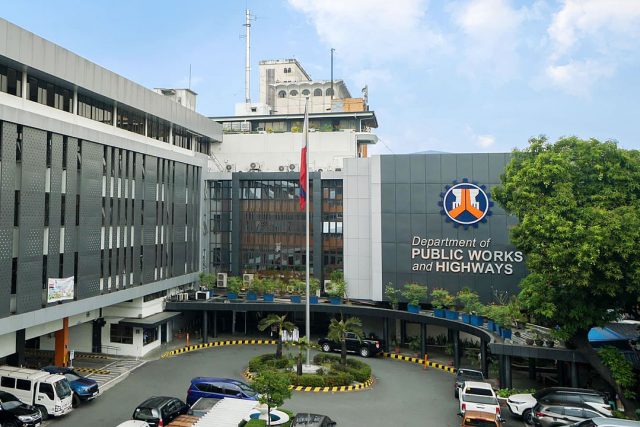
THE Department of Public Works and Highways (DPWH) said it lifted the two-week suspension of auctions for locally-funded projects, citing the need to fast-track the rollout of key items of infrastructure.

“Pending a full review of the department’s internal processes, and in the exigency of the service to prevent delays in the implementation of critical infrastructure, the suspension is hereby lifted,” Public Works Secretary Vivencio “Vince” B. Dizon said in a memorandum dated Sept. 16.

The DPWH had suspended bidding for two weeks to facilitate the government’s investigation into defective or non-existent flood control projects.

The DPWH threatened to cancel the bidding process in case irregularities emerge.

“Non-compliance shall be deemed sufficient cause for the deferment or cancellation of the bidding process and shall subject the responsible officials and personnel to appropriate administrative and/or criminal actions, in accordance with existing laws, rules, and regulations,” according to the memorandum.

The DPWH ordered the livestreaming of all bid activities, the validation of all road and bridge application data; and the geotagging of project sites.

“All projects, regardless of cost, infrastructure type, or funding source, shall undergo geotagging at the following stages: planning (prior to implementation), mobilization, monthly progress, and completion,” the DPWH said.

It noted the provisions in Republic Act No. 12009 or the New Government Procurement Act requiring the review of all prospective bidders’ capacity to undertake projects, particularly financial capacity, the DPWH said, adding that prospective bidders are also required to submit sworn disclosures of beneficial ownership.

The suspension had affected ongoing bid activities involving national, regional and district-level projects as the DPWH raced to install safeguards against so-called “ghost” projects.

President Ferdinand R. Marcos, Jr. in his fourth State of the Nation Address on July 28 directed the DPWH to submit a full list of projects from the past three years and ordered an investigation into flood control projects.

The DPWH has submitted a list of over 9,000 projects completed between July 2022 and May 2025. Of these, 160 projects have undergone validation, with 15 reported as missing or unlocated, according to former Public Works Secretary Manuel M. Bonoan.

On Monday, the DPWH dismissed three officials of the Bulacan first district Engineering Office after finding multiple administrative offenses linked to flood control. — Ashley Erika O. Jose

Roadshows due out soon as US tariff picture clears up, Go says

FREDERICK D. GO — PHILIPPINE STAR/RYAN BALDEMOR

By Justine Irish D. Tabile, Reporter

SECRETARY Frederick D. Go said the US tariff picture is clearing up sufficiently to make it worthwhile to resume investment roadshows promoting the Philippines.

“Right now, the legality of the unilateral tariffs has been put in question in front of the US courts. And I think the dust is more or less settling,” according to Mr. Go, who heads the cabinet-level Office of the Special Assistant to the President for Investment and Economic Affairs (OSAPIEA). 

Speaking before the Anvil Business Summit 2025 on Monday, he said that the Philippine investment team will be ready to hit the road again soon.

“We have to go on a roadshow… We are still planning it out. This year we hope to get back on track on our roadshows kasi we were not able to in the first half,” he added.

He said the US tariff announcements starting April had been “an obstacle in the way of us going out and promoting the Philippines.”

Mr. Go said he hopes the Philippines will exceed the P1.9 trillion in investment pledges that were approved last year.

“Last year we recorded an all-time high of P1.9 trillion in registered approved investments,” Mr. Go said at the Anvil Business Summit 2025 on Monday.

“These record numbers are a great achievement, but they also raise the bar. They now set the benchmark that we must now surpass,” he added.

Last year’s investment approvals reflected an over 29% increase from 2023.

Asked about the elements of the roadshow team’s pitch to investors, he cited the Corporate Recovery and Tax Incentives for Enterprises to Maximize Opportunities for Reinvigorating the Economy (CREATE MORE) Act.

He called on Anvil members “to continue investing and inspiring others to believe in the limitless promise of our country.”

“I am totally committed to improving the economy and getting things done, improving the ease of doing business, reducing the cost of doing business, and improving the predictability of doing business,” he added.

Christopher C. Yae, president of Anvil Business Club, Inc. (Association of Young Filipino-Chinese Entrepreneurs), said business owners remain positive that the government will tackle corruption.

“We are always very hopeful about what the government is doing. I think if we are negative about it, I think mas walang mangyayari sa atin (nothing will come of it),” he said.

He said that 520 business owners attended the summit, which reflects “the optimism of the business community.”

Mr. Yae also said digitalization brings the Philippines closer to where business owners want it to go.

Asked about what other regulatory reforms businesses want to see, he said the government needs to devote more resources to building up local industries.

He called for master plans “for each sector” and more consultation of the business community to discover their needs.

Supermarkets say midterm poll boost muted as competition with discounters intensifies

PHOTO BY BERNARD HERMANT

SUPERMARKETS said the midterm elections failed to deliver the expected boost in spending due to intensifying competition in the industry, particularly from discounters.

Speaking on the sidelines of the Anvil Business Summit 2025 on Monday, Steven T. Cua, Executive Director of the Philippine Amalgamated Supermarket Association, Inc., said competitors have so saturated the market that “even the midterm elections did not make a dent.”

“There are a lot of new stores that opened, not just the hard discount stores, but even regular stores,” he said.

Mr. Cua added that the gambling craze is beginning to be reflected in their sales.

“Money is being channeled everywhere… Some consumers put their money in online gambling, because they would rather get rich right away than buy groceries.”

He said prices have been fairly stable in the first six months.

“Prices have been flat. In fact, some prices even went down. There were price increases, but for non-essential items,” he said.

“The price increases were not felt so much because there is now more choice, and there are more imported items, especially from the hard discount stores, which have been developing house brands,” he added.

Hard discounters offer no-frills shopping and minimal marketing, focusing on everyday essentials. In the Philippines the segment includes DALI Everyday Grocery and O! Save.

Asked how the supermarkets are preparing for the holidays, he said inventory levels are currently high.

“There are lots of stocks right now. Because there’s not so much demand. And, during the last election, grocery items weren’t moving,” he said. — Justine Irish D. Tabile

Palay output forecast cut after heavy floods in July

A farmer threshes newly harvested palay grains at a ricefield in Mogpog, Marinduque in central Philippines, March 22, 2016. — REUTERS

THE Department of Agriculture (DA) said it reduced its forecast for palay (unmilled rice) production following the July floods.

Palay production is now expected to come in at 20.09-20.39 million metric tons (MMT), against the previous forecast of 20.46 MMT, the DA said in a statement.

Palay production remains on track to exceed the 2024 total of 19.09 MMT, it said.

Year-ending rice inventory is now projected at around 3.86-3.96 MMT, the DA said.

Palay output was 9.08 MMT during the first half, up 6.4% year-on-year due to favorable weather and improved government support to the industry.

The DA said it expects the second half to account for 55% of palay output. — Andre Christopher H. Alampay

GOCCs expected to remit P157B by year’s end

GOVERNMENT-OWNED or-controlled corporations (GOCCs) are expected to generate P157 billion in remittances this year, Department of Finance (DoF) Secretary Ralph G. Recto said.

He was speaking at GOCC Day in Malacañang, where 53 GOCCs transferred P116.84 billion to the Bureau of the Treasury, with 15 remitting at least P1 billion each.

“Possibly we can hit P157 billion… That’s a possibility. Hopefully that will reduce our deficit,” Mr. Recto told reporters on Tuesday.

The government aims to trim the share of the deficit relative to gross domestic product to 5.5% this year and eventually to 3.1% by 2030.

GOCC dividends are a major source of non-tax revenues for the national government, helping fund the President’s priority programs without the need to impose new taxes.

The top source of dividends was the Land Bank of the Philippines (LANDBANK), which remitted P33.53 billion.

This was followed by the Bangko Sentral ng Pilipinas (P18.91 billion), Philippine Amusement and Gaming Corp. (P12.68 billion), and Philippine Deposit Insurance Corp. (P10.13 billion), the Power Sector Assets & Liabilities Management Corp. (P8.96 billion), and the Bases Conversion and Development Authority (P5.33 billion).

In a speech, President Ferdinand R. Marcos, Jr. noted the growth in remittances of GOCCs since state-owned firms were reorganized into the category, averaging P36 billion in 2011-2013 to P137 billion in 2024.

GOCCs “finance the establishment and renovations of classrooms, of hospitals, and of infrastructure, as well as the implementation of vital social programs,” he said.

Mr. Marcos also approved the Compensation and Position Classification System (CPSP) II, which increases the salaries of GOCC employees and provided tiered medical allowances.

GOCCs are required by Republic Act 7656 to surrender at least 50% of their profits to the Treasury, though the DoF has since asked them to remit 75%. — Aubrey Rose A. Inosante

PHL exploring financing solutions to reduce capital costs for offshore wind

STOCK PHOTO | Image by Nicholas Doherty from Unsplash

THE government is in talks with international financial institutions to find ways to lower the cost of capital for offshore wind developers, the Department of Energy (DoE) said.

“Offshore wind is capital-intensive, and emerging markets face higher financing costs due to perceived risks like typhoons,” Energy Undersecretary Rowena Cristina L. Guevara said during the APAC Wind Energy Summit 2025 in Melbourne on Tuesday.

“To address this, the Philippines is engaging with multilateral banks and exploring mechanisms to lower the cost of capital, while also considering lessons from  regional peers on blended finance   and risk-sharing instruments,” she added.

Despite strong momentum for offshore wind in the Asia-Pacific region, Ms. Guevara said financing is among the major bottlenecks that could slow deployment.

Other challenges she cited are regulatory and permitting process, ports and infrastructure, and transmission and grid integration.

“By tackling these bottlenecks — permitting, ports, grids, and financing — and by learning from the best practices of our neighbors, we can provide investors with certainty and accelerate offshore wind deployment across the Asia-Pacific,” Ms. Guevara said.

According to the World Bank’s 2022 Offshore Wind Roadmap, the Philippines has potential offshore wind resources equivalent to over 178 gigawatts (GW).

The DoE’s fifth round of green energy auction (GEA-5) is dedicated to offshore wind.

GEA-5 covers fixed-bottom offshore wind technology, with an installation target of 3.3 GW and deliveries targeted to commence in 2028-2030.

Ms. Guevara said the DoE is refining the auction design to provide developers with a clearer picture of the risks.

While floating offshore wind technology remains in the early stages of development, the DoE has started to explore tailored mechanisms to be ready when the resource data and technology are in place.

“By strengthening these three pillars — permitting, auction design, and infrastructure planning — we aim to give investors and developers the confidence that Philippine offshore wind projects can move smoothly from award to power delivery,” the Energy official said.

The DoE expects offshore wind to play a key role in achieving the Philippine target of increasing renewable energy’s share in the power mix to 35% by 2030 and 50% by 2040. — Sheldeen Joy Talavera

Nuclear supply chain forum convenes in PHL next month

PNRI.DOST.GOV.PH

THE GOVERNMENT will host the Philippine International Nuclear Supply Chain Forum (PINSCF) on Oct. 2-3 to gather experts and industry representatives as the nuclear industry gathers momentum here.

In a statement on Tuesday, the Department of Energy (DoE) said the forum will convene representatives from countries with nuclear industries, as well as international experts and potential nuclear equipment suppliers.

“The Philippines is signaling its readiness to engage at the highest level and ensure that its path to nuclear energy development is guided by world-class expertise and safe, sustainable practices,” Energy Secretary Sharon S. Garin said.

The forum will draw guests from operators of nuclear facilities like Argentina, China, Finland, France, Hungary, Japan, Russia, the United Arab Emirates, and the US.

The DoE said that this year’s event aims to deepen international collaboration in developing nuclear supply chains, ensuring nuclear safety, and advancing Philippine plans to incorporate nuclear power in its energy mix by 2032.

“Last year’s forum laid the groundwork for meaningful engagement between the Philippines and the international nuclear community. This year’s edition will advance those conversations into concrete partnerships and strategies to strengthen nuclear supply chains,” Ms. Garin said.

Under the Philippine Energy Plan 2023-2050, the Philippines hopes to integrate 4,800 megawatts of nuclear energy into the power generation mix through 2040. — Sheldeen Joy Talavera

PHL improves three places in 2025 Global Innovation Index

THE Philippines placed 50th out of 139 countries in the 2025 Global Innovation Index (GII), up three places from a year earlier, according to the World Intellectual Property Organization (WIPO).

This year’s edition of the GII gave the Philippines a score of 33.6 and noted its performance among its lower middle-income peers, behind only Vietnam (37.1) and India (38.2).

Within Southeast Asia, East Asia, and Oceania, the Philippines was 11th out of 16 economies.

Philippines rises to 50<sup>th</sup> in Global Innovation Index

The index considered around 80 indicators, including research and development (R&D) spending, venture capital (VC) deals, high-tech exports, and intellectual property filings in compiling the index.

WIPO said the Philippines’ main strength lies in its innovation ecosystem’s integration into global markets, noting its strong performance in the high-tech exports category.

The Philippines also placed fourth in high-tech imports and performed strongly in creative goods (16th) and ICT services exports (20th).

Despite weak infrastructure and R&D spending, the Philippines ranks 20th in high-tech manufacturing and 35th in intangible asset intensity, with growing production complexity and a budding creative sector, WIPO added. — Edg Adrian A. Eva

ADVERTISEMENT
ADVERTISEMENT