Swiss challenge for two road projects under review delayed
By Denise A. Valdez
Reporter
THE Swiss challenge for the unsolicited proposals of the Metro Pacific group for the Cavite-Tagaytay-Batangas Expressway (CTBEx) and the San Miguel group for the extension of the Tarlac-Pangasinan-La Union Expressway (TPLEx) may not make it within the year.
The Department of Public Works and Highways (DPWH) told BusinessWorld over the weekend the two projects are still with the National Economic and Development Authority (NEDA) for review. The Swiss challenge, or the competitive procurement process where third-party companies are invited to challenge an unsolicited proposal, can only come after NEDA has approved the project.
“We need to wait for NEDA evaluation results. For the timeline, most probably next year ang Swiss challenge,” DPWH Public-Private Partnership (PPP) Director Alex G. Bote said in a text message Saturday.
The Swiss challenge for both projects were originally targeted to start in the first half of the year. If the original proponents emerge successful in the competitive process, they will be automatically awarded the concession for the project and may proceed with the groundbreaking.
Last year, the DPWH awarded both companies with the original proponent status for their unsolicited proposals to develop expressways in the neighboring regions north and south of Metro Manila.
For CTBEx, the Metro Pacific group, through MPCALA Holdings, Inc. is bidding for a P22.43-billion, 50.42-kilometer toll road that will connect the Cavite-Laguna Expressway at Silang East Interchange to Tagaytay City and Nasugbu, Batangas.
For the TPLEx extension, the San Miguel group, through San Miguel Holdings Corp., is pitching a P23.948-billion, 59.4-kilometer extension of the existing 89.2-kilometer TPLEx from Rosario, La Union to San Juan, La Union.
The two projects are the first two unsolicited proposals that the DPWH had endorsed to NEDA under the Duterte administration. DPWH Secretary Mark A. Villar earlier said these are good opportunities for the private sector to engage in the government’s aggressive push for infrastructure projects under the Build, Build, Build program.
Once completed, MPCALA said CTBEx will help reduce travel time from Governor’s Drive to Nasugbu by about an hour, and from Sta. Rosa to Tagaytay by 1 hour and 15 minutes.
The TPLEx extension, meanwhile, is expected to promote development in Northern Luzon and improve connectivity to Central Luzon and Metro Manila, according to a project brief on the DPWH website.
MPCALA Holdings is under Metro Pacific Tollways Corp., the tollways unit of Metro Pacific Investments Corp. (MPIC). MPIC is one of three key Philippine units of Hong Kong based First Pacific Co. Ltd., the others being Philex Mining Corp. and PLDT, Inc.
Hastings Holdings, Inc., a unit of PLDT Beneficial Trust Fund subsidiary MediaQuest Holdings, Inc., has a majority stake in BusinessWorld through the Philippine Star Group, which it controls.
Cebu’s JDC plans expansion, looks for partners
By Arra B. Francia
Senior Reporter
CEBU-BASED property developer JEG Development Corp. (JDC) is boosting its presence in the Visayan capital with the launch of four projects in the following years, while also looking for more partnerships for the future.
JDC Chief Operating Officer Marko G. Sarmiento said they currently have the land bank to develop four vertical projects in the city, although plans have yet to be finalized.
“It’s still not final, but they will definitely be vertical projects. We’re not sure if it’s an office, residential, or hotel. We’re still weighing out the options,” Mr. Sarmiento said in an interview on the sidelines of the company’s media launch last week.
This will follow the completion of JDC’s flagship project, JEG Tower @ One Acacia, a 22-storey Grade A office towers located right across Cebu Business Park. The company is spending about P40,000 to P43,000 per square meter (sq.m.) for the project, which it noted is 20-25% more expensive than the standard building.
JDC will be topping off JEG Tower next month, in time for its full completion by the first quarter of 2020. It will cover about 26,000 sq.m of construction floor area, targeted toward corporate office tenants, knowledge process outsourcing firms, and business process outsourcing firms.
The company said potential tenants have already made commitments for lease once the building is complete.
“There’s definitely a lot of interest in the building…The government is focusing on VisMin, so it’s gonna bring a lot more business into the region,” Mr. Sarmiento said.
JDC is also awaiting approval for the building’s registration at the Philippine Economic Zone Authority, which should give tenants tax perks. The building has also been recognized with a pre-certified Silver rating by the US Green Building Council’s Leadership in Energy and Environmental Design (LEED).
Rental rates in the tower could average at P700 to 750 per sq.m.
JEG Tower marks the fifth project under JDC’s portfolio. Other projects mostly residential properties such as Tomodachi Premium Residences, a 14-unit townhouse project incorporating Japanese features, and Blue Garden, a mixed-use building in Fulton Street, Lahug.
At the same time, JDC is scouting for more partnerships to facilitate its expansion, as land becomes more scarce in Cebu City.
“It’s very difficult to find land now, it’s very expensive. So it might be more strategic to get into more partnerships, we’re always looking,” Mr. Sarmiento said.
The top executive said they have “a few hectares” of land in the fringes of Cebu, which can also be developed into future projects.
Incorporated in 1994 by businessman Jose E. Garcia, the company previously operated as a holding company for the family’s business interests. It transformed into a real estate firm in 2003.
Farmers seek crackdown on rice ‘profiteering’
A FARMER organization called on the trade department to crack down on traders and retailers who are “profiteering” with still-high retail prices while also forcing farmers to accept low prices for their harvests.
“That is a problem that the DTI (Department of Trade and Industry) and other government agencies should try to prevent… DTI should do its job and not ask farmers to pay the price for their negligence and failure to stop profiteering by traders and retailers,” Federation of Free Farmers National Manager Raul Q. Montemayor said in a statement.
The entry of cheap imports has not brought about a commensurate drop in retail prices, essentially defeating the inflation-controlling intent behind the Rice Tariffication Law. At the same time, traders have turned reluctant to buy domestic palay, or unmilled rice, softening the market for palay, or unmilled rice, the form in which farmers sell their harvest.
The combination of a continuing high retail price alongside a low palay purchase price is thought to increase the margins of all the parties standing between farmers and consumers.
The government has sought to intervene by increasing the support price paid by the National Food Authority (NFA) to P19 from P17, while legislators preparing the 2020 budget have said they will increase the NFA’s procurement budget. The Department of Agriculture (DA) has also encouraged local governments to engage in direct palay purchasing at “fair” prices.
Agriculture Secretary William D. Dar said that the DA has started an investigation that could lead to the imposition of safeguard duties on rice imports and restrictions on inbound shipments by the end of September or early October.
The Philippines has informed the World Trade Organization (WTO) of its investigation.
Republic Act 8752, or the Anti-Dumping Act of 1999, authorizes the government to impose duties on imports of any product priced below fair market value.
The government is also considering the imposition of more stringent sanitary, phyto-sanitary and inspection measures on rice imports.
Trade Secretary Ramon M. Lopez has said he opposes the imposition of the duties, which will be reflected in higher retail prices.
Mr. Montemayor noted that rice imports as of September are equivalent to 20% of the country’s rice requirement.
“We actually need to import at most 10% because our own farmers can produce up to 90% of what we need. There is already a surplus in the country equivalent to 10% which is good for 36 days consumption,” he said.
He called safeguard measures the “most effective and cost-effective” way to address the drop in palay prices.
He added that loans to farmers and intervention by the National Food Authority and local governments will help, but ultimately will be limited by budget constraints.
“The solution is to manage the entry of imports, and then find a way so that they do not create a similar problem in the future,” he said.
According to the Philippine Statistics Authority (PSA), the average farmgate price of palay fell 4.4% during the fifth week of August to P16.68 per kilogram (kg). though the prices offered by private traders in some rice-growing areas have reportedly fallen to the single digits. — Vincent Mariel P. Galang
PSE unit invests P200 million in new clearing system
A UNIT of the Philippine Stock Exchange, Inc. (PSE) is investing P200 million for a new clearing and settlement system.
In a disclosure posted Friday, the PSE said its wholly owned unit Securities Clearing Corporation of the Philippines’ (SCCP) board of directors has approved the issuance of two million shares worth P200 million from the unissued portion of its authorized capital stock to the company.
“SCCP will use the investment to partially fund the purchase of a new clearing and settlement system,” the PSE said.
The PSE also said it will settle its unpaid subscription worth P50 million.
SCCP acts as the central securities clearing institution in the country, managing and supporting the clearance of trades in securities at the PSE and other official securities markets.
In a separate disclosure, the PSE said SCCP has also declared additional cash dividends worth P145 million to stockholders as of Sept. 19. The dividends will be distributed on Oct. 2.
Earlier last week, the stock exchange disclosed that it has secured approval from the Securities and Exchange Commission (SEC) for changes in its authorized capital stock, which will now consist of 106 million common shares with a par value of P1 each plus 14 million preferred shares worth P14 million.
The preferred shares will have voting rights, be cumulative in the payment of dividends, be excluded in any further dividends, and cannot be converted into common shares.
The shares may also be redeemed at the option of the board after its fifth anniversary.
Meanwhile, the PSE has yet to obtain the SEC’s approval for the creation of 3.5 million non-voting preferred shares. This is part of the bourse operator’s plan to reduce broker ownership in the company to less than 20%, as per the Securities Regulation Code.
The PSE said last March that its broker ownership stood at 26.44%, higher than the 20% industry limit.
With this, the preferred shares may only be issued to brokers. They will be non-voting, non-participating in any further dividends, non-convertible, and can be redeemed at the board’s discretion on its third anniversary date.
The PSE’s net income attributable to the parent surged 57% to P290.33 million in the first half of 2019, amid a 13% decline in gross revenues to P605.24 million. — Arra B. Francia
Lexus facelifts the RX
By Manny N. de los Reyes
SAY HELLO to the 2020 edition of Lexus’ best-selling SUV, the RX — a pioneer in the luxury SUV segment, not just for Lexus, but for the entire genre, when it made its world debut way back in 1998.
With the RX, Lexus has dominated the SUV segment in the Philippines, consistently holding the highest market share since 2015. In fact, Lexus closed the first half of the year at the top, with a share of 28%. The RX remains the best-selling model in the brand’s lineup. As of June 2019, the RX has sold 1,413 units since it was introduced locally in 2009.
And now, with the launch of the RX’s latest iteration, Lexus hopes to cement its leadership in the high-profile luxury SUV segment. As before, the new RX comes in four variants: the RX 350 priced at P4,278,000; the RX 350 F Sport at P4,838,000; the 110mm-longer RX 350L at P4,758,000; and the top-of-the-line 308hp RX 450H hybrid model at P5,078,000.
The first three variants are powered by a 296hp 3.5-liter direct-injection V6 while the flagship adds a hybrid system to the 3.5-liter motor for a 308hp total output. All (except for the front-wheel drive entry-level model) have all-wheel drive.
The 2020 RX’s exterior retains the model’s powerful and sporty appearance, while the character line that runs from the front of the vehicle to the rear has been redrawn, giving the RX an elegant, dynamic styling that underscores the Japanese luxury brand’s new design language.
Newly sculpted front and rear bumper designs achieve a flowing integration of character lines from front to rear, elevating the RX’s dynamic appearance. Connecting the rocker panels to the bottom of the grille in a straight line delivers a feeling of heightened strength and stability.
Lexus designers linked the lower bumper with the rear fenders, which blend with the window graphic on the bottom section of the rear pillar, lending a distinctively elegant and powerful shape to the rear. Furthermore, by presenting components such as the muffler and the underbody shield to accentuate the vehicle’s width, the designers were able to provide the RX with a sporty, aggressive rear.
The signature Lexus spindle grille adds modulation to the “L” pattern mesh and a new frame that blends into the side of the front bumpers provide a unified profile. New slim headlamps give the front fascia a newfound sharpness. In the rear, combination lamps feature an “L” shape motif.
In terms of driving character, the RX remains faithful to Lexus’ exhilarating performance following the path of the LC and LS flagship coupe and sedan. Lexus Chief Engineer Takeaki Kato was determined to deliver pleasurable driving experience through agile handling and exhilarating driving pleasure, and his engineering team worked closely with the production team to achieve this goal.
Laser Screw Welding (LSW) and spot welding have been extensively employed, along with the increased use of high-strength adhesives (4.2 meters of strategically placed adhesive). In combination with the stiffening of stabilizer bars (now hollow and 1mm wider) and enhanced hub rigidity, the result is a more immediate response to steering inputs.
The new RX features Active Cornering Assist (ACA) that suppresses understeer when stepping on the throttle in mid-corner, as well as dramatic improvements in the tuning of the Electric Power Steering, all of which result in a truly linear steering feel. The engineers scrutinized every part of the vehicle and made enhancements to the rigidity of the body and suspension system, as well as adding a new shock absorber and braking system. The result is an SUV that promises a truly responsive handling feel while maintaining Lexus’ signature luxurious ride.
Other key new features of the 2020 RX include the introduction of an all-new seven-seat RXL variant that offers an ingenious and truly usable third-row seat. The second-row seats slide forward to provide ample legroom when the third-row seats are occupied.
Meanwhile, the power-folding 50/50-split third-row seats fold away independently, providing extra luggage space to accommodate varying passenger and luggage configurations. The third-row seat design allows a flat, gap-free luggage space, regardless of whether the third-row seats are in use or stowed. A retractable tonneau cover can be stored under the luggage space floor to provide ample legroom for luggage, even when carrying seven people.
The split-seatback design for both the second- and third-row seats enable different luggage configurations. For even easier use, the power-folding third-row seats are controlled by switches located on the passenger side trim of the second-row seats, and on the left side of the luggage space. The third-row seats now feature two different seating positions. In addition to the traditional seating position, even more leg space can be had with the new setting when the situation demands it.
Improved luxury, performance, and versatility — the new Lexus RX certainly has more than what it takes to consolidate its position as a true pioneer and segment leader.
Dyson set to add more than 2,000 jobs in Southeast Asia
SINGAPORE — Appliance maker Dyson Ltd. is hiring more than 2,000 people across Singapore, Malaysia and the Philippines over the next four years, following its decision to relocate its head office to Southeast Asia.
The recruitment plan includes engineers, as well as employees working on production, design and operations, Jon-Paul Pritchard, Dyson’s global head of talent acquisition, said on the sidelines of the Milken Institute Asia Summit in Singapore on Friday.
“We’re investing in local populations as much as possible,” Mr. Pritchard said during a panel session on “Jobs of the Future” at the event. “We’re going to spend a lot of effort in retraining.”
The company, which is best known for its vacuum cleaners and hand dryers, was founded by engineer James Dyson. The company employs close to 6,000 engineers and scientists, spread across Asia and its U.K. campus.
Dyson has mushroomed in recent years, driven by its growing customer base in Asia. It has expanded into air purifiers and hair-care products, and embarked on a costly project to build an electric car by 2021. “We are growing, expanding and building the car here,” Mr. Pritchard said of Singapore, where the firm plans to add hundreds of jobs.
As technologies advance, Dyson is also looking beyond the usual qualifications as soft skills are increasingly becoming important in a new world, Mr. Pritchard said during the panel session. “We look for things like resilience, learning agility and adaptability in individuals rather than necessarily nuts and bolts of hard skills,” he said. — Bloomberg
New Michelin replacement tire touts affordability, durability
Text and photos by Kap Maceda Aguila
ALREADY AMONG the leaders in the mass-market tire segment for eight consecutive years, French tiremaker Michelin goes after a bigger portion of the tire-replacement business with an affordable yet high-performing line designed for small to medium-sized vehicles.
The Michelin Energy XM2+, priced from around P3,000, is developed for “young, budget-conscious consumers looking for tires with safety and performance that last,” according to a company release. The company’s chief representative to the Philippines Michael Nunag said during the line’s recent launch that among the challenges is “to keep up with new subcompact cars which are getting bigger,” with tires that deliver longevity and performance. This move for the company surely makes sense as it noted that subcompact and compact car sales across the region (including the Philippines) continue to rise.
Already available in the brand’s dealers and associate dealers, the Energy XM2+ line banners a full-silica rubber compound which, reported Mr. Nunag, “actually strengthens the rubber molecules and filler (while making them) highly flexible to adapt to contours of the road.” The tread features full-depth, large channels to keep the depth of the grooves even when worn out. The design also effectively disperses water to prevent hydroplaning, even as it cuts down on noise.
He continued, “The ‘+’ sign on the sidewall denotes the rubber compound upgrade that is behind the braking superiority of the… Energy XM2+ versus its predecessor. The tire also maintains the green ‘X’ marking of its predecessor, indicating optimized fuel savings. We hope the combination of enhanced safety and superior value-for-money will particularly appeal to the younger consumers.”
The tire is said to deliver shorter wet-braking distance from 80kph to standstill (by 1.5 meters) when new, and even shorter braking distance (by 2.6 meters) when worn, compared to competitors. The Energy XM2+ has also been tested to last 25% longer than other premium tire manufacturers. These findings were revealed by independent testers TUV Rheinland Thailand Ltd and China Automotive Technology and Research Center Co. Ltd, whose services were contracted by Michelin.
Mr. Nunag asserted that the French tiremaker’s key design philosophy is safety while assuring longevity. “We’re pushing the boundaries… (to make sure) that this will perform down to the last millimeter of your tread.” He added, “I haven’t seen any manufacturer doing tests with worn-out tires.”
Replying to a question from Velocity, Mr. Nunag revealed that around 80% of the domestic supply is sourced from Thailand, and points to Michelin’s six-year worldwide warranty as additional proof of quality.
The new Energy XM2+ is positioned as being suitable for Philippine road conditions, and now becomes the entry point to the Michelin portfolio. A total of 36 sizes, from 14 to 16 inches in diameter, are available. According to Michelin, it should fit vehicles such as the Honda Brio, Honda City, Honda Jazz, Honda BR-V, Honda Mobilio, Honda Civic, Toyota Wigo, Toyota Vios, Toyota Yaris, Toyota Altis, Toyota Avanza, Toyota Innova, Mitsubishi Mirage, Mitsubishi Mirage G4, Mitsubishi Lancer EX, Mitsubishi Xpander, Hyundai i10, Hyundai Accent, Hyundai Elantra, Suzuki Celerio, Suzuki Swift, Suzuki Ertiga, Nissan Almera, Nissan Altima, Nissan Juke, Mazda 2 and Mazda 5. For more information, visit www.michelin.com.ph.
Meat processors expect supply crunch if government moves to ban pork imports
MEAT processors said they expect supply to be pressured if the government responds to demands from sections of the agriculture industry to ban pork imports.
Farm groups are asking the government to ban pork imports and implement a stricter quarantine regime to prevent the spread of African Swine Fever (ASF) after infected hogs were found in Rizal, Bulacan and Quezon City.
Some provinces have responded to the panic by restricting the inward movements of pork products entirely to protect thir hog industries
“You could zone geographically, but you cannot zone economically,” Rex B. Agarrado, spokesperson of the Philippine Association of Meat Processors, Inc. (PAMPI), told reporters after the group’s news conference.
“What I mean is hatiin mo ‘yung (if you divide the) area, madali (it’s easy),” though it will mean regional specialty meats like tocino will be in short supply in may areas while remaining in surplus in Pampanga, a major producer.
The Department of Agriculture (DA) has implemented a so-called 1-7-10 protocol, under which all hogs within one klometer are culled and buried, while those within a seven-kilometer radius are prevented from leaving the area and animal movements are monitored within an outer ring of 10 kilonmeters.
Cebu and Bohol provinces have both declared a total ban on the shipment of pork and pork products from outside their borders.
Agriculture Secretary William D. Dar has appealed to the provincial governments to reconsider their total ban.
“In these trying times, particularly in protecting our shores from the challenges of major diseases such as ASF, we appeal for unity and brotherhood among our countrymen, most particularly our local chief executives,” he said in a statement.
“While we wish to protect our respective borders, we should not limit the movement of goods, most particularly food,” he added.
The Philippine Chamber of Agriculture and Food Inc. (PCAFI) has said that the government should suspend pork imports until it is able to come up with a better biosecurity system.
“That policy will not only ensure animal protection from ASF infection. It will also ensure that proper tariffs and duties are paid,” it said in a statement.
“The Bureau of Customs (BoC) currently does not have the full capability to carry out strict biosecurity system that will guarantee that no imported meat products infected with ASF will enter the country,” it said.
The Samahang Industriya ng Agrikultura (SINAG) has also asked the Department of Agriculture to immediately suspend imports of pork and pork products.
Mr. Agarrado of the meat processors’ association expressed the group’s opposition to such an action since this will affect its members’ production of pork products, since the industry needs to import much of its raw materials.
“It [ban of imports] is not the solution. This is not something that can be managed by closing borders,” he said.
Meanwhile, he said supervision over the movements of processed meat products should be returned to the DA, after it had been transferred to the Food and Drug Administration by Republic Act No. 10611, or the Food Safety Act of 2013.
He said that a bill was filed in Congress about three weeks ago to amend the law.
Meat processors also warned that some members have decided to reduce production for the year-end holidays due to uncertainty over restrictions to meat distribution. One company has decided to halt production entirely. Jerome D. Ong, president and chief executive officer of Foodsphere, Inc. said that the company is reducing its production of Christmas ham by 15-20%. — Vincent Mariel P. Galang
What is good design?
IF TIME were a true test of anything, then objects may matter more than we do. We would be long dead and gone, but the objects we would have acquired through the years will still be gathering dust by the time we would have turned into it.
The International Design Conference was held on Sept. 20 in Makati, staged by the Design Center of the Philippines. The conference saw the culmination of the IDC Pitching Session, in which four teams of young, bold thinkers presented their best ideas on how to use design as a force for good. In front of a powerhouse panel of industry leaders and the Conference audience, Greg Balondo (arkayv.com), Gerome Sta.Maria (Diwata), Dean Cuanso (Bespoke Forever Wedding Bouquet), and Marthy Angue (Catwander) pitched how they intended to innovate to change the world. Diwata emerged as the winner for a collection of women’s footwear and other fashion accessories using marine plastics.
Among the speakers at the conference was Jacob Jensen Designs Shanghai Chief Operating Officer Manuel Veiga Aldemira who discussed the design principles that guide their institution.
The design studios, with a presence in Denmark, Shanghai, and Bangkok, were founded by Jacob Jensen, a leading designer of the Danish Modern period and the last of his generation, dying in 2015. Jacob Jensen’s imprimatur can be found in television sets, mobile phones, household goods, and even coffins.
THE TEST OF TIME
Mr. Aldemira noted the importance of sustainable design in the forefront of the fourth Industrial Revolution, marked with advances in digital technology. “A big part of sustainable design is actually durability: to create goods that are not made to be disposed of, products that have intrinsic quality, and that withstand the test of time.”
Mr. Aldemira said that part of the late Jacob Jensen’s principles included that good design should be different, but not strange. Good design is innovation, but not innovations for its own sake, rather innovation that exists to improve existing products. “Innovation for the sake of innovation often shows that it’s rejected to a certain degree by the audiences it’s presented to.”
Because the fourth Industrial Revolution rests on our reliance to information technology, with a nexus to it usually in our very own hands, perhaps it’s time to accept certain things. “Gadgets are a part of our life,” noted Mr. Aldemira. “We build relationships with them.”
“As such, design should trigger certain emotions for those that hold them,” he said. This rests on three categories: distance, closeness, and touch. Really, by the way he talks about it, it sounds like a courtship or a seduction, hammering home the point of emotive design. “Good design should attract you from a distance,” he noted. “There has to be a different element that is appealing.”
In approaching the object, you discover more appealing elements to it, and then, “When you interact with it, that’s when you discover the, say, magic of it.”
In accepting that objects are extensions of ourselves, we begin to see that design is less a frivolous pursuit but a serious discipline aimed at building ourselves and the world. As such Mr. Aldemira talked about the values instilled in good design. He said that design should include contrasts, because it communicates with you, and makes you more intuitive to the needs of the end-user. Good design should also be honest, meaning things are not added for the sake of it, or because they are, as he phrases it, “cool.”
“Everything is to have a purpose. Everything needs to be there for a reason.”
“Good design is value-based,” he said. “When everything that you do [depends on] a very strong, solid foundation, and a personal set of values, it withstands the test of time.” — Joseph L. Garcia
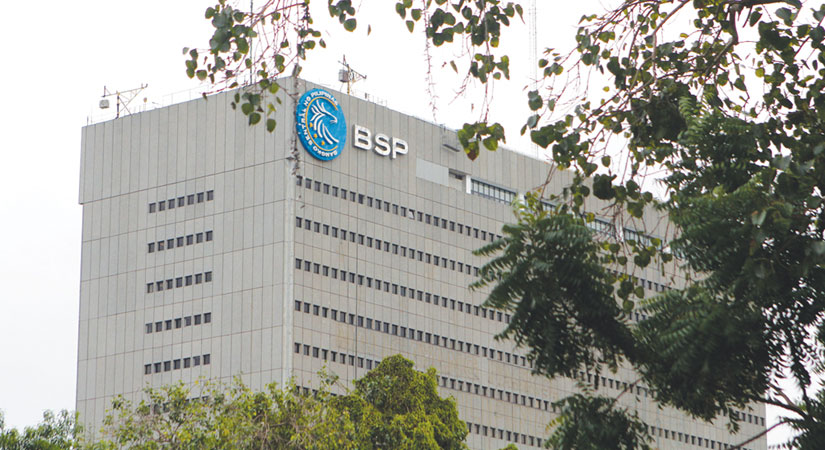
Reissued 20-year bonds to fetch slightly higher rate ahead of BSP
RATES of the Treasury bonds (T-bond) on offer tomorrow will likely move sideways amid expectations of an interest rate cut when the Bangko Sentral ng Pilipinas (BSP) meets this week, as well as bets of further reductions to big banks’ reserve requirement ratio (RRR).
The Bureau of the Treasury (BTr) will offer P20 billion worth of reissued 20-year bonds on Tuesday with a remaining life of 19 years and four months. The bonds carry a coupon rate of 6.75%.
One bond trader said the 20-year papers may fetch an average rate from 5.125% to 5.25%, while another said its yield may fall within 5.15% to 5.3%.
“We’re expecting 5.125% to 5.25%, around the market rate given that the BSP (Bangko Sentral ng Pilipinas) is expected to cut its policy rate on the Sept. 26 meeting as well as a possible RRR cut…,” the first trader said by phone on Friday.
“It’s more of [the] market waiting… This is a test of market demand,” the trader added.
The second trader said the 20-year bonds’ rate may fall within a slightly higher range as the market is pricing in the anticipated benchmark rate cut by the central bank.
“For the 20-year auction, we expect yields to trade within 5.15% to 5.3%. Meron pa rin namang (There is still) interest in the long end but we expect the market to price in the expectation of possible action by the BSP [this] week,” the second trader said on Friday.
The government fully awarded P20-billion worth of the reissued 20-year papers when they were offered last July 30. The bonds fetched an average rate of 5.015% at that auction, 15.5 basis points (bp) lower than the 5.17% quoted when the debt papers were offered on June 11. Total bids reached P29.814 billion.
Meanwhile, at the secondary market on Friday, the 20-year bonds were quoted at 5.201%, based on the PHP Bloomberg Valuation Service Reference Rates published on the Philippine Dealing System’s website.
The BSP’s Monetary Board will meet to revisit policy settings on Thursday.
The central bank has cut rates by a total of 50 bps this year — by 25 bps each last May 9 and Aug. 8 — to 4.25% for the overnight reverse repurchase rate, 4.75% for overnight lending and 3.75% for overnight deposit, partially dialing back the 175-bp cumulative hikes triggered last year by successive multi-year high inflation that peaked at a nine-year high.
BSP Governor Benjamin E. Diokno earlier said the central bank’s plan to cut interest rates anew “won’t reach November.”
Mr. Diokno has said the central bank is looking to cut policy rates by another 25 bps as well as slash big banks’ RRR before the year ends.
Currently, the RRR is at 16% for big banks and six percent for thrift banks following the phased 200-bp cut implemented after an off-cycle meeting last May. The reserve ratio of rural and cooperative lenders was also cut to four percent from five percent effective May 31.
Last week, Mr. Diokno said the BSP may cut big banks’ reserve ratio by another 100 bps before the year ends.
The government is set to borrow P230 billion from the domestic market this quarter through Treasury bills and T-bonds.
It wants to raise P1.189 trillion this year from local and foreign sources to fund its budget deficit, which is expected to widen to as much as 3.2% of gross domestic product. — Beatrice M. Laforga
Investors unload Phinma Energy Corp. shares after the planned stock rights offering

By Marissa Mae M. Ramos
Researcher
NEWS of Phinma Energy Corp.’s (now AC Energy Philippines, Inc.) plans to fuel its expansion through a stock rights offering (SRO) made the stock one of the most actively traded last week.
Data from the Philippine Stock Exchange showed the listed energy firm trading P413.267 million worth of 149.288 million shares from Sept. 16-20.
Shares closed at P2.69 apiece on Friday, 8.8% down week on week from its P2.95 per share finish on Sept. 13. For the year, the stock gained 133.91%.
“[Phinma Energy Corp.] was among the most active stocks [last] week as investors sold on the news about its planned capital raising via SRO next year to fund the $2 billion spending plan to become the leader in renewable energy by 2025,” said Unicapital Securities, Inc. technical analyst Cristopher Adrian T. San Pedro in an e-mail.
Mr. San Pedro explained that the move concerned investors as SROs can cause stock dilution.
“[SRO] leads to dilution, which results in a decrease of an existing stockholder’s ownership percentage of that company. Another thing to consider is that the company’s earnings per share decreases as the allocated earnings result in share dilution,” he said.
Last Tuesday, AC Energy Philippines President and Chief Executive Officer Eric T. Francia told shareholders during their annual meeting of the company’s goal of being “the leader in renewable energy in the country.” The firm looks to reach its target of 2,000-megawatts of renewable energy capacity by 2025.
To finance its capital expenditures of $2 billion in the next six years, Mr. Francia told reporters that the fund-raising would be conducted through an SRO. The terms would be decided by management on Oct. 9.
If approved, the company expects to receive the proceeds from the SRO “sometime [in the] first or second quarter next year,” said Mr. Francia.
The annual meeting last Tuesday also saw shareholders approved the renaming of the listed firm to AC Energy Philippines, Inc. as well as the company’s plan to increase its capitalization to P24.4 billion from P8.4 billion.
To recall, AC Energy, Inc. announced in January that it was taking control of Phinma Energy through a “mutually strategic agreement” that gives the Ayala-led firm a 51.48% stake in the listed energy company for P3.42 billion. The acquisition was completed on June 24.
“They have also disclosed that AC Energy, Inc. will be injecting some of its Philippine assets into AC Energy Philippines… Valuation of the assets here is key,” RCBC Securities, Inc. equity analyst Jeffrey Lucero said in an e-mail.
For Philstocks Financial, Inc. senior research analyst Japhet Louis O. Tantiangco, the stock’s price movement was attributed to profit-taking “amid a worrisome general market sentiment.”
“We did see a 3.77% surge in [the company’s] share price last Sept. 18 following its announced plan to allocate $2 billion for its renewable energy projects. This was cancelled out in the next two trading days, however, as general market uncertainties continued to linger,” Mr. Tantiangco said in a separate e-mail.
In the second quarter, Phinma Energy’s attributable net loss widened by 344% to P406.6 million from P91.57 million in the same quarter last year.
Philstocks’ Mr. Tantiangco said the company’s earnings “could remain depressed” for the rest of the year, but that it may recover in the long run as “it is already being combined with AC Energy, which would give it more operational capacity.”
Mr. Tantiangco pegs the stock’s support at P2.20 apiece while initial resistance is at P2.80 and next resistance at P3 per share.
“Its 50-day exponential moving average also serves as a dynamic support which is expected to be tested in the upcoming trading days. If it holds, then [Phinma Energy] may continue with its uptrend,” said Mr. Tantiangco.
For RCBC Securities research head Raul P. Ruiz, support and immediate resistance is at around P2.69 and P3, respectively.
“The stock encountered heavy selling primarily by local players early in the week, but found support at around the P2.50 level. It might consolidate over the next few days before attempting a retest of the P3.00 resistance,” Mr. Ruiz said in an e-mail.
Unicapital’s Mr. San Pedro expects “the stock to consolidate between P2.60 support and P2.92 resistance in the short term.”
“A bearish scenario to test the support levels at P2.40 and P2.45 might happen if the stock falls below P2.60,” Mr. San Pedro said.