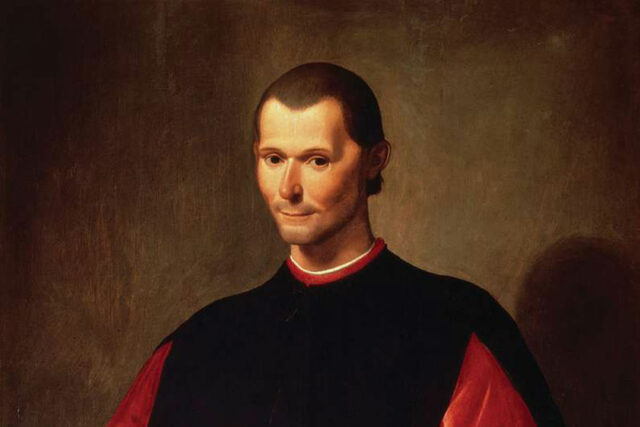
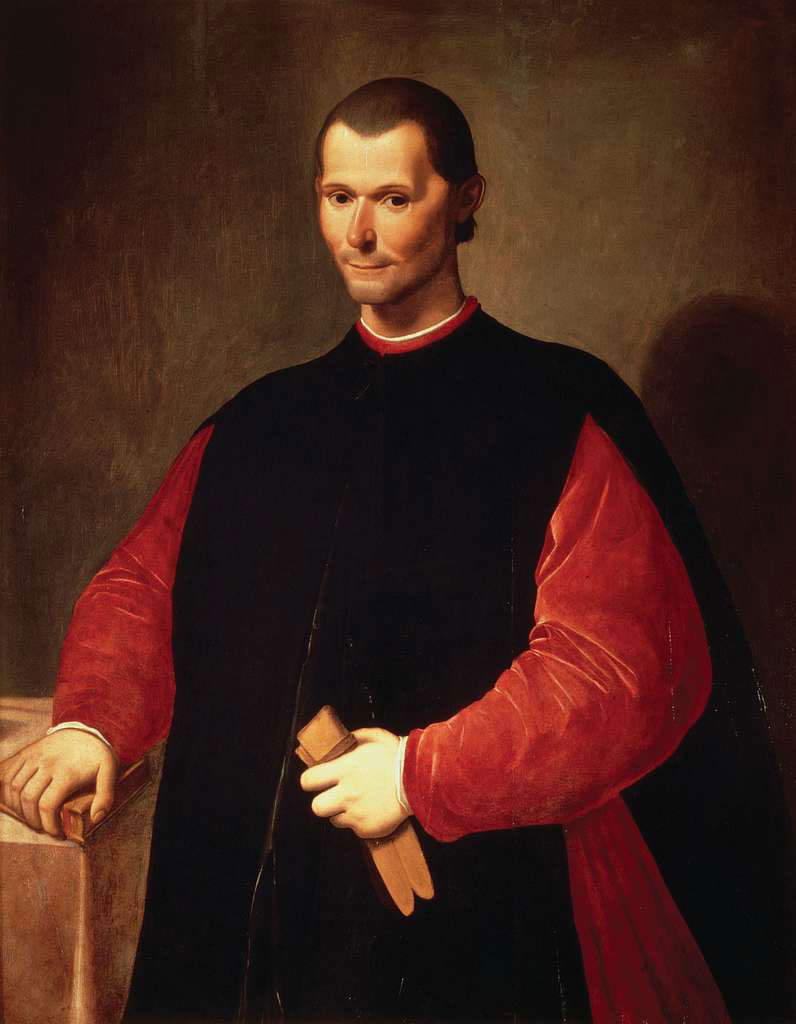
PORTRAIT of Niccolò Machiavelli by Santi di Tito. — EN.M.WIKIPEDIA.ORG
PORTRAIT of Niccolò Machiavelli by Santi di Tito. — EN.M.WIKIPEDIA.ORG
Niccolò Machiavelli was a Florentine diplomat, author, philosopher, and historian who lived during the Italian Renaissance. He is best known for his political treatise, The Prince (Il Principe), published in 1532, for which he has often been called the “father of modern political philosophy and political science” by modern-day political thinkers.
Such an honorific was earned by this self-made political philosopher who strategized his own survival and positioning in the shifting politics of his time. Historian Maurizio Viroli, in his biography of Machiavelli, relates that Machiavelli was born in a tumultuous era. As a secretary (historian) in the court, Machiavelli witnessed firsthand the state-building methods of Pope Alexander VI (head of the Catholic Church, ruler of the Papal States, and leader of the Holy League with European rulers) and his son, Cesare Borgia. Note that Rodrigo Borgia was appointed cardinal when he was barely in his twenties by his uncle, Pope Callixtus III, and he rose to the papacy after the death of Pope Innocent VIII as the most senior, most powerful cardinal, aligned with the emperors of Europe at that time. As Pope Alexander VI, he made his son, Cesare, cardinal and supreme military commander of papal forces that conquered opposing regimes. These nepotistic appointments by dynastic rulers were characteristic of the era.
Machiavelli personally witnessed the brutal retribution Cesare Borgia inflicted on his rebellious commanders and emphasized “the danger of offending a ruler and then expecting to trust him afterward.” Rodrigo and Cesare Borgia may have set the prototype for Machiavelli’s The Prince — of “political leaders by birth and destiny” who ruled by “the end justifying the means” on subjects who were cowed into submission by fear more than love and allegiance.
When Pope Alexander VI died, a proper papal conclave ultimately selected Julius II — who was a bitter rival of the Borgia family — as pope. Machiavelli still tried to ingratiate himself with the new “Princes,” the Medicis. He redirected his already-started The Prince, and dedicated it to Guiliano de Medici, the new co-ruler of the Florentine Republic with his brother, Lorenzo the Magnificent. Guiliano was “The Prince” to whom Machiavelli wrote his radical political prescriptions for tyrannical, amoral, and enduring power in position. It is said that Guiliano never read Machiavelli’s The Prince.
Changing loyalties of both ruler and the ruled is one of the political realities exposed and warned against in The Prince. “People are loyal only when it suits them,” Machiavelli cautioned. In reality, self-interest drives allegiances and alliances; beware of appearances and false declarations of love and admiration.
Is it better for a “prince” to be feared or to be loved? Machiavelli’s reply: “Since it is difficult for a ruler to be both feared and loved, it is much safer to be feared than loved, if one of the two must be lacking. For this can generally be said of men: that they are ungrateful, fickle, liars and deceivers, avoiders of danger, greedy for profit; and as long as you serve their welfare, they are entirely yours, offering you their blood, possessions, life and children… when the occasion to do so is not in sight; but when you are faced with it, they turn against you…For men are less concerned with hurting someone who makes himself loved than one who makes himself feared, because love is held by a link of obligation which, since men are wretched creatures, is broken every time their own interests are at stake; but fear is held by a dread of punishment which will never leave you.” Always remind everyone of your power.
So, “Prince,” go ahead with whatever you need to do, to keep yourself in power, Machiavelli exhorts. In chapters three, five, and eight,, he explicitly says that fraud and deceit are necessary for a prince to use. Violence is needed for the stabilization of power and the introduction of new political institutions. Force may be used to eliminate political rivals, destroy resistant populations, and purge the community of other men strong enough of a character to rule, who will inevitably attempt to replace the ruler. Politics have no relation to morals, Machiavelli infamously said.
In 1559, the Catholic Church (Pope Paul VI) banned The Prince, putting it on the Index Librorum Prohibitorum, the list of publications that Catholics were forbidden to read. In the 16th century, Catholic writers “associated Machiavelli with the Protestants, whereas Protestant authors saw him as Italian and Catholic.” In fact, he was apparently influencing both Catholic and Protestant kings, Robert Bireley analyzed in his book, The Counter Reformation Prince (1990). The Prince was spoken of highly by Thomas Cromwell in England and had influenced Henry VIII in his turn towards Protestantism and his serial divorce, beheading, or otherwise disposing of six wives.
“Why are we still reading this book called The Prince, which was written 500 years ago,” a Yale University essay asks? (Jan. 1, 2011). Machiavelli is not interested in talking about ideal republics or imaginary utopias, as many of his predecessors had done: “There is such a gap between how one lives and how one should live that he who neglects what is being done for what should be done will learn his destruction rather than his preservation.” This is Machiavelli’s political realism — his intention to speak only of the “effectual truth” of politics, “so that his treatise could be of pragmatic use in the practice of governing.”
Are we still focused on the opportunistic use of power and influence in position? That is exactly the definition of “Machiavellianism” as “the name of a personality trait construct characterized by manipulativeness, indifference to morality, lack of empathy, and a calculated focus on self-interest,” as described by psychologists Daniel and Delroy Paulhus in Machiavellianism (2009).
Machiavellianism is the antithesis of good governance in today’s rights-focused democracies. Yet it thrives, perhaps because of the realities of shifting economics, and the overriding need to “maximize scarce resources” for individual survival and improvement, as espoused by the economist Adam Smith (1776).
It is said that there are almost 250 political families, referred to as “political dynasties,” that control all 82 provinces of the Philippines at all levels. The “taipans,” the cartel of mixed political and business oligarch families which control politics and own various crony capitalist businesses, has reshaped political alliances, according to the Manila Times of Sept. 16, 2020. (Recall the nepotism and dynastic rule in Machavelli’s time.)
According to a Philippine Star editorial on July 15, 2024: “Dynasty building undermines the criminal justice system, with clans controlling the police, prosecution, judiciary and jail facilities in their turfs. This has engendered impunity, as the nation has seen in so many brazen political killings.” There are many unresolved cases of stolen wealth and plunder, extrajudicial killings, oversized confidential funds, pork barrel, and bribery scams pending or still unfiled.
During his fourth State of the Nation Address (SONA) on July 28, President Ferdinand Marcos, Jr. ordered an audit of flood control projects under his administration, as he denounced the corruption that caused people to suffer from recurring flash floods during heavy rains.
Between July 2022 and May 2025, the first three years of the Marcos Jr. presidency, the government funded 9,855 flood-control projects worth over P545 billion. Massive flooding in recent months has brought these projects under the harsh glare of public scrutiny, with allegations of substandard work and links to corrupt practices.
An initial audit flagged projects collectively worth more than P350 billion ($7.11 billion) which did not specify the exact flood control structure built or repaired, as well as several projects at different locations which disclosed identical designs and materials. Ghost projects were revealed.
The Department of Public Works and Highways (DPWH) identified a total of 2,409 contractors for both local and national flood control projects.
President Marcos Jr. disclosed that an initial review found that P100 billion worth of projects — 20% of all flood control projects in the past three years — were undertaken by only 15 contractors.
Senator Panfilo Lacson said as much as 60% of infrastructure funds could go to “commissions” and off-the-books payments to legislators, public works officials, auditors, and others. “The pie-sharing varies depending on the level of greed,” he said.
The Machiavellian level of greed was first unmasked by a rerun of a video by Korina Sanchez on Korina Interviews and another by Julius Babao for his YouTube channel which both showcased the fantabulous house and 40 luxury cars of the couple Sarah and Curlee Discaya. It seemed to be a feel-good, rags-to-riches story, until Korina asked Sarah, “Where did all this wealth come from?” “From the DPWH,” was Sarah’s forthright reply, as she explained that the reason why they have this many cars is also to show their clients their “capacity to execute a project” (Philippine Star, Aug. 8).
It is, again, the Machiavellian model of power through structured interdependencies and rewarded allegiance to the “princes,” the powers-that-be in the self-centered bureaucracy that tapers to the top. In the Senate Blue Ribbon Committee that is building up the facts of the flood control projects issue, bigger and bigger names are being implicated, as selected witnesses tell on each other and insinuate the Machiavellian ruthlessness towards self-aggrandizing wealth and continued power. Those high-ranking officials who might be connected to the DPWH anomalies have resigned or were quietly relieved of their positions.
“You can always be a generous giver when what you give is not yours,” Machiavelli says of the sharing of what is plundered by princes. But you should not “load your people with exorbitant taxes and squeeze money out of them” to fund your generosity, Machiavelli warns.
The Filipino people are angry with the greed and corruption in government. The people know that it is their tax money that has been stolen in this systemic plunder of the flood control funds. A big protest rallies were held at the Luneta and the historic EDSA monument beside Camp Aguinaldo yesterday, Sept. 21, the anniversary of Marcos Sr.’s Martial Law which was declared 53 years ago.
Floods are upon Machiavelli’s new “princes.”
Amelia H. C. Ylagan is a doctor of Business Administration from the University of the Philippines.
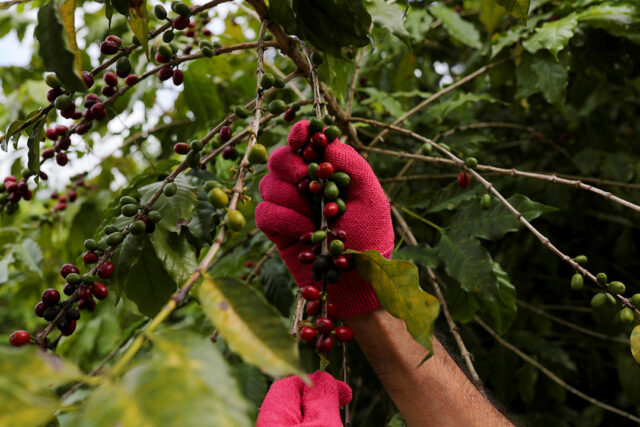
US REPRESENTATIVES Don Bacon and Rohit Khanna were set to introduce bipartisan legislation that would exempt coffee products from any tariffs, spokespeople for the legislators said.
Brazil used to supply a third of all the coffee used in the US, but shipments dried up since a 50% tariff was imposed on Brazilian imports at the end of July.
“Families across America are feeling the cost of higher coffee prices, which are already up 21%, and tariffing a product we can’t grow at a large, commercial scale, only makes it worse,” Republican Mr. Bacon said.
Roasted coffee prices at grocery stores in the US rose 20.9% in August from a year earlier, according to the Bureau of Labor Statistics.
“I look forward to working with Rep. Khanna to introduce this bipartisan bill and believe it can help spark the broader debate about Congress reclaiming its constitutional role in tariff policy,” Mr. Bacon, one of the few Republican voices in
Congress who has taken positions independent of President Donald J. Trump, added.
Prices for arabica coffee, the mild variety mostly used by coffee chains such as Starbucks and Dunkin Donuts, have jumped around 50% at the Intercontinental Exchange in New York since the Trump administration imposed its tariff on Brazilian imports, including green coffee.
“If you drink coffee every morning, how can you not be mad about that?” Mr. Khanna, who is a Democrat, told Reuters, referring to the price rise.
The bill seeks to exempt coffee from any tariffs imposed after Jan. 19, including roasted and decaffeinated coffee, as well as coffee husks, skins, and coffee substitutes containing coffee in any proportion. — Reuters
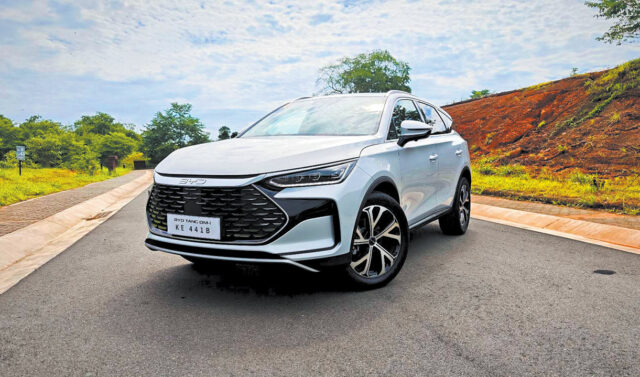
Formally launched last week, the BYD Tang DM-i is priced at P2.098 million. — PHOTO BY PABLO SALAPANTAN
1 of 5
Formally launched last week, the BYD Tang DM-i is priced at P2.098 million. — PHOTO BY PABLO SALAPANTAN
PHOTO BY PABLO SALAPANTAN
Curiously, the large infotainment screen of the Tang does not rotate as in other BYDs. — PHOTO BY PABLO SALAPANTAN
Either AC or DC charging is accepted. — PHOTO BY PABLO SALAPANTAN
Is the BYD Tang a sure putt for distributor ACMobility? — PHOTO BY PABLO SALAPANTAN
The BYD Tang DM-i might just shake up the midsize SUV segment
By Pablo Salapantan
IS THE BYD Tang DM-i a sure putt for distributor ACMobility?
BYD’s seeming formula for success has been simple: Challenge and undercut the competition with better-equipped, ideally priced, good-quality vehicles. This approach has surely been central to the winning sales figures it now enjoys with its already established models in key segments like the Seal 5 DM-i, the Sealion 5 and 6 DM-i, Seagull EV, and more.
Its latest challenger in the country is taking its usual fight to a very competitive segment, the midsize SUV — specifically ones rising on the PPV or pickup-based platform. Enter the Tang DM-i, with which BYD is keen to make an impression — and possibly take everyone’s lunch money in the process.
ELEVATED DM-i The first thing you need to know about the Tang DM-i is that it’s a higher-tier model compared to the aforementioned Seal and Sealion. In the BYD universe, the “ocean/water models” serve are the more mass-market, affordable options, and the “dynasty models” like the Tang take things to a level higher in terms of the overall feel of the vehicle.
I felt that difference immediately once I stepped inside the BYD Tang DM-i to set off for our drive to Anvaya Cove in Bataan. As the first driver of the day, I quickly settled into the plush interior highlighted by the usual soft-touch materials, luxurious touches, and upmarket appointments.
You get a huge panoramic sunroof, leather seats, wireless charging, and easy connectivity in Apple CarPlay and Android Auto. The Tang’s big infotainment screen interestingly does not rotate like in other BYD models. When asked, the brand says this was probably done to keep costs down — or maybe to focus on what’s important.
Looks-wise, the Tang DM-i is a tad conservative compared to its BYD stablemates; it has a more curved and sculpted look, with no outlandish (or garish) touches. It is a welcome difference from the usual “out there” looks of the recent BYD models.
Now, down to the most important aspect of the Tang DM-i, the powertrain. Propelling this vehicle is a 1.5-liter turbocharged high-efficiency gasoline-fed generator paired with the BYD Super DM-i electric motor technology. Combined, the setup outputs 200ps and 315Nm of torque. Significantly, it can muster a total range of 1,160 kilometers (with an exclusive EV range of 110 kilometers).
Essentially, the 1.5-liter mill is used as a range extender for the Tang DM-i, providing the owner and driver peace of mind, and sans range anxiety. There’s also a plug-in port, should owners want to top up at charging stations or at home.
Safety comes in the form of the usual ADAS (advanced driver assistance system) features found in most models in the BYD lineup. This collection further gives BYD a leg up on the direct competition, which lack most of the safety features found in the Tang DM-i.
SELF-DRIVEN SUV Most midsize SUVs are geared for passengers, and rarely is any significant focus given to the driver experience. In the BYD Tang DM-i though, the script is flipped, and the driving experience for me is the highlight more than anything else.
I like how the Tang DM-i feels easy to use from the get-go. There are no complicated procedures, the button layouts are well placed, and the maneuverability is top-notch for something this big.
Power is immediate from the turbocharged engine, which gives the oomph and torque a vehicle of this size needs to hustle along. In fact, it may feel so brisk and the power so sudden that torque steer sometimes makes an appearance, so caution under heavy acceleration should be exercised.
Frugality is at the forefront of every BYD DM-i model, and the Tang is no exception. In the city during heavy traffic, we saw numbers climb to as high as 19kpl, and highway cruising yielded 22kpl. The claimed 1,160 kilometers of full range appears realistic, with no need to refuel or even ease off the throttle, and it seems the DM-i technology easily adapts to driving conditions.
My one critique of the BYD Tang DM-i concerns the ride. While most vehicles in this class ride harsher due to ride height and rugged underpinnings, I think the Tang additionally has huge rims to blame for the somewhat hard ride. While it isn’t back-breaking, I was assuming the ride would be better, given that it rides lower than other SUVs, and doesn’t appear to be geared for ruggedness.
THE BOTTOM LINE My overall experience with the new BYD Tang DM-i leads me to believe that the brand had a specific mindset when it came out with the model. Its main purpose is to provide a less rugged, harsh, and noisy experience than what the current crop of PPVs generally offer, while taking efficiency (through DM-i technology) to another level that conventional ICE-powered SUVs can’t match.
The Tang has everything a buyer would want without a hint of compromise — a proposition that should prove too good to pass up.
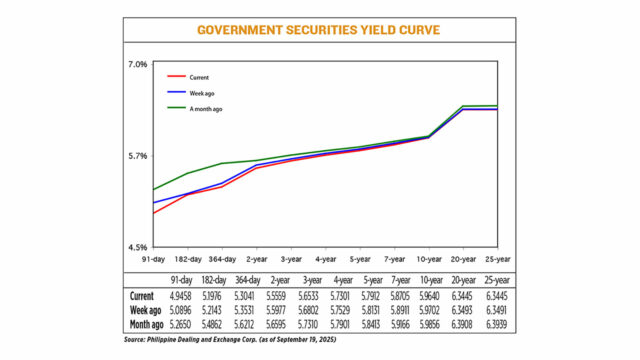
YIELDS on government securities (GS) traded at the secondary market went down across all tenors last week as the market priced in the US Federal Reserve’s first rate cut for this year and expectations of further easing amid signs of weakness in the world’s largest economy.
GS yields, which move opposite to prices, declined by an average of 3.26 basis points (bps) week on week, according to data from the PHP Bloomberg Valuation System Reference Rates as of Sept. 19 published on the Philippine Dealing System’s website.
Yields dropped across the board. At the short end of the curve, yields on the 91-, 182-, and 364-day Treasury bills (T-bills) slid by 14.38 bps (to 4.9458%), 1.67 bps (5.1976%), and 4.90 bps (5.3041%), respectively.
At the belly, the rates of the two-, three-, four-, five-, and seven-year Treasury bonds (T-bonds) went down by 4.18 bps (to 5.5559%), 2.69 bps (5.6533%), 2.28 bps (5.7301%), 2.19 bps (5.7912%), and 2.06 bps (5.8705%), respectively.
At the long end, yields on the 10-, 20-, and 25-year bonds fell by 0.62 bp (to 5.964%), 0.48 bp (6.3445%), and 0.46 bp (6.3445%), respectively.
GS volume traded declined to P43.82 billion on Friday from P46.9 billion the week prior.
Lodevico M. Ulpo, Jr., vice-president and head of fixed-income strategies at ATRAM Trust Corp., said the local market was “broadly constructive” heading into the Fed’s two-day meeting last week.
“Positioning reflected investor confidence that the anticipated rate cut would reinforce the case for extending into the belly of the curve,” Mr. Ulpo said in a Viber message.
“The Fed’s tone has shifted meaningfully. While tariff-related inflation risks remain a watchpoint, the focus has pivoted toward supporting employment amid signs of labor market weakness.
For local markets, this translates into a bias for easier US policy conditions, which in turn anchor expectations of a supportive global rates backdrop for Philippine bonds.”
At Wednesday’s meeting, the Fed lowered its policy rate by 25 bps to a range of 4%-4.25%, its first cut since December, and signaled a gradual easing cycle in response to mounting labor market concerns, Reuters reported.
At the same time, Fed Chair Jerome H. Powell highlighted “a challenging situation” for policymakers, noting that risks to inflation were tilted to the upside and risks to employment to the downside.
The comments dampened market optimism despite a much hoped-for dovish shift after recent data that showed unemployment climbing to 4.3% in August and payrolls growing far less than expected. A steep downward revision to benchmark jobs figures for the year through March also recently added weight to the view that the labor market is losing steam, bolstering the case for multiple rate cuts ahead.
The US central bank’s release on Wednesday of updated quarterly economic projections, including rate forecasts issued in a chart known as the “dot plot,” reflected expectations of more easing this year when compared to the “dots” from the June meeting, with 50 bps in cuts seen before year end.
At the same time, the Fed’s projections still put inflation ending this year at 3%, well above the central bank’s 2% target, while its projection for economic growth was slightly higher at 1.6% versus 1.4%.
Security Bank Vice-President and Head of Fixed Income Dino Angelo C. Aquino said in an e-mail that the Fed cut was seen as hawkish and was “a headwind to the local bond rally.”
“Despite weakening labor market in the US, the tariff impact on inflation remains uncertain — hence, it may add volatility in the short term,” he added.
“The effect of the much awaited 25 bps cut by US Fed has pushed rates lower. Given these developments, this gives the BSP (Bangko Sentral ng Pilipinas) room to cut rates in October to help support growth amid stable inflation,” Jonathan L. Ravelas, a senior adviser at Reyes Tacandong & Co., said in a Viber message.
The BSP lowered benchmark borrowing costs by 25 bps for a third consecutive meeting last month, bringing the policy rate to 5%. It has now delivered cumulative rate cuts of 150 bps since starting its easing cycle in August 2024.
The Monetary Board’s last meetings for the year are scheduled for Oct. 9 and Dec. 11.
The inclusion of Philippine bonds in the positive watchlist for JPMorgan Chase & Co.’s emerging market government bond index also helped drive appetite for securities last week, Mr. Aquino said. “Bonds saw good two-way flows, which were skewed to better buying from both local and foreign flows.”
“Investors are extending duration in anticipation of further policy easing in the months ahead,” Mr. Ulpo added.
For this week, rate-cut expectations will continue to drive GS yields lower, Mr. Ravelas said.
“The immediate focus will be the release of the Bureau of the Treasury’s borrowing program and the upcoming auctions. Strong demand is likely to persist in the T-bill space and the three-year bond auction, which could drive a bull-steepening of the curve as front-end rates drift closer to BSP policy levels. At the long end, performance will remain sensitive to global rate developments, with duration demand reinforced by broad investor positioning and supportive technicals,” Mr. Ulpo said.
There could be some volatility as markets continue to digest the Fed’s decision and statements from its officials over the weekend, Mr. Aquino added.
“The market is expected to see sporadic selling, but expect demand to remain robust.” — with Reuters
The Porsche Design Cupsole Sneaker (P20,000) is made in Italy from calf skin. It is a modern sport shoe with a light rubber sole made from recycled material. It comes in a Porsche Design shoe bag and includes spare laces. — PHOTO FROM PORSCHE DESIGN MANILA
1 of 2
The Porsche Design Roadster Trolley (P35,000) is made of polycarbonate and features smooth-running wheels with ball bearings and a multi-height handle system with an ergonomic grip. It is especially easy to place bags over the handle and remove them again. The cabin-size luggage has a volume capacity of 45 liters. — PHOTO FROM PORSCHE DESIGN MANILA
The Porsche Design Cupsole Sneaker (P20,000) is made in Italy from calf skin. It is a modern sport shoe with a light rubber sole made from recycled material. It comes in a Porsche Design shoe bag and includes spare laces. — PHOTO FROM PORSCHE DESIGN MANILA
PORSCHE DESIGN hosted an exclusive car meet last Sept. 11 at the AutoComplex in Quezon City — celebrating the brand’s “enduring connection to the original Porsche 911.” Said Porsche Design Manila President Hans Yao, “Just like Ferdinand Alexander Porsche who stood the test of time, giving us a brand that is beloved through generations, Porsche Design carries the same principles of innovation, precision, and timeless excellence. And representing the brand which started the first-ever Treffen Der Ikonen (“meeting of icons”), this gathering is indeed a testament to his vision.”
Around 100 Porsche 911s across generations made an entrance as an emcee narrated their stories. Mr. Yao and Porsche Design Manila Marketing Head Heinrich Quintong welcomed guests and spoke about the brand’s “engineered luxury” philosophy, which merges function with form.
A video presentation showcased Porsche Design’s lifestyle products — from sleek timepieces to modern luggage. Various showcases were set up: a “heritage gallery” for guests to learn more about FA Porsche’s design journey, starting from the birth of the Porsche 911 to his vision of expanding into lifestyle products; a “timepieces and innovation lounge” for a look at Porsche Design’s iconic chronographs inspired by motorsport engineering; a “travel and mobility showcase” with the brand’s premium luggage, backpacks, and other leather goods that are “created for optimum performance, durability, and style perfect for both urban lifestyles and global travels;” and a “lifestyle and fashion zone” displaying apparel, eyewear, footwear, and accessories.
Event sponsors included AutoComplex, Second Skin Industries, Diageo, Nustar Resort and Casino, Washington Watches, Singlife, Mt. Fuji, and Summit Golf and Country Club. Porsche Design shops are located at Rockwell Powerplant Mall, Shangri-La Plaza, Okada Manila, Newport Resorts Mall, and Nustar Resort and Casino. Follow the brand on Facebook (Porsche Design Manila) and Instagram (@porschedesign.manila).
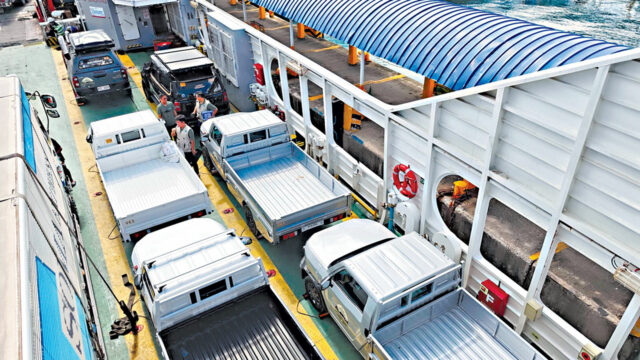
Toyota Tamaraws aboard a Ro-Ro (roll on, roll off)vessel. — PHOTO BY PABLO SALAPANTAN
TOYOTA MOTOR Philippines (TMP) Corp. is planning to roll out additional conversion models for its Next Generation Tamaraw to capture more small and medium enterprises (SMEs), citing strong demand for commercial vehicles.
“Because of the strong performance of Tamaraw, we recently introduced new conversion models,” TMP First Vice-President for Corporate Affairs Josephine Villanueva told BusinessWorld in a phone interview.
“And because of strong demand, it is going to boost our production, and we will try to introduce more conversion models to reach other types of customers,” she added.
The Tamaraw, relaunched last year, initially came with three conversion types — aluminum cargo, utility van, and dropside.
Earlier this year, TMP added new variants including a food truck, ambulance, patrol vehicle, camper van, wing van, and mobile store.
Ms. Villanueva said that beyond Tamaraw’s monthly sales, which reached 1,200 units as earlier reported, the company is monitoring the broader pure commercial market.
Citing data from the Chamber of Automotive Manufacturers of the Philippines, Inc. (CAMPI), she said that the pure commercial market — covering vehicles under one ton and over one ton — grew by 47.8% in the first eight months.
Industry sales rose to 30,446 units in January to August from 20,595 a year earlier.
Trade Secretary Ma. Cristina A. Roque said that TMP President Masando Hashimoto, in a Sept. 18 meeting, noted strong demand for food trucks, camper vans, and delivery vans.
“The demand is so huge, so they came here to ask about incentives, the usual,” Ms. Roque said.
The government is finalizing a new auto revival program called the Revitalizing the Automotive Industry for Competitiveness Enhancement, which will offer incentives similar to the Comprehensive Automotive Resurgence Strategy program but with a lower volume requirement of 100,000 units.
“It will just be a matter of time… because we want more manufacturers to join,” Ms. Roque said.
In the January–August period, TMP retained its market leadership with sales of 146,357 units, up 4.1% from 140,654 a year ago. It accounted for 47.93% of total industry sales. — Justine Irish D. Tabile
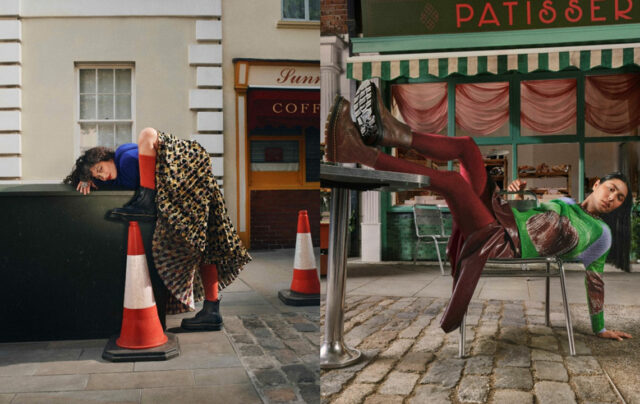
DR. MARTENS’ cushioned Zebzag sole staked its claim on summer with the Zebzag Mules. Now, the sole is wearable year-round with the introduction of two new pairs of boots. The Zebzag sole is designed with a cushioned core, fusing a lightweight EVA midsole with a durable PVC tread. The Zebzag Laceless boot is inspired by the brand’s 1460 boot with some relaxed adjustments. It is a slip-on style that maintains the aesthetic of a lace-up, wrapped in relaxed black Wyoming leather for a lived-in look fresh out of the box. It’s finished with the brand’s black and yellow scripted heel loop. Sitting slightly lower on the ankle is the Zebzag Rigger boot, inspired by industrial silhouettes and reformed for relaxed comfort. Another slip-on, the boot is fitted with dual pull-tabs and marked with Puritan stitch detailing. The Rigger boot is available in black Wyoming leather or water-resistant Milled Nubuck in a variety of shades. The new boots are also fitted with SoftWair insoles. The Zebzag Laceless and Rigger boots are available globally starting this month and the Zebzag sole will also appear elsewhere in the Dr. Martens Fall-Winter 2025 line-up.
Corso Como 88 opens at BGC
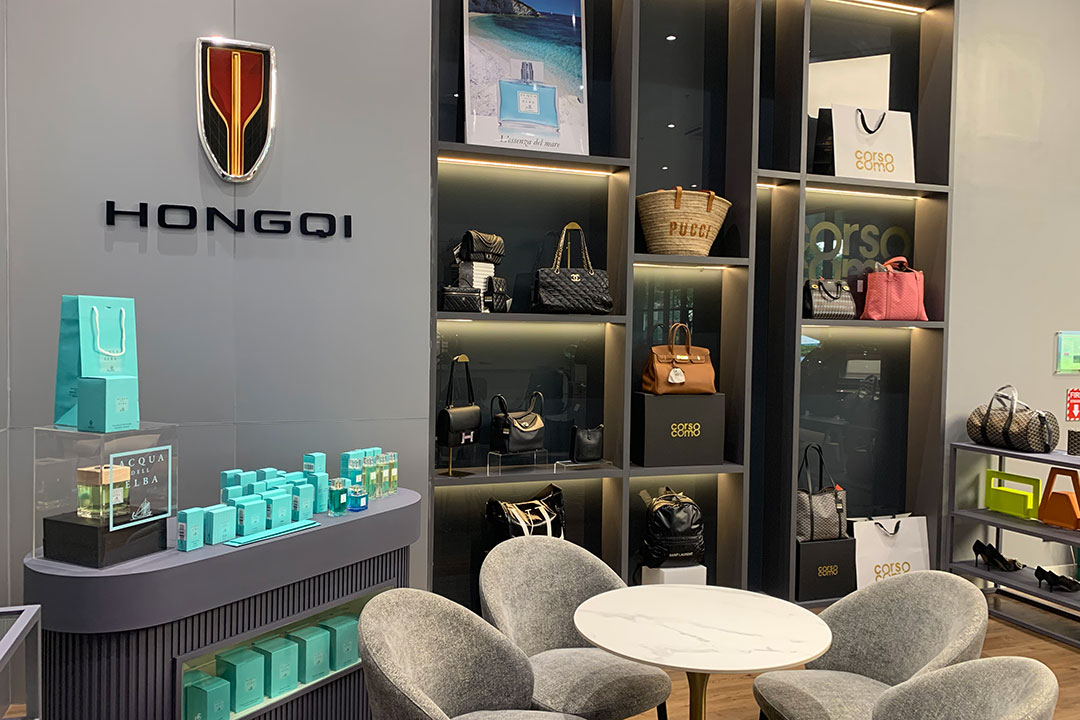
CORSO COMO, the luxury boutique known for its Italian leather pieces, is now in Bonifacio Global City (BGC). The newest Corso Como 88 store is located inside the Hongqi showroom, ground floor Asian Century Center, 27th Street corner 4th Avenue, BGC, Taguig. The outlet promises a unique shopping experience with fashion pieces displayed side by side with the latest sedans, SUVs, and EVs by Hongqi. The official distributor of Biagini, Buti Pelleterie, BOIS 1920, and Acqua dell’Elba in the Philippines, Corso Como 88 is home to luxe Italian leather pieces and other top European brands. “We always like to offer something different for our friends who frequent Corso Como 88,” said owner Imelda Menguito in a statement. “In One Ayala, aside from showcasing our leather pieces and accessories, we hold events and parties inside the store. And now in BGC we are inside a prestigious car showroom, a real treat for those who appreciate luxury, fashion, and style.”
Gap celebrates logo with sale
THE Gap is bringing back the Logo Weekend, spotlighting its signature logo collections. From Sept. 26 to 28, shoppers can check out the “Buy one Get one deal” on Gap’s logo apparel (hoodies, sweatshirts, tees, sweatpants, sweat shorts, accessories) for the whole family. Special promotions will be available in-store at branches atTrinoma, SM Mall of Asia, SM Megamall, Shangri-la Plaza, Glorietta 4, Rustan’s Makati, Alabang Town Center, the Evia Lifestyle Center, Ayala Malls Manila Bay, and Abreeza, and online at gap.com.ph. For more information, visit the website or follow @gapphilippines on Facebook and Instagram.
COS shows at NYFW
COS returned to New York Fashion Week (NYFW) with its Autumn/Winter 2025 collection: a study in contrast, materiality, and craftsmanship, staged inside Brooklyn’s Greenpoint Terminal Warehouse. The show unveiled 47 refined and powerful looks. Womenswear explored sculptural draping, cocooning volumes, and versatile day-to-night dressing — highlighted by a softly sculpted silk dress. Menswear brought tailoring with oversized proportions, tactile knits, and tonal layering, grounded by timeless leather footwear. Accessories and bags echoed the same craftsmanship, completing sleek, contemporary silhouettes. Select pieces from the COS Autumn Winter 2025 collection are now available in the COS Store at SM Aura Premier and on cos.com, with limited drops arriving throughout the season.
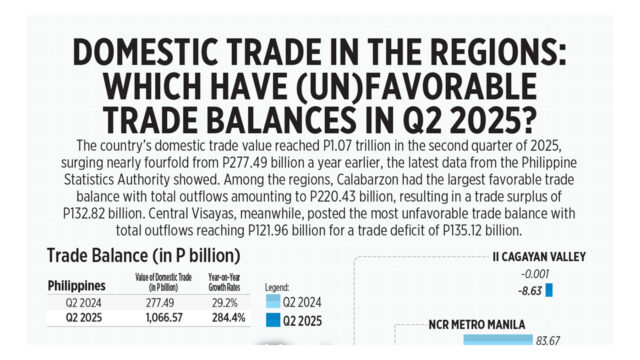
The country’s domestic trade value reached P1.07 trillion in the second quarter of 2025, surging nearly fourfold from P277.49 billion a year earlier, the latest data from the Philippine Statistics Authority showed. Among the regions, Calabarzon had the largest favorable trade balance with total outflows amounting to P220.43 billion, resulting in a trade surplus of P132.82 billion. Central Visayas, meanwhile, posted the most unfavorable trade balance with total outflows reaching P121.96 billion for a trade deficit of P135.12 billion.
The first week of September marks Obesity Prevention Awareness Week, a timely reminder of a growing health emergency that cuts across health, productivity, and social well-being. In the Philippines, nearly 40% of adults and close to 10% of children are overweight or obese, levels considered high by global standards. Left unaddressed, these numbers translate into millions of Filipinos facing higher risks of diabetes, heart disease, liver disease, and even cancer, conditions that take lives too soon and drain household incomes and public resources.
Obesity is not merely a lifestyle issue. It is now recognized worldwide as a chronic non-communicable disease (NCD), shaped by complex biological, social, and environmental factors. For families, this means more than medical costs. It means reduced productivity at work, lower quality of life, and intergenerational effects as children adopt unhealthy eating and activity patterns from an early age.
To confront this challenge, the National Nutrition Council (NNC), with support from the World Health Organization (WHO), developed the Philippine Strategic Plan in Addressing Obesity and Other Metabolic Disorders 2024–2028. This roadmap outlines measures to make healthy choices the easier choices: regulating food environments in schools, creating safe community spaces for physical activity, expanding access to nutritious food for vulnerable groups, and strengthening data and monitoring systems. Importantly, the plan ties into broader national goals, including the Philippine Development Plan and AmBisyon Natin 2040, which envision a healthier, more prosperous population.
The urgency of these reforms was underscored during the World Obesity Day Philippine Forum in March 2025, which brought together experts, policymakers, and advocates. The event highlighted how cross-sector collaboration, among government agencies, UNICEF Philippines, Department of Science and Technology – Food and Nutrition Research Institute, Philippine Association for the Study of Overweight and Obesity, WHO, and civil society, will be key to implementing sustainable solutions.
Globally, the World Obesity Federation reminds us that obesity is not simply about personal willpower. This year’s theme, “Changing Systems, Healthier Lives,” highlights how failing systems from food and healthcare to transport and the built environment drive rising obesity rates. Other countries have shown that systemic reforms work. Policies such as urban designs that promote walking and cycling, and mandatory nutrition labeling have all contributed to healthier outcomes.
For the Philippines, healthcare systems must first recognize obesity as a disease and embed prevention and management into primary care. This requires expanding insurance and universal health coverage to include obesity services, establishing monitoring and surveillance beyond Body Mass Index (BMI), and equipping the health workforce with training to provide compassionate and people-centered care.
But strategies must extend beyond hospitals and clinics. Local governments can design greener, more active communities by building parks, safe walking paths, and cycling routes. Fiscal incentives such as reduced taxes on sporting goods or subsidies for after-school sports programs can help make active lifestyles more accessible. Employers should also address stigma in the workplace, while the media can play a vital role in reshaping narratives around obesity and promoting healthier norms.
The economic case is compelling. Data from the Organisation for Economic Co-operation and Development show that obesity accounts for around 70% of all diabetes treatment costs, 23% of cardiovascular disease costs, and nearly 10% of cancer costs. Reducing obesity is therefore not only a health imperative but also a fiscal strategy to reduce the burden on health systems and free up resources for other pressing needs.
The global biopharmaceutical industry, through the International Federation of Pharmaceutical Manufacturers and Associations (IFPMA), continues to support the WHO Global NCD Action Plan 2013-2030. By addressing obesity as an NCD, we can prevent a cascade of related illnesses, extend healthier lives, and reduce treatment costs.
Tackling obesity is one of the defining public health challenges of our time. Success will require courage, collaboration, and commitment from policymakers who enact reforms, from communities who create healthier environments, from employers who champion wellness, and from industries who stand ready to partner in this mission. By working together, we can prevent an obesity crisis and build a healthier, more productive future for all Filipinos.
Teodoro B. Padilla is the executive director of Pharmaceutical and Healthcare Association of the Philippines, which represents the biopharmaceutical medicines and vaccines industry in the country. Its members are at the forefront of developing, investing and delivering innovative medicines, vaccines and diagnostics for Filipinos to live healthier and more productive lives.
THE TRUMP administration is drawing up plans to use tariff revenue to fund a program to support US farmers, the Financial Times reported, citing Agriculture Secretary Brooke Rollins.
“There may be circumstances under which we will be very seriously looking to and announcing a package soon,” Ms. Rollins told the newspaper in an interview.
Ms. Rollins said financing the bailout with “tariff income that is now coming into America” was “absolutely a potential.”
The White House did not immediately respond to a Reuters request for comment.
The report follows pressure from farm groups after China stopped purchases of soybeans from the US in their tit-for-tat trade dispute, and as tariffs have pushed up costs for fertilizer, machinery and other imported inputs.
Agriculture has emerged as a major point of contention between China and the US as the superpowers are locked in a tariff war launched by President Donald J. Trump. — Reuters
YIELDS on the Bangko Sentral ng Pilipinas’ (BSP) short-term securities were mixed on Friday, even as demand was strong as it offered a lower volume compared to the previous week.
The BSP bills fetched bids amounting to P86.003 billion, higher than the P80-billion offer and the P112.781 billion in tenders for the P100-billion auctioned off a week prior. The central bank made a full P80-billion award of the securities.
Broken down, tenders for the one-month BSP bills reached P30.119 billion, just a tad above the P30 billion placed on the auction block but lower than the P46.395 billion in bids for a P40-billion offer in the previous auction.
Banks asked for rates ranging from 5.255% to 5.4%, a narrower but higher margin compared to the 5.198% to 5.395% seen a week earlier. With this, the average rate of the 28-day securities edged up by 0.23 basis point (bp) to 5.3454% from 5.3431% previously.
Meanwhile, the two-month papers attracted P55.884 billion in tenders, higher than the P50-billion offering but lower than the P66.386 billion in tenders for the P60 billion auctioned off the prior week.
Accepted rates were from 5.29% to 5.34%, narrower than the 5.25% to 5.359% band previously. This caused the average rate of the 56-day securities to decline by 1.52 bp to 5.3106% from 5.3258% a week prior.
The central bank uses the BSP securities and its term deposit facility to mop up excess liquidity in the financial system and to better guide short-term market rates towards its policy rate.
The BSP bills also contribute to improved price discovery for debt instruments while supporting monetary policy transmission, the central bank has said.
BSP officials last month said they are gradually shifting away from the issuance of short-term papers to manage liquidity as they want to boost activity in the money market.
“I think we’re beginning to move away from our short-term issuance of BSP securities. We still have enough government securities in our books, and there’s enough of it so we can reduce liquidity,” BSP Governor Eli M. Remolona, Jr. said on Aug. 28.
“I think we’ve been spoiling the banks by helping them manage liquidity too much, whereas in other places … there’s a money market that allows banks and other entities to manage short-term liquidity. We don’t have a money market. Somehow, our money market disappeared, and part of the reason may be us. We’re the money market for them, maybe. So, that’s something we’re looking very closely at.”
Data from the central bank showed that around 50% of its market operations are done through its short-term securities. — K.K. Chan