Home Blog Page 9782

Philippine trade year-on-year performance (January 2020)

THE COUNTRY’S trade-in-goods deficit narrowed in January as merchandise export growth outpaced the increase in imports, the Philippine Statistics Authority (PSA) reported on Tuesday. Read the full story.

Philippine trade year-on-year performance (January 2020)

Gov’t collections may drop by up to P100 billion

GOVERNMENT revenue collections may fall by between P91 billion to P100 billion if disruptions caused by the coronavirus disease (COVID-19) drag on until June, with the budget deficit projected to balloon to as much as 3.6% of gross domestic product (GDP) this year, government economic managers said on Tuesday.

In a press conference following the Economic Development Cluster (EDC) meeting, Finance Secretary Carlos G. Dominguez III said the government’s borrowing program may be increased to plug the funding gap that is projected to widen this year.

“It’s financeable, and quite frankly, it is necessary. Despite these difficulties, we are not contemplating a reduction in our expenditures, our ‘Build, Build, Build’ will go full blast and so will all other programs of the government… and make sure the economy is humming along as it should,” Mr. Dominguez told reporters.

The government set a P3.49-trillion revenue collection target this year, alongside a P4.1-trillion expenditure program.

Socioeconomic Planning Secretary Ernesto M. Pernia said up to 1.2 percentage points could be shaved off this year’s gross domestic product (GDP) growth if the coronavirus outbreak drags on until yearend.

Earlier estimates by the National Economic and Development Authority (NEDA) showed GDP growth may be reduced by 0.5 to one-percentage point if the COVID-19 outbreak lasts until June. This would mean a lower full-year growth of 5.5-6.5% against the 6.5-7.5% official target.

Amid higher government spending, Mr. Pernia said fiscal deficit could hit 3.6% of GDP this year. This would be higher than NEDA’s initial estimate of 3.3-3.4%, but still above the 3.2% official budget cap.

Economists have suggested that higher government spending, particularly on infrastructure projects, will probably cushion the effects of the COVID-19 on the economy.

“It’s very (easy) for us to fund a P100 billion to cover the budget shortfall, that is not difficult at all… We assure you that we have enough in our toolkit to make sure that our expenditures are going to remain at what the plan levels are despite the fact that we might get a hit on our growth and revenues because of this COVID,” Mr. Dominguez added.

Mr. Pernia said the Development Budget Coordination Committee (DBCC) will review the official targets and assumptions when they meet later this month.

At the same time, Mr. Dominguez said the EDC recommended the approval of an additional budget worth P2.92 billion for the Department of Health (DoH), particularly for its “additional testing, augmentation of contact tracing and surveillance and additional personnel protective equipment for health workers at the national and local levels.”

The Finance chief said the additional funds for the DoH will be sourced from both foreign and domestic lenders. He said the Philippines, as a borrowing country, is at an advantage at a time of declining interest rates.

Asked if the economic team will release a “stimulus package” to boost growth and help affected sectors mitigate the impact of the outbreak fallout, Mr. Dominguez said: “as of now, we see the stimulus program as being just keeping our expenditure budget where it is despite the fact that our revenue is going down, so that in itself is already stimulus package.”

On food prices, Mr. Pernia said they expect month-on-month inflation rate to accelerate by 0.1-0.2 percentage points due to “supply disruptions in arrival of China-dependent food imports.”

AFFECTED SECTORS
In that same briefing, Bangko Sentral ng Pilipinas (BSP) Deputy Governor Francisco G. Dakila, Jr. said remittances sent home by overseas Filipino workers (OFWs) could also decline by 0.2 to 0.8 percentage points amid temporary ban on deployment of workers to China, Hong Kong, Macau and Taiwan. A three percent remittance growth target for this year was set prior to the COVID-19 outbreak.

Meanwhile, Labor Assistant Secretary Dominique Rubia-Tutay said 47 establishments with 4,416 workers nationwide have implemented flexible work arrangements while 19 businesses with over 300 workers have temporarily closed to cope with COVID-19 outbreak.

“Temporary displacements are coming from Regions 3, 6, 7, and 12, with Region 6 reporting the highest number of covered local workers affected, and also followed by Region 7. There are also OFWs, 734 who have been displaced particularly in Macau, some of them have been terminated while some are undergoing unpaid leave,” Ms. Tutay said. — Beatrice M. Laforga


Vehicle sales rebound in February

AUTOMOTIVE SALES in February climbed as the industry recovers from the Taal Volcano eruption, a joint report from the Chamber of Automotive Manufacturers of the Philippines, Inc. (CAMPI) and Truck Manufacturers Association (TMA) showed on Tuesday.

Data released by the groups showed February sales of 29,790 units grew 13.2% from 26,327 in the same month last year, and surged 25.6% from 23,723 units in January.

Automotive sales had dropped in January after some plants and dealerships in the National Capital Region and the Calabarzon Region were forced to temporarily suspend operations due to ashfall from the volcanic eruption. CAMPI-TMA data showed vehicle sales stood at 23,723 in January, 12% lower year on year and 30% lower than sales December 2019.

CAMPI President Rommel R. Gutierrez said the double-digit growth in February exceeded industry expectations.

“While we anticipate a growth recovery coming from the previous month’s losses due to the adverse effect of the Taal Volcano eruption, this double-digit growth is more than what we have expected,” he said.

“Based on the industry’s statistics, we are also very pleased to report that the month of February 2020 has recorded with the highest sales figures, surpassing the same month’s sales performance in the last 10 years.”

Year-to-date, vehicle sales inched up 0.6% to 53,513 units, from 53,215 last year.

In February alone, commercial vehicle sales, which accounted for 72.83% market share, grew 21.5% year on year to 21,697 units.

Broken down, Asian utility vehicle (AUV) sales soared 112.5% to 4,733 units, and light commercial vehicle sales grew 10.8% to 16,003 units. Sales of light trucks dropped 24.1% to 555.

Passenger car sales, on the other hand, slipped 4.5% to 8,093 units.

For the first two months of the year, commercial vehicle sales grew 7.2% to 38,877 units, while passenger car sales dropped 13.7% to 14,636 units.

Toyota Motors Philippines Corp. retained its spot as the market leader with 41.23% share, with its sales growing 32.5% to 12,283 units in February.

Mitsubishi Motors Philippines Corp. followed with 18.73% market share, with sales growing 10.4% to 5,579 units. This was followed by Nissan Philippines, Inc. with 13.23% share and sales growing by 11.9% to 3,941.

Honda Cars Philippines, Inc. (HCPI)has the fourth-largest market share with 6.34%. Its sales slumped 24.2% to 1,890 in February.

HCPI is shutting its Philippine operations this month after a global automotive industry slowdown. The company has said it will continue to sell vehicles in the country through its regional network.

Mr. Gutierrez is expecting the coronavirus disease 2019 (COVID-19) to have an effect on vehicle sales this year.

“While the industry remains optimistic that this growth will be sustained in the coming months, we cannot disregard the ripple effect of COVID-19 moving forward. It must be noted that the auto industry remains one of the most complex and integrated supply chains regionally and globally,” he said. — Jenina P. Ibañez

Torre Lorenzo allots P7B for ‘premium’ projects

By Denise A. Valdez, Reporter

TORRE Lorenzo Development Corp. (TLDC) is investing up to P7 billion this year to boost its premium residential-business projects and expand further into leisure development, its finance chief said.

“Our objective is to launch a few more projects this year. We’re looking at premium projects with an inventory value of P6.9-7 billion,” TLDC Chief Finance Officer Emmanuel A. Rapadas said in a briefing in Makati City yesterday.

The property developer has three new residential towers scheduled to launch this year, on top of expansion plans in leisure properties in Batangas, Pampanga, Manila and Davao.

Mr. Rapadas identified three projects that the company plans to introduce by year-end: a P900-million premium university residence along P. Noval St., Manila City; a P1.5-billion mixed-use development in Davao; and a P3.7-billion mixed-use development in Katipunan, Quezon City.

The Manila property is expected to break ground by the third quarter and generate sales of up to P1.6 billion. The Davao project will similarly offer student residences, with more than 600 units to be offered and raise about P2.6 billion in sales.

The Katipunan project is planned to be TLDC’s biggest mixed-use development to date, totaling 2,200 square meters with two towers and a podium. It is expected to generate about P6.9 billion in total revenues.

Aside from the three residential projects, TLDC is also expanding its leisure portfolio this year, through projects such as Dusit Princess Hotel Lipa in Batangas; Tierra Lorenzo Hotel San Fernando in Pampanga; Lyf by Ascott in Malate; and dusitD2 and Dusit Thani Lubi Plantation Resort in Davao.

The company is known for building premium university residences for the past 20 years, but it opened last year its first hotel in Davao, the dusitD2 Hotel, and private island resort Dusit Thani Lubi Plantation Resort.

TLDC President and Chief Executive Officer Tomas P. Lorenzo said the company wants to invest in the leisure segment further given the tourism potential of the Philippines.

“It was an exciting year because people know us for our university residences, but we finally crossed over to doing leisure projects around the country. We’re excited because tourism was really a market that we saw early,” he said.

Even with the coronavirus outbreak, Mr. Rapadas said its effect on TLDC’s hotel business is “very negligible,” as the bulk of its guests are domestic travelers. “We have a very strong risk management system,” he added.

Over the next two years, Mr. Rapadas said TLDC wants its hotel business to contribute 20% of total revenues, and in the long-run, grow this further to 30%. “Leisure is the emerging economic leg of the Philippines… Leisure tourism is the next big thing,” he said.

TLDC booked total revenues of P2.2 billion in 2019, up 21% year-on-year. Its compound annual growth rate from 2015 to 2019 is 47%.

PSE tells listed firms to offer remote voting as virus lingers

THE Philippine Stock Exchange, Inc. (PSE) is reminding shareholders of publicly listed firms of their options to participate in annual stockholders’ meetings (ASM) as the virus outbreak persists.

In a memo on its website Tuesday, the operator of the local bourse said investors may remotely participate in ASMs scheduled over the coming weeks as a precautionary measure to the coronavirus disease 2019 (COVID-19).

“To mitigate the risk of contracting COVID-19, stockholders may prefer to participate in the ASM and vote through remote communication, instead of a face-to-face meeting,” it said.

Republic Act No. 11232, or the Revised Corporation Code of the Philippines, allows companies to participate in ASMs either remotely, in absentia or through a proxy. The requirements and procedures for these options are up to the companies to establish.

“For corporations vested with public interest such as publicly-listed companies, stockholders may vote in the election of directors through remote communication or in absentia, notwithstanding the absence of a provision to that effect in the by-laws,” the PSE said.

The memo came as the PSE said it talks with the Securities and Exchange Commission for other possible safeguards to protect investors.

Over the next few weeks, listed companies that have scheduled their ASMs are Roxas Holdings, Inc. (Mar. 18); BDO Leasing and Finance, Inc. (Mar. 20); Xurpas, Inc. (Mar. 24); Chelsea Logistics and Infrastructure Holdings Corp. (Mar. 26); and Phoenix Petroleum Philippines, Inc. (Mar. 27).

More corporations scheduled their ASMs from April to June, and are yet to announce any adjustments in schedule in light of COVID-19.

The Department of Health reported nine new cases of COVID-19 infection yesterday, bringing the total cases in the Philippines to 33 as of late afternoon. President Rodrigo R. Duterte had earlier announced a State of Public Health Emergency in the country due to the outbreak.

Classes across all levels in Metro Manila have been suspended until Mar. 14. Malls and other commercial establishments likewise started checking temperatures of guests and provided alcohol and hand sanitizers at building entrances.

Several gatherings across the country have also been either cancelled or postponed as a precautionary measure to the outbreak.

Health Secretary Francisco T. Duque III advised the public to practice preventive measures such as proper hand hygiene, cough etiquette and social distancing to prevent the virus from spreading.

“With the increasing number of cases, I implore everyone to fully cooperate with us in investigation and contact tracing activities… We also advise everyone to avoid visiting public places and/or attending mass gatherings at this critical time,” he said in a statement yesterday. — Denise A. Valdez

MPTC readies P60B as toll road projects continue

CAPITAL expenditure for 2020 has been fully funded via project financing and equity from parent firm. — BW FILE PHOTO

METRO PACIFIC Tollways Corp. (MPTC) is setting aside P60 billion for this year’s capital expenditure (capex) as the toll road operator continues with the implementation of expressway projects, its finance chief said.

“It’s (capex) fully funded already via project financing. The equity portion comes from our parent company Metro Pacific Investments Corp. (MPIC),” MPTC Chief Financial Officer Christopher Daniel C. Lizo told reporters last week when asked about the funding source.

He said this year’s budget, which is three times higher than the P20 billion spent in 2019, will be used to fund the Cebu-Cordova Link Expressway (CCLEx), Cavite-Laguna Expressway (CALAx), C5 South Link of the Manila-Cavite Expressway (CAVITEx), and North Luzon Expressway-South Luzon Expressway (NLEx-SLEx) Connector Road.

MPTC had planned to earmark P45 billion for 2019, but Mr. Lizo said there were delays in the acquisition of rights of way (ROWs).

He noted that the company had spent only “P20 billion plus” for the toll road projects last year.

He said the company is hoping all ROWs will be delivered on time this year.

Mr. Lizo said further that the company had fully acquired the ROWs for CCLEx, 80% for C5 South Link of the Manila-Cavite Expressway (CAVITEx), 60% to 70% for NLEx-SLEx Connector Road, and 100% for CALAx.

May kaunting delay last year (There was a slight delay last year). As you know, only three of eight subsections of CALAx have been opened,” he said.

He added that the Department of Public Works and Highways had assured him that all ROWs would be acquired within the first half of 2020.

“Then construction works will go full blast,” he said.

MPTC is the tollways unit of MPIC, one of the three key Philippine units of Hong Kong-based First Pacific Co. Ltd., the others being Philex Mining Corp. and PLDT, Inc.

Hastings Holdings, Inc., a unit of PLDT Beneficial Trust Fund subsidiary MediaQuest Holdings, Inc., has a majority stake in BusinessWorld through the Philippine Star Group, which it controls. — Arjay L. Balinbin

Petron income falls to P2.3B

PETRON opens 124 new stations to bring the total to more than 2,400. — BW FILE PHOTO

PETRON CORP., the country’s largest oil refiner, reported a consolidated net income of P2.3 billion last year, down 67% from the earlier year after the company’s refining business incurred losses in part because of low production.

“Despite the challenging business environment, we still pursued our strategic goals to sustain our leadership and deliver long-term growth for our company,” Petron President and Chief Executive Office Ramon S. Ang said in a statement on the company’s 2019 financial results.

“Moving forward, we intend to keep our focus on further expanding our reach, strengthening our services and product offerings, and increasing our operational efficiency to better secure our position for the future,” he added.

Petron, which is also a leading participant in the Malaysian market, posted consolidated revenues of P514.4 billion last year, down 8% from the previous year.

Its sales volume was slightly lower at 107 million barrels from the previous year’s 108.5 million barrels after the 5% decline in Philippine volumes as its Petron Bataan Refinery went through an emergency shutdown as a result of the earthquake in April 2019.

Petron’s sales volume in Malaysia grew by 3%, which helped offset the decline in the Philippines.

In the Philippines, operations swung to a net loss of P1.4 billion last year, reversing 2018’s income of P2.8 billion. The losses came after the unplanned total plant shutdown starting in April, resulting in its local refining business incurring losses on low production and the start-up and stabilization activities in August to September.

Petron said its financial results were also affected by the weak refining margins. It said the market remained volatile last year because of the political tensions in the Middle East and uncertainties in the global economy.

Regional prices of finished petroleum products and petrochemicals dropped amid oversupply, with the average Dubai crude down to $63 per barrel in 2019 from $69 per barrel in 2018. The decline also came with the slowdown in demand. Average crude premiums in 2019 rose by almost threefold, further depressing the margins.

Last year, Petron opened 124 new stations, keeping its record of having the most number of stations nationwide at more than 2,400.

Among the highlights in 2019 is the start of commercial operations of its new lube oil blending plant in Tondo, Manila. The facility, which produces lubes and greases for local and foreign markets, has a filling capacity that is twice bigger than Petron’s former plant in Pandacan, Manila.

Petron also started operating its import terminal located in Tagoloan, Misamis Oriental, improving efficiency in product handling and distribution in the south.

It said its major facilities had complied with the government’s fuel marking program before the end last year, affirming its support to the initiative to curb smuggling.

Petron has a combined refining capacity of 268,000 barrels a day. It produces a full range of fuels and petrochemicals. The company operates about 40 terminals in the region and has more than 3,000 service stations.

On Tuesday, shares in the company slipped by 1.92% to close at P3.07 each. — Victor V. Saulon

Chelsea Logistics losses hit P832 million in 2019

CHELSEA Logistics and Infrastructure Holdings Corp.’s net loss ballooned by 51% to P832 million last year as the Dennis A. Uy-led firm suffered from its share in the losses of some units and expenses for new vessels and a warehouse complex.

“A significant portion of the net loss reported by the Group can be attributed to its share in net losses of 2Go Group and DITO Telecommunity totaling to P483 million,” it said in a regulatory filing.

The company saw a 35% increase in its consolidated revenues to P6.97 billion as all its business segments improved profitability.

Revenues from the tankering segment grew 14% to P1.98 billion as a result of the operations of the company’s medium-range tanker MT Chelsea Providence.

Freight revenues grew 43% to P2.44 billion while passage revenues rose 47% to P1.42 billion.

“The growth in the freight and passage revenues can be attributed to the operations of new vessels deployed during the year,” Chelsea Logistics said.

Revenues from the logistics segment, which accounts for 7% of the consolidated revenues, posted the biggest growth at 60% to P459 million from P287 million. The company attributed the increase in logistics revenues to its expansion program.

However, it said it had failed to achieve profitability last year “due to the full costing of ships (including, but not limited to, depreciation, financing costs, crew costs, insurance and other related costs, both fixed and variable) deployed during the year.”

Chelsea Logistics said further that there were additional interest expenses incurred for the new vessels and the 2.5-hectare parcel of land that the company had acquired.

The company also cited the construction of a warehouse complex, which will be completed by the third quarter of this year.

Cost of sales and services increased 44% to P5.42 billion from P3.76 billion due to “bunkering costs, depreciation and amortization, crew salaries and employee benefits, repairs and maintenance and insurance as a result of additional vessel deployments last year.”

Portions of the cash flows, Chelsea Logistics said, were also “used to pay P4.5 billion in maturing debts, both principal and interest, during the year.” — Arjay L. Balinbin

POGOs have insufficient AML, CTF awareness, regulation — study

PHILIPPINE OFFSHORE Gaming Operators (POGOs) have low defenses against dirty money transactions, according to a risk assessment done by the Anti-Money Laundering Council (AMLC).

In its attempt to conduct on-site compliance checking on POGOs, the dirty money watchdog found POGOs have yet to create anti-money laundering/counter-terrorism financing (AML/CTF) compliance units.

“The POGOs have no AML/CTF compliance units…there is a low level of AML/CTF awareness and regulation,” AMLC said in a study released on Tuesday.

The AMLC said compliance officers of POGOs could not be found and contacted in their provided addresses.

The study also found non-compliance of some POGOs with existing AML regulations, including the appointment of a local gaming agent.

“A foreign-based operator is required to appoint a local gaming agent, who will represent the said foreign-based operator in the Philippines,” AMLC said, noting these local agents are in charge of completing the documentary requirements during the application for gaming operations.

The AMLC also found that the offices of some POGOs, local gaming agents, and authorized representatives are not located in addresses they registered with the Philippine Amusement and Gaming Corp. (PAGCOR). Instead, their service providers (SPs) are the ones maintaining an office in the said addresses.

PAGCOR has clarified that SPs should be distinguished from POGOs, as SPs only offer services needed by POGOs including gaming software, and content streaming, among others.

With these findings, AMLC concluded there is a low level of AML/CTF awareness in the POGO sector.

“Generally, POGOs and IGLs (interactive gaming licensees) are a lesser threat compared to their SPs,” AMLC said.

The agency said insufficient AML/CTF regulations in POGO service providers is a “jurisdictional issue” as SPs are only merely accredited and not licensed by PAGCOR.

Meanwhile, POGOs are jointly supervised by the PAGCOR and AMLC in terms of their AML/CTF measures as they are considered casinos, which are covered by the 2017 amended version of the Anti-Money Laundering Act of 2001.

The AMLC also concluded there has been an increasing level of dirty money threats and fraudulent activities from the POGO industry.

“The number of investigations involving domestic Internet-based casino operators and SPs is growing. From 2017 to 2019, the recorded casino-kidnapping-related incidents totalled 63 cases,” the AMLC said.

The agency’s sectoral risk assessment, which was based on suspicious transaction reports from 2013 to 2019, found that the estimated value of suspicious transactions in this period amounted to P14.01 billion.

“Considering the high level of vulnerability risk to money laundering of Internet-based casinos, a collective mitigation strategy with concrete actions must be applied to SPs and Internet-based casino operators,” the AMLC said.

The sectoral risk assessment, which forms part of the study, covered the 59 POGOs under PAGCOR’s watch, 218 SPs, and three gaming laboratories as well as the Cagayan Special Economic Zone’s 24 interactive gaming licensees and 18 interactive gaming support service providers. — L.W.T. Noble

San Miguel food unit stays positive amid virus

SAN MIGUEL Food and Beverage, Inc. (SMFB) remains optimistic about its prospects for 2020, as it maintains smooth operations amid the coronavirus disease 2019 (COVID-19) outbreak.

SMFB Chief Finance Officer Ildefonso B. Alindogan told reporters yesterday the food and beverage arm of listed San Miguel Corp. (SMC) sees a healthy consumer demand despite worries of the virus.

“I think we’re still very positive about our prospects. The Filipino consumer is still very healthy. We have some noise lang in terms of the virus, some noise in terms of the markets. But I think from the medium-term to the long-term, the prospects of the business within SMFB is still very good,” he said.

He added the company is currently “okay” in terms of operations, but it is carefully studying the situation in case it worsens.

“I think things are proceeding smoothly from an operational standpoint,” Mr. Alindogan said. “(But) we’ll take any other procedures and steps that’s required for us to not have any disruption in our operations,” Mr. Alindogan said.

SMFB is a manufacturer of beer and non-alcoholic beverages, spirits, and food, through brands such as San Miguel Beer, Ginebra San Miguel, Magnolia and Purefoods.

It posted flat earnings of P22.92 billion as of September 2019, amid a 10% rise in revenues to P226.36 billion.

SMFB listed yesterday its P15-billion bonds at the Philippine Dealing and Exchange Corp. (PDEx), marking its maiden bond listing as a separate entity from SMC.

Mr. Alindogan said the offer gained strong support from investors, but this will be its last planned borrowing for the year.

“(Demand) was actually very good. We had very good demand from retail investors as well as quality institution investors. So we were able to price it very tight,” he said. “But in terms of SMFB, we’re done for the year from the capital markets perspective.”

Proceeds from the issuance will be used to repay the company’s preferred shares that are maturing on Mar. 12. SMFB is expecting to net around P14.81 billion from the offer.

The company’s bond listing is the 10th in PDEx for 2020, bringing the total value of new listings this year to P93.54 billion.

Shares in SMFB at the stock exchange fell P1.50 or 2.19% to P67 each on Tuesday. — Denise A. Valdez

A musical of possibilities

WHAT happens when an Egyptian police band ends up in the wrong town in Israel and has no way to leave before morning? Strangers change each other’s lives with a whole lot of singing.

Atlantis Theatrical Entertainment Group opens its 2020 performance season with The Band’s Visit on March 13 at the Carlos P. Romulo Auditorium in RCBC Plaza, Makati City.

Based on the 2007 Israeli film of the same title, the musical premiered on Broadway in 2017 to great critical acclaim. Set in 1996, the story follows the Alexandria Ceremonial Police Orchestra that arrives in Israel to play a concert. However, there is a mix-up at the border when they are sold bus tickets to the isolated dessert town called Bet Hatikva instead of Petah Tikva City where they are scheduled to perform at the local Arab cultural organization. With no bus available until morning, the travelers are welcomed by the locals into their homes.

“I have to always remember the acceptance speech of Bong Joon-Ho for Parasite: ‘Once you overcome the one-inch-tall barrier of subtitles, you will be introduced to so many more amazing films’,” playwright, actor, and singer Rody Vera said, referring to the award-winning director’s acceptance speech for Best Foreign Language Film at the 77th Golden Globes.

’Yun yung nangyari sa akin (That’s what happened to me) when I first watched this film,” he said, since the movie and the musical based on is in Arabic and Yiddish. “It [will take] a while for you to find out what’s going on but then once you get into it, ang ganga-ganda ng kwento (the story is so nice).”

Mr. Vera is making his debut in an Atlantis production playing the role of Tewfiq Zakaria, the quiet leader of the band.

With music and lyrics by David Yazbek and a book by Itamar Moses, the musical won 10 of its 11 nominations at the 72nd Tony Awards including Best Musical, Best Book, Best Score, and Best Direction of a Musical.

FOREIGN ACCENTS
At a press launch on March 4 in Tomas Morato, Quezon City, the actors explained that they had to take Arabic and Yiddish language classes in preparation for their roles.

“It has to be distinct,” Niño Alejandro, who plays the widower Avrum, told the press. “There is a difference between the Jewish and the Arabic [accent].”

Menchu Lauchengco-Yulo, who takes the role of café owner Dina, explained that the songs in the musical require “not so much beautiful singing” which meant no vibratos.

“We were not allowed to sing with vibratos because we had to take on the way the Arabs and Isrealis sing,” she said, describing that the style was “not very Western, everything [is] forward, and almost spoken.”

“A lot of what happens to the show is unsaid. It’s in the silences. It’s the possibilities of what could have happened if they didn’t leave or what changed in their lives after they left,” she said.

“It is so profound. It wasn’t earthshaking, but it changed them,” she said.

The musical is directed by Atlantis’ founder, Bobby Garcia. Also in the cast are Mark Bautista, Reb Atadero, Steven Conde, Maronne Cruz, Rhenwyn Gabalonzo, Jep Go, Leanne Mamonong, Jill Peña, Bibo Reyes, Dean Rosen, and Floyd Tena.

The story, said Ms. Lauchengco-Yulo, is about possibilities and how encounters can affect one’s life.

The Band’s Visit runs from March 13 to 29 at the Carlos P. Romulo Auditorium in RCBC Plaza, Makati City. Tickets are available through TicketWorld (www.ticketworld.com.ph, 8891 9999). — Michelle Anne P. Soliman

Rediscount facility untapped

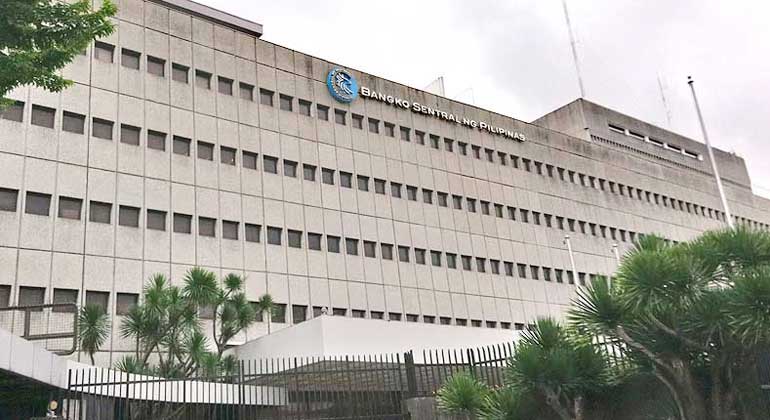
NO BANKS took out loans from the Bangko Sentral ng Pilipinas’ facility. — BW FILE PHOTO

LENDERS DID NOT avail of the central bank’s rediscount facility for the fourth straight month in February, as banks had enough liquidity following the reserve requirement ratio (RRR) cuts implemented last year.

“There were no availments under the Peso Rediscount Facility and the EDYRF (Exporters Dollar and Yen Rediscount Facility) for the period covering Jan. 1 to Feb. 29,” the Bangko Sentral ng Pilipinas said in a statement on Monday.

The rediscount facility of the BSP lets banks get hold of additional money supply by posting their collectibles from clients as collateral.

In turn, the banks may use the fresh cash — in peso, dollar or yen — to grant more loans for corporate or retail clients and service unexpected withdrawals.

Peso rediscount loans are based on the overnight lending rate which is currently at 4.25% to be added to a spread depending on the term of the loan.

Peso loans totaled P122.167 billion from January to October 2019. After which, banks did not tap the facility.

Rizal Commercial Banking Corp. Chief Economist Michael L. Ricafort said lenders may have opted to not avail rediscount loans due to the excess liquidity from the series of RRR cuts in 2019.

“Banks may not have availed yet the Peso Rediscounting Facility at the BSP brought about by the cut in banks’ RRR that effectively infused additional funds into the banking system by a total of more than P450 billion,” he said in an e-mailed response.

He added that prospects of a global economic slowdown due to US-China trade war and concerns on the spread of the coronavirus disease 2019 may have also affected demand for financing.

“Some banks could possibly tap again the Peso Rediscounting Facility in the next few months, as early as Q2 2020, in view of planned borrowings by the biggest businesses and by the government as borrowing costs recently eased that made it more attractive for borrowers,” Mr. Ricafort said.

The BSP trimmed banks’ RRR by a total of 400 basis points last year, reducing the reserve requirement ratios of big banks, thrift and rural lenders to 14%, four percent, and three percent, respectively.

Bangko Sentral ng Pilipinas Governor Benjamin E. Diokno has said he wants to reduce big banks’ RRR to the single-digit level by the end of his term in mid-2023.

RATES
For this month, rediscount rates for peso loans with a maturity of 90 days or less are priced at 5.19% while those with a 91- to 180-day term have a rate of 6.143%.

On the other hand, the EDYRF for the dollar credit lines will have rates of 4.40925% for loans maturing from one to 90 days; 5.35575% for those with a tenor within a 91- to 180-day time frame; and 7.24875% for those with a term of 181 to 360 days.

For yen-denominated credits, rates are at 2.86% for terms of three months or less; 3.817% for those maturing within a 91-180 day time frame; and 5.71% for loans maturing from 181 to 360 days.

Computations for the EDYRF rates are depending on the 90-day London Inter-Bank Offered Rate plus the spread depending on the tenor of the credits, the BSP said. — Luz Wendy T. Noble