

Home Blog Page 9743

The beauty of aging

Virginia Woolf once wrote, “I don’t believe in aging. I believe in forever altering one’s aspect to the sun.”

Does age matter? “Only if you are a wine!” This witty retort was printed on a T-shirt worn by a youthful lady who looked 20 years younger. Age is not just based on the birth date. It is an attitude, a state of mind. It is relative and depends on one’s projection and the viewer’s perception.

The aura of youth or age reflects the individual’s state of mind. One’s physical appearance improves when he thinks and acts young (but not too young.) The state of mind is more important than one’s chronological age. One can defy the clock and the calendar indefinitely by having a healthy and open attitude in life.

Experience — in relationships, career, and travel — broadens the individual’s perspective and hastens maturity. Exposure to the finer things in life gives the person a certain degree of polish and sophistication. The mind absorbs new sensations and images and stores them in a data bank. For future Reference.

Sometimes, the downside of the growth and maturation process is the loss of a childlike wonder. At the extreme, he can become a cynic — one who is unable to enjoy the simple pleasures of life. He acquires the air of someone who has seen it all, done it all. Nothing lasts. Nothing is exciting anymore. Nonchalance and cynicism can age the individual more quickly than the ravages of time. The eyes reveal a cool wariness and weariness. Ho hum. What else is new?

Eternally young people and children share particular qualities — spontaneity and adventure, wide-eyed curiosity, delightful innocence and refreshing simplicity. They project an attractive aura of vitality and convey youth and agelessness — despite a few laugh lines and extra pounds. Is there an antidote for aging?

People are afraid of growing older. To stop time, some resort to quick fixes such as geriatric pills, Botox injections and fillers, and rejuvenation treatments and stem cell therapy, hair transplants. Others undergo cosmetic surgery in progressive stages to preserve their youthful looks. There is nothing wrong in wanting to look and feel good — for as long as possible. Why not? With advances in modern science and the discovery of anti-aging serums, it is possible to prolong the state of youth.

Medical tourism continues to grow.

The beauty and wellness industry is thriving because there is a big demand. Throughout the world, people seek the specialists and undergo expensive procedures. Halting the physical side of the aging process indefinitely is only one of the challenges of research scientists.

However, during this critical time, the urgent, most significant and essential research would be the discovery of vaccines for the prevention and cure, and the eventual eradication of diseases.

The most vulnerable are the seniors and the elderly relatives. Although some seniors may look much younger, they are clustered with the chronological age group of the 60 plus. Ironically, not all the biological organ systems are still young.

On the lighter side of things, here are some thoughts on beauty and age. The authors have retained the spark and spunk of youth.

“It’s sad to grow old, but nice to ripen.”

— Brigitte Bardot,
French actress (b.1934)

“Beauty is accepting what you are and how old you are.”

— Sophia Loren,
Italian actress (b.1934)

“We turn not older with years, but newer every day.”

— Emily Dickinson,
American poet (1830-1886)

MARIA VICTORIA RUFINO is an artist, writer and businesswoman. She is president and executive producer of Maverick Productions.

mavrufino@gmail.com

Virus lockdown is a $28-Billion gig-loan buster

By Andy Mukherjee

NO economy is immune to a fast-spreading pathogen. But where activity is organized more formally, authorities can at least try to reach the pain points with liquidity, credit, tax rebates, salary supplements or rental discounts.

None of this is easy in a highly informal economy like India. The lockdowns that nervous cities and states are now forced to impose to slow the coronavirus could upend livelihoods in ways that will be hard for government programs to combat. Shopping malls, cinemas and pubs in the financial capital of Mumbai are shut, along with schools, colleges, and the zoo. What remains open is being shunned because of fear. Chicken prices have collapsed across the country as people avoid buying meat from wet markets. Tourism is at a standstill. Eating out is rare.

The cost of protecting against the virus will fall disproportionately on the poor. India has more than 100 million microfinance accounts, serviced in cash every week by gig-economy workers, who hawk vegetables on street corners or embroider saris sold in malls, among other things. Three out of four workers make a living by working casually for others or at their family firms and farms. Prolonged shutdowns will impair their ability to repay loans of 2.1 trillion rupees ($28.5 billion), putting the world’s largest microfinance industry at risk.

While many countries in Asia, Africa, and Latin America also use microcredit to grease consumption at the bottom of the pyramid, India’s banks and shadow financiers are already reeling under a severe crisis of confidence. Savers’ accounts recently had to be temporarily frozen at a major institution, making people anxious about the health of others. Microlenders have only now recovered from a nonperforming loan crisis sparked by Prime Minister Narendra Modi’s overnight 2016 ban on 86% of cash. More bad news would be hard to swallow.

With a population density three times China’s, India could be the next global hotspot for the virus, with an avalanche of cases, Bloomberg News reported Tuesday. As the currently low infection count rises with more testing, the curbs on economic activity that will be required to flatten the peak of the outbreak in a nation of 1.3 billion people may have to be harsh. Shutdowns could become as widespread and prolonged as they have in East Asia.

The forced social distancing is going to hit metropolises like Mumbai, New Delhi, Bangalore, Chennai, Hyderabad, and Kolkata and tourism centers like Goa. But it comes at a time when the rural economy, which accounts for 45% of gross domestic product, shrank in January for the seventh time in eight months, according to Bloomberg Economics’ output tracker. Should city jobs disappear, workers will move to villages, putting further strain on already weak rural wages. Anemic corporate credit and lackluster economic growth were already pulling each other down; a freeze in unsecured lending to the urban poor would make the situation a lot worse.

Tiny loans have their pitfalls. Financiers occasionally lose their heads and loosen their lending standards, leading to excessive borrowing and financial distress, which then becomes a political issue. Toward the end of last year, this problem surfaced in India’s tea-growing northeastern state of Assam, which had witnessed annual growth of 43% for seven years in loan values, before cash collections from small borrowers began to collapse.

Microfinance specialists like Bandhan Bank Ltd., with its near 20% return on equity, are profitable enough to deal with such occasional hiccups in pockets of a large market. However, a pandemic that cuts across regions could end up being a far more serious threat than a localized flood or a drought.

Even with interest rates being slashed around the world, the Indian central bank kept its powder dry Monday, though deep cuts are bound to be in the cards. Outright cash transfers from the government to the most vulnerable people would be more helpful. Incentivizing small borrowers and women’s self-help groups to sustain timely repayments would help the industry and keep credit channels for the poor open. A further loss of sanity in India’s financial system would be prevented.

Before the coronavirus, New Delhi’s budgetary situation was parlous. But a combination of interest rate cuts and plunging prices of imported crude oil will hopefully keep a lid on long-term bond yields. Stepping up borrowings to protect livelihoods should be the preferred strategy to deal with the virus. The informal nature of the economy means that relief can’t be targeted at firms — it has to reach households.


BLOOMBERG OPINION

Private equity has the cash, and it is king

By Nisha Gopalan

PRIVATE EQUITY FIRMS, sitting on a record $388 billion of dry powder in Asia, may be about to get their reward for patience. Cash is king as corporate finances are stretched by the coronavirus outbreak. Having sat on their hands for much of the past year in protest at unappealing valuations, the virus-induced stock market meltdown is creating a potential parade of bargains. Blackstone Group Inc.’s reported plans to acquire Hong Kong-listed property company Soho China Ltd. may be just the start.

High valuations are the number one complaint of private equity firms devoted to the Asia-Pacific region, according to a Bain & Co. report last week. Prices hadn’t budged significantly before the outbreak even as economic growth slowed in China, the region’s top destination for such investments. That’s because owners and entrepreneurs have been spoiled for choice: More than 3,000 private equity firms are jostling to find opportunities in Asia.

Deal prices eased only slightly last year, to a median ratio of 12.9 times enterprise value to Ebitda, from 13.3 times in 2018. Valuations remain above levels before 2017, according to Bain.

The MSCI Asia-Pacific Index has slumped 23% this year, opening up potential buyout targets in the public markets and dragging valuations of unlisted companies down in its wake. While tightening dollar liquidity threatens the financing that private equity firms need to make deals work, shrinking availability of credit may also weaken the reluctance of startup founders to yield control, which has been a hindrance to transactions, particularly in Southeast Asia.

Another positive from the market shakeout is a possible easing in the pace of activity by Masayoshi Son’s SoftBank Group Corp. That would come as welcome relief to fund executives who see the conglomerate’s $99 billion Vision Fund as pumping up private valuations and crowding out other investors. With SoftBank shares having fallen more than 40% in Tokyo from its February high, Son’s focus has switched to shoring up his own company’s valuation via a $4.8 billion share buyback announced last week. SoftBank is also grappling with challenges at portfolio companies such as WeWork and Indian start-up Oyo, as my colleague Tim Culpan has noted.

Not all private equity firms are positioned to profit from the rout. The biggest are in the strongest position. New York-based Warburg Pincus, for instance, raised $4.25 billion for a China-Southeast Asia fund in five months last year, exceeding its target. By contrast, smaller and newer funds spent an average of 22 months on the road and raised only 60% of their goals, according to data from Bain and Preqin.

Baring Private Equity Asia and TPG Capital are examples of other firms with well-known names and track records that have successfully raised multibillion-dollar funds. Blackstone closed a $7.1 billion real estate fund last year that was the biggest ever in that sector. And few would bet against KKR & Co. being able to complete a $12.5 billion fundraising that it started for its fourth Asian buyout fund in November. Meanwhile, sovereign wealth and pension funds started playing safe with their private equity investments a couple of years ago, leaving them with plenty of firepower.

The divergence between strong and weak will widen. Less financially robust private equity firms may struggle to rescue cash-strapped portfolio companies as credit tightens. Even bigger players are likely to reassess previously hot industries or regions. Money has poured into Vietnam and Southeast Asian neighbors on bets that they would benefit as the trade war forced a supply-chain shift out of China. The pandemic has put that thesis in doubt. “People are questioning the whole Southeast Asia-China nexus as a theme,” said Winston Ma, a former executive sovereign wealth fund at China Investment Corp. who’s now an adjunct professor at New York University.

Chinese consumer companies, a magnet for private equity money in the past couple of years, are also likely to suffer a loss of favor. Efforts to curb the coronavirus prompted restaurant chains from McDonald’s Corp. and Yum China Holdings Inc.’s KFC to shut outlets. While giants such as Citic Capital Holdings Ltd. and Carlyle Group LP, which bought most of McDonald’s China business in 2018, can ride out closures, other restaurants may not be so lucky.

Cash alone won’t guarantee success. As long as the pandemic lasts, it will be difficult for private-equity executives to visit potential investments, putting a damper on due diligence and limiting dealmaking. For every great deal made by a cash-rich private equity firm during a financial crisis, there are others that came a cropper. Finding the genuine bargains amid the rubble will be key.


BLOOMBERG OPINION

ONE Championship taking the COVID-19 challenge head-on

By Michael Angelo S. Murillo
Senior Reporter

THE CORONAVIRUS DISEASE 2019 (COVID-19) can either bring the best or the worst to an organization. And for ONE Championship there is no way to guide its affairs but to the former.

With its live events affected at the onset when cases of COVID-19 started to climb, Asia’s largest sports media property moved swiftly to calibrate its push, deciding to render their events behind closed doors and audience-free.

ONE founder and chairman Chatri Sityodtong said the move was not only to have “the show go on” but more importantly to provide inspiration to forge ahead to people in these trying times.

“For the fans at home around the world, the show will go on from the comfort and safety of your living room. ONE Championship will continue to thrill you with the greatest martial artists on the planet and inspire you with their incredible stories,” Mr. Sityodtong said in a statement.

The tack started on Feb. 28 with “ONE: King of the Jungle” at an audience-free Singapore Indoor Stadium with American Janet “J.T.” Todd becoming the new world atomweight kickboxing champion after defeating erstwhile champ Stamp Fairtex of Thailand.

Such a setup is to continue at least for the next three events of ONE set for April 24, May 1, and May 8, all to take place in Singapore where ONE Championship is headquartered.

The promotion is hoping to go back to a familiar setting with fans in tow when it comes back to Manila on May 29 for ONE Infinity 1 at the Mall of Asia Arena.

In addition to adjusting to how it shows are being presented in light of COVID-19, ONE is also taking the opportunity to find more ways to build on its content and offering.

For one, it recently partnered with American reality TV show The Apprentice for the future launch of The Apprentice: ONE Championship Edition under license from MGM.

“This brand-new concept brings a completely unique and original dimension to The Apprentice with the high-stakes drama of real-life business competitions, coupled with herculean physical challenges, featuring some of Asia’s top CEOs, the world’s greatest martial arts world champions, and A-list celebrities from across the continent,” said Mr. Sityodtong of the ONE edition of The Apprentice.

ONE is also shoring up its esports component, lining up packed event schedules for this year.

Mr. Sityodtong underscored that as an organization they are taking the threat of COVID-19 seriously, and is encouraging one and all to do the same.

But at the same he said they are not allowing it to stop them from moving on and seeing their group vision through but guided still by the prevailing conditions.

“This virus might be on the attack right now, but I believe in the power of the human spirit. Let’s Go! #WeAreONE,” Mr. Sityodtong said.

NCAA moves to officially terminate Season 95

By Michael Angelo S. Murillo
Senior Reporter

PUTTING the safety of its stakeholders above all else, the National Collegiate Athletic Association (NCAA) on Thursday officially terminated the already-suspended Season 95 over the coronavirus disease 2019 (COVID-19).

Met on Wednesday by way of teleconference, representatives of the member schools of the NCAA arrived at the decision to safeguard the well-being of all those involved in the staging of the sporting events as well as the fans of the country’s oldest collegiate league.

“The National Collegiate Athletic Association (NCAA) has announced through the Policy Board of Season 95 President Francisco Cayco of Season Host Arellano University that NCAA Season 95 is terminated. This was arrived at after consulting the Policy Board members,” the league statement, signed by Mr. Cayco, read.

“First and foremost that was considered was the safety of the athletes, students, fans, and officials. Eligibility matters of athletes being raised shall be discussed later,” it added.

The NCAA initially suspended some matches of different sports events in February as the threat of COVID-19 became imminent before suspending the season indefinitely early this month.

In issuing the suspension, the league said it would evaluate the situation, with the termination of Season 95 a likely possibility.

Affected sports were those scheduled for the second semester, which include indoor volleyball, football, lawn tennis, soft tennis, track and field, beach volleyball and cheerdance competition.

Apart from Arellano, member schools of the NCAA are Colegio de San Juan de Letran, De La Salle-College of Saint Benilde, Emilio Aguinaldo College, Jose Rizal University, Lyceum of the Philippines University, Mapua University, San Beda University, San Sebastian College-Recoletos, and University of Perpetual Help System DALTA.

NBA weighs next moves while season is put on hold

DESPITE not yet knowing exactly when his sport will return to action, National Basketball Association (NBA) commissioner Adam Silver told ESPN on Wednesday that the league is considering several scheduling options depending on how long the coronavirus pandemic shutdown lasts, including a potential charity game.

In a nationally televised interview, Mr. Silver opined on how the league could best handle its eventual schedule once games are again deemed safe enough to play.

Among the considerations include the safety benchmarks for restarting the league again with fans as normal, how to play games “and operate as we’ve known it with 19,000 fans” in league venues without concern of spreading the virus.

Mr. Silver admitted perhaps it would be better for games to begin first without fans, so as not to overreach and possibly endanger fans, players and league personnel before being completely certain the coronavirus would not be spread.

“Because, presumably, if we had a group of players, and staff around them, and you could test them and follow some sort of protocol, doctors and health officials may say it’s safe to play,” Mr. Silver said.

Silver then brought up the idea of a charity game, one that would not affect the regular season, in order to raise funds while proving a respite for those itching for a welcome distraction from recent events.

“One of the things we’ve been talking about are,” Mr. Silver said, “are there conditions in which a group of players could compete — maybe it’s for a giant fundraiser or just the collective good of the people — where you take a subset of players, and is there a protocol where they can be tested and quarantined and isolated in some way, and they could compete against one another?

“Because people are stuck at home, and I think they need a diversion. They need to be entertained.”

Silver openly shared that all ideas are on the table these days since the league suspended its regular season last Wednesday, even potentially pushing the annual league calendar to December through August instead of October through June, as some have suggested.

Among other topics, Mr. Silver defended the eight NBA teams that have been tested for coronavirus — saying they were simply following orders from health officials, not getting special treatment despite so few tests being readily available.

He also said it was premature to reveal any specifics over the fates of end-of-season awards — such as MVP trophies, scoring titles, etc. — if the league fails to resume its 2019-20 regular season.

Mr. Silver seemed more concerned with the next steps for the league on the floor and how the NBA could help the nation make a move toward normalcy.

“As I look at the options, maybe we can do this incrementally, and the first step isn’t games with thousands of people in the arenas, but maybe it is just games,” Mr. Silver said. — Reuters

AFC Cup 2020 group matches of Ceres and Kaya postponed

THE AFC Cup 2020 campaigns of local clubs Ceres-Negros FC and Kaya FC-Iloilo were put on hold on Wednesday after organizers decided to suspend all matches over concerns on the coronavirus disease 2019 (COVID-19) pandemic.

In an announcement shared to members of media, the Asian Football Confederation (AFC) said it had decided to postpone all AFC Cup 2020 matches until further notice.

The AFC initially postponed AFC Cup West Zone Group Stage matches beginning March 12 but went on to apply the decision to all matches scheduled for March and April as the number of cases of COVID-19 in different parts of the world continues to increase.

The governing body said the decision was arrived at in consultation with the different member associations, and made as a precautionary measure to ensure the safety and well-being of all participating players and teams, match officials and spectators.

It was also designed to protect the integrity of the competition.

Ceres and Kaya are currently in the mix for top position in their respective groupings.

Three-time Philippines Football League champion Ceres is currently in number one position in Group G with seven points, built on a record of two wins and a draw.

The “Busmen” are three points clear of second-running Than Quang Ninh of Vietnam (1-1-1).

On third spot is Preah Khan Reach Svay Rieng FC (1-0-2) of Cambodia with three points and Bali United FC (1-0-2) at fourth with three points as well.

Ceres last played on March 11 at the Rizal Memorial Stadium where it dominated Bali United, 4-0.

Spanish striker Bienvenido Maranon scored a brace (54’ and 69’) in the win with OJ Porteria (35’) and Robert Lopez Mendy (73’) accounting for the two other goals.

Postponed matches of Ceres were away games against Bali United on April 14 and Svay Rieng on April 29.

Kaya (1-2-0), meanwhile, is at second place in Group H with five points, two down of group pacesetter Tampines Rovers FC (2-1-0) of Singapore.

PSM Makassar (1-1-1) of Indonesia is third with four points while winless Shan United FC of Myanmar is at fourth.

Kaya was held to draws in its last two matches, the last one against PSM, 1-1, on March 10.

It vowed to do better in its next matches against PSM on April 15 and Shan United on April 28 here at home, games which unfortunately were covered by the AFC Cup postponement.

Leader on the board after group play in the AFC Cup books a spot in the zonal semifinals. — Michael Angelo S. Murillo

Risk-return ratio

Make no mistake. Tom Brady’s exercise of his free agency rights had everything to do with him underscoring his worth. His first choice was to stay with the Patriots, but he had a compensation package in mind, and he no longer wanted to compromise as he routinely did since he turned professional in 2000. With owner Robert Kraft letting head coach Bill Belichick make the final decision, however, the Patriot Way took precedence, thereby making the remuneration he sought untenable in light of his advancing age and seemingly declining skills. For the franchise, sense and sensibility ruled over sentiment and sentimentality.

Needless to say, Brady’s departure became cast in stone as soon as he found a place to land. He took his set of demands to potential suitors, and, by all indications, two proved willing to check all the boxes he wanted. With his minimum requirements met, he then took into account the opportunities for success his options presented. And, all other things being equal, the Buccaneers appeared to have the most valued assets in hand to help him achieve mutually beneficial targets. Theirs may be fairly categorized as a marriage of convenience, but it’s likewise one with the best risk-return ratio.

For the Buccaneers, really, Brady’s inclusion is a no-brainer. They went at him hard for a good number of reasons, not least of which had been their inability to escape mediocrity in recent memory. They last made the playoffs in 2007, with their 9-7 slate good for a wild-card stint that they promptly lost. In the interim, they had two winning records and missed the postseason throughout. Which meant that they needed to do something — anything — to prop up their fortunes and engage an increasingly disappointed fan base. And it didn’t help that erstwhile quarterback Jameis Winston was a feast-or-famine type who put up sterling passing lines along with historically abhorrent interception rates.

Under the circumstances, Brady’s arrival makes the Buccaneers better — much, much better. His style doesn’t seem to mesh with head coach Bruce Arians’ predilection for the long ball, but their smarts and willingness to meet halfway should have them steadily improving over time. And who knows? With no small measure of good fortune, they may yet crowd the Saints for the top spot in the National Football Conference South Division. They have marked weaknesses, and will require some offseason lineup tinkering to improve their talent base. On the other hand, he covers up a lot of shortcomings with his unique blend of skill and experience.

Can the Buccaneers contend for the Super Bowl? Absolutely. Will they? That’s the bigger query with an answer that depends largely on Brady’s continued capacity to defy Father Time. Motivation will not be a problem. He’s bent on proving he can go places without Belichick by his side. His legacy is secure, but he’ll certainly add to its luster if he manages to show all and sundry that he makes partnerships work no matter the hurdles, and that he put in more than his fair share in the most productive one in National Football League history.


Anthony L. Cuaycong has been writing Courtside since BusinessWorld introduced a Sports section in 1994.

alcuaycong@bworldonline.com

Layers of protection: how Magwai helps saves the corals

Sunscreen. It’s a staple in any beach-goer kit, outdoor athlete’s go bag, or self-respecting skin care enthusiast’s regiment. And for good reason: it’s a necessity for protection against harmful rays, especially from hours of exposure to the sun.

However, unbeknownst to most of us slathering on sunscreen by the shore, the marine life that we appreciate during these beach trips suffer at the cost of our protection. Most commercially-available sunscreens contain harmful compounds like oxybenzone which can bleach, deform, and even kill coral. This is even more alarming considering that the Philippines sits within the Coral Triangle, a reef system that occupies only 1.5% of the world’s ocean area and yet represents 30% of its coral reefs.

So is there a way to shield ourselves from the sun while shielding our corals from further damage? Local startup Magwai offers a solution.

Taking the plunge

Four years ago, friends and frequent beachgoers Maffy Tamayo and Czar Carbonel stumbled upon an article discussing the negative impact of sunscreen on corals. “When we found out, it was very shocking for both of us to find out that the sunscreen brand that we had been using contributes to that damage. And we’d been… conscious about making more sustainable choices,” said Tamayo.

So when they found that there weren’t any reef-safe alternatives available here in the Philippines, they were inspired to make their own solution. And thus, Magwai was born.

Named after Magwayen, a sea goddess in Visayan folklore, the locally-made sunscreen is rated at SPF 50+ (an effective and well-balanced value) claiming protection against both UVA and UVB. But what keeps it true to its thrust is that it’s made of natural ingredients and uses alternative components to absorb harmful rays.

“The active ingredients that we’re using are titanium dioxide and zinc oxide,” said Tamayo. “So what makes us different is that we have none of those toxic ingredients, but at the same time is still very effective in terms of providing protection from sun damage.”

Changing tides

As more consumers raise expectations on personal care products and become open to changing consumption habits for the benefit of the environment, so do the opportunities for startups operating in the same industry that share the same vision. But in order to raise awareness on specific issues such as coral reef damage, both the private and public sectors must collaborate in creating educational efforts and promoting environmentally-friendly alternatives.  

Tamayo cites government agencies like the Department of Tourism which have been campaigning for sustainable tourism. Outside the country, tourist spots like Hawaii and Palau are taking legislative measures to ban the use of chemical sunscreen among visitors. As for Magwai, they partner with businesses like retailer SESOU which share the same mission of helping the environment, and run efforts like collecting used Magwai tubes in-store for recycling.

“It goes beyond trying to save corals because there are so many other problems that contribute to the negative impact to the ocean, not just corals. There’s climate change, overfishing, plastic pollution… There are so many other bigger problems that need to be addressed.”

With products in the pipeline and a goal to hit more shelves across the Philippines, Tamayo hopes that Magwai will be able to cast a wider net of influence in the industry not just in protecting coral reefs but also the environment overall.

Filipino team bags grand prize at Finastra global hackathon

Manila-based Team WonderTech won the grand prize at Finastra Universe New York, a global fintech hackathon, last March 11. The competition, hosted by fintech player Finastra, saw more than 1,000 participants across 38 countries inventing over 240 new apps.

Team WonderTech is a team of young professionals and students composed of Michael Puzon, Vaniza Dagangon, John Robert Tubale, and Clyde Palattao. Their winning app, Agree Farm, aims to give rural Filipino farmers access to bank loans, and was built in just a few weeks using Finastra’s open development platform, FusionFabric.cloud.

Agree Farm also bagged an award for “Future of Payment & Banking for a Better Future”, one of five categories, namely “Future of Capital Markets”, “Future of Corporate Banking”, “Future of Retail Banking”, and “Best App by an Established Fintech”. Each winner will be able to continue refining their solutions, for promotion in Finastra’s FusionStore.

“Fintech is one of the hottest growth and innovation areas, with some serious investment from banks, private equity, VC and government,” said Shuki Licht, Chief Innovation Officer at Finastra. “Team WonderTech and all of the category winners have demonstrated an incredible ability to understand the needs of the market and have shown that the future of finance is truly open.”

Facebook calls for applicants to new Community Accelerator

Facebook recently unveiled Community Accelerator, a six-month program providing training, mentorship, and funding for community leaders from 13 different countries to help them grow their communities.

“We are extremely proud to launch the Community Accelerator, the natural evolution of our Fellowship program. Building community is at the heart of our mission and the program serves to invest in and support the community leaders who offer encouragement, build bridges, and drive change,” explained John Cantarella, VP of Social Good and Community Partnerships at Facebook.

“Our past participants have created positive, lasting change in their communities, which makes us all the more excited to welcome the next cohort through our new, purpose-built program,” he said.

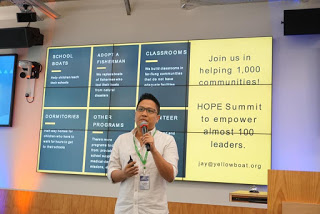
“Last year, participants in the Facebook Community Leadership Program touched the lives of over 580,000 people in Asia Pacific through their community initiatives. In the Philippines, Jay Jaboneta from the Yellow Boat of Hope successfully brought together volunteers, schools, government, and nonprofit organizations from over 130 communities in the first HOPE Summit,” added Clapham.

Back in 2010, Jay Jaboneta learned that there are kids out there who have to swim just to get to school. Moved by the amazing lengths that these kids go just to get an education, he decided to post a status about it. The post caught the attention of people who wanted to get together and see how they can help these children, and thus, the Yellow Boat of Hope Foundation was born.

Jay Jaboneta pitching the HOPE Summit during Meet-up 2 of the Facebook Community Leadership Program (FCLP)

After being selected for the Facebook Community Leadership Program (FCLP) and going through the training process, Jaboneta found the learnings immediately useful for the Yellow Boat of Hope Foundation’s cause.

“The Yellow Boat of Hope started with one Facebook post and from there, we connected with people, and built a strong community of volunteers—HOPE Paddlers, who are passionate about bridging the gap in education. The Facebook Community Leadership Program helped us maximize Facebook tools to grow and strengthen our community while reaching more like-minded people, who are just as determined to make an impact in their communities,” said Jay Jaboneta, Co-Founder and Chief Storyteller of the Yellow Boat of Hope Foundation.

10 years later, the Yellow Boat of Hope Foundation has provided over 4,000 boats to nearly 200 communities nationwide and counting.

“Community leaders in the Philippines often tell us that some of the biggest challenges they face are a lack of access, training, and funding. We are excited to continue to invest in and support them through the Community Accelerator,” said Head of Community Partnerships for Facebook APAC, Grace Clapham.

If you run an impactful, established community, are ready to grow using Facebook’s apps, and have the time and energy to invest in this program, Facebook encourages you to apply here: https://www.facebook.com/community/accelerator/.

Asia-Pacific faces imminent recession

A RECESSION across Asia-Pacific is “now guaranteed” amid an unprecedented disruption in the flow of people, trade and supply chains in large economies like China and the United States, with emerging countries in the region like the Philippines also likely to see spillover effects, according to S&P Global Ratings.

But Bangko Sentral ng Pilipinas (BSP) Governor Benjamin E. Diokno said the impact of the Luzon-wide enhanced community quarantine on the Philippine economy is still uncertain, but added that adverse effects could be minimized if the government’s efforts to arrest the spread of coronavirus disease 2019 (COVID-19) are successful.

In a report sent on Wednesday, S&P said a recession across Asia-Pacific is “now guaranteed due to a deep first-quarter shock in China and the shutdown of activities across G7 economies.”

“By recession, we mean at least two quarters of well below-trend growth sufficient to trigger rising unemployment. Asia-Pacific growth in aggregate will likely more than halve to less than 3%,” it said.

S&P noted the Philippine economy has exposure to final demand from the US and Europe of 2.6% and 4.7%, respectively, totaling 7.3% of the country’s gross domestic product (GDP).

Moreover, S&P said the virus spread will be an issue in Asia’s emerging markets where health care infrastructures remain weak.

“Restrictions are now being imposed in some of these countries — for example, the lockdown of Metro Manila in the Philippines — reflecting that risks have increased,” the report said.

“As household and business confidence in these economies erode, we will start to see domestic demand suffer,” it added.

S&P already downgraded its 2020 growth outlook for the Philippines to 5.8% from the 6.2% penciled in last December. If realized, this would be slower than the 5.9% GDP growth in 2019 and also below the 6.5-7.5% government target for the year.

The debt watcher said the loss of household and business confidence in Asia Pacific will lead to “severe and more persistent supply and demand shocks,” paired with higher unemployment rates.

It noted that policy responses from governments across the world, including the emergency rate cuts from the US Federal Reserve and the scaled-up asset purchases of the Bank of Japan could “cushion but not quickly reverse these shocks”.

“Local measures aiming to support vulnerable sectors and workers, such as a payroll tax cut in China, may help but their effect will wane the longer the crisis lasts,” S&P said.

IMPACT OF LOCKDOWN
BSP’s Mr. Diokno said the impact of the Luzon lockdown is yet to be assessed.

“What’s the impact of the Luzon-wide community isolation on the economy? I don’t know yet. But it will definitely have an impact,” Mr. Diokno said in a text message.

“If it (quarantine) succeeds, the adverse impact will be minimal and we can expect a V-shape recovery; if it fails, the adverse impact can be large and protracted, and the recovery can be an elongated U,” Mr. Diokno said in a text message.

The central bank chief said the lockdown, which is a temporary move to arrest the further spread of COVID-19, falls within both the first and second quarter of the year.

“It will straddle two quarters — two weeks out of 13 weeks in Q1 and another two weeks in Q2,” Mr. Diokno said of the lockdown that is scheduled to end on April 12.

Meanwhile, citing data from the Philippine Statistics Authority, the Economic Research Unit (ERU) of UnionBank of the Philippines, Inc. said the Luzon-wide lockdown will affect 73% of the total GDP of the country.

“Thus the economic impact on these particular regions will be significant. Both Q1 and Q2 GDP growth will significantly slow down,” UnionBank’s ERU said in a report on Tuesday, noting that they expect first-quarter GDP growth to settle below five percent.

“If the local virus containment efforts succeed by April 12th and the parallel global efforts also succeed, then, a slight recovery can be expected in Q3 and a more robust one in Q4,” the report added.

“A major part of the Philippine economy is the Service Sector at 49% composed of services-related sub-sectors directly affected by the COVID-19 health scare like tourism, transport, airlines, real estate, retail, and other services,” it said.

It said trade-related firms in the manufacturing sector will also be affected as China’s shutdown has had an impact on export and import companies.

With the enhanced community quarantine in Luzon, UnionBank’s ERU said they expect the Build, Build, Build program — seen as a key growth boost by the government — to be disrupted as firms have to limit their activities.

The report also said countries like Italy, China, Iran, Korea, Spain, Germany, France, the US, Switzerland, and the UK, which have recorded the highest number of COVID-19 patients, make up 50% of remittance flows to the Philippines.

“This is a significant portion of overall levels and future remittance inflows may be affected consequently for the coming months,” the report said.

Data from the BSP showed cash remittances in January, when the virus had yet to reach pandemic level, grew 6.6% year on year to $2.648 billion. Analysts have, however, warned the next months’ inflows could be strained due to the impact of the virus.

BSP’s Mr. Diokno has said the central bank is ready to use its policy tools to battle the impact of the outbreak on financial markets and the country’s growth prospects.

The Monetary Board will have its second policy-setting meeting for the year today (March 19). Mr. Diokno earlier said they might slash rates by more than 25 basis points following easing moves and stimulus from central banks in the US, Japan, New Zealand, South Korea, and Vietnam, among others.

The overnight reverse repurchase rate of the central bank is currently at 3.75%, while overnight lending and deposit rates are at 4.25% and 3.25%, respectively.

There were 202 confirmed COVID-19 cases in the country as of 4 p.m. Wednesday, with 17 deaths recorded. — L.W.T. Noble

ADVERTISEMENT
ADVERTISEMENT