Home Blog Page 9720

Agri dep’t agencies to host Kadiwa farmers’ markets

AGRICULTURE Secretary William D. Dar has instructed various agencies of the Department of Agriculture (DA) to designate portions of their compounds as markets for agricultural products.

Additional stalls for the Kadiwa ni Ani at Kita program will go up around the National Capital Region (NCR) to give the public more access to produce during the COVID-19 quarantine.

“We want to provide the public as many options possible to access affordable and nutritious food. The DA offices shall be ready to accommodate buyers but they should, of course, follow the quarantine guidelines and physical distancing procedures,” Mr. Dar said.

Kadiwa ni Ani at Kita links local government units (LGUs) with farmers for direct distribution and delivery of commodities.

The farmers’ market concept was tested on March 21 and 22 in Cainta, Rizal.

Participating farmers’ associations included Baguio’s Hola Green, Batangas Organic and Natural Farming Association, Agripreneur Farmers and Producers Association, and Mama Agnes of Bataan.

“It’s a win-win for both consumers and producers with the Kadiwa event in Cainta for the farmers’ groups and residents enjoying affordable and nutritious agri-fishery products amid this health crisis,” Mr. Dar said.

The DA plans to roll out more Kadiwa stores around Metro Manila to ease the supply situation which may have come under pressure due to movement restrictions in and out of the National Capital Region.

Assistant Secretary for Agribusiness and Marketing Kristine Y. Evangelista said targeted locations are Quezon City, Pasig, Manila, Pasay, and Taguig.

“At least 66 Kadiwa sites will be opened nationwide,” Ms. Evangelista added. — Revin Mikhael D. Ochave

SEC asks finance firms to offer borrower relief

Securities and Exchange Commission (SEC) logo

THE Securities and Exchange Commission (SEC) is appealing to financing and lending companies to relax their requirements for borrowers while Luzon is under quarantine.

In a notice on its website, the corporate regulator asked firms to consider measures like loan term extensions and suspension of collection to help the community during the COVID-19 lockdown.

“We call on financing and lending companies to adopt all possible measures that will help ease the burden of their borrowers amid this public health emergency, which has disrupted the everyday lives of Filipinos, including their livelihoods,” SEC Chairperson Emilio B. Aquino said in a statement.

Among the measures it recommended are lower interest rates, penalty waivers or fee reductions, extended loan terms, suspended collections, and debt consolidation.

The SEC said its Corporate Governance and Finance Department is in direct talks with financing and lending firms about which it has received complaints from the public.

It also noted some are implementing debt relief measures, such as the 18 members of the Philippine Finance Association that have reportedly extended payment deadlines without penalty.

Some firms that have announced extended payment deadlines are BDO Unibank Inc.; Metropolitan Bank & Trust Co.; Bank of the Philippine Islands; Rizal Commercial Banking Corp.; Union Bank of the Philippines; East West Banking Corp.; China Banking Corp.; CIMB Bank Philippines; and Philippine Savings Bank.

Luzon is under enhanced community quarantine until mid-April. — Denise A. Valdez

NPC warns of surge in fraud cases during lockdown

THE National Privacy Commission (NPC) is warning the public against a rise in online fraud during the COVID-19 outbreak.

NPC in a bulletin Tuesday said online scammers are exploiting public fear to lure individuals into clicking phishing emails and installing malware that can steal personal data and money.

NCP said that home quarantine during the Luzon-wide lockdown — where people working from home rely heavily on online transactions — presents ripe conditions for online fraud.

“They can steal your sensitive data, cause you financial and reputational damage, make your device unusable and cut you off from the outside world.”

NPC advised the public not to offer personal data in “suspicious COVID-themed emails and messages.” The commission advised the public not to click on attached files in unsolicited messages that promise COVID-19 vaccines or cures not reported in the news.

“It is most likely a phishing attack that steals your financial data such as credit card or online banking details.”

NPC also said to look up legitimate websites when finding information about the pandemic, not “random” websites or applications.

“What we may find on these sites instead are suspicious links, pop-ups and downloadable files, resulting in a ransomware infection that locks us out of our devices.”

NPC advised to ensure the legitimacy of a charity or crowdfunding campaign before donating, by doing research, checking with contacts, and verifying how much has been debited from bank accounts.

It cautioned against dealings with people claiming to represent legitimate companies and to verify their authority to transact with the companies directly. — Jenina P. Ibañez

DICT issues cyber-attack advisory, warns hospitals being targeted

THE Department of Information and Communications Technology (DICT) warned Tuesday of potential cyber-attacks against hospitals and health care facilities.

The DICT said there have been reports of such attacks targeting hospitals globally as they deal with the COVID-19 pandemic.

“According to Healthcare IT News UK, a cyber-attack on a Czech hospital, also serving as a COVID-19 test facility, forced a tech shutdown in the midst of the outbreak, compromising life-sustaining medical equipment,” the DICT said.

It said Philippine hospitals and health care facilities should “employ emergency backup systems to ensure operational continuity for both databases and infrastructure in case of outages caused by malware or cyber-attacks.”

The department also warned the public against the so-called phishing attacks.

“Since March 18, 2020, a post entitled ‘P20,000 Para sa Lahat ng SSS Pangtawid’ has been circulating on Facebook. Clicking it directs the user to RANDOMNAMES.CLUB, which is a phishing site, and proceeds to repost the same link on the user’s Facebook wall,” it said.

It said the public should be wary of similar phishing threats, and they should only refer to official government websites and sources for information they need.

Cyber incidents can be reported directly to the DICT through its official Facebook page (www.facebook.com/Ncertgovph) or e-mail (cert-ph@dict.gov.ph). — Arjay L. Balinbin

Congress empowers Duterte vs virus outbreak

By Charmaine A. Tadalan, Reporter
and Genshen L. Espedido

LAWMAKERS approved a bill giving President Rodrigo R. Duterte special powers to deal with a novel coronavirus pandemic that has sickened hundreds in the Philippines and threatens to bring the economy to a standstill.

Senators and congressmen approved their own versions of the bill from late Monday night to early Tuesday morning that both declared a state of national emergency and gave the President more than two dozen powers amid rising cases of infection.

Congressmen later adopted the Senate version, doing away with the need to reconcile conflicting provisions in a bicameral conference committee.

Mr. Duterte only needs to sign the measure to turn it into a law.

The Senate bill allows Mr. Duterte to realign savings from the 2020 budgets of agencies under the Executive branch.

The original draft measure from Malacañang had authorized the President to reprogram any appropriations in the national budget, which legal experts said was unconstitutional.

“The total emergency subsidy program will require a total of P97.4 billion per month, or around P200 billion pesos for two months for all the households working in the informal sector, plus P5.1 billion of administrative cost,” Senator Pia S. Cayetano, who heads the ways and means committee, said in her sponsorship speech on Monday night.

The President’s special powers will be in effect for three months unless Congress withdraws them sooner.

The Senate measure also struck down the original proposal to give Mr. Duterte sweeping powers to “take over” public utilities and private businesses during the national emergency.

Instead, it limited his power to directing the operations of private hospitals and medical facilities to house health workers and serve as quarantine areas. The President may also direct the operations of public transportation to ferry frontliners.

The bill will give 18 million low-income households an emergency cash aid worth P5,000 to P8,000 for two months, depending on a region’s minimum wage.

Under the measure, public and private health workers will get P100,00 in compensation if they are severely infected with the coronavirus disease 2019 (COVID-19).

Their families will get P1 million if they get infected and die. The clause will be applied retroactively. Health workers will also get a special COVID-19 risk allowance on top of their regular hazard pay.

The proposed law allows the President to quicken the approval of testing kits and testing of persons under investigation and monitoring, as well as the isolation and treatment of patients. He will also ensure that local governments follow the rules set by the National Government.

He will also continue to enforce measures against hoarding, profiteering, price manipulation and other illegal acts that could affect the supply and distribution of food and other basic goods.

The President will also speed up the procurement of protective gear for health workers, test kits, medical supplies and relief goods. He may also order the construction of temporary hospitals for COVID-19 patients.

Mr. Duterte may also lower lending rates and the reserve requirements for banks, and regulate the distribution of fuel, power and water. He may likewise undertake other measures “as may be reasonable and necessary” to respond to the pandemic.

The approved bill would still allow Mr. Duterte to “take over” privately owned establishments, Michael Henry Ll. Yusingco, a lawyer and research fellow at the Ateneo de Manila University Policy Center, said in an e-mail.

“The conditions set by the bill serve as a limitation to the exercise of the authority, but without a doubt this provision authorizes the President to exercise takeover power,” he said.

Mr. Yusingco added that the inclusion of the provision was “ill-advised.” He said that “Addressing the COVID-19 crisis entails a lot of work for the government. None of this is helped by putting a draconian measure such a takeover clause in a bill that claims to be an expression of the bayanihan spirit.”

Novel coronavirus infections top 500

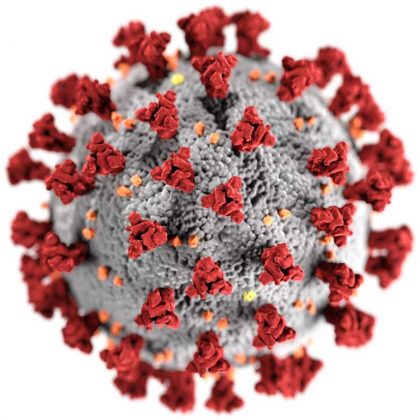
THIS illustration released by the Centers for Disease Control and Prevention in Atlanta, Georgia on Jan. 29 shows the ultrastructural morphology exhibited by the novel coronavirus. — REUTERS

HEALTH authorities reported 90 new COVID-19 infections on Tuesday — a record daily increase — bringing the total to 552.

In an bulletin, the Health department said two more patients aged 71 and 76 had died, raising the total deaths to 35.

Two patients — both females aged 21 and 76 years — have recovered, bringing the total of those who have gotten well to 20, it said.

Worldwide, about 384,000 people have been infected with the novel coronavirus, with more than 16,000 deaths. About 103,000 people have recovered from the virus.

President Rodrigo R. Duterte locked down the entire Luzon island on March 16, suspending schools, work and public transportation to contain the outbreak.

The Health department earlier ruled out mass testing for the coronavirus disease 2019, citing limited resources.

Health Undersecretary Maria Rosario S. Vergeire said other countries had managed to hold coronavirus mass testing because their quarantines were strictly implemented.

The Philippines has taken delivery of 100,000 COVID-19 test kits donated by China.

Mr. Duterte first imposed a community quarantine on Metro Manila, suspending classes and limiting the movement of people to and from the capital and nearby cities. He later expanded the lockdown to Luzon.

The University of the Philippines-National Institutes of Health has developed a detection kit that was still being field-tested.

Ms. Vergeire has also said the government does not recommend rapid testing because it could give false negative results. — Vann Marlo M. Villegas

St. Luke’s stops admission of COVID-19 patients

ST. LUKE’S Medical Center on Tuesday said it had stopped admitting COVID-19 patients for confinement after both its branches in Quezon City and Taguig exceeded their capacities.

In a statement posted on its Facebook page, the private hospital said accepting more novel coronavirus patients would “seriously impact our ability to deliver the critical level of care and attention patients need at this time.”

Management said its hospitals were also treating non-COVID-19 patients on other floors and their health could not be compromised, it said.

“While it is our desire to extend quality health care to every patient that needs our help, we can only do so much at this point,” it said.

Both hospitals were caring for 48 COVID-19 patients, 139 patients under investigation and 592 of their own health care workers who were on quarantine, according to the statement. — NPA

#COVID-19 Regional Updates (03/24/20)

4 caught for selling overpriced thermal scanners, masks face inquest

THE FOUR persons arrested for selling overpriced thermal scanners and medical masks were presented for inquest Monday, an official of the Department of Justice said. Undersecretary Markk L. Perete said the four who were working in two medical supply establishments in Manila are facing complaints for violation of profiteering and hoarding under Republic Act No. 7581, or The Price Act and Unconscionable Sales Act or Practice, and Republic Act No. 7394, or the Consumer Act of the Philippines. They were arrested following an entrapment operation by the National Bureau of Investigation (NBI) in coordination with the Department of Trade and Industry. The NBI on Saturday said it raided medical supply stores in Manila, which resulted in the confiscation of 1,360 thermal scanners and 7,680 face masks worth P10 million. The operation came following reports that thermal scanners, which supposedly cost P1,000 each, were being sold at P8,000 per piece. Arrested were the assistant manager, cashier and sales ladies. The owner who was not present at the store during the operation will also be charged. Another establishment in Rizal was also raided for selling overpriced isopropyl alcohol. — Vann Marlo M. Villegas

Air quality in QC improves since community quarantine enforcement

AIR QUALITY in Quezon City has improved since the enhanced community quarantine measure was implemented last March 16 due to the spread of the new coronavirus disease known as COVID-19. The Environmental Pollution Studies Laboratory (EPSL) reported on Tuesday that there has been a decline of about 180% in fine dust particles (Particulate Matter / PM 2.5) based on several air quality measurement systems placed around the city. During ordinary Thursdays, fine dust particles peak to 38 micrograms per cubic meter, which can be harmful to sensitive groups. These dust particles can penetrate the lungs, cause shortness of breath, and may aggravate pre-existing respiratory conditions. EPSL founding head Mylene G. Cayetano, in an e-mail yesterday, credited the improved air quality to lesser vehicles on the road and less human activities that contribute to city air pollution. “Majority of the air pollution comes from vehicle emissions. Cordoning off East Ave and Quezon Ave, both hospital zones, brings positive feedback of cleaning the air. The COVID-19 patients and the rest of the patients present in these QC hospital zones have either obstructive or restrictive breathing, thus, are in much need of clean air,” Ms. Cayetano said. The air quality measurement systems are a project of the Rotary Club of Makati in collaboration with the Lung Center of the Philippines, and the University of the Philippines Diliman Institute of Environmental Science and Meteorology. — Revin Mikhael D. Ochave

1st COVID-19 patient in Eastern Visayas out of ‘critical condition’

THE DEPARTMENT of Health-Eastern Visayas (DoH-8) office assured the public that the first confirmed COVID-19 patient in the region is “no longer in critical condition” and that all measures are continuously being undertaken to mitigate the spread of the new coronavirus disease. “She would have been discharged today (March 23) had the result been negative. It means the patient is no longer in critical condition,” DoH-8 Regional Director Minerva P. Molon said in a live-streamed briefing late Monday. The patient is a 51-year old female from Northern Samar province. She is currently confined at the Eastern Visayas Regional Medical Center (EVRMC) in Tacloban City, the designated referral hospital.

TRAVEL HISTORY
The patient arrived in the Philippines from Japan on January 2 and stayed in Manila until March 2. She went home to Northern Samar on March 3 and went for consultation in a private hospital on March 7 due to difficulty in breathing. She was transferred to EVRMC on March 12. “The patient’s condition improved and was subsequently wheeled out of the ICU (intensive care unit) with an occasional cough,” Ms. Molon said. “With this evolving situation, I assure the public that DoH is on top of the situation… we were able to manage the patient who has greatly improved and is now recovering,” she added. Meanwhile, contact tracing is continuing while the medical workers who came into contact with the patient have been placed under quarantine. As of March 23, there were 237 persons under investigation (PUIs) in the region, including 15 in hospital, 31 discharged, and the rest under strict monitoring. “With the current situation in the region, again, I urge the public to stay calm and remain vigilant at all times. Take seriously the stringent social distancing, continue to practice good personal hygiene and cough manner,” Ms. Molon said. Community quarantine measures are in place in Tacloban City and other parts of the region.

2 Mindanao universities step up to address COVID-19 threat

@USEPOFFICIAL

TWO state-run universities in Mindanao are taking action to help mitigate the coronavirus disease 2019 (COVID-19), with one proposing a diagnostic program and the other has started fabricating face shields for frontliners. The University of the Philippines Mindanao (UP-Min), in a press statement, said it is working on a P15 million biosafety molecular laboratory that can help the Southern Philippines Medical Center (SPMC) in testing COVID-19. Lyre Anni E. Murao, UP-Mindanao professor of virology and director of the Philippine Genome Center-Mindanao (PGM-Mindanao), wrote in her proposal that the molecular laboratory is intended to “back up the existing facility in SPMC and to prepare for the unprecedented peak of outbreak of the disease.” She also said, “(I)t is only imperative to consider the establishment of another diagnostic facility for faster and efficient diagnosis for coronavirus.” Ms. Murao said the PGC-Mindanao will be tasked with capability building through “trainings for our partner hospital on biosafety procedures and molecular diagnostics.” Based on the proposal, the laboratory can operate at full capacity of 96 tests a day with a monthly operational cost of P10.3 million, including the purchase of kits, reagents and consumables.

USeP
The University of Southeastern Philippines (USeP), meanwhile, has started producing face shields at its Fabrication Laboratory, also known as Digihub FabLab. Health workers at the COVID-19 referral hospitals in Davao Region will be the initial recipients of the products. “These face shields will be distributed to the medical health workers of Southern Philippines Medical Center and Davao Region Medical Center,” USeP said on its Facebook page. — Carmelito Q. Francisco

Nationwide round-up

WHO asks for more private sector help in providing PPE to health workers

THE WORLD Health Organization’s (WHO) Philippine representative has called on the private sector to help in the procurement of personal protective equipment (PPE) for health care workers, citing a global shortage problem as the new coronavirus disease, known as COVID-19, continues to spread around the world. “Again our call is for everybody in the private sector to help support the government efforts in procuring and supplying personal protective equipment so that the health care workers can feel protected and secured so that they can do their job and care for COVID infected patients,” WHO Country Representative Rabindra R. Abeyasinghe said in a briefing Tuesday. Some health care workers around the country have been using improvised PPE sets, adding to their risk of exposure to the virus. Mr. Abeyasinghe said WHO does not encourage the use of “do it yourself” PPEs as they are not 100% protective, but added that given the circumstances, “any protection is better than no protection.” Early this month, WHO asked industry and governments to increase production of PPEs by 40% due to global demand. In the Philippines, several conglomerates have donated PPEs and other medical kits, including the Aboitiz Group, SM Group, and Gokongwei Brothers Foundation, among others. — Vann Marlo M. Villegas

DFA clarifies donated COVID-19 test kits will still undergo assessment

DFA logo seal
AS DONATIONS of COVID-19 test kits pour in from foreign governments and organizations, the Department of Foreign Affairs (DFA) clarified on Tuesday that these will still undergo local assessment before put to use. Foreign Affairs Undersecretary Brigido Dulay, in a media briefing, said test kit donations from other countries must be approved by their respective food and drug board, and the Philippines’ Food and Drug Administration will also assess the kits based on Department of Health (DoH) guidelines. The DoH earlier said it could not roll out mass testing due to lack of available kits. Several patients under investigation of the new coronavirus disease around the country have died without confirmation if they were afflicted by the virus. — Gillian M. Cortez

LPG group flags prohibition of delivery to households

THE PHILIPPINE Liquified Petroleum Gas Association (PLPGA) called on authorities to address the reported barring of LPG deliveries, which is supposedly exempt from the community quarantine measures in effect around the country due to COVID-19. “Ngayon po nanawagan po kami sa DILG (Department of Interior and Local Government), sa mga LGU at lalong-lalo na po sa PNP (Philippine National Police) na sana po makipag-cooperate po sila o sumunod po tayo sa memorandum na nilabas ng national government. Ang LPG po ay kasama sa exemption, necessity po ito so sana po i-allow po natin sa mga checkpoints po (We are appealing to the DILG, local government units, and most especially to the police to please cooperate and follow the national government’s memorandum),” PLPGA member Daniel Brian Joven said in a radio interview on Tuesday. Mr. Joven noted that some barangays have been issuing their own local ordinances which prohibits the entry of LPG deliveries. Mr. Joven said they are currently distributing accredited identification cards from the Inter-Agency Task Force for the Management of Emerging Infectious Diseases (IATF) to their employees to facilitate the unhampered delivery of LPGs. Memorandum Circular No. 20-08 of the Department of Trade and Industry mandates the unhampered movement of all types of cargo, both food and non-food within, to and from Luzon amid the enhanced community quarantine to mitigate the spread of the new coronavirus disease. Meanwhile, the IATF has reaffirmed that food, agricultural commodities, and personnel are allowed unhampered passage to, from, and through the localities of LGUs. In its Resolution No. 14 passed March 20, the IATF reiterated that all types of cargo, such as food and non-food cargo, should be granted uninterrupted passage. The resolution also covers employees of business establishments that are allowed to operate. The latest resolution was issued after Agriculture Secretary William D. Dar appealed to LGUs to guarantee unhampered movement of goods such as agriculture and fishery inputs, food products, and agribusiness personnel across the country. “We would like to always emphasize that the threat of hunger is as real as the threat of COVID-19. I believe my colleagues in the Task Force agree with me on the matter, hence our unified call to conquer this threat by allowing free movement in the food value chain,” Mr. Dar said. — Genshen L. Espedido and Revin Mikhael D. Ochave

Alien employment permits processing suspended

PENDING applications for alien employment permits (AEP) will be suspended, the Department of Labor and Employment’s (DoLE) Metro Manila regional office announced Tuesday. In Advisory No. 20-04, the DoLE National Capital Region (NCR) Office said, “Due to the ongoing threat posed by the Corona Virus (COVID-19) and pursuant to the Memorandum from the Executive Secretary entitled Community Quarantine over the Entire Luzon and Further Guidelines for the Management of Corona Disease 2019 (COVID-19) situation, all AEP clients are hereby informed that the processing of the said permit shall be suspended until further notice.” The enhanced community quarantine will be in effect until April 15. DoLE-NCR also said that AEPs that will expire within the period of the enhanced community quarantine will not be slapped with a fine if not reapplied within two weeks. “New AEP applications of foreign nationals whose employment contracts are effective during the suspension period or the fifteen (15) days grace period already lapsed will not be imposed with penalty,” DoLE-NCR said. — Gillian M. Cortez

Hong Kong bars entry of non-residents, transit passengers from March 24

NON-RESIDENTS will not be allowed to travel to and from Hong Kong for two weeks beginning March 24, the Department of Foreign Affairs (DFA) reported Tuesday. The new travel restriction also applies to passengers transiting in Hong Kong. “All travelers are advised to check if their inbound or outbound flights from Philippine airports will be affected by this new restriction, and adjust travel plans accordingly,” the DFA said in a statement. The DFA also reminded Filipinos to keep updated on travel restrictions being imposed by countries in efforts to contain the spread of the coronavirus disease 2019 (COVID-19). In the Philippines, the Bureau of Immigration said in a March 22 advisory that only Filipinos, their foreign spouse and children, accredited officials of foreign government and international organization, and foreign airline crew members will be allowed to enter the country. Foreign nationals, overseas Filipino workers, and holders of permanent visa and student visa are allowed to exit the Philippines.

SINGAPORE DONATION
In a separate development, Secretary Teodoro L. Locsin, Jr. on Tuesday received test kits and a Polymerase Chain Reaction (PCR) machine from the Singapore government. It was turned over by Singaporean Ambassador to the Philippines Gerard Ho. Also present were Health Undersecretary Mario C. Villaverde and Deputy Chief of Mission Zhou Suli. The Deed of Donation was signed on Monday by Philippine Ambassador to Singapore Joseph del Mar Yap, on behalf of Health Secretary Francisco T. Duque III. Singapore Ministry of Foreign Affairs (MFA) Director General Constance See signed the Deed on behalf of Singapore. She was represented by MFA Country Officer Olivia Chong at the signing. — Charmaine A. Tadalan

Communist leader accedes to ceasefire offer

EXILED Communist Party of the Philippines (CPP) founder Jose Maria C. Sison has recommended a unilateral ceasefire with the government after initially shrugging off President Rodrigo R. Duterte’s call for a truce as the country deals with the spread of the coronavirus disease 2019 (COVID-19). In a statement on Tuesday, Mr. Sison said his recommendation is in line with the United Nation’s (UN) call for a global armistice amid the COVID-19 pandemic. As chief political consultant of the National Democratic Front of the Philippines (NDFP), he said, “I am advising the negotiating panel of the NDFP to recommend to its principal, the NDFP National Council, the issuance of a unilateral ceasefire declaration by the Communist Party of the Philippines to the New People’s Army (NPA) in order to respond to the call of UN secretary general Antonio Guterres for a global ceasefire between warring parties for the common purpose of fighting the COVID-19 pandemic.” The NPA is the CPP’s armed group. Last week, Mr. Duterte called for a unilateral ceasefire with the Reds, which Mr. Sison said had no basis and that the move was “insincere.” — Gillian M. Cortez

Senate committee asks DepEd, CHEd to release student subsidies

THE SENATE Committee on Basic Education, Arts, and Culture asked the Department of Education (DepEd) and Commission on Higher Education (CHEd) to release the last tranche of student subsidies. Senator Sherwin T. Gatchalian, who heads the panel, is referring to the subsidy for the Senior High School Voucher Program (SHS VP) and Tertiary Education Subsidy (TES) for school year 2018-2019. He said this could serve as additional financial relief to affected families and may also allow private schools to advance payment of salaries and 13th month pay. “This would help families who are bearing the socio-economic impact of the coronavirus disease (COVID-19) pandemic,” he said in a statement Tuesday. “Kung may tamang panahon para putulin ng DepEd at CHED ang red tape, ito na ang pagkakataong gawin nila ito (If there is a right time for DepEd and CHED to cut red tape, this is the opportunity for them to do so),” he said. Mr. Gatchalian said DepEd’s 2020 budget allocates P23.93 billion for the SHS VP program while the TES has a P16 billion allocation for 2018-2019. — Charmaine A. Tadalan

Now is the time to help

Besieged by the COVID-19 pandemic and pushed into adversity, the current circumstance has stimulated a surge in patriotic and emphatic response from the private sector and civil society groups.

The health crisis has plunged Luzon into a 24-hour lockdown which tremendously impacts upon the livelihood of the most vulnerable sectors of society. Juxtaposed by a populist government, the full spectrum of society with all its conflicting dynamics are now trapped in an agnostic health-cum-economic predicament.

Despite persistent political undercurrents, the people are finding a long dormant spirit of caring and kindness that has been buried by the daily stresses of working for our individual goals to better our lives. This national emergency has thrown us into a unprecedented situation that has sparked an urgency for synergy and charity.

For starters, some of the country’s biggest business groups are donating generously to ease the unanticipated sufferings of the urban poor in Metro Manila. Responding to the urgency, an initial fund of over P1.5 billion was swiftly raised for door to door distribution of P1,000 grocery vouchers to more than 1 million households in the poorest communities of Mega-Manila. The first responders supporting the project as of this writing are: the Aboitiz Group, the ABS-CBN/Lopez Group, Alliance Global/Megaworld, AY Foundation and RCBC, Ayala Corp., Bench/Suyen Corp., Century Pacific, Concepcion Industrial Corp, DMCI, the Gokongwei Group of Companies/Robinsons Retail Holdings, ICTSI, Jollibee, the Leonio Group, Mercury Drug, Metrobank/GT Capital, Nutri-Asia, Oishi/Liwayway Marketing Corp., PLDT/Metro Pacific

Investments Corp., Puregold, San Miguel Corp., SM/BDO, Sunlife of Canada, and Unilab.

Project Ugnayan is essentially a fund-raising initiative that will initially collaborate with Caritas Manila’s Project Damayan and the Pantawid ng Pag-ibig program of ABS CBN. These will provide the needed ground network to efficiently distribute the gift certificates that recipients can use to purchase the goods they need in supermarkets or groceries accessible to them. Caritas has started distribution in four pilot areas and will gear up to expand to all 677 parishes in greater Manila (regardless of religion). The Philippine Disaster Resilience Foundation supports as the secretariat of the project.

Mindful of social distancing precautions, parish volunteers will distribute to each household, with the cooperation of the Philippine National Police and local barangay officials.

Jump starting this wave of benevolence was the Ayala Group’s P2.4 billion amelioration package which consists of “P1.4 billion in rent condonation for its Ayala mall merchants, P600 million for continuing salaries of construction site workers shut down in various projects of the Ayala Malls group and Makati Development Corp., P270 million for Globe Telecoms vendor partners and retail store support staff, and P10 million in financial support for personnel of other Ayala companies.”

As announced by the brothers Jaime Augusto Zobel de Ayala, (Chairman, CEO of Ayala Corp.) and Fernando Zobel de Ayala (Ayala President), “Its employees will continue to receive salaries and financial support such as early release of mid-year bonuses. Employee loan payments have been postponed together with the release of special financial assistance programs with subsidized rates.”

Manuel V. Pangilinan (Chairman of Metro Pacific Investments Corp., MPIC) concurrently assured continued “pay and benefits, full payment of 13th month pay, no charging of work from home days to vacation or sick leave for all their employees in PLDT, Smart Communications and MPIC. Government hospitals will also get much needed support with an initial supply of 4,000 liters of alcohol and 500,000 vitamin tablets for frontline personnel.”

This new virus from China has sent the world scrambling to arrest what is now emerging as the multi-dimensional fallout that threatens to kill multitudes and impoverish millions. Crisis always has a way of bringing out the best, and the worse, in people. What we need now is for all of us to be at our best behavior and try to block off the anxieties and negativity that can cloud our better judgement. Let us support our countrymen who are now at the frontlines, our local governments, our health workers, our peacekeepers, social workers, and volunteers who must cope with the inadequacies and mortal risks of this crisis. For those who have the capacity to help, now is the time.


Victor Andres C. Manhit is the President of Stratbase ADR Institute.

Coping with COVID-19

The World Health Organization (WHO) has declared the coronavirus disease 2019 (COVID-19) a pandemic and people around the globe are understandably very worried, if not in a state of panic. In the Philippines, in an effort to quell the upward surge in infections similar to what is happening in other countries, President Rodrigo R. Duterte initially ordered a “community quarantine” of the National Capital Region (NCR) effective March 15 until April 1. However, on March 16, the President put the entire island of Luzon on “enhanced community quarantine” (ECQ-Luzon), strictly imposing a home quarantine, among others, starting on March 17 until April 12.

While COVID-19 is primarily a health issue, it cannot be denied that it has multifaceted effects — from the suspension of classes to how businesses operate, and, yes, even redefining how people socialize.

Indubitably the economy will take the hardest hit. It is a daunting challenge for the government to balance the economy and the health of the populace. While we are, of course, very concerned about people’s health, we need to keep the economy going. Some businesses must operate, albeit not “business as usual” and with very stringent restrictions.

In this regard, Malacañang, through Executive Secretary Salvador C. Medialdea, has issued a Memorandum following the declaration by the President of the ECQ-Luzon providing, among others, that only those private establishments providing basic necessities and such activities related to food and medicine production, i.e. public markets, supermarkets, groceries, convenience stores, hospitals, medical clinics, pharmacies and drug stores, food preparation and delivery services, water-refilling stations, manufacturing and processing plants of basic food products and medicines, banks, money transfer services, power, energy, water and telecommunications supplies and facilities, shall be open, subject to the adoption of a strict skeletal force and social distancing measures.

Furthermore, the Memorandum provides that Business Process Outsourcing (BPO) establishments and export-oriented industries shall remain operational subject to compliance with the following conditions: a.) strict observance of social distancing; b.) provision of appropriate temporary accommodation arrangements for employees; and c.) implementation of a skeletal workforce. Cabinet Secretary Karlo Nograles has made it clear that any covered company that fails to comply with any of the said conditions shall not be allowed to operate. Note that the Labor Advisories issued by the Department of Labor and Employment (DoLE) prior to the declaration of the ECQ-Luzon, i.e. LAs 9 and 11, Series of 2020, may still apply. Such advisories allowed companies to adopt certain flexible work arrangements (FWA) such as work-from-home, reduction of work hours/workdays, rotation of workers, forced leave, and temporary suspension of operations under Article 301 (formerly 286) of the Labor Code. Companies falling within the exceptions under the Palace Memorandum may adopt any of such FWAs. Other companies may adopt work-from-home or temporary suspension of operations.

Furthermore, the provision in the Advisories stating that leaves of absence during the community quarantine period are to be charged against the workers’ existing leave credits, if any, may still arguably apply. Remaining unpaid leaves during said period may be covered and be subject to the conditions provided in DoLE’s COVID-19 Adjustment Measures Program. In any case, the DoLE has subsequently issued Department Order No. 209, Series of 2020 or Guidelines on the Adjustment Measures Program for Affected Workers Due to the Coronavirus Disease 2019 (DO 209), which provides, among others, that a one-time financial assistance of P5,000 shall be provided to affected workers (of affected establishments) in lump-sum, non-conditional, regardless of employment status, to cover the remaining unpaid leaves. Large establishments, however, are highly encouraged to cover the full wages of the employees during the entire quarantine period. There shall also be employment facilitation by providing access to available job opportunities.

Affected establishments, under DO 209, refer to private establishments that have implemented FWAs as defined under Advisory No. 9, S 2020. On the other hand, affected workers are workers in private establishments whose employment face or suffer interruption due to the COVID-19 pandemic such as: retained workers who do not receive regular wage (e.g. those on a reduced work hours or work days); and workers whose employment is temporarily suspended by reason of the suspension of operations of the employer’s business establishment.

With respect to Ecozone IT Enterprises, the Philippine Economic Zone Authority or PEZA issued on March 5 Memorandum Circular No. 2020-011 or the PEZA Assistance to Ecozone IT Enterprises in responding to COVID-19. Perhaps PEZA should issue another Circular in light of the declaration of the ECQ-Luzon.

Pray tell when this catastrophe will end, but it is fervently hoped, by the grace of God and coupled with the unparalleled resilience of the Filipino workers, that these measures will cushion the economic and even psychological impact of the COVID-19 on the employers and their employees. Let us keep safe, everyone!

The views and opinions expressed in this article are those of the author. This article is for general informational and educational purposes, and not offered as, and does not constitute, legal advice or legal opinion.


Tiffany Ann L. Dy is an Associate of the Labor and Employment Department of the Angara Abello Concepcion Regala &Cruz Law Offices (ACCRALAW).

tldy@accralaw.com

(632) 8830-8000

Wanted: A great leader

The coronavirus disease 2019/COVID-19 pandemic is just one more crisis, among the many, that the world has experienced in the 20th century and in the present millennium. Each crisis has been a test of leadership, underscoring the need for a great leader, someone who can rally the citizenry, inspire them and keep up their spirits in the face of discouraging odds. Someone on whose wisdom they can depend on, whose words they can believe, and in whom they can entrust their lives.

Winston Churchill, as newly appointed Prime Minister of the United Kingdom in 1940, went against the policy of appeasement of his predecessor, Neville Chamberlain, in dealing with Hitler, whose forces had conquered much of Europe. Churchill defiantly declared:

“We shall fight on the seas and the oceans, we shall fight with growing confidence and growing strength in the air, we shall defend our Island, whatever the cost may be, we shall fight on the beaches, we shall fight on the landing grounds, we shall fight in the fields and in the streets, we shall fight in the hills; we shall never surrender…”

These words kept up the spirits of the British people throughout the Nazi blitzkrieg that devastated London and resulted in 32,000 civilian fatalities and 82,000 seriously injured, In the end, they prevailed.

How does President Rodrigo Duterte compare to Churchill in the face of China’s incursions into territory claimed by the Philippines in the South China Sea?

Beijing has claimed nearly all of the resource-rich South China Sea. while Duterte has disregarded a 2016 decision of the Permanent Court of Arbitration in The Hague that China’s claims have no legal basis. In 2016, on a visit to Beijing, Duterte told President Xi Jinping, “We are staking our claim in our economic zone and we will dig for oil in our territory.” At this, Xi patronizingly advised Duterte that it was “better to hold talks first because if you insist on your position, there might be trouble”

That could have been Hitler talking to Chamberlain. And, like Chamberlain, Duterte chose to appease the Chinese.

In a speech before the Philippine Navy, Duterte said: “I cannot afford at this time to go to war. I cannot go into a battle which I cannot win and would only result in destruction for our armed forces.”

While Vietnam and Indonesia, which also have claims over sections of the South China Sea, have warned Beijing to back off, Duterte lamely explained, “I had no choice. If I send my navy and my soldiers there tomorrow and start to travel toward them, in a matter of seconds they’ll all explode… they will be slaughtered and the missiles that are parked there will arrive in Manila in about four minutes. Do you want a war?”

Duterte did make snarling sounds when some 200 Chinese ships moved into a disputed area in the vicinity of Pag-Asa island, occupied by Filipinos. Duterte said that he would be forced to send a suicide mission to confront the Chinese. But he was like a mouse warning a dragon to stay away.

On the other hand, the Royal Air Force (RAF) also went on a virtual suicide mission, bravely engaging the superior Nazi Lutwaffe in the skies over England. On Sept. 15, 1940, the RAF trounced Hitler’s air force, shooting down 56 planes. The Lutwaffe turned tail and the Battle of Britain was won.

Describing the victory, Churchill said, “Never in the history of human conflict have so many owed so much to so few.”

Unfortunately, Duterte is no Churchill, although his supporters insist that Duterte demonstrated true leadership by avoiding a slaughter of the Filipino people. Perhaps. But if Churchill had taken Duterte’s attitude, the United Kingdom would have fallen.

In 1933, Franklin Delano Roosevelt assumed the US presidency at the height of the Great Depression following the 1929 stock market crash. In his inaugural speech, he endeavored to revive the spirits of the American people, not by offering false hopes, but by admitting the harsh facts and laying out his plans for recovery:

“This is preeminently the time to speak the truth, the whole truth, frankly and boldly. Nor need we shrink from honestly facing conditions in our country today.”

Roosevelt then said these immortal lines: “The only thing we have to fear is fear itself!”

Appealing for the “understanding and support” of the citizenry and of Congress, Roosevelt bluntly added: “But in the event that the Congress shall fail to take one of these two courses, and in the event that the national emergency is still critical, I shall not evade the clear course of duty that will then confront me. I shall ask the Congress for the one remaining instrument to meet the crisis — broad Executive power to wage a war against the emergency, as great as the power that would be given to me if we were in fact invaded by a foreign foe.”

During his first 100 days of his presidency, Roosevelt worked to hasten recovery by stabilizing industrial and agricultural production, and mounting massive public works projects that employed thousands. He also reformed the financial system and established a safety net for Americans. He created the Securities and Exchange Commission and the Federal Deposit Insurance Corporation, and signed the Social Security Act that provided unemployment and disability benefits and old age pensions for American retirees.

The economy was well on the way to recovery when a recession hit the country in 1937 and again in 1938, prolonging the depression up to the end of the decade. And then on Dec. 7, 1941, Roosevelt faced another test of leadership when Japan attacked Pearl Harbor. Roosevelt dubbed it “a day of infamy.” But he proved equal to the new crisis.

Compared to him, how has Trump fared in the face of the coronavirus crisis? Here is how one US publication characterized it:

“President Donald Trump’s failure to respond to the coronavirus pandemic didn’t begin with the administration’s failure to provide testing kits needed to tackle the crisis. It didn’t start with Trump’s bungled messaging and inability to send out the millions of test kits even as the crisis worsened.

“It began in April 2018 — more than a year and a half before the SARS-CoV-2 virus and the disease it caused, COVID-19, sickened people in China — that authorities realized they were dealing with a new disease.

“The Trump administration, with John Bolton newly at the helm of the White House National Security Council, began dismantling the team in charge of pandemic response, firing its leadership and disbanding the team in spring 2018.

“The cuts, coupled with the administration’s repeated calls to cut the budget for the Centers for Disease Control and Prevention (CDC) and other public health agencies, made it clear that the Trump administration wasn’t prioritizing the federal government’s ability to respond to disease outbreaks… The federal government is only now playing catch-up, as thousands of coronavirus infections are confirmed and the death toll steadily increases every day.”.

At a time when credible leadership is so urgently required and a leader’s word must be his bond, Trump has also wallowed in lies. And at a time when taking responsibility is proof of leadership, Trump has been notorious for passing the buck.

Asked if he felt accountable for the botched testing process, he replied, “I don’t take any responsibility at all.” And when asked if he had anything to do with dismantling of the White House National Security Council’s Directorate for Global Health Security and Biodefense, Trump said he did not know about it.

He lied. Sadly, Trump is no Roosevelt.


Greg B. Macabenta is an advertising and communications man shuttling between San Francisco and Manila and providing unique insights on issues from both perspectives.

gregmacabenta@hotmail.com

ADVERTISEMENT
ADVERTISEMENT