Home Blog Page 9718

COVID-19 cases top 700; death toll now at 45 — DoH

SEVENTY-ONE more people have tested positive for the coronavirus disease 2019, bringing the total infections to 707, according to the Department of Health.

Seven more patients aged 46 to 87 have died, taking the death toll to 45, DoH said in a bulletin.Two more patients aged 41 and 69 recovered, bringing the total of those who have gotten well to 28, it added.

Meanwhile, 253 Filipino workers in Kuwait have come home amid the COVID-19 pandemic that has sickened about 475,000 people worldwide, with more than 21,000 deaths, the Department of Foreign Affairs said in a separate statement.

The Filipinos, who arrived at the Ninoy Aquino International Airport (NAIA) yesterday, went through medical protocols and check-up at the airport and will undergo a mandatory 14-day home quarantine.

Those who live in Metro Manila and nearby were provided transportation, while those who could yet go home due to the lockdown were given shelter, the agency said.

DFA said it would coordinate with the Philippine Embassy in Indonesia to help facilitate the return of Filipino workers there.

DFA in a separate statement reminded Filipinos about Brunei’s temporary travel ban as part of containment measures starting March 24.

“The DFA reminds the Filipino public to remain vigilant and accurately informed as countries/territories impose and/or adjust travel restrictions that may affect Filipino travelers,” it said.

DFA said 172 Filipinos overseas have been infected with the virus. Eighty patients were being treated, 90 have recovered and two died. — Vann Marlo M. Villegas and Charmaine A. Tadalan

Top pediatrician dies after being infected with new coronavirus

THE president of the Philippine Pediatric Society died after contracting the coronavirus disease 2019, Health Secretary Francisco T. Duque III said yesterday.

Sally Gatchalian, who was also an assistant director at the Research Institute for Tropical Medicine, died, Mr. Duque told radio DZMM.

President Rodrigo R. Duterte earlier signed a measure into law giving him special powers to deal with the COVID-19 pandemic.

Under the measure, public and private health workers will get P100,00 in compensation if they are severely infected with the coronavirus disease 2019 (COVID-19).

Their families will get P1 million if they get infected and die. The clause will be applied retroactively. Health workers will also get a special COVID-19 risk allowance on top of their regular hazard pay.

The proposed law allows the President to quicken the approval of testing kits and testing of persons under investigation and monitoring, as well as the isolation and treatment of patients.

He will also ensure that local governments follow the rules set by the National Government.

He will also continue to enforce measures against hoarding, profiteering, price manipulation and other illegal acts that could affect the supply and distribution of food and other basic goods.

The President will also speed up the procurement of protective gear for health workers, test kits, medical supplies and relief goods. He may also order the construction of temporary hospitals for COVID-19 patients. — Vann Marlo M. Villegas

#COVID-19 Regional Updates (03/26/20)

IATF OKs DA-endorsed food transport protocol

THE Inter-Agency Task Force (IATF) for the Management of Emerging Infectious Diseases has approved the food resiliency protocol endorsed by the Department of Agriculture (DA) for faster movement of major food commodities to Metro Manila and other parts of Luzon. Agriculture Secretary William D. Dar said the protocol covers free movement of agricultural personnel such as farmers, fishers, employees of food processing and manufacturing companies, and food supply chain logistics providers. “Iniiwasan po natin na mayroong mabubulok na mga gulay at iba pang produkto dahil sa mabagal na galaw ng mga ito. Maliban dito, iniiwasan nating tumaas ang presyo ng mga pagkain at pangunahing bilihin (We are avoiding food wastage due to slow movement of cargo transport. We are also preventing higher prices for basic food commodities),” Mr. Dar said. Interior and Local Government Secretary Eduardo M. Año also issued an advisory to local governments units (LGUs) on Wednesday to ensure the uninterrupted movement of goods. “All LGUs are advised to adhere to protocols prescribed by the IATF and concerned NGAs (national government agencies) in ensuring food availability and sufficiency during the COVID-19 crisis,” Mr. Año said. — Revin Mikhael D. Ochave

BoC issues ECCs at airport

THE BUREAU of Immigration has started issuing emigration clearance certificates (ECC) at the Ninoy Aquino International Airport to minimize crowding at its office and physical contact between officers and holders of a temporary visitors visa. An ECC is issued to temporary visitors who stayed in the country for more than six months and holders of residence, work, or student visa who would like to leave the country “for good.” “We have put this temporary measure in place to prevent the influx of foreign nationals leaving the country who will be applying to process their ECCs, essentially minimizing physical contact with the traveling public,” Commissioner Jaime H. Morente said in a statement. Mr. Morente said they have also suspended biometrics capturing and issuance of special security registration numbers for processing of ECCs in observance of physical distancing. The commissioner assured that they still match the application with the derogatory database to ensure that the applicants have no pending obligation with the government. — Vann Marlo M. Villegas

Cebu airport closed to all inbound international flight passengers starting March 27

ALL INBOUND passengers on international flights will no longer be allowed to enter Cebu through the Mactan Cebu International Airport starting March 27 as the entire province is placed under enhanced community quarantine to mitigate the spread of the new coronavirus known as COVID-19. Governor Gwendolyn F. Garcia, in a streamed media briefing Thursday, said one of the reasons for the stricter protocols is to lessen the burden of monitoring newly-arrived people who are required to undergo a 14-day quarantine. Speaking in Cebuano, Ms. Garcia cited several local government units (LGU) around the province, such as Liloan, that are struggling with keeping watch of thousands of people who could potentially be carriers of the virus. Outbound passengers will still be allowed as well as the free flow of cargo movement in all airports and seaports. Inter-LGU transport services will also be restricted. The enhanced community quarantine will be in effect until further notice. — MSJ

BPOs in Davao City checked for compliance to DTI rules

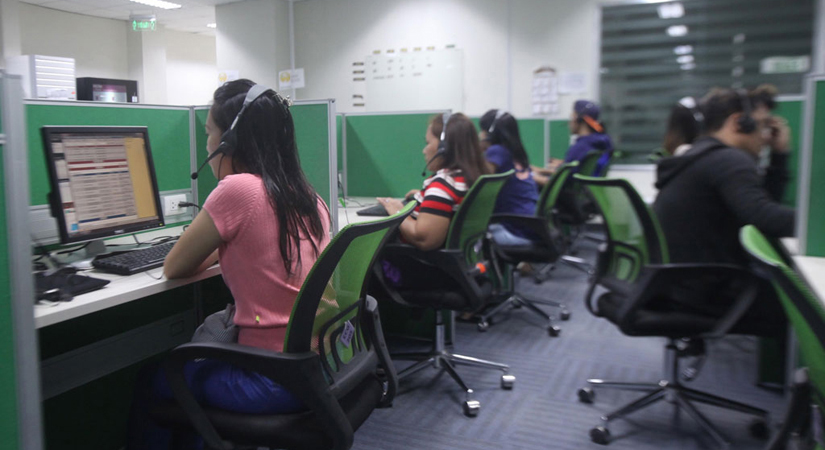
A 2018 file photo of a call center in Davao City. — BW FILE PHOTO

DAVAO CITY — Business process outsourcing (BPOs) companies here are being checked by a joint team from the city government and the Department of Trade and Industry (DTI) for compliance to guidelines on continued operations.

“You only have two options based on the DTI memo: skeletal workforce provided they observe social distancing and employees should have a temporary accommodation within the vicinity of the workplace with shuttle service; and work from home arrangement. If they cannot comply they must close down,” Mayor Sara Duterte-Carpio said over the state-run Davao City Disaster Radio.

Under the national government’s state of health emergency policy, BPOs are among the sectors allowed to continue operations.

DTI issued a memorandum circular outlining the rules that must be observed by outsourcing firms while the Davao City government also released localized guidelines last Monday.

Samuel R. Matunog, president of ICT-Davao, Inc., the industry council for the Davao region’s information and communications technology sector, said they have reminded members not to waste this concession from the government.

“Government is providing a way to maintain the operation and for us not to lose our clients along the way and provide employment to our workers. To that extent, BPOs will be able to comply and we hope they will be able to follow guidelines,” Mr. Matunog said in a telephone interview.

As of Monday, 26 BPOs have been inspected, according to the mayor.

One call center, Six Eleven, already has about 40% of its employees on home-based arrangement.

“(It’s) those accounts that can be done from home. We lent them computers and all necessary hardware,” Six Eleven owner Joji Ilagan-Bian said in a text message.

For those still reporting to the office, Ms. Bian said they have set up a foot bath and temperature check in all entrances, and social distancing is observed.

“We enforced that strictly by actually removing the chairs in between so the agents will be disciplined to observe social distancing while at work. We also have our floor sanitized every five days,” she said.

Ms. Bian said accommodations and shuttle service are provided for those who require these.

“We understand that we have to be proactive now and really follow strict protocols from our government. We are also doing our utmost best to protect our people and to ensure their safety,” she said. — Maya M. Padillo

Nationwide round-up

Gov’t eases release procedures on medical equipment for COVID-19


THE BUREAU of Customs (BoC) may now release medical equipment vital in addressing the coronavirus disease 2019 (COVID-19) without clearance, the Food and Drug Administration (FDA) said. “Foreign donations of ventilators, respirators and their respective accessories to be used in the treatment of COVID-19 patients need not require FDA clearance prior to customs release,” FDA Director General Roland Enrique D. Dominguez said in a letter to Customs Commissioner Rey Leonardo B. Guerrero. The FDA also said that for imported medical equipment, the importer will only be required to present copies of their License to Operate. The March 23 letter was shared by Foreign Affairs Secretary Teodoro L. Locsin, Jr. in a social media post, after he flagged the FDA, BoC, and the Department of Health over “the runaround” amid the health crisis. — Charmaine A. Tadalan

PhilHealth reiterates assurance of coverage to all COVID-19 patients

THE PHILIPPINE Health Insurance Corp. (PhilHealth) on Thursday reiterated that it will cover all medical expenses of patients tested positive for the coronavirus disease 2019 (COVID-19). In a briefing on Thursday, PhilHealth President Ricardo C. Morales said under the government’s Universal Health Care program, “Walang tao dapat maglabas ng pera (No one should shoulder the cost).” He added, “Lahat ng gagastusin, whether public or private hospitals, sasagutin ‘yan ng PhilHealth (All the expenses, whether in public or private hospitals, that will be covered by PhilHealth).” Patients under investigation (PUI), or those exhibiting COVID-19 symptoms, are also covered. Mr. Morales noted that this week alone, P1.6 billion has been released to hospitals. This is part of the P30 billion fund it has allocated to address COVID-19. The Inter-Agency Task Force on the Management of Emerging Infectious Diseases on Wednesday called for an additional funding of P420 million for PhilHealth, to be sourced from the Philippine Charity Sweepstakes Office. — Gillian M. Cortez

Lawmaker proposes use of MOOE budget for COVID-19 response

A LAWMAKER has called for the realignment of part of the Executive branch’s operating budget to augment the fund for addressing the new coronavirus disease 2019 (COVID-19). “The tens of billions we can save by reducing unnecessary expenses can be used to fight the coronavirus disease,” Anakalusugan Rep. and chairman of the House committee on public accounts Michael T. Defensor said in a statement on Thursday. He cited non-essential items under the maintenance and other operating expenses (MOOE) budget such as travel expenses worth P19.4 billion, and training and scholarship expenses worth P32.9 billion, among others. “These are programmed and budgeted expenses we clearly can scrimp on or do away with while we are battling this pandemic,” he said. Mr. Defensor said these funds would be in addition to the P275 billion that the administration’s economic team has committed to raise from non-budget sources. — Genshen L. Espedido

Dominguez says worker support main priority

FINANCE SECRETARY Carlos G. Dominguez III said the government is focused on saving jobs and ensuring workers are paid during the COVID-19 outbreak, and does not consider tax breaks a priority.

“I have told the people who came out with that proposal to do a stimulus package — that is not our priority at the moment… we don’t even know what the point is of giving tax credits and stimulus packages when you have no workers. What’s the point? The workers are in quarantine… Let’s talk about that later,” Mr. Dominguez told reporters Wednesday via Google Meet.

He said the government’s focus is to support Filipinos who lost their livelihoods, protect front-liners and the health care system, as well as boost the economy.

“The first part of the battle, we must take care of the essentials and then as the battle develops, we will take a look at the damage to the economy and therefore that’s the time when we will plan on what we are going to do for the stimulus program. But now, I think we are still in the assessment stage,” he said.

The Makati Business Club on Monday urged the government to implement financing programs and stimulus packages to help businesses, especially micro, small and medium enterprises (MSMEs), stay afloat during the crisis.

Before Congress approved Republic Act No. 11469, or the “Bayanihan to Heal as One Act,” the group said in a statement: “we suggest the Administration and Congress consider… providing rehabilitation, special financing programs and/or stimulus package to help businesses — especially MSMEs — that are adversely affected by the COVID-19 pandemic, especially to help them pay workers to remain quarantined and, when the pandemic is under control, to rehire and resume normal operations.”

According to Mr. Dominguez, the government “doesn’t know exactly what the total damage is, but there is damage. So, we’ll attend to the immediate emergency which is to provide livelihood, to provide safety equipment and provide general support to the economy. But for the specifics I don’t know yet this time.”

According to the law, 18 million low-income families will receive emergency subsidies worth P5,000 to P8,000 per month for two months. A “COVID-19 special risk allowance” will also be given to public health workers and additional compensation for all health workers who contract the disease.

Meanwhile, the law also provides for the liberalization of incentives for manufacturing or importing needed equipment and supplies for health workers fighting the outbreak, as well as ensuring that credit is available to “productive sectors” during the crisis.

Mr. Dominguez has said the government is currently seeking up to $2 billion worth of funding assistance from multilateral agencies to support the government’s increased spending and plug the funding gap. Economic managers expect revenue to drop by around P318.9 billion this year for every percentage-point contraction in economic growth.

Separately, Mr. Dominguez also urged his fellow governors at the Asian Development Bank (ADB) to give President Masatsugu Asakawa more leeway as the multilateral lender addresses its member-countries needs during the global health crisis.

“Extraordinary times call for extraordinary measures. A certain degree of discretion ought to be provided to the President on administrative matters, such as allocating the Bank’s budget and authority to approve crisis-related programs and projects, within reasonable limits,” Mr. Dominguez said in his letter to the other 67 ADB governors.

The government rolled out an initial P27.1-billion economic stimulus package to help virus-affected sectors while the recently-signed law allows the government to realign as much as P275 billion from the national budget and make off-budget outlays to the emergency subsidy program.

The World Bank has committed to provide a $100-million loan to the Philippines while the ADB has extended a $3-million grant.

Economic planners expect losses of between P428.7 billion to P1.355.6 trillion in gross value added, equivalent to 2.1-6.6% of gross domestic product, due to the economic impact of COVID-19. — Beatrice M. Laforga

MSMEs running out of working capital during lockdown

A SECOND lockdown would devastate the micro, small and medium enterprise (MSME) sector because their working capital has been depleted with the shutdown of most businesses as banks grow more reluctant to lend because of the heightened bad-loan risk, Presidential Adviser for Entrepreneurship Jose Maria A. Concepcion III said.

“We have to make sure this lockdown succeeds. Because if it fails then the country cannot afford a second lockdown. If we continue with the lockdown of course mas malaking problema para sa mga MSMEs natin kasi ‘yung working capital nila ubos na (It will be a bigger problem for MSMEs because their working capital has been wiped out) in this first round and then ‘yung funding galing sa mga bangko ay wala pa diyan kasi nahirapan din ang bangko na mag-lend kasi baka lumaki ‘yung exposure nila (bank funding will dry up because of the heightened exposure to bad loans),” he said in a radio interview Thursday.

Mr. Concepcion added that the main problem of MSMEs during the COVID-19 outbreak is that they cannot obtain additional funding from banks.

Ang bangko kasi, once confidence starts to (weaken), baka may mag-collapse din na bangko (Banks are worried about a loss of confidence which could collapse the system) so that’s what we don’t want to happen. So (the banks), because of fear, (are) pulling back. They’re not lending and they’re doing selective lending so talagang matatamaan itong mga MSMEs (the MSMEs are really going to take a hit),” he said.

Mr. Concepcion noted that employees are afraid to work because of the fear of contracting the virus.

“Many are not sure if they can be tested. Fear is really moving around very strong as they see the cases moving higher, mas lalo silang natatakot (the more the fear spreads),” he said.

“They may have one to two months’ leave and support from the government pero pagkatapos nu’n, wala na silang maipambibili para sa pagkain (when that runs out, they won’t have anything left to buy food),” he added.

Mr. Concepcion said the Republic Act 11469 or the Bayanihan to Heal As One Act will help the Executive Department define priorities for stimulus.

“What would happen here is that the Secretary of Finance can now work on the current budget and reallocate and prioritize what is more pressing which is ‘yung mga nawala sa trabaho, itong mga contractual employees natin. (the lost jobs, particularly among contractuals) So the program of this administration right now is to focus really on the supply of food. They are looking at expanding the cash transfers. Those are what’s considered urgent (right now),” he said.

The second phase of the government’s efforts will be to revive businesses, Mr. Concepcion added.

“That stimulus package is going to be important to revive, to reenergize the business community,” adding that MSMEs are critical because ”they connect all the way down to the poor,” he said.

Mr. Concepcion said it was important that the current “lockdown” succeeds.

“So within this one month, you will know who is sick and who is not sick. We have to prevent a second lockdown from happening (because) by this Sunday it will be the end of two weeks so makikita natin siguro maraming cases lalabas ‘yan (so we will see a lot of cases emerging). But before four weeks end, (maybe) things should be stabilized,” he said.

Once the lockdown ends, Mr. Concepcion said that the government should focus on reviving the manufacturing sector.

“Once we are over this lockdown, the most important thing is we have to go back to manufacturing. We have to run our plants because this is what will give the people jobs. We cannot lock down again because then nobody will have jobs, the government cannot continue giving money, giving food because we will run out of that,” Mr. Concepcion said. — Genshen L. Espedido

Harvest means rice inventory ample until June — Agriculture dep’t

AGRICULTURE Secretary William D. Dar said the dry-season rice harvest will make inventories of the staple sufficient to meet demand until June.

According to the Philippine Statistics Authority (PSA), rice stocks are estimated at 2.661 million metric tons (MT) by the end of the first quarter, equivalent to a 75-day supply.

Average daily consumption was 35,369 MT per day, for a monthly consumption rate of around 1.2 million MT.

“With the harvest already coming in, along with the steady arrival of imported rice, we expect no shortage of the staple during the duration of the enhanced community quarantine and beyond,” Mr. Dar said.

By the end of June, the rice inventory is projected at 2.38 million MT, sufficient for 67 days.

The Department of Agriculture (DA) is studying early planting in Regions 2 and 3 to boost production during the third quarter of the current year.

In addition, the DA is expanding areas covered by the Rice Competitiveness Enhancement Fund (RCEF) and is promoting the use of hybrid seed for increased yield.

Meanwhile, Vietnam has suspended new rice export contracts until March 28, as Hanoi assesses whether its domestic supply is sufficient for the COVID-19 pandemic.

The third-largest rice exporter exported 6.37 million tonnes of rice in 2019, up 4.2%.

Asked whether the Philippines is affected by Vietnam’s decision, Mr. Dar said there are other rice exporters within ASEAN like Myanmar and Thailand, as well as other countries like India and Pakistan.

Agricultural groups said rice stocks are ample with no threat of a rice shortage for now.

In an interview with BusinessWorld, Samahang Industriya ng Agrikultura (SINAG) Chair Rosendo O. So said the industry is still working through excess imports from last year, but said the main problem is keeping farmers working.

“There is enough rice supply for 90 days, plus the rice that will still be harvested. It’s just that farmers should not be prevented from going to their farms due to quarantine checkpoints,” Mr. So said.

In a text message, Federation of Free Farmers Chairman Leonardo Q. Montemayor said the critical period remains the lean months of July to September.

“It is a big problem if Vietnam stops rice exports and/or the private sector finds rice imports to be too expensive, plus if shipping and freight charges rise,” Mr. Montemayor said.

SINAG said self-sufficiency is the only way to feed the public, adding that eventually all rice exporting countries will stop exporting to prioritize local supply.

“The global market is erratic, unreliable, and expensive. We must only rely on our own capacity and capability to put food on our dining tables,” Mr. So said.

According to initial estimates from the Bureau of Plant Industry, the Philippines imported some 1.813 million MT of rice from Vietnam in 2019. — Revin Mikhael D. Ochave

Tighter overseas lending seen as main risk to PHL economy

A WIDER COVID-19 quarantine and more restrictive lending conditions worldwide pose the main risks to the Philippine economy, threatening to bring growth to their lowest levels since 2011, Fitch Solutions Macro Research said.

Fitch Solutions reduced its growth outlook for the Philippines to 4% earlier this week from the already-downgraded 6% estimate issued in February.

The estimate points to a further slowdown from the below-target 5.9% performance in 2019, and a failure to meet the government’s original growth target of 6.5-7.5%. Officials have flagged possible revisions to the target in the wake of the enhanced community quarantine (ECQ) in Luzon, which accounts for 70% of Philippine gross domestic product (GDP).

“While we do not expect a shock to the magnitude of the global financial crisis (GFC), the outbreak is likely to drag on the Philippine economy into Q420-Q121 and as such, we now see growth coming in at its slowest pace since 2011,” Fitch Solutions said in a note Thursday.

GDP growth in 2011 was 3.7% largely due to government underspending on infrastructure and also due to external economic problems.

Fitch Solutions noted that the Luzon ECQ, which started on March 15 and is set to end on April 12, was intended to arrest the spread of the virus, but will have the side effect of suppressing economic activity.

“(A)s data from China has shown, such restrictions result in a sharp contraction in domestic activity, with household consumption and investment activity collapsing,” Fitch Solutions said.

Although lower oil prices could somehow offsetting lower growth, Fitch Solutions said consumption will also be dented by weaker remittance flows, which helps power household consumption.

Cash remittances from overseas Filipino workers rose 6.6% in January to $2.649 billion, according to data from the central bank. However, analysts have warned that the next months could see a strain in inflows due to the pandemic.

“With remittance flows likely to slow more aggressively as the outbreak spreads to the US, which accounts for around 40% of remittances, a valuable driver of household consumption will shrink,” Fitch Solutions said.

Fitch Solutions also expects reduced income for self-employed workers, who make up 25% of the labor force, as well as a rise in unemployment due to the pandemic’s impact on tourism and cash flow difficulties for small and medium enterprises during the lockdown.

Economic recessions in the coming months will spil lover into exports and fund flows from overseas, Fitch Solutions said.

“Such a widespread drop in global growth will feed through to a sharp drop-off in foreign direct investment (FDI) inflows and a weakening of remittances, which combined account for around 10% of GDP,” Fitch Solutions noted.

FDI inflows fell 23.1% to $7.647 in 2019, dampened by global uncertainty and weak investor sentiment due to uncertainty over the future shape of Philippine tax reforms.

Fitch Solutions said that the Philippine’ twin current account and fiscal deficits points to a shortage of domestic savings and reliance on foreign funding as a growth booster.

“However, with FDI inflows likely to stall and remittances to be hurt as unemployment rises globally, we expect the Philippines to face harsher funding conditions,” Fitch Solutions said.

The current account was in deficit by $464 million in 2019.

Meanwhile, the budget deficit widened to P660.2 billion from P558.3 billion a year earlier, as the government spent aggressively on infrastructure projects.

Fitch Solutions said the peso is among the best performers among emerging market currencies on the back of ample reserve buffers that safeguard it against sell-offs.

The peso ended trading at P51.07 on Thursday against the P51.14 close on Wednesday, according to the Bankers’ Association of the Philippines. — Luz Wendy T. Noble

Quorum during quarantine

Undeniably, the effects of the COVID-19 outbreak have spread globally. In the Philippines, Luzon has been placed under Enhanced Community Quarantine, along with other areas across the nation. People were advised to stay home, most businesses are closed except for those serving the public, and social distancing is imperative where possible.

To respond to the crisis, immediate action is required. Since holding physical meetings is discouraged, remote meetings have become a must, if not the best option available.

In the case of corporations, which act through a board of directors, board meetings are necessary to approve emergency measures. A corporation intending to utilize remote communication for its meetings should refer to the relevant provisions of the Revised Corporation Code (RCC) and Securities and Exchange Commission (SEC) Memorandum Circular 6-2020 (MC 6-2020).

Section 52 of the RCC allows directors or trustees who cannot physically attend or vote at board meetings to participate and vote through remote communication such as videoconferencing, teleconferencing or other alternative modes of communication that will allow them to participate. Since being a director is a fiduciary duty, attendance by proxy is still not allowed for board meetings.

When so authorized in the by-laws, Section 50 of the same Code allows stockholders or members to exercise the right to vote, whether directly or through a proxy, via remote communication or in absentia.

Just before the quarantine, the SEC issued MC 6-2020 on March 12 to guide corporations in formulating their internal procedures and bylaws which will allow their directors/trustees, stockholders/members and other persons to participate and vote in meetings in absentia or through remote modes of communication.

Remote communication is defined as the transfer of data between two or more devices not located at the same site. Teleconferencing refers to holding of a conference among people using telecommunication devices such as telephones or computers. Videoconferencing is the holding of a conference among people in remote locations by means of transmitted audio and video signals. Computer and audio conferencing mean teleconferencing supported by one or more computers and telephone/internet connections, respectively.

Below are the guidelines that must be observed in case a director/trustee or stockholder/member, will participate remotely:

• The Corporate Secretary must send the notice of the meeting. It is now allowed to be sent by electronic mail, messaging services or such other manner allowed under the by-laws or board resolution. The notice should indicate that remote participation is allowed, including instructions for its conduct.

• The director/trustee or stockholder/member should notify the Presiding Officer and the Corporate Secretary that he or she will attend remotely.

• Attendees via remote communication are counted as present in determining quorum.

• In terms of votes, the following rules should be followed:

a. Director/Trustee: vote can be cast through electronic mail, messaging service or such other manner as may be provided in the internal procedures, to be sent to the Presiding Officer and Corporate Secretary.

b. Stockholder/Member: votes may be exercised by a) remote communication or b) in absentia, when authorized by a resolution of the majority of the board of directors, provided that the resolution shall only be valid for a particular meeting.

For corporations vested with public interest, votes during elections of directors, trustees and officers may be by remote communication or in absentia, even if it is not provided for in the bylaws.

• The Corporate Secretary has the duty to ensure that during remote meetings, there are suitable equipment and facilities available such as a stable Internet connection, that attendees can hear and see each other clearly, that audio and visual recordings are secure, and that the meetings are continuous and interruptions will be managed. Upon conclusion of the meeting, the Corporate Secretary should safe-keep and perpetuate the visual and audio recordings in an updated data storage equipment or facility, and facilitate the signing of the minutes whenever practicable within a reasonable time after the meeting.

• As to the place of meetings, directors or trustees’ meetings can be held anywhere within or outside the Philippines; but as for stockholders, pursuant to Section 50 of the RCC, as a general rule, it should be called by the presiding officer at the principal office of the corporation as provided in the articles of incorporation, or, if not practicable, in the city or municipality where the principal office of the corporation is located.

Corporations are allowed to issue their own internal procedures taking into consideration the number and location of stockholders/members, the importance of the matters to be discussed and voted upon in the meeting, promotion of minority rights and other factors consistent with the protection and promotion of stockholders’/member’s rights.

With the objective of immediately putting these guidelines into use, the MC 6-2020’s transitory provision allows the conduct of remote meetings for the board/trustees and stockholders/members for the limited purpose of approving the provisions in their bylaws or internal procedures which will govern participation in meetings by means of remote communication or other alternative modes of communication.

In coming up with their internal protocols, one area that corporations may need further clarification on would be the venue of the stockholders’/members’ meeting. If it’s a purely remote meeting, how will the SEC view where it is actually held? Is it dictated by the location of the presiding officer, or perhaps the server which hosts the meeting? Does this mean that even if remote attendance is allowed for others, the presiding officer still has to be physically present at the principal place of business, or be in the same city? If physical presence is still necessary, this may be complicated by the quarantine if the office is located in a city that is currently under lockdown, and the presiding officer’s residence is not in the same city.

These complications aside, the guidance in the MC is definitely a good place to start. Moreover, perhaps it is not too much to hope that the SEC will grant corporations even more flexibility in case certain conditions under the guidelines cannot be complied with during this time of quarantine.

The views or opinions expressed in this article are solely those of the author and do not necessarily represent those of Isla Lipana & Co. The content is for general information purposes only, and should not be used as a substitute for specific advice.


Aimee Rose DG dela Cruz is a senior manager with the Tax Services Group of Isla Lipana & Co., the Philippine member firm of the PwC network.

(02) 8 845-27 28

aimee.rose.d.dela.cruz@pwc.com

Locking-down our priorities

COVID-19 PH4, Carlo L. Navarro, a 48-year-old tax lawyer, visited Japan in February with his wife, Evie and only daughter, Gia. Throughout their trip, they wore protective masks, gloves, and incessantly used alcohol on their hands. Seven days after returning home, Mr. Navarro showed mild signs of COVID-19. A responsible citizen and father, he immediately insisted on being tested for the virus at a private hospital. His infection was confirmed within two days. He was the first Filipino to be found positive in the country. He was quickly confined to prevent its spread. His family, household members, and contacts have all tested negative.

Mr. Navarro was in hell for eight days at the Research Institute for Tropical Medicine (RITM) and for another week at a private hospital. He was discharged after a CT Scan showed that his hospital-acquired pneumonia did not consolidate.

He was allowed home quarantine without the benefit of two confirmatory negative tests for the virus. RITM has been flooded by requests for COVID-19 testing from Persons Under Investigation (PUIs) and from prioritized asymptomatic “very important persons,” to whom the Health Secretary has decided to accord “courtesy.”

According to the Department of Health tracker, as of this writing, the Philippines has 636 confirmed cases with 84 new cases, 38 deaths, and 26 recoveries.

The prognosis is very grim. With a very weak healthcare system and late lockdown, the scoreboard is expected to continue bleeding red. It is only recently that the Philippines received a good number of test kits mostly from other countries. Those under the radar would be flushed out, and the statistics of infected Filipinos is likely to surge. There is hope in Mr. Navarro’s message put out by the South China Morning Post, that getting COVID-19 “is not a death sentence.” It can be controlled.

Until the passage of the “Bayanihan to Heal as One Act” last Tuesday, for weeks there was little coherence in the public response to the virus. We experimented in incrementalism: from simple monitoring to “community quarantine,” to “enhanced community quarantine,” to “extreme enhanced community quarantine,” to lockdown. The experiment in incrementalism has failed.

Hospital facilities including the medical complement cannot cope. Heroes are falling from their ranks. The lack of PPEs (Personal protective equipment) and masks are being addressed by private donations or do-it-yourself-taped-up garbage bags and acetate shields, while a Senator calls out the medical-supply scarcity as “fake news.” Some local government units have decided to establish makeshift tent cities with flimsy partitions to accommodate potential COVID-19 patients.

Incrementalism is sensible only when one advocates good governance and expects meaningful changes in public policy. But during a health crisis like the COVID-19 pandemic, the perspective of competent health practitioners should guide public policy decisions and subsequent implementation. We urgently need decisive leadership with the best interest of the general public foremost in their hearts.

What do we expect from the Bayanihan Act?

Constitutional and legal issues aside, the Bayanihan Act compensates health workers infected with COVID-19 or those who perish upholding their Hippocratic Oath. PhilHealth is mandated to shoulder the medical expenses of public and private health workers in case of virus exposure or any work-related injury or disease. It allows the Executive to engage temporary health workers to support the regular force. Good.

The Act however, does not rectify the previous reduction of the Health Budget, and those of RITM, PGH (the Philippine General Hospital) and other public hospitals. We hope this is addressed by leveraging on Section 3 of the Bayanihan Act. It ensures “sufficient, adequate and readily available funding to undertake… measures that will prevent the overburdening of the healthcare system.”

We highlight the healthcare system because the virus piggybacked on it to propagate itself.

Because it is weak, our healthcare system has failed to readily test cases; establish contact tracing; and undertake mitigation to those affected. A half-hearted lockdown aggravated the tragedy. Both public and private healthcare systems are bursting at the seams. Sufficient funding is absolutely needed to avoid unbridled spread of the virus.

Some epidemiologists hope that “the virus mutates and dies out.” Be that as it may, there is no substitute for funded vigilance. The virus can be proactively controlled. This is displayed by policy actions with good results in Singapore, Taiwan, South Korea, and Hong Kong.

The social and economic costs cannot be dismissed. In the Philippines, as in other jurisdictions, the virus has prevented daily wage earners and ambulant vendors from sustaining their lives through their modest earnings. The Bayanihan Act addresses this issue by providing subsidies ranging from P5,000 to P8,000 a month to some 18 million low-income households. This is admittedly inadequate by any standard. It is good the Executive is also authorized to implement an expanded and enhanced conditional cash transfer program.

To secure the welfare of both individuals and businesses, the Act rightly protects the general public from “hoarding, profiteering, injurious speculations, manipulation of prices, product deceptions, and cartels, monopolies or other combinations in restraint of trade, or other pernicious practices” affecting the supply, distribution and movement of products and services.

What about the economy?

The Act is silent as to any assistance to businesses at this time. We agree: first things first. Since we are just catching up with COVID-19’s deadly spread, focus on the healthcare system and insurance for social protection are the imperatives.

What of Government’s initiatives prior to the pandemic? The Build, Build, Build program must be sustained subject to normalization of business. If a project is too ambitious to be completed within the year, it would be prudent to freeze it. Meanwhile, the budget can be realigned to augment public healthcare.

In this, Finance Secretary Sonny Dominguez assured that the Government is “willing to do as much as it takes.” He acknowledges the need to prioritize. After a good stocktaking of economic damage, further stimulus programs can be considered. Previous fiscal and monetary measures have been announced by the National Government and the Bangko Sentral ng Pilipinas.

So far, the public has broadly adhered to the quarantine.

But what about the quarantine call endorsed by a Senator of the Republic, a call strongly decried by Makati Medical Center as “merely rhetoric,” which “he himself violated,” virtually assaulting the hospital, its frontliners, and in the process, the integrity of the whole healthcare system?


Diwa C. Guinigundo is the former Deputy Governor for the Monetary and Economics Sector, the Bangko Sentral ng Pilipinas (BSP). He served the BSP for 41 years. In 2001-2003, he was Alternate Executive Director at the International Monetary Fund in Washington, DC. He is the senior pastor of the Fullness of Christ International Ministries in Mandaluyong.


Defying the virus

MEMBERS of the QCPD Batasan police station rounded up 135 residents, including 15 minors, for violating the public safety hours of 8 p.m. to 5 a.m. of the enhanced community quarantine at Barangay Batasan in Quezon City on March 23. — PHILIPPINE STAR/MIGUEL DE GUZMAN

With over 500 cases in the Philippines, the COVID-19 threat is already serious enough to concern everyone. But its unwanted presence has also further exposed Filipinos to the authoritarian virus that to this day has survived the 1896 Revolution, World Wars I and II, the EDSA civilian-military mutiny of 1986, and the untiring efforts of human rights defenders, independent journalists, committed artists and academics, civil society organizations, and social and political activists to combat it.

Although resident as well among the citizenry, the contagion is most visibly lodged in the flesh, blood and bone of the government bureaucracy. Its symptoms have several times been manifest during the present crisis. But so has growing resistance to it.

President Rodrigo Duterte declared earlier in March the lockdown of metro Manila to stop the spread of COVID-19. But instead of health personnel, he made it a point to have police and military officials prominently behind him. Not a few citizens concluded that it was to remind everyone that Mr. Duterte and his cohorts now control the coercive powers of the State and that he is prepared to use them. Human rights defenders went on to alert the public to the possibility of his using the present crisis to place the country under martial law and of the imperative of opposing it.

The Presidential Communications Operations Office (PCOO) immediately required journalists covering, or who intend to cover, the lockdown and events related to the COVID-19 emergency to obtain accreditation cards before they go about their job of providing the public the information it needs in this hour of national peril.

Journalists already carry press ID cards issued by their media organizations. That fact makes the requirement superfluous, unless the purpose is to limit reporting what’s happening only to those journalists and media organizations the PCOO approves of. Hence the protest of, among others, the National Union of Journalists of the Philippines (NUJP).

This is the same PCOO whose trolls, hacks and accomplices in social media, print, and broadcasting have accused independent journalists and their organizations of irresponsible reporting, and advocated their licensing by government. This is also the same agency that has been using public funds to tour Europe in “press freedom caravans” to convince various countries there that press freedom and free expression are alive and well in Mr. Duterte’s Philippines.

After President Duterte locked down the whole of Luzon, he announced on March 18 that he would address the nation, which many sectors thought would be on such urgent concerns as how the workers who’ve lost their daily wages can feed themselves and their families.

He instead used the occasion to warn local government executives not to do anything contrary to national government directives — as vague, as contradictory and as unsuitable to local conditions as those may be — at the risk of facing administrative charges.

The warning was apparently addressed to Pasig City Mayor Vico Sotto, who has taken exception to the ban on tricycles on the argument that not only do their drivers need the work to survive; they’re also needed to transport health and other frontline workers in the fight against COVID-19 as well as the sick to hospitals, clinics, and dialysis centers.

Mr. Duterte is supposedly an advocate of federalism because it would enable local executives to more meaningfully address local concerns. But he has apparently become the champion of the presidential form of government he now commands but of which he was once so critical. Some lawyers, however, were quick to point out that his claim that the national government has control over local governments has no legal basis.

Several municipalities including Manila have declared a curfew. In the aftermath, the threat of arresting anyone caught outside their homes during curfew hours has fallen frequently from the lips of the all-powerful police and their military partners.

Missing is any mention of exactly what crime the putative offenders will be charged with. However, as the experience of activists who have been accused of committing common crimes from murder to child trafficking to illegal possession of firearms and explosives to kidnapping has time and again demonstrated, these experts in planting evidence can always manufacture something.

Both the Philippine National Police (PNP) and the National Bureau of Investigation (NBI) also warned purveyors of disinformation (“fake news”) that charges will be filed against them under “existing laws.” Several bills have indeed been filed in Congress to penalize the generation and dissemination of “fake news,” but none have passed, among other reasons because of protests that such a law would lead to the abridgment of free expression and press freedom. Crisis or no crisis, the threat of penalizing people for offenses no law covers is evidently still first in the PNP and NBI’s list of scare tactics and priorities.

Using the same tactics, barangay officials in Sta. Cruz, Laguna crammed several young men into a dog cage for being outside their homes during curfew hours, and were rightly condemned for that brazen display of abuse of power and gross stupidity. The curfew being intended to prevent the transmission of the COVID-19 virus, crowding the young men into the cage defeated that purpose. But that was obviously the farthest thing in what passes for their minds, their focus being on demonstrating their power over the lowly.

In another display of petty power, policemen threatened to arrest a woman in Manila when she took photos of them out of curiosity over their unusual presence in her neighborhood unless she deleted the shots from her phone. She was outraged enough to post the alleged incident on her social media page. It’s more than likely that she was telling the truth. Policemen have become as camera-shy as criminals, because cameras have more than once caught their fellows in the act of breaking the laws they’re supposed to implement, as in the 2017 killing during a supposedly anti-illegal drugs operation of teenage schoolboy Kian de Los Santos, whose murder by policemen was caught on CCTV.

The name of the regime game isn’t public health and safety; and neither is it law and order. It is instead intimidation and control, not only over everyone’s mobility, livelihood, access to information, and free expression, but even more importantly over their very lives and fortunes by those who call themselves the authorities, whether president, Cabinet member, barangay official, soldier or policeman. But while the authoritarian malignancy has prevailed over the last three years, it may not survive the present crisis, so rapidly has resistance to it in various forms been growing during the COVID-19 emergency.

The defiance is there not only in some local executives’ insisting that they know best what’s happening in their jurisdictions and they are who can better address their problems and needs. It is also there in tricycle drivers’ plying their trade despite the threat of arrest, and in the determination of workers and the poor to feed themselves and their families.

But even more crucially is it there as well in the citizenry’s mounting anger. The streets may be empty for now, and silent. But the lessons this crisis is imparting, once the threat of the COVID-19 contagion is over, are unlikely to be so soon forgotten by the millions to whom the arbitrariness of power has so clearly demonstrated the imperative of political engagement, protest and resistance in the defense of their communities, their lives, and those of their families.


Luis V. Teodoro is on Facebook and Twitter (@luisteodoro).

www.luisteodoro.com

Spring thoughts

Spring officially began on March 21st . In our tropical country, it is also the start of the long, hot summer season.

We are having a surreal experience. The series of consecutive disasters around the world seemed to be a prologue of the overwhelming, devastating pandemic nightmare. Time seems to fly. There is nothing to look forward to — at least until it is over.

How shall we survive?

By being good citizens and following all the important, difficult instructions. By praying and being grateful for the blessings. By simplifying our lives and reinforcing the traditional values. By relearning the basic lessons. By sharing and helping others.

On the practical side, people are coping by doing the mundane chores of spring cleaning. It is the external organization of one’s files — personal and professional. It is deciding what to keep, what to give away or discard. It is the act of downsizing, rearranging furnishings to make space. For something new or just having empty breathing space. In a house or a tiny studio, one tends to accumulate clutter over the years.

One has to let go of the voluminous folders, papers, books, piles of sentimental stuff, little and big.

Change is essential.

The act of organizing symbolizes an internal distillation process.

Introspection triggers mixed feelings — the unloading of emotional baggage, hurt feelings, imagined wrongs, repressed anger, envy and pain. Thoughts that have repressed come to the surface.

One of the most precious things in life is the gift of friendship. Its elements are mutual loyalty, love, compassion, understanding, humility and a sense of selflessness.

A genuine friendship is nurtured. It endures, strengthened by mutual experiences — the roller coaster twists and turns, ups and downs. Some childhood friends will eventually grow up to become best buddies, wedding sponsors, godparents for their kids, work colleagues. They will survive the petty quarrels and transcend many differences — in career choices, religious and political beliefs and other issues.

One passes important milestones, hurdles obstacles and survives the crises with a steadfast mate.

Upon reaching the crossroads, a true friend is there to hold one’s hand, through thick and thin, feast and famine. In fair and foul weather.

Inevitably, like the moon and the tides, there are natural cycles — the ebb and flow, the waxing and waning of a long-standing friendship.

A sudden rupture, personal or professional, may separate former confidantes. A minor spat can easily be repaired — like a tiny tear or a scratch. However, a severe misunderstanding can be a devastating wound. It festers and deteriorates.

Communication ceases as defensive walls sprout. Worse than geographical distance is the surge of false pride. The inability to admit a mistake, to be contrite, to act with humility and sincerity.

In Greek classical drama, hubris is “overweening pride that leads to disaster… the refusal to accept the authority of the gods.” This character flaw can drown the individual in emotional quicksand.

A treasured heirloom figurine, once shattered can be patched and restored painstakingly. However the delicate pieces would have missing chips and hairline cracks. From a distance, it may resemble the original. Despite expert gluing and mending, the fine flaws appear. There is no perfect finish. People observe that the imperfect patina with scars can give the object character.

Like the fragile figurine, a patched friendship may appear normal on the surface. A glaze of social niceties can camouflage the profound inner damage. Underneath the cool exterior, the fissure would still be vulnerable to the slightest tremor.

To heal a wound completely, it is necessary for the protagonists to seek forgiveness and forgive. Nothing less than a mutual reaching out and reconciliation. Cracks and scars notwithstanding, a friendship that goes through the test of fire will endure. The gruff, begrudging attitude of an arrogant person is not acceptable. GK Chesterton once wrote, “A stiff apology is a second insult.”

To illustrate, here is an anecdote on apology Baron Beaverbrook ran into young British MP Edward Heath in his London club’s washroom soon after printing an insulting editorial in his newspaper. Beaverbrook said contritely, “I’ve been thinking it over, and I was wrong.” MP Heath replied, “Very well. Next time, please insult me in the washroom and apologize in your newspaper.”

For those people who have been hurt beyond endurance and apology, it is useless to go down to the level of the enemy. Hold your head high. Keep your dignity and move on.

There is karma. Sometimes, you might be lucky enough to see it happen.

The British poet and clergyman George Herbert (1593-1633) wrote, “Living well is the best revenge.” This will pass. One looks forward to the healing light after the confusing darkness.


Maria Victoria Rufino is an artist, writer and businesswoman. She is president and executive producer of Maverick Productions.

mavrufino@gmail.com

ADVERTISEMENT
ADVERTISEMENT