Home Blog Page 9604

Politics and Crisis: A discussion series:Governing the new normal

By The Ateneo de Manila Department of Political Science

Last of an eight-part series

SIX WEEKS after the beginning of this discussion series and around six months since the beginning of the COVID-19 pandemic, we find our personal and collective worlds in a state of pause. From the initial shock and panic brought by lockdowns and other similar state measures, countries now find themselves in a holding pattern that has highlighted the variations in leadership, decision making, and citizen response. The ongoing challenge of borders and mobility also amplifies the fragility of a global system that heavily relied on hard security and economic power, but is now appraised on the strength of political institutions and the robustness of the provision of basic goods and universal health care.

The realities are unimaginable. The increasing number of confirmed cases and death and the disruption of daily lives in a shared atmosphere of uncertainty weigh heavily on the collective psyche of parts of the world connected now mainly by technology. There is no definitive when and there is no definitive how.

There are, however, good models for local, national and regional responses that are indicative of the ease that countries will be able to transition to the new normal.

This brings us back to the goal of this series: to frame the crisis conversation towards evidence-informed policy making; institutional over personal political agendas; and critical pedagogy as an approach to citizenship education.

This crisis requires structural change at the local, regional and global levels.

CHALLENGING PATRONAGE: LOCAL POLITICS
Patronage politics, which has grown “acceptable” over time, is the most harmful form of political discord, cutting off meaningful citizen participation (that includes regular means of articulating and aggregating interests) and replacing it with myopic partisan (or personal) interests.

Problem solving will require a new political logic that cuts the unnecessary patronage-based ties between citizens and local officials, LGUs and the National Government. This requires a re-engineering of the political supply chain: redirecting decision-making, branding and allocation of goods and services with the broad goal of public interest in mind, rather than personal or political gain.

LGUs who have risen to this challenge in the short time that the country has been affected by this crisis have been able to balance public health and public safety as well as socio-economic and citizen well-being by innovative and evidence-informed decision making rather than outright force.

CHALLENGING NONINTERFERENCE: REGIONAL POLITICS
ASEAN will also have to recast the non-interference policy as the questions of labor migration, inter-ASEAN mobility and regional security politics (including regional level response to China). This shift may also mean more focus on the pillars of political and economic security without the usual buttress of socio-cultural exchange.

This will also raise the question of what (or who) will be the authoritative ASEAN voice. What will ASEAN-wide mechanisms for securing the region look like? What will it collectively choose to protect and who will it choose to engage as its primary partners? Will the future of ASEAN be governed together or apart?

CHALLENGING GLOBALIZATION: GLOBAL POLITICS
While the local, national and regional try to take stock of structural strengths and gains, it seems that at the global level, it is time to take stock of structural failures. Here, Walden Bello (2020) notes that this current crisis has cut off globalization’s connectivity — with air travel, technology, business and tourism serving as primary means of transmission — and now leaves an imperative to redefine globalization. Or its alternative. Acharya (2020) hopes that it be a more “humane and regulated” globalization.

Among the possible key global political re-awakenings include a reassessment of state capability, the role of science and technology in defining global power shifts and a new appreciation of East-West, North-South divides.

The key question here is what the Philippines will make of this and whether, at this juncture, she has the political will to decide her own fate. Strategic decisions must be made by policy makers to ensure that the long-term survival of a Sovereign Philippine State is ensured. International cooperation and new partnerships including economic stimulus packages, overseas development assistance in exchange for access to Philippine resources should be consistently watched and duly criticized in a free and democratic political environment, no matter what the crisis climate may be. This means that the New Normal will have to be negotiated by citizens, not dictated to them.

This crisis requires independent, evidence-informed policy. This is non-negotiable.

LEADERSHIP
Most noticeable in social media is the praise for Jacinda Arden’s (New Zealand) communicative approach and Angela Merkle’s (Germany) scientific and grounded way of leading their countries past the critical stage of local transmission containment. What is admirable is not the fact alone that they are female, but the fact that their country’s political education system produced them. While their talents are uniquely their own, a political environment that nurtures future leaders secures a country’s political future.

Conversely, social media is rife as well with examples of poor leadership: cut-the-line and taking-a-cut public officials have been shamed online but real punishment for the abuse of power is glaringly absent and more acutely painful when ordinary people suffer in their stead.

On this, we have only one thing to say: the abuse of political power during times of crisis is unforgivable. It should be remembered and paid the equivalent response in the form of informed choices on our ballot in 2022.

PUBLIC ADMINISTRATION AND PUBLIC HEALTH
Universal Health Care is a right. The countries that have fared best in this crisis are those that have respected their citizens’ right to access public health and ensured their well-being both in times of collective wellness and in times of natural or human-made disasters.

Universal Health Care is a comprehensive, well-planned policy that considers the general population as well as vulnerable sectors in sickness and in health.

This crisis is a question of both public policy and public administration. Specifically, the need to address the uneven distribution of health resources: from hospital bed capacity to diagnostic facilities. This also includes the need to support Philippine R&D efforts thereby lessening the need for reliance on external support and imported commodities. The same goes for human resources in the health sector: closing the gap and addressing Universal Health Care will also mean addressing the uneven distribution of health professionals, despite our adequate number of graduates from health-related courses, to adequately respond to the needs of the Philippines.

This crisis requires a new political logic.

For the Philippines, this crisis is not just a true test of leadership, it is a true test of citizenship. Both will require a new political logic that breaks with the old patronage based politics and reactive policy environment. One that is characterized by innovative leadership that is both communicative and evidence based, a transparent and responsive governance structure that locates rather than loses the citizen in its programs and a proactive policy agenda.

A redefined citizenship should likewise be supported by radical equalizing measures that incentivize civic participation, amplify citizen voice and democratize opportunities.


Previous columns in this series can be accessed here:

https://www.bworldonline.com/politics-and-crisis-a-discussion-series-framing-the-crisis-conversation/

https://www.bworldonline.com/politics-and-crisis-a-discussion-series-governing-the-pandemic/

https://www.bworldonline.com/politics-and-crisis-a-discussion-series-power-from-below-social-policy-for-the-people-by-the-people/

https://www.bworldonline.com/politics-and-crisis-a-discussion-series-re-imagining-asean-in-a-time-of-crisis/

https://www.bworldonline.com/politics-and-crisis-a-discussion-series-covid-19-lessons-in-east-asia-the-good-the-bad-and-whats-just-right/

https://www.bworldonline.com/politics-and-crisis-a-discussion-series-global-health-governance-and-covid-19-pandemic/

https://www.bworldonline.com/politics-and-crisis-a-discussion-series-the-covid-19-pandemic-a-failure-of-global-institutions-and-a-test-of-national-leadership/

NBA eyes Disney World as return-to-action venue

THE National Basketball Association (NBA) is looking at the Walt Disney World Resort near Orlando, Florida, as a possible playing site should the 2019-20 season resume, and has even gotten the OK from Disney to use the site, Stadium’s Shams Charania reported Wednesday.

The report came hours after Dr. Anthony Fauci, director of the National Institute of Allergy and Infectious Diseases, told the New York Times some professional sports leagues may have to “bite the bullet” and cancel their seasons altogether because of the COVID-19 pandemic.

According to Charania, NBA commissioner Adam Silver on Wednesday had a conference call with the league’s 30 general managers and a league doctor and discussed what Charania called “some positive developments” regarding potential treatment for COVID-19 and a vaccine trial in England.

According to reports Wednesday, the experimental drug remdesivir showed positive results with COVID-19 patients in a recent study, and the University of Oxford in England on Tuesday announced that a vaccine prevented six monkeys from contracting COVID-19 at a lab in Montana despite getting heavy quantities of the virus. A human trial of the vaccine is now under way.

The NBA announced Monday it will soon unveil rule changes that will allow teams to open their practice facilities for players to take part in treatment and limited workouts, so long as the city in which the facility is located permits it.

Numerous restrictions still will be in place for the limited opening of facilities, the league said in a statement. There also is no set date for when facilities can open, though “the league advised teams that it is targeting no earlier than Friday, May 8, as the commencement date for the new rules, and that it may push this timing back if developments warrant,” per the NBA’s statement.

The NBA suspended play March 11 after Utah Jazz center Rudy Gobert tested positive for the coronavirus. A week later, the league instructed teams to close their training and practice facilities. Whether or not the 2019-20 season will resume remains unknown.

Earlier Wednesday, Dr. Fauci told the New York Times, “I would love to be able to have all sports back. But as a health official and a physician and a scientist, I have to say, right now, when you look at the country, we’re not ready for that yet.”

“Safety, for the players and for the fans, trumps everything. If you can’t guarantee safety, then unfortunately you’re going to have to bite the bullet and say, ‘We may have to go without this sport for this season.’”

NBA executives also reportedly have discussed the idea of teams attempting to play all games in a central location, with Las Vegas and the Bahamas having been floated as possible sites. — Reuters

Early resumption of Premier League not safe for players — Neville

BENGALURU — Rushing to resume the 2019-20 Premier League season stalled by the COVID-19 pandemic could jeopardize the lives of players and staff, former Manchester United defender Gary Neville said.

English soccer has been suspended since March 13 due to the novel coronavirus, which has led to the deaths of more than 26,000 people in Britain. Still, the minister responsible for sport has held talks with the league on competition returning as soon as possible.

“If people are really serious about putting health first we would not be discussing football returning at this moment,” eight-time Premier League winner Neville told Sky Sports.

“The minute one member of staff or player goes into intensive care, what are they going to do? That’s the bit on one shoulder telling them: ‘It’s a risk.’ They really aren’t sure at this time how to deal with it.”

Premier League clubs will meet on Friday to discuss ways to finish the season and Neville said the prospect of losing money from broadcasters if the campaign is canceled had clouded the judgment of those pushing for quick restart.

“If this was a non-economic decision, there would be no football for months,” Neville said. — Reuters

CSB Blazers coach Tang holds free online basketball clinic

WITH OUTSIDE movement currently limited because of the coronavirus disease 2019 (COVID-19) pandemic, people are looking for creative and alternative ways to try and get back to the swing of things.

For College of Saint Benilde (CSB) men’s basketball coach TY Tang, he is tapping the online platform to share his basketball knowledge, turning his sports clinic into a free online resource hub accessible through social media sites Facebook, Instagram and YouTube.

Started in 2008, the TY Tang Basketball School, a training program for kids and teens, was forced to make changes on how it is presented after the government declared a state of public health emergency and put the entire of Luzon on enhanced community quarantine, which included barring mass gatherings to help prevent the spread of the highly contagious COVID-19.

Mr. Tang said such a setup is taking time to get used to but he is not letting it get in the way of him reaching out and sharing his passion for the sport of basketball.

“It was my basketball school in Xavier that I certainly missed as I can’t connect much with the kids that I’ve been used to seeing on a weekly basis,” said Mr. Tang, 35, of him going online and doing his thing.

“My plan is to make two to three posts a week. I already have six more lessons scheduled to be uploaded and I still have ideas for more than a hundred drills. Content is not a problem. It’s today’s technology that I am still learning!” he added.

Mr. Tang’s videos and livestreams consist of demonstration of basketball fundamentals and drills (e.g. finger touches, ball slaps, swings and squeezes, ball toss, toss with clap, movement around the head, waist and legs, plus the reverse) and exercise regimens to encourage an active lifestyle in the time of COVID-19.

“At the moment, I will focus on basketball-related wellness and fitness. Interested individuals may apply this as an exercise of sorts.” Mr. Tang said.

Meanwhile, even if he is busying himself with his online sports clinic, Mr. Tang said work for him as Blazers coach continues even if the team is temporarily unable to collectively train in a single facility.

The CSB coach, who played for the De La Salle Green Archers in college and had a solid career in the Philippine Basketball Association after, said he is doing his coaching by way of Web sessions, which include ensuring the wellness and nutrition of their players.

He is also communicating with the other Blazers coaches at least three times a week so that they will be on top of things.

In Season 95 of the National Collegiate Athletic Association, CSB finished with a 9-9 record, good for fifth place, and missed the playoffs. — Michael Angelo S. Murillo

Red Bull River Runes makes Philippine return

ESPORTS ACTION in the country buzzes this month despite the coronavirus disease 2019 (COVID-19) pandemic with the return to the country of the Red Bull River Runes tournament.

Back for the second straight year, Red Bull River Runes allows top local DoTA 2 players a chance to showcase their talent to a wider audience and against world-class talents.

Regional qualifiers of the tournament will take place digitally throughout the month of May with the eventual winner earning a shot at going up against a member of champion team OG, the back-to-back The International world champion.

Competitors in Red Bull River Runes will battle on a custom map built in the DoTA 2 environment. The tournament offers players a fast-paced 1v1 mirror matchup that rewards intuition and the ability to make quick decisions. In order for a player to progress through the tournament, they must first achieve three kills or score the first kill on an enemy T1 Tower.

The tournament is open to all players ages 18 and above, with their own Steam and Discord accounts.

Tournament proceedings start with the Mindanao Qualifiers on May 8 and 9, followed by the Visayas Qualifier (May 15 and 16), and the Luzon Qualifier (May 22 and 23).

A Last Chance Qualifier takes place on May 29 with the Philippine Finals, to be livestreamed via Lupon WXC), set for May 30.

The 1v1 finals against a member of 2019 The International champion OG is slated for June.

Registration for the Red Bull River Runes tournament is ongoing at WIN.GS/PHR1V1RUNES. — Michael Angelo S. Murillo

Packers QB

Brett Favre and Aaron Rodgers haven’t always been friends. In fact, their relationship arguably started off as icy at best. The latter was selected 24th overall in the 2005 draft precisely to replace the former, who hitherto remained outstanding for the Packers, but who nonetheless appeared to be on the downside. Pride, not coincidentally that which fueled their competitiveness and success, got in the way of smooth interpersonal relations. “My contract doesn’t say I have to get Aaron Rodgers ready to play. Now, hopefully, he watches me and gets something from that,” the incumbent starter then defiantly told the Milwaukee Journal Sentinel. Which, creditably, the quarterback-in-waiting did, the absence of active mentorship (and petty pranks) notwithstanding.

“I don’t think you can ever replace a legend” was the quote of a grateful Rodgers, whose draft stock inexplicably fell to a point where he remained available for the Packers to take. He didn’t care that Favre was beloved in Wisconsin, and that he would have to wait for his turn. Newly installed general manager Ted Thompson was ecstatic; reflecting the sentiments of a management group fed up with the three-time Most Valuable Player’s yearly flirtation with retirement, he looked forward to the prospect of planning offseasons effectively and without being hostage to the whims of the larger-than-life face of the franchise.

Favre, meanwhile, dug in his heels. Despite the writing on the wall, he kept chugging along, going 4-12, 8-8, and then an inspired 13-3 in the next three years. By then, however, the Packers had made up their mind, and not even a series of meetings with head coach Mike McCarthy after his usual vacillation could prevent his departure for the Jets. It was Rodgers’ time to shine, they believed. And, as things turned out, they wound up proven right, though the two players’ ties stayed fractured. As he himself noted, “I would say (we were) strong enemies. I wanted to play my tail off, and so did he, especially when we played against each other.”

These days, it would be an understatement to argue that the two are close. They communicate with each other constantly, the old wounds gone and having been replaced by stronger skin. Hindsight gives perfect perspective, with all the hardware amassed since their parting of ways lending support for the changing of the guard. The Packers have celebrated a Super Bowl win since then, and Rodgers’ efforts have been rewarded with two MVP trophies. And through it all, Favre has been generous in praise of his once-upon-a-time rival. From the outside looking in, he finally appreciated what his replacement brought to the table.

Which, in a nutshell, was why Favre minced no words describing the Packers’ decision to take quarterback Jordan Love with the 26th pick in last week’s draft. Disclosing that he has talked to Rodgers about the choice, he predicted that the latter “will play somewhere else” at some point in the future. He told the Rich Eisen Show that the move sent a “disrespect message,” especially since the franchise had the option to pick up “any weapons that can help immediately.” Needless to say, he was speaking from experience; he drew from how he felt back when his exit was being engineered.

Significantly, Rodgers has stayed silent throughout. He’s also unlike his predecessor in character; he will likely be more accommodating towards Love, although not quite from the standpoint of a has-been on the way out. After all, he’s still one of the best in his position even at 36, and continues to draw from a contract that won’t expire until 2024. That said, Favre isn’t wrong. The Packers could have used the draft to provide him with more support; not for nothing does he have a grand total of one touchdown to a first-round draft pick. Instead, they went the opposite direction. He can’t possibly be happy, and only time will tell if he feels bad enough to want to leave, or bad enough to want to stay for as long as he can.


Anthony L. Cuaycong has been writing Courtside since BusinessWorld introduced a Sports section in 1994.

alcuaycong@bworldonline.com

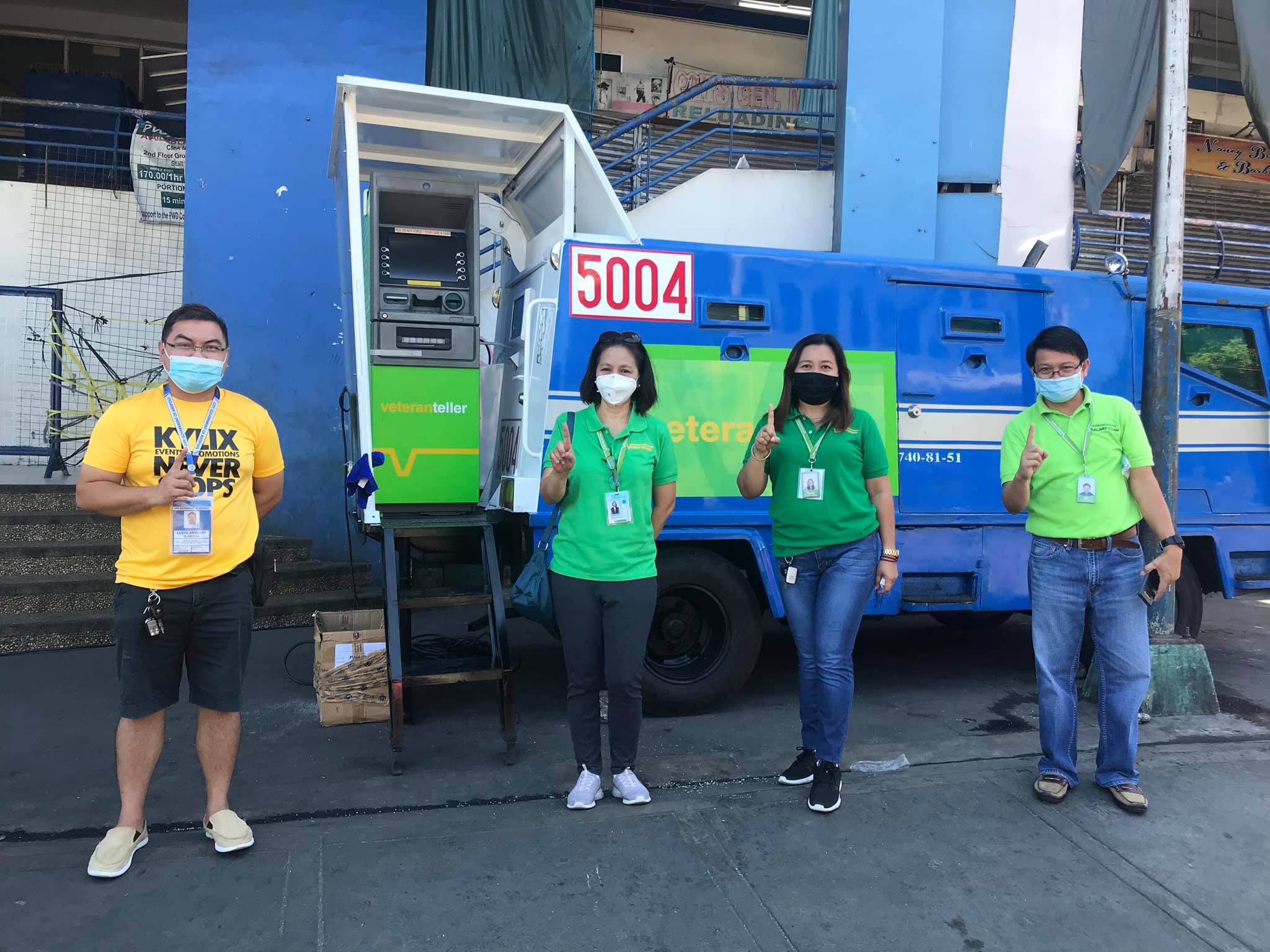
Veterans Bank deploys mobile ATM to Antipolo amidst ECQ

To help ease the difficulty of accessing funds during the enhanced community quarantine, residents of Antipolo are now able to withdraw funds from Philippine Veterans Bank’s VeteranTeller Mobile ATM which began its service last week. This ATM on wheels will be going around the vicinity of Antipolo City as a service to the LGU’s employees, who are ATM cardholders of the bank, and, to the public as well. The VeteranTeller Mobile ATM was made possible through the partnership of Veterans Bank and the City Government of Antipolo. Photo shows (L-R) Lloyd Ligutam of the Antipolo LGU; FVP Visitacion Gajitos, Branch Banking Group Head of Veterans Bank; Ms. Rowena Nuyda, Area Head of Veterans Bank North Metro Manila Branches; and Mr. Bibian Nalda, Branch Head of Veterans Bank Antipolo Branch during the launch of mobile ATM service at the City Mall of Antipolo.

The Final Pitch: Heroes Edition highlights best Covid-19 solutions

The Final Pitch, CNN Philippines’ business reality TV show, is looking for non-profit organizations, startups, and innovators with solutions to address Covid-19 challenges. Themed the Heroes Edition, its sixth season is set to begin filming by the third quarter of this year.

Best “new normal” solutions

The Final Pitch is a competition where entrepreneurs and startups pitch their proposals and get the chance to fund their businesses with help from elite investors. The upcoming season aims to address the economic and social impacts of the Covid-19 pandemic. 

Entrepreneurs, inventors, and startup teams are also invited to pitch their solutions towards the country’s new post-COVID-19 normal.

“We are hopeful as we introduce this relevant and timely format for The Final Pitch: Heroes Edition,” says The Final Pitch host and creator John Aguilar.

“We have seen in our past five seasons the exponential effects of matching the right ideas with the right investments. We hope that through this season, we will identify the best high-impact advocacies and solutions to help turn around the economic and social ramifications of the Covid-19 crisis for the sake of our kababayans.”

Sample target industries include retail, transport, and tourism. Ideas for employment of both locals and displaced OFWs, and MSME business solutions, are welcome as well.

Applicants may send their online entries and one-minute pitch videos through TheFinalPitch.ph/application. Investors and corporate partners may reach the show through submit@TheFinalPitch.ph or 0917 8136674. For more information, visit www.thefinalpitch.ph and follow its social media accounts on Facebook, Instagram, and YouTube.

The show is currently open for pitches from non-profits for support in the form of donations and grants.

According to showrunners, these pledges must come from reputable organizations that have a specific ask for beneficiary communities such as medical frontliners, farmers, indigent communities, and displaced workers.

Interested investors and conglomerate partners are also being called upon to assist in the show’s selection process, refinement of proposals, and financial backing.

AutoDeal now allows consumers to buy cars online through its platform

In today’s modern world, consumers rely heavily on on-demand services available online to further improve and ease their lives. With short waiting time, these digital solutions offer great convenience to customers hence influencing them to utilize these services more, and further demand for innovations of this nature. Various sectors are already adapting this norm, with food, transportation, logistics, and e-commerce leading the pack. The automotive industry is getting up to pace, with online vehicle marketplace AutoDeal.com.ph bringing innovative solutions to digital-driven car buyers.

Committed to continuously improving the car-buying journey with its stream of digital services available for consumers to enjoy without leaving their homes, the online vehicle marketplace is launching its online car buying component. The newest addition to its host of digital facilities allows car buyers to reserve their dream car online for up to 30 days in just a few clicks.


Car buyers on the go

Consumers are growing more tech-savvy and are expecting more services to be available on desktop and mobile now more than ever. According to AutoDeal’s Industry Insights 2019, 75.99% of buyers from its website shop for vehicles using their smartphones. Over 28,000 vehicles were purchased using its platform, proving that the modern car buyer goes online to look for and purchase a vehicle.

The car buyers of today do the necessary research, read and watch car reviews, and compare vehicle prices on their screens before actually purchasing a car. It takes about 45 days for a buyer to purchase after their online inquiry on AutoDeal. Over the course of 2019, there were more than 322,900 requests for quotations and test drives made on its platform.

“In 2019, we saw consumer activities that potentially mark the beginning of a paradigm shift in buying trends. On the business side, online penetration is growing, with brands investing more heavily in their online channel than ever before.”, stated Christopher Franks, AutoDeal Co-Founder.

Buying your dream car online now made possible.

The traditional process of buying a car requires a buyer to physically go to a dealership or attend an off-site event to choose the vehicle, and make the payment there or proceed to a bank branch to do so.

With AutoDeal’s ‘buy online’ feature, the customer can skip all these steps by simply heading to a screen to digitally reserve their unit in the comfort of their own home. They don’t even need to know the dealer’s bank details as this will be taken care of for them, making the process significantly convenient.

To reserve a car, car buyers need to make a vehicle selection and fill out the online reservation form on AutoDeal.com.ph. Upon keying in the details of their chosen vehicle such as vehicle make, model, variant, and color, and entering their contact information, the customer will select their dealer of choice from the website’s range of partner local dealerships.

Customers will be prompted to make their reservation payment through the website’s preferred payment gateways including PayPal, PayPal Credit, MasterCard, and GCash. The tech startup aims to add more payment methods to offer more suitable options to consumers in the coming weeks.

Once payment has been made, the customer will receive email and SMS notifications confirming the receipt of payment. They will be contacted by a partner sales representative to discuss the options available for payment completion, either through cash or auto loan. The reservation payment will be deducted from the final balance of the transaction, and will not only help customers easily reserve their vehicle of choice, but will signal to dealers the true buying intent of the customer. While customers may still opt to visit the dealership if they wish; there is now an easily accessible option for the majority of a vehicle transaction to be conducted online.

A digitized car buying experience

As advocates of a convenient car acquisition journey, AutoDeal founders Daniel Scott and Christopher Franks are always thinking of smart solutions to make the car buyers’ lives as convenient as possible. “Through this new innovation, we extend to our customers the ability to have a more seamless, faster, and more convenient car buying process. We believe that this new website feature will not only offer a safer and a more fitting way for consumers to shop but will provide dealers with a more streamlined and cost-effective method to serve their clients.”, added Franks.

Lessons from Taiwan’s response to COVID-19

By Adrian Paul B. Conoza
Special Features Writer, BusinessWorld

Timely measures, transparency emphasized by Taiwanese experts in AIM webinar

Taiwan is highly recognized for its quick and efficient response to the coronavirus disease 2019 (COVID-19) disease when it rapidly spread in China last January. Learning from the difficulties and losses experienced during the severe acute respiratory syndrome (SARS) outbreak of 2003, Taiwan was seen by the global community taking the COVID-19 outbreak very seriously by ramping up domestic face mask production and utilizing digital technology, among other measures.

With 429 cases and only six deaths as of April 27, Taiwan has become one of the countries that other states are beginning to learn from as the world fights this pandemic.

An opportunity to learn from the country came last April 24 when the Asian Institute of Management kicked off its webinar series about best practices from selected countries in their fight against COVID-19. For the webinar’s first iteration, speakers from Taiwan shared their experiences in dealing with the disease.

Fightinga ‘long-lasting’ battle
Dr. Mei-Shang Ho, M.D., M.P.H., president of the Taiwan Health Corp., expounded on the medical aspects of Taiwan’s preventive measures.

Starting her talk, Dr. Ho pointed out that since they realized that the pandemic cannot be eradicated with the available control measures, preventing a surge of patients that would inundate the healthcare system is the key.

Regarding the length of the pandemic’s duration, she stressed that “technically when the sufficient proportion of population possess immunity, the transmission of the disease will slow down or will be halted.”

Under this context, she further stressed that “the proceed of natural infection among [the] population would be made very slow” without any vaccine or effective antiviral drug curing the disease. Until then, states should prepare for a “long-lasting” kind of pandemic.

Dr. Ho also listed four layers of protection that involves the state, health care facilities, and individuals.

At the first level, there should be control of the state’s border to mitigate the entry of the virus.

The second and third levels involve personal health. The second level tackles human behaviors in order to mitigate exposure and infection to the virus, which includes social distancing, promoting proper hand hygiene, and using face masks.

The third level, on the other hand, has to do with mitigating the severity of illness whenever one gets the virus.

Expounding further on this level, Dr. Ho emphasized that one’s health behaviors and lifestyle could contribute to the level of contracting the disease.

She listed the following risk factors for severe or fatal cases of COVID-19: diabetes, cardiovascular disease, hypertension, chronic respiratory disease, obesity, and old age.

For Dr. Ho, looking into one’s health lifestyle is one of the ways to reduce the risk of having a severe type of the disease.

“Personal behavior may reduce the exposure and infection probability. Other host metabolic states or health states may determine whether they would have severe or asymptomatic cases,” she added.

The fourth level involves health care facilities, especially in helping severe cases recover.

Highlighting the need for adequate supply to protect health care workers and outdoor triage of potentially infected patients, Dr. Ho finds that they should carefully think of cost-efficient ways to allocate their resources.

She also advised that facilitiescalculate surge capacity, including the human resource of healthcare workers, as well as setting alternative plans to expand it.

Moving forward to Taiwan’s measures, Dr. Ho pointed out that setting border controls in the state is one of the country’s very early actions.

Responding to the first reported case of COVID-19 from Wuhan last Jan. 21, Taiwan banned non-essential travel and direct flight to Wuhan, and it also prohibited entry of Chinese individuals from Wuhan.

More stringent measures were applied in succeeding months, when the entry of people from China as well as the docking of cruise ships were prohibited. Flights to China were also stopped except for 5 airports, while all inbound travelers, regardless of nationality, were quarantined for 14 days with a daily compensation amounting to 35 US$.

Dr. Ho also noted that contact tracing was done respectively along with the quarantine measures. Digital tracking of location, along with a sufficient number of investigators comprising of central and local government employees, has made contact tracing much easier.

Building trust among citizens has also been very helpful as Taiwan combats COVID-19, Dr. Ho stressed. The state’s transparent information drive include a daily briefing to keep the public well-informed; the use of a digital platform to counter fake news, misinformation, and disinformation concerning the pandemic; and implementing tough penalties for disseminating fake news or disinformation.

Dr. Ho also pointed out Taiwan’s transparent policy to fairly distribute surgical masks “to build the sentiment that we are all on the same boat together”.

Aside from prohibiting the exportation of surgical masks, the government also granted the private industry to increase production capacity.

Moreover, domestically-produced masks were requisitioned and sold at a set price. To help citizens in purchasing, an app was created to indicate the stock of masks available in drug stores.

While Taiwan is successfully handling the pandemic, Dr. Ho noted, an opportunity still lies to find better tools to combat the disease, such as quick and accurate diagnostics, antivirals, and the long-sought vaccine.

Taipei’s strategy
Sharing experiences on a local scale, Tai-Chu Chou, spokesperson of the Taipei City Government, finds it very beneficial for other countries to learn from the experiences of Taiwan.

“If we want to recover our normal life [and] to enjoy our economic growth, we should walk together. We are on the same boat,” Mr. Chou said, emphasizing that experience sharing and learning is important “to strengthen the capability of the world to fight against this vicious virus”.

Under the city government’s strategies, according to the spokesperson, strict internal controls were implemented, among them monitoring individuals under home quarantine, which he regards as their most important internal control.

“One very creative measure by our Taipei government is that we provided a smart checking system to make sure those individuals would stay at the hotel or their residences,” Mr. Chou said.

When asked for recommendations on how the Philippines can harness digital technology for better contact tracing, Mr. Chou said that getting people’s confidence in the government is key to effectively apply such technologies.

He also found the increased production and use of face masks as another important facility for cutting off the spread of COVID-19 in the area.

Advanced deployment of measures, as implemented by installing isolation institutions, is also under Taipei’s strategy.

Valuing the economy as much as epidemic prevention, Mr. Chou continued, Taipei implemented strict health management measures in businesses instead of closing them down. Economic relief measures, such as those involving rent and subsidies, are also rolled out.

Avoiding excessive mobilization was also ensured within Taipei’s strategy, considering that “epidemic prevention is a long term war”.

“We should not finish all of our bullets in the first phase because more enemies may come our way,” Mr. Chou illustrated.

Sharing of experiences was also included in the strategy, as the spokesman noted that shutting down countries and cities should not last forever. “Success relies on global cooperation,” he noted.

The Taipei City Government spokesman also noted the creative measures the city implemented. Among these include the provision of transportation for people who are under home quarantine in order to prevent them from infecting others and the accommodation of hotels to the families of those who are under home quarantine.

Aside from the city’s strategy and creative measures, for Mr. Chou, the country’s advantages also play a big role in mitigating COVID-19’s spread.

He pointed out the country’s ‘superior’ national health insurance system, aside from its more than 20,000 hospitals and clinics.

“Most of the clinics in Taiwan can provide a walk-in service so that people don’t have to wait,” Mr. Chou noted, adding that such services get nearly 90% satisfaction ratings from patients.

He also stressed the country’s learned lessons from the SARS outbreak. “We paid a very heavy price. This explained why when coronavirus happened in China, early this year, our government took a very swift and effective measure to contend the virus,” Mr. Chou said.

Finding their way back home

By Hannah Mallorca
Features Writer, The Philippine STAR

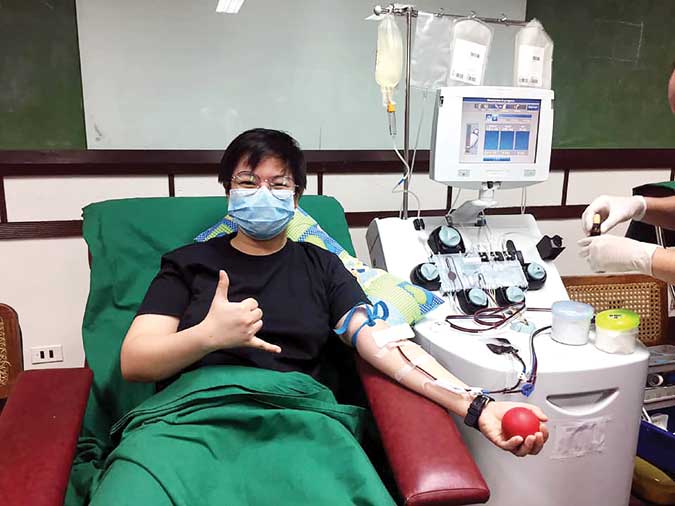
Despite the lingering fear and anonymity, COVID-19 (coronavirus disease 2019) survivors are now living hopeful lives.

Three of them bravely told their tales of how the virus has changed the course of their physical, mental, and overall health. (Caution: Details in this story may trigger fear, stress, and anxiety among other COVID-19 survivors and suspected, probable and positive case individuals.) As of April 29, there are 8,212 confirmed COVID-19 cases in the Philippines. Despite this, patients seek to live another day — hoping to find their way back home.

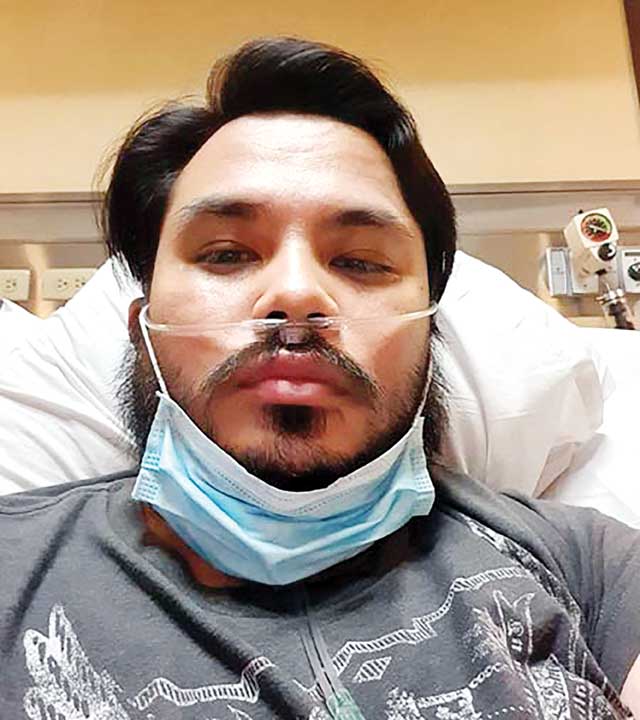
PH4: CARLO NAVARRO
Seven days after a family trip to Japan, Mr. Navarro experienced chills and a low-grade fever of 37.7°C. The hospital said his symptoms were mild, but he insisted to get tested. The fever eventually subsided, but he experienced muscle pain and dry cough.

He soon received a call from the Department of Health (DoH) confirming that he was positive for COVID-19. Immediately, he was whisked away by an ambulance to the Research Institute for Tropical Medicine (RITM).

“I suspect I got infected during our family’s February 25 flight back home from Haneda to Manila. Behind my seat was a man coughing vigorously,” Mr. Navarro shared. “We thought we were making up for the risk by wearing masks, washing and rubbing our hands with alcohol and essential oil, and wearing disposable latex gloves which we regularly changed and threw away.”

When Mr. Navarro was confirmed to be positive, the Philippines only had three positive cases. They were Chinese tourists from Wuhan.

“This made it doubly frightening; it was surreal.My first thought was that my daughter, wife and helpers might get infected. Thankfully, they all tested negative,” Mr. Navarro recounted. His family was frightened as well. His daughter cried a lot in the beginning, while his wife remained strong.

Mr. Navarro experienced diarrhea and fever on the sixth day of his confinement. “At that point, my doctors had suspected pneumonia, which was confirmed the following day. I (also) began to lose my appetite and vomited everything I ate,” he shared.

However, it wasn’t the treatment and physical pain that put more strain on Mr. Navarro’s health — it was the psychological effects of the virus. “I was vomiting endlessly and had diarrhea probably due to stress,” he shared. According to the World Health Organization (WHO), the pandemic has also caused a crisis on mental health worldwide.

“It was terrifying to hear wails and cries from adjoining rooms when other patients would not make it through the night,” Mr. Navarro admitted. Despite this, his battle with COVID-19 strengthened his faith in God.

After 10 days in confinement, Mr. Navarro was discharged. He still experiences cough but his doctor said it is the effect of his lungs recovering from pneumonia. He was notified of his latest test result, which was negative, two weeks after his discharge.

PH# UNKNOWN: KAI SORIANO
Ms. Soriano’s story is a different one since she works on the frontline to defend patients from the virus.

Kai Soriano

“Working in the emergency room means we handle countless patients with differing diagnoses. Before the implementation of ECQ, there was a sudden influx of patients tagged as PUI. Therefore, pinpointing a specific patient as my source would be difficult,” she shared.

However, the last patient she handled was experiencing shortness of breath, although it seemed he was suffering from a myocardial infarction or heart attack. He eventually passed away — it turned out he was COVID-19 positive.

Ms. Soriano thought she was only experiencing a regular flu when she got tested. “I had fever and diarrhea, so I considered it just a normal stomach flu. What was quite unusual was I didn’t have a sense of taste and smell. That’s why it was quite a surprise when I saw my results,” she admitted.

Ms. Soriano and her family kept her condition a secret to avoid unnecessary panic. However, she was not confined in a hospital and was placed under strict quarantine.

“Every (person) living in our house was not permitted to go outside. We were discriminated,” Ms. Soriano recalled. “One day, I woke up to soldiers banging on our gate (while) yelling (through a) megaphone that I was a COVID-19 positive patient. It was then proceeded by them surrounding our house with yellow ‘Caution’ tapes.”

On April 6, the Metro Manila Council urged local ordinances to penalize acts of discrimination and violence against frontline workers, overseas Filipino workers and individuals under suspect, probable and positive cases. President Rodrigo R. Duterte and the Inter-agency Task Force for the Management of Emerging Infectious Diseases also urged local government units, police and military to prohibit discriminatory acts.

Ms. Soriano shared that she fought emotionally since she was also worried about her family’s safety. “What made home quarantine difficult was that I had to isolate myself in a separate room. It wasn’t comfortable, but I had no other choice than to stay inside,” she added.

When Ms. Soriano was declared as COVID-19-free, she was advised to boost her immune system by drinking water, taking vitamins, and eating nutritious food.

For Ms. Soriano, the discrimination that she and her family experienced was due to lack of awareness.

“Health education and information dissemination is the primary responsibility of each LGU and health worker, so they must be properly oriented to not add more confusion and unnecessary stress. There must also be a uniform process for all of COVID-related cases that may arise,” she said.When asked about her patient number, Ms. Soriano admitted that it was never relayed to her.

PH358: ROGELIO BUENO, JR.
Mr. Bueno admitted that he was in denial when he showed symptoms. On the other hand, his wife Joanna was worried about his condition since he was already experiencing fever, weakness, and difficulty in breathing.

Rogelio Bueno

“Joanna was telling me, ‘baka (COVID-19) na yan.’ I was in denial, ‘malakas katawan ko and ang taba ko, ‘di ako tatablan niyan’ was my response to my wife,” Mr. Bueno shared in his Facebook post.

According to Mr. Bueno, his symptoms quickly progressed from mild to severe. He visited various hospitals, was initially diagnosed with systemic viral illness and was prescribed various medicines as a result.

It wasn’t until the sixth hospital where Mr. Bueno got tested for COVID-19, and received his results. “The nasal swab test was very painful, it was a long stick that is inserted very deep per nostril. The throat swab test is more tolerable, thought it can still make you gag,” he admitted.

Mr. Bueno admitted that he was suffering from pre-existing asthma, hypertension and diabetes prior to being tested. Since he came from a family of doctors, they knew that his existing illnesses will complicate his condition.

“It’s hard for them because, as doctors, they go to the hospital to check their patients, but they can’t check on me since I was in isolation. At the same time, they were also put in quarantine after being exposed to me,” he added.

Like Mr. Navarro, Mr. Bueno also experienced anxiety as he dealt with the disease. “I was feeling hopeless and was preparing myself for the worst. Regrets were on my mind,” he admitted. He thought that he was not ready for his wife to be a widow at a young age.

“Good thing my wife was with me. She helped me pull through and just get through each day by telling me not to give up, by praying with me and constantly reminding me to have faith in God and that I will be healed,” he shared.

Eventually, Mr. Bueno was declared to be COVID-19-free. To maintain his condition, he observed health precautions such as taking antibiotics and checking his vital signs regularly. Despite the experience, he is grateful to have a second chance to live.

“I think (health sectors) should appreciate the frontliners more because they are putting their lives at stake (every day). I think they should be protected as well,” Mr. Bueno said.

Recovering from the virus is only the beginning of another battle for many survivors. According to the American Association for the Advancement of Science, many are likely to deal with the virus’ lingering effects and the treatments used to overcome it.

Despite this, survivors remain hopeful. “COVID-19 is not a death sentence. Since our immune systems can defend it, it is important to stay strong not just physically, but also emotionally, psychologically, and spiritually,” Mr. Navarro said.

Having the second chance to live was not easy for the three survivors. But they continue to live, hoping their stories can help patients find their way home, too.

WB sees dim PHL growth outlook

By Beatrice M. Laforga
Reporter

THE Philippine economy may contract by as much as two percent this year as the coronavirus disease 2019 (COVID-19) crisis persists, a World Bank (WB) economist said on Wednesday.

World Bank Lead Economist and Program Leader for Brunei, Malaysia, Philippines and Thailand Souleymane Coulibaly said they are currently revising the economic forecast for the Philippines for 2020.

“It will not be the six percent growth. Maybe it will be zero this year, or even minus one or two (-1, -2 contraction) this year. But next year, we will see resumption in the economy,” Mr. Coulibaly said during the BUSINESSWORLD INSIGHTS online forum on Wednesday.

In its Regional Economic Update report published earlier this month, the World Bank downgraded its earlier 6.1% growth forecast for the Philippine economy and gave a growth forecast range of 3% to -0.5%, depending on the extent of the impact of the COVID-19 outbreak and the enhanced community quarantine (ECQ) in Luzon.

“In our upcoming economic update, we’ll revise our estimates. It will definitely be downward because by the time we were providing numbers in (early) April, the health situation was not as bad as what we have now,” Mr. Coulibaly said.

“It will be lower, definitely, I can’t put out numbers yet because we need to do the calculations, my team is already working on that, we are just waiting for first quarter data,” he added.

First-quarter gross domestic product (GDP) data will be released on May 7.

Government economic managers have said the best-case scenario for the economy is flat growth, even warning of a possible one percent contraction this year.

Economic activity in Luzon, which accounts for over 70% of GDP, has been at a near-standstill since mid-March as strict lockdown measures are implemented to contain the virus outbreak.

The Development Budget Coordination Committee (DBCC) has yet to release its official updated macroeconomic assumptions, as it continues to monitor and assess the impact of the health crisis and restrictive measures on the economy.

Among those that have downgraded their Philippine growth forecasts are ASEAN+3 Macroeconomic Research Office (0.2% from the previous 4.5% estimate), the Asian Development Bank (2% from 6.2%) and International Monetary Fund (0.6% from 6.3%).

NOT ENOUGH FISCAL SPACE
Mr. Coulibaly also warned that the government may not have enough fiscal space to maneuver if the economic fallout from the pandemic widens.

“The spillover effect in many other economies, even if these middle-income economies are doing the right thing, will be large. Governments need to handle this the right way, first by having the health crisis under control. If it takes longer, then we will have a fiscal challenge because the government cannot continue to borrow to provide for daily income earners,” he said.

The Department of Health on Wednesday reported that confirmed cases of the coronavirus reached 8,212, with the death toll at 558 and recoveries at 1,023.

In that same forum, Philippine Chamber of Commerce and Industry (PCCI) President Benedicto V. Yujuico said small businesses raised concerns that government financial assistance is not sustainable in the long term.

Eventually, Mr. Yujuico said the government will have to allow companies to reopen and trust that they will do their part to observe safety measures to avoid further spread of COVID-19.

“They know that this is not sustainable, that they will just look at the Department of Finance for additional funding, loans and guarantees. It is after the third, fifth month that they are now thinking about, they are worried that it is not sustainable, they do not want to overburden the government, they are very thankful for the help, but they need to do something for their survival,” he said.

Foundation for Economic Freedom (FEF) President Calixto V. Chikiamco said a lot of micro, small and medium enterprises (MSMEs) are facing difficulties as their operations remain halted due to the extension of the ECQ until May 15.

“In the two months (lockdown), they are out of working capital and I think facing bankruptcy,” Mr. Chikiamco said.

Data from the Philippine Statistics Authority showed MSMEs account for 99.52% or 998,342 of the 1.003 million business enterprises operating in the country in 2018.

For Mr. Coulibaly, the government will have to ensure that the health situation is under control before deciding to ease lockdown restrictions.

“As soon as consumers decide to behave normally, the economy will slowly go back to where it was before the crisis,” he said.

Finance Assistant Secretary Antonio G. Lambino III said that the government has the “strong desire” to restart the economy as soon as possible but is making sure that there will be a U-shaped recovery, and not a W-shaped where a second wave of outbreak is expected to hit harder.

Mr. Coulibaly said the government, private sector and the entire country should take advantage of the opportunities arising from the health crisis and “strengthen the medium-long term prospect of the country” by focusing on the health care and education systems, as well as the digital economy.

FEF’s Mr. Chikiamco also urged the government to implement structural reforms as financial assistance programs of the government, which includes cash handouts to poor families and employees affected by the lockdown, are “useless if institutions are incapable of delivering.”

For instance, he mentioned that the Department of Social Welfare and Development (DSWD) struggled to identify and distribute cash aid to recipients of the P200-billion Social Amelioration Program, while applications for the P51-billion wage subsidy program faced backlogs as the website keeps on crashing.

To address this, the national government has ordered local governments to release the cash handouts to recipients of the SAP within 24 hours after the funds were downloaded according to Mr. Lambino of the DoF.

Further, application and distribution processes for the wage subsidy program are automated and will be quicker he said, while issues on the website were solved by launching other options to apply such as via email or cloud-based systems.

ADVERTISEMENT
ADVERTISEMENT