Home Blog Page 954

PHL stocks slip on weak sentiment, lack of leads

PHILIPPINE STAR/KRIZ JOHN ROSALES

PHILIPPINE STOCKS continued to decline on Wednesday due to the absence of fresh trading drivers and after Wall Street ended lower overnight.

The Philippine Stock Exchange index (PSEi) slipped by 0.16% or 9.82 points to close at 6,108.72, while the broader all shares index went down by 0.3% or 11.38 points to end at 3,682.29.

“The local market declined further as dismay over the Philippines’ corruption issues continued to dampen investors’ sentiment,” Philstocks Financial, Inc. Research Manager Japhet Louis O. Tantiangco said in a market report. “The negative cues from Wall Street, the weakening of the peso against the US dollar, and the recent rise in long-term local Treasury yields also weighed on the local bourse.”

“Bearish sentiment in the market continues to prevail as there is no firm catalyst in sight at the moment. Moreover, international developments are also weighing on Philippine market sentiment, as Fed Chair Powell indicated that slow hiring and persistent inflation are creating a challenging situation for the US economy,” Regina Capital Development Corp. Head of Sales Luis A. Limlingan said in a Viber message.

US stocks finished lower on Tuesday, breaking a three-session string of record closing highs, as US Federal Reserve Chair Jerome H. Powell said the US central bank needs to balance inflation concerns with a weakening job market in its coming interest rate decisions, Reuters reported.

In comments on Tuesday, Mr. Powell offered little hint of when he thinks the Fed might next cut interest rates. The Fed last week cut rates for the first time this year and indicated further cuts may be coming.   

The Dow Jones Industrial Average fell 88.76 points or 0.19% to 46,292.78; the S&P 500 lost 36.83 points or 0.55% to 6,656.92; and the Nasdaq Composite lost 215.50 points or 0.95% to 22,573.47.

Mr. Powell’s colleagues earlier gave comments on both sides of the policy argument. Fed Vice Chair for Supervision Michelle Bowman said the Fed could downplay concerns about persistent inflation and needed to make a commitment to cut rates in support of the job market.

At home, all sectoral indices ended in the red on Wednesday. Property fell by 0.37% or 8.96 points to 2,394.07; industrials went down by 0.33% or 29.85 points to 8,843.17; holding firms sank 0.21% or 10.81 points to 5,012.23; services dropped by 0.17% or 3.93 points to 2,235.86; mining and oil declined by 0.15% or 18.49 points to 12,275.03; and financials slipped by 0.13% or 2.73 points to 2,065.82.

Value turnover fell to P5.26 billion on Wednesday with 5.37 billion shares traded from the P22.69 billion with 2.72 billion stocks that changed hands on Tuesday.

Decliners outnumbered advancers, 103 to 88, while 63 names closed unchanged.

Net foreign selling was at P370.63 million on Wednesday, a reversal of the P7.05 billion in net buying recorded on Tuesday. — Alexandria Grace C. Magno with Reuters

Rice import freeze could be extended; tariff hike studied

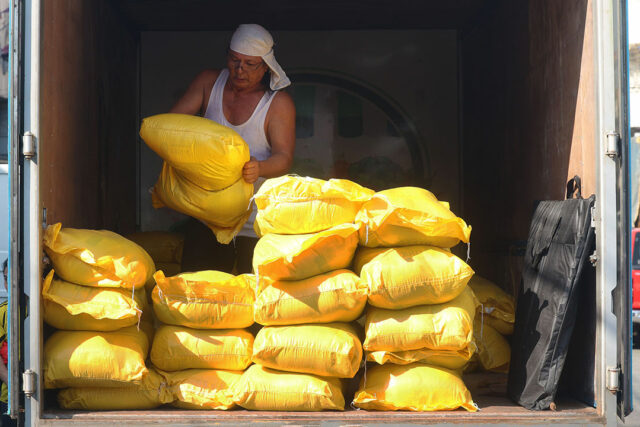
PHILIPPINE STAR/MIGUEL DE GUZMAN

PRESIDENT Ferdinand R. Marcos, Jr. ordered the Department of Agriculture (DA) to be ready to extend the 60-day freeze on rice imports, which started on Sept. 1, and consider a possible tariff increase on foreign rice.

Agriculture Secretary Francisco P. Tiu Laurel, Jr. made the announcement Wednesday, saying the President directed the DA to make the necessary arrangements to extend the import freeze.

“The duration of the import freeze and the possible increase in taxes on imported rice will be determined once we have more accurate data on supply and prices of palay at the farm gate,” Mr. Laurel said after meeting with Mr. Marcos.

The import suspension, which is set to end on Nov. 2, was initially imposed to provide relief to hit by falling prices of palay (unmilled rice), which is competing on the market with imported rice.

Palay prices briefly rose from a low of P8 a kilo to around P14 per kilo before dropping again as the harvest came in, with rice quality affected by recent heavy rains.

Rice import tariffs are currently at 15%, lowered as an inflation-containment measure. The tariff had been 35% previously for Southeast Asian grain. — Andre Christopher H. Alampay

Legislator says Finance department open to discussing tax on billionaires

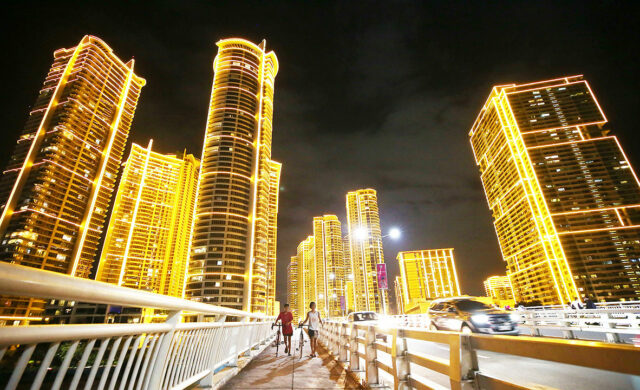
Pedestrians along the Estrella-Pantaleon Bridge are dwarfed by the towering buildings in Makati City, Dec. 5, 2022. — PHILIPPINE STAR/MIGUEL DE GUZMAN

THE Department of Finance (DoF) is open to discussing a “wealth tax,” a legislator said at the DoF’s budget hearing, which could signal greater willingness by the government’s chief fund-raiser to consider new sources of revenue after a longstanding no-new-taxes position.

Sultan Kudarat Rep. Bella Vanessa B. Suansing, speaking at the hearing late Wednesday with Finance Secretary Ralph G. Recto seated near her, said: “The DoF is very open to discussions relating to the wealth tax to be integrated into the revenue program of the National Government,” she said at the hearing.

Mr. Recto’s position on new taxes has subtly evolved after ruling them out entirely last year. In August, he said he will support any tax law passed by Congress.

Wealth tax proposals have ranged from 1-3% of net assets held by billionaires in recent sessions of Congress, though no such bills have been filed in either chamber during the current 20th Congress.

“Ever since the 19th Congress, (the DoF) has been very open with proposals for wealth taxes… because the agency is not just mandated, but has pursued progressive taxation,” Ms. Suansing said.

A bill proposing a 1-3% tax on taxpayers with a net value of taxable assets exceeding P1 billion failed to gain traction in the House of Representatives at the 19th Congress. No counterpart proposal was filed in the Senate.

House Deputy Minority Leader Antonio L. Tinio of the Makabayan party-list said in July that he plans to file calling for a 3% wealth tax on billionaires, and estimated the potential collections from such a bill at P98 billion each year at least.

In early September, Batangas Rep. Leandro Antonio L. Leviste proposed a wealth tax based on land holdings to offset his proposed reduction in value-added tax (VAT) to 10% from 12%.

“We can focus the tax on high-end land because that is harder to hide and transfer compared to other forms of wealth… it comes down to really what’s the easiest way to collect a wealth tax,” he said.

The government should consider pursuing a tax on high-net worth individuals to make the government’s tax system more equitable, according to Jose Enrique A. Africa, executive director at think tank IBON Foundation, speaking to BusinessWorld via Viber.

“The biggest fiscal effort now comes from regressive consumption taxes, like VAT or excise duties, and withholding on wages,” he said, claiming that the financial sector and the wealthy are “lightly taxed.”

Legislators should consider a tiered wealth tax with rates starting at 1% for those holding P1 billion in assets, rising to 3% for those whose wealth exceeds P3 billion, Mr. Africa said.

Luis F. Dumlao, an economics professor at the Ateneo de Manila, said the standard practice for countries implementing wealth taxes typically ranges from 1% to 2% per billion dollars in net worth.

“The current tax system on paper is progressive with a maximum tax of 35%,” he said via Messenger chat. “The fiscal policy is even more progressive with government expenditures disproportionately favoring the poor despite corruption.”

“Before any congressman talks about taxes, politicians must do something first to restore public trust in tax collection and utilization,” John Paolo R. Rivera, a senior research fellow at the Philippine Institute for Development Studies, said via Viber. — Kenneth  Christiane L. Basilio

Coconut demand from Europe blunting threat from US tariffs — industry official

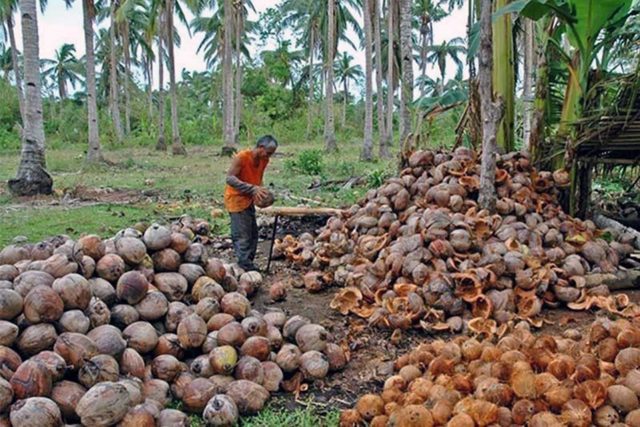
PHILSTAR FILE PHOTO

THE strength of the European market for coconut products will mitigate the disruption brought about by US tariffs, according to Marco C. Reyes, chairman of the United Coconut Association (UCA).

Mr. Reyes said at a briefing during the 2025 World Coconut Congress at the SMX Convention Center in Pasay City that the industry must seize opportunities presented by the “surging” demand for “sustainability and healthy products,” noting that the coconut “is at the heart of this moment. Our mission is to bridge that international demand with innovation and sustainable practices to ensure that the entire value chain continues to thrive.”

Mr. Reyes said concerns about US tariffs can be allayed somewhat because Europe is actually the top importer of coconut products, with coconut oil being highly profitable.

China and Japan are also growing partners in the trade in coconut products, he said.

Mr. Reyes also said that while negotiations are ongoing to lower tariffs for certain Philippine products, the coconut industry is focusing on other opportunities.

Mr. Reyes said the industry is in contact with other industries, including livestock and rice farming, to make the broader agricultural sector more sustainable.

Agriculture Undersecretary Roger V. Navarro said at the congress that the industry needs to be sustained through a replanting program in the face of threats from climate change, the ageing tree stock, and waning interest in farming among the younger generations.

Mr. Navarro, who oversees operations for the Department of Agriculture (DA), added: “We must act urgently” in “taking out all policies and regulations that hinder development.”

“You mustn’t just accept what your farmers give you. You must make sure farmers can replant.” Mr. Navarro said.

Mr. Navarro called for protecting the industry during years of low yields, citing the industry’s importance to around 3.2 million Filipinos across 82 provinces.

The congress gathers coconut farmers, processors, exporters, researchers, policymakers and investors, drawing representatives from 20 countries.

The Philippines was among the top exporters of coconut products in 2024, with output valued at $2.66 billion, mostly coconut oil, which accounted for $2.2 billion.

Coconut oil is currently the Philippines’ fifth-leading exported commodity by value, with exports amounting to $1.38 billion in the first half.

The congress runs until Sept. 26. — Andre Christopher H. Alampay

PHL wins seat on IAEA board as emerging user of nuclear power

REUTERS

THE PHILIPPINES won a seat on the board of the International Atomic Energy Agency (IAEA), putting it in position to influence policy as it gears up to integrate nuclear power into its energy mix,  the Department of Energy (DoE) said.

In a statement on Wednesday, the DoE said the Philippines will serve on the IAEA board of governors until 2027.

Energy Secretary Sharon S. Garin said the Philippines will play a role in “shaping global policies on nuclear safety, security, and the peaceful use of atomic energy.”

“As one of only 35 member-states represented on the board, the Philippines will help steer key decisions on safeguards (and) technical cooperation,” she said.

According to the Department of Foreign Affairs (DFA), the Philippines was chosen by acclamation during the 69th Regular Session of the IAEA General Conference in Vienna on Sept. 19.

The Philippines previously served on the board between 2015 and 2017.

Science and Technology Undersecretary Maridon O. Sahagun, head of the delegation to Vienna, said: “The long-standing position of the Philippines is that the peaceful uses of atomic energy are not ancillary to disarmament and non-proliferation — they are foundational pillars of peace, health, and prosperity. We aim to advance these initiatives at this key policy-making body of the IAEA.”

Ambassador to Austria Evangelina Lourdes A. Bernas, permanent representative of the Philippines to the IAEA, said: “Member-states like us who are just embarking on our nuclear energy program and rely on a rules-based international order have a chance to advocate for others like us on the Board.”

Ms. Garin added that the Philippines will be in a position to access to technical cooperation in nuclear medicine, agriculture, food security, and energy.

According to the Philippine Energy Plan, the Philippines’ first nuclear power plant is set to be built by 2032. — Sheldeen Joy Talavera

PHL urged to harness peso to maintain edge in services

BW FILE PHOTO

By Justine Irish D. Tabile, Reporter

THE PHILIPPINES must use foreign exchange to its advantage in response to growing investor interest in the service sector, as manufacturing loses favor due to tariffs, an economist said.

Aris D. Dacanay, HSBC economist for ASEAN, said the manufacturing outlook is currently clouded by uncertainty due to the reciprocal tariffs imposed by the US.

“Ever since US President Donald J. Trump came into power in 2016, the number of trade restrictions on goods we produce has been increasing,” he said at the International Information Technology and Business Process Management (IT-BPM) Summit on Wednesday.

“If you are an investor, why invest in something uncertain when you can invest in something that is more certain, and that is services,” he added.

He said over the last six years foreign direct investment in services has exceeded that of manufacturing, with India and the Philippines among the beneficiaries.

“Since we are a service-oriented economy, we are insulated… Manufacturing as a percentage of total jobs in the Philippines is around 7% because most are in services,” he said.

“Because of that, job creation in the Philippines has remained intact,” he added, citing the weaker job creation trend in manufacturing countries like Vietnam, Thailand, and Malaysia.

Mr. Dacanay said Philippine IT-BPM needs to remain competitive vis-a-vis India, whose own currency has weakened.

“We are among the top two in the world; we are competing with India,” he said.

He noted, however, that India has been able to take market share away from the Philippines because of currency factors.

“If you look at the average peso exchange rate, it has been stable since 2023, but for India (the rupee) depreciated by as much as 6%,” he said.

“By currency movements alone, Indian services have become cheaper… And that, I think, is a wake-up call for us,” he added.

He said that the Philippines should be more accepting of a weaker peso as a service exporter.

He also said that India’s IT-BPM services are much more diverse compared to the services being offered by the Philippines.

“The IT-BPM industry is too big not to innovate; it is too big not to diversify. And to be able to keep ourselves on our toes, we need to be accepting of a weaker peso, and at the same time diversify and make sure that we innovate to the best extent,” he said.

“We are moving in the right direction, moving towards global capability centers and moving towards artificial intelligence,” he added.

ECCP sees investment climate improving with PHL ratification of High Seas Treaty

OCEANA.ORG

THE European Chamber of Commerce of the Philippines  (ECCP) said the Senate’s ratification of the High Seas Treaty could improve the investment climate by demonstrating the Philippines’ commitment to protecting the environment.

“The ratification of the Agreement on Biodiversity Beyond National Jurisdiction, also known as the High Seas Treaty, affirms the Philippines’ long-standing commitment to safeguarding the oceans for present and future generations,” the ECCP said in a statement on Wednesday.

“With the ratification, Filipino scientists, students, and fisherfolk stand to benefit given the potential to support sustainable livelihoods, food security, and scientific innovations,” it said.

It added that sustainability is no longer an investor advocacy but “a pillar of competitiveness and long-term growth.”

“Clear policies that promote environmental protection and sustainable development enhance the country’s investment climate and global standing,” it added. — Justine Irish D. Tabile

Frasco: DoT dealing with budget-cut ‘challenges’

PHILSTAR FILE PHOTO

THE Department of Tourism (DoT) said on Wednesday that budget cuts present “challenges” to achieving its mission of promoting the Philippines as a destination.

“Our work is to ensure that the number of tourists coming to the Philippines continues,” Tourism Secretary Ma. Esperanza Christina G. Frasco told reporters.

“It is quite a challenging time,” she added.

The Tourism department reported 2,905,363 foreign visitors arrived in the first six months of 2025.

The Bureau of Immigration also reported that international arrivals increased to 7,840,728 during the first half of 2025, up from 7,268,465 a year earlier.

The US remained the top source of tourists with 753,544 arrivals, followed by South Korea (745,623), Japan (256,776), China (229,915), and Australia (188,082).

Ms. Frasco noted that the department will continue to pursue collaborations to promote Philippine tourism.

“This includes partnerships with our airlines, tour operators and travel agencies,” she said, noting the efforts being undertaken via social media and the cultivation of opinion leaders, she said.

The destinations being promoted heavily in key source markets include Cebu, Bohol, Palawan, and Siargao, she said.

“With the difficult times that the entire world is facing now, if you wish to remember the essence of our humanity, our sense of community, feel a sense of family, you can get it all in the Philippines,” Ms. Frasco said.

The department’s branding budget in 2025 is P100 million, down from P200 million in 2024 and P1.2 billion in 2023.

“Why does Congress continue to cut the budget of an industry that not only creates millions of jobs but also contributes trillions to our economy?” Ms. Frasco said in late July.

She noted that regional rivals’ tourism industries benefit from  “multi-million-dollar marketing allocations.” — Almira Louise S. Martinez

Aurora ecozone signs management deal for health center in Casiguran

FACEBOOK.COM/APECOGOVPH

THE Aurora Pacific Economic Zone and Freeport Authority (APECO) said International Workplace Group (IWG) has signed an agreement to manage a P16.83-million health center in Casiguran.

The agreement marks the first venture for IWG, a flexible office and workspace solutions company, in the management of healthcare facilities.

“Under the partnership, IWG will oversee day-to-day operations of the Super Health Center, bringing global standards of efficiency, facility management, and patient care to the public health facility that was funded by APECO,” it said on Wednesday.

APECO completed the facility in February. It was established to provide healthcare services to its future locators and set the stage for the economic zone to attract retirement facilities.

“This partnership shows that we can deliver world-class services through public-private collaboration while maximizing our existing infrastructure,” APECO President and Chief Executive Officer Gil G. Taway IV said.

APECO “is seeking to unlock public assets by inviting private companies to co-develop facilities, pursue joint ventures, and explore public-private partnerships, rather than relying solely on government funding,” he said.

IWG Philippines Country Manager Rowena Natividad said Aurora’s natural beauty makes it an ideal location for a wellness, care, and treatment facility.

“This development will not only complement the area’s appeal but also provide the local community with much-needed access to high-quality healthcare,” she said.

“With growing demand for quality healthcare and limited infrastructure, this partnership is a vital step in bridging the gap — bringing real benefits to the community through IWG’s strong network and resources,” she added.

IWG is also looking at managing co-working flexible workspaces within Aurora. — Justine Irish D. Tabile

What keeps CEOs awake at night? Top concerns for 2025 revealed

Every September, we look forward to sharing the results of our firm’s Philippine CEO Survey, timed to coincide with the International CEO Conference of the Management Association of the Philippines (MAP).

Now on its 11th year, our survey continues to provide valuable insights into the perspectives of business leaders across the country. This year, 175 CEOs participated, with 67% representing large companies.

Despite headwinds — such as the recent downgrading of the Philippines’ 2025 GDP growth forecast from 6.1% to 5.5% as well as growing concerns about rising commodity prices, it’s encouraging to see that most CEOs remain optimistic about their industries in the coming year. In fact, many expect their companies to achieve revenue growth over the next three years — a hopeful sign for the future.

Beginning last year, we also  asked CEOs what keeps them awake at night. Just like the previous year, our CEOs continue to cite geopolitical uncertainty, uncertain economic growth, and workforce issues as their top concerns. Why do these challenges still weigh heavily on their minds despite their overall optimism?  More importantly, what can they do to manage these risks?

GEOPOLITICAL UNCERTAINTY
Geopolitical uncertainty remains a major concern for CEOs. The ongoing conflicts between Ukraine and Russia and between Israel and Hamas show no clear signs of ending, and their impact is felt worldwide — from rising fuel prices to disrupted supply chains, inflation, and shaken investor confidence. On top of that, uncertainties around US tariffs are disrupting the business landscape. These factors have led to lost customers, postponed expansion plans, and higher costs for businesses.

Many CEOs see diversification as the obvious solution. In fact, 35% of the CEOs plan to enter a new industry, making this the top strategic move for recovery and growth. Additionally, 28% plan to expand into new markets outside the Philippines.

With stronger workforce skills and improved digital infrastructure, companies are in position to expand into new markets. But it’s not just about entering new markets or launching new products — a smart strategy is critical. That means making sure the market is ready, finding the right partners, setting up the right structures, and complying with local laws and regulations. With careful planning, businesses can turn these challenges into opportunities.

UNCERTAIN ECONOMIC GROWTH
Uncertain economic growth continues to be a top concern for our CEOs, with about 42% expecting global growth to slow down over the next year. The International Monetary Fund forecasts the global economy to grow by just 3.0% this year, down from 3.3% last year. Several factors are at play here, including uncertainties around US tariffs, rising fiscal deficits, ongoing political tensions, and possible disruptions to global supply chains.

Our CEOs recognize that a slower economy impacts customer spending patterns and leads to higher costs, as we’ve seen recently. As such, being prepared is more important than ever. That means business leaders need to engage in thorough scenario planning — looking at different possibilities, even including a recession, and assessing how each might affect company profits, cash flow, and growth.

Additionally, stress-testing the balance sheet is essential. Companies must ensure they have enough liquidity and reserves to weather any storm. As we saw during the pandemic, companies with enough cash on hand are in a much better position to ride out tough times. Staying proactive and anticipating changes is key to keeping pace with the economy and evolving customer needs.

WORKFORCE ISSUES
Workforce issues also continue to worry Philippine CEOs, with 42% citing it as one of their biggest challenges this year—up from 38% last year. Keeping talented employees remains tough. According to WTW data, voluntary turnover sits at 12.5%, showing that many workers are opting to leave their employers to pursue new opportunities.

Managing people today isn’t easy. Millennials and Gen Z make up about 70% of the workforce, and they’re looking for more than just job security. What really matters to them is company culture, flexibility, strong leadership, and opportunities to grow. On top of that, with rapid advances in AI and automation, some employees are feeling change fatigue; they’re struggling to keep up with how fast everything is evolving.

Thus, CEOs can no longer focus solely on compensation and benefits. It’s equally important to help employees handle change and stress. Prioritizing employee well-being should be a key part of leadership. CEOs must also clearly communicate their vision for the company’s future and how employees fit into that picture.

Support like upskilling programs is essential to help employees close skills gaps and feel confident about the future. Showing that you’re invested in your people’s growth isn’t just good practice — it’s a business imperative.

THE BUSINESS MODEL REINVENTION IMPERATIVE
With everything happening around the world — from rapid technological change to shifting workforce priorities — the pressure on businesses to stay relevant has never been stronger. Our CEOs are feeling it too: more than half now say their organizations won’t be economically viable after 10 years if they continue on their current course, up from 46% last year.

Megatrends like climate change, technological disruption, demographic shifts, global tensions, and social instability are pushing business leaders to act fast. The pressure to reinvent isn’t going away anytime soon. Today’s leaders  must do more than adapt to stay several steps ahead – they must anticipate change, drive  transformation, and shape the future of their businesses.

The views or opinions expressed in this article are solely those of the author and do not necessarily represent those of Isla Lipana & Co. The content is for general information purposes only and should not be used as a substitute for specific advice.


Trissy Rogacion is a deals and corporate finance partner at Isla Lipana & Co., a Philippine member firm of the PwC network.

karen.patricia.rogacion@pwc.com

AMLC asked to freeze assets of officials, contractors in flood control scandal

PUBLIC Works Secretary Vivencio B. Dizon holds a press conference on Sept. 24, at the Department of Public Works and Highways office in Manila, where he announced that officials allegedly linked to a “lavish lifestyle” and “substandard projects” have been issued show cause orders. — PHILIPPINE STAR/RYAN BALDEMOR

By Ashley Erika O. Jose, Reporter

THE Department of Public Works and Highways (DPWH) has requested the Anti-Money Laundering Council (AMLC) to freeze the billions of pesos worth of air and vehicle assets belonging to personalities, contractors and agency officials linked to anomalies in flood control projects.

“I think the freeze order will be issued (immediately). I think within a few days (after request) it will be issued. Hopefully, the freeze order will be issued right away,” Public Works and Highways Secretary Vivencio “Vince” B. Dizon said in a press briefing on Wednesday.

This move follows the DPWH’s announcement last week that it is coordinating with other agencies to probe real estate properties and high-value vehicles of 26 contractors and DPWH personnel linked to irregularities in flood control projects.

“LTO (Land Transportation Office) and CAAP (Civil Aviation Authority of the Philippines) have already responded to our request. We are still waiting for MARINA (Maritime Industry Authority) and LRA’s (Land Registration Authority) responses for these individuals’ sea and land assets,” Mr. Dizon said.

According to the report of LTO, a total of P474.48 million worth of motor vehicles were found to be registered under the names of DPWH personnel and private contractors.

Based on the report provided by the agency, about P277.26 million of the total amount were vehicle assets of former Pasig mayoral candidate Cezarah Rowena C. Discaya, and her husband Pacifico F. Discaya.

Among the top 15 flood-control contractors earlier identified by President Ferdinand R. Marcos, Jr. were Alpha & Omega Gen. Contractor & Development Corp. and St. Timothy Construction, both linked to the Discayas.

Meanwhile, about P35.34 million worth of vehicles were registered under former DPWH assistant engineer Brice Ericson P. Hernandez and P670,000 under former district engineer Henry C. Alcantara.

“This is just the initial list. We do not know yet if there are assets registered under their relatives,” Mr. Dizon said, adding relevant agencies have been asked to check the assets registered under family members of those linked to the scandal.

Mr. Dizon said that while CAAP found no air assets registered under the 26 contractors, it found at least 10 air assets with a combined value of $82.59 million tied to Party-list Rep. Elizaldy S. Co.

A total of P4.7 billion or $82.59 million worth of air assets were registered under Mr. Co’s Misibis Aviation and Development Corp. and Hi-Tone Construction and Development Corp. — founded by his brother Christopher S. Co.

Hi-Tone and Sunwest, Inc. founded by Rep. Co were among the 15 contractors that cornered more than P100 billion worth of flood control projects between July 2022 and May 2025.

Meanwhile, CAAP also found $2 million worth of aircraft registered under QM Builders, another company tagged in flood control anomaly.

“We have also written to the AMLC, Department of Justice and ICI (Independent Commission for Infrastructure) about these assets. NBI has already requested a freeze order,” he said.

Other contractors named were: Legacy Construction Corp.; EGB Construction Corp.; Topnotch Catalyst Builders, Inc.; Centerways Construction and Development, Inc.; Sunwest, Inc.; Hi-Tone Construction & Development Corp.; Triple 8 Construction & Supply, Inc.; Royal Crown Monarch Construction & Supplies Corp.; Wawao Builders; MG Samidan Construction; L.R. Tiqui Builders, Inc.; and Road Edge Trading & Development Services.

The DPWH has also issued show-cause orders against 10 of its regional directors and engineers for reported lavish lifestyle, tampering of official documents and involvement in substandard projects.

He said the agency is giving these individuals five days to submit written explanations.

“This will be followed by filing of cases, administrative cases will be filed if there is enough evidence against them,” Mr. Dizon said, adding that these individuals will also be submitted to ICI for potential filing of criminal cases.

Political scientist at the Ateneo de Manila University Arjan P. Aguirre said the move of the DPWH is a big help in the ongoing investigation in the flood control mess as this will prevent those involved from using their assets to undermine efforts to investigate them.

“This move will also prevent those accused from causing further harm or damage to public interest — since these properties, possessions, (among others) are assumed to have been acquired at the expense of taxpayers money,” Mr. Aguirre said via Facebook Messenger.

Ex-DPWH officials, Discaya couple now protected witnesses, Remulla says

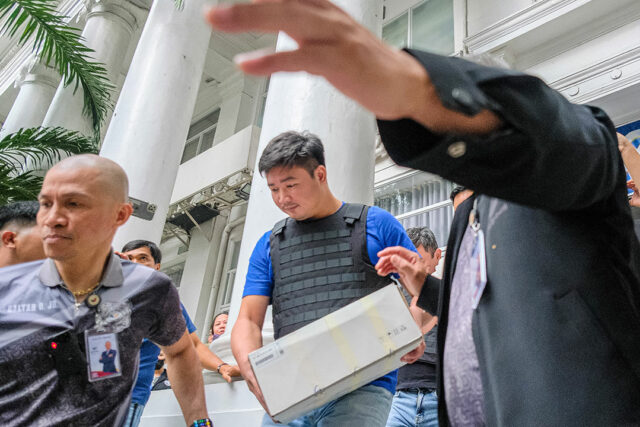
FORMER First District Assistant Engineers Brice Ericson Hernandez is escorted as he left the Department of Justice on Sept. 24, 2025. — PHILIPPINE STAR/RYAN BALDEMOR

THE Department of Justice (DoJ) has placed three former Public Works officials and a couple linked to alleged irregularities in flood control projects under protected witness status, Justice Secretary Jesus Crispin “Boying” C. Remulla said on Wednesday.

Mr. Remulla confirmed that former Bulacan District Engineer Henry C. Alcantara, First District Assistant Engineers Brice Ericson P. Hernandez and Jaypee Mendoza, as well as Cezarah Rowena C. Discaya, and her husband Pacifico F. Discaya, are now covered by the program.

He said the DoJ has written to the Senate President to formalize their protection and will hold further discussions with the chamber.

“These witnesses are showing good faith by coming forward with documents and notes they have kept through the years. We consider them protected witnesses,” Mr. Remulla told justice reporters in Filipino.

He added that their cooperation is crucial as they provide evidence such as ledgers and records that could help establish transparency in ongoing cases.

The Justice chief clarified that being declared a protected witness is different from being discharged as a state witness, which frees individuals from criminal liability.

“That is a separate process. We are just at the tip of the iceberg,” he said.

He also confirmed that the Discayas were granted the same protection, saying the government would evaluate the scope of assistance, including security for their families.

“We will help them first with the security problems.”

Mr. Remulla said the information gathered so far has gone beyond what has been revealed in Senate hearings, with more names and details expected to surface.

He emphasized that the DoJ’s role is to prosecute cases, but securing witnesses and evidence is key to moving investigations forward.

Mr. Remulla noted that Mr. Hernandez has already begun returning assets, including a Lamborghini Urus, to the Independent Commission for Infrastructure (ICI) as part of restitution efforts.

“These are symbols of wealth that should not have been amassed by a public servant. If these came from government funds, they must not be repeated,” he said.

He added that recovered assets should be auctioned promptly, with the proceeds remitted to the Treasury.

Malacañang on Wednesday said President Ferdinand R. Marcos, Jr. wants stolen flood control funds to be returned to state coffers.

“Return the people’s money,” Palace Press Officer Clarissa A. Castro said in Filipino at a briefing. “It is not enough to simple file cases against those involved in the anomalous flood control projects; nor is it enough to imprison them because the President wants people’s money to be returned.”   

This also comes as the Anti-Money Laundering Council (AMLC) ordered to freeze the assets of contractors and agency officials implicated in the scandal.

Public Works Secretary Vivencio B. Dizon on the same day said the agency has requested the AMLC to freeze about P474.48 million worth of vehicles registered under Department of Public Works and Highways (DPWH) officials, staff, and private contractors.

The department will likewise issue show-cause orders to 10 regional directors and engineers over allegations of lavish lifestyles, document tampering, and links to defective projects.

INFRACOMM PROBE SUSPENDED
Also on Wednesday, a congressman said the House of Representatives will suspend its investigation into anomalous flood control deals to pave the way for a “full and impartial” probe by the government’s fact-finding body.

Speaker Faustino “Bojie” Dy III will turn over all documents the House joint infrastructure committee has collected during its hearings into bogus flood control contracts to the ICI, Party-list Rep. Terry L. Ridon said in a media briefing.

He said the joint House panel investigating questionable flood control infrastructure would hand over a trove of evidence, including testimonies linking top officials “in the Executive and Legislative” to substandard or nonexistent flood mitigation structures in Bulacan province.

“We are announcing the suspension of proceedings of the House Infrastructure Committee to give way to the full and impartial proceedings of the ICI,” he said, adding the congressional panel is willing to cooperate with the fact-finding body.

The Philippines is facing a widening scandal over billions of pesos worth of flood control projects, with the two legislative chambers launching separate investigations amid allegations of kickbacks tied to public works contracts.

Lawmakers have traded accusations during parallel hearings, raising concerns over the credibility of the inquiries.

Mr. Marcos has formed an independent commission to investigate anomalies in flood control and other infrastructure projects, with authority to recommend criminal, civil, and administrative charges.

Mr. Dy on Monday said the House should let the independent commission take the lead in the investigation into bogus flood control contracts. “Most Filipinos no longer believe what’s being uncovered in the House committee,” he told reporters in Filipino.

Mr. Ridon said the House joint committee will keep its inquiry suspended “for as long as the ICI is… doing the work for transparency, accountability and justice.”

The Marcos administration has been rocked by an unfolding flood control scandal involving substandard, incomplete, or nonexistent infrastructure in a country regularly battered by flooding.

The controversy stems from Mr. Marcos’ revelation in August that more than 6,000 flood control projects launched since 2022 lacked key details. About P545 billion has been allocated for flood control since then, with P100 billion cornered by top contractors.

REPAIR OF SUBSTANDARD DPWH PROJECTS
Malacañang also said that Mr. Marcos ordered the immediate repair of substandard and unfinished government projects to prevent taxpayers’ money from going to waste following revelations that some of the DPWH projects were deliberately built below standards to allow kickbacks.

“What needs fixing should be repaired immediately so it can be utilized, otherwise the money spent will go to waste,” Ms. Castro told the same briefing.

Education Secretary Juan Edgardo M. Angara earlier reported that over 1,000 classrooms turned over by the DPWH to the Department of Education (DepEd) remain idle because they were left unfinished.

As a result, public classrooms remain crowded and rundown.

Meanwhile, a Philippine senator proposed to allocate part of the 2026 budget for flood control projects to fund the Department of Social Welfare and Development (DSWD)’s livelihood programs.

In a Senate budget hearing, Senator Erwin T. Tulfo proposed that part of the budget for flood mitigation projects should be transferred to the Assistance to Individuals in Crisis Situations (AICS) and the Sustainable Livelihood Program.

“Perhaps we can do that. We can look into it or study it,” Mr. Tulfo said.

The government moved to cut the DPWH budget for flood mitigation projects amid the allegations of irregularities in projects, including substandard, incomplete or nonexistent infrastructure projects.

The AICS program seeks to provide immediate financial and material assistance to individuals and families in crisis; while the SLP is designed to help poor, vulnerable, and marginalized households and communities improve their socio-economic well-being by providing them with opportunities to develop sustainable livelihoods and access necessary assets.

DSWD Secretary Rexlon “Rex” T. Gatchalian said that the agency had initially requested P362.3 billion for 2026, a P149.2 billion drop from its initial P221 billion proposal for next year.

“The biggest item there would be protective services, under that is the AKAP (Ayuda para sa Kapos ang Kita Program) that is around P26 billion. Also the (AICS) also had a decline around P14 billion to P15 billion,” Mr. Gatchalian said. “There was also the SLP which decreased by P1.8 billion,” he added.

However, Senator Sherwin T. Gatchalian is pushing for the suspension of the AKAP program, amid concerns of budget insertions in the 2025 budget.

“When a program is not thoroughly discussed, this is what happens—numerous CoA findings, the intended purpose is not met, and worse, the program becomes redundant,” the senator said.

“It’s a waste of resources and inefficient. So, I understand why AKAP was not carried over to 2026,” he added.

AKAP is a social welfare scheme that provides one-time cash assistance worth P3,000 to P5,000 to workers whose income falls below the poverty threshold. — Erika Mae P. Sinaking, Chloe Mari A. Hufana, Kenneth Christiane L. Basilio, and Adrian H. Halili


ADVERTISEMENT
ADVERTISEMENT