Home Blog Page 9477

Athletes should be first to get COVID-19 vaccine, says POC

By Michael Angelo S. Murillo, Senior Reporter

THE CORONAVIRUS disease 2019 (COVID-19) pandemic has thrown a curveball to the Philippines’ Olympic Games push but the agency representing the country to the sporting meet reiterated its commitment to continue to backstop the Filipino athletes in their quest.

Among the Philippine Olympic Committee’s (POC) reassurances is lobbying for local sports to be among those to be prioritized should a vaccine for COVID-19 be available, particularly those going to compete in the rescheduled Tokyo Olympic Games next year.

“Definitely there should be an allocation there [for the vaccine]. I will personally fight that sports get some priority because of the Olympics,” POC President Abraham “Bambol” Tolentino shared during his online session at the Philippine Sportswriters Association Forum on Tuesday.

“Right now there are still no guidelines for that but we can (definitely) lobby for that because of the Olympics, after all those availing of that (vaccine) would not be a lot based on the number of delegates and those who have qualified. We would continue to look after our athletes,” added Mr. Tolentino, also the chief of the Integrated Cycling Federation of the Philippines (PhilCycling) and a sitting congressman from the eight district of Cavite.

The Tokyo Games was supposed to take place from July to August this year but was moved to next year as COVID-19 remains to be a going concern worldwide.

To date, the Philippines is assured of at least four athlete-representatives in the Games, namely, pole vaulter EJ Obiena, gymnast Carlos Yulo and boxers Eumir Felix Marcial and Irish Magno, with many others still looking to join them in the various qualifying events.

The POC president said they are hoping that the Tokyo Games pushes through after being postponed this year so as not to have the athletes’ efforts go to waste, but admits a lot of things still need to happen for the successful staging of the Olympics to be a reality.

“The postponement was a huge blow. We cannot afford to have another delay because it would mean its cancellation altogether,” the POC chief said.

ALLOWANCE
Meanwhile, Mr. Tolentino also shared that he laments the recent decision by the Philippine Sports Commision (PSC) to slash by half the allowance of national athletes in light of the COVID-19 situation.

While he said he understands where the PSC is coming from in its decision as government priorities are being channelled to the fight against COVID-19, and resources rendered limited because of the pandemic, still he believes other options could have been taken, including having sports assistance be included in the “Bayanihan Act” geared towards combating the impact of COVID-19 across various sectors.

“Had I been told earlier, we could have added it to our recommendation to the government to also help sports,” said Mr. Tolentino.

He, nonetheless, expressed being one with the PSC in hoping that the monthly stipend of national team members be restored to its normal level just as he vowed to help in finding ways to augment the budget for the athletes, including having the leaders of national sports associations serve as “godfathers” to their own athletes and coaches.


SMC teams take first step toward possible return

WHILE the return to action of the Philippine Basketball Association this season remains to be seen amid concerns over the coronavirus disease 2019 (COVID-19) pandemic, teams under the umbrella of San Miguel Corp. have begun moves for their possible return to the floor by having their players tested for the highly contagious respiratory disease.

Recently, players of the San Miguel Beermen, Magnolia Hotshots Pambansang Manok and Barangay Ginebra San Miguel Kings underwent COVID-19 testing, bearing favorable results as all of them tested negative.

“We are happy to report that all of our basketball players tested negative from the virus,” said SMC president and chief operating officer Ramon S. Ang, who decided to put up a real-time reverse transcription polymerase chain reaction (rRT-PCR) testing facility and laboratory right at the company’s premises to reduce the strain on government health facilities that are currently conducting and processing COVID-19 tests.

Mr. Ang and his group expressed hope that with the tests of their players, the conversation for the possible return of sports like basketball, and leagues like the PBA, under the “new normal” would be sustained and considered.

“We defer to the government’s wisdom and decision on when team-based leagues like the PBA will return especially if people’s lives are at stake. While we all miss the PBA, we need to first create a safe environment to limit the spread of the virus,” the SMC chief said.

Mr. Ang went on to urge the PBA family to be part of the movement for recovery efforts by consistently testing everyone involved in the league, among other things, to serve as an example.

He added that the company will continuously monitor the health of its players and the rest of its employees and assured that existing health packages are more than sufficient to cover them and their families while assuring as well that when players are allowed to go back to work the company will observe proper health and safety protocols.

The testing of its players is one of the initiatives SMC has been doing in the fight against COVID-19, which, as of this writing, has 18,997 confirmed cases in the country.

Among its recent efforts was its donation of three sets of rRT-PCR testing machines and RNA machines to key government hospitals on top of the five sets of the same machines and testing kits equivalent to 20,000 tests that were given to the Department of Health.

It also donated testing booths to 17 Metro Manila local government units to help expand COVID-19 testing in their respective areas and make it available at little or no cost to poor communities.

The PBA shut down its current season on March 11 as COVID-19 started taking further root in the country, and the government came out with mitigating measures against the disease, including prohibiting mass gatherings like sporting events.

The league is still hopeful of resuming the season but leaving making a final decision till August, believing there would be a better picture of the COVID-19 situation by that time. — Michael Angelo S. Murillo

Cincinnati ‘exploring multiple scenarios’ for summer tournament

NEW YORK — Cincinnati Masters organizers are exploring options for hosting the tournament as the New York Times reported that it could be moved to Flushing Meadows this year as part of a double-header with the US Open.

“The health and safety of the players, fans, volunteers and staff will be our greatest concern,” tournament organizers said in a written statement.

“To align with the decision-making timeline of the WTA and the ATP, we expect a final decision on the status of the tournament to be made in mid-June.”

According to the Times report, under a proposal by the US Tennis Association (USTA), both competitions would be played in New York’s Billie Jean King National Tennis Center back to back.

The intention behind the plan is to minimize travel and the risk for participants after the coronavirus disease 2019 pandemic wreaked havoc on the professional sports calendar.

Cincinnati, also known as the Western & Southern Open, is set to run until Aug. 23 and the US Open’s main draw is expected to begin on Aug. 31.

“The USTA and Western & Southern Open have been exploring multiple scenarios for the tournament,” Cincinnati organizers said. “The number one goal is to hold the tournament, in some form, this summer.”

The USTA did not immediately respond to a request for comment.

The tennis world has slowly begun to resume action, with fans absent from stands.

World number 12 Petra Kvitova claimed victory in the women’s draw at an all-Czech tournament in Prague on Thursday, in a slot on the calendar that was originally occupied by the French Open.

French Open officials rescheduled the claycourt Grand Slam to begin on Sept. 20, the week after the US Open was set to kick off, prompting frustration from many in the tennis world. — Reuters

No race cancellation even if driver has COVID, says F1 boss

LONDON — Formula One will not cancel a race even if a driver tests positive for COVID-19, chief executive Chase Carey said on Tuesday.

The American was speaking after the sport published an eight-race initial calendar with the season starting in Austria on July 5.

The original March 15 opener in Australia was cancelled after a McLaren team member returned a positive test for the coronavirus disease 2019 before the weekend had started.

“An individual having been found with a positive infection will not lead to a cancellation of a race,” Carey said in an interview on the official www.formula1.com Website.

“We encourage teams to have procedures in place so if an individual has to be put in quarantine, we have the ability to quarantine them at a hotel and to replace that individual,” he added.

“A team not being able to race wouldn’t cancel the race… we will have a procedure in place that finding infection will not lead to a cancellation. If a driver has an infection, [the teams have] reserve drivers available.”

Formula One plans to race without spectators, at least initially, and teams will fly in on charters and be isolated from the local population.

Carey pointed to “a rigorous set of guidelines” of some 80–90 pages detailing the processes for travel, hotels, meals, track behavior and testing.

Teams will operate in “bubbles” with social distancing in non-critical areas such as the paddock.

Formula One expects some 1,200 essential personnel with the 10 teams limited to a maximum 80 people each compared to the more usual 130.

Carey said he hoped to finalize the rest of the calendar by the end of June and recognized there were some races currently included which might not happen, but the sport had other options.

The F1 boss defended the decision to go racing, saying governments in the countries concerned were supportive.

“Much of the world is moving forward and I think it is important to realize that the shutdown does have both health, societal and economic consequences which are real long term,” he said. — Reuters

A once-in-a-generation challenge to save the Philippine startup ecosystem

The challenge facing the Philippines is unprecedented. A global health crisis wrought by the COVID-19 pandemic has become an economic calamity due to the extreme restrictions on social and economic activity which are the only proven ways for it to be combatted.

With the IMF World Economic Outlook forecasting the country’s economic growth will crash to 0.6% in 2020, from 5.9% in 2019, the shock to the real economy and in turn society will be far reaching and long term.

As with all micro, small, and medium enterprises (MSMEs), technology startups have been hit hard by this crisis. In response there are currently 19 programs of government assistance available to MSMEs, in recognition that they are the backbone of the Philippines’ economy (comprising 99% of businesses and providing two-thirds of jobs).

However, due to their fundamental differences with most MSMEs, this support is not available to startups. Loan sizes are either inadequate, or loan criteria (such as required lengths of operation, positive cash flows, debt/equity limits, etc.) cannot be satisfied by most startups.

Much of the Philippine startup ecosystem is close to the point of bankruptcy or closure. A collapse in consumer demand, an inability to provide services during the Extended Community Quarantine (ECQ) period and soaring corporate late payment rates as cash flows tighten, have significantly affected startup revenues and compressed their runways.

A generation of Filipino startups could be wiped out without further specialized liquidity support. 

Not a handout, an investment in the Philippines’ future.

Offering handouts to startups beyond that available to other MSMEs is not the right response.

This crisis has created a long list of needs in the Philippines. Studies suggest that about three out of five Filipinos have limited capacity to subsist without additional support if community quarantines are extended beyond one month.

With unparalleled demand, the government cannot provide direct support to all sectors. Scarce taxpayer funds need to be used where there is the greatest need to respond to human suffering and stabilize the economy.

Rather, mechanisms are required to serve as a powerful catalyst to unlock private sector support for startups, to ensure that they receive enough liquidity investment to remain viable and survive this crisis.

The Manila Angel Investors Network calls for the establishment of a Development Finance Institution-backed blended finance facility to issue bridging finance, alongside private sector funds, in the form of convertible loans, to technology startups impacted by COVID-19.

Such catalyst is bridge financing would incentivize individual and corporate investors holding on to their cash reserves to back Filipino early stage technology companies in a meaningful way.

For use solely for working capital purposes, it is intended to mitigate the immediate impact of the COVID-19 liquidity crunch, instead of stretching the impact over several years.

Its focus of support would be on funded startups—seed stage and onwards—to ensure it backs only startups that have a chance of commercial success beyond COVID-19. Unfunded businesses would not be supported, as these have a high chance of failure even in a stable economy.

Such a fund should also have the option to do invoice factoring, that is, provide startups with cash flow by purchasing their outstanding credit worthy invoices.

As a matched fund it avoids damaging or distorting the ecosystem, as it:

– does not prop up unsuccessful companies or investors,

– limits the risk of the government spending taxpayer money on poor businesses,

– Is structured to give taxpayers upside, in effect a loan

– And requires skin in the game from the private sector.

This action needs to be taken quickly, as any delay will prove fatal for startups, which may be down to as little as a few weeks of cash runway.

Why save Filipino startups?

Startups have a high chance of failure, even in a stable economy—so why not let them?

Simply put, the current crisis is not normal market risk, and its impact will decimate Filipino startups across the board. The Philippines will be losing good companies with the bad. As a result, it will:

– lose talent,

– lose a key driver of economic innovation which develops new products and helps power exponential growth,

– and lose all the hard work from a. Generation of investments made into the startup ecosystem.

Petr Sadlacek, a professor of economics at the University of Oxford researching startups for the European Commission, found that startups “are the ones that create the jobs.”

“Almost 100 percent of the new people hired in an economy come through startups and young firms,” he said. “The large firms are where most people work, but the startups are where jobs are created.”

Further, the impact of COVID-19 is not gender neutral. Women founders will be disproportionately impacted by the current crisis. Less than a quarter of startups in the Philippines are founded by women. In normal times, venture capital does not support female startup founders. Within the UK, for example, only 1p of every £1 of venture capital goes to women-led startups. This disparity will be felt for funding raised during this crisis period.

For this reason, MAIN calls for greater support for women owned or led startups during this crisis, and recommends that a higher level of leverage be provided by the proposed fund.

Most importantly, without action, the Philippines will be left behind, and startups domiciled in other ASEAN countries will capture our home market. Those startups that survive these times will be positioned to dominate the ASEAN markets. With the government of Singapore providing a 75% wage subsidy and deferred low interest bridging loans (up to SGD$5 million) providing cash flow support, their startups will preserve their capacity and capabilities, hitting the ground running once their ECQ is lifted.

We do not believe the future of the Philippines I served by standing by and doing nothing. Together with the private sector, we can unite for the survival and growth of Philippine startups that drive job creation and deliver compelling solutions to the country’s pressing needs.

Remaining connected amid a global pandemic

The cloud of the coronavirus pandemic cast a dim shadow over the global economy, with many economists fearing a recession worse than the 2008 financial crisis. Yet, every cloud has a silver lining, and the world’s capability to adapt and recover has improved dramatically since then.

Instead of crippling productivity, the COVID-19 pandemic only managed to hasten the development of a global digital workforce. Many businesses have transitioned to an operations model of remote work, with employees working from home able to remain connected through digital platforms and video conferencing.

It is not too much of a stretch to say that digital connectivity has saved economies from collapsing amid the crisis. As the leading telecommunications provider in the country, Globe has been at the forefront of this pandemic, offering the connectivity that has become essential to keeping people’s lives and businesses going during the community quarantine.

Vince Tempongko, Globe’s VP for Site Acquisition and Management

“The impact could have been much worse if we did not have digital tools to support us during this time,” Vince Tempongko, Globe’s VP for Site Acquisition and Management, said during the BusinessWorld’s Beyond Survival: Charting the Path to Recovery insights online forum.

“The past two months have shown a shift from physical to digital interactions and transactions — with companies adopting the work-from-home setup, schools pushing for online learning, brick-and-mortar stores selling goods online, consumers relying on the internet for their daily needs including entertainment,” he said.

Mr. Tempongko noted that Globe recognizes the urgent need for better connectivity, working with both the private and public sectors to make necessary upgrades to its network. This includes taking advantage of the current reduction of foot traffic to improve connections in normally dense areas during the enhanced community quarantine.

He pointed out that the Philippines suffers from having low site density compared to other countries due to lack of cell sites in relation to the number of internet users. The Philippines lags behind India, Indonesia and Vietnam when it comes to cell sites to internet users ratio. Today, the country has around 18,000 cell sites compared to Vietnam’s more than 90,000.

On the other hand, latest data from We Are Social show that internet penetration in the Philippines stood at 67% in January this year. The country now has 73 million users on social media. This brings the users per site ratio at 4,000 users that are sharing one cell site.

To facilitate faster economic recovery and mitigate any future crises, Mr. Tempongko emphasized that the country should prioritize a shift towards digitalization and achieving “first world-quality internet”.

“The road to recovery will require a pivot to digitalization. Companies, whether big or small, will be reliant on connectivity and digital tools to keep their businesses afloat,” he said.

“Lastly, this digitalization requires reliable connectivity delivered thru a robust network (meaning cell sites and fiber infrastructure). Globe has been aggressively investing in and expanding its network but we continue to be challenged by the tedious and slow LGU permitting processes,” Mr. Tempongko said.

He added that Globe continues to be optimistic as there are some LGUs who have been leading the movement towards digitalization of their communities by making it easy to get permits and allowing the company to build its network infrastructure. By doing so, they are able to take advantage of the latest technologies such as 5G in their towns which accelerates their digital transformation and enables economic activity even during the crisis.

“We are hopeful that other LGUs will realize the need for Information and Communication Technology (ICT) and network facilities in the new reality. As business recovery thru digitalization demands better connection, better service, and better experience.”

Steadfast in its commitment towards digitalization, Globe has continuously developed products and services to make its customers’ lives easier and more convenient. Products and services which saw a dramatic increase in usage given their relevance amid the community quarantine.

 Through its mobile apps, Globe One App and Globe At Home App, customers can easily do transactions whether paying bills, buying load, checking data usage, or pulling up a monthly statement. 

The need for contactless alternatives to sending money and paying bills has made GCash ubiquitous. GCash also partnered with government agencies and local government units for money distribution such as the Social Amelioration Program for Angkas, Joyride, and Grab riders of the Department of Social Welfare and Development (DSWD) and Land Transportation Franchising and Regulatory Board (LTFRB). The G-Cash App has, in fact, emerged as one of the top five most downloaded apps in Android.

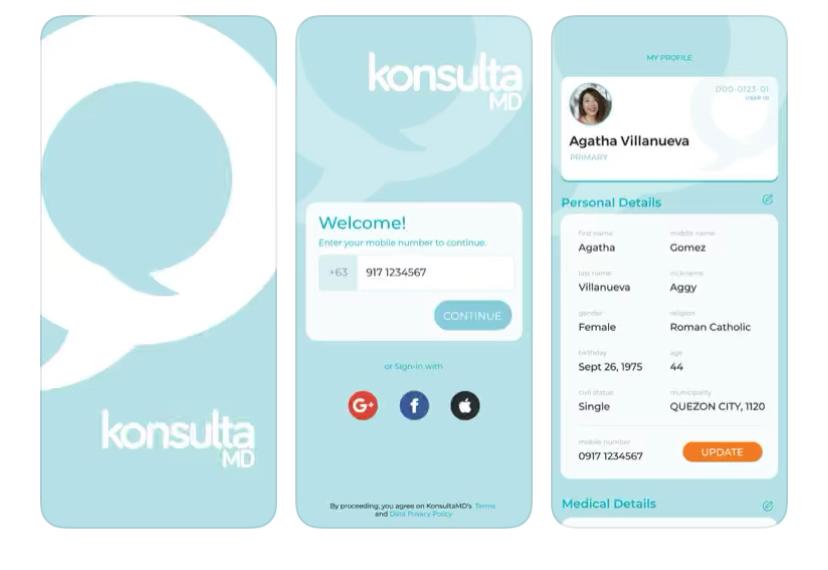
Through KonsultaMD, an affiliate of 917Ventures, the corporate incubator and wholly-owned subsidiary of Globe, customers have access to licensed doctors over the phone anytime without leaving the comforts of their homes. The 24/7 telemedicine hotline may be used to seek advice on primary care, first aid, health and wellness, nutrition, mental health, and even for the issuance of e-prescriptions and interpretation of lab results. KonsultaMD also recently released its app that allows customers to “teleconsult” via video or voice. This contactless approach to health services is endorsed by the Department of Health as a way to relieve hospitals with non-critical cases and prevent the spread of the COVID-19 virus especially among vulnerable members of society.

The coronavirus pandemic has brought fear and uncertainty all over the Philippines, but with innovations in digital technology and improving connectivity nationwide, the path towards the Philippines’ economic recovery can be found. As one of the country’s foremost telecommunications providers, Globe aims to do its part to see it through.


2nd BUSINESSWORLD INSIGHTS Phase 2: Improving the Country’s Healthcare and Welfare System

Watch industry experts as they discuss the topic, “Improving the Country’s Healthcare and Welfare System”, with DOH undersecretary Dr. Maria Rosario Vergeire; DSWD spokesperson and social marketing service OIC-director Irene Dumlao; Makati Medical Center medical director Dr. Saturnino Javier; and Philippine Disaster Resilience Foundation president Butch Meily moderated by BusinessWorld associate editor Timothy Roy Medina.

#BUSINESSWORLDINSIGHTS Phase 2 is made possible by Globe, Entrego, Unilab, Seagate, Pag-ibig Fund, The Philippine STAR and www.olern.com
with the support of Management Association of the Philippines, Philippine Chamber of Commerce and Industry, Philippine Association of National Advertisers, Bank Marketing Association of the Philippines, CFA Society Philippines, and British Chamber of Commerce Philippines.

Some branches of Victoria Court to be shuttered

Several branches of local motel operator Victoria Court under Angelina Mead King are closing because of the pandemic, while branches under her brother, Atticus King, will still be operational but will be retrenching employees, according to two separate videos shared on social media.

“I don’t think that hotel and motel operations will be able to produce the same results as how we used to,” Ms. Mead King said in a video addressed to her employees which made rounds of social media on June 2.

Ms. Mead King handles the operations for three Victoria Court branches: Taft, Pasay, and Malate while the rest are under Mr. King.

Despite housing medical frontliners so they can stay closer to their hospitals and Overseas Filipino Workers (OFW) who are completing their mandatory 14-day quarantine, Ms. Mead King that it’s “still not enough for the business to sustain itself and take care of all of us.”

“We all have to go into survival mode. It is better for us to prepare for this now, rather than ignore it,” she said.

Her group will be preparing the employees’ retirement and retrenchment packages over the next few weeks to help them “survive the next few months,” and she advised them to look for other jobs. She then assured them that “when the business does re-open again,” the displaced employees will be the first ones the company will be calling back.

“Please don’t think that we have come to this decision lightly. It was a great difficulty. I want to let you know that we value all your hard work and loyalty that you have given during my management. And I really wish there was another way to go about this,” she said.

Ms. Mead King told BusinessWorld in an e-mail that the video was supposed to be private and was not meant for the public and that she will be making an official announcement soon.

The King family has been in the motel business since businessman Angelo King opened Anito Lodge in Pasay City in 1975. When his sons, Archimedes and Wyden, joined the company, it expanded with the openinbg of Akasya Lodge in Sta. Mesa, Manila in 1984. A year later, the company opened Anito Royale and Anahaw and the first Victoria Court in Pasig. The Victoria Court brand is known for its themed rooms.

Victoria Court is now under the management of both Ms. Mead King and Atticus King.

In a separate video, Atticus King clarified that only the branches under his sister’s management are closing, while he has opted to try “to keep the lights on” for those he manages. The company’s website lists 10 Victoria Court branches across Metro Manila.

“For clarity, we both share the brand Victoria Court but we have completely different management groups. Given that, our solutions to the ongoing situation are completely different and unrelated,” he said in a video posted on his Facebook account on June 2.

“For my group, we decided to retrench and we are trying our best to keep the lights on,” he said, explaining that they are also providing accommodations for OFWs under quarantine, employees of business process outsourcing companies, and medical frontliners.

“It’s not ideal. We are not optimized for it and we are looking back to things reverting back to normal,” he said. — Zsarlene B. Chua

Huawei Cloud’s online summit to discuss global expansion for Internet companies

Know the latest Internet industry insights and win a Huawei gadget from this year’s Internet Industry Summit


With mobile Internet rapidly growing in China, leading Internet companies there started seeking international expansion. Along with this, new technologies such as cloud, artificial intelligence, and 5G are seen to further converge in accelerating innovation in Internet companies and drive industry upgrades.

As the COVID-19 pandemic is reshaping the world, new turning points are being created for many industries, especially in terms of technological innovation— an opportunity the Internet sector is best positioned to benefit from.

What are the latest trends in the global expansion of Internet companies? How can companies adapt fast enough to a vastly different business environment when they enter a new market? How do enterprises drive transformation and improve user experience through technological innovation?

These are some of the questions that will be explored on “Go Cloud, Go Global”, HUAWEI CLOUD Asia Pacific’s 2020 Internet Industry Summit, which will be held live and online on June 10 at 2:30 to 5:30 p.m. (Manila time).

The online summit connects experts across the Asia Pacific region, who will discuss relevant and hot topics within the Internet industry, in particular the global expansion of Internet companies in a post-pandemic period, coupled with success stories from well-known platforms in running a global business.

Aside from the talks, the online summit will give exciting prizes to attendees who interact with the live broadcast. These prizes include one HUAWEI P40, one HUAWEI Watch GT2, and one HUAWEI Smart Scale.

The first set of discussions will focus on “Going Global In A New Era”.

Mark Chen, director of the International Business Department at HUAWEI CLOUD, will showcase how the global cloud platform can help companies expand their reach globally.

Wei Haijun, founding partner of cross-border fund Grand View Capital, will provide his perspective on the headwinds and tailwinds Internet companies will face as they seek to expand globally in a post-COVID era.

Xu Zhidong, compliance VP at Huawei Asia Pacific, will share his extensive experience in operational compliance and discuss how Internet companies can expand their business globally while ensuring regulatory compliance.

Resources and technologies will be the agenda of the second set of speakers who will share interesting stories of how their companies have successfully expanded globally with the help of HUAWEI CLOUD technologies.

Henry Yu, research and development director of SHAREit, will talk about the journey of one of the most popular mobile applications in building a global user base of 1.8 billion in five years.

Wang Xi, chief executive officer of NetEase Games, will share his company’s global journey through the launch of War Rage, now known as Conqueror’s Blade—one of the hottest PC games today.

Beluga Global’s CEO Wei Fangdan, meanwhile, will give his take on the recently-launched HUAWEI CLOUD 2020 Go Global Whitepaper for Internet Companies, which aims to serve as a guide for Internet companies that seek to expand globally.

In addition, Feng Qiyou, vice president of HUAWEI CLOUD China Region, will present further how HUAWEI CLOUD supports the global operations of Internet companies.

The last set of speakers will talk about the new ecosystem wherein the Internet industry will work in, with experts highlighting the Global Hospital Management System (HMS) Ecosystem and the launch of the Asia Pacific Internet-Telco Partnership Program, which intends to connect Internet companies and top global telecom operators.

Aside from the prizes attendees can win in the online summit, interested individuals can register with HUAWEI CLOUD and get free packages with 1500-hour free usage quotas valid for 12 months for 10 hot products.

Learn more about the future of the Internet industry and get to win great prizes from Huawei on its “Go Cloud, Go Global” online summit this June 10 at 2:30 p.m.

To register, click this link http://intl.smarket.net.cn/u/5UFqJIH or scan the QR code provided.

And get the free package of HUAWEI CLOUD service: https://bit.ly/3gR6lu8

BoP in surplus for 2nd month in a row

THE country saw a thinner surplus in its balance of payments (BoP) position in March on the back of hot money outflows and a narrower trade deficit.

Latest data from the Bangko Sentral ng Pilipinas (BSP) showed that BoP recorded a surplus for the second straight month at $448 million in March, smaller than the $627-million surfeit seen in the same month of 2019 as well as the $839 million recorded in February.

The surplus is lowest since the $541-million surfeit in November.

The BoP paints a summarized picture of the economic transactions of the country with the rest of the world within a given period.

“The BoP surplus in March 2020 reflected mainly the inflows arising from the BSP’s foreign exchange operations as well as income from its investments abroad, and the national government’s foreign currency deposits with the BSP,” the central bank said on Tuesday.

The inflows were partially offset by foreign currency withdrawals made by the national government to pay its foreign currency debt obligations, it added.

The BoP position also reflects the final gross international reserves (GIR) worth $88.86 billion as of end-March, enough to cover around 7.9 months of imports of goods and services as well as payments of primary income. It is also around 5.3 times the country’s short-term external debt based on original maturity and 3.8 times based on residual maturity.

According to Rizal Commercial Banking Corp. Chief Economist Michael L. Ricafort, the slimmer BoP surplus reflects the heavy hot money outflows, which reached $961.05 million in March.

“This was amid net foreign portfolio investments outflow in March 2020 amid the lockdown in Luzon and also the global concerns over COVID-19 spreading to other countries worldwide beyond China,” he said in an e-mail.

ING Bank N.V. Manila Senior Economist Nicholas Antonio T. Mapa said the narrower trade deficit supported the BoP surplus for the second successive month.

“The BoP surplus may have resulted from a narrowing trade deficit owing to falling imports as remittance flows managed to grow in the (first quarter) of the year,” Mr. Mapa said in an e-mail.

Data from the Philippine Statistics Authority showed the country’s trade deficit hit $2.38 billion in March, smaller than the $3.33-billion deficit seen in the same month last year but wider compared to the $1.66-billion deficit logged in February.

Meanwhile, cash remittances from overseas Filipino workers grew by 2.5% year on year to $2.301 billion in February, as the pandemic crisis affected many economies where inflows came from.

In the first three months of the year, the BoP recorded a deficit of $68 billion, a reversal compared to the $3.797-billion surplus in the January to March 2019 period.

The BSP in November projected BoP to settle at a $3-billion surplus in 2020.

Crucial to the BoP position will be the borrowings during the pandemic crisis, according to Mr. Mapa.

“Going forward, we expect the BoP to be supported largely by the financial account with the government securing foreign borrowings to help fund the COVID-19 rescue efforts,” he said.

Mr. Ricafort said that bright spots may arise with improved market sentiment as the economy gradually reopens.

Starting June 1, most areas in the country have been placed under modified general community quarantine, while key cities including Metro Manila is under general community quarantine.

“For the coming months, net foreign portfolio investments outflows could ease and BoP data could correspondingly improve amid recent gains in the local financial markets,” he said. — Luz Wendy T. Noble

Philippine debt hits P8.6 trillion in April

OUTSTANDING DEBT rose by 1.4% to P8.6 trillion as of end-April, as the government issued more domestic securities and obtained additional foreign loans to fund its coronavirus disease 2019 (COVID-19) response, the Bureau of the Treasury (BTr) said on Tuesday.

In a statement, the BTr said the national government’s total debt stock stood at P8.6 trillion as of end-April, up from P8.48 trillion as of end-March and 10.4% higher than P7.79 trillion logged a year ago.

Of the outstanding debt, the bulk or 68% was sourced domestically, while the remaining 32% was from foreign creditors.

Domestic debt inched up 0.9% to P5.86 trillion as of end-April, from P5.81 trillion as of end-March. It was also 12.6% higher than P5.21 trillion seen in April last year.

The increase was largely due to the issuance of government bonds which rose 0.9% month on month to P5.56 trillion.

“The end-March figure was subsequently adjusted to reflect the P300 billion short-term borrowing through the repurchase agreement with the Bangko Sentral ng Pilipinas (BSP),” BTr said in a statement Tuesday.

In late-March, the central bank bought P300 billion in three-month government securities from the BTr to boost state coffers for efforts to contain the fallout from the pandemic.

The BTr said to date, domestic debt rose by P735.92 billion or 14.4% since the start of the year “as a result of net debt issuance and the short-term borrowing from BSP.”

Meanwhile, outstanding external debt jumped 2.7% to P2.74 trillion as of end-April from P2.66 trillion the month prior, and 16.4% higher than P2.58 trillion recorded in April 2019.

“For April, net availment of external loans amounted to P87.34 billion as part of the government’s effort to raise concessional financing to address the 2019 coronavirus disease (COVID-19) pandemic,” BTr said.

In April, Manila-based multilateral lender Asian Development Bank (ADB) approved a total of $1.7-trillion loans to support Philippine government’s COVID-19 response. World Bank also approved $600 billion in loans for the Philippines.

Meanwhile, the outstanding external debt securities that month slightly declined by 0.6% to P1.595 trillion that month from P1.61 trillion in March.

“Currency adjustments trimmed P15.1 billion, particularly through local currency appreciation,” it explained.

To date, the national government’s external debt went up by 5.1% to P133.10 billion.

The national government’s guaranteed debt declined 0.9% month on month to P477.68 billion as of end-April, from P481.82 billion as of end-March.

“The lower level of guarantees was due to the net redemption of both local and foreign guarantees amounting to P3.24 billion and P0.10 billion, respectively. This was further trimmed by currency adjustments which reduced the value of external guarantees by P800 million,” the BTr said.

Of which, domestic guaranteed debt made up 53% of the total or P251.59 billion, while external guaranteed debt accounts for 47% or P226.09 billion. — B.M. Laforga

Disinfection services demand spikes as business operations resume

By Jenina P. Ibañez, Reporter

DEMAND for disinfection and cleaning services is on the rise as businesses resume operations after the easing of lockdown measures.

However, the strong demand has put pressure on inventory of imported decontamination technology, which is now facing global shortages.

D&G Pacific Corp., a disinfection and waste management company, said it is experiencing a 25-30% rise in demand for disinfection services since the coronavirus pandemic began.

D&G Pacific President Edmund M. Dimalanta said in an online interview that operations for restaurant cleaning services stopped at the start of the lockdown, but growing demand for disinfection services from other industries offset any losses. The month of March saw the most demand since the company started two decades ago, he added.

“We’ve been getting calls from customers, friends, and I guess it’s even inquiries from our website. It’s non-stop. It’s from different industries — from hotels to buildings to maybe even car manufacturers. If we were to describe the business that knocks on our doors, it is the business that has high contact traffic,” Mr. Dimalanta said.

Happy Housekeepers, Inc., a home and workplace cleaning services provider, is also seeing more requests for deep cleaning and sanitation, vehicle sanitation, and workplace disinfection.

Iramor D. Lopez-Pozas, Happy Housekeepers, Inc. operations head, said in an e-mail that there has been a noticeable spike in inquiries from condominium residents.

“For business, the highest demand comes from supermarkets and convenience stores. Before the pandemic, they request services monthly. Now, they require a weekly service,” she said.

Meanwhile, a construction business that stopped operations during the lockdown added disinfection services to its portfolio. Construction management company Thaison Builders and Developers halted ongoing projects, but shifted operations to Firstline Sanitation Solutions (FSS).

“(It’s) a way to support our manpower so they can continue supporting their families despite the economic pause,” FSS Chief Executive Officer Arthur Cantor said in an e-mail interview.

The company offers disinfection packages, charging P50,000 for workplaces that usually have fewer than 40 employees, and P100,000 for those that employ up to 150. These packages include the service, disinfection materials, and employee training and monitoring, among others.

Products that were once mostly purchased by families with children, schools and hospitals are now being bought by various industries.

Intech Group Innovations Corp., the distributor of UV Care sterilization and air purifier products, sells its products to major mall operators in addition to outsourcing companies and office buildings. The products are advertised prominently in Ayala Malls’ online video on safety measures for mall goers.

Intech Chief Marketing Officer Carolyn Chuaying-Tanchen said in an online interview that the company is facing challenges in importing the products amid growing demand and global scarcity.

“There is also scarcity of products as well because it’s a worldwide need. So we are just only able to get what allocations are available and made to us. So that’s also one of the challenges that we had to face was the inventory coming in is very limited because of the production as well that is also trying to meet the demand worldwide,” she said.

The company is seeking regulation that will help penalize people selling fake products that advertise the use of UV-C, a type of ultraviolet radiation used for disinfection. They also hope the government would address difficulties in goods delivery to areas outside Metro Manila, as well as add their products to the list of goods that have fewer port limitations during the pandemic.

The importation of health and protective products designed to address the pandemic is exempt from all taxes and fees, but does not include UV Care’s products.

IS IT EFFECTIVE?
The effectiveness of these disinfection products and services in preventing the spread of the coronavirus disease 2019 (COVID-19) specifically is still being studied.

“We don’t know, really,” D&G’s Mr. Dimalanta said, explaining that they have researchers looking at global expertise and government regulations. He cited recommendations from the Health department, the World Health Organization (WHO), and the United States’ Centers for Disease Control and Prevention.

“There’s too much information from different parts of the world. It’s actually confusing…even among experts, even among the doctors, there is no one simple solution,” he added.

UVC has been effectively used against another coronavirus, SARS-CoV, but a recent study found that killing the COVID-19 virus in personal protective equipment required higher UVC exposure.

Various studies have shown how long the virus can remain on different types of surfaces.

The WHO on May 15 released guidelines on disinfection, saying there has to be adequate concentration of disinfectant solution to ensure its effectiveness and to reduce damage to surfaces.

“All touchable surfaces should be disinfected. Cleaning practices and cleanliness should be routinely monitored. The number of cleaning staff should be planned to optimize cleaning practices,” the organization said.

ADVERTISEMENT
ADVERTISEMENT