Home Blog Page 9466

Mindanao introduces eco-friendly abaca face mask

By Michaela Tangan
Features Writer, The Philippine STAR

The world has boosted its creativity in finding alternative materials for making face masks.

Online, we can easily find do-it-yourself (DIY) video tutorials on how to transform old clothing into face covers. Recently, Japan and Chile also presented copper in face masks to repel certain bacteria and viruses.

The Philippines also takes masks one step further with Mindanao’s trademark abaca fiber.

Salay’s contribution to the world

The Abaca fiber used to create Salay Handmade Products Industries, Inc. (SHPII) face cover provide better filtration, density, porosity, and water repellency than the synthetic materials. (Photo from Fiber Mask – SevenXb/Facebook)

Salay Handmade Products Industries, Inc. (SHPII) has been creating world-class stationery products for the last three decades.

In March, the Misamis Oriental-based company began developing prototypes of abaca-made masks, heeding to the call of the World Fair Trade Organization-Asia to join the rest of the world in flattening the coronavirus disease 2019 (COVID-19) curve by providing fair trade personal protective equipment (PPE) to affected communities.

SHPII utilized abaca that is locally grown by farmers in Salay and prized for its mechanical strength and resistance to saltwater.

“We have this strong, tear-resistant, and water-absorbent paper material that was introduced to us about five years ago. We experimented by applying this strong material to make face mask or face cover. The material is based from 100% abaca fiber, the strongest fiber in the world,” SHPII’s Neil Francis Rafisura told The Philippine STAR.

Along with local women artisans with over 30 years of experience in making handmade paper, SHPII started with the production of face masks in mid-April.

Mr. Rafisura explained that it takes roughly five days to process, convert and ship the face masks as each product is carefully and precisely manufactured by hand.

“The paper filters are manufactured by hand,” he shared. “The raw abaca fiber undergoes at least 15 processes before they are cut and sewn into face covers. It also has three layers: two layers of abaca-based filters in 90 to 220 gram per square meter (gsm) and one layer of cloth.”

Soon, they will have the capacity to produce 4,000 face covers per week. SHPII’s goal is to gradually increase their production and is currently focusing on developing and adding more features and varieties to the mask. They are looking to add layers of anti-microbial cloth and cotton fabric to cater to the special needs of the market.

“We really need to scale up our production capacity to satisfy the demand. We need more sub-contractors for sewing, preferably within Misamis Oriental or Cagayan de Oro City and a reliable courier service for our distribution,” he shared.

According to the recent study conducted by the Department of Science and Technology (DOST) Region 10, the abaca face cover has a filtration rate that is seven times better than cloth masks. It also has lower water absorption than N95 masks. More tests will be conducted to strengthen the study of DOST.

“Our mask is for face covers and not for medical or surgical use,” he added. “We are not in that category. It is not our intention to market this to hospitals. However, it can be an option for better protection compared to thin masks found and peddled everywhere and in the public market place,” he said.


To support the local artisans of Salay, Misamis Oriental, customers may call the following numbers to order a facemask: (0956) 956-6769, (0936) 980-3345, (0917) 529-9150, (0998) 854-5644, (0956) 739-6238 and (0936) 369-8502. To learn more about SHPII, visit www.salayhandmade.com.

BUSINESSWORLD INSIGHTS: The need for resilient, more comprehensive systems

By Adrian Paul B. Conoza
Special Features Writer, BusinessWorld

The healthcare and welfare sectors have been on the frontlines in tackling coronavirus disease 2019 (COVID-19) itself as well as its impacts on the vulnerable members of the society. At the same time, the pandemic has revealed several concerns and issues that need to be fixed in order to improve the country’s healthcare and welfare systems, which the panelists in the recent session of BUSINESSWORLD INSIGHTS have looked into.

Moderated by BusinessWorld‘s associate editor Timothy Roy Medina, the recent BUSINESSWORLD INSIGHTS session, held last June 3, gathered from esteemed professionals assessments on the current state of the healthcare and welfare systems of the country in light of the pandemic and insights on how these systems can be improved to meet the needs of people amid the ongoing fight against COVID-19.

Managing risks to the vulnerable
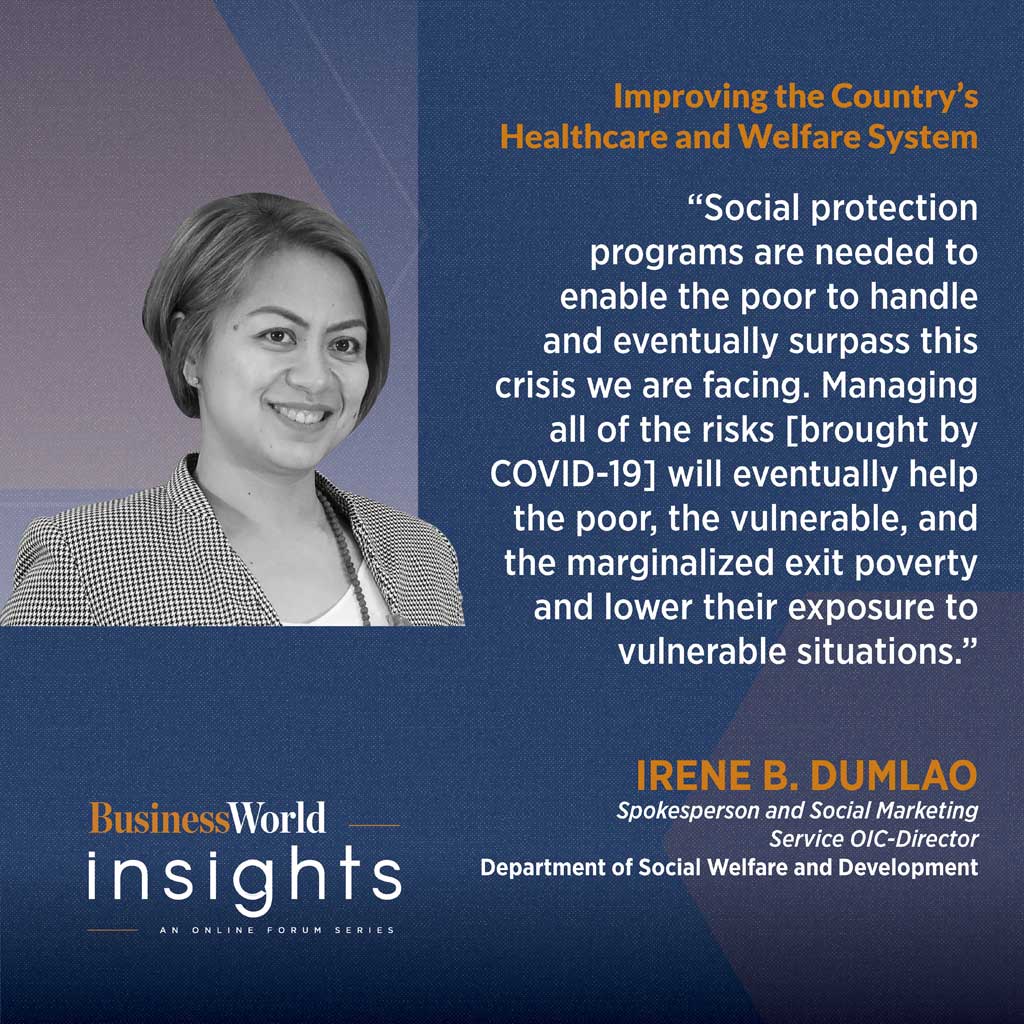
Irene B. Dumlao, spokesperson of the Department of Social Welfare and Development (DSWD) and the social marketing service head of the department, started the online forum by recognizing that the rapid spread of COVID-19 and the continued extent of quarantine measures have brought a severe long-term impact on the poor and highly vulnerable families and individuals.

In response to such impacts, social protection programs are set in place “to protect and prevent people from falling from their current income and consumption levels due to various risks.”

These are also in place to build capacity adaptability and to expand more income opportunities and improve human capital investments in the long-term, she added.

Ms. Dumlao also highlighted the actions taken by DSWD as the lead agency in social protection, especially the emergency cash subsidy under the Social Amelioration Program (SAP).

“Through SAP, we helped cushion the impact or effect of the pandemic to poor Filipino families, whose jobs and sources of livelihood have been disrupted,” she said.

The spokesperson reported that the department has partnered with various local government units (LGUs) in delivering the cash aid to Filipino families who belong to the low income and vulnerable sector, which amount to 18 million families.

More than 4.2 million beneficiaries of the Pantawid Pamilyang Pilipino Program (4Ps) were identified and included among the beneficiaries, and around 13.8 million were identified by LGUs.

For the second tranche of the distribution, Ms. Dumlao continued, DSWD would be partnering with the Armed Forces of the Philippines (AFP) and the Philippine National Police (PNP) in distributing the aid to identified recipients.

The department has agreements with several private groups, particularly financial services GCash and Paymaya, in distributing the cash aid. The department has also rolled out its Relief Agad mobile application, which seeks to fast track data gathering and aid distribution of the SAP.

However, Ms. Dumlao noted that the distribution could have been more efficient with a national ID system set in place.

“It could also have been helpful since the system would have been able to link our constituents, our clients, and beneficiaries to banking or financial institutions. That would have expedited the delivery of our aid to them,” she said.

Ms. Dumlao also noted the value in cooperation between the private sector and the government in strengthening the welfare system.

“The government has a big responsibility to promote and protect the welfare of the poor, the vulnerable, and the marginalized. But the private groups also play a significant role,” she said.

With the pandemic posing economic, environmental, and man-made risks to the vulnerable sectors of the country, Ms. Dumlao finds it important for social protection programs to manage these risks in order to prevent families from falling into and being trapped into poverty.

Improved capabilities
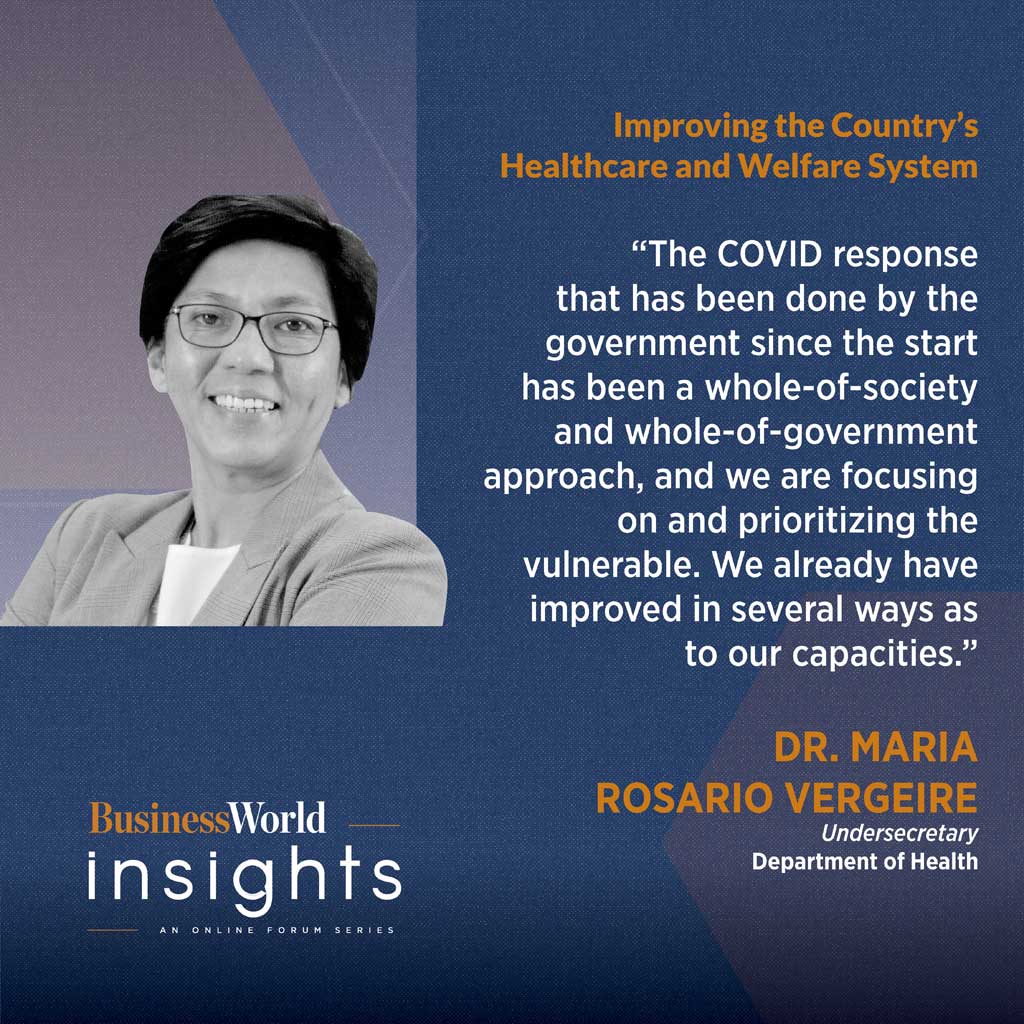
Meanwhile, Dr. Maria Rosario S. Vergeire, Undersecretary of the Department of Health (DoH) highlighted the gradual improvement in the government’s response to the pandemic.

“The COVID response that has been done by the government since the start has been a whole-of-society and whole-of-government approach, and we are focusing on and prioritizing the vulnerable. We already have improved in several ways as to our capacities,” Dr. Vergeire said.

According to the Undersecretary, from just a single laboratory at the onset of COVID-19, there are now a total 52 laboratories licensed by the DoH.

From only 300, the testing capacity has grown to at least around 34,000 rated capacity per laboratories.

Dr. Vergeire also noted that several facilities are set in place to respond to the pandemic, namely COVID referral hospitals, COVID accepting hospitals, temporary treatment and monitoring facilities for quarantined individuals, and Ligtas COVID centers in LGUs.

The department has an emergency hiring program intended to provide and augment health human resources to our hospitals and quarantine facilities as well as our primary care facilities, she added.

In terms of DoH’s engagement with the private sector, the T3: Test, Treat, and Trace program is ongoing, with the private sector providing DoH with the utmost support in terms of the capacity for laboratories and swabbing facilities, among others.

Dr. Vergeire also noted that as the Universal Health Care (UHC) program has initially enrolled all Filipinos to the Philippine Health Insurance Corporation (PhilHealth), individuals who have been affected by COVID-19 has benefitted from PhilHealth rates or benefits packages.

“Prior to April 15, Philhealth covered a whole set of medical bills that only individuals affected by the COVID have incurred,” she said. “But after April 15, they have issued these new benefits packages, especially for COVID-19, [which also cover] pneumonia cases and also testing and quarantine facilities.”

“The other provisions of the law have taken the back seat, but we are very eager to push forward and implement these in the coming months as we go through this pandemic, also realizing that there are still other non-COVID services for health that our people are entitled to,” Dr. Vergeire added.

Regarding private testing by private companies, Dr. Vergeire stressed that DoH has issued return-to-work policy guidelines, wherein the department recommends companies to hold symptomatic screening.

“Upon resumption to work, all employees should be screened, and all those who have symptoms have to be isolated,” she explained. “Also, those who have symptoms within 15 days prior to returning to work should be tested and isolated.”

As to companies who have been doing this mass testing, the undersecretary reminded, DoH’s position still remains on symptomatic screening using the RT-PCR method of testing.

Hospitals in the ‘new normal’

Dr. Saturnino Javier, medical director of Makati Medical Center (MMC), provided a perspective from the medical community by showing how the esteemed medical institution struggled with intensively attending to COVID-19 cases and how it plans to bounce back as it gradually reopens for other patients.

He noted the difficulties hospitals encountered in the past two months.

“You go out of the house, and it seems to be peaceful and quiet. But, it’s a different atmosphere when you’re in the hospital,” Dr. Javier said. “You have the emergency room full of patients on ventilators waiting to be admitted. You have an ICU and COVID wings which are full. Some of your nurses are being quarantined, if not admitted… And while these are happening, PPEs (personal protective equipment) and masks are being depleted, and supplies are running low.”

Hospital has had to confront other issues, he added. One of them is a decrease in occupancy, which has caused a drop in revenues will fall. There was also a halt in elective surgeries as well as closures of clinic offices. Adding to these burdens is the continuous spending in PPEs, some of which Dr. Javier found to have been exorbitantly priced.

From this chaotic situation, according to Dr. Javier, MMC has started moving to a resumption of operations in a gradual, partial, limited, and very conscious manner.

“This is a situation where we try to manage fear, and this fear cuts across sectors — fear of the patients to come back and fear among our healthcare practitioners and professionals to once again embrace clinical practice,” he added.

Ensuring the safety of patients, healthcare workers, and physicians, MMC has put in place measures such as zoning protocols across the hospital, designated traffic routes for patients, and designated hotspots, among many others.

Nevertheless, with safety measures set in place in hospitals, Dr. Javier stressed that people should still do their share in preventing others from getting infected by COVID-19.

“We have to keep in mind that the virus did not go on quarantine. It’s the people who did. The virus is just there. It did not go on vacation. Once it finds a suitable host again it will definitely be causing havoc again,” he said.

Dr. Javier also expressed his support for telemedicine as a platform for meeting patients’ needs in the new normal.

“Even during the height of the pandemic, we have encouraged many of our practitioners to embrace telemedicine to be able to connect with the patients who have no opportunity to visit them at the hospital. This is still being encouraged as we partially resume operations,” he said.

When asked whether he sees any pressure on the supply of medical professionals and nurses amid the pandemic, Dr. Javier recognized that there are manpower issues with the nursing field, while there is not much with physicians.

“When personal security or health issues are on the line, we can’t impose on anyone to stay, especially if there are offers of higher salaries elsewhere. This is a reality we confront and we’re still confronting at the moment,” he said.

For Dr. Javier, action by the government in needed in this matter.

“We really cannot compete with our European countries and the US, especially when the demand for nurses in those areas is much higher. I think that’s one area where we can be helped by the government to put some stop-gap measures to prevent the brain drain,” he stressed.

Regarding legislation that responds to the health crisis, Dr. Javier emphasized that there is no need for additional laws, but existing laws must be implemented very well. In particular, he sees the need to ensure a steady flow of medicine and testing kits as well as to ensure proper regulation of prices of PPEs and supplies.

Lessons from disaster response
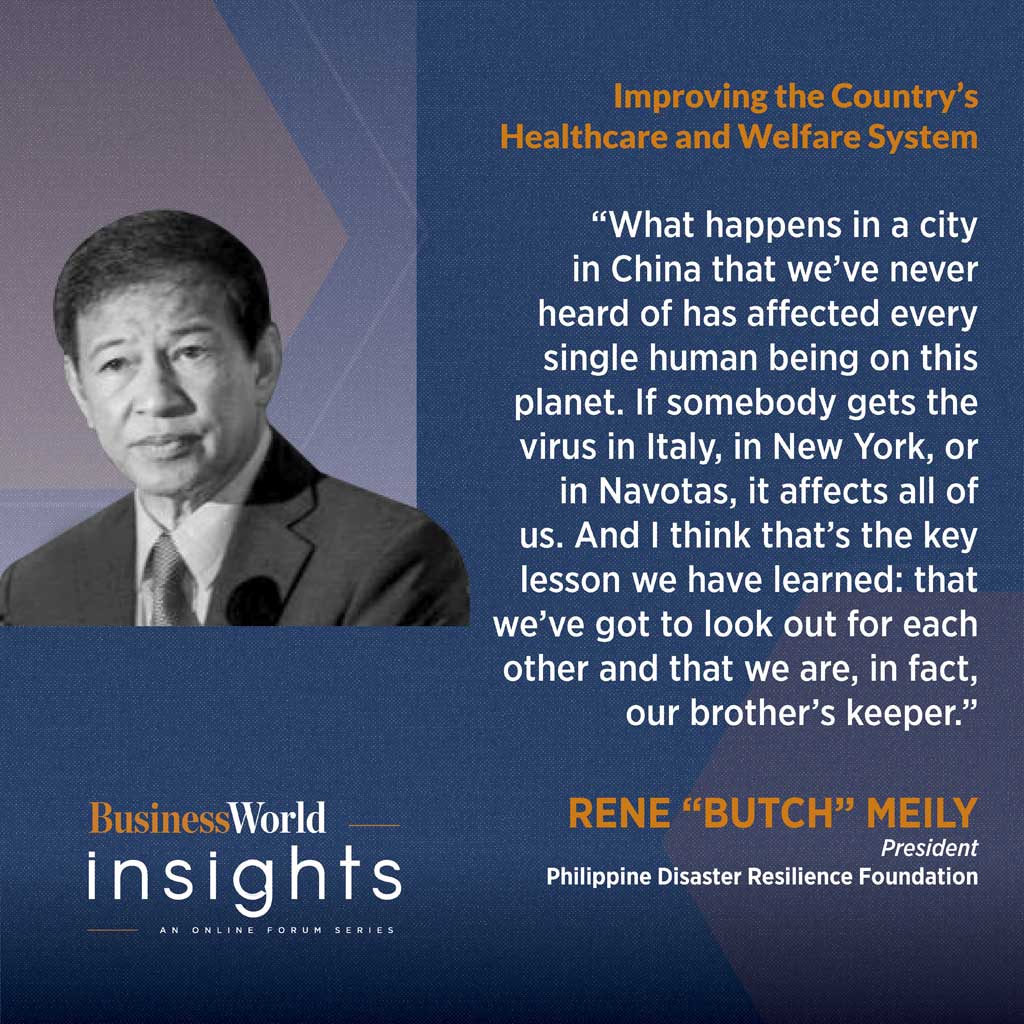
A [stark] difference from previous disasters was spotted by Butch Meily, president of the Philippine Disaster Resilience Foundation (PDRF), in COVID-19. While previous disasters have primarily affected one area of the country, the health crisis has affected the entire Philippines. A similarity, however, was found in terms of reopening the economy, especially the micro, small, and medium enterprises (MSMEs).

One of PDRF’s intiatives in this matter is Project Sikap, which launched a one-stop digital shop for MSMEs where their questions about bouncing back gets to be answered.

Moreover, similar to PDRF’s response to affected sari-sari stores after Supertyphoon Yolanda, it has started helping sari-sari stores in Metro Manila reopen after the COVID-19 crisis, as they found that up to 40% of them have closed — either for health concerns or because many consumers were not able to purchase their goods.

As the foundation interviewed sari-sari store owners, it has found out that 80% to 90% of them are women. “[S]o they play a key role in the recovery of the economy and in holding our families together,” Mr. Meily concluded.

Another lesson learned from responding to the present crisis, according to Mr. Meily is the value of having pre-agreements in place with companies.

Through its pre-agreements with private companies, the PDRF rolled out other initiatives. With the help of package delivery company UPS, it has ferried medical supplies from Manila to outside areas. Through a pre-agreement with online marketplace company Airbnb, health workers were provided with temporary shelters in residences and hotels.

Among the lessons learned from this pandemic, however, the most important to keep in mind is that people are connected, Mr. Meily said.

“What happens in a city in China that we’ve never heard of has affected every single human being on this planet,” he said. “If somebody gets the virus in Italy, in New York, or in Navotas, it affects all of us. And I think that’s the key lesson we have learned: that we’ve got to look out for each other…, that we are, in fact, our brother’s keeper.”


[B-SIDE Podcast] Lack of preparation threatens Philippine agriculture sector

Follow us on Spotify BusinessWorld B-Side

COVID-19 has exposed how fragile the agriculture sector is. Local farmers are among the hardest hit by the pandemic and the protracted crisis is putting a strain on the country’s food supply chains. Magsasaka Party-List Representative Argel Joseph T. Cabatbat and BusinessWorld reporter Genshen L. Espedido talk about the consequences of the delays in modernizing our rice farms and why we should aim for food sovereignty in the long-term.

TAKEAWAYS

Government has to work harder to ensure that our food supply chain remains intact.
Allied businesses of the agricultural sector were not granted frontliner exemptions during the lockdown. As a result, the delivery of supplies and equipment critical for the operation of the agricultural sector was limited. Government should make sure that the transportation of agricultural products and farm inputs remains unhampered especially during a crisis.

Farmers are among the hardest hit by the pandemic.
COVID-19 greatly disrupted the country’s agricultural sector. The pandemic made it more difficult to distribute the Rice Competitiveness Enhancement Fund (RCEF), which was supposed to equip farmers with modern machinery to facilitate efficient farming. At the same time, farm produce anticipated to be sold in bulk during this season was wasted. Aid should be distributed immediately to farmers to help them recover from their losses.

In the long-term, we should aim for food sovereignty.
The pandemic showed that the Philippines cannot continue relying on importation, as other countries limit their exports to secure their own food supply for their citizens. The country should prioritize Filipino farmers by giving them enough financial and material resources, thus ensuring food sovereignty.

Recorded remotely on April 28. Produced by Nina M. Diaz, Paolo L. Lopez, and Sam L. Marcelo.

Follow us on Spotify BusinessWorld B-Side

PHL to miss poverty eradication goal

By Marissa Mae M. Ramos, Researcher

PRIOR to the coronavirus pandemic, the Philippines was on track to meet its targets for reducing unemployment and poverty.

Poverty incidence among individuals — or the proportion of Filipinos whose incomes fell below the poverty threshold — was 16.7% in 2018, lower than the revised 23.5% recorded in 2015, according to the Philippine Statistics Authority (PSA). This was already near the Philippine Development Plan (PDP) 2017-2022 target of reducing poverty incidence to 14% by 2022.

According to the National Economic and Development Authority (NEDA), around 5.9 million Filipinos had been lifted out of poverty as of 2018 on track with its target of six million Filipinos by 2022.

At that time, the NEDA noted the country was likely to meet the Sustainable Development Goal (SDG) target of eradicating extreme poverty as defined by the international poverty line as well as cutting by half the proportion of the population living below the national poverty line by 2030.

The same could also be said about unemployment. The PSA’s Labor Force Survey (LFS) revealed a national unemployment rate of 5.1% in 2019 — its lowest since the adoption of a new unemployment definition in 2005. In the PDP 2017-2022, unemployment was targeted to go down by 3-5% by 2022.

With the ongoing health crisis, it is now unlikely these development goals will be attained.

“The government will likely find it difficult to bring the poverty rate down to 14% by 2022. The extended lockdowns have not only slashed jobs, they have compelled firms to restructure their operations post-COVID-19, which would likely require fewer investments in capital goods, except for IT-related spending,” University of Asia and the Pacific (UA&P) Economist Victor A. Abola told BusinessWorld in an e-mail.

In an upcoming paper, Ateneo de Manila University (ADMU) Economist Geoffrey M. Ducanes and former Socioeconomic Planning Secretary Arsenio M. Balisacan said poverty incidence is “likely to double or even triple relative to the 2018 level,” assuming no or minimal government transfers, the lockdown lasts for two months, and employment levels only gradually recover by yearend.

“Most low-income households are dependent on wage income and entrepreneurial income [for those that are self-employed], so unless this decline is offset by an increase in other income, such as government transfers, it is inevitable that poverty will increase,” Mr. Ducanes said in a separate e-mail interview.

Philippine Institute for Development Studies Senior Research Fellow Jose Ramon G. Albert estimated a 10% contraction in incomes during the pandemic, even with the Social Amelioration Program (SAP) and Small Business Wage Subsidy, will push poverty incidence to 18.2% from the 2018 baseline data.

Meanwhile, a simulation of a 20% drop in incomes, with both government programs implemented, will increase poverty incidence to 24.2%.

NEDA Acting Secretary Karl Kendrick T. Chua said last Tuesday that the increase in poverty incidence may be “very short-lived” as the majority of the poor are in rural areas. Mr. Chua said these areas are hardly affected by the government’s quarantine measures as COVID-19 cases are concentrated in urban areas. He said he does not see the temporary increase in the poverty rate of urban areas as a “prolonged problem.”

The poverty rate for individuals residing in urban areas stood at 9.3% in 2018 (from 13.2% in 2015) while for individuals in rural areas it is 24.5% (from 34%) according to PSA data.

Broken down, poverty incidence in the National Capital Region (2.2%), Central Luzon (7%), and Calabarzon (7.1%) — cited by Mr. Chua as urban areas — have lower poverty incidence than the national rate at 16.7%. However, the poverty rates in the remaining regions of Luzon, which have also undergone quarantine for at least a month and a half, were relatively close or higher than the national figure: Ilocos Region (9.9%), Cordillera Administrative Region (12%), Mimaropa (15.1%), Cagayan Valley (16.1%), and Bicol Region (27%).

As of June 5, the Department of Health reported that 11,656 or 57% of confirmed COVID-19 cases in the Philippines are in the NCR while 1,781 cases or 9% were in Calabarzon.

UNEMPLOYMENT
Along with rising poverty rates, the country would have to deal with the increase in unemployment levels.

The April round of the PSA’s LFS showed the unemployment rate rising to record high of 17.7% from 5.1% in April 2019. This is equivalent to an additional five million jobless Filipinos, bringing the total to more than seven million.

“My fear is that the worst of modern economics’ nightmares will happen — simultaneous massive unemployment and ever ratcheting price spirals (stagflation)…,” said Federico M. Macaranas, an adjunct professor at the Asian Institute Management (AIM) and a former Foreign Affairs undersecretary, in an e-mail interview last month.

Stagflation, a term coined in the 1970s, was characterized by persistently high inflation and unemployment levels. Alternatively, it can be defined as a period of accelerating inflation with a decline in the gross domestic product (GDP).

Mr. Macaranas said stagflation could persist only until productivity bounces back with the production of “real goods” along with innovative ideas.

“The most vulnerable in the short-term are the hard-core unemployed with no basic income for subsistence, or those working under contractual terms, small enterprises whose cash lifeline may not be sufficient to adopt new business models, and in the long-term even larger firms which lack creative minds to collaborate with good market-sensing, socially aware people,” Mr. Macaranas said.

For ADMU’s Mr. Ducanes, employment in restaurants, malls, and public transportation where physical distancing could be challenging is generally affected.

“Together, wholesale and retail trade, transportation and storage, accommodation and food service activities, construction, and manufacturing employ 21 million workers or about 50% of total employed in the country. A good portion of these workers is likely to have lost or to lose jobs because of COVID-19. To the extent that a large share of these workers belongs to low-income households… many will fall into poverty,” Mr. Ducanes said.

“The global recession is also likely to dampen demand for Philippine exports, thus possibly even affecting manufacturing and some agricultural jobs. Many OFWs (overseas Filipino workers), especially seamen and those working in countries that are hit hard economically by COVID-19 will lose their jobs,” the economist added.

MORE NEEDS TO BE DONE
“Because COVID-19, through its effect on employment and income, will also have a downstream effect also on enrollment and health outcomes… It will also negatively impact our hope of achieving a high level of human development by 2022,” Mr. Ducanes said.

In the near term, he said the government should extend or expand SAP even if the household is no longer under strict quarantine. While acknowledging the program can be very costly, he said targeting beneficiaries for cash grants and emergency employment programs would be key to keep Filipinos above the poverty line.

“The government needs to improve the social protection programs for the working poor, especially those in self-employment,” Mr. Ducanes said, noting that subsidized social security and unemployment insurance are necessary safety nets for the country’s vulnerable population.

“The government must also make sure to control inflation, especially for food, which has a big weight in the consumption basket of the poor. An extraordinary rise in food inflation of about 15% will be enough to offset the impact on poverty of the current SAP, according to our estimates,” he added.

For AIM’s Mr. Macaranas, government funds may soon run out when the more than $2 billion in COVID-19 support programs are extended.

“National finances can be supplemented by funds from international financial sources… If worse comes to worst, the government can sell more of its land assets, and reclaim more land from coastal urban centers,” he said.

Mr. Macaranas also said that private sector institutions should also be quick on their feet as “those who will be more successful are people who are more creative, collaborative, fast, agile, sustainability-driven, and technologically-savvy.”

For UA&P’s Mr. Abola, the government should provide subsidies and incentives to private schools in upscaling human capital to reduce the burden on state-owned institutions and improve education quality.

“Financial assistance should also focus a lot on the agricultural sector, where poverty is highest, so that they can shift to more high-value crops, as well as provide incentives for modern storage facilities. Help provide e-platforms so that farmers can maximize their earnings, instead of being held captive by middlemen,” Mr. Abola said.

He added infrastructure goals under the “Build, Build, Build” program “should not be sacrificed” in order to lower logistics costs in the country.

Philippine economy to shrink by 4% — Fitch Ratings

By Luz Wendy T. Noble, Reporter

THE Philippine economy is now forecast to contract by 4% this year, according to Fitch Ratings, as the fallout from the coronavirus pandemic widens.

“We have recently lowered our GDP (gross domestic product) growth outlook to -4% to reflect the short-term impact of lockdown restrictions on economic activity, as well as the ongoing weak external environment,” Stephen Schwartz, head of Asia Pacific Sovereign Ratings at Fitch Ratings, told BusinessWorld in an e-mail.

To recall, Fitch Ratings gave a -1% forecast for the Philippine economy in May, and a 6% baseline forecast before the pandemic.

The government projects the economy will contract by 2% to 3.2% this year. S&P Global Ratings and Moody’s Investors Service see the economy shrinking by 0.2% and 2.5%, respectively.

“A cautious lifting of restrictions could lead to a resumption of activity, but the outlook is highly uncertain depending on the evolution of the virus, both globally and within the Philippines,” Mr. Schwartz said.

The lockdown in Metro Manila and key cities began easing on June 1, allowing public transportation to partially resume and most businesses to reopen. Most parts of the country are also now under a more relaxed quarantine.

As the lockdown covered April and May, Mr. Schwartz said the second quarter will be “significantly worse” than the first quarter, as the full-quarter impact of the restrictions will be seen.

The country’s economic output shrank by 0.2% in the January to March period, its first contraction since 1998.

However, Mr. Schwartz noted the third and fourth quarters will likely see positive growth, setting the stage for a gradual recovery next year. For 2021, Fitch Ratings sees growth at 7.4%, faster than the 7% penciled in last May and the 6.5% baseline forecast.

He pointed out that the country had ample fiscal space pre-pandemic, which will allow it to weather the crisis.

“We understand that the authorities aim to preserve their infrastructure spending program, while returning the debt-to-GDP ratio to a downward path over the medium term after the crisis subsides,” Mr. Schwartz said.

The country’s end-2019 debt-to-GDP ratio was at 41.5%, slightly lower than the 41.8% seen in 2018 and better than the government target of 41.7%.

“Their recent tax reforms and medium-term efforts to boost the Philippines’ tax revenue ratio will be important in this regard for meeting these objectives,” Mr. Schwartz said.

The Senate was unable to pass the second tax reform package under the Corporate Recovery and Tax Incentives for Enterprises (CREATE) bill before adjourning last week. However, senators committed to passing the measure by August.

One of the main features of CREATE is the immediate lowering of corporate income tax to 25% from 30%.

Finance officials earlier hoped the lower corporate income tax would take effect by July, as part of efforts to stimulate the economy amid the pandemic.

Remittances may fall by 10% this year

By Beatrice M. Laforga, Reporter

CASH sent home by overseas Filipino workers (OFWs) could drop by as much as 10% this year, as massive layoffs and wage cuts are seen around the world, the Institute of International Finance (IIF) said.

Yuanliu Hu, an emerging markets Asia economist at the IIF, told BusinessWorld remittances from OFWs are projected to decline by 7% to 10% this year.

“We expect remittances to fall by 7% to 10% in 2020, and the current account deficit will also expand to 1% of GDP (gross domestic product),” Mr. Hu said via e-mail.

IIF earlier projected a 20-30% drop in remittances for developing countries, worse than the 5% decline recorded during the global financial crisis between 2007 and 2009.

“From the high frequency monthly overseas workers’ remittances data, we did not see a significant reduction until February, but we expect the number will decline sharply in March as a lot of countries started lockdown since then,” Mr. Hu said.

He attributed the decline mainly to the massive layoffs and salary reductions implemented in other countries affected by the pandemic and subsequent lockdown measures.

“The Philippines relies heavily on OFW remittances, it accounts for around 8% of GDP in 2019. But with the COVID-19 effect, a lot of overseas Filipino cannot provide services or suffering layoffs and pay cuts,” he said.

Mr. Hu also pointed to the slump in oil prices that has hurt countries in the Middle East — the biggest source of remittances from Filipino migrant workers.

OFW remittances rose 2.5% from a year ago to $2.358 in February, but at a slower pace compared to the 6.6% expansion seen in January.

“Looking forward, the speed of reopening for the world economy is very important for the remittance inflow, if there is a second wave of outbreaks, the situation will definitely be worse,” Mr. Hu said.

Philippine Statistics Authority (PSA) data showed there were 2.202 million OFWs in 2019, slightly less than the 2.299 million in 2018. Saudi Arabia remains the top destination of OFWs accounting for 22.4% of the total migrant workers, followed by the United Arab Emirates (13.2%), Hong Kong (7.5%), and Taiwan (6.7%).

“The recovery of international shipping and fishing business is also crucial for OFW remittance, as around 75% of remittance comes from sea-based (workers),” Mr. Hu added.

The central bank still expects OFW remittances to post a two percent growth this year.

Meanwhile, the World Bank in April projected remittance flows in lower- and middle-income countries could drop by around 13% on average this year.

Current account made up 0.1% of GDP in 2019 as the current account deficit hit $464 million, narrower than the $8.773-billion gap recorded in 2018.

The current account displays the country’s overall economic interaction with the rest of the world covering trade in goods and services; remittances from OFWs; profit from Philippine investments abroad; interest payments to foreign creditors; as well as gifts, grants and donations to and from abroad.

The government estimated the economy to shrink by 2-3.4% this year.

Shuttered economy caused record-high unemployment — Diokno

THE record-high unemployment rate does not show the real picture of the economy and the job market, Bangko Sentral ng Pilipinas Governor Benjamin E. Diokno said.

“The increase in unemployment does not reflect the true state of the economy and the jobs market. It was more a result of the policy decision to save lives in response to the COVID-19 (coronavirus disease 2019) pandemic,” Mr. Diokno told reporters in a Viber message on Saturday.

The jobless rate in the country soared to 17.7% in April, the highest since the Philippines adopted new definitions for the survey and was much higher than the 5.1% recorded a year earlier.

Mr. Diokno said the survey was conducted from April 20 to May 16, which was at the height of the enhanced community quarantine (ECQ) in Luzon. Lockdown measures were imposed in mid-March to prevent further spread of the virus, causing many business operations to temporarily shut down. Restrictions were gradually lifted for some areas starting May.

Although the BSP is not in the position to directly address unemployment, Mr. Diokno said the central bank’s “timely, proactive, and decisive” monetary actions at the onset of the pandemic will work to lift confidence in the market and “avert further damage in the economy.”

“We, therefore, reiterate our support for carefully coordinated actions with other government authorities as well as pending stimulus bills in Congress aimed at responding to the evolving needs of the economy as it transitions into new economic realities amid the ongoing pandemic,” Mr. Diokno said.

The rise in the jobless rate was “expected,” and even be worse since many workers in the informal sector and overseas Filipino workers (OFWs) have also lost their jobs, said UnionBank of the Philippines Chief Economist Ruben Carlo O. Asuncion.

Data from the Department of Foreign Affairs showed that repatriated OFWs reached more than 36,000 as of June 6.

“Basic sources of income of people are largely affected. This may impact poverty incidence and may cause it to grow higher,” Mr. Asuncion said in a text message.

The increase in the underemployment rate is also worrisome, according to ING Bank N.V. Manila Senior Economist Nicholas Antonio T. Mapa.

Underemployed Filipinos — those already working but still looking for more work — also rose to 6.39 million from 5.61 million a year earlier, pushing the underemployment rate to 18.9% from 13.4%.

“Some companies have opted to furlough a portion of their staff, which means that they are technically still employed but will no longer receive a salary,” he said.

Mr. Mapa said all this will create a domino effect as no salary will mean no consumption, and no consumption will lead to no growth.

Private consumption is a vital facet of the economy as it accounts for 70% of the country’s gross domestic product (GDP). As the pandemic lingers, economic managers have said GDP is likely to shrink by 2-3.2% in 2020, with the economy contracting by 0.2% in the first quarter.

“Now that COVID-19 has ran roughshod through the Philippine economy and leveled all its past “economic fundamental” grandeur, we realize what held together the magical growth run of the Philippine economy: jobs,” Mr. Mapa said.

Mr. Asuncion expressed hope the gradual lifting of restriction measures will somehow lift the job market by the next labor force survey expected to be reported by August.

“[B]y then, the economy may have adjusted to the “new normal.” Barring any high resurgence or infections needing a serious lockdown, some firms may continue their business with ample help from the government,” he said. — Luz Wendy T. Noble

Expect higher rates in June

AROUND 2.8 million power users representing 40% of Meralco’s customer base have yet to receive their bills — VICTOR V. SAULON

By Adam J. Ang

MANILA Electric Co. (Meralco) advised its customers that their upcoming bills for June will be higher as these will reflect their total actual consumption during the lockdown period.

Ang bills na matatanggap nila ay naglalaman ng actual na konsumo sa loob ng apat na buwan. Asahan po na mas malaki ito kumpara sa usual na natatanggap nilang bill na para sa konsumo ng isang buwan lamang,” Meralco Spokesperson Joe R. Zaldarriaga said in a virtual briefing over the weekend.

(The bills they will receive this month include their actual consumption during the four months. Expect that this will be higher compared to their usual monthly bills.)

The distribution utility drew flak from customers last month, complaining of their high charges. The high bill resulted from Meralco’s computation of both the actual electricity consumption of its customers in May and estimated billing in March and April.

The Philippines’ biggest electricity distributor said around 2.8 million customers representing 40% of its customer base have yet to receive their bills during the quarantine period this June as the utility restarted reading their meters with the easing of lockdown measures.

Dahil sa restrictions na ito, may natira pa pong 2.8 million customers na hindi nabasahan ng metro noong May kaya’t minabuti ng Meralco na huwag na munang magpadala ng bills hangga’t hindi pa nababasa ang kanilang actual consumption,” Mr. Zaldarriaga said.

(Because of restrictions, electricity meters of 2.8 million customers were not read in May so, Meralco decided not to deliver their bills until they can be read for their actual consumption.)

Starting this month, customers who have yet to pay their bills during the lockdown period can settle these in monthly installments as per the order of the Energy Regulatory Commission on May 22.

In an advisory, the regulator told power utilities to allow their customers with 200 kilowatt-hours (kWh) and below of consumption in February to settle their unpaid bills during the quarantine period in six monthly installments, while those with above 200 kWh consumption can pay their March-May bills in four installments.

The installment bill will come as a separate charge that is due on every 15th day of the month, while a customer’s regular monthly bill is due on the last day of the month.

According to Meralco Head of Commercial Operations Agnes R. Macob, customers who already received their bills in May can settle their unpaid dues starting mid-June, while the remaining 40% who are yet to be billed this month will start paying their installment bills on July 15.

Meanwhile, the listed utility has yet to decide whether it will invoke another “force majeure” provision on their supply contracts.

A force majeure event is an uncontrollable event that makes it impossible for power plant operators to fulfill their obligations

In April, Meralco relaxed its power supply agreements with suppliers to bring down the cost of electricity amid falling demand during the quarantine period. It resulted in lower generation charges passed on to customers.

Sa ngayon, ‘di pa namin masabi kung mai-invoke ang force majeure. Imo-monitor pa rin naman ang demand from our customers, kasi ‘yun ang pinaka-root ng pagi-invoke ng force majeure that when the ECQ (enhanced community quarantine) started demand fell by 30% compared to its pre-ECQ levels,” Meralco Head of Utility Economics Lawrence S. Fernandez said.

(For now, we cannot say if we would invoke a force majeure provision. We still have to monitor customers’ demand as this is the reason for invoking such a provision during the ECQ period when demand fell by 30% compared to pre-quarantine levels.)

Meralco noted peak customer demand reached over 10,400 megawatts in Luzon as businesses restarted operations with the easing of quarantine restrictions.

Moreover, the utility said its suppliers agreed to lift the minimum off-take provision in their contracts which capacity charge is passed on to customers.

Complying with the ERC order, Meralco will not be collecting the universal charge to cover environmental costs of P0.0025 per kWh from customers in the June bill.

Also, it has suspended the guaranteed minimum billing demand for business customers with contracted consumption as an aid measure.

Meralco’s controlling stakeholder, Beacon Electric Asset Holdings, Inc., is partly owned by PLDT Inc. Hastings Holdings, Inc., a unit of PLDT Beneficial Trust Fund subsidiary MediaQuest Holdings, Inc., has interest in BusinessWorld through the Philippine Star Group, which it controls.

Ayala Land to offer up to P10 billion bonds

AYALA Land, Inc. (ALI) is issuing up to P10-billion fixed rate bonds to generate financing that will support its capital expenditure (capex) requirements.

The listed property developer filed its offer supplement with the Securities and Exchange Commission (SEC) on June 2 to issue the fourth tranche of its P50-billion shelf registration. A copy of the filing was given to the media over the weekend.

The planned offer will have a principal amount of up to P6 billion and an oversubscription option of up to P4 billion. The bonds are intended to be listed in the Philippine Dealing & Exchange Corp.

It had tapped BDO Capital and Investment Corp., BPI Capital Corp. and China Bank Capital Corp. as joint lead underwriters and bookrunners for the offer.

Should it exercise the oversubscription option, ALI expects to net some P9.87 billion from the issuance. If not, the net proceeds will be approximately P5.92 billion. This will be used to partially finance the company’s general corporate requirements, including capex.

Specifically, ALI intends to allot the proceeds for its Ayala Triangle Garden 2 project in Makati City; Central Bloc — Cebu I.T. Park in Cebu City; land acquisitions in Pampanga and Bonifacio Global City; and investments for its Parklinks project with Eton Properties.

Other projects it will finance are the One Ayala Avenue in Makati City; Vermosa Mall in Cavite; retail, outsourcing and hotel projects in Manila Bay; and land acquisitions in Pampanga, Laguna, Cavite and Bulacan.

“Costs related to the projects, in general, include various construction-related materials and services… The net proceeds from the offer, which are expected to be fully utilized in 2020, will be disbursed accordingly,” it said in its offer supplement.

The SEC said ALI had so far issued three tranches worth P21 billion from its P50-billion shelf registration.

The company announced in April it was spending P69.8 billion for capex this year, about 37% lower from its previous plan as a reaction to the coronavirus disease 2019 (COVID-19) pandemic.

Aside from the P10-billion bonds, ALI’s board of directors also approved in May a plan to offer P19-billion bonds to refinance its outstanding debt.

ALI’s earnings were down 41% to P4.3 billion in the first quarter because of a slowdown in bookings and project completions, which were affected by the Taal Volcano eruption and the lockdown measures for COVID-19.

Shares in ALI at the stock exchange closed P38 each on Friday, up 50 centavos or 1.33% the earlier day. — Denise A. Valdez

Britain’s Banksy depicts US flag on fire in Floyd tribute

LONDON — Reclusive British street artist Banksy published a new artwork online on Saturday which depicts the United States flag being set alight by a candle that forms part of a memorial to an anonymous, black, silhouetted figure.

The artwork appeared as thousands of people gathered in London and other cities around the world to protest the May 25 killing of George Floyd in Minneapolis, where a white police officer detaining him knelt on his neck for nearly nine minutes.

“People of color are being failed by the system. The white system,” Banksy wrote in a short statement that accompanied the image on the social media platform Instagram.

Banksy likened racism to a broken pipe flooding a downstairs apartment, and said the downstairs occupants would be entitled to break into the apartment upstairs to fix the problem.

“This is a white problem. And if white people don’t fix it, someone will have to come upstairs and kick the door in,” Banksy wrote alongside the image.

Banksy frequently chooses topical themes for his artworks, which are normally stenciled on walls.

Last month, he showed a young boy choosing a nurse as the superhero he wants to play with over Batman and Spiderman, in a new artwork to encapsulate the gratitude Britons have felt toward the country’s National Health Service during the coronavirus crisis. — Reuters

Cebu Pacific, Cebgo offer more local destinations

FROM three domestic destinations last week, Cebu Pacific and Cebgo said they intend to operate local flights to 17 more destinations this week until the end of the month as they try to rebuild their local route network.

Cebu Pacific Director for Corporate Communications Charo Logarta-Lagamon told BusinessWorld in a phone message on Sunday that the “planned” destinations are “subject to government approval.”

In an advisory e-mailed to reporters late Saturday night, budget carrier Cebu Pacific, operated by Cebu Air, Inc., and its subsidiary Cebgo said that “as part of the gradual rebuilding of [their] domestic route network,” they “plan to mount domestic flights to 20 destinations from June 8 to 30, 2020.”

The Gokongwei-led airlines intend to mount flights between Manila and Dipolog, Pagadian, and Zamboanga from June 8 to 30.

From June 9 to 30, they plan to operate flights between Manila and Masbate.

They also hope to operate Manila-Tablas, Manila-Davao, and Cebu-Clark flights from June 10 to 30.

From June 16 to 30, the airlines plan to operate flights between Manila and nine more local destinations such as Bacolod, Cotabato, Dumaguete, Iloilo, Catalan, Roxas, Tacloban, Bohol, and Busuanga.

They are also studying to mount flights from June 16 to 30 between Cebu and Davao.

Cebu Pacific and Cebgo operated flights between Manila and Naga, Cebu, and Cagayan de Oro last week when the government eased air travel restrictions between areas placed under a more relaxed community quarantine.

“This is a developing situation and we will have an agile approach to rebuilding our network schedule. It may be necessary for us to add or cancel flights at last minute given the fluidity of restrictions and directives from the Inter-Agency Task Force (IATF), the Local Government Units (LGUs) and other concerned government agencies,” they said.

“We will provide updates through our website and official social media accounts and endeavor to inform our passengers in a timely manner.” — Arjay L. Balinbin

VLF 2020: Exploring transnational identity

VIRGIN Labfest 2020: KAPIT — the Cultural Center of the Philippines’ theater festival of new, unstaged one-act plays, which has moved to the digital realm because of the restrictions imposed to control the spread of the COVID-19 virus — is two days away from its first online premiere.

Claro De Los Reyes’ Mongoloida’s Casa De Pun is one of the plays selected for a staged reading.

Directed by Guelan Luarca, the play follows the internal struggle of Afro-Filpina Enrica who migrated to New York City under contentious circumstances related to her upbringing. She confronts a transnational cast of historical characters who navigate life with differing world views.

“The play was first drafted in 2016 as a response to the original Black Lives Matter movement, and maybe a relationship to what Filipinos have with the idea of colorism,” Mr. De Los Reyes, who is currently based in New York, told BusinessWorld in a Zoom interview on June 2.

Of the materials Mr. De Los Reyes encountered during his research for the play, he said that he was largely influenced by African American playwright Adrienne Kennedy’s one-act play Funnyhouse of a Negro. The 1964 play is about the internal struggle with racial identity of a mixed race young woman, which uses historical figures as manifestations of her mind.

Mongoloida’s Casa de Pun, Mr. De Los Reyes said, focused on “fracturing a linear understanding of the character.”

“[It is] actually very timely for today. It asks a lot of questions in a nonlinear way about colorism in Filipino society. The idea of being dark skinned is a big theme in the play,” he said, noting that the origins of the main character are up for interpretation.

“I wanted to take that sensibility and really highlight a central character, exploring, and embodying transnational identity. So, even if they are 100% Filipino, there are different worlds that they’re occupying,” he added, citing questions of how a black Filipino, her language, her sense of identity, are received and perceived as a migrant.

The narrative veers away from the “well-made play catharsis” of following a character’s story and their goals, and by the end they either become successful or are defeated.

“I’m hoping that the experience starts a conversation as opposed to ingesting it like a story that satisfies. Hopefully it’s engaging too. But engaging in a very different way,” he said.

In the play’s cast are Kakki Teodoro, Tata Tuviera, Ybes Bagadiong, Anthony Vaughn, Teisha Duncan, Arvy Dimaculangan, Carmen Dolina, Kat Dizon, and Franny Tan.

Mongoloida’s Casa De Pun will stream live on June 24, 5 p.m.

THE ONLINE MIGRATION
For the past three months of the lockdown, the Virgin Labfest (VLF) has been preparing and adjusting to the new medium.

“I think everyone’s excited, everyone’s nervous, and everyone is just continuously expanding their patience and their understanding of what is possible,” VLF festival director JK Anicoche told BusinessWorld in a separate Zoom interview.

“Our initial invitation [was] for the artists is just to create a Zoom reading of their performances in the most basic sense. But we cannot stop artists from exploring and being at their best. And when they told us about their intention to explore things, I kind of anticipated that,” he added, noting that everyone involved has acquired new skills due to the transition.

“If it’s worth doing, maybe it’s worth overdoing. And we learn from that,” he said.

Likewise, Cultural Center of the Philippines Vice-President and Artistic Director Chris B. Millado said that the transition “can actually be an opportunity to broaden audiences through our online reach,” speaking to BusinessWorld via a Zoom interview on June 4.

“This whole situation of quarantine made me trust a singular characteristic of artists which is our sense of improvisation and adaptability,” he added.

WHERE AND HOW TO CATCH THE SHOWS
The VLF 2020’s 10 main featured plays, staged readings, and revisited plays will premiere via free live streaming on the cultural center’s official Facebook page beginning June 10.

Recorded versions of the shows will be streamed on the Vimeo website and app beginning June 14 to 28. Viewers can set up an account then search for Cultural Center of the Philippines or VLF Kapit for access to the shows.

The festival also offers series packages: a Regular Series Package (P100) which includes VLF 2020: KAPIT productions of the 10 new featured works, three revisited plays, and five staged readings); while the Premium Series Package (P200) includes all performances, and interviews with playwrights, directors, designers, and behind-the-scenes footage. (To purchase the packages, go to https://vimeo.com/ondemand/vlf2020kapit or https://vimeo.com/ondemand/vlf2020kapitpremium.)

“After paying a fee and watching a show, each show would have a Pass the Hat button, where if [audience members] really love the experience, they can donate either in cash or kind. Whatever is collected at the end of each show will go directly to the cast and crew involved in that production,” Mr. Millado said.

Aside from the revisited plays and staged readings, the VLF Playwright’s Fair and Virgin Labfest 2020 Writing Fellowship Program will stream via CCP’s official Facebook page.

The VLF Playwright’s Fair online will feature this year’s playwrights talking about their work. It will be held on June 11-14, 17-20, 25-27 at 8 p.m. Participating in the event as panelists are playwrights Allan Lopez, Liza Magtoto, Layeta Bucoy, Maynard Manansala, Chuckberry Pascual, U Z. Eliserio, Dustin Celestino, Eljay Castro Deldoc, Guelan Luarca, Vlad Gonzales, and Nicolas Pichay. Writers Dingdong Novenario, Luna Sicat Cleto, and Visconde Carlo Vergara will have solo talks, while Sari Saysay will render an online reading.

Meanwhile, the Virgin Labfest 2020 Writing Fellowship Program will culminate in an online staged reading of the fellows’ works on June 28 at 2 and 5 p.m. When schedules overlap, the featured performances will stream on the cultural center’s official Facebook page while the VLF Playwright’s Fair will stream at the official VLF Facebook page (https://www.facebook.com/thevirginlabfest).

For more details and show schedules, visit https://www.facebook.com/culturalcenterofthephilippines/ and https://www.facebook.com/thevirginlabfest/, or join https://www.facebook.com/groups/VLFTambayan/. — Michelle Anne P. Soliman

ADVERTISEMENT
ADVERTISEMENT